Chateau de Calavon

While I was doing a tasting at my local wine shop The Fine Wine Shop in Livonia, Michigan, I had a chance to try three wines from the same estate in a region that I have only written about four times in almost ten years, so it is usually below my radar, for no apparent reason other than it doesn’t get much attention from the distributors.  I am talking about Provence, in the south-eastern part of France, and in particular Coteaux d’Aix-en-Provence, the second largest appellation of the region.  Originally the region was known as Coteaux du Roy Rene (Rene D’Anjou, a 15th Century King of France who was very partial to wines), in 1956 it was granted VDQS status and in 1985, it was granted AOC status. The long dry summers make it ideal for vineyards, and the entire region is basically limestone.  
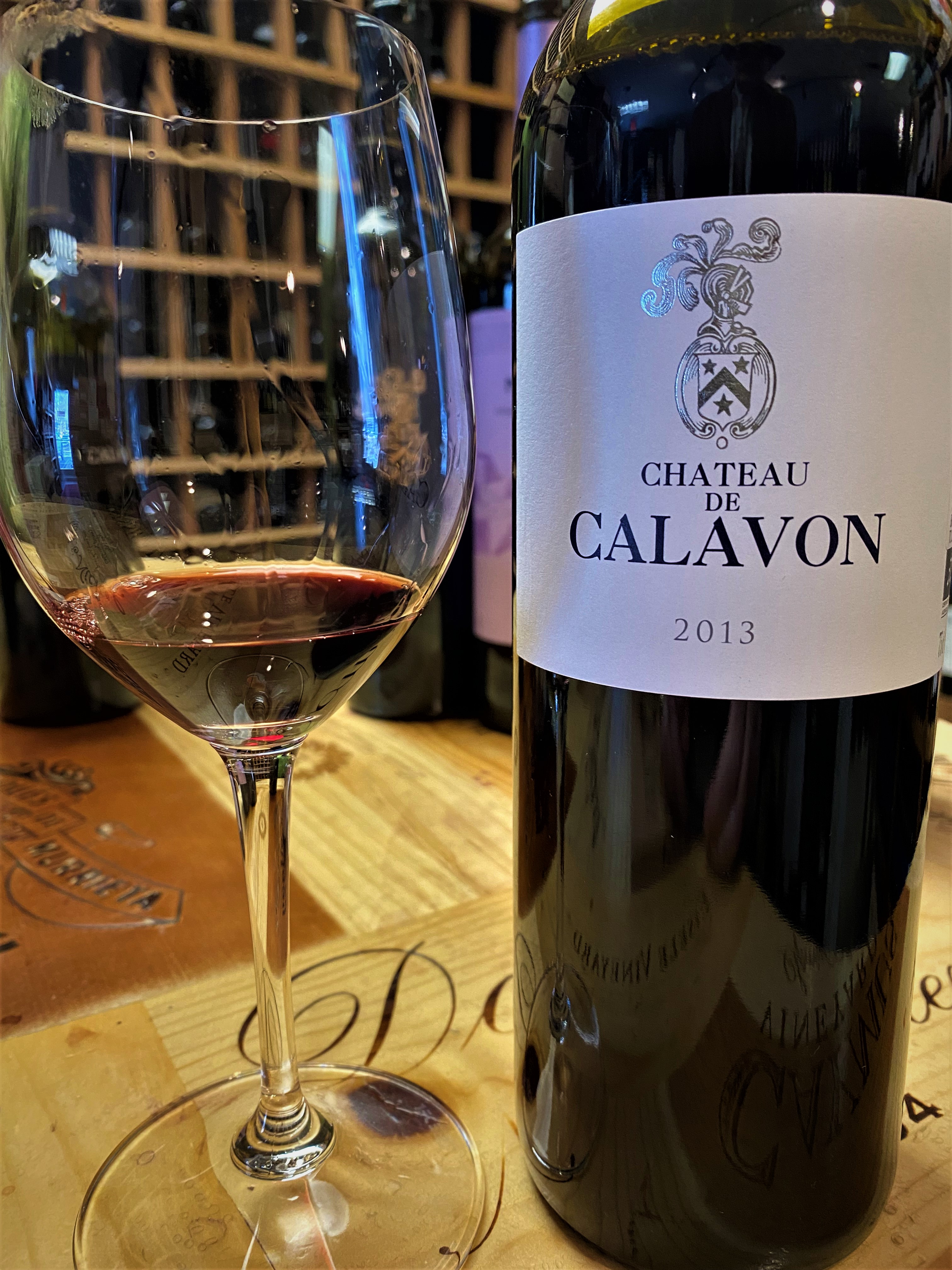
Chateau de Calavon Coteaux d’Aix-en-Provence 2013 is located in the center of the region in Lambesc, and the Audibert family has been making wine there for five generations. The estate is sixty hectares and was originally cultivated as vineyards by the Prices of Orange, broken up during the French Revolution, and slowly reconstructed.  The vineyards are basically small terraced plots that were configured about three centuries ago.  The estate has been certified Organic Agriculture since 2013 (Ecocert).  The wine is a blend of Grenache, Syrah and Cabernet Sauvignon.  The fruit is basically hand-harvested and goes through a long maceration in concrete tanks, and then is matured in a mix of Stainless Steel and wooden barrels for a minimum of two years.  The wine had a nice deep garnet color with a great nose offering black fruits, pepper and spices.  It was a nice full wine offering dark fruits and it was ready to be enjoyed with a nice medium count of terroir to finish off the experience.
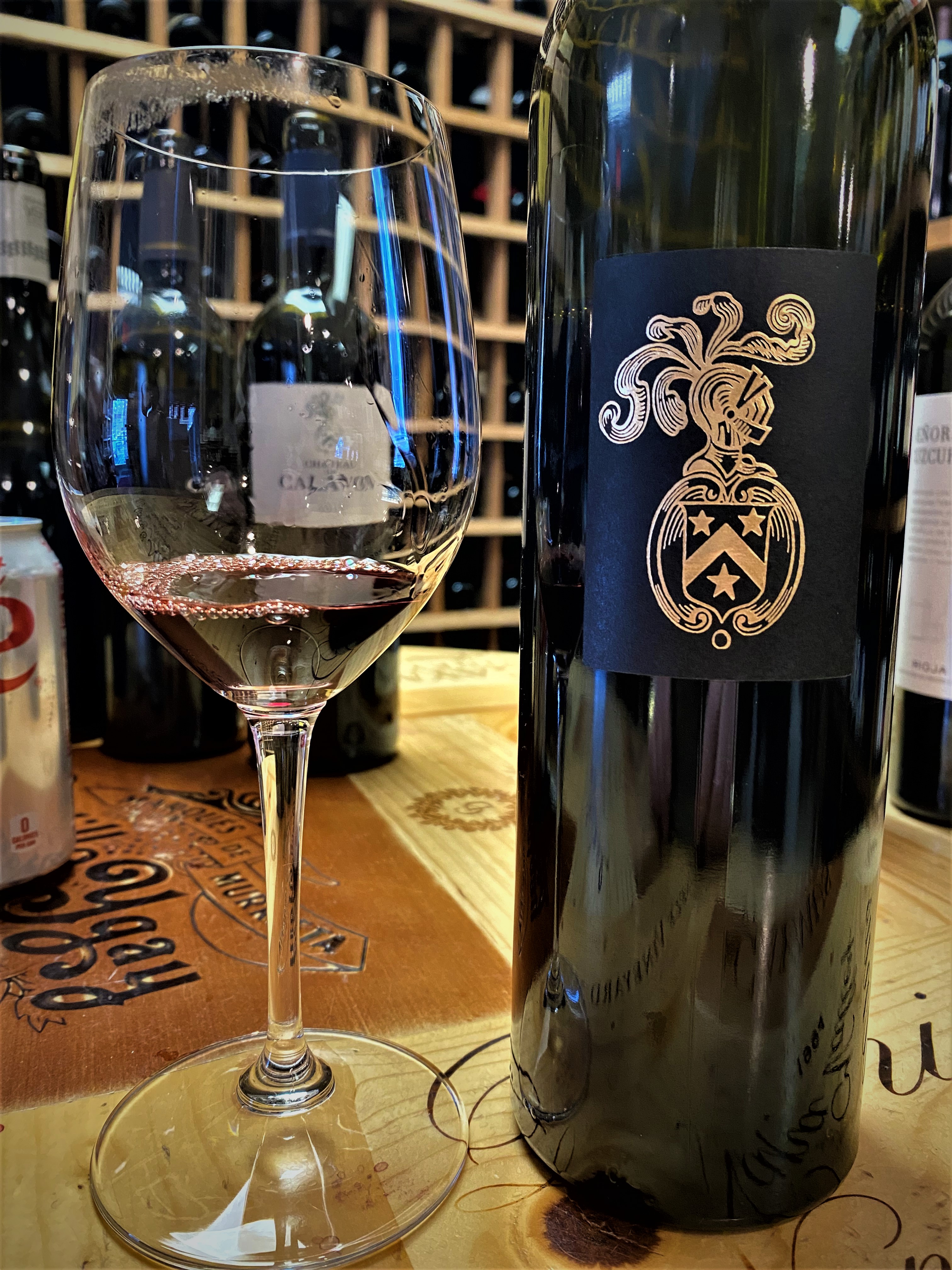
Chateau de Calavon “La Reserve” Coteaux D’Aix-en-Provence 2012 is a blend of Syrah, Cabernet Sauvignon and Grenache.  The vines are cultivated to have a low yield with a long growing season.  After a long maceration, the individual juices are selected, and blended in French Oak for one year.  They feel that this wine needs at least four years in the bottle to fully appreciate the potential of the wine, and this wine is made for cellaring.  Considering that this wine is already ten years of age, the garnet color was intense with notes of dark fruit and terrain.  The wine was fruit forward and jammy, and the tannins were very elegant and a nice long count for a finish of terroir.  A great wine for a big red meat or game dinner.
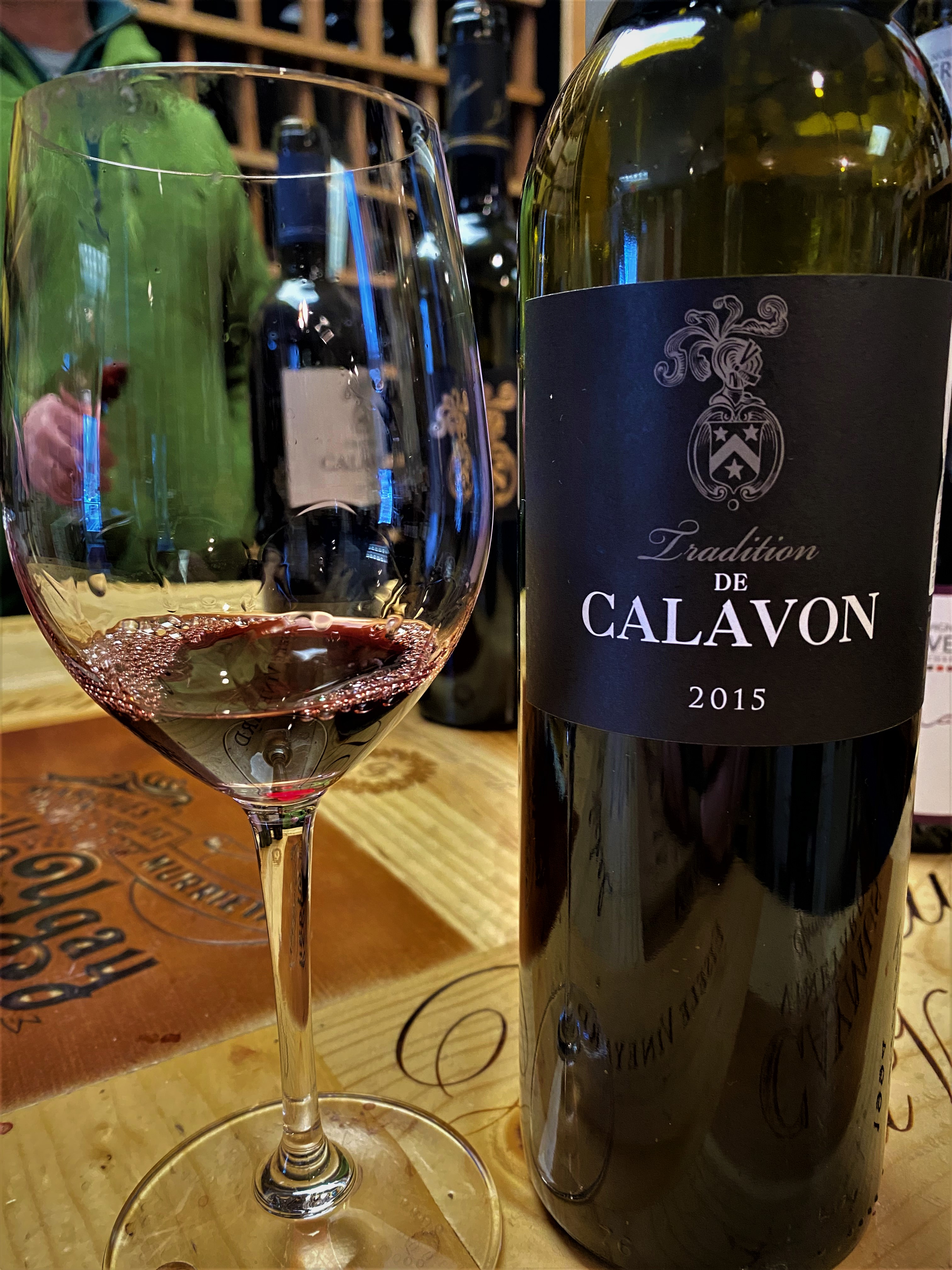
Chateau de Calavon “Tradition de Calavon” Rouge 2015 was the third wine from the estate.  The nearby village of Lambesc, hosted the General Assembly of the Villages of Provence and was known as “The Little Venice of Aix,” and has an historical and economic reputation.  There were no production notes to glean about this wine, but it is a blend of Grenache and Carignan, which they refer to as “the forgotten grape of Provence.” A pretty garnet colored wine with notes dark fruit and terrain.  A rather jammy wine with some spiciness, very silky and supple with a medium finish of terroir.  A different wine from the other two that I had.         
Posted in Wine | Tagged , , , , , , , , | 2 Comments

A St. Joseph and a Blaye

I am totally spoiled these days, with impromptu wine tastings at The Fine Wine Source.  All of the wines that they carry have been curated by the owner and the staff, and sometimes guests.  They don’t compete with gas stations, party stores, convenience centers, grocery stores, department stores or big box stores.  It is a pleasure to speak with knowledgeable people, who can even direct you to some new unknown mystery that will be totally satisfying.

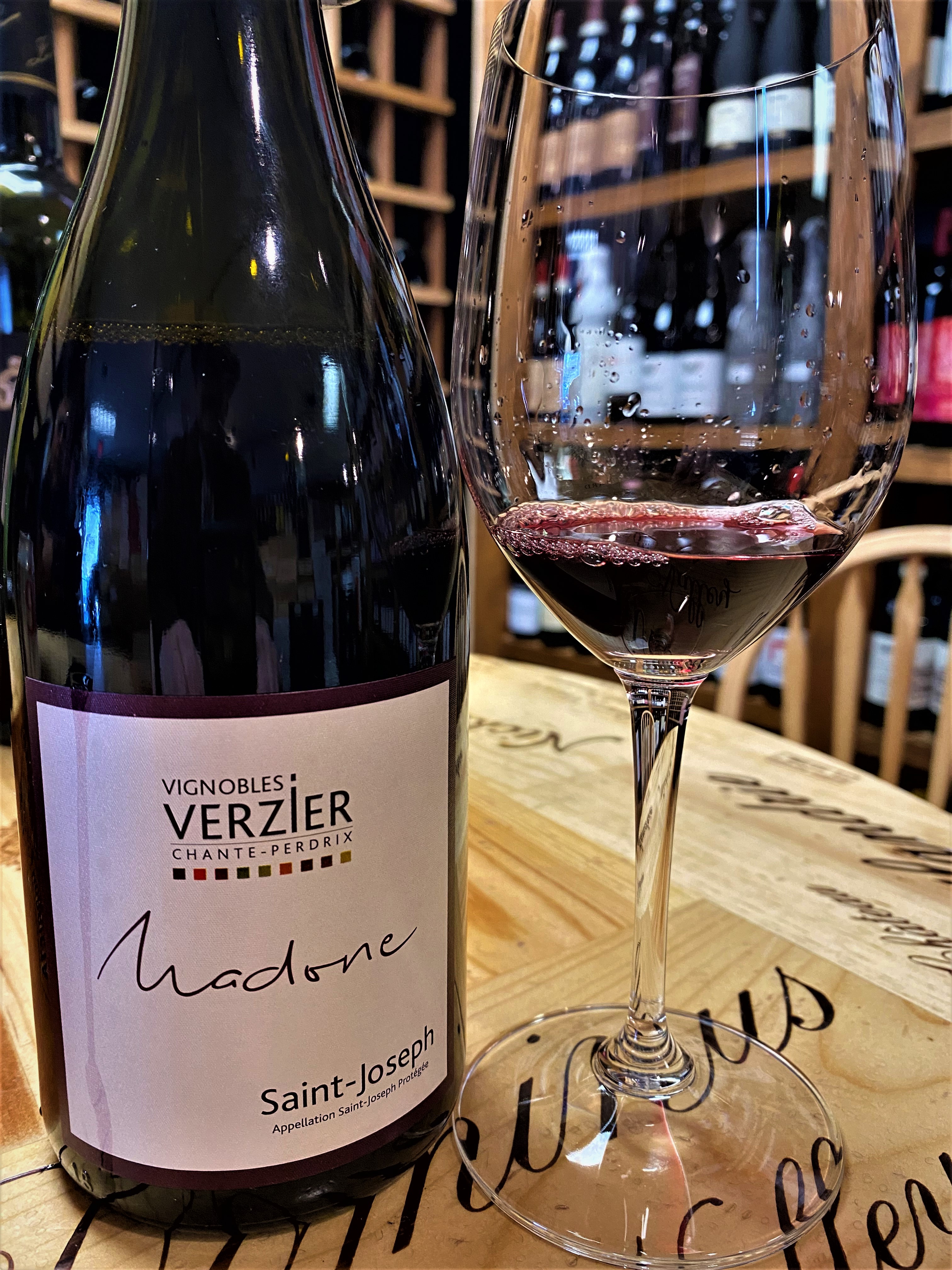
We were enjoying Vignobles Verzier Cave de Chante-Perdrix La Madone Syrah St. Joseph 2018.  St. Joseph is the largest appellation in the Rhone Valley and encompasses both red and white wines.  It was designated in 1956 and originally had six parishes, and in 1969 the boundaries were extended to twenty-six communes and along thirty miles of the Rhone.  The Verzier family has owned the farm estate since 1828, and of the current family Philippe at the age of nineteen took over the estate and even planted some terraced vines overlooking the Rhone and next to the Madone statue. In 1988 he stopped sending his harvest to the cooperative and created his own wines in his converted cellar.  Now some of the vines in the Madone vineyard are around fifty-years-old. The family plot called Chante-Perdrix, a singing partridge, is where they grow the Viognier.  The fruit is hand-harvested, destemmed for maceration in either concrete or Stainless Steel.  The fermentation takes between eighteen and twenty-eight days using natural yeast.   For La Madone they use a mix of medium and heavy toasting of the barrels for longer aging.  The wine had a nice deep color with floral notes, leather, smoke and pepper.  The flavor was deep with black fruits, earthy and savory with a medium count finish and definitely Old World in taste.

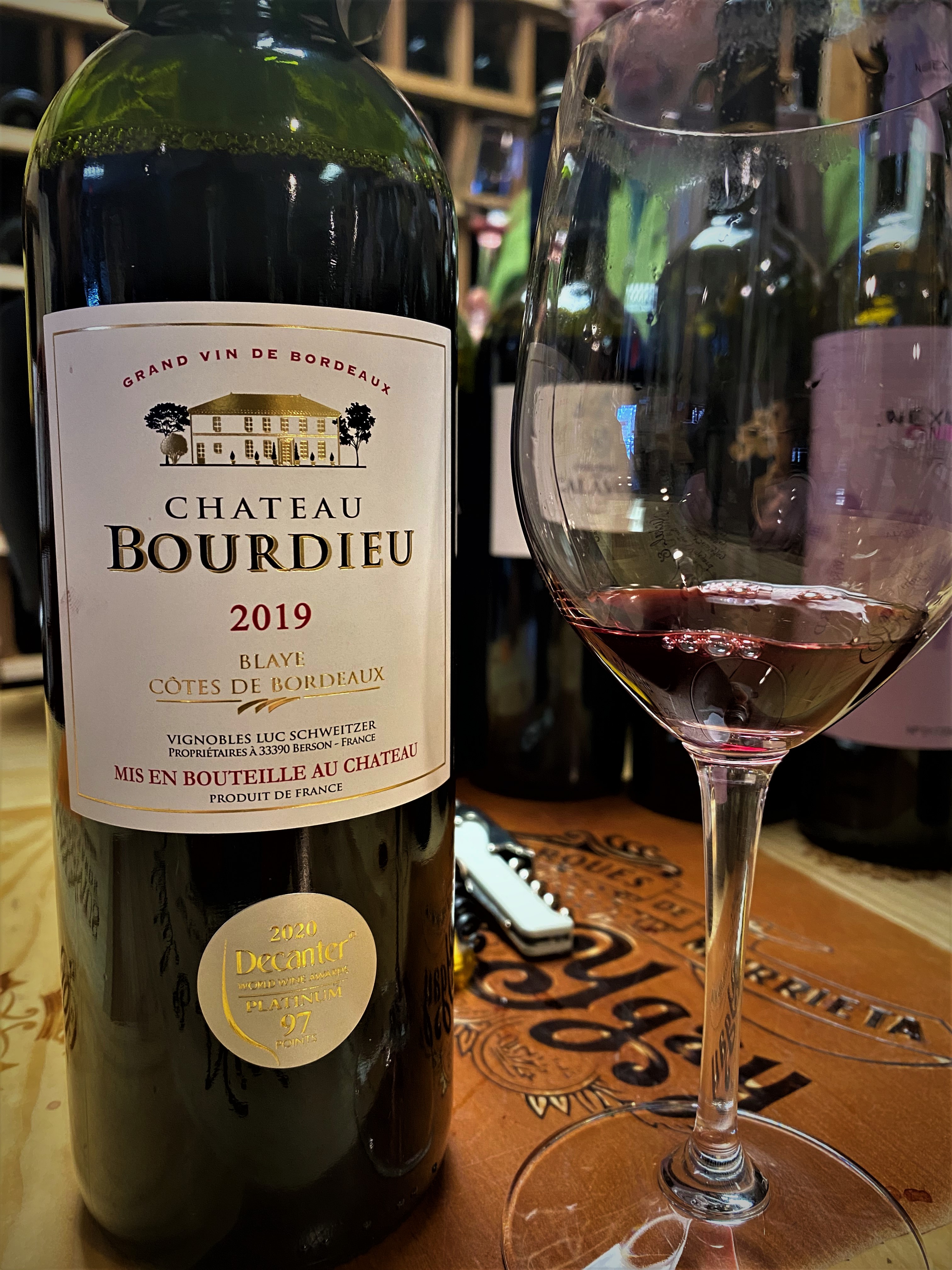
Then trying a totally different French wine was Chateau Bourdieu Blaye Cotes de Bordeaux 2019.  The story goes that Luc Schweitzer used to pass by this property on his way to his boarding school and the property goes back to 1464.  Eventually he followed in his parent’s footsteps and became a winegrower and he bought this property in 1993 and has worked to add and expand the estate to where it is now one-hundred-eighty-five acres.  The winery is run as a sustainable agriculture vineyard with modern methods of farming and no reliance on chemicals. When I was in my teens, they use to joke that in music one often hears of the three B’s, off to the side of Bordeaux is another set of three B’s. The Cotes de Bourg, the Cotes de Blaye and Bergerac are productive wine districts on the wrong side of the Gironde (which encompasses Bordeaux).  These two areas were producing wines before the Medoc was even planted.  They are classic made wines known as Claret.  They unfortunately have been totally eclipsed by the Medoc and even the Bordeaux wines.  The Cotes de Bordeaux appellation was created in 2009, to put all the “cotes” under one banner; Blaye, Cadillac, Castillon and Francs.  The wine is a blend of eighty-seven percent Merlot, ten percent Cabernet Sauvignon and three percent Cabernet Franc with vines averaging thirty-five-years in age, and aged in Stainless Steel.  The wine was a ruby red, with a nose of red fruits and black currants, on the palate red and dark fruit with integrated tannins and a medium finish.

Posted in Uncategorized | Tagged , , , , , , , , , , , , | Leave a comment

One Spanish and One Italian

I never get tired of trying new wines, and my local wine shop The Fine Wine Source helps me stay happy.  I mean most of the wines that I try there, have already been curated by the owner and his staff, to make sure that you are getting the best wines in the Michigan market.  So, when I had a chance to try some wines that may possibly be found on the shelf there, or at Vertical, their restaurant, I was more than eager and pleased.

We tried Bodegas Nexus & Frontaura “Nexus One” Ribera del Duero 2018 and this wine making family goes back to 1840 for their original estate.  In 2000, the winery had a weather station installed in their Pago de Valdelacasa estate. In 2008 the Nexus project was completed with one-hundred-twenty-hectares devoted to the wine production of Tempranillo Tinta de Toro.  The vineyards useRihe wine is aged for eight months in French Oak.  The wine was a nice dark red with notes of red fruit, flowers and walnuts.  On the palate the wine was fruit forward with spices, balanced and silky with a nice medium count finish.

Also enjoyed some Ca’ del Bosco “Maurizio Zanella” Rosso del Sebino IGT Lombardy 2017.  Ca’ del Bosco is most known as a sparkling winemaker in Franciacorta DOCG in Lombardy, but they also make still wines using classic Italian and French grape varieties.  The estate had their first wine produced in 1972 and they have one-hundred-eighty-four-hectares of vineyards. The estate was developed and grown by Maurizio Zanella for his family, and though it was acquired in 1994 by the Marzotto family’s Gruppo Zignano, Zanella still manages the estate as an independent entity.  Sebino IGT designation was created in 1995 and covers both red and white wines in Lombardy and allows great flexibility for the winemakers. This particular wine is fifty percent Cabernet Sauvignon, twenty-five percent Merlot and twenty-five percent Cabernet Franc, with the average age of all the vines being about thirty-years-of-age.  Twenty-one days of fermentation on the skin, the juice is aged for three years in oak, seventy percent new, and then blended and aged for an additional thirteen months, and then another year of bottle aging.  The wine had a nice ruby red color with notes of plums, vanilla and cigar-box tobacco.  On the palate great rich cherry flavor, with elegant tannins and a long finish.  An excellent wine with food or with friends.      

Posted in Wine | Tagged , , , , , , , , , , , , | Leave a comment

Two Beautiful Whites

There I was at The Fine Wine Source in Livonia, Michigan just casually stopping by to pick up my monthly club selections, and I was asked if I had a few minutes to taste some wines that they were looking at for the shop and for their restaurant Vertical in Downtown Detroit.  I know that it may look strange that I always write it as Downtown Detroit, but I grew up when it was thought of as that way.  I mean who doesn’t enjoy tasting a wine or two?  Also, it is rather flattering to even have wine professionals ask me for my thoughts, 

The first white wine was P.J. Valckenberg Madonna Auslese Rheinhessen 2016 and they have been in business since 1786, both as a winemaker and as a wine trading house. In 1400, the Liebfraumilch has been cultivated by Capuchin monks around the church of “Our Dear Lady” in the city of Worms, Rheinhessen.  Peter Joseph Valckenberg exported the “Liebfraumilch” as the first in history in 1908.  The firm has over two centuries of experience in bottling and exporting wines, especially from their five-hundred-year-old vineyards.  The Rheinhessen is famed for their two white varietals: Muller-Thurgau and Riesling. Since neither is listed on the label, it is probably a blend of the two, as both are grown in almost equal amounts in the district.  Auslese is a special designation and means “selected harvest” and some of the grapes are affected by botrytis, the “noble rot” which consolidates the sugar in these late harvested grapes.  The wine had a nice soft gold color with notes of honey, peach and apricot.  This was a true dessert wine with a true balance of acidity and sugar, with a very nice long count finish of honey and peach for me.    

Klein Constantia Vin de Constance Constantia, South Africa 2017 is what legends are all about.  Napoléon Bonaparte asked for it on his deathbed.  Vin de Constance is their flagship wine made from Muscat Blanc a Petits Grains, as well as many other local names like Muscat de Frontignan.  This is the oldest member of the Muscat family known for its small berries and seeds.  The estate was once part of a larger estate called Constantia, established in 1685 by Simon van Der Stel, the then Governor and namesake of Stellenbosch.  In 1817, the estate was broken into two, and the smaller (klein) of the two estates was hit by phylloxera at the end of the century and basically was left dormant until the Seventies.  The grounds are decomposed granite and limestone, and the fruit is left to raisin on the vine, before harvesting. That is about all the trade secrets I could find.  A beautiful soft golden color with notes of citrus, florals and almonds.  On the palate, it was a true nectar of the Gods with ripe stone fruits, citrus zest in a perfectly balanced combination of acidity and sweetness, without being cloying, and a honeyed spice finish that had a nice long count.    

Posted in Wine | Tagged , , , , , , , , , | Leave a comment

My February 2022 Wine Club Selections

My Fine Wine Source Club Selections came out at the usual time, it is just for some odd reason the hardest month for me to get there.  It just seems that projects seem to grow exponentially and then compounded with multiple blizzard snow falls, didn’t someone win a bundle of money once, crying about Global Warming; I sure wish that politician would come over here and shovel my sidewalks and driveway.  Now onto subjects that should warm my heart, the two wines, one representing the Old World and the other representing the New World.

Fattoria Il Muro “Il Muro” Chianti Riserva DOCG 2016 has been owned by the Pancaro family for over two centuries.  Their land has always been used for the cultivation of grapes and olives as it is composed of loose marl and limestone.  In the Seventies, the winery modernized their technology with emphasis on the vineyards.  The fruit is pure Sangiovese from their best vineyard “Galioffo Vecchio,” crushed and aged for eighteen months in large Tuscan style barrels and then aged for another six months in the bottle, prior to distribution.  The wood of choice for these barrels is Chestnut, as they want to maintain their tradition. The wine is described as being bright ruby red with notes of ripe mulberry, roasted coffee beans and dark chocolate.  On the palate offerings of cherry, spice, velvety with excellent structure and a prolonged concentration and “Sangiovese” tang in the finish.

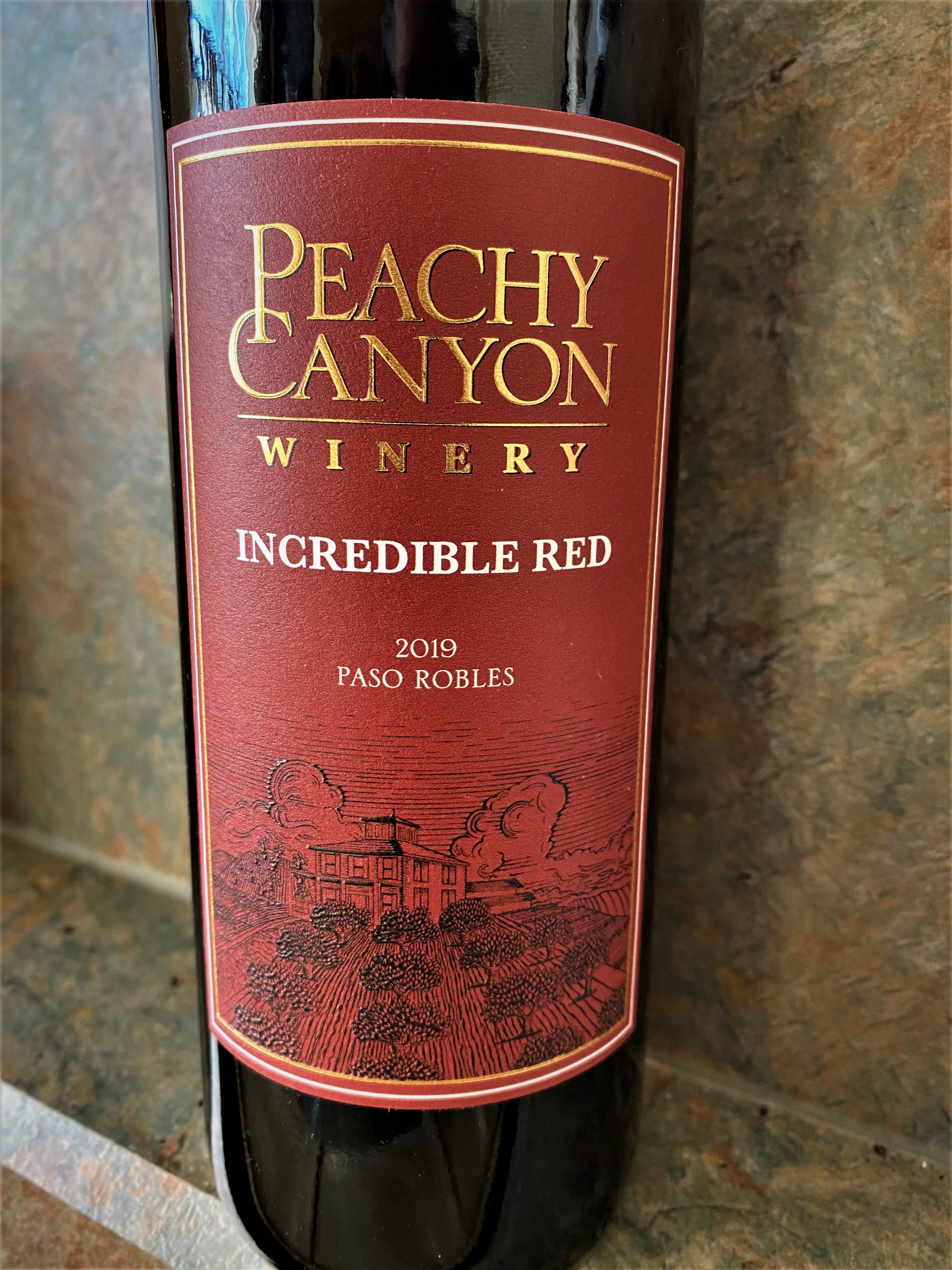
Peachy Canyon Winery “Incredible Red” Paso Robles 2019 is representing the New World for this month’s selection. Peachy Canyon is a family-owned winery founded by Doug and Nancy Beckett in 1988 on the Central Coast near Big Sur and the Hearst Castle in Paso Robles.  Zinfandel is their flagship grape and this wine is seventy-five percent Zinfandel with thirteen percent Petite Sirah, nine percent Alicante Bouschet and three percent Counoise.  The wine is described as being maroon in color with notes of red and black fruits and mulling spices.  On the palate it is fruit forward with tart cherries, raspberries and strawberries.  It sounds like a classic California Zinfandel to me and perfect for a nice casual dinner.           

Posted in Wine | Tagged , , , , , , , , , , , , | Leave a comment

A Quiet Night for My Dinner Club

My dinner club is actually a “society” that is probably about one-hundred-forty-years old and has been recognized by the City of Detroit as one of the oldest groups still functioning, and is listed as Group Number Six in the national organization that we are affiliated with.  Originally the club of forty some members by charter met at a member’s home and the host supplied the dinner and the drinks.  I truly don’t know anyone that can seat forty some members for a formal dinner at their home, and during the Great Depression, the meetings began being held at hotels, fraternal clubs, and then finally in restaurants that have a private room.  Hosts went from singular to now having three hosts per meeting, and several years ago, there was an uproar that non-drinking hosts were upset that they had to pay for the drinks of the drinkers, and that is now paid for by each drinking member.  Our latest uproar, was decided that during the “Summer” meetings, members could refrain from wearing coats and ties for dinner, and the attire has yet to be seen.

There were storm advisories issued for the night of the meeting and I think that we had the smallest turnout that I ever recall, as we only had about sixteen members show up, and granted that the majority of the members live on the west side all the way out to Ann Arbor and this meeting was on the east side, which didn’t help.  It was a nice meeting that started off with a chafing dish of Breaded Chicken Filets and Meatballs in a Mushroom Gravy for appetizers.  There was a salad course, and then the members were offered their choice of either Beef Tenderloin Tips, “Hawaiian” Chicken or Grilled Salmon (which each dish served with rice pilaf). Coffee and Chocolate Sundaes for dessert.

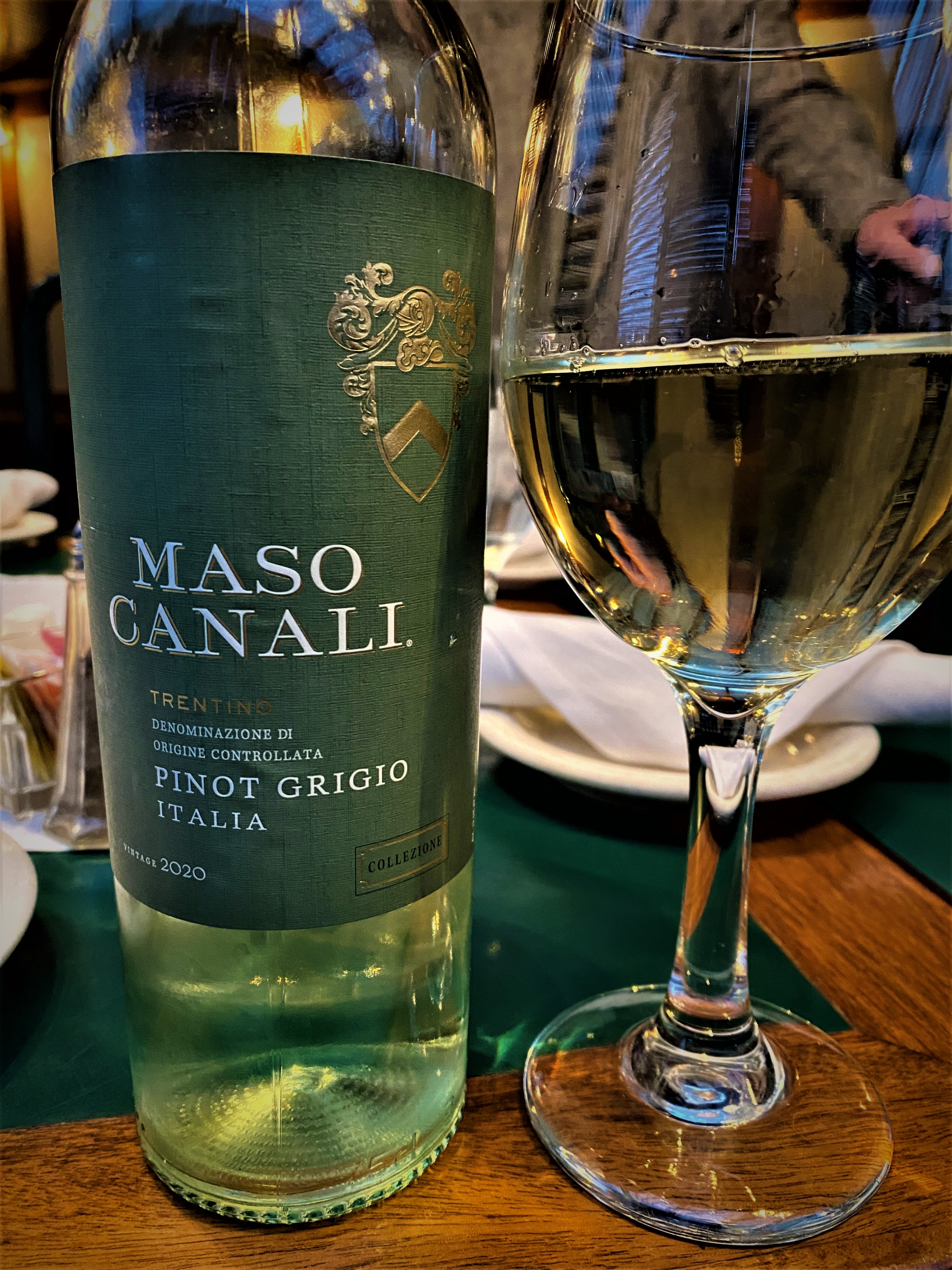
Since none of my wine drinking associates attended, I just went with wines offered by the glass.  I started off with a glass of Maso Canali Pinot Grigio Trentino 2020.  Maso Canali Estate has a heritage of winemaking since the Middle Ages, and they have raised Pinot Grigio since 1893.  The winery is unique in that they only make one wine, but they do it very well.  The fruit is hand harvested, with a small selection that is selected to be late harvested, and these grapes are dried on racks for eight to ten weeks.  The late harvest grapes are fermented separately and then blended with the other wine and aged on fine lees for a month.  While the wine is green and flinty this wine offers a very rich finish on the palate that is missing from most bottles of Pinot Grigio.  With my entrée, I went with a glass of Beringer Vineyards Founders’ Estate Cabernet Sauvignon California 2019.   Beringer has the honor of being the longest continuously operating winery in California.  They have a range of offerings from affordable generic table wines to single-vineyard cuvées and a private reserve label. Brothers Jacob and Frederick Beringer had their first harvest in 1976 in what is now St. Helena AVA.  Frederick built his Rhine House, a Victorian mansion in 1883 which is now the main visitor building at the winery.  This home was added to the US National Register for Historic Places.  They even survived Prohibition, the first dismal nanny-state disaster, by getting a Federal License and producing sacramental altar wine.  After Prohibition, they were the first winery to offer public tours which was the start of making Napa Valley a tourist destination. In the 70’s Beringer was bought by Nestlé, and then it changed hands a couple of more times and is now owned by Treasury Wine Estates, which also owns among other labels Penfolds and Stags’ Leap.  In 2015, Mark Beringer became the Chief Winemaker and he is the great-great-grandson of Jacob Beringer.  While Beringer owns vineyards in Napa and Sonoma as well as their leased vineyards are all certified sustainable.  This is part of their bulk popular priced wines with fruit from Lodi and the California Delta.  The wine was a deep rich color, and had notes of dark red fruits and spices, while on the palate dark fruit, soft tannins and some vanilla and a very short finish.  It was an easy food wine and I am sure that it is probably made to be dependable year after year. 

Posted in Dining, Wine | Tagged , , , , , , , | Leave a comment

I Cooked for Valentine’s Day

It is true, and we didn’t have to call for an ambulance.  I have a secret, I can cook, but I can’t cook for one or two people, if the Fifth Army was stopping by, I could cook.  I once saw a meme that said basically that the only time one clove of garlic is used, is if the recipe was how to cook a clove of garlic, and then just in case, add another clove to the recipe.  I am not a cook, and for sure, I don’t know about measurements, but I try. When my Bride and I decided to split duties, she decided to cook, and I said that I would do the laundry, only because I am fussy and I won’t pay a service to destroy my custom shirts and my mother taught me, the fine art, when I was in elementary school.  And my Bride is thrilled.  

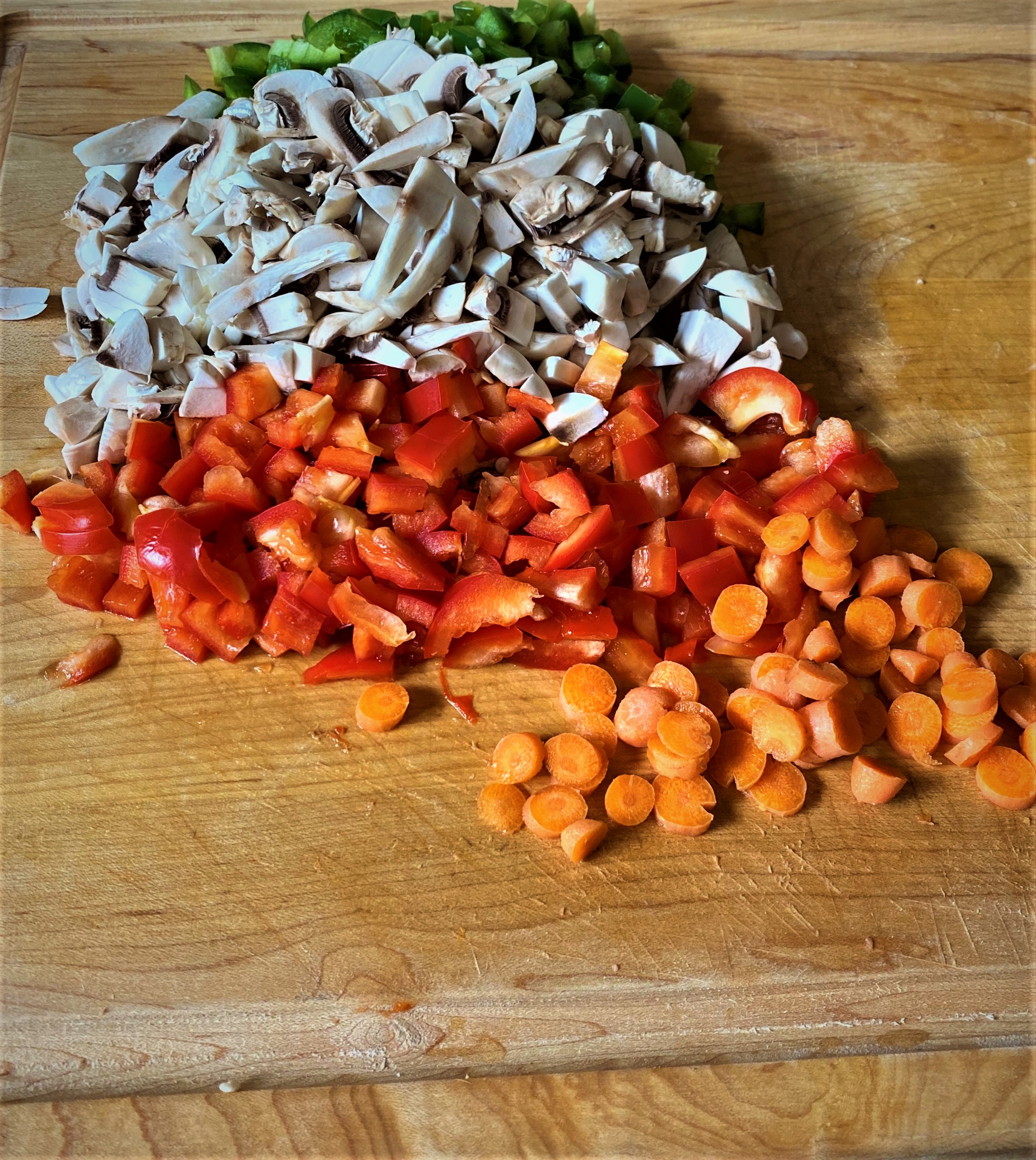
Well, once in a blue moon, I will make my Sauce Bolognese, and the trick is to dice up all the ingredients ahead of time, and I really dice the hell out of them; garlic, onions, red pepper, green pepper, carrots and mushrooms.  Start with a big pot, heat it up and toss in some bacon or prosciutto and get it nice and crispy, first you start off with some nice “smoky” grease to begin with, and then when you pull the meat out of the grease, pat it down a bit, and you have a nice sandwich to get started.  With the “smoky” grease toss in one very large finely diced onion of your choice and lots of diced garlic and as they start to get golden and translucent, time to add about three pounds of ground beef (I like to ask the butcher to grind his “stew meat” twice -see what a pain I am).  Add more garlic, salt and pepper, and a ton of mixed Italian spices, and when it browns up nicely, remove the excess grease that has accumulated, then add all the other diced vegetables.  Then multiple cans of Tomato Paste, Tomato Sauce and Tomato Puree (the finely diced carrots are in lieu of sugar to cut the acidity).  Add more garlic, Red Pepper Flakes, more spices and cook on low heat for at least three hours with a mesh top over the pot.  A third of a bottle of red wine, or in my younger days, I liked almost a can of Molson Canadian beer, the balance for the chef, while he stirs. The other secret, is to take some good Italian hard crusted bread and dip it into the sauce for a sandwich, and then you can determine if you have to add anything more, for some zing.

The wine I used for the sauce and later, for our dinner was from Societa Agricola Le Siepi di San Giovanni Sangiovese Superiore di Romagna DOC 2012. The estate of Le Siepi di San Giovanni is located in the Northern Apennines in the Santerno River Valley near Bologna in the Emilia-Romagna region of Italy.  The Emilia-Romana region is big and it is the only region in Italy that has an East and West Coat.  The estate is owned by the Zuffa family and was started in 1960.  The estate is forty hectares, but only eleven hectares are devoted to vineyards.  The wine is pure Sangiovese and was manually harvested.  I could find no production notes or rules pertaining to Sangiovese Superiore.  I got this wine in 2019, so I have to presume that there were some years of storage, both in barrel and in the bottle.  I tried the wine before pouring it in the sauce, and just kept the bottle uncorked for the next five hours, while the sauce was cooking. The wine was a pretty ruby color, with mulberry and floral notes, On the palate, the wine was still fruit forward with good red fruit, soft tannins and a peppery finish.       

Posted in Dining, Wine | Tagged , , , , | Leave a comment

Valentine’s Day – Part Two

Life is never quite how you plan it.  We were going to go see the ice sculptures in downtown Plymouth and it would give us a day of exercise.  One year, we went and it was so warm the sculptures were melting as we looked at them, there were puddles everywhere.  This time it was extremely cold, so the sculptures were safe, but we weren’t.  I don’t know if the homeowners on the perimeter of the downtown take umbrage at all the tourists that flock into the city, but the sidewalks were a “slip and fall” waiting to happen.  My Bride, didn’t want to take a chance, as she is still in physical therapy for falling and having a hairline fracture in her ankle.  We were going to look at the exhibits, stop and have some wine and something to eat.  We had to go elsewhere, and the next place that we tried was closing at in fifteen minutes, due to a lack of staff, as we are still suffering from the fallout of our forced lockdowns.  We were going to go grocery shopping afterwards, because I said that I was over due to make my Sauce Bolognese. 

We went to our favorite Italian grocery store Cantoro’s Market, which is a huge interpretation of their original location, only about six miles away and still going strong as well.  The Market is a labyrinth of small aisles that defy navigation and two carts cannot go side by side in some of the aisles.  From Prosciutto to Wagyu Steaks and everything your heart desires from an Italian viewpoint.  We picked up everything we needed, my Bride went to the cashier and then to the trunk of our car, while I went to Cantoro Trattoria, which was entirely full for reservations, but I was told that if I went to the back bar about twenty minutes before the restaurant opened for dinner, I might be able to snag a couple of chairs, and I did, immediately after I go there, the bar was totally full.  It was not the first time that we have dined at a bar and we ordered two appetizers to share and then a pizza after that.  We had Calamari Peperonati, which was lightly floured and grilled, tossed with sweet, sour and spicy peppers, fresh lemon and Marinara Sauce. We also had Carpaccio, thinly sliced, raw beef tenderloin, capers, red onion, parsley, lemon, arugula and Parmigiano Reggiano.  Our pizza was their “Rucola & Bresaola” (and I shared a frou-frou pizza) of Italian Beef, tomato sauce, fresh Mozzarella, arugula, grape tomatoes, olive oil and shaved Parmigiano Reggiano.

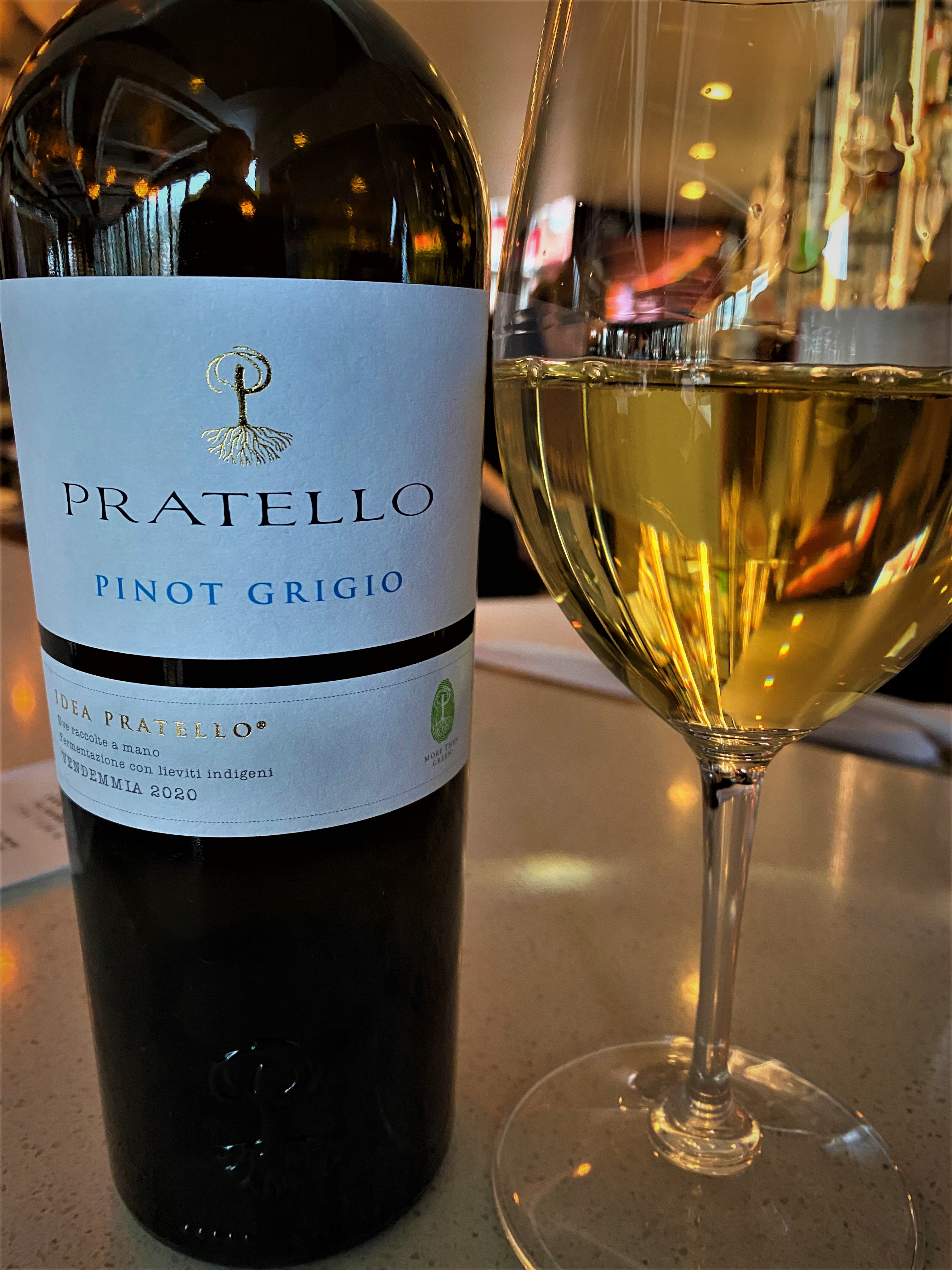
I did mention that we were sitting at a bar. We had Henri Gaillard Cotes de Provence AOP 2020.  Henri Gaillard was the best negocient in the Cotes de Provence area for Crus et Domaines de France.  He was a descendent of an old Languedoc family and is regarded as a pioneer for the South of France.  The Cotes de Provence is the largest growing region in Provence.  The Cotes de Provence was originally a VDQS designation in 1951, encompassing forty-two communes.  In 1977, it was awarded AOC status and covers eighty-four communes.  This wine is a blend of Syrah, Grenache, Cinsault and Mourvedre.  The wine I am sure was done in Stainless Steel with minimum aging.  The wine offered notes of strawberry, rose petals and spices, and on the palate, it was a dry wine with good acidity, offering red fruit, florals and some light spices.  Then we had Pratello Pinot Grigio Garda DOC 2020 from Azienda Agricola Pratello di Bertola.  Pratello was founded in 1867 on the morainic hills off of Lake Garda.  The estate is now one-hundred-twenty-hectares, of which eighty are vineyards and the balance is for olive groves and borders two districts; Valtanesi and Lugana. Lake Garda is Italy’s largest lake and it splits up two DOC areas; Lombardy and Veneto.  In 2017, Garda DOC combined with Valtanesi and Riviera del Gard Bresciano to become the Riviera del Garda Classico DOC.  The fruit is hand harvested with a soft pressing in Nitrogen saturation.  The initial fermentation is for about fifteen days, and then aging in Stainless Steel for five months, with an additional bottle aging for three months.  The wine was a pretty golden color with notes of pear and golden apples, and on the palate, great citrus flavor and acidity and a finish of fruit.  After dinner, we had to go back into the market, as someone wanted more of this wine.           

Posted in Dining, Wine | Tagged , , , , , , , , , , , | Leave a comment

A Head Start

If romance is in the air, it must be St, Valentine’s Day.  Now, my Bride and I are not partial to going out, when the rest of the world is expected to be out for dinner.  The restaurants and staff are overtaxed, and normally the food and the service suffer, because of it.  It is not a great combination and especially if it is a night to honor romance. So, we normally celebrate early or after the holiday.

We went out to celebrate and most of the time, these days, we really enjoy a table in the bar area, as opposed to the dining area.  My wife had a Caesar Salad, and they brought out a dish of sliced anchovies to add, if one was inclined, and they made soft croutons on the side as well.  I had a nice bowl of a classic interpretation of Lobster Bisque with poached lobster and a dollop of Sherry.  Of course, after the first course, my Bride always says that she is full.  She had Chicken Milanese, a dish of crispy Romano encrusted Chicken with White Wine, Lemon, Caper Sauce and Asparagus. While I enjoyed Crab Cake Oscar, with Sauteed Asparagus, topped with Lump Crab and Sauce Bearnaise. We finished our meal with a New York Style Cheesecake with Amarena Cherries and a Chambord Cherry Glaze and French-Press Coffee.

Our waitress tried to tout me into selecting a two-hundred-dollar bottle of wine, but I passed, actually, for a restaurant, they were really low-balling the price compared to retail.  It was a nice suggestion, but I don’t know about you, but I like to try different wines and different regions.  She did ask me, if I needed the assistance of the Sommelier, but I passed.  Since we were both going in the direction of a white wine for our meal, I thought something green and flinty, with a robust saline acidity (I realize that does not really sound enticing, it is hard to envision, but when you taste the pairing) it makes sense.  I selected a bottle of Bodegas Agro de Bazan Granbazan Etiqueta Verde Albarino Rias Baixas DO 2020.  The winery did not talk about themselves that much for history, but they claim to have a classic profile and essence of the Salnes Valley, on the banks of an estuary, with a strong Atlantic personality.  This wine was from fruit harvested from thirty-five-year-old vines on soil with a high granite content. The fruit was destemmed, soft pressed and a cold maceration for six to eight hours in Stainless Steel.  Then it was allowed to rest on the lees with no batonnage (stirring of the juice and lees), fermentation and then aging for three months, still in Stainless Steel.  A pretty yellow wine with notes of citrus and green apples. On the palate, stone fruit and the acidity was invigorating, enticing you to have another taste, and the finish had a nice long count of terroir and a touch of salt (or saline).  A great dinner and a great wine, and a wonderful way to start the Valentine’s Weekend.

Posted in Dining, Wine | Tagged , , , , , | Leave a comment

Butter Run Saloon

Butter Run Saloon * Spirits * Nourishment * Character* is the basis for a recent get-together.  If I leave it to my Bride, we will always dine at the same restaurant, have the same meal and the same wine.  Not that there is anything wrong with that, but it would make for a lousy blog, in my opinion.  We were going to meet one of her cousins and her husband, have a meal and then go to her mother’s house to wish her a 96th Happy Birthday.  We were on the East side of town and I found a restaurant that sounded interesting, and the Eastsiders had seen this place, but never ventured there, until now.  It was one of those places that I instantly felt comfortable in, long and narrow with the old-fashioned plank wooden floor, embossed tin ceiling, tables that were shadowboxes of Detroit nostalgia, and so were the walls.  They tout themselves as having the larges whisky selection in the state.  I know that it doesn’t sound like a place for us, but I called to make a reservation, which was no, and to ask if they have a wine list, which was a yes. 

The menu was quite extensive for a small casual place, besides burgers and sandwiches, they had full dinners and even exotic appetizers like Escargot.  There was one Fish and Chips, one Walleye and one Whitefish dinner, and I had the Barbecued Ribs (note to myself to go with fish, the next time, because they had chosen better).  The meals started off with two people have big mugs of Beef Barley Soup, my Bride had a House Salad with (of course) Caesar Dressing and I had Purple Cabbage Cole Slaw.  We will be back, when we are in that part of the town,

My Bride wasn’t too sure about what to expect from their wine carte, but it was an adventure and they did have a succinct, but nice list of some good popular value and priced wines.  We had a bottle of J Vineyard and Winery Chardonnay California 2019. The winery began in 1986 by Judy Jordan, the daughter of Tom Jordan, founder of Jordan Vineyard & Winery fame. The father and daughter team began as equal partners, until the daughter was able to buy out her father and she became sole proprietor. For the first ten years, they only produced the J Vineyard Brut and what a fine job they did with it. In 2015 E&J Gallo bought J Vineyards & Winery and the winemakers were maintained with the change of command.  This is their introductory Chardonnay as the fruit is harvested from Monterey, Sonoma and Napa Counties.  I will venture to say that this wine is produced using Stainless Steel and a short aging period, but it was just an easy drinking wine and especially perfect for the fish dinners.  The name “Butter Run” is from the time the grandfather was asked to go buy some butter, and during that errand, he got side tracked at a watering hole for a quick one and a few hours later, he returned home with the butter.  There are now four generations that have continued this family tradition of going out for a “Butter Run.”  You have to honor tradition.

Posted in Dining, Wine | Tagged , , , , , | Leave a comment