“Bordeaux is My Favorite Grape”

A couple of weeks ago, my Bride and I went out to meet another couple for dinner.  I am always a bit concerned when she couches the restaurant’s description and tells me that they have really good food.  I have been to plenty of restaurants over the years that have no pretensions, no décor or ambience, but have great food.  I have also been to places that reek of pretensions and self-importance and can’t even serve a glass of water properly.  I don’t think that I am a snob (well maybe a little bit), but I really despise paying good money for mediocrity.  If a place is a family-style restaurant that all of a sudden, thinks they are gourmet, this could be scary. 
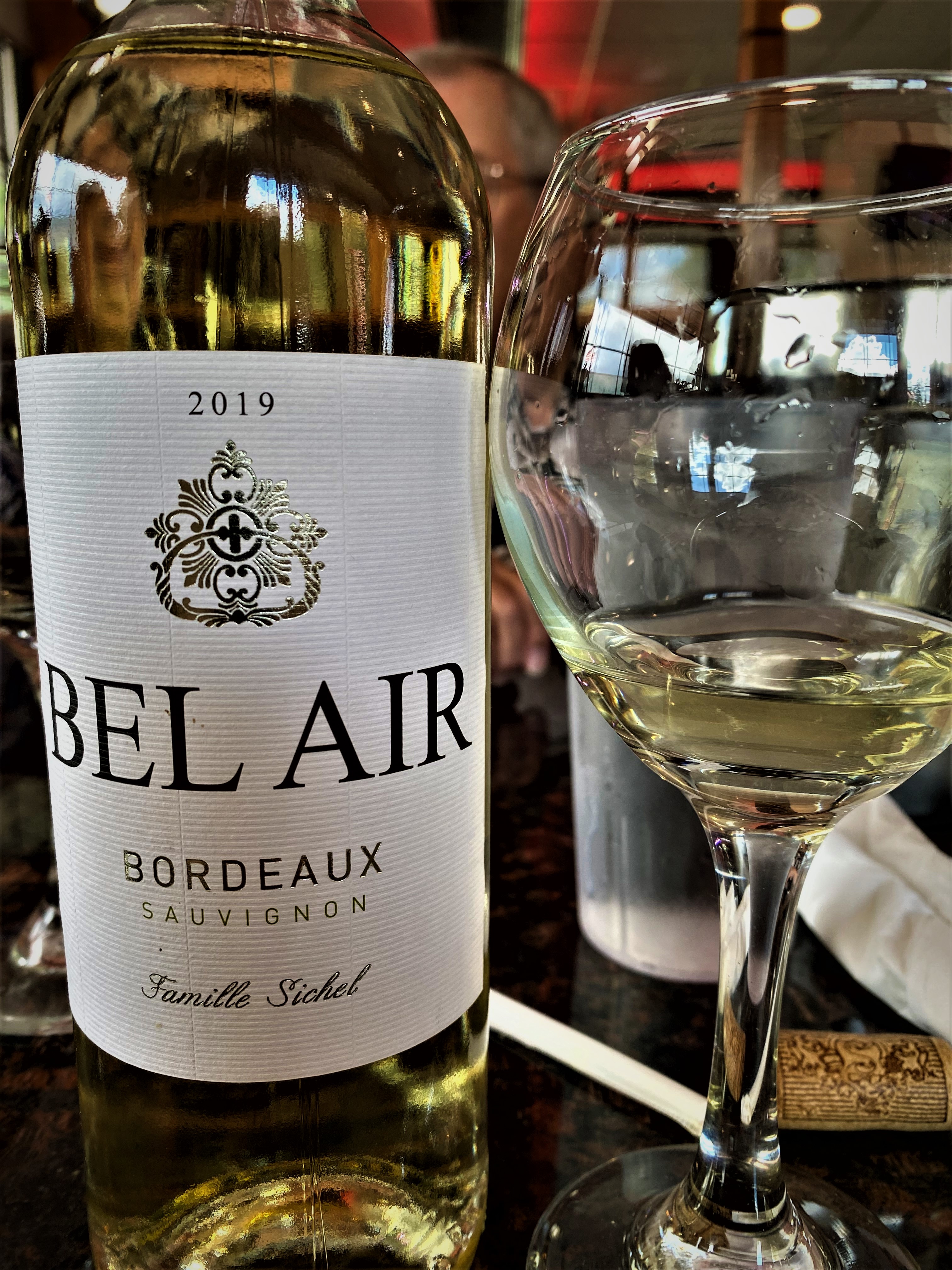
My Bride told me that they had just started to carry wine, because they now have a liquor license.  She called and asked what their policy is regarding bringing your own wine and paying a corkage fee.  She was handed over to the restaurant’s wine buyer who assured my Bride that every wine has been tasted by both the owner and the wine buyer for quality, and that they don’t allow outside wines.  We went and placed our dinner requests; the specials were on an erasable board as we came in.  When I asked about the wine, the wine buyer shows up to take the order.  They had a small wine carte, which is fine, one should always start cautiously.  I saw a white wine that I did not know, but I knew and respected the house, as they make one of our go-to wines at the house, so I was willing to try their opening range wine.  When I selected the wine, the wine buyer informed the table that “Bordeaux is my favorite grape.”  I am not sure when Bordeaux became a grape, but I learn something new daily.  The wine buyer brought the bottle out and it was warm, and I asked for a wine bucket, and she was surprised that a white wine should be chilled.  I kept my cool, had the bottle opened and prayed that an ice bucket would be brought before the meal was finished.

The wine was Maison Sichel (Cave) Bel-Air Bordeaux Blanc AOC 2019 and pure Sauvignon Blanc.  Maison Sichel, about forty years ago was the first negociant to invest in a vinification cellar; so that they could be responsible for the wine from grape to the bottle.  This Cave handles the fruit from about two-hundred hectares of vineyards in making red, white and rosé wines from Bordeaux.  The average age for the vines is thirty-years and basically from clay-limestone soils.  The juice undergoes skin maceration for about twelve hours, pressed and preserved using carbon dioxide gas for a day. Then the juice is put into Stainless Steel vats for fermentation, the heavy lees are racked, and the fine lees are allowed to age with the juice for about four months.  The wine had a soft yellow color and offered notes of citrus and exotic fruits and florals.  On the palate there were tones of fruit and some nice acidity, with almost no finish.  The wine may have shown better, if it had been chilled prior.  My Bride knows that I will not go back to this restaurant.     

Posted in Dining, Wine | Tagged , , , , , | 2 Comments

“Bueller…Bueller”

I enjoy the cinema, but I am old fashion, and I like to be entertained.  I don’t like to be preached to, or to be lectured to.  I enjoy a well written script and not a computer-generated cartoon, Warner Brothers and the old Walt Disney cartoons were stellar.  I mention this, because my Bride and I took another day trip to The Henry Ford, or for me Greenfield Village and the Henry Ford Museum.  Instead of our usual 5K walk in the morning, we did it a little later in the day, this time at the museum.  The museum and the Hagerty Drivers Foundation which sponsors the National Vehicle Register will be providing the patrons with some unique and historic automobiles, that are not in the museum’s collection.  The first car to be featured is the replica 1961 Ferrari 250 GT California, that was featured in the film “Ferris Bueller’s Day Off.” This is one of three replicas that were secured by the production company, and one was destroyed in the film, so I guess there are only two now.  This car is the 22nd of 32 automobiles to be commemorated so far.

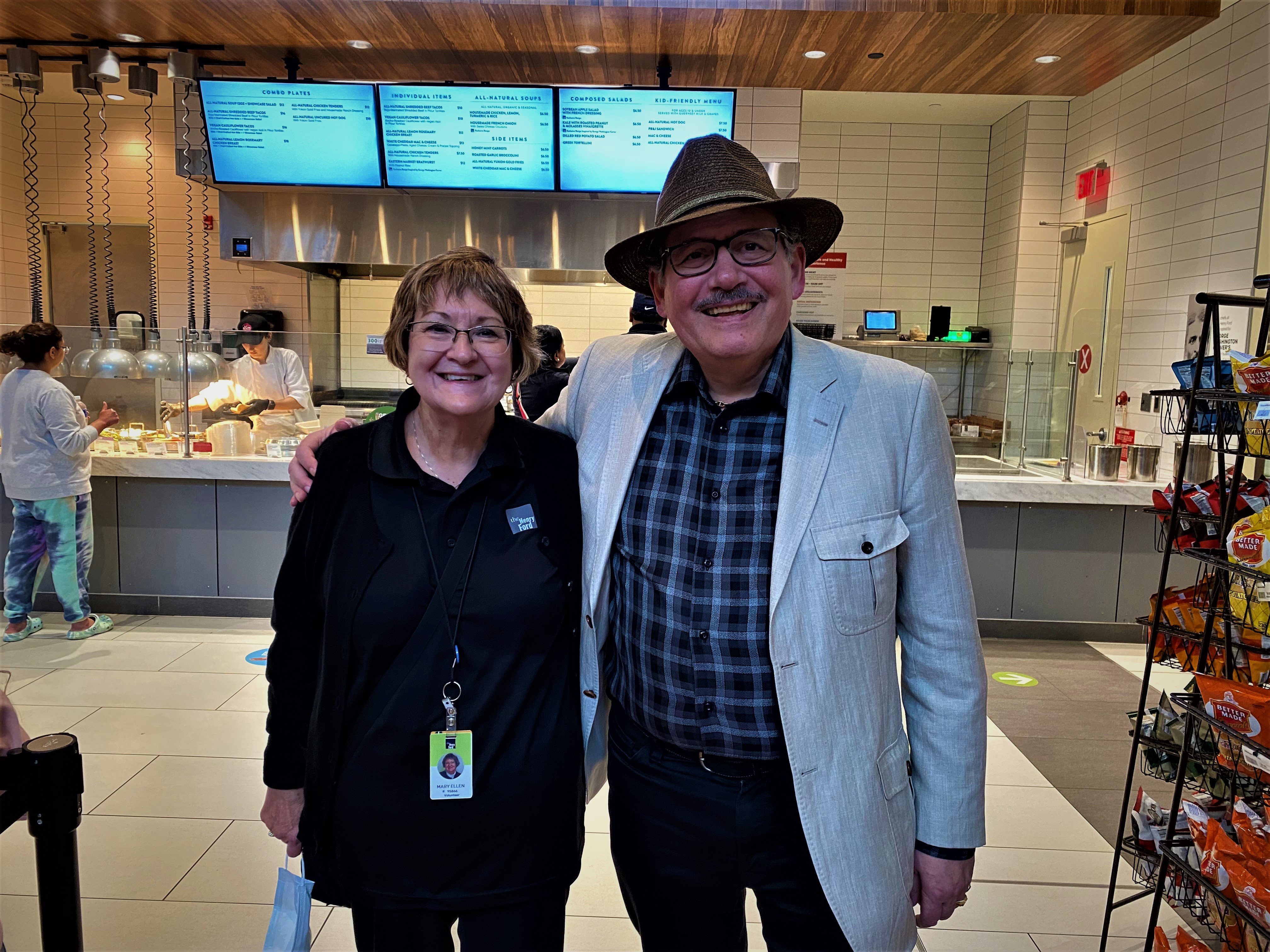
The car was basically one of the first exhibits that we saw, and it was back in the railroad section of the museum.  A lot of men set up model trains in their basement, Henry Ford bought the real things and had rail tracks installed to display them properly.  We walked around and saw most of the exhibits, and my Bride was getting hungry, when we walked over to the new restaurant in the museum, it was slammed, so I suggested that we go and walk around some more, and come back in a little while.  Sure enough, about an hour later, the crowds had disappeared and we basically walked right into to place our food orders.  As we were getting ready to order, a woman asked “will this be in your wine blog?’  I confirmed her question, but I didn’t recognize her, as she was wearing one of those horrible masks that our governor mandated, until she was threatened with an impeachment, then the science requiring the mask disappeared immediately.  The woman in question and I had worked together, she is now retired like I am, and she works a couple of days as a volunteer in whatever capacity that she is needed for that day.  I had my Bride capture the moment.

My Bride had a bowl of Chicken Lemon Rice Soup and a Caprese Salad.  I had a couple of Beef Tacos with a side of Macaroni and Cheese.  Then my Bride had a frou-frou coffee drink, so someone had to be the responsible one and have a glass of wine, for the sake of having an article.  I had a glass of Black Star Farms Arcturos Sur Lie Chardonnay Old Mission Peninsula 2021, to remind people that Michigan has a fine wine industry.  Afterall, Michigan is the seventh largest producer of table wine in the United States of America.  This is a non-oaked style wine, which I presume to mean that it is produced using Stainless Steel vats.  The wine had a beautiful soft-gold color with lush floral notes.  On the palate tones of citrus, apple and pear in a medium bodied wine with a short finish with a subtle mineral tinge.   

Posted in Dining, Wine | Tagged , , , , , | 4 Comments

Two Wines From La Doria

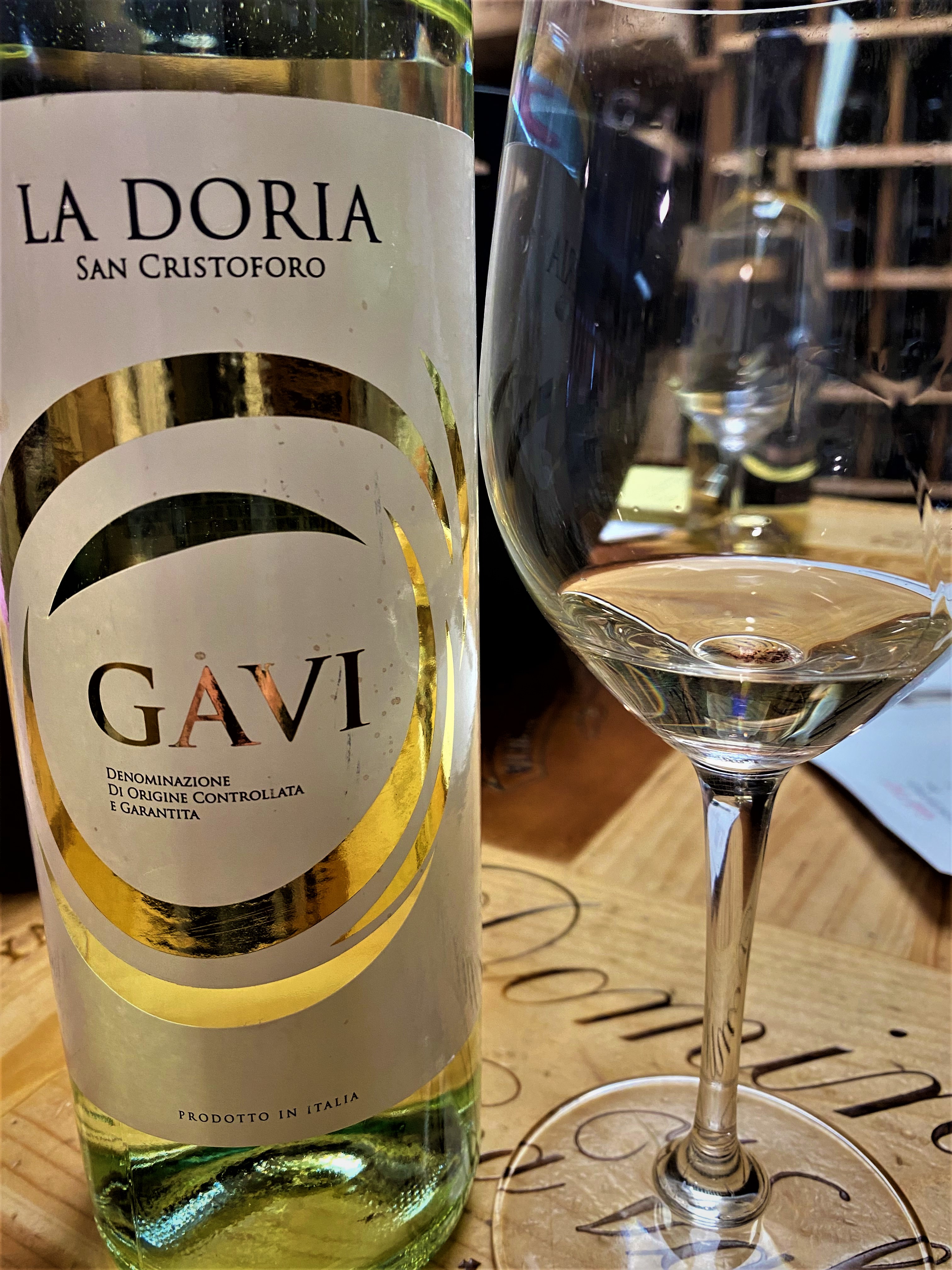
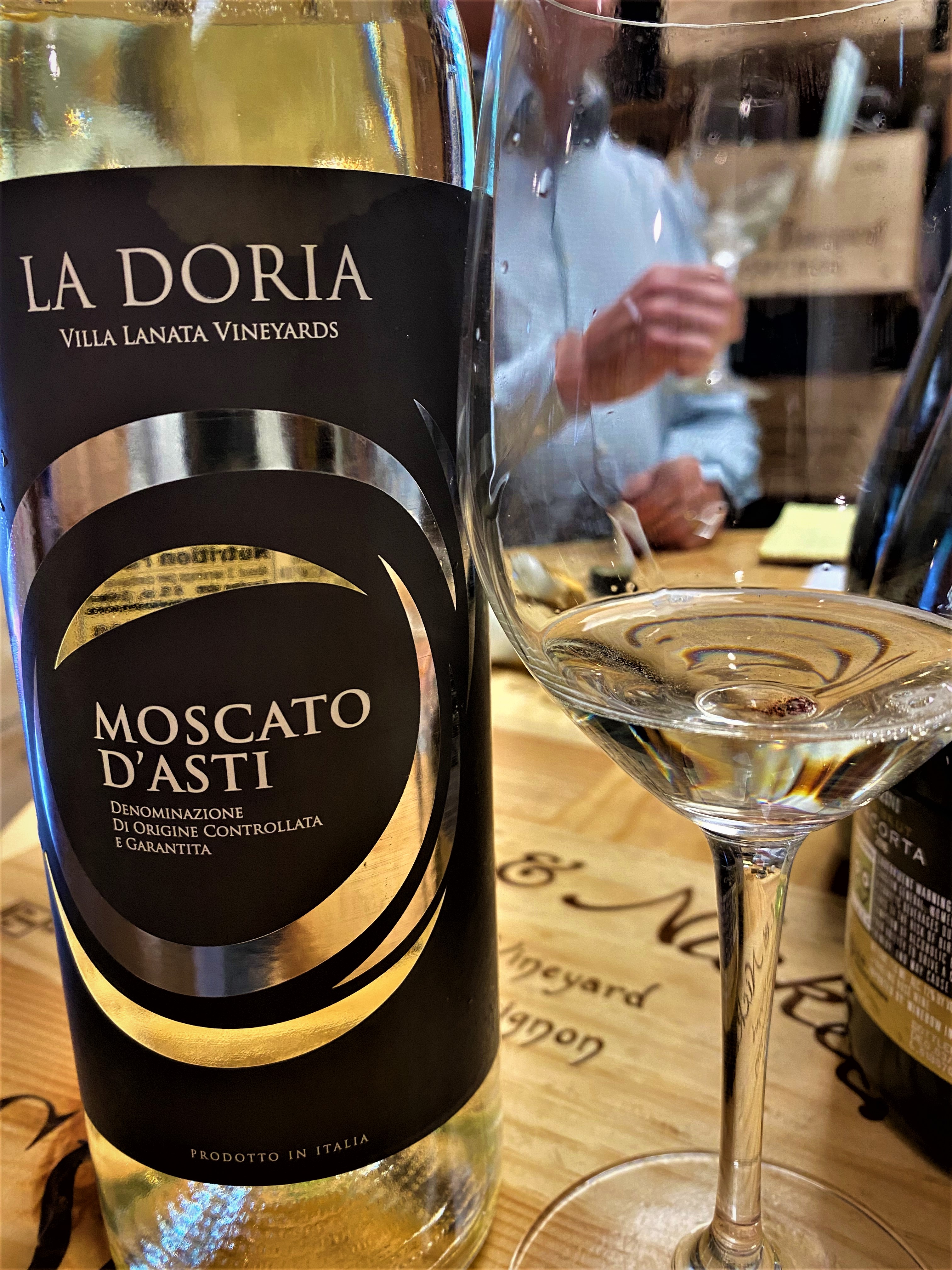
While I was at my local wine shop, The Fine Wine Source of Livonia, enjoying a couple of Franciacorta wines, the salesman, like a good salesman produced two other wines for the owner, the staff and lucky me. The next two wines were from Cascina La Doria; and the Cascina or farmhouse is located in the commune of San Cristoforo, three kilometers from Gavi.

The first wine was Cascina La Doria Gavi DOCG 2020 from the commune of San Cristoforo.  The wine is pure Cortese, sometimes referred to as Cortese de Gavi, and Gavi DOCG is not to be confused with Gavi di Gavi DOCG which is (Cortese de) Gavi di (Commune del) Gavi. The Cortese vines were first recorded in 1659 and in 1856 the first major estate of Cortese grapes was established.  Gavi DOC was created in 1974 and in 1998 was Gavi DOCG.  In 2002, the Consortium for the Protection of Gavi decreed that genetically modified vines would not be allowed.  The wines from the commune of San Cristoforo for La Doria are about twenty years in age planted on Calcareous-Clay soil.  The grapes are gentle pressed and the fermentation takes place in Stainless Steel vats without the skins.  Then the wine is aged for six months in Stainless Steel before bottling.  The straw-colored wine offered notes of pears and citrus fruits.  On the palate the fruit is very fresh and dry, with a nice medium finish of minerals (terroir).  A very pleasant wine, ideal for fish and sea food.   

The second wine was Cascina La Doria Villa Lanata Vineyards Moscato D’Asti DOCG 2020 and the only other wine offered by the Farmhouse.  Moscato D’Asti is from the Piedmont region of Italy and from vineyards near the town of Asti, which includes fifty communes. The varietal for this wine is the Muscat Blanc a Petits Grains, also known as Moscato Bianco in Italy and is the oldest of the Muscat grape family; and was recorded in the Piedmont in the 13th Century.  Villa Lanata Vineyards is owned by Cascina La Doria and is fifteen hectares in size and was planted in 1990, so on the average the vines are now thirty-years of age and planted on alluvial soil. The first vintage of this wine was in 2019.  This straw-colored wine offered notes of pear and citrus and floral sweetness.  The wine on the palate is “dry” with citrus and fruit tones, very fresh with a finish that I call frizzante (at least that was the term I was taught years ago) for a “fizzy” finish with a touch of sweet and savory with the minerally terroir.  Very pleasant either before or after a nice dinner.       

Posted in Wine | Tagged , , , , , , , , , | Leave a comment

Two From Barone Pizzini

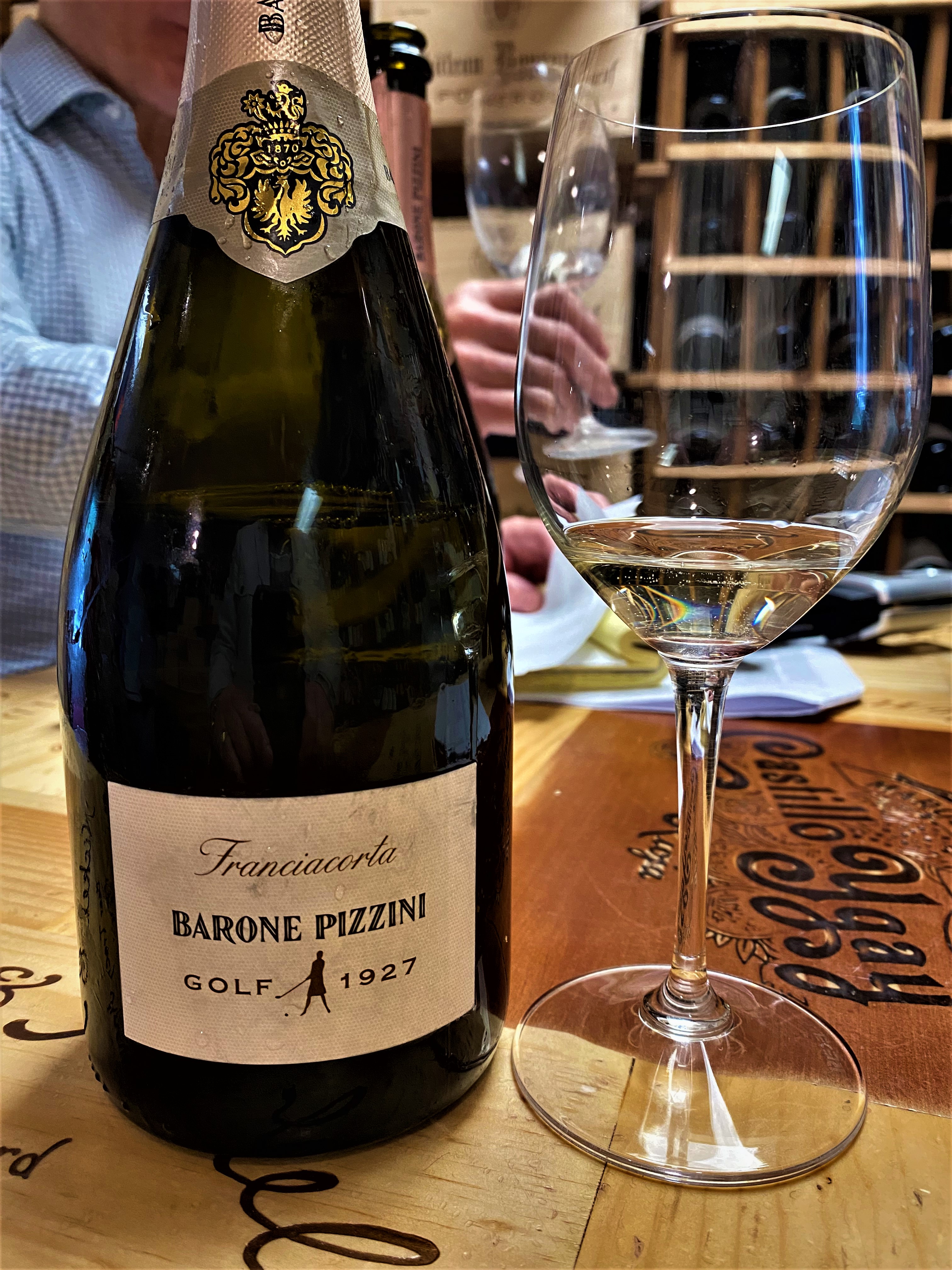
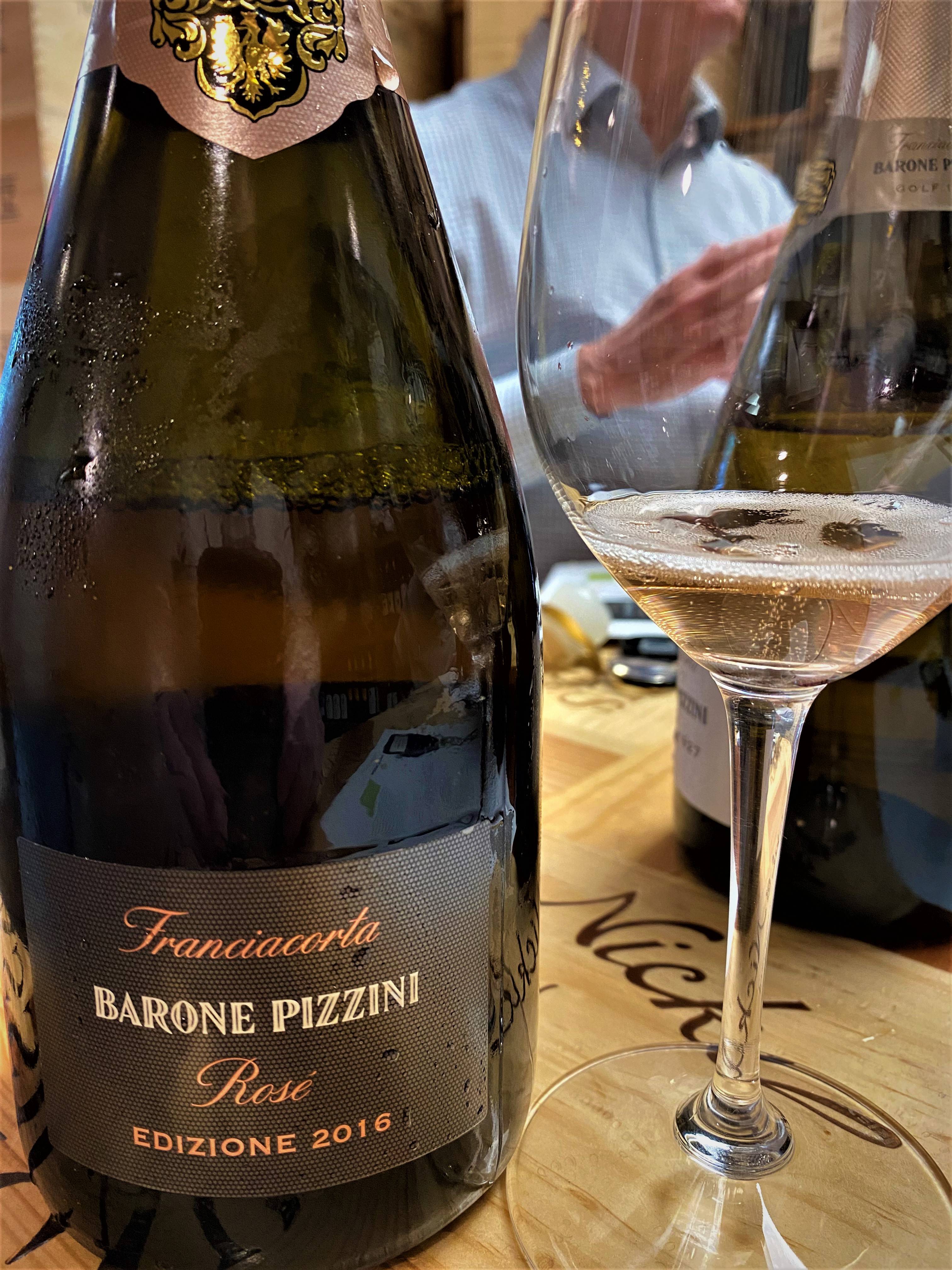
One day I was visiting my local wine shop, The Fine Wine Source in Livonia, Michigan, and while I was chatting with the owner and the staff, a “road warrior” came in, to have them sample some new wines that he was representing.  The owner called for a glass for me as well, as some quick introductions were made.  These two wines were from Barone Pizzini from the Franciacorta DOCG region.  Franciacorta is in the Lombardy region of northern Italy.  It is famed for its high-quality sparkling wines made ala Champagne, and not like Prosecco and Moscato D’Asti.  The name Franciacorta was created by the Berlucchi Winery in the 1950’s when they introduced their sparkling wines to compete with Champagne.  It slowly gained more and more acceptance; by 1967 Franciacorta DOC was created and in 1995 Franciacorta DOCG. 

The Barone Pizzini Golf 1927 Franciacorta DOCG NV was the first wine that I was poured. Barone Pizzini specializes in very fine sparkling wines with a range of labels and wines in Franciacorta. In 1870, Enrico and Bernardino Pizzini Piomarta von Thurberg founded the Pizzini Farming Company.  In 1967 Barone Pizzini was one of the first wineries to belong to Franciacorta DOC and the first vintage was in 1971.  In 1927, Barone Edoardo Pizzini founded one of the first golf courses in Italy.  The label depicts a female from that era and evokes the era of innovation as this is the first organic Franciacorta wine.  This wine is pure Chardonnay and the fruit is harvested from twenty-five vineyards on deep moraine soil with sandy deposits created by former glacial river beds. The juice is from the initial gentle first pressing, fermentation occurs in Stainless Steel vats on the lees for eight months. Followed by about thirty months in the bottle still on the lees, in the Methode Traditionelle.  I have to admit that most sparkling wines are to dry for me, but this wine I really enjoyed.  The pale gold wine with tiny bubbles offered notes of orange zest and brioche.  On the palate tones of yellow apples and hints of walnuts, with bright acidity and a finish begging for another taste.

The second wine that I had the good fortune to taste was Barone Pizzini Rosé Extra Brut Franciacorta 2016.  Barone Pizzini covers forty-seven hectares and the vines average fifteen to twenty-years of age. In 1998, they were one of the first producers in the region to use organic farming methods. Part of the agreement by the consortium that pushed for the DOCG status was the elimination of Pinot Grigio among the vines. This wine is a blend of eighty percent Pinot Nero and twenty percent Chardonnay.  The juice is from the first gentle pressing and is fermented for ten months on the lees in a mix of seventy percent Stainless Steel and thirty percent neutral oak.  Then the wine is aged in bottle for an additional forty months on the lees using the Methode Traditionelle.  This wine was a pretty salmon color with an abundance of small bubbles.  The offered notes of red berries, brioche, herbs and pepper and a touch of balsamic.  On the palate strawberry and pomegranate, silky, acidic with a savory smoky finish.  This was my type of Extra Brut, as there was still some sugar to enjoy in this wine.  It could work very easily with an appetizer or alongside dinner.     

Posted in Wine | Tagged , , , , , , , , , , | Leave a comment

A Wine Flight at the Gandy Dancer

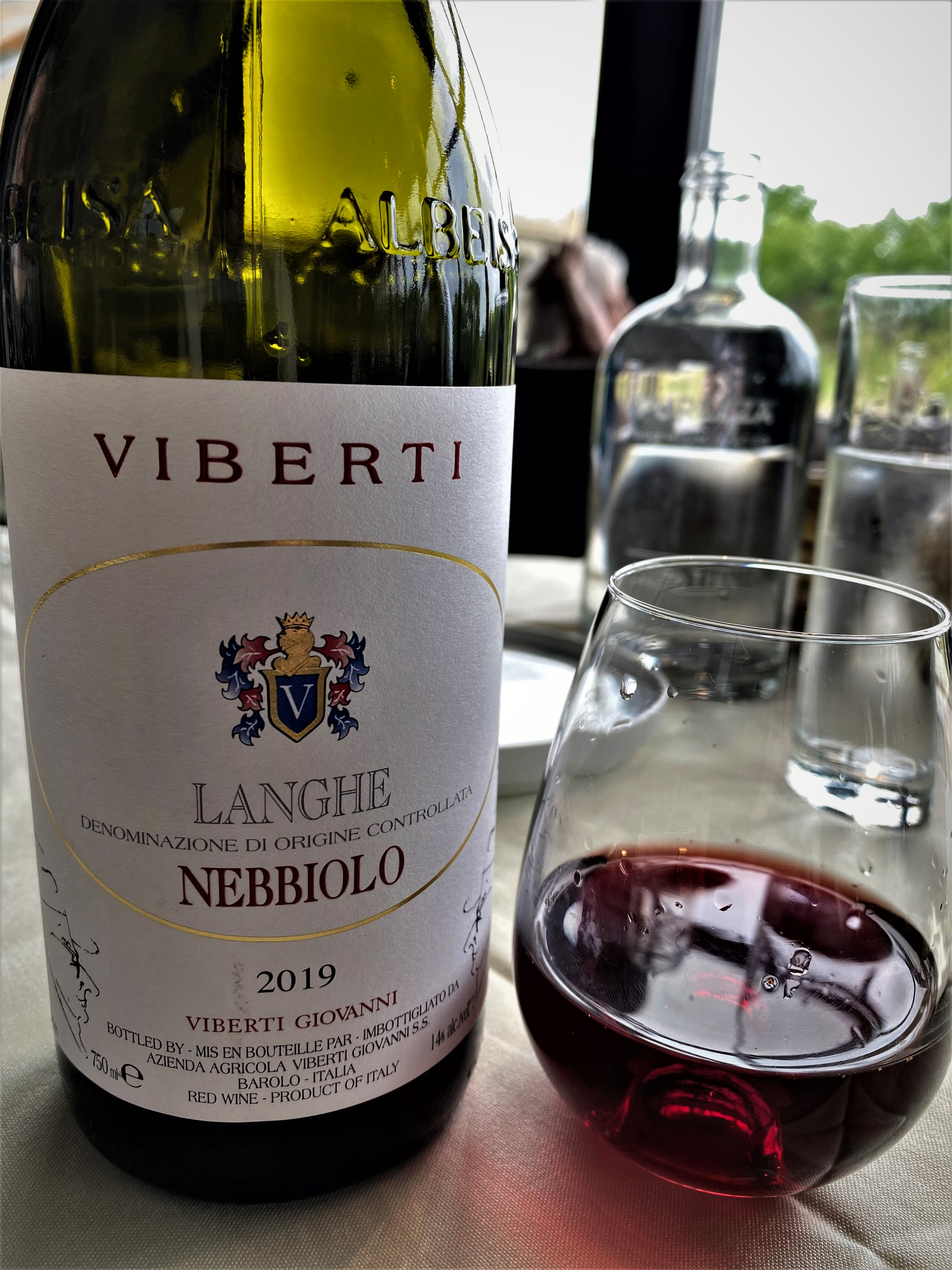
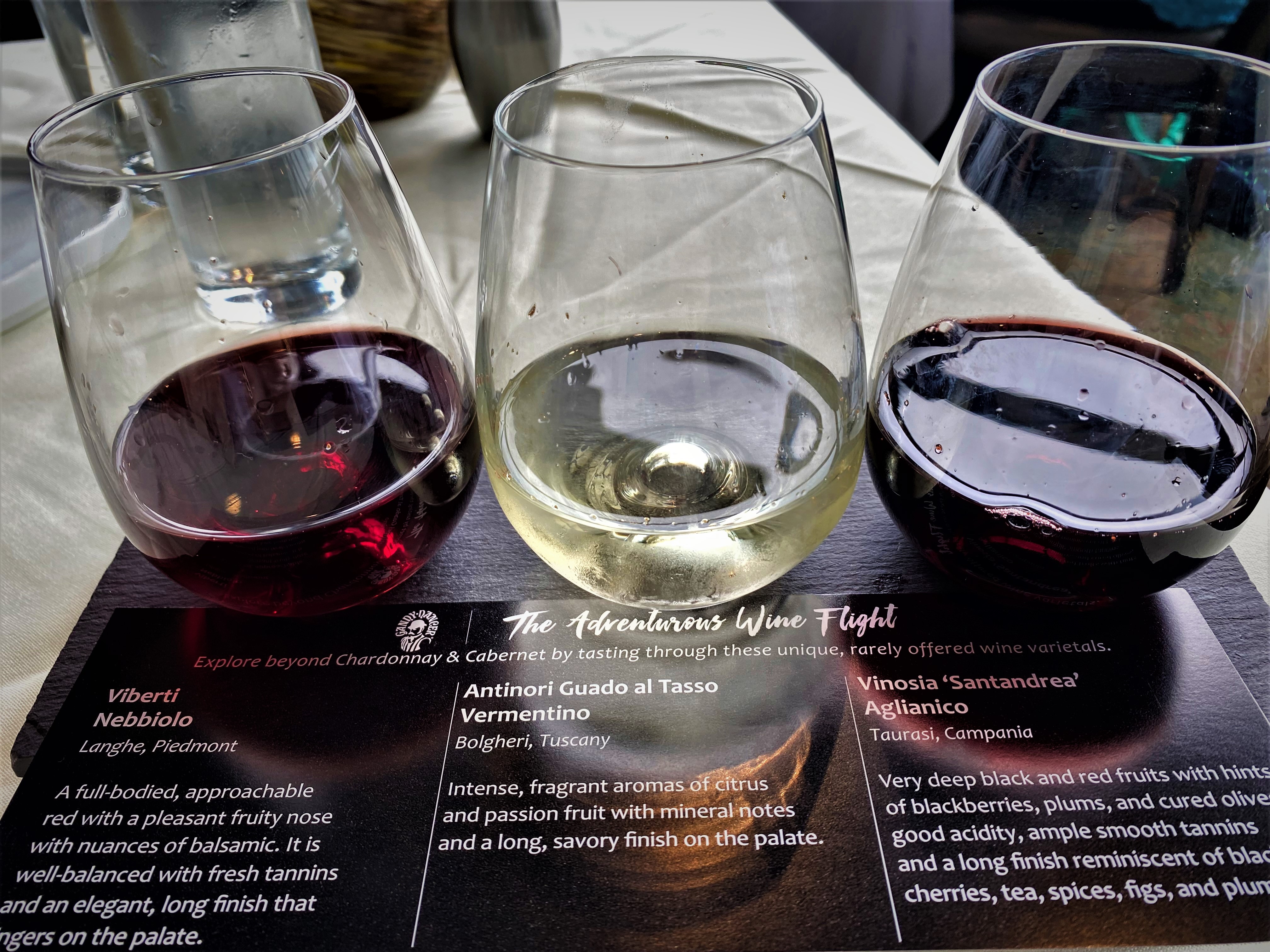
With my Bride drinking a Negroni, I had to find to keep myself amused at lunch sitting in a glass enclosed old train station in Ann Arbor.  The architecture, the details of brick, wood and metal could easily made up several pages of photographs. There were several interesting wines by the glass being offered by the use of the Coravin System, but we were there for a lunch, and I was having a burger, which I do crave now and then. I decided to try their wine flight of three and my Bride wanted to taste each wine with me.  The first wine was Azienda Agricola Viberti Giovanni Langhe Nebbiolo DOC 2019.  The winery’s history began in 1923 when Cavalier Antonio Viberti buys the Locanda del Buon Padre.  He started by producing wine in the basement to serve to his guests and originally, he offered wines of Dolcetto, Barbera and Nebbiolo.  Langhe Nebbiolo is a subset of the Langhe DOC of the Piemonte region.  It is viewed as a junior version of Barolo and Barbaresco, usually a bit lighter compared to the bigger siblings; and there is no regulations or minimums for the winemaking.  The wine is pure Nebbiolo from vineyards in the Barolo region and the first year of production for this wine was 2000.  The initial fermentation and maceration are for about fifteen days on the skins in Stainless Steel.  This is followed by aging for one year in wood, and then another year in Stainless Steel.  The light ruby-red wine offered notes of red fruits.  On the palate, the tones of red cherry and strawberry was noted with soft tannins and a medium finish of fruit.

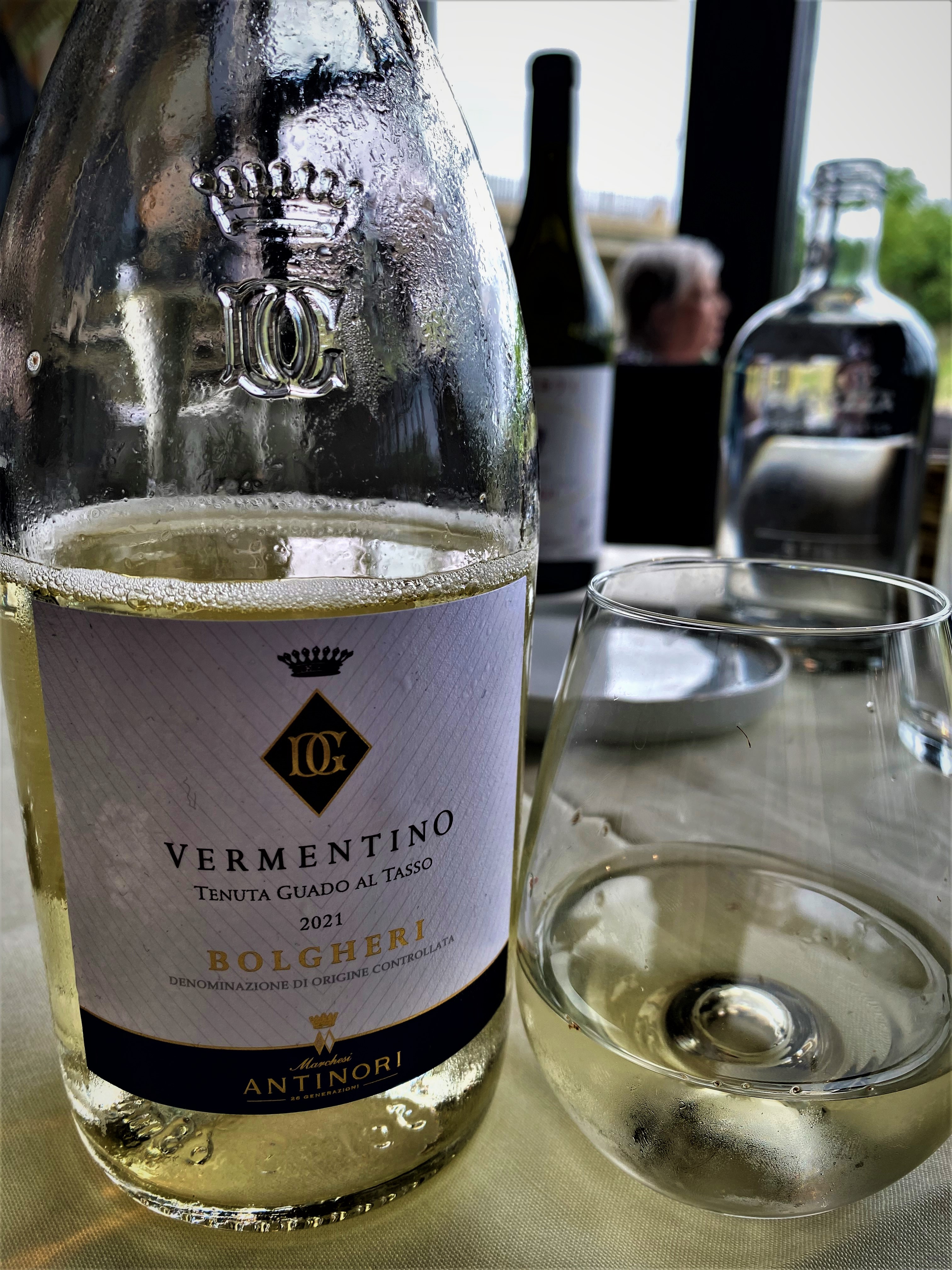
The second wine of the flight was Marchesi Antinori Tenuta Guado al Tasso Vermentino di Bolgheri DOC 2021.  The Antinori family has been making wines since 1385 when Giovanni di Piero Antinori became a member of the “Arte Fiorentina dei Vinattieri,” the Florentine Winemakers’ Guild.  Twenty-six generations later the family is still making wines in Italy.  Tenuta Guado al Tasso is a Tuscan wine estate in the Bolgheri region and is part of the Marchesi Antinori group.  The estate is three-hundred hectares predominately red varieties and the white Vermentino.  The former owners of the estate the della Gherardesca family, began wine making in the latter half of the 17th Century.  In the 1930’s it came under the control of the Antinori family through marriage.  The first vintage of Vermentino was 1996 to take advantage of the alluvial soil and the proximity to the sea for the notes of minerals.  Each vineyard parcel was harvested separately.  The fruit was destemmed, delicately crushed and gently pressed and the juice was transferred to Stainless Steel vats for fermentation, then the different parcels were blended and bottled in January after the harvest.  The wine is straw-colored and offered notes of citrus fruits, tropical fruits and flower blossoms.  On the palate the different fruits were blended in a dry savory wine, nice and crisp with a finish of citrus fruits.   This was my Bride’s favorite.     

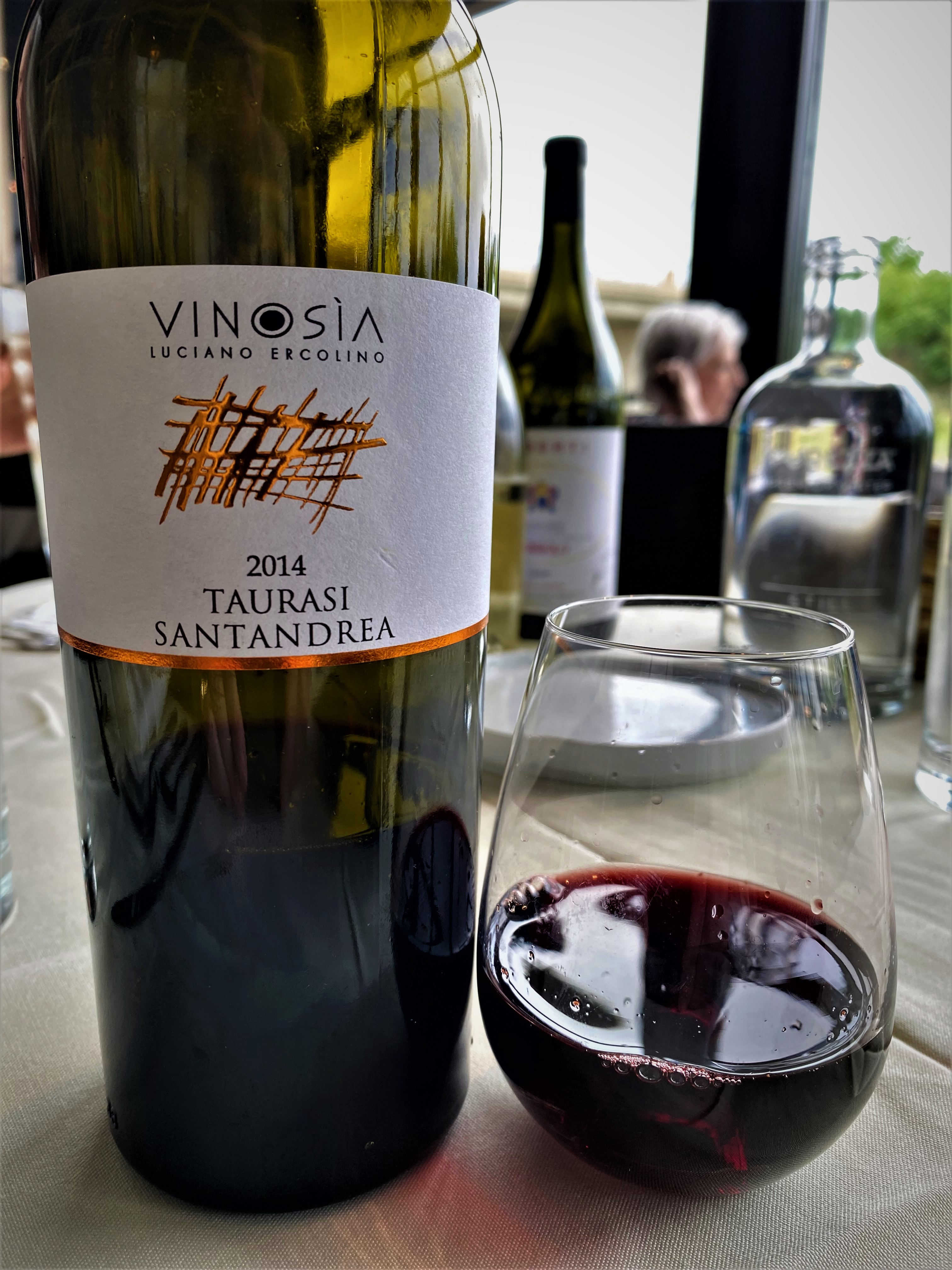
The final wine of the flight was Vinosia by Luciano Ercolino Taurasi DOCG Santandrea 2014.  Luciano Ercolino comes from a century old winemaking family, but this winery was founded in 2004. The winery is located in an ancient part of Italy that was once Greek, known as Irpinia, which in Latin means “land of wolves.” Irpinia is a sub-region of Campania in southern Italy and the wines are base on the native varietal of Aglianico. The best come from the higher altitudes of the Taurasi region showcasing volcanic deposits and limestone.  Taurasi was recognized as a DOC in 1970 and DOCG in 1993.  This wine is pure Aglianico with maceration and fermentation for fifteen days, followed by fourteen month is French Oak barriques and then another twenty months in bottles.  A deep red wine offering notes of dark fruits, spices and tobacco.  On the palate, there were tones of black cherry and plums, layered with black pepper, leather, mushrooms (what some called bramble) with a nice finish of terroir and some smokiness.  I have to admit that I have only had a few Aglianico wines, but I have been impressed with each one. 

Posted in Wine | Tagged , , , , , , , , , , , , , , , , | Leave a comment

Lunch at the Gandy Dancer

In old railroad slang a “gandy dancer” was a maintenance of way laborer, left over from when the tracks were laid by hand and a gandy pole was an implement used for tamping, while another man held tongs on the railroad spikes to hold the rails in place.  Now all of this labor is performed by machines, but the term has kind of hung around in the parlance of railroad enthusiasts.  I mention this arcane knowledge, because we had lunch at the Gandy Dancer recently in Ann Arbor, Michigan.  I had never been there, but my Bride had.  The restaurant is actually in a beautifully restored Michigan Central Depot built in 1886.  It is a lovely landmark not far from the downtown district of the city or the university.

We were seated out where the passengers and the luggage wagons would have waited for the next train, depending on the direction.  Of course, now this area was entirely enclosed, basically in glass to look out onto the tracks for both commuter and freight trains; while we were there, we watched two trains pass the station/restaurant with nary a vibration.  Leave it to me, to notice that some of the spikes seemed to have worked their way up, but I felt more at ease after the first train traversed the rails.  The bar was installed in the center of the building, which was probably where the tickets were sold, and there were plenty of other rooms for passengers, freight and luggage that were now part of the restaurant dining areas.  The restaurant also does special events and weddings when someone is interested in fine food, a destination and a unique themed atmosphere.  The restaurant was part of the Chuck Muir restaurants which are still scattered around Michigan, Ohio and Florida, but this is now part of the Landry Hospitality Group.

My Bride wanted a Negroni for lunch, an aperitif that she really enjoys if it is made well and she was happy.  She had the Coconut Shrimp with Mango Salsa, Sweet Thai Chili Butter, Coconut Ginger Rice and fresh Asparagus.  I had the Bacon Cheddar Burger with Grilled Onions and Mushrooms served with French Fries and Malt Vinegar.  Unfortunately, she decided that I had the better of the two dishes, as she thought her dish was rather bland, but she did enjoy the Fries with a Canadian twist.  She didn’t want any wines, but I saw that they had an interesting wine flight of three, so that is what I ordered and I will discuss the wines in the next article.

Posted in Dining, Wine | Leave a comment

Naked Bottles of Wine

A little while ago, I was asked by a winemaker and wine blogger for my opinion on a bottle of wine retailing without the top capsule.  I said that I didn’t like it as the bottle looked unfinished, and I said that the only good reason, might be to see if the cork was looking iffy and perhaps should be opened up sooner.  Now, if that word sounds unusual, it is just that colorful sleeve that fits over the bottle top and cork and extends down the neck to the fill line of the bottle of wine.  It is that sometimes pain in the arse item to remove, before the cork is removed.  In the old days, the capsules were made of lead and much easier to remove, by the way.  It was just another layer to keep the bottles sealed, and a way to keep vermin from gnawing at the corks in the cellars, when buildings weren’t as sealed tight as today. 

I can understand how some of the wineries are probably looking at the capsule, as just another cost factor, just like some of them are looking for thinner and lighter bottles to keep shipping costs down.  Whereas some of the prestige wines are using bottles that weigh about as much as two bottles of wine, and that is when they are empty.  I make no bones about it, that I am an old curmudgeon about traditions.  I did as a clothier and I still do about wines.  I have never been excited about “trends.”  I would rather see a man dressed like Cary Grant, compared to looking like Peewee Herman.  It is just aesthetically pleasing to the eye and a sense of decorum that suits me.

After, I got offline, I became curious as I remembered the first bottle of wine that we received from our wine club out west, and being a curmudgeon, I was a little miffed that the bottle arrived without a capsule or any labels.  A real naked bottle of wine.  I went and found the bottle in the rack and I noticed the neck ring tags that I hang on the bottles, so I can see what is there had started to seep and had stained the tag. I decided that it was time.  The wine in question was Kori Wines Santa Lucia Highlands Pinot Noir 2013, and I mean how can one not get a bit excited, as I feel that this is one of the best areas in California to grow this very fussy grape, who can give rather mediocre results if not tended to properly and in the ideal terrain to be grown.  This winery is a partnership that started in 2007 between grower Kirk Williams and his step-daughter Kori Violini.  This is a dream winery, getting fruit from the KW Ranch & Highlands in the Santa Lucia Highlands.  This is one of the respected vineyards that sells grapes to wineries like Wrath and Morgan.  The vineyards owned by Kirk Williams is surrounded by other well-known estates like Gary’s Vineyard, Sleepy Hollow and Rosella’s (all vineyards that I have had the good fortune to encounter because of my wine club).   I was a little surprised that in today’s computer era, I could find almost nothing about the winery or any production notes, other than a production run on one-hundred-fifty cases produced. The wine I am glad to say, survived, I used my Durand, but there was still a little cork crumbling.  The wine offered notes of cherries and violets.  On the palate the tones of fruit had softened and so had the tannins, the finish was a medium count with a touch of terroir.  I guess we opened this wine in time.  

Posted in Wine | Tagged , , , , , , | Leave a comment

Just Arrogance

I used to enjoy telling friends and strangers alike, especially when we are out that there are wineries in all fifty states.  I always enjoy looking at the expressions on people’s faces when I make that statement.  Of course, now disinformation forces will come out and this will become a non-issue.  One of the leading periodicals about wine “Wine Enthusiast” has made an editorial decision that only five states in the country are worthy of discussion, even though they acknowledge that there are good wines being made elsewhere, only five coastal states merit discussion and all of the others aren’t worthy of their ink.  All of the “fly over” states plus others, have been eliminated by some arrogant elitist or elitists, that probably want to speak for all, because they evidently know more than anyone else in the country.  The top ten wine producing states in the nation are: California, Washington, New York, Pennsylvania, Oregon, Ohio, Michigan, Kentucky, Vermont and Virginia.  According to the elitists only California, Oregon, Washington, New York and Virginia should rate your attention. 

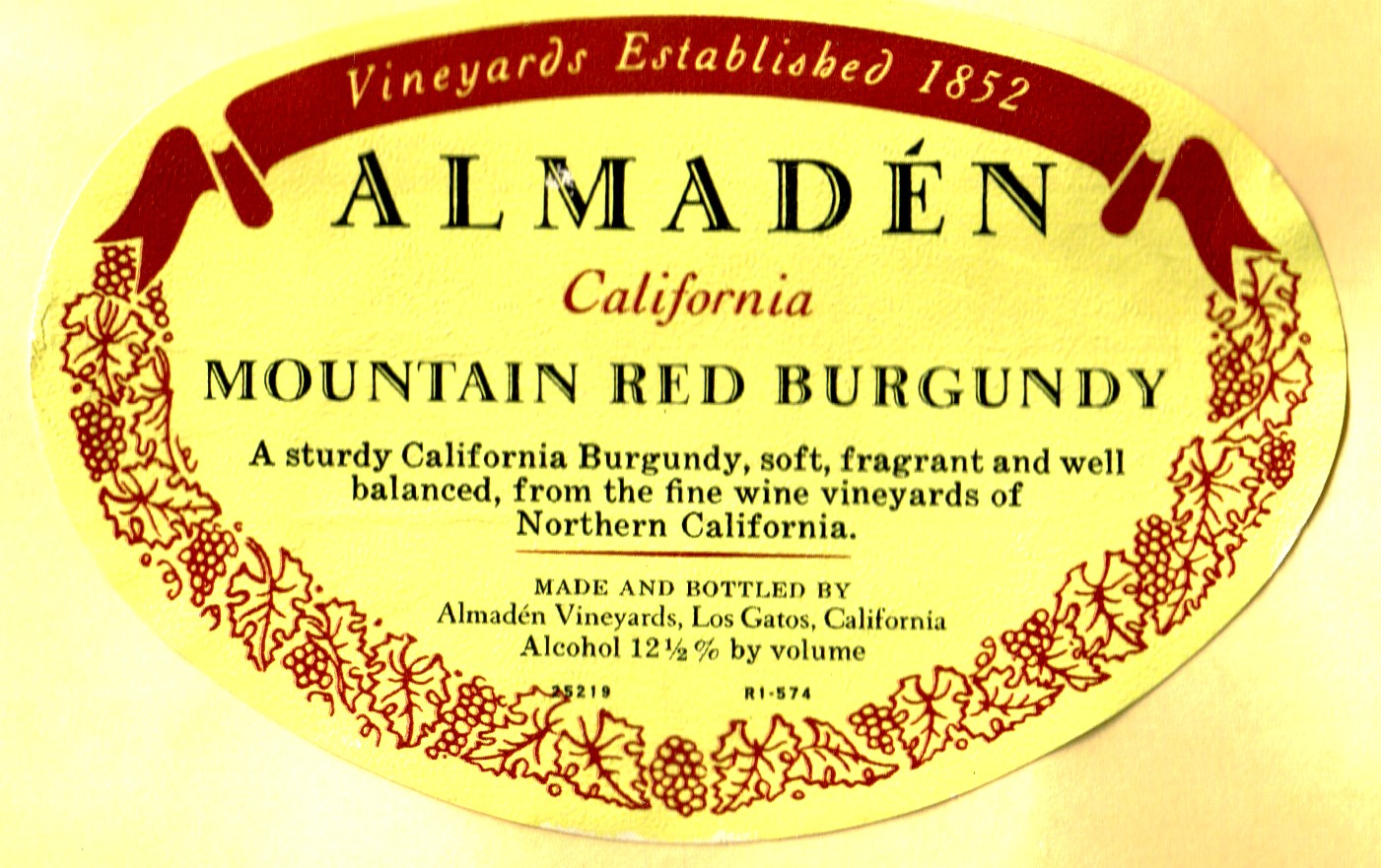
I find it almost laughable, because when I started learning about wines, California wasn’t even mentioned.  This was the time of Gallo and Almaden and others who made jug wines with names like “Mountain Red Burgundy.”  I started my real wine education when I started high school in 1969; some punk politician that owns a winery and allowed it to stay open during the China Flu wasn’t even two years old (and Snopes had to admit that it was open).  I graduated from college before “The Judgement of Paris” occurred in 1976.  The first wine reference book I purchased as a kid was published in 1971 and only afforded twelve pages to America with subsections for California and New York.  Wine arrogance back then, really only thought of France, Italy and Germany with a few “also mentions” for other countries on the Continent. 

I mention all of this, because I live in one of the top ten wine producing states in the country and it took me years to really try and give the wines a taste.  They have slowly, but steadily increased in quality and perception.  At first, I was as arrogant about California as I was about Michigan wines.  The more I learned, the less arrogant I became, because I realized that there was a whole world of wines that I would never really discover or to pass judgement on. The first agricultural college in America was founded in 1857 and is now Michigan State University.  For years, Michigan was only known for having a puppet-governor that defended Michigan as a felony state for the shipping of wines to a residence and thankfully she lost.  This one term governor went on to a bigger job in politics and she wasn’t capable of being a governor.  All I know, is that I have stopped being arrogant about wines and I look forward to trying wines from all of the other states that I recognize, as being part of the union; even if an editorial staff does not.  Not that we travel that much, but I have tried wines from Michigan, Nevada, Ohio, Hawaii, Kentucky, Arizona plus New York, California, Oregon and Washington; I have had some great reports about other states that I do want to try.  I am smart enough to not turn my nose down at any wine these days, which I guess may be another reason that I will never be respected as a wine writer.  

Posted in Uncategorized | 2 Comments

August 2022 Wine Club Selections

I got to my local wine shop, The Fine Wine Source in Livonia, Michigan almost at the tail end of the month.  Considering all that my Bride and I have been going through, I am glad that we got there.  The good news is that they still knew who I was, and had been keeping up, so they understood about my absence.  I had to get some basic wines as well, as my Bride had kept taking wine with her for the past month to keep everyone mellow, and that is a lot to ask from wine.  As I have said in the past, I think that this is one of the most affordable and quality-driven clubs that we have ever belonged to.  There are two bottles each month, one Old World and one New World.

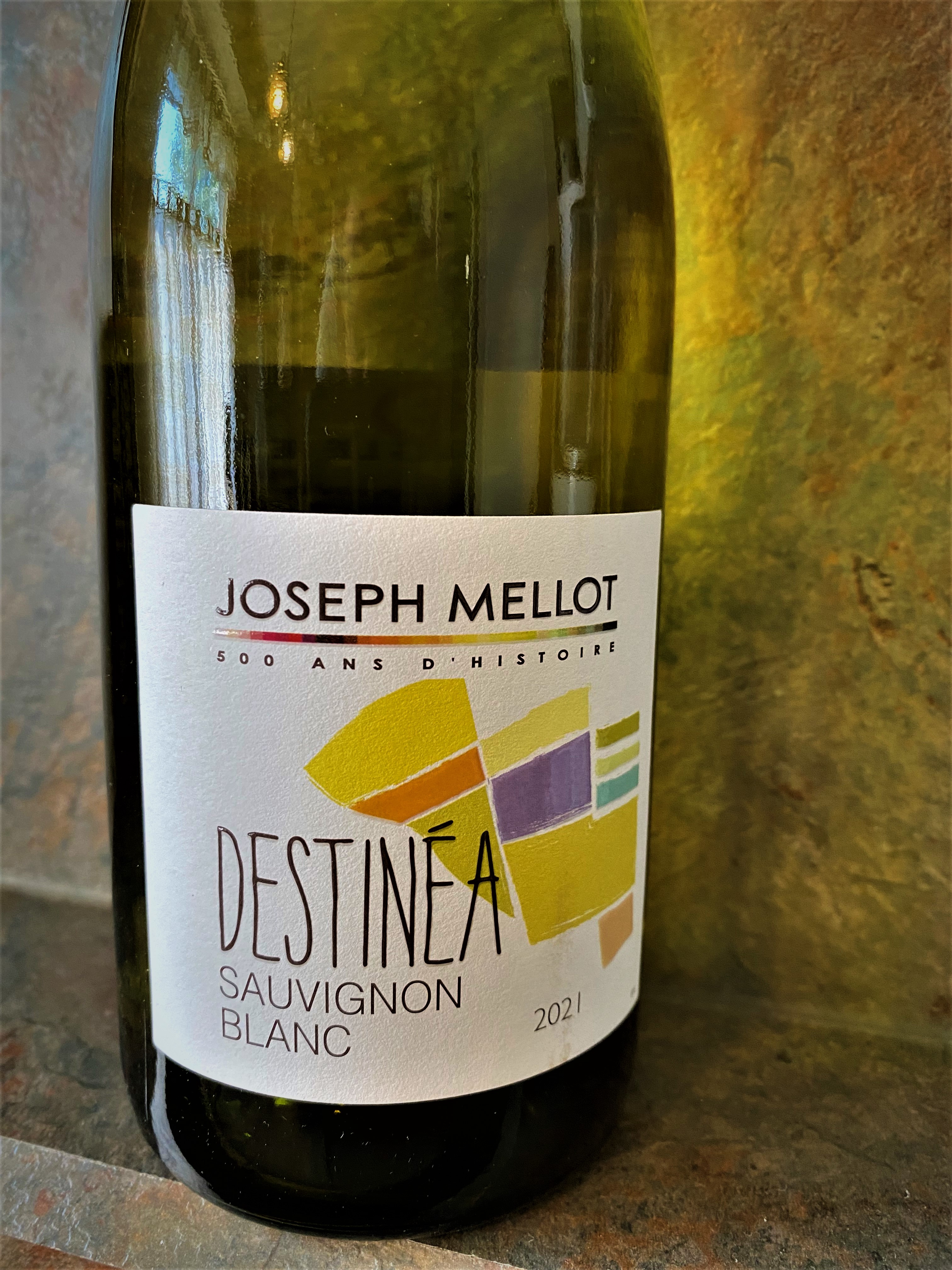
The wine representing the Old World was Joseph Mellot Destinea Sauvignon Blanc Val de Loire IGP 2021.  Joseph Mellot is a wine producer in the central Loire region of Sancerre with a portfolio of labels and domaines covering a huge swath of real estate in the region.  The estate was established in 1969, but the Mellot family name goes back to the 16th Century.  Since 1513 Pierre -Etienne Mellot established his domaine and began his winemaking dynasty.  Cesar Mellot acted as a wine advisor to King Louis XIV.  In the 1920’s they were the first Sancerre winemaker to showcase their wines at the Foire de Paris.  Unfortunately, there was an inheritance split and one brother began Joseph Mellot. By far, Sauvignon Blanc is the grape of choice for the estate from one-hundred-hectares of vineyards in the Loire; and each plot is harvested and vinified separately.  Val de Loire IGP basically covers the entire Loire Valley, encompassing fourteen departments and in terms of area, is one of the largest in France.  It basically follows the Loire River for about 350 miles.   The designation was established in 2009 from its prior Vin de Pays, or its proper and more floral Vin de Pays du Jardin de la France.  The grapes are destemmed, then pressed.  A short maceration period and a short fermentation period of ten to fifteen days and then aged for a short period on the lees before bottling to maintain the fresh fruit finish.  The wine is described as pale gold in color with notes of florals and orange and passion fruit.  On the palate the fruit is fresh with tones of lime and lemon, and well balanced with a “zippy” acidity and ends with an aromatic finish.  The Sauvignon Blancs of France are usually classified as Green and flinty, to differentiate the wine as it can be found especially in New Zealand and Australia.

The wine for the New World this month is Cline Family Cellars Ancient Vines Carignane 2018.  Cline Cellars is a producer based in Carneros and known for Zinfandel and Rhone varieties and established in 1982 in Oakley.  Fred Cline is one of the original Rhone Rangers of California.  Farming is sustainable and the wines are vegan-friendly.  Contra Costa County AVA is directly east of San Francisco Bay and is home to some century-old plantings of Zinfandel, Mourvedre and Carignan (English is Carignane).  The fruit for this wine is from four separate plots in Oakley, where the newest vineyard was planted in 1940, the rest around 1900.  The fruit is hand-harvested, because the vines are too gnarly, then the fruit is destemmed with gentle crushing.  The fermentation was done in Stainless Steel with indigenous yeasts and then aged for fifteen months in French Oak.  The accompanying notes for the wines say the wine offered notes of berry, spices and plum.  On the palate it offers tones of dark fruit, spice and pepper with structured tannins and bright acidity and a strong finish.  

Posted in Wine | Tagged , , , , , , , , , , , , , | Leave a comment

Le Ragnaie Casanovina Montosoli and VV

The last two wine tastings for the afternoon of Le Ragnaie wines at my local wine shop, The Fine Wine Source of Livonia, Michigan was upon us.  The tasting was supposed to be conducted by the owner and winemaker Riccardo Campinotti, but alas, he was stuck in some airport, part of flotsam and jetsam of today’s air transportation.  Riccardo and Jennifer Campinotti purchased the original property, a mix of new and old vines and established Le Ragnaie in 2003.  The organically farmed estate now has three distinct parcels and has forty-two acres in Montalcino, with olive groves mixed in as well.  It has some of the highest altitude vines in the region, and this area also is very popular for bird catchers, and hence the traditional birdwatchers’ net that is on the label.

Azienda Agricola Le Ragnaie “Casanovina Montosoli” Brunello di Montalcino DOCG 2017 is pure Sangiovese and is one of the cuvee wines made since 2015.  This is a one-hectare vineyard adjacent to the cellars of an historic estate.  The wine undergoes fermentation and maceration with indigenous yeasts in concrete vats for forty-five days.  After the wine is aged for thirty-six months in Slavonia Oak vats, followed by additional aging in the bottle, before release.  It has been written up as one of the wines of the vintage and less than three-thousand bottles of wine were produced.  A pretty ruby red wine with notes of dark fruits, red cherries, mushrooms and violets.  On the palate dark fruit and smoke, with very tight tannins and tinges oranges and truffles, with a very long count finish of spices and terroir.  It drank beautifully and I am sure that the tannins will mellow in twenty to thirty years and give the wine a totally different memorable taste.

The last wine of the tasting was Azienda Agricola Le Ragnaie “Ragnaie V.V.” Brunello di Montalcino DOCG 2017.  The V.V. stands for “Vigna Vecchia” or “Old Vines” with fifty-years of maturity; instead of a Riserva this wine is treated as another cuvee offering.  I saw one set of notes that suggested that this wine might have had ninety days of fermentation and maceration with indigenous yeasts in concrete vats.  Followed by the thirty-six months of aging in Slavonia Oak and more aging in the bottle.  There were three-thousand-eight-hundred bottles made.  The ruby-red wine offers notes of currants, spices and roses.  On the palate, it was the fullest bodied of all the wines, probably from the older vines which create compactness and richer flavors.  There were tones of cherry, licorice, spices and orange peel, fully balanced with a nice long finish of spices and terroir.  Another one for the cellar, or absolutely fine right now.  It was a pleasure watching my Bride taste and her writing her notes.  I guess being a Street Somm has rubbed off on her.  

Posted in Wine | Tagged , , , , , , , | 2 Comments