A Tasting of Two White Graves

It is always fun with a bit of trepidation when my Bride accompanies me to our local wine shop, The Fine Wine Source in Livonia, Michigan.  While I think that they abide me, the enjoy when she comes along.  After all, she is the exchequer of the household and her pen is becoming legendary when it comes to writing orders.  She may not use any of the right words, of course, there are times when I don’t either, the Royal Pass when one is a Street Somm; but she can get quite animated when tasting wines. 

We started a tasting with Chateau Carbonnieux Grand Cru Classe de Graves Pessac-Leognan 2019 from the Famille Perrin.  Most of the finer estates in the Pessac-Leognan region of Graves make red and white wines, sometimes in a couple of tiers.  The estate was founded in the 13th Century and it has passed through many of France’s “bourgeois families: over the centuries.  In the mid 1900’s it was purchased by the Perrin family.  They renovated both the winery and the vineyards and increased the property from forty-five to ninety-two hectares.  By the time of the classification of Graves in 1959, both the red and the white were rated as Grand Cru. The winery is practicing organic and sustainable farming in the vineyards and the soils are rich in gravel, clay, sand and limestone and naturally well-draining.  For the white wines the estate grows Sauvignon Blanc and Semillon.  For the grand vin blanc, Maceration and Initial Fermentation takes place in Stainless Steel and the Malolactic Fermentation takes place in French Oak for ten months.  After blending, the wines are fined before bottling and then allowed to rest for a few months prior to release.  A very pale yellow-green colored wine offering notes of vegetation and spices.  On the palate there were tones of ripe stone fruit, tart with a kiss of sweetness and toasted oak, the acidity is quite fresh and the finish was a mix of wine and terroir.
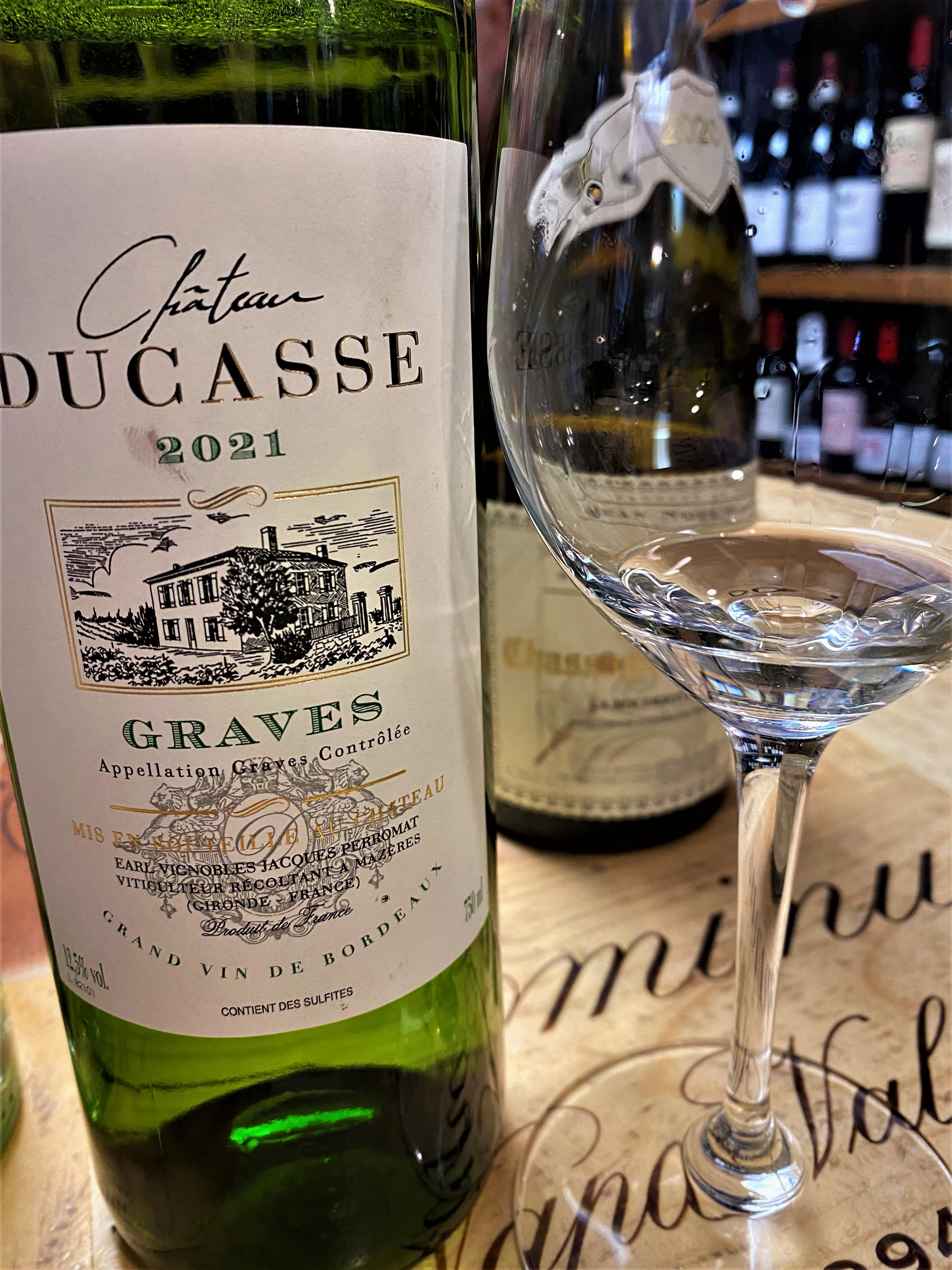
The second wine that we tried was Chateau Ducasse Graves 2021.  The estate makes both dessert and dry white wines and they have been considered great values for decades.  The soil is clay and limestone on fissured bedrock.  The wine is seventy percent of Semillon and thirty percent Sauvignon Blanc and the vines average about thirty-five years of age and is thirteen hectares in size.  The Maceration, Initial Fermentation and Malolactic Fermentation was done in Stainless Steel and then aged for six months in Stainless Steel as well.  The pale straw-colored wine offers the classic notes of grass and some lime.  On the palate fresh citrus and a touch of apple, balanced and dry with a nice finish of terroir.   
Posted in Wine | Tagged , , , , , , , , | Leave a comment

A Couple from Langhe Nebbiolo

Now I have to admit that I enjoy tasting and writing about wines, but the wines that I get from my local wine shop, The Fine Wine Source in Livonia, Michigan, may keep you scrambling to find some of these wines.  Since they curate every wine that they carry and they go out of their way to not compete with chains, department stores, grocery stores, party stores and gas stations; their mix is far superior and not any more expensive.  They are always looking for bargains to pass onto their customers and to their club members.  I recently tried two wines from the Langhe region in the Piedmont area of Italy and using the Nebbiolo grape, the star varietal of the area. Langhe Nebbiolo is considered by many to be a secondary version of Barolo and Barbaresco.  The rules are lax comparing to the first versions, and while fifteen percent of indigenous grapes varieties are permitted, most are pure Nebbiolo.  Winemaking processes tend to be shorter compared to the first versions as well and a lot of time offering a price value, if one can find this designation.  

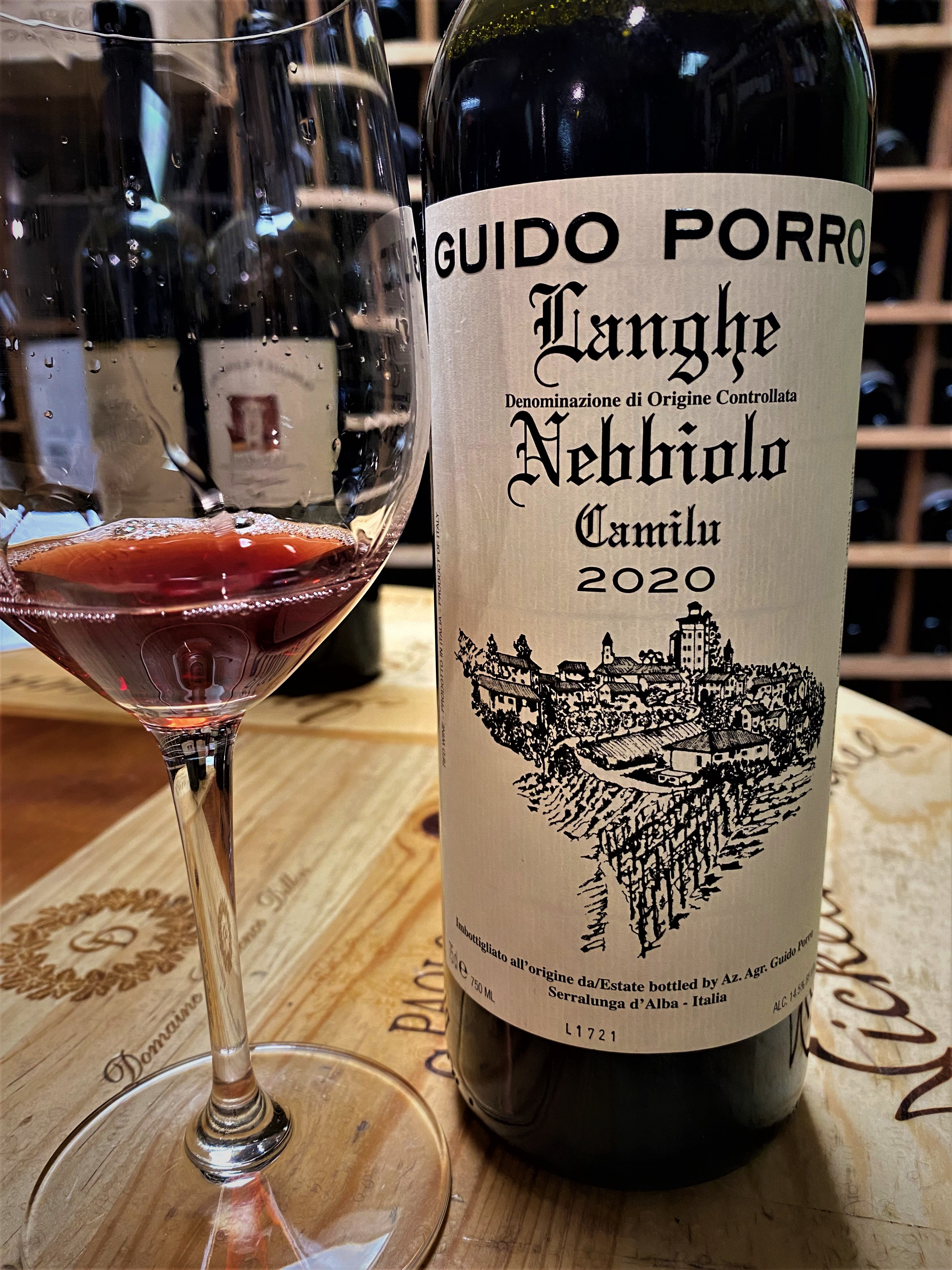
The first wine that I tasted was Guido Porro “Camilu” Langhe Nebbiolo DOC 2020 from Azienda Agricola Guido Porro.  The winery is now in the fourth generation and it is six hectares in size and they produce about twenty-five-thousand bottles in several categories.  This wine comes from a vineyard that is about a third of a hectare in size, and the vines are ten to twenty years of age on limestone and clay soil.  Six to seven months in large tonneau casks for aging.  A bright garnet-red colored wine which offered cherries, roses and spices.  On the palate notes of rich concentrated black cherries and spices, perfect acidity and tight tannins with a nice medium count finish of terroir.

The second wine was Michele Chiarlo “Il Principe” Langhe Nebbiolo DOC 2018.  Michele Chiarlo is a producer in Piedmont and specializes in Barolo, Barbaresco, Asti and Gavi.  The winery was established in 1956 with vintages of Barbera and Moscato from Asti, and the first Barolo in 1958. While the winery is young, he is of the fourth generation of Piedmontese winemakers.  This wine has fruit that is from their Barbaresco vineyards that is adjacent to vineyards of Roero, named after the Roero family, who were powerful bankers in the Middle Ages and the soil is marked by its bluish-gray calcareous-clay marl and loose sandy earth.  Manually harvested, the fruit spent ten days of maceration, Initial Fermentation, and Malolactic Fermentation in Stainless Steel and then was aged in wood for about eleven months and then some time in the bottle, before release.  A pretty bright garnet red-colored wine with notes of red fruit, violets and spices.  On the palate tones of rich black cherries and spices with fine tannins, balanced with great acidity and a nice medium count of fruit and terroir.  This was a real keeper and I had to get some for the cellar.   

Posted in Wine | Tagged , , , , , , , , | Leave a comment

Tasting a Couple of Barolos

I don’t know about you, but I would never turn away an offer to try some Barolo wines, and that is what happened one day at my local wine shop The Fine Wine Source in Livonia, Michigan.  Barolo is a traditional village in Piedmont. The hills of the region are famous for the fragrant, tannic deep red wines made entirely of the Nebbiolo grape.  The Barolo DOCG rules require a minimum of thirty-eight months of aging, prior to release of which eighteen must be spent in barrel, the rest can be in bottle.  Traditional Barolo wine making almost required that the wine be cellared for at least ten years to tame the tannins; which when they soften offer tones of earth, truffles and dark chocolate.  There are some winemakers that are tweaking the procedure to make the wine more accessible at a younger age (more New World) and the difference in philosophies have been termed the Barolo Wars by some wags.

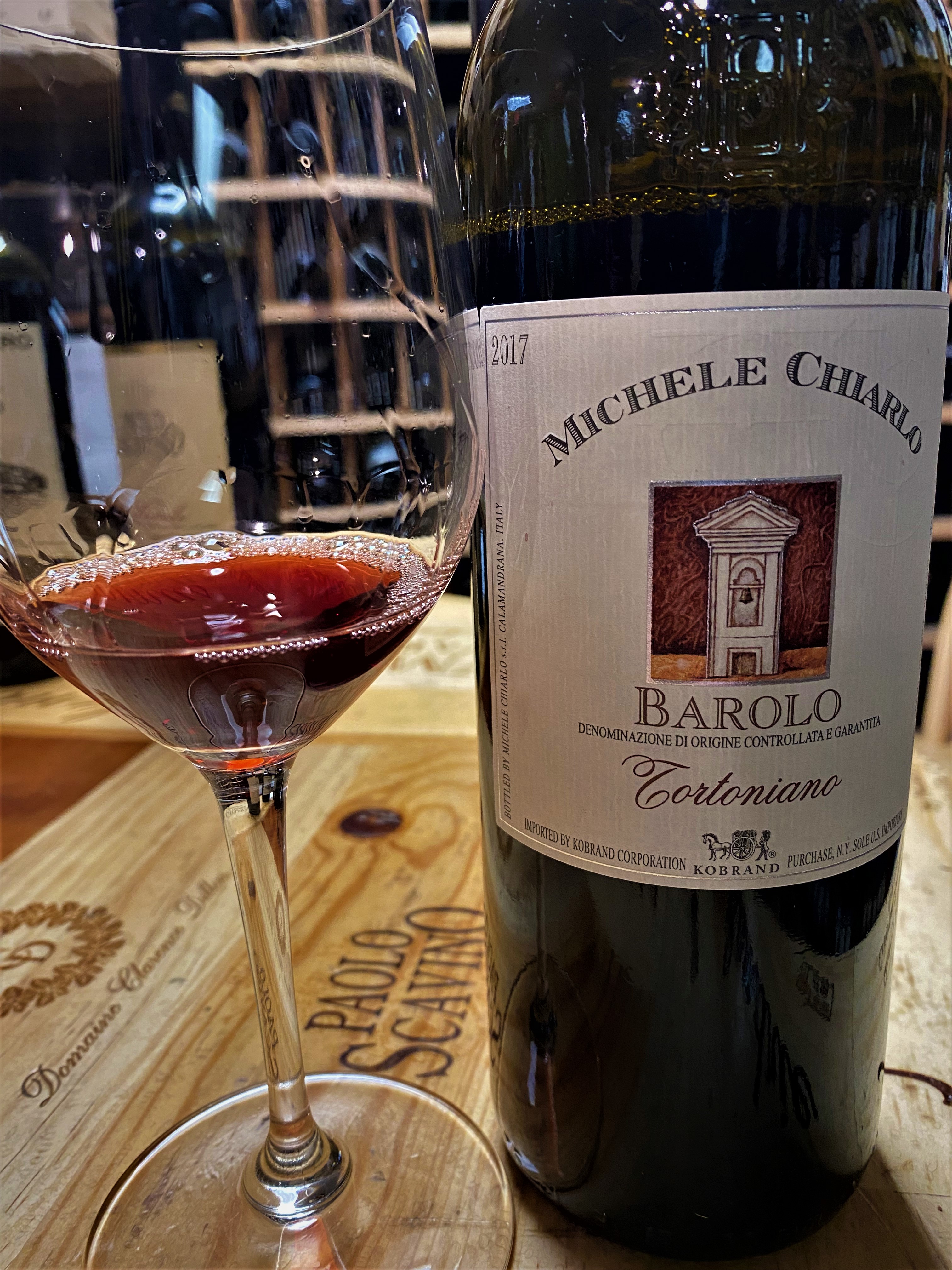
We started with Michele Chiarlo “Tortoniano” Barolo DOCG 2017.  Michele Chiarlo is a producer in Piedmont and specializes in Barolo, Barbaresco, Asti and Gavi.  The winery was established in 1956 with vintages of Barbera and Moscato from Asti, and the first Barolo in 1958. While the winery is young, his is of the fourth generation of Piedmontese winemakers.  This wine is named after the calcareous marl clay of sedimentary marine origin from the Tortonian period (9 million years ago) with active limestone, magnesium and manganese.  The fruit is manually harvested; maceration, Initial Fermentation and Malolactic Fermentation is done in Stainless Steel vats on the skins for about eighteen days.  The wine is aged in oak casks for twenty-four months and then an additional twelve months in bottle before release.  A very pretty garnet-colored wine with notes of dark fruit, rose petals, juniper berries, truffles and spices.  On the palate black cherries, raspberries, silky tannins, well balanced and a very nice finish of spice and terroir. I think this wine will start to be enjoyed from now to the end of the decade for sure, with a big meal.

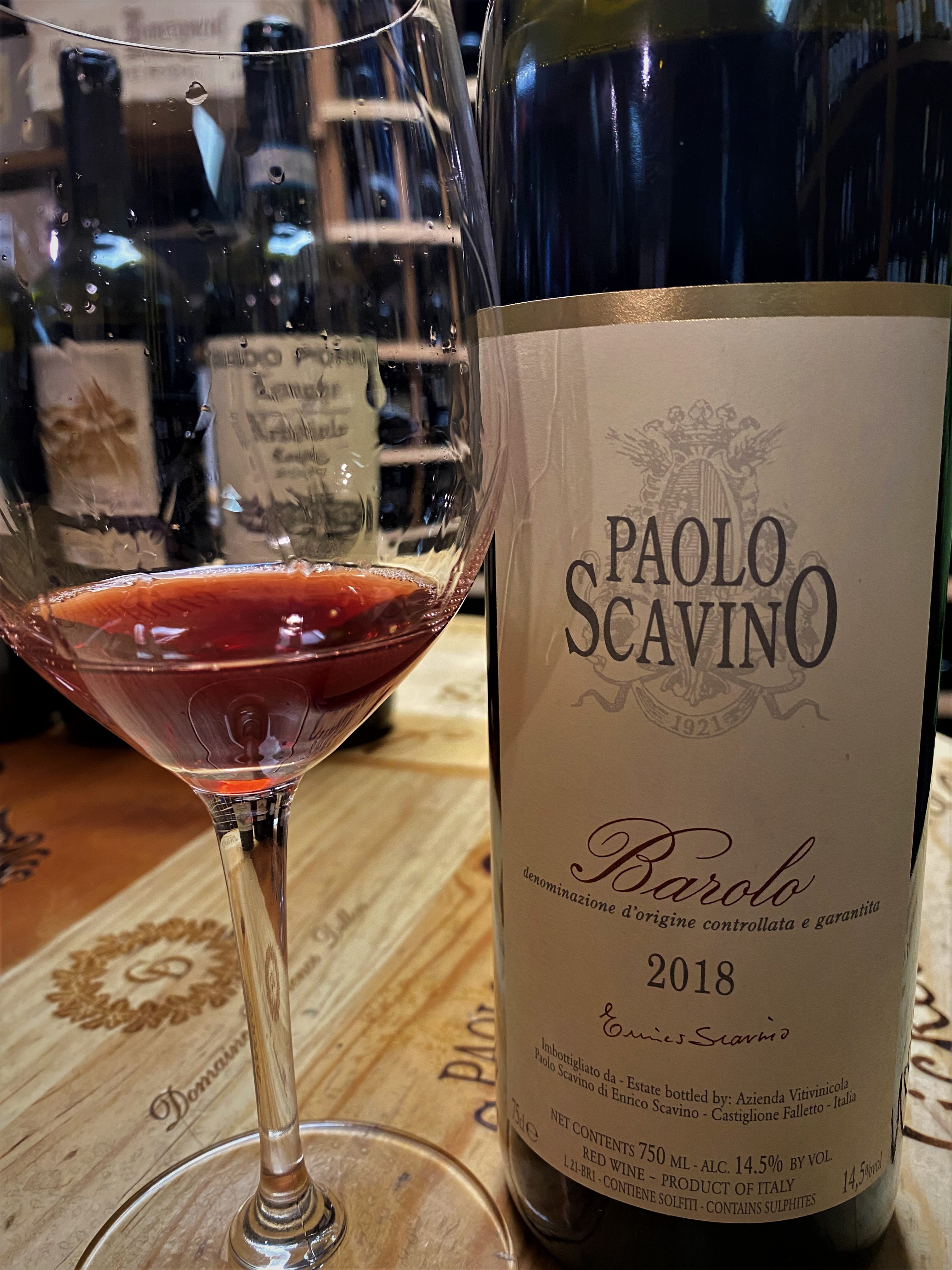
The second wine that followed was Paolo Scavino Barolo DOCG 2018.  Paolo Scavino was founded in 1921 and they are into the fourth generation of winemakers.  They estate is twenty-three hectares entirely within Barolo with nineteen different Cru vineyards.  This particular wine has a special value and represent the history and tradition of blending different cru of Barolo.  The fruit came from the best plots of seven cru vineyards.  Separate vinification of each cru, including destemming and light crushing.  The maceration and Initial Fermentation were done in Stainless Steel and indigenous yeasts.  Malolactic Fermentation was done in oak barrels.  Each of the crus were kept separate and aged in neutral French Oak for ten months and a further twelve months in large casks.  Final blending of the cru wines for one year in Stainless Steel and then ten months of bottle aging before release. A soft garnet-red wine which offered notes of red fruit, floral, graphite and hint of menthol.  On the palate notes of cherry, raspberry, pepper; totally balanced with smooth tannins with a salty mineral finish of terroir.  Perfectly drinking now or for cellaring.     

Posted in Wine | Tagged , , , , , , | Leave a comment

Two From Chateau Rouillac

When all the wines in your local wine shop are curated by the owner and staff, like at The Fine Wine Source in Livonia, Michigan there are times, more often than not, where one gets to try both the first and second label from a chateau.  This was the case when I was able to taste two wines from Chateau de Rouillac from Pessac-Leognan and both of these were red.  The Chateau actually produces six labels, three red and three whites. 

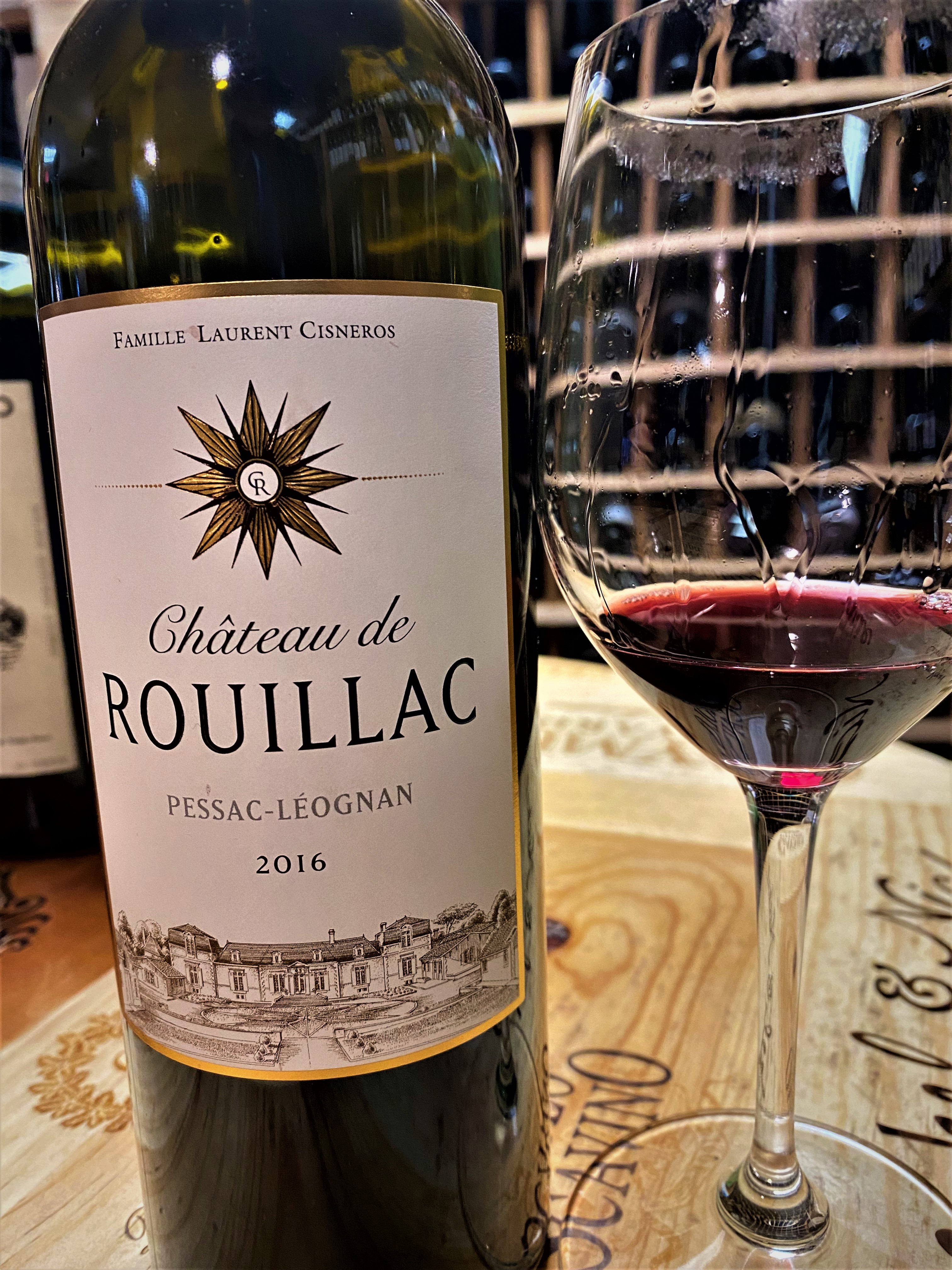
Chateau de Rouillac Pessac-Leognan 2016 is an historic estate and noble land bequeathed in the Seventeenth Century to Jean-Paul Loret, then President of the Parliament of Bordeaux.  In 2009, the property was acquired by Laurent Cisneros who accepted the challenge to reinvigorate the old estate and the grounds, while his wife and three daughters enjoyed the grounds and out buildings for their love of the equestrian arts.  The Grand Vin label is decorated with a Rose des Vents, symbol of the orientation of the new course of Chateau de Rouillac by Laurent Cisneros.  The estate is thirty-six hectares, with twenty-six hectares devoted to vineyards on fine gravel soil.  The wine is fifty-two percent Cabernet Sauvignon and forty-eight percent Merlot.  The fruit is hand-harvested and manually inspected and Initial Fermentation is done in Thermo-regulated Stainless-Steel vats for about twenty-five days.  The wine is then aged for about eighteen months in French Oak, of which a third is new.  A pretty ruby-red wine which offered notes of red fruit, cassis, toasted oak and tobacco.  On the palate the fruit, spice and oak mixed quite well with some softened tannins and a nice medium-count finish of terroir.

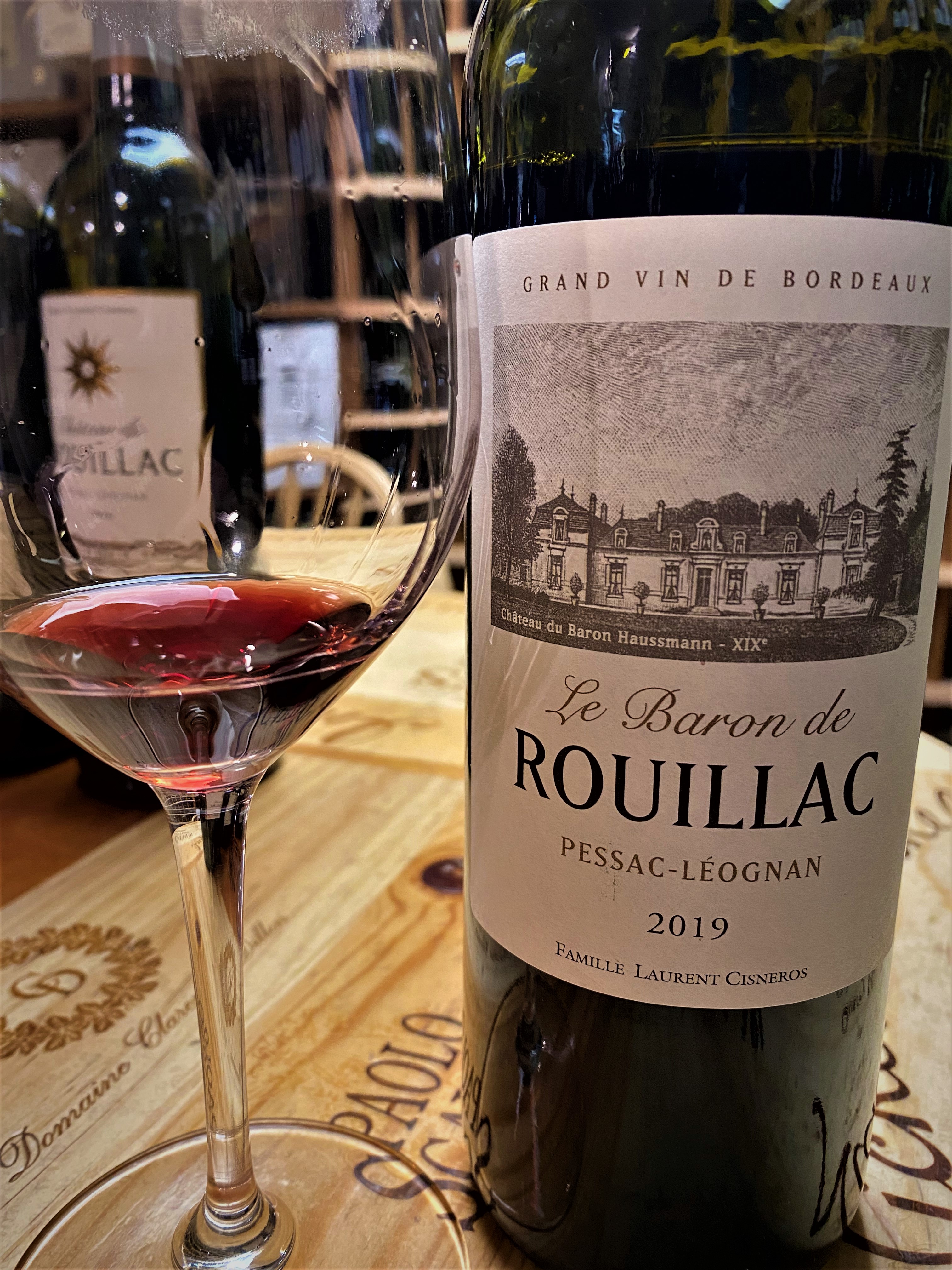
Le Baron de Rouillac Pessac-Leognan 2019 is the second label of the winery and an homage to Baron Haussmann.  The Baron acquired the estate in 1864 through marriage and it became his retreat from business in Paris.  He revamped the entire estate to fit his pleasures and his elegance of style.  The estate after it left his hands kind of drifted until the present owner Lauren Cisneros.  This wine does not get as much exportation as the first label.  The wine is a blend of fifty-two percent Cabernet Sauvignon and forty-eight percent Merlot.  The fruit is manually harvested and inspected.  Initial Fermentation in Thermo-regulated Stainless-Steel bats for twenty-two days and aged for twelve months in French Oak, of which fifteen percent was new.  The wine was a bright ruby-red in color and offered notes of fresh red fruit, floral and spices.  On the palate tones of blackberry and cassis, some spices and it was well balanced and crafted with a nice medium-count finish of terroir.  I thought it was refreshing and a bargain.                 

Posted in Wine | Tagged , , , , , | Leave a comment

Two From La Rioja Alta S.A.

I have had a love affair with Rioja for the last fifty years and I think they are well aware of it at my local wine shop The Fine Wine Source in Livonia, Michigan.  I mean back when I was a student and just starting to learn about wines, I could buy two wines from Rioja, basically for the price of a Bordeaux.  My early mentors used to also tell me, that vintages were not reliable or necessary to worry about, and I have never been able to ascertain the validity of that, but I have also not been able to get that thought out of my memory banks.  Though when I was a kid, Rioja wines were very accessible, in fact more shelf space was devoted to Spain, than to California.

La Rioja Alta S.A. or the Sociedad Vinicola de La Rioja Alta was founded in 1890 by five families from Rioja and the Basque, and in 1904 the Ardanza winery joined the firm.  The estate also has about four-hundred hectares of vineyards planted in the Rioja region, including the Rioja Alta area. The flagship of the firm is the Gran Reserva 890, and the second label is Gran Reserva 890 (which was formally labeled Reserva 1904).   Now onto the notes of La Rioja Alta S.A. Gran Reserva 904 2011, and 2011 was declared and rated as “Exceptional.”  The wine is eighty-nine percent Tempranillo and eleven percent Graciano.  Initial Fermentation is done in batches for a period of seventeen days and some batches were allowed to complete Malolactic Fermentation for a period of seventy-five days.  The wine is then aged for fifty-four months with house-made barrels of American Oak.  A deep garnet-red wine with notes of black and red fruits and traces of orange zest, with secondary notes of cedar/cigar box and spices.  On the palate tones of fruit, silky tannins and totally balanced delivering a nice long delicate finish of fruit and balsamic. 

The second wine we had was La Rioja Alta S.A. Vina Ardanza Reserva 2015 and is one of three Reserva wines that they produce.  This wine is seventy-eight percent Tempranillo from thirty-year-old vines on their main estate vineyards and twenty-two percent Garnacha (Grenache) from a forty-hectare vineyard in the Rioja Oriental (formerly known as Rioja Baja).  The fruit is hand-harvested and destemmed, and this was the first year that they used an optical selection process, and examined each berry.  Initial Fermentation and Malolactic Fermentation took about seventy-five days.  The Tempranillo was aged for thirty-six months and the Grenache was aged for thirty months and then the final blending.  This Garnet-red wine offered notes of red fruit, baking aromas, licorice, coffee, cocoa, vanilla and cinnamon.  On the palate, this was a powerhouse of fruit, totally fresh with full tannins, very chewy, and a nice long finish of fruit and spices.  We tasted these two wines in reverse order, and I made a suggestion that they should do the tastings in this sequence, because the Vina Ardanza Reserva to me, just stole all the thunder, it was such a magnificent wine and the aging potential has to be at least ten to twenty years, easily.       

Posted in Wine | Tagged , , , , , , , , , , , , , | 1 Comment

Le Clarence de Haut-Brion 2019

After fifty some odd years, I still have unicorn wines that I have desires for, as I think most wine drinkers do as well.  I was visiting my local wine shop The Fine Wine Source in Livonia, Michigan and they let me get a little closer to one of the unicorns, almost within petting range, I might add.  One of the many unicorns that I haven’t tried and there are many, as I have been a working man, raising a family and have tried to be fiscally responsible, is Chateau Haut-Brion, the only First Growth that I have not had, and the only one from Pessac-Leognan.

Chateau Haut-Brion is the oldest of Bordeaux’s five First Growths, as it was established in the early 1500s by the Pontac family and then has changed hands several times since then.  A wine that was favored by Charles II, Thomas Jefferson and Samuel Pepys to name a few.  The estate was acquired in 1935 by the American Francophile Clarence Dillon and has been managed by his family ever since.  While the Chateau is famed for their red wine “grand vin” they also produce a white wine on the property.  The property is fifty-one hectares and forty-eight hectares are planted to Merlot, Cabernet Sauvignon, Cabernet Franc and Petit Verdot and three hectares are planted with Sauvignon Blanc and Semillon.

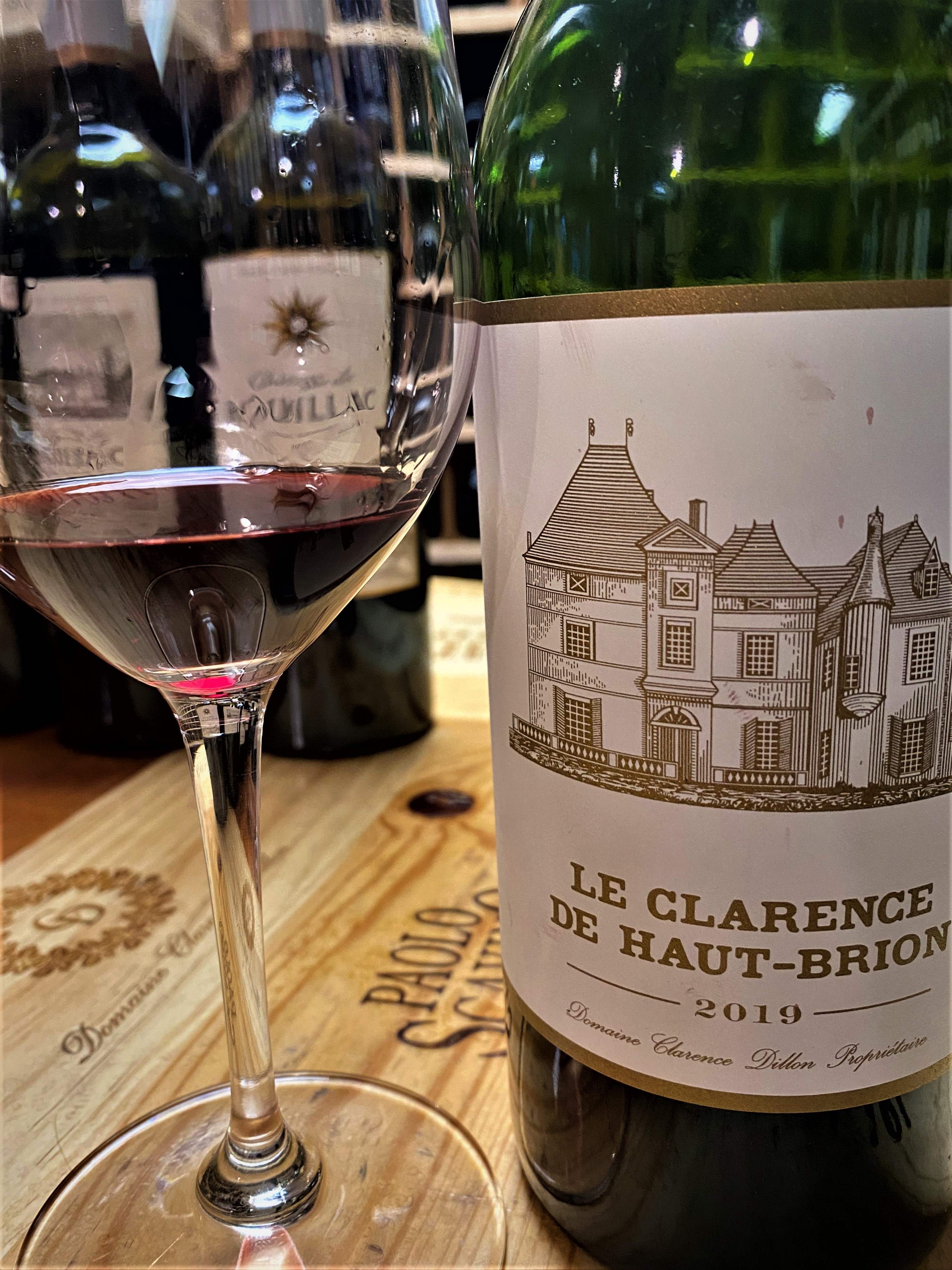
Le Clarence de Haut-Brion Pessac-Leognan 2019 is the second label for Chateau Haut-Brion in the red wine.  Prior to 2007 the wine was known as “Chateau Bahans Haut-Brion” and was renamed in homage to Clarence Dillon.  The fruit for this wine gets to enjoy the same soil as the parent and that is small pebbles of assorted quartz upon a subsoil of clay, sand and limestone with excellent drainage.  The wine is a blend of seventy-three percent Merlot, eleven percent Cabernet Sauvignon and sixteen percent Cabernet Franc; all of which was hand-harvested during a three-week period.  The juice has two weeks of maceration and fermentation, and then the juice is aged in French Oak (thirty percent new) for about seventeen months before bottling.  A nice deep-dark-red wine offering notes of fresh red and black fruit, violets and spices.  On the palate there were notes of blackberry and cassis, along with spices in a well balanced and creamy wine with firm tannins, with touches of vanilla and pepper and a nice long-count finish of terroir.  If this is as close to one of the unicorns, it will suffice. 

Posted in Wine | Tagged , , , , , , , , , | Leave a comment

Bodegas Faustino 1 Gran Reserva 1996

I was pleasantly surprised on one of my recent trips to my favorite wine shop The Fine Wine Source in Livonia, Michigan as the first wine that they poured for me was Bodegas Faustino 1 Gran Reserva Rioja 1996.  And they asked me, if I had ever had it before.  First, I told them, that I haven’t come across that many Gran Reserva wines in my travels.  Second, I told them that I almost came close to having a later vintage of this wine at a restaurant, but luckily, I stopped them from cutting the foil and the mesh, and discovered that it was a Reserva, not a Gran Reserva as listed on the Wine Carte.

Bodegas Faustino is one of the leading Rioja producers and they export to over seventy countries; and they make up about a third of the total exports of Rioja Reserva and Gran Reserva from Spain.  It was founded by Eleuaterio Martinez Arzok in 1861 in Alava.  Its fame came in the late 1950s when Julio Faustino Martinez began exporting the wines.  In Rioja they offer from Crianza to Gran Reserva, and offer both red and white varieties.  They also offer Cava wines and Rosado wines.  They have also expanded beyond Rioja to Navarra, La Mancha, Ribera del Duero and they have created Grupo Faustino.

Bodegas Faustino 1 Gran Reserva 1996 is a blend of Tempranillo, Graciano and Mazuelo.  They have about six-hundred-fifty hectares across the three Riojas and with different elevations, but all basically on calcareous clay soil.  There is a minimum of thirty-eight months of aging in a mix of American and French barrels.  The label shows a painting by Rembrandt van Rijn of Nicolaes Van Bambeeck on a frosted bottle and the legendary copper chicken wire protection on each bottle.  For a twenty-six-year-old the wine still had a nice garnet color, maybe slightly orange halo at the edge, but no brick color aging.  On the nose there were notes of dark fruit, leather, cocoa and balsamic.  On the palate black cherry, ripe fruit and prunes with additional notes of green pepper and black pepper.  The tannins were totally silky, lush and elegant a soft, medium count of terroir.  It was just a beautiful wine and the day was just beginning.  

Posted in Wine | Tagged , , , , , , , , , | Leave a comment

A Solemn Afternoon

“Who, after all, speaks today of the annihilation of the Armenians” is inscribed on one of the walls at the United States Holocaust Memorial Museum in Washington D.C. We did not tour that museum, but we did tour The Zekelman Holocaust Center in Farmington Hills, Michigan.  Even as one approaches the museum the building and grounds were designed to evoke the Concentration Camps of the Third Reich.  There unfortunately has been seen a rise in Anti-Semitism around the world again, and hatred is easy to foment anywhere.  The word “genocide” was coined in 1944 by Raphael Lemkin, a Polish-born lawyer who fled the persecution and moved to America in 1941.  We actually had to go through a security inspection, before we could enter the museum.

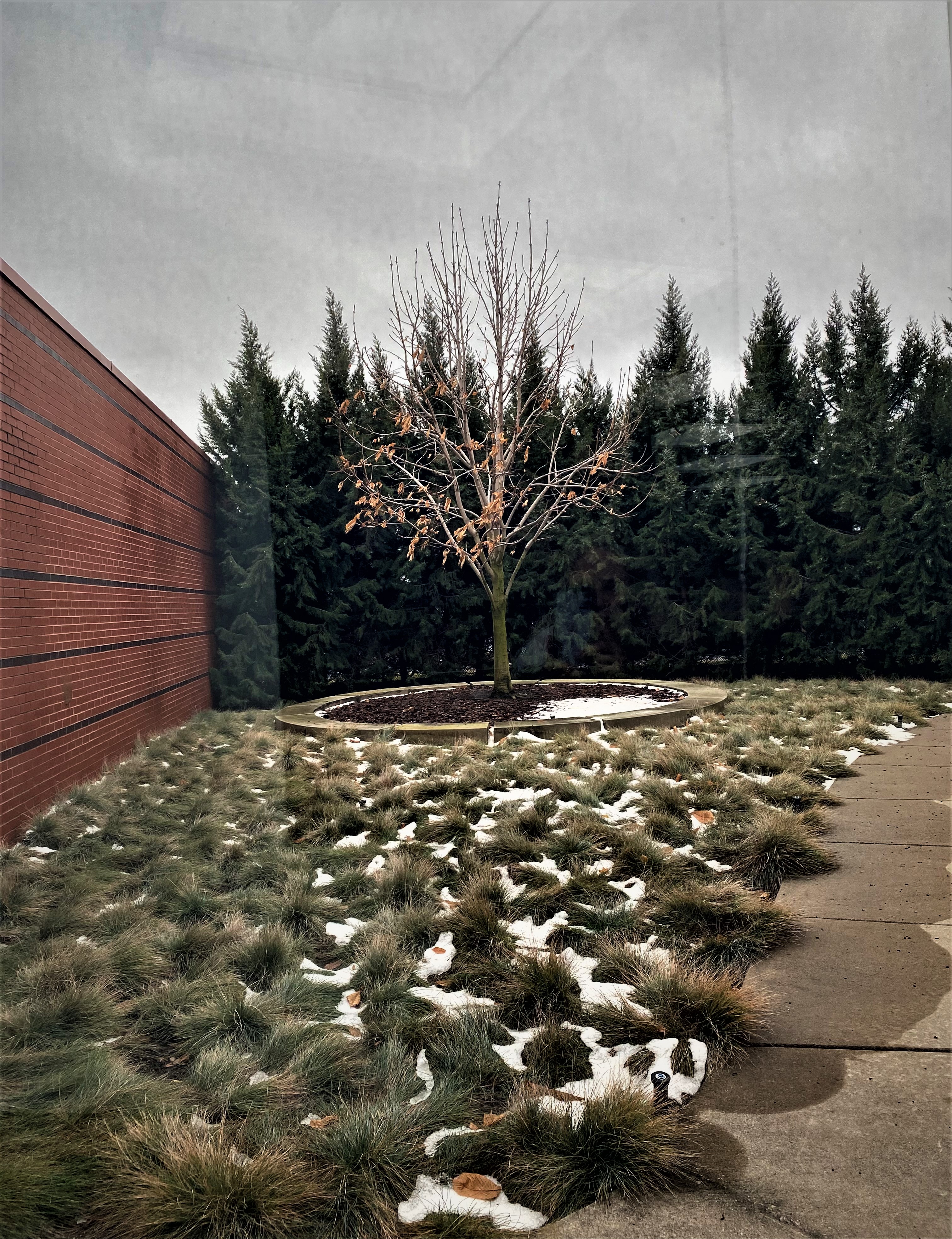
Upon entering the museum, the first image to be seen is a boxcar that was used to shuttle humanity to the Concentration Camps, with no concern for humanity.  While the building does not look that large from the outside, it took me several hours to go through the exhibits, and some I did not stay for long and others that required more effort, I left for perhaps another time.  My Bride left the exhibit halls to go hear a talk, by a “survivor,” but I passed, as I worked with a survivor for three years during my high school years.  Instead, I got a chance to watch a group of students running around and laughing as if they were at a basketball game, thankfully they must have been escorted out, because they were not disrupted the serenity of the occasion.  While I could go on and on about the atrocities and hatred, I would rather mention the hope which was personified by the Viola and Gary Kappy Anne Frank Tree Exhibit and Garden.  The Zekelman Holocaust Center is home to one of eleven saplings in the United States harvested from the white horse chestnut tree that grew outside of Anne Frank’s hiding place and mentioned in her diary writings.

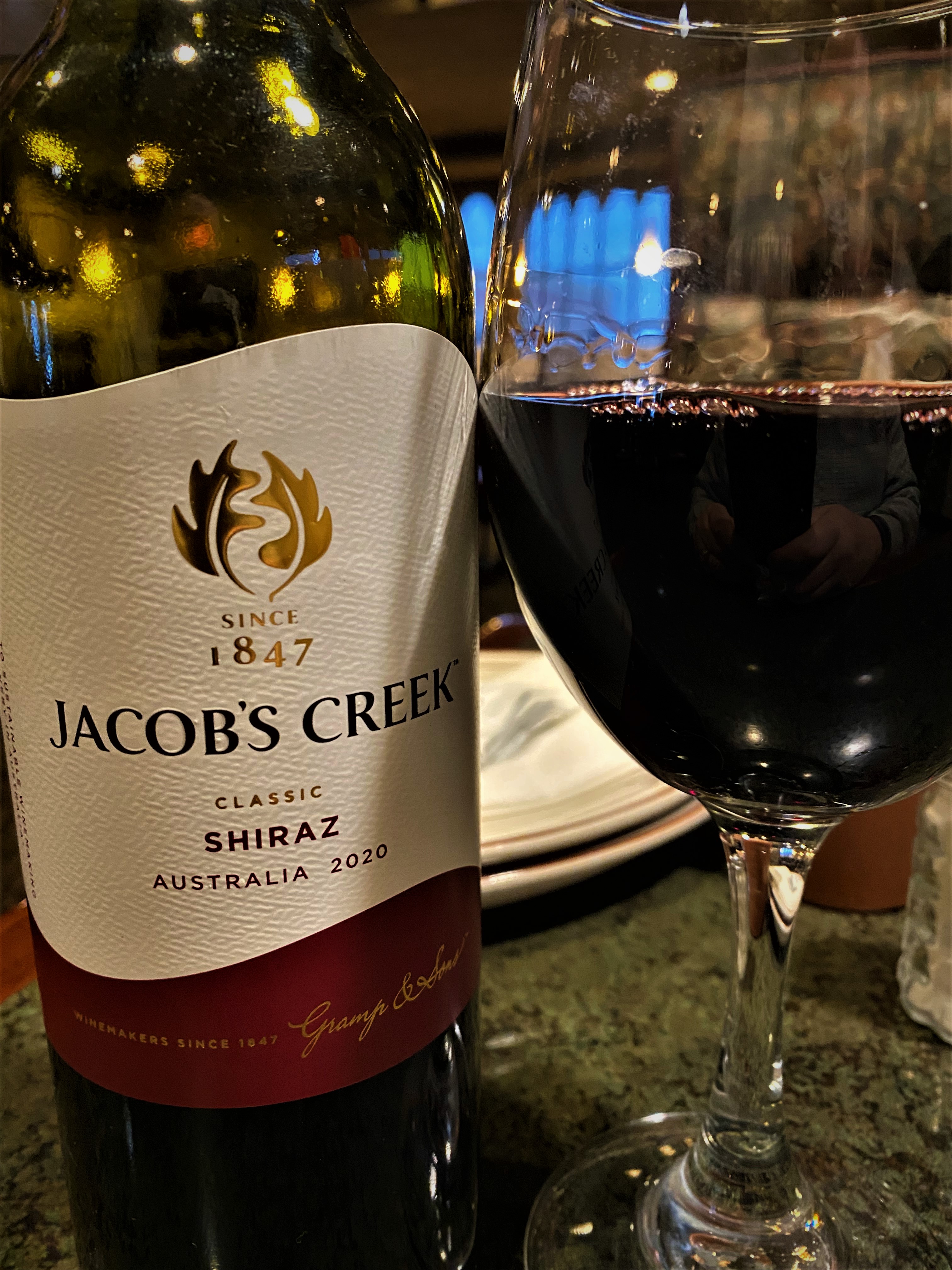
As we were leaving the center, we pondered where to eat, and I suggested a restaurant that my dinner club uses several times a year; and my Bride had never been there.  My Bride wanted something warm and strong after the tour and she had a Spanish Coffee, and most of the time I go there I start off with a Maker’s Mark Whiskey Sour and then have a glass of wine with dinner.  We had Broasted chicken and Broasted potato wedges and started off with creamy Cole Slaw. Alas, the restaurant is not known for a fine wine carte.  I went with something full bodied to go with breading of the Broasted chicken.  I had a glass of Jacob’s Creek Classic Shiraz Australia 2020.  Jacob’s Creek has a large portfolio of wines spanning several regions and varieties and they are based in the Barossa Valley and are known for good value.  The company Gramp & Sons was established in 1847 planting vines along the banks of Jacob’s Creek.  In 1850 the wines used the Orland Wines label, and Jacob’s Creek appeared on labels in 1976.  Today it is part of Pernod Ricard.  A deep purple with notes of dark cherry, plums and mocha.  On the palate tones of dark fruit and soft tannins with a very short finish.  The wine is a bulk wine that is to be enjoyed as close to the vintage date as possible.  My Bride enjoyed the restaurant and we were both in awe of our day at the museum and if you go, give yourself a minimum of three hours, and if they have a speaker, even longer.  

Posted in Dining, Wine | Tagged , , , | Leave a comment

Another Run to Butter Run

The last time we were at Butter Run, I said that we would be back.  The name “Butter Run” is from the time the grandfather was asked to go buy some butter, and during that errand, he got side tracked at a watering hole for a quick one and a few hours later, he returned home with the butter.  There are now four generations that have continued this family tradition of going out for a “Butter Run.”  You have to honor tradition. The restaurant always continues to find something that makes me smile. 

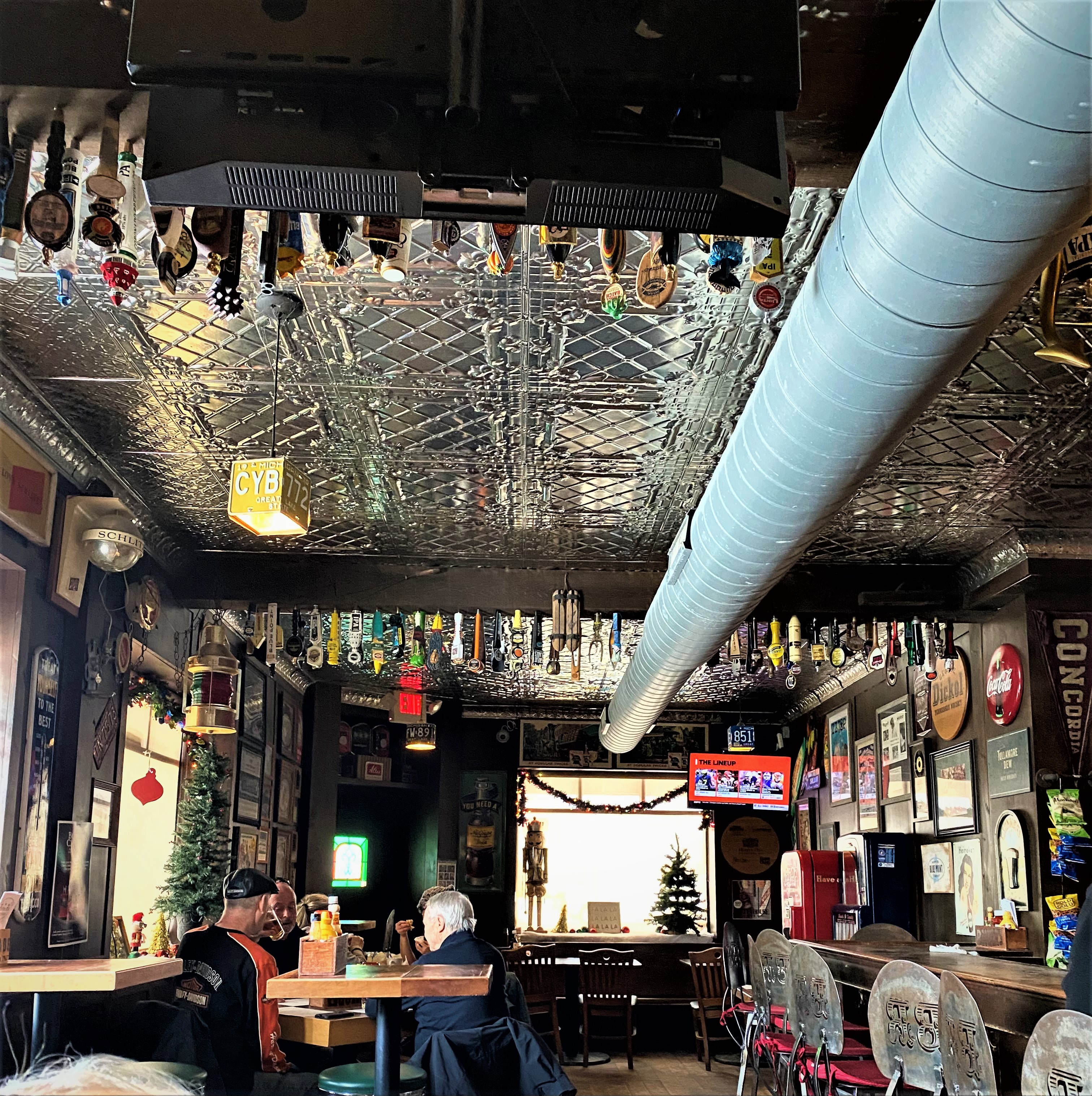
The Butter Run Saloon is in St. Clair Shores, but not on the water.  It is one of the old saloons that one would normally just read about.  It is long and narrow with a patio on the back, that was probably hastily rigged when the harridan insisted that only politicians could eat indoors, but people could eat outdoors in the winter.  It is the kind of joint that one could find in old neighborhoods as it had wide plank pine floors, tin embossed ceiling, long gone beer draught beer emblem levers handing from the ceiling as well.  The walls are covered with Michigan memorabilia of sports, schools, popular snack foods and candies and Motown. 

One could spend probably a day there and still miss something very cool. The menu, right off the bat, offers Escargot as an appetizer, and we still haven’t tried it, because we haven’t really been there for a dinner.  They have appetizers, soups, salads, sandwiches and main entrée dishes; and have breakfast, lunch and dinner. Three of us had Beef Barley Soup which is there daily offering (and it may have been the best we have ever had) and one opted for Cheese Soup.  Then we all had different versions of Cheeseburgers with either fries or onion rings (me) and they were excellent, and I tend to be fussy (go figure) about a burger.  We had to take boxes for the leftovers, as they were that good.  The other thing that surprised me, even from the last time we were there, was that they not only carry a nice assortment of wines (not just a red and a white), but they now carry their own house brand.  There were four different “The Butter Run Saloon Private Reserve” wines; a Pinot Grigio, a Chardonnay, Merlot and a Cabernet.  We shared a bottle of The Butter Run Saloon Private Reserve Pinot Grigio California NV.  The wine was “cellared and bottled” by Free Run Wine Company of St. Helena, California. I could not find anything about this company, but I can make kind of an educated guess that they are a custom-crusher and warehouse for independent winemakers that cater to both individual wineries that can’t afford their own equipment yet, and for jobbers that will affix “house labels” for restaurants and caterers.  Now some of you might think that I have lost it by ordering a Pinot Grigio to go with burgers, but I have found that a good chilled Pinot Grigio can be complimentary to many different dishes, when one isn’t looking for complexity, and even a mediocre one tends to be palatable.    There were no production notes of course on this wine, but I think it is safe to say that the wine was made in Stainless Steel to keep the fruit and the acidity as fresh as possible.  The nose was very light and so was the wine, it was what we call a quaffable wine and perfect for a hot day, but we were enjoying it in the winter.

Posted in Dining, Wine | Tagged , , | Leave a comment

With Ms. Yoga Back at Hyde Park

It was our last night with Ms. Yoga and it was only fitting that we went back to Hyde Park for our dinner, as she had introduced it to us in the first place.  Hyde Park Prime Steakhouse is based out of Ohio, and it is a nice comfortable restaurant that fits in between the macho old-school Morton’s and the loud feminine Capital Grille (at least the one in Detroit is, which is in a shopping mall).  And they have a charming, dare I call it an “early-bird special” if you dine in the bar area, and as proud retirees, we will take advantage of such largesse.  Not to mention that I saw an old customer from my retail days, and he was the third generation of his family that I helped and it is always good to see an old familiar face.

It was actually quite an easy evening, especially for the waitstaff, as we basically all had the same meal.  We all had the Lobster Bisque, which is laced and has some poached lobster added just before serving, which is worth the price of admission.  Along with their great bread basket and crackers and a slab of butter that is seasoned on one edge and the other edge has Himalayan Pink Salt.  It is amazing that I have never have bread at home, even during the holidays, but get me in a restaurant setting and I enjoy bread.  We then enjoyed Prime Filets prepared perfectly with Bearnaise Sauce and Garlic Whipped Potatoes.  We also got a side order of classic steakhouse prepared Spinach with Garlic and butter.  There were also some desserts, but they went directly into a carry-out box, because we were full from dinner. 

We had a wine that I have read about over the years, but it was the first time I had ever encountered the wine.  We had Dave Phinney’s Locations Wine I (Italy) NV.  Dave Phinney, is the founder of Orin Swift Cellars and The Prisoner Label.  Locations Wine is an American value wine brand that blends wines from the designated country.  The wines are non-vintage-designated and have a very minimalistic label reminiscent to the old international car bumper stickers from when I was a kid (F for France, E for Spain, I for Italy etc.).  Though this must have been an old wine in their cellars, as the new designation for Italy is IT on the labels. This wine brand was purchased by Gallo in 2018, but they have retained Dave Phinney as the winemaker.   The fruits for this wine are a blend of Negroamaro and Nero d’Avola from Puglia in the Southern Region and Barbera from Piemonte in the Northern Region of Italy.  The wine is barrel aged for ten months prior to release.  A dark inky purple wine with notes of black cherry, vanilla, sandalwood and some cinnamon and nutmeg.  On the palate tones of figs, blueberry jam with soft tannins and a decent finish of wine and sea-salt.  A rather interesting little wine for one so affordable in a steakhouse setting.      

Posted in Dining, Wine | Tagged , , , , , | Leave a comment