Fine Wine Source Club – April 2023

I hope that everyone that reads my little articles, actually belong to a local wine club, and if so, I hope that it is like my local club, The Fine Wine Source in Livonia, Michigan.  I believe in local independent merchants, who truly appreciate your patronage, but unfortunately one periodically encounters a third generation run business, where the management is arrogant and has forgotten that the customer is king.  If you find a well run local wine shop, it is a blessing and thank them, because the wine is not an SKU item, where it could easily be a box of nails or nuts and bolts.
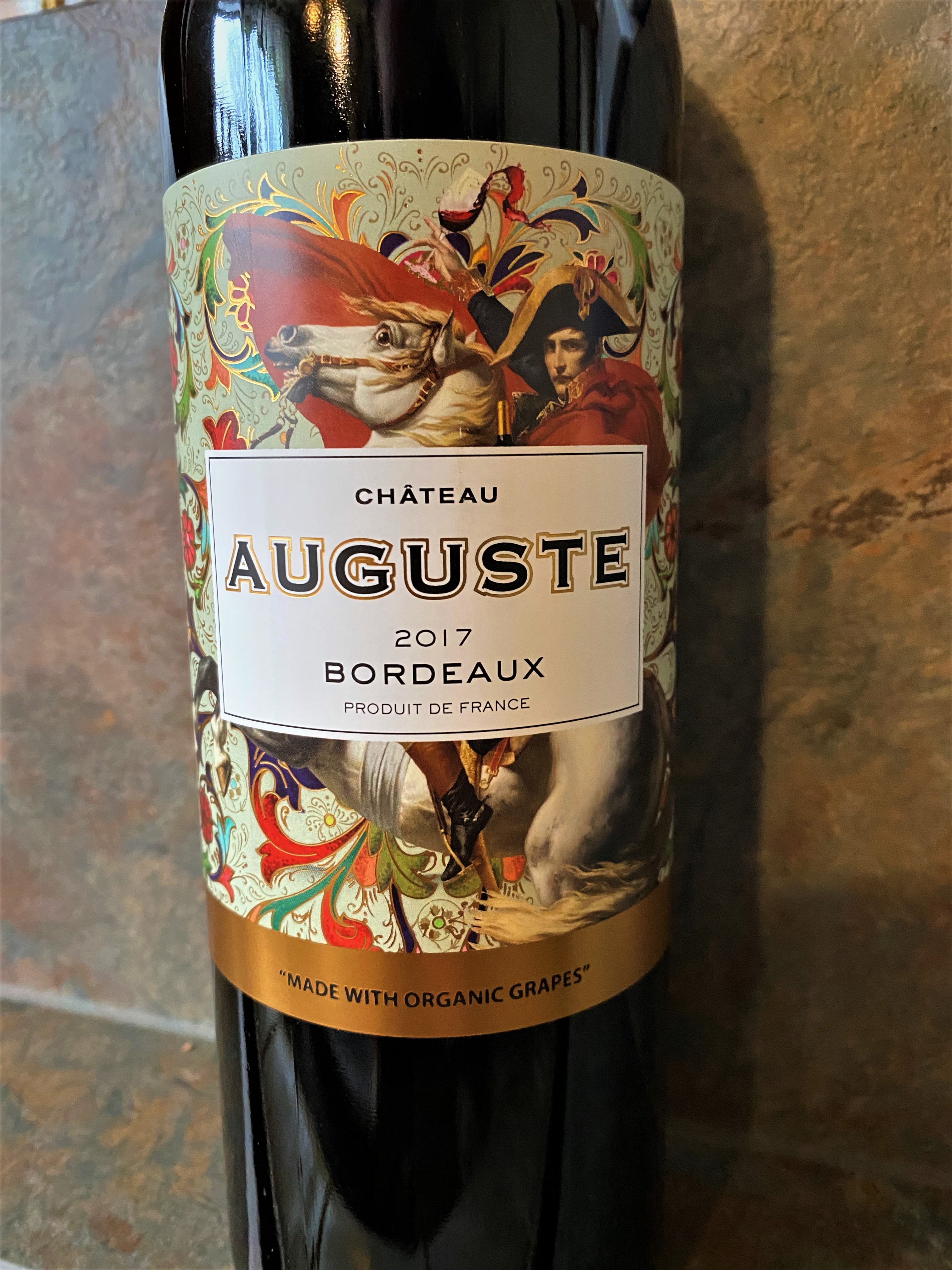
Chateau Auguste Bordeaux 2017 represented the Old World for this month’s selection.  Bordeaux is the big picture of the region and maybe along with Burgundy, the two main regions of wine making that even non-wine drinking individuals can identify as wine names  Bordeaux covers the gamut of wine making from red, white, rosé and from still to sparkling, and from dry to dessert wines.  From the famous Communes of the Medoc, to the affordable wines of the Cotes and Entre-deux-Mers, Bordeaux is for every taste and wallet; as there are twenty-two sub-regions of Bordeaux.  Chateau Auguste is a seventy-four-acre Bordeaux Superieur estate on the right bank region, within the Entre-Deux-Mers appellation or between the two seas e.g. the Garonne and Dordogne rivers.  For centuries the two rivers have deposited sand and gravel, creating layers of limestone and a very fertile region for grapes.  The Romans began planting the grapes, followed by the Monks in the Middle Ages.  The estate is organically farmed.  The wine is eighty percent Merlot, ten percent Cabernet Sauvignon and ten percent Cabernet Franc.  The tasting notes accompanying the wine says that the wine offers notes of black and red fruits and soft florals.  On the palate tones of dark fruit, with a medium body, balanced acidity, dry tannins and a nice medium count finish with terroir.    

Broadway Vineyards Keanu Chardonnay Los Carneros Sonoma 2019 is representing the New World. In 2002 a prime property was found just 2 miles south from the Historic Square in downtown Sonoma and purchased by Jim and Marilyn Hybiske. Six of their wine loving friends joined forces to develop a small vineyard and produce exceptional Sonoma County wines exclusively for their family and friends. Work was begun on the vineyard in the spring of 2004 and in 2006 the first harvest produced very promising fruit and Broadway Vineyards began to thrive. An experienced winemaker was hired to craft three wines that express the terroir of the Carneros Appellation. As the reputation of the vineyard and wines grew the Broadway partners decided to make their wines available to the public. The six friends celebrate the harvest every year. They are now sharing their bounty with a limited amount of wine lovers who are lucky enough to have access to the Broadway cellar.  The wine is pure Chardonnay, using Dijon clones.  The tasting notes say that the wine is made in the French Burgundian style.  The wine offers note of hay, pine, jasmine, lily, plum and licorice and then opens up to ocean air and oysters and a touch of coconuts.  On the palate tones of pear, vanilla, apricot and pineapple with bracing acidity and a long finish of ripe pear and a hint of banana. 

Posted in Wine | Tagged , , , , , , , , , , , | Leave a comment

Happy Easter 2023

My Bride and I would like to wish you a Happy Easter.

More wine and stories coming from your humble raconteur. 

Posted in Uncategorized | 2 Comments

Meeting Friends for a Birthday Dinner

In 1889 Rudyard Kipling wrote a poem “East is east, and west is west –  and never the twain shall meet.” He may have been writing about Detroit, because there is a definite delineation and a mindset between the two, at least in popular folklore; of course, my Bride and I have proven this theory wrong, without having to involve the Capulets and Montagues.   And while I am off on a tangent on geography, before I even get started writing about wine; both the group Journey and the Library of Congress are wrong, as there is no South Detroit, unless you are referring to the Detroit River or Windsor, Ontario, Canada which is the only place the Canada is south of the American border, if you ever want to get people riled up about border rhetoric.

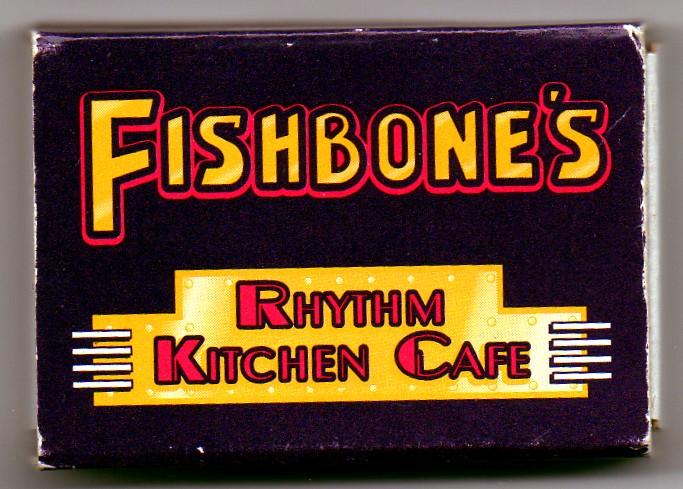
I mention all of this, because I tagged along with my Bride to celebrate a birthday of one of her classmates way back when schools were not politicized and the “Three R’s” were still being taught.  We were all meeting at Fishbone’s Restaurant, and it gave me a chance to brush off, one of my old matchbooks, which I still think was the best advertising medium for restaurants, plus a cool keepsake.   We were all having different versions of seafood, which was good as it is Lent and it keeps my Bride safe and happy.  My Bride had their Pasta Orleans which was Fettuccine sautéed with shrimp, crab meat, crawfish, mushrooms, fresh tomatoes and scallions in a Pesto Cream Sauce with Parmesan cheese.  I had the Crawfish Etouffee a “smothered” stew of crawfish tail meat, onions and peppers served with rice.  I can’t say that we had anything quite like them in New Orleans, but it had the concept and we were there for the fun and friendship.

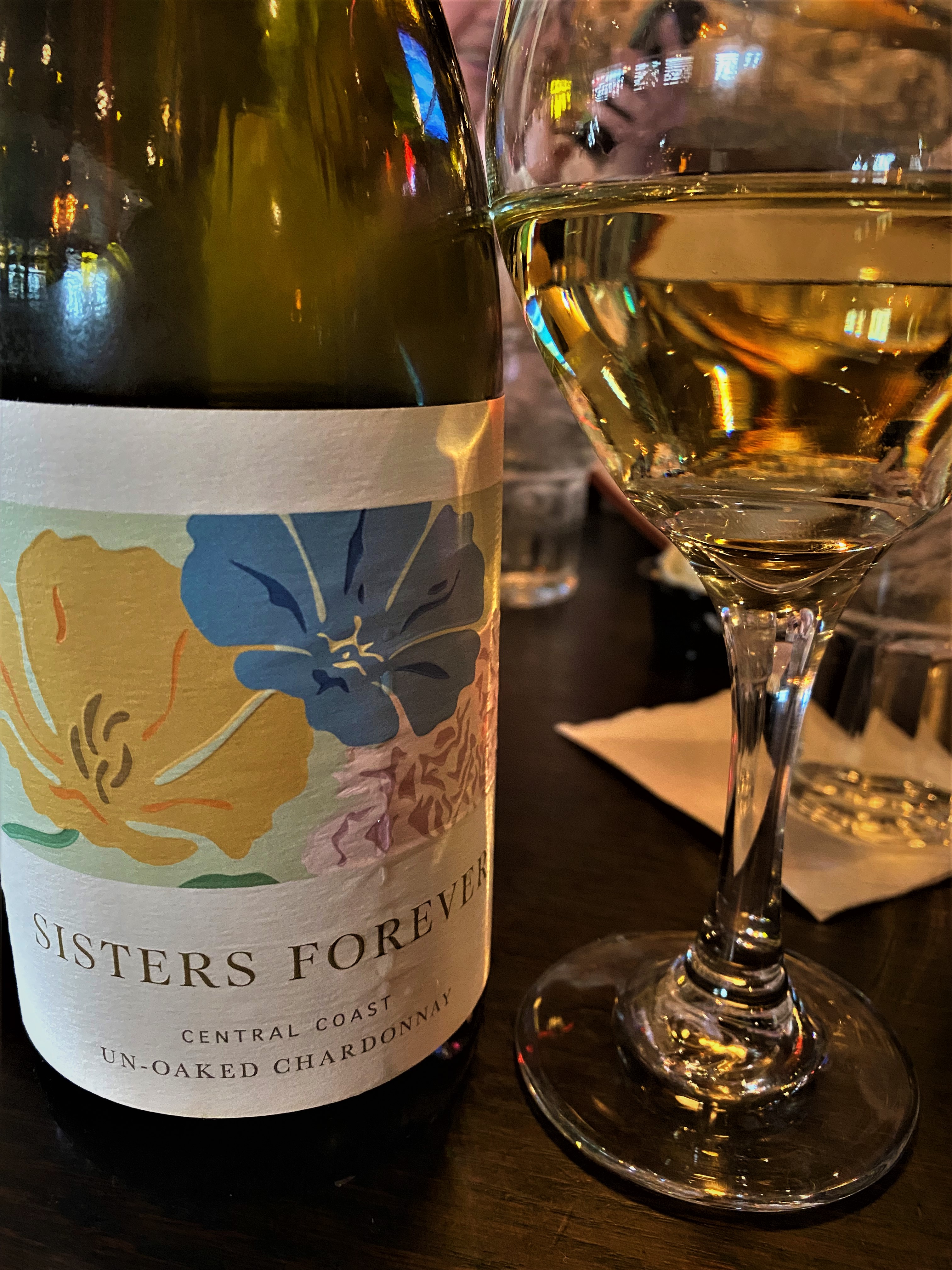
I was surprised that we were the only ones drinking wine and I saw a wine that I had not had from a winery that I knew.  They had a bottle of Donati Family Vineyards “Sisters Forever” Un-oaked Chardonnay Central Coast 2021.  Well, I am used to more attentive wine service and the waiter unscrewed the cap and started to pour and I stopped him, and said that is not the wine, as I am used to seeing their wine with their logo.  He took it back to the bar area and returned and showed me the winery name on the back label.  I was fine, it is just that one gets used to a certain look from a winery and they toss you a curve ball. The Donati family started arriving in the Paicines region of the Central Coast in 1998, when they purchased the land that would become the family estate and vineyard.  Since then, they have planted the vineyards and built a state-of-the-art winery.  Paicines is the southernmost AVA in the San Benito County and in the 1980’s and 1990’s the area was associated with the production of bulk wines, but a few wineries are attempting to correct that image.  To this day, much of the fruit is grown and then sent to wineries in other parts of California.  It is still home to the five-hundred-acre Vista Verde Vineyard that was previously owned by Almaden Vineyards, before the company was sold and split up in the 1980’s.  The sandy soils of gravel and limestone have forced the vines to develop deep root systems, because of the good drainage and has strengthened the vines.  The wine is ninety-five percent Chardonnay, three percent Viognier and two percent Albarino.  Fermentation and Aging were all done in Stainless Steel to maintain the integrity of the fruit.  It was a pretty soft golden color wine that offered notes of tropical fruits and white florals.  On the palate stone fruit and lemon zest, balanced, fresh and clean; a nice simple wine for seafood. 

Posted in Dining, Wine | Tagged , , , , , , | Leave a comment

Comanche Cellars Tempranillo 2020

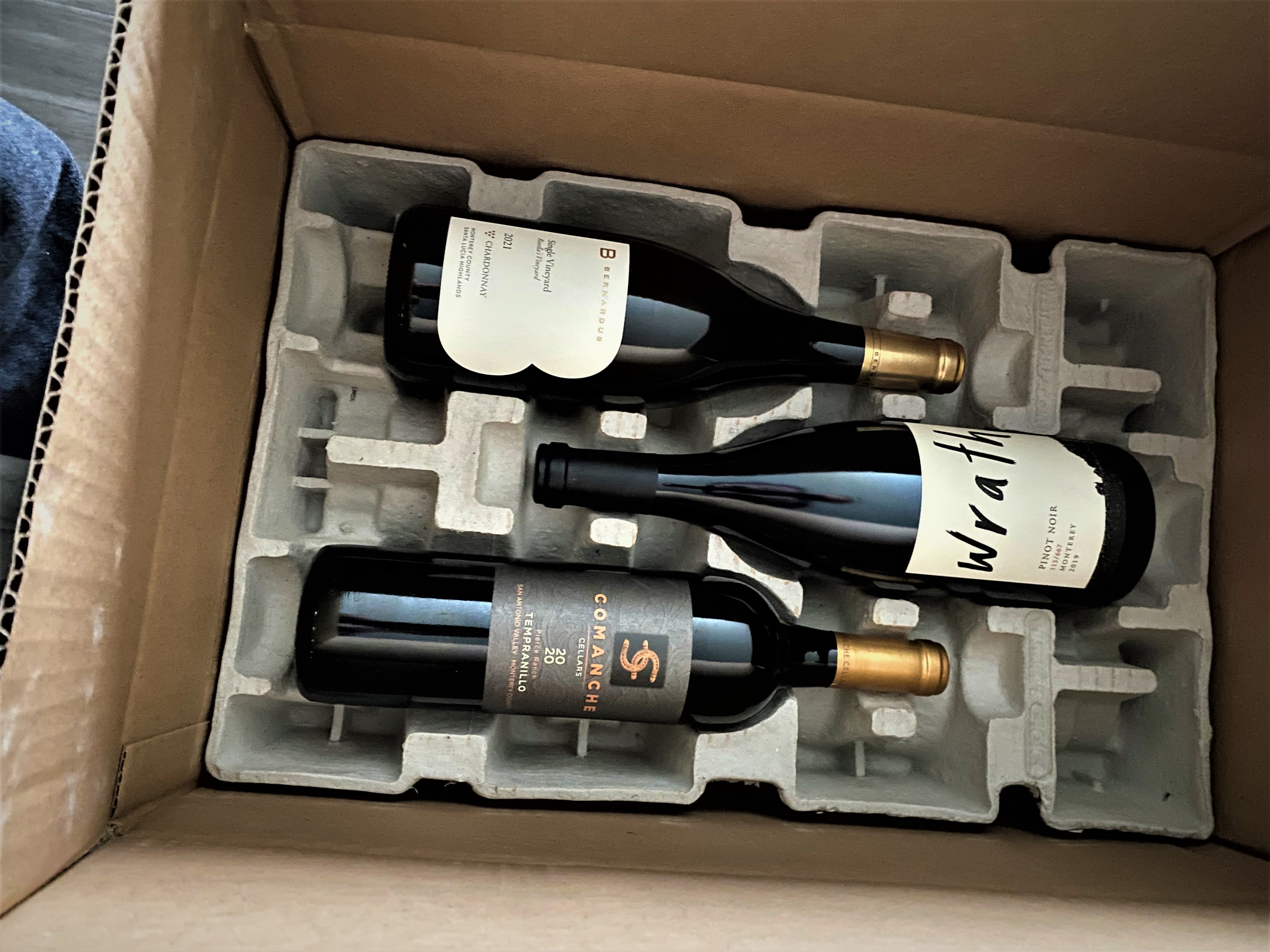
The last bottle that I pulled out from my shipment from “A Taste of Monterey” is Comanche Cellars Tempranillo San Antonio Valley 2020.  This will be the third bottle of wine that I have received from them.  The first was a Pinot Noir with a production of one-hundred-thirty-five-cases.  The second was a Petite Sirah with a production of eighty-nine cases.  I think that is a major plus from this club, because on occasions there are some really small production wines that would never find their way to Michigan.  

Michael Simons, in his own words started as a love affair and turned it into a passion for producing small lots of very handcrafted wines from neighboring vineyards.  The winery is now up to a production of eighteen-hundred-cases of wine.  Comanche was the name of the horse, he used to ride when he was ten years old.  Now, he laments that he hardly has time to ride a bicycle.  But he enjoyed his time with Comanche that much, that he has his name and shoes on every bottle of wine.  Since he is on the Monterey Peninsula, he has had the good fortune to have friendships and contracts with many vineyards: Pierce Family Vineyards in San Antonio Valley (Monterey), Chareva Vineyards above the Arroyo Seco, Mesa del Sol Vineyards in Arroyo Seco, Cedar Lane in Monterey, Siletto Ranch in Monterey, Hahn Family Vineyards in Santa Lucia Highlands, Chateau Pinette in the Sierra Foothills, Graziano Vineyard in Mendocino County,  Massa Estate (formerly Heller Estate) in Carmel Valley,  Tondre Grapefield in Santa Lucia  Highlands and Zabala Vineyard in Mendocino County.

Comanche Cellars Tempranillo San Antonio Valley 2020 is a wine that I will look forward to.  The fruit came from the Pierce Ranch Vineyards, a small family-owned operation in southern Monterey’s San Antonio Valley AVA.  San Antonio Valley received their AVA designation in 2007.  The fruit was aged for twenty-eight months in French Oak, of which thirty-five percent was new.  There were thirty-three cases produced.  The tasting notes for this famed “Spanish grape starts with bold, spicy cranberry on the nose.  With its wonderfully smooth mouthfeel, this single varietal brings aromas of tart cherry, smoked meats and a long satisfying finish that creates a beautifully balance glass of wine.”   

Posted in Wine | Tagged , , , , , , | Leave a comment

Wrath Estate Pinot Noir 115/667 San Saba Vineyard 2019

The second bottle of wine that I pulled from the “A Taste of Monterey” wine club parcel was Wrath Estate Winery Pinot Noir 115/667 San Saba Vineyard Monterey 2019.  Wrath Estate Winery is located in Soledad, California and they are a winery where production is limited, but not the quality, and since we have been there, they have opened a satellite tasting room in downtown Carmel.  The winery produces Pinot Noir, Chardonnay, Syrah, Falanghina and Sauvignon Blanc from their estate vineyard and some very respected private vineyards in the Santa Lucia Highlands.  This is among the top ten most highly rated Monterey wines by Wine Spectator and based on critic scores and price, this wine represents great value.  The earliest wine that I have had from Wrath is their Pinot Noir, San Saba Vineyard 2010.  The soil

The Estate’s San Saba Vineyard is set in a sheltered nook, just below the Santa Lucia Highlands.  The estate is seventy-two acres divided among five varietals.  It is a cool site, with very little rainfall and one of the longest growing seasons in the world.  The soils are a mix of Arroyo Gravelly Loam and Hanford Gravely Sandy Loam provide a low-vigor, well-draining, disease and pest-free medium for the vines; as well as a subtle mineral quality to their wines.  They are accredited as Certified Sustainable (SIP) farming program.

The Wrath Estate Winery Pinot Noir 115/667 San Saba Vineyard Monterey 2019 refers to the mix of two distinct clones; sixty percent Clone 115 and forty percent Clone 667. The grapes are hand-picked and hand sorted; and the Clones are kept in separate lots during fermentation.  Twenty percent of the wine undergoes whole cluster Initial Fermentation.  After fermentation the wine is aged in an assortment of different size French Oak barrels and twenty-five percent is new to create additional complexity.   The barrel aging is for about eleven months, and then bottle rested for an additional twelve months before release.   Just a shade under seven-hundred cases were produced.  The tasting notes that were furnished “has a distinctive spicy character that energizes the dark cherry and mineral tones in this bottling.  Made in a fresh, lively and pure style with loads of character.”

Posted in Wine | Tagged , , , , , , , | Leave a comment

Bernardus Rosella’s Chardonnay SLH 2021

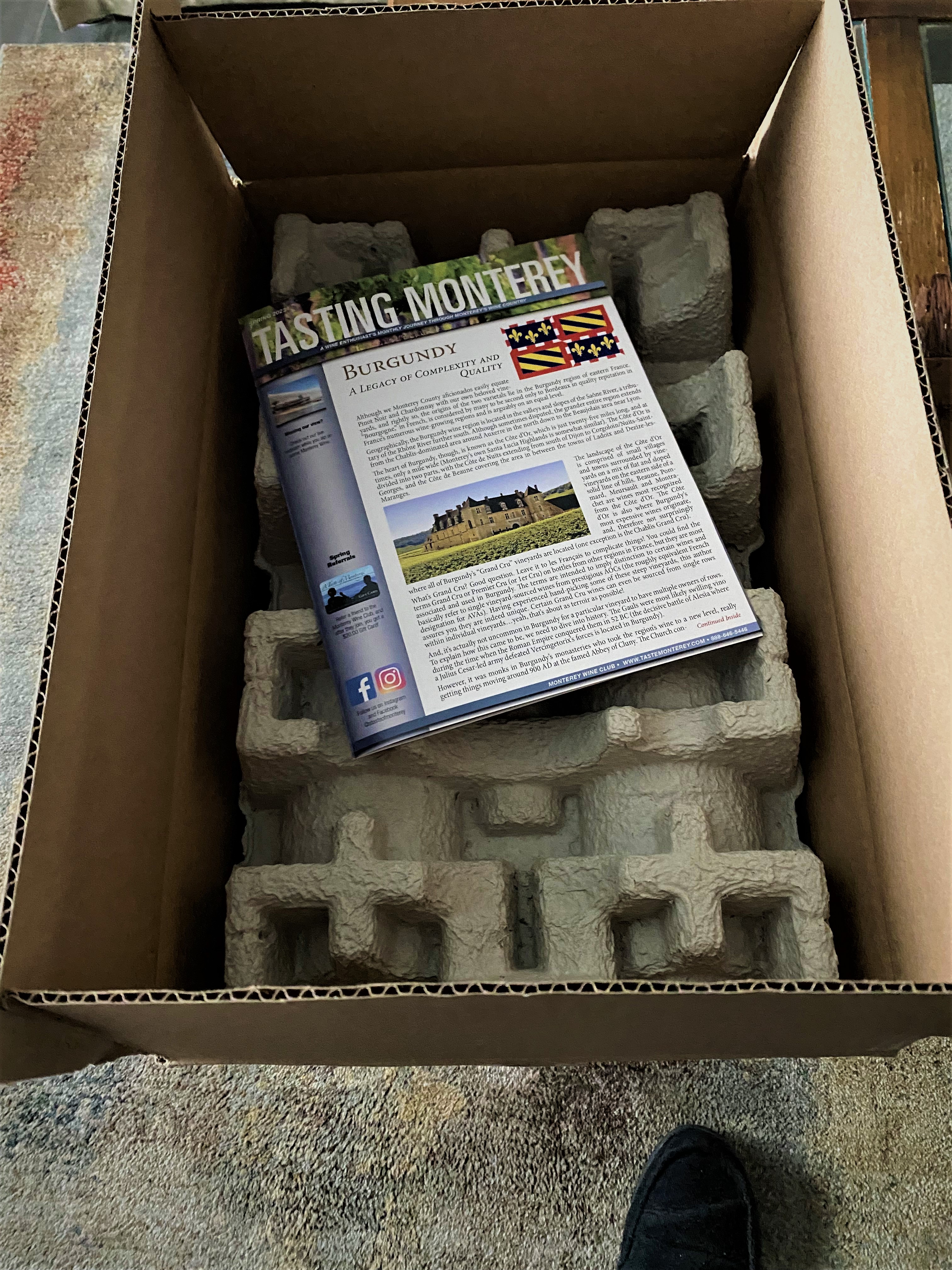
We just received our Spring 2023 shipment from our old wine club A Taste of Monterey and we have probably been members for around twenty years, one day I should probably ask. In fact, I called and they returned my message that we joined 10 February 2003, so I guess I guessed right.  We found the club by accident as were wandering around the Cannery Row district of Monterey, because we had a reservation at The Sardine Factory.  We were intrigued, especially since they said that they could ship to Michigan, which at the time was a felony state for personal wine shipments.  It took the famous Granholm v. Heald decision from the Supreme Court to show the error of the governor and is considered a watershed case for Direct to Customer sales of wine.  We joined their Reserve Wine Club, as we figured that it would probably be the only way to get some excellent and limited production wines from Monterey County, and we have been happy ever since.

Bernardus Winery and Vineyards was founded by Ben Marinus Pon about twenty-five years ago with the intention of creating premier wines in the Carmel Valley.  His intent was to produce single vineyard designated wines and a Bordeaux blended wine.  Bernardus has three estate vineyards: Marinus planted with Cabernet Sauvignon, Merlot, Cabernet Franc, Petit Verdot and Malbec; Featherbow planted with Petit Verdot and Cabernet Sauvignon; and Ingrid’s Vineyard planted with Chardonnay and Pinot Noir.  All fifty-four acres of estate vineyards are in the Carmel Valley AVA.  To compliment the estate vineyards Bernardus also has contracts with vineyards the Arroyo Seco, Santa Lucia Highlands, and others in the Monterey County. I am sorry to say, that Mr. Pon passed away in September of 2019 and his vision will be continued by Robert van der Wallen the current owner, who also understand the passion that Mr. Pon had for his winery.

The first wine out of the carton was Bernardus Winery Chardonnay Santa Lucia Highlands Rosella’s Vineyard 2021.  Rosella’s Vineyard is located in the heart of the Santa Lucia Highlands and was planted by Gary Franscioni, a fourth-generation farmer and the vineyard is named after his wife Rosella.  The vineyard is famous for their Pinot Noir, but just as impressive is their small block of Dijon clone Chardonnay, which is considered by many to be the finest Chardonnay in the Highlands. This wine is produced in the Burgundian tradition.  The grapes are hand-picked and gently whole-cluster pressed and Initial Fermentation using specially selected yeasts.  It then undergoes complete Malolactic Fermentation and each barrel is hand stirred every two weeks until shortly before blending and bottling for about eight months.  They use only French Oak barrels and one third new.  There were four-hundred-twenty-five-cases produced.  The tasting notes provided are for a golden colored wine that offers notes of ripe white fruits and baking spices.  The palate has tones of ripe peach and tropical fruits with secondary tinges of subtle caramel and a long crisp finish. 

Posted in Wine | Tagged , , , , , , | Leave a comment

Black Star Farms Club – First Quarter 2023

In case you are worried that we may have an empty cellar soon, we do belong to a wine club at Black Star Farms in the Traverse City area, I say that because they have a location in both peninsulas.  This is a special year for the winery, they will be celebrating their twenty-fifth anniversary.  In October 1997, Kerm and Sallie Campbell and Don and Marylou Coe looked at a property just south of Suttons Bay.  Sport Valley Farm was a hundred-twenty-acre equestrian estate developed by Barry Boone, an area restaurateur.  It was a palatial red estate house with soaring white columns, stables, barns and outlying paddocks that evoked Lexington, Kentucky and not northern Michigan.  In March of 1998, the property was acquired and named Black Star Farms after the stylized star in the marble foyer of the estate house.

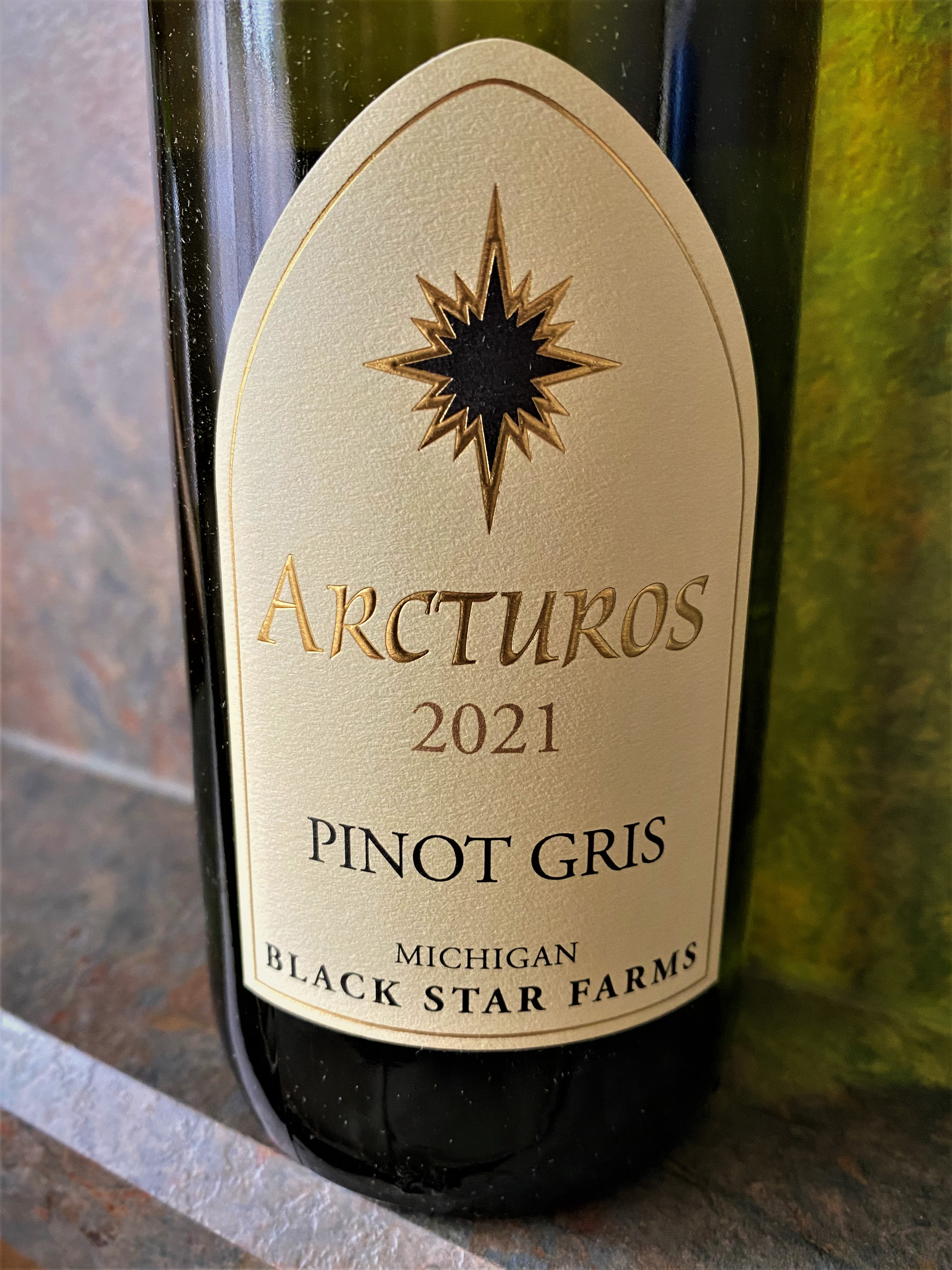
The first two wines out of the carton was Black Star Farms Arcturos Pinot Gris Michigan 2021.  On their website the wine is listed as having the appellation of Old Mission Peninsula, but the label reads Michigan, so to be official, I will say Michigan.  The winery does not offer much in the way of information of wine production.  They prefer to make this wine to remind one of a rich Alsatian Pinot Gris, instead of the leaner Italian style of Pinot Grigio.  The wine came from fruit that was well-developed; meaning fully ripened and later hanging.  They think this wine will be fresh and crisp for the next three to five years.  I will go out on a limb and state that I think this wine was done from Initial Fermentation to aging in Stainless Steel.  The tasting notes call for a white wine that offers notes of citrus, melon, and florals.  On the palate a dry wine with big fruit, balanced acidity and subtle minerality (terroir) for a finish.

The second two wines out of the carton were Black Star Farms Arcturos Pinot Noir Michigan 2020.  Pinot Noir is the most prolific red wine grape that they grow and bottle, and they have been producing a Michigan version of this varietal since day one.  The fruit for this wine was harvested from five different vineyards, hence the Michigan appellation.  The wine has been aged in used French Oak barrels, with about fifteen percent new, but no information for how long.  The tasting notes also suggest ten or more years for cellaring.  “If you are looking to try a Michigan version of what the French call Burgundy, this is your wine!”  The dark red wine offers notes of plums and violets.  On the palate a fruit forward wine with tones of dark cherries, currants, and spices compliments of the oak.      

Posted in Wine | Tagged , , , , | Leave a comment

Tua Rita Keir and Per Sempre

This Raconteur was in the presence of another Raconteur as Thomas Cuni led us on a wine tasting first of Damilano and then with Tua Rita at my local wine shop, The Fine Wine Source in Livonia, Michigan.  Rita and Virgilio Tua began with two hectares of vineyards in 1984, and in less than a decade were up to nine hectares, then twenty and now thirty.  Their passion and enthusiasm originally had them labeled as “vin de garage.” Unfortunately, Virgilio passed away in 2010, but their daughter married and she and her husband both have the driven passion that her mother and late father displayed.

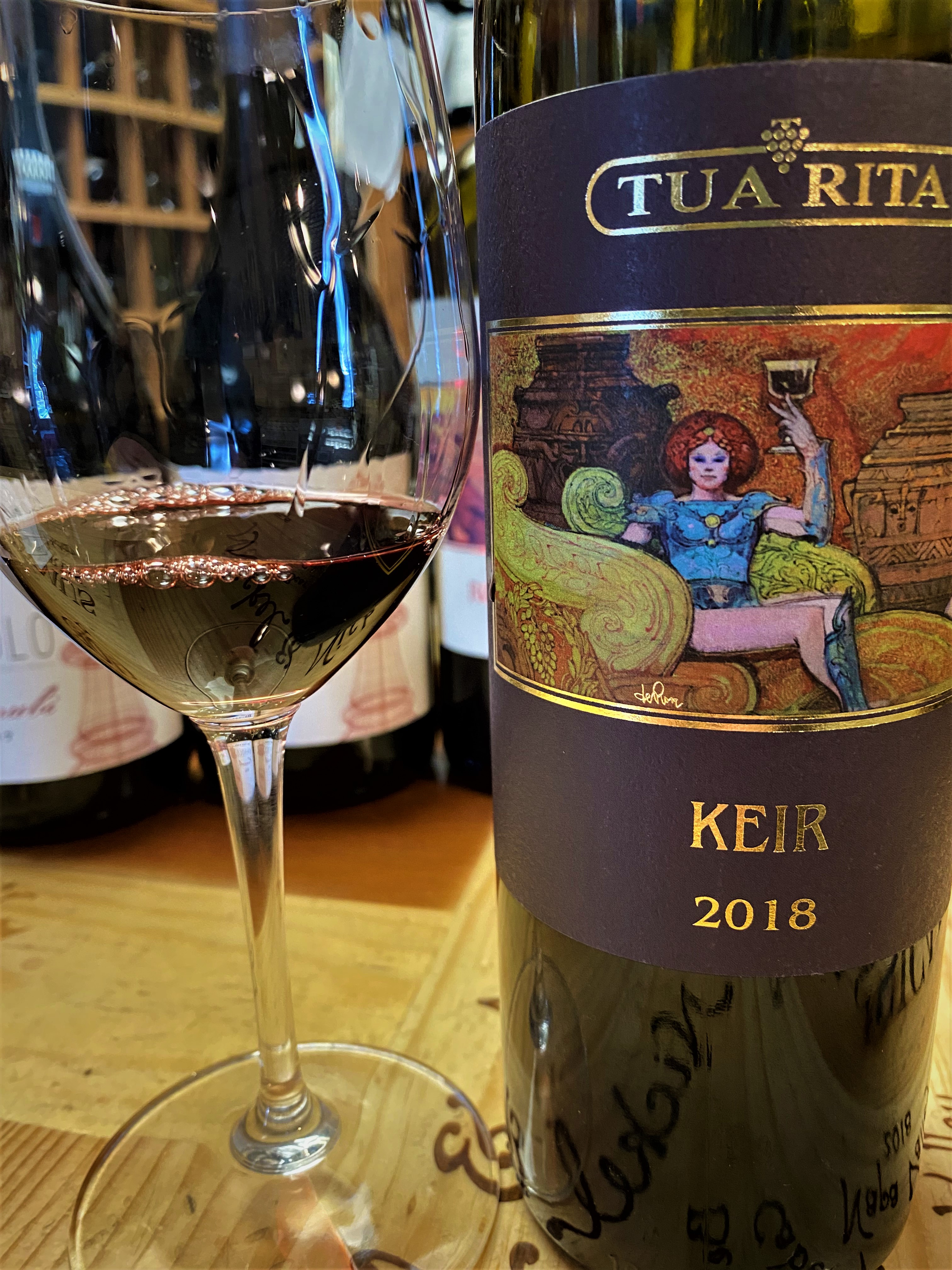
We had some Azienda Agricola Tua Rita Keir (Val di Cornia) Toscana IGT 2018 and Keir in old Greek means “working hands,” meaning the hands that create the amphora.  This wine is pure Syrah and comes from a one-hectare vineyard on a sloping hillside of Alta Maremma part of the Colline Metallifere with southern exposure and the appellation of Val di Cornia.  The vineyard was planted in 2004 on soil that is clay, lime and small rocks and the first vintage was 2016.  The Initial Fermentation is done in open Amphora pots along with a Maceration period on the lees for six months in the Amphora, and then rests for three months in French barriques and then followed with several months in the bottle before being released.  There were twenty-five-hundred bottles produced of this wine.  A beautiful garnet color wine that offered notes of red and black fruits, the earth and spices.  On the palate there were tones of black cherry, raspberry and blackberry, Bay Leaf and some wonderful full tannins, perfectly blended and balanced with a nice long count finish of terroir.  This was a delightful Syrah that really enchanted me, it was really refreshing.

The last wine of the tasting was Tua Rita Per Sempre Toscana IGT 2018, another Syrah wine done in a more traditional winemaking method, and Per Sempre is Italian for “forever.” This elevated vineyard is one-hundred-seventy-nine-acres of clay, lime, pebbles and stones with a southern exposure.  The vineyard was planted in 1998 and the first vintage of this wine was 2001.  Initial Fermentation was for sixteen days, followed by Maceration for twenty-eight days in oak, and then Malolactic Fermentation and aging follows in French Oak barriques for about twenty months and then six months of resting in the bottle before release.  This was a deep garnet wine that offered notes of blackberries, plums and figs with black pepper and scents of violets.  On the palate this was a full-bodied wine with notes of black fruits and pepper with silky tannins and a nice long count finish of fruit and terroir.  This was a big classic Syrah and if I hadn’t had the Keir, I would have been totally for this wine, but as we talked even after the tasting, I was still in love with the Keir and that interpretation of Syrah.      

Posted in Wine | Tagged , , , , , , , , , | Leave a comment

Tua Rita and Two from Notri

We had just finished tasting six wines from Damilano with Thomas Cuni at The Fine Wine Source, Livonia, Michigan and then we were going to taste four wines from Azienda Agricola  Tua Rita.  Tua Rita is located just outside Suvereto in the Colline Metallifere hill country of Tuscany.   They are famed for their Redigaffi IGT Toscana and the 2000 vintage was the first Italian wine to get a perfect 100-point rating from Robert Parker.  Rita Tuan and her husband, Virgilio Bisti bought two hectares of land in 1984 and planted it with Cabernet and Merlot.  They later purchased an additional 17.5 acres and did more planting.  It has been said that the wines of Tua Rita are some of the most difficult wines to find in Italy.

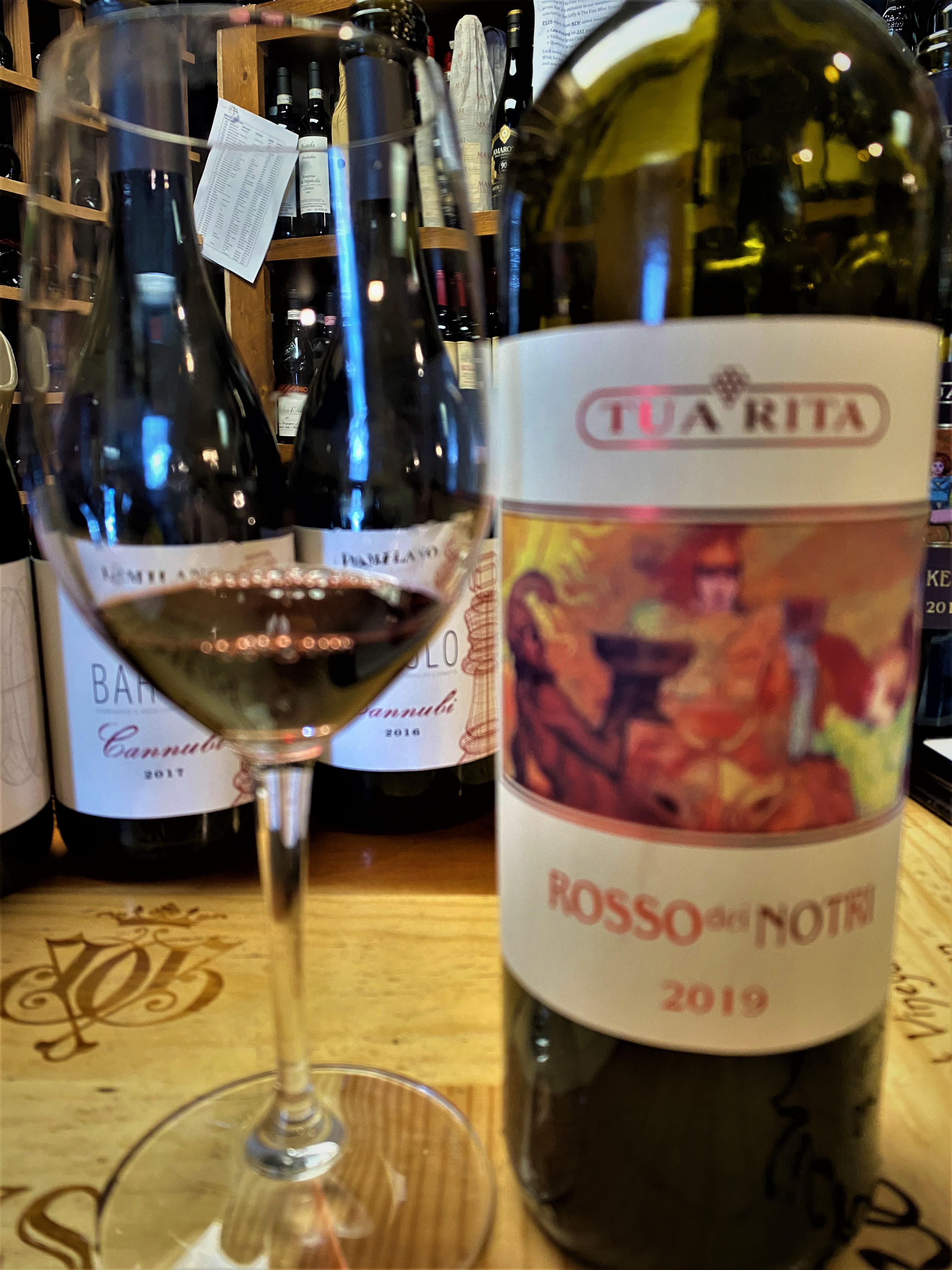
We started off this tasting with Tua Rita Rosso dei Notri Toscana IGT 2019 and is their entry-level wine showcasing recently planted vines of Cabernet, Syrah, and Merlot.  A hillside vineyard of twenty-five acres of pebbles and clay soil with southern exposure.  The first vintage of this wine was in 2000 and this wine is a blend of forty percent Cabernet Sauvignon, forty-percent Merlot, ten percent Syrah and ten percent Cabernet Franc.  Initial Fermentation is for fifteen days, with maceration for an additional twenty days and then Malolactic Fermentation for twenty days in Stainless Steel.  The wines are then blended aged in French Oak for three months, and then six months in the bottle before release.  A deep ruby wine that offered notes of black fruits along with cocoa and spices.  On the palate tones of black cherries, blackberries, plums, silky tannins, balanced and a nice finish of fruit and spices. An ideal wine immediately.

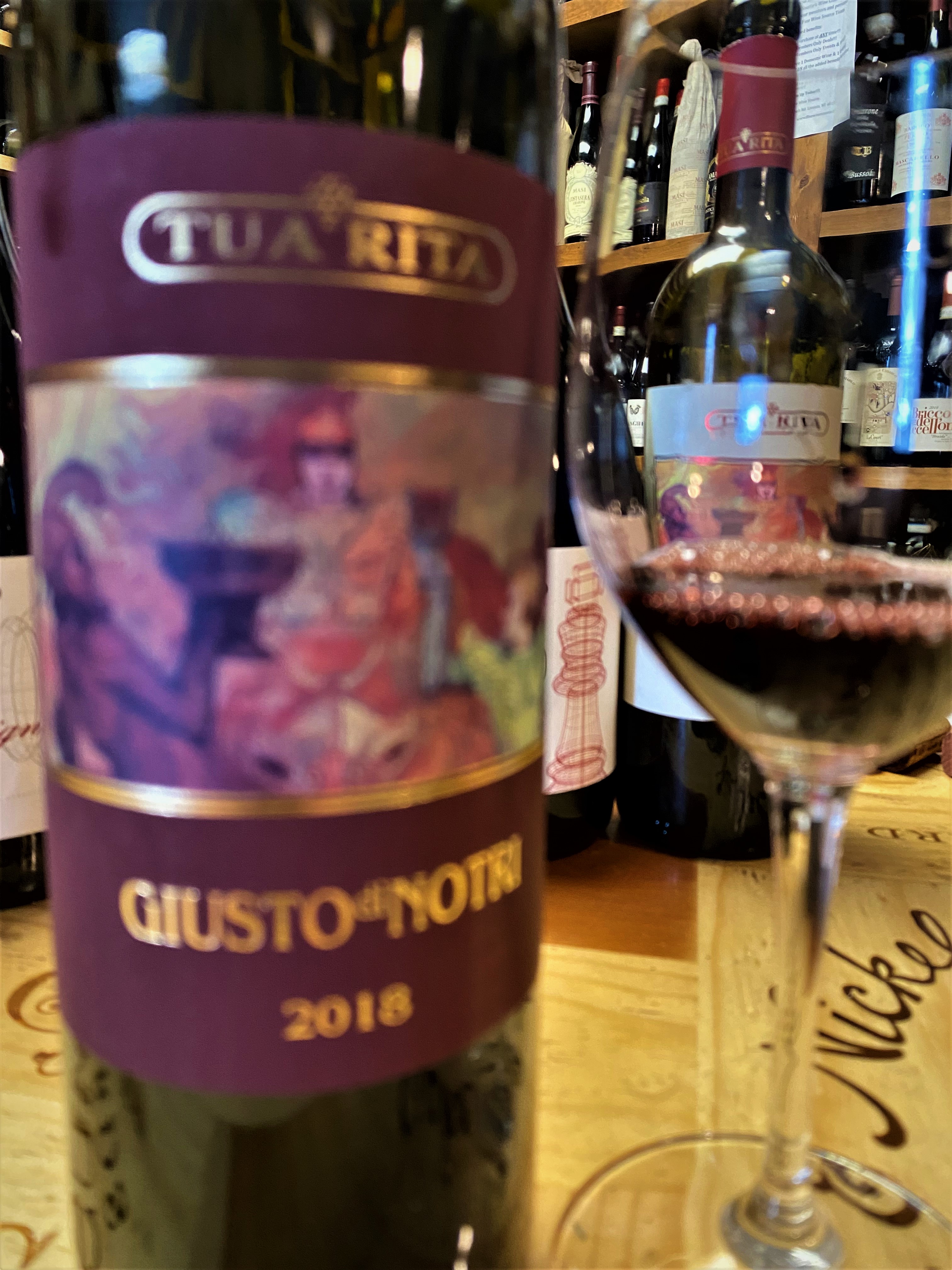
We then had the Tua Rita Giusto di Notri Toscana IGT 2018 and the first vintage of this wine was 1992.  The word “Giusto” is in homage to the Patron Saint of Suvereto and “Notri” is the name of the winery’s exact location.  The wine is a blend of eighty percent Cabernet Sauvignon, ten percent Merlot and ten percent Cabernet Franc.  Initial Fermentation was for fifteen days, with a maceration period of twenty-five days in Stainless Steel.  Malolactic Fermentation and about twenty months of aging in French Oak barriques (a mix of new and once used).  A deep purple wine offering notes of black fruits, florals and spices.  On the palate tones of blackberry, plum and currants and some vanilla, in a full bodied wine with good tannins, a silky texture and a nice finish of fruit and terroir.  This wine would be wonderful with a bit of aging in the cellar.                 

Posted in Wine | Tagged , , , , , , , , , , , | Leave a comment

Damilano Barolos – Lecinquevigne and Two from Cannubi   

Thomas Cuni, the Brand Manager for Damilano Azienda Agricola srl was really pouring some stellar wines at The Fine Wine Source in Livonia, Michigan. Damilano is located in the La Morra district of Barolo, and Barolo is so revered in Italy, that when they created the DOCG status, only Barolo and two other areas were awarded.  There are twelve parishes of Barolo, and it is almost to the layman’s eye as Byzantine as Burgundy.  The area has a very complex topography with countless small hills, and the southern exposures are planted in Nebbiolo and the northern exposures are planted with another varietal.  Even the soils and meso-climates can very between the communes.  In fact, there is an informal “cru” status, based on the official, structured model used in Burgundy, and winemaker Renato Ratti was instrumental in this map and designation for : Cannubi, Sarmazza, Brunate, Cerequio, Rocche, Monprivato, Villero, Lazzarito, Vigna Rionda, Bussia, Ginestra and Santo Stefano di Perno.

The first of the Barolo wines was Damilano “Lecinquevigne” Barolo DOCG 2016.  Lecinquevigne is made from five distinct Nebbiolo sites in Barolo, and the fruit is from five vineyards in four different parishes: Barolo, Grinzane Cavour and Monforte, and they all are on elevated sites with southern exposure with calcareous and clay soils.  The vineyards were planted from 1970-1990, hence the average age for the vines is around forty years. The first vintage of this wine was 2002.  Initial Fermentation is done for fifteen days in Stainless Steel with an additional ten days of maceration.  Then the juice is aged for twenty-four months in a mix of 20 hl to 100 hl barrels.  This is followed with an additional twelve months of aging in the bottle, before being released.  The ruby red wine offered an intense nose of roses, leather, tobacco, violets and tar.  On the palate tones of black cherry, cranberry, with really tight tannins and a nice long-count finish of dried fruit and terroir.  I am sure as this wine matures more, the tannins will open up with secondary and tertiary tones of truffles and chocolate.  This may have been opened early, as 2016 is considered one of the best vintages for Barolo.

Then we had a real treat as we tried Damilano Cannubi Barolo DOCG 2017, followed by Damilano Cannubi Barolo DOCG 2016.  Cannubi “Cru” is found within one of the six core zones which comprise the fiftieth UNESCO site in Italy.  An elevated hillside vineyard with a southern exposure on soil that is a mix of Calcareous Marl of Clay, Limestone and Sand with low potassium and a high calcium/magnesium content that offers unique notes and tones to the wine.  The first vintage of this single vineyard “Cru” wine was 1935.  The vineyard underwent replanting from 1970 – 1990, and now the average age of the vines are forty years.  This wine is pure Nebbiolo and the Initial Fermentation is for fifteen days in Stainless Steel, followed by ten days of Maceration using the Submerged-Cap technique.  The wine is then aged for twenty-four months in a mix of 20 hl to 100 hl barrels, with an additional twelve months of aging in the bottle.  We started with the 2017, a nice ruby-red wine that offered notes of black fruits, leather, tobacco and menthol (tar).  On the palate tones of cherries, plums/prunes, spices, and tight tannins, and a nice long-count finish of dried fruit, some heat and some terroir.  The 2016 had similar offerings, but on the palate, it was a bigger wine that was really chewy, a term that I learned fifty years ago, and I still like using it, when a wine is very expressive.  I think that both wines were still youthful, the 2016 has been outstanding each time that I have had it, and I am reading that some feel that the 2017 may end up being another stellar vintage.     

Posted in Wine | Tagged , , , , , , | Leave a comment