Two Graduations in One Day

My Bride’s godson graduated from college and we drove out to see the ceremony.  After the ceremony, they announced that we all suffered in sweltering heat in at an arena, because they were concerned that it was safer than to be there, then in a comfortable auditorium.  The stadium had the old-fashioned bleacher benches, and my Bride went to one of the ushers and said, that her husband (me) would not be able to sit like that for hours, so they had me sit in an area on folding chairs and brought me a bottle of water.  I watched with another man and we had a discussion as to whether or not, we would watch student(s) fall over from the direct sun baking on them in their black robes, while they listened to faculty members pontificate on what a great job they were doing.

I am glad to say that no student passed out, and I slowly worked my way out and sat at the “medical tent,” at least there was shade and fans and coolers of water.  I eventually caught up with my Bride and we drove to where the luncheon would be, and we were there first, so I ordered a bottle of wine, which we paid for immediately and figured out what we were going to have for lunch.  The first time, we had eaten at this small pizzeria chain and I was very happy, we split a Caesar Salad, you know who wanted that, and a custom pizza of pepperoni, roasted garlic, caramelized onions, and peppadews.  My Bride went and gave money to the people that were picking up the check for a group of twenty, who we just met that day.  I mean, why should they, have to pay for our meal?  The bottle of wine that I ordered was Bieler Pere & Fils “Sabine” Coteaux d’Aix-en-Provence 2022.  In 1992, Philippe Bieler founded Chateau Routas in Coteaux Varois, a small appellation in the middle of Provence. A few years later, two of his children became involved, they had a chance to sell the Chateau and founded Bieler Pere & Fils.  The Coteaux d’Aix-en-Provence appellation was originally a VDQS in 1956, as it was unofficially known as Coteaux du Roy Rene (Rene d’Anjou who loved the local wines back in the 15th Century.  The region was granted AOC in 1985.  The wine is a blend of 32% Grenache, 23% Syrah, 17% Cinsault, 11% Cabernet Sauvignon, 9% Rolle, 5% Grenache Blanc and 3% Counoise.  Each block of grapes or vineyards are fermented separately using different yeasts and different lees treatments.  Each tank of grapes is treated with nitrogen gas, so that there is no air contact with the juice, until it is fully blended and then bottled to maintain the fruit.  A pretty pink/salmon shade that offers notes of peaches, white cherries, raspberries, tea and Provence herbs.  On the palate tones of red fruits, stone fruit, tea, and spices in a brightly acidic wine that finishes with fruit, rose petals and wet stones.
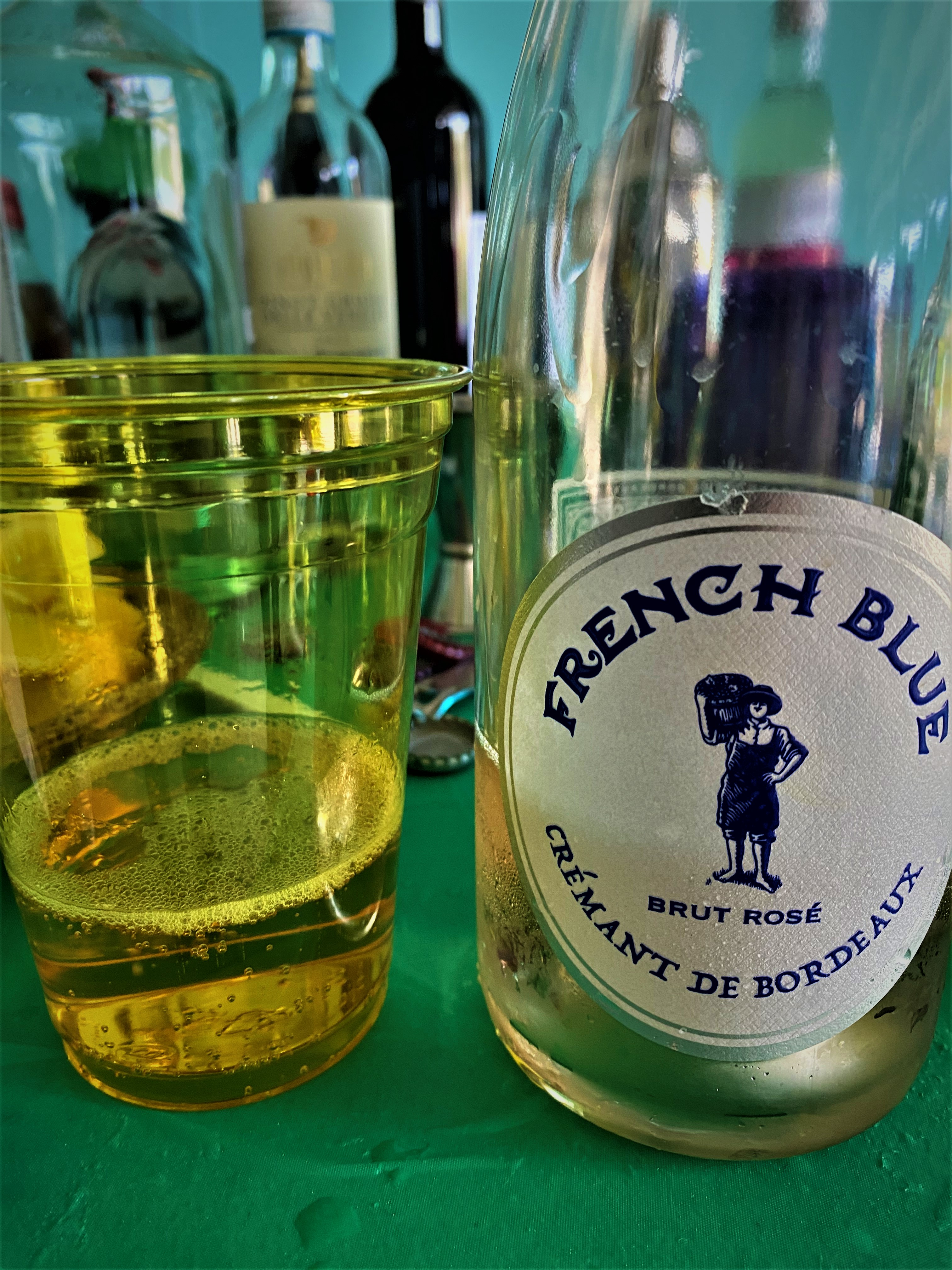
So, after driving an hour to the university, and almost an hour to get to the luncheon, we drove back about half-way to attend a high school graduation party at the parent’s home.  We were so full from the lunch, that we just skipped having another meal, but there was a lot of merriment and glee, and my Bride was perfect going from table to table as is her nature.  As for me, I wasn’t hungry, but I was still outside in the sun, so I looked for something that could keep me cool and comfortable and I saw a bottle of French Blue Cremant de Bordeaux Brut Rosé NV.  The winemaker at French Blue, Stephanie Rivin is attempting to put an American twist on French wines.  Since 1990, Cremant de Bordeaux has been allowed, a Sparkling Wine and this wine is produced “Methode Traditionnelle” and is produced in the Nouvelle-Aquitaine/Bordeaux district.  What also helps is that along the banks of the rivers Garonne and Dordogne are natural caves and grottos with the perfect humidity for the stockage of sparkling wines.  The wine is ninety-nine percent Merlot and one percent Malbec.  The fruit is hand harvest, pressed and undergo the Initial Fermentation.  The Second Fermentation occurs after bottling, and the wine ages for twelve months sur lie and subject to daily “riddling” of a quarter turn, until after a year, the bottle is disgorged and the final dosage is added.  A salmon-colored wine with tiny bubbles offering notes of raspberries, and currants.  On the palate, there was not a lot of mousse, but there was a  touch of vanilla and it was enjoyable on a hot summer day.       
Posted in Dining, Wine | Tagged , , , , , , , , , , , , , , , , , , , | Leave a comment

Black Star Farms Club June 2023 Selections

You know that I go back to drinking wine from my high school days and I graduated from college right about the time of the Judgement of Paris.  Well for all of those early years, California was not on my mind and certainly not Michigan.  We had been traveling to the different parts of wine country in Michigan for the last twenty years or so.  We were staying at the Inn at Bay Harbor and we tried some of the wines from Black Star Farms and decided that we had to go out of our way to drive home, to buy some of the wine that we just had, met a great employee in Chris Lopez and we ended up joining their club.   

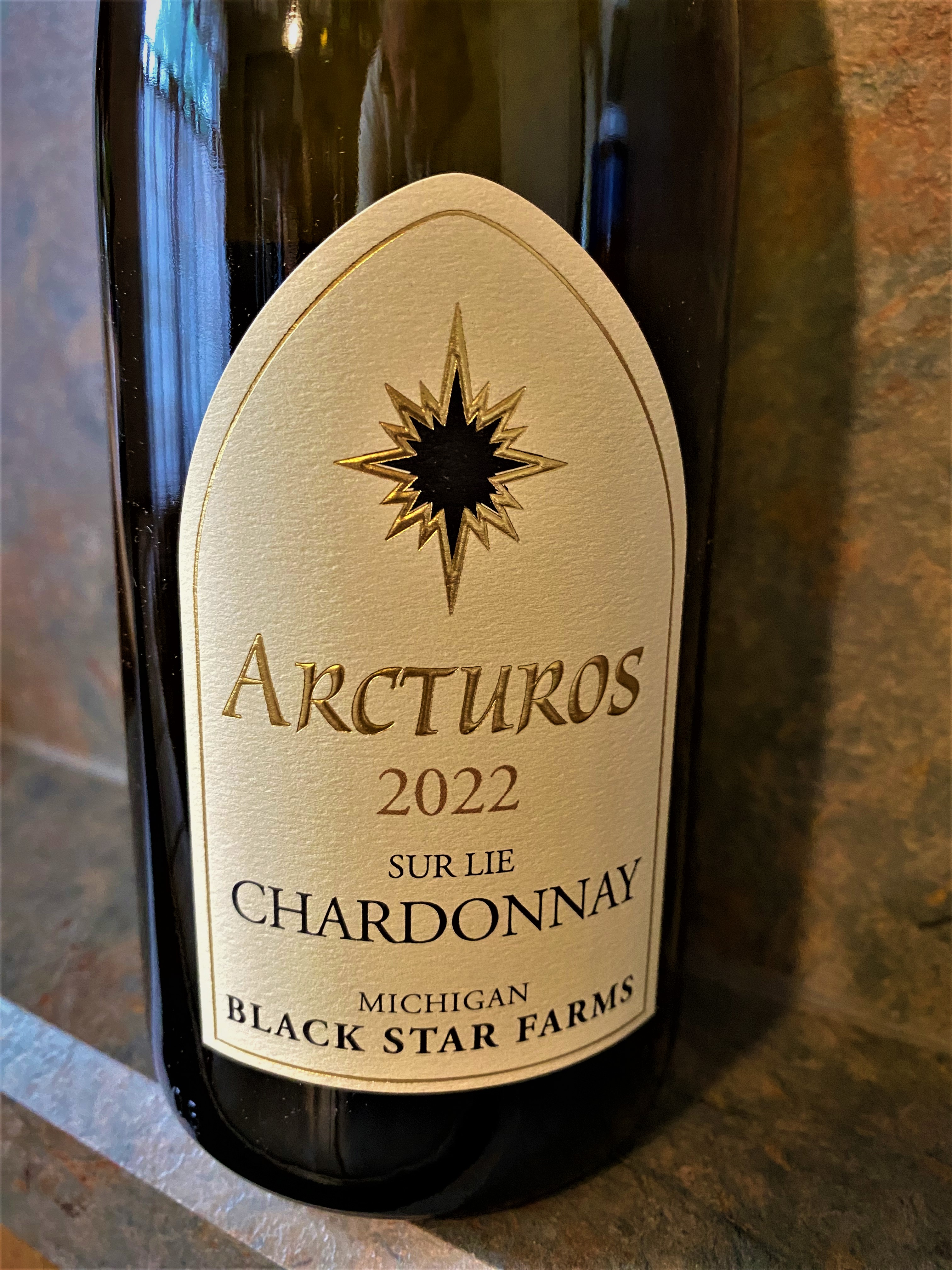
Each club shipment has four wines, two different offerings.  The first wine out of the carton is their Black Star Farms Arcturos Sur Lie Chardonnay Michigan 2022, which is what the newsletter describes, but with a different wine in the photo (they may need another proofreader, but I know that it is difficult, as I think of my errors over the years).  Black Star Farms is located on the 45th Parallel that runs through some of the great wine regions of the world, and it also can appreciate the “lake effect” climate.  This wine carries the Michigan AVA, because Black Star Farms has vineyards on both sides of Traverse City; on the Old Mission Peninsula AVA and Leelanau Peninsula AVA.  This wine undergoes all phases of production in Stainless Steel tanks and they age on the lees (Sur Lie) to get more complexity compared to other unoaked Chardonnay wines. They use Stainless Steel to maintain the pure fruit flavors of the grapes, both in aromatics and flavor.  The light-golden-yellow wine offers notes of citrus, apples, and pears, along with hints of florals and honeysuckle.  On the palate, this medium-bodied wine has tones of citrus and white fruits, pineapple and lemon peel; and a bright finish with tinges of flint (terroir).

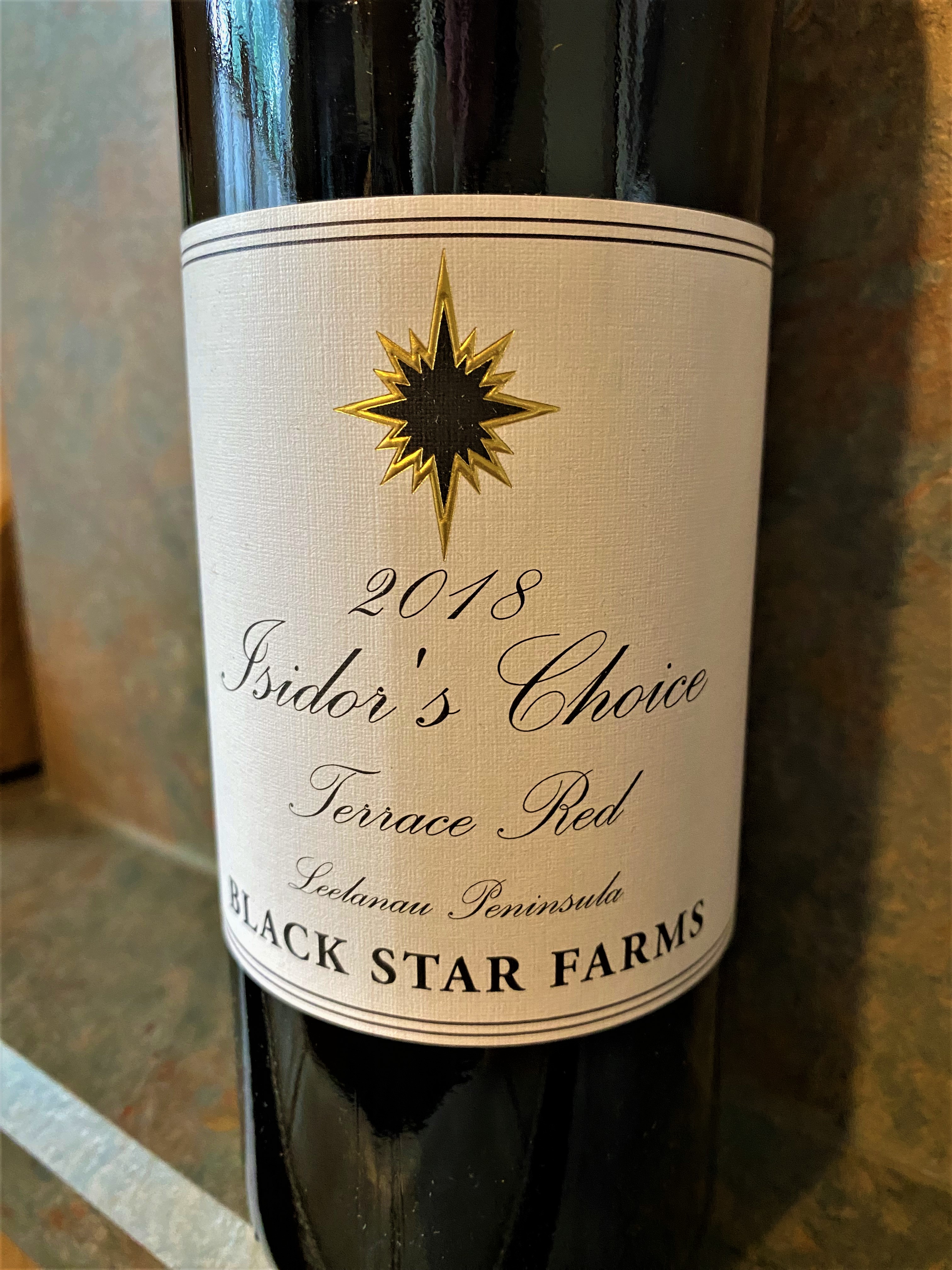
The second wine in the shipment was Black Star Farms Isidor’s Choice Terrace Red Leelanau Peninsula 2018 and is one of their “limited red wines.”  Isidor’s Choice wines are from a partner-grower vineyard to Black Star Farms.  The Terrace Red features Teroldego and Lagrein grapes originally from Northern Italy and offer a depth of color and a “wild” fruit profile.  Those two grapes are tempered with the addition of Cabernet Franc and Merlot which both soften the wine and add nuance to the blend.  It is described as “wild blueberries that have been dusted with white pepper.”  It is also suggested that this wine will age for a decade or so, and that it should be “opened in advance, to offer broad and complex dark fruit character, plenty of spice” and a wine that craves big food flavors.  

Posted in Wine | Tagged , , , , , , , , , , , | Leave a comment

A Taste of Monterey Club July 2023

A Taste of Monterey club shipment arrived and this was the first wine club we joined back on 10 February 2003, and we discovered them by happenchance as we were killing time, waiting for our lunch reservation at the famous Sardine Factory in Cannery Row.  We also bought a Hirschfeld while we waited for that reservation.  What really got us excited is that for some odd reason, they could ship to Michigan, because at that time we were still a felony state for wine shipments, thankfully our useless governor was sued and lost the case, and it actually became easier for wine drinkers across the country to enjoy wine shipments, though there were and still are, some exemptions.

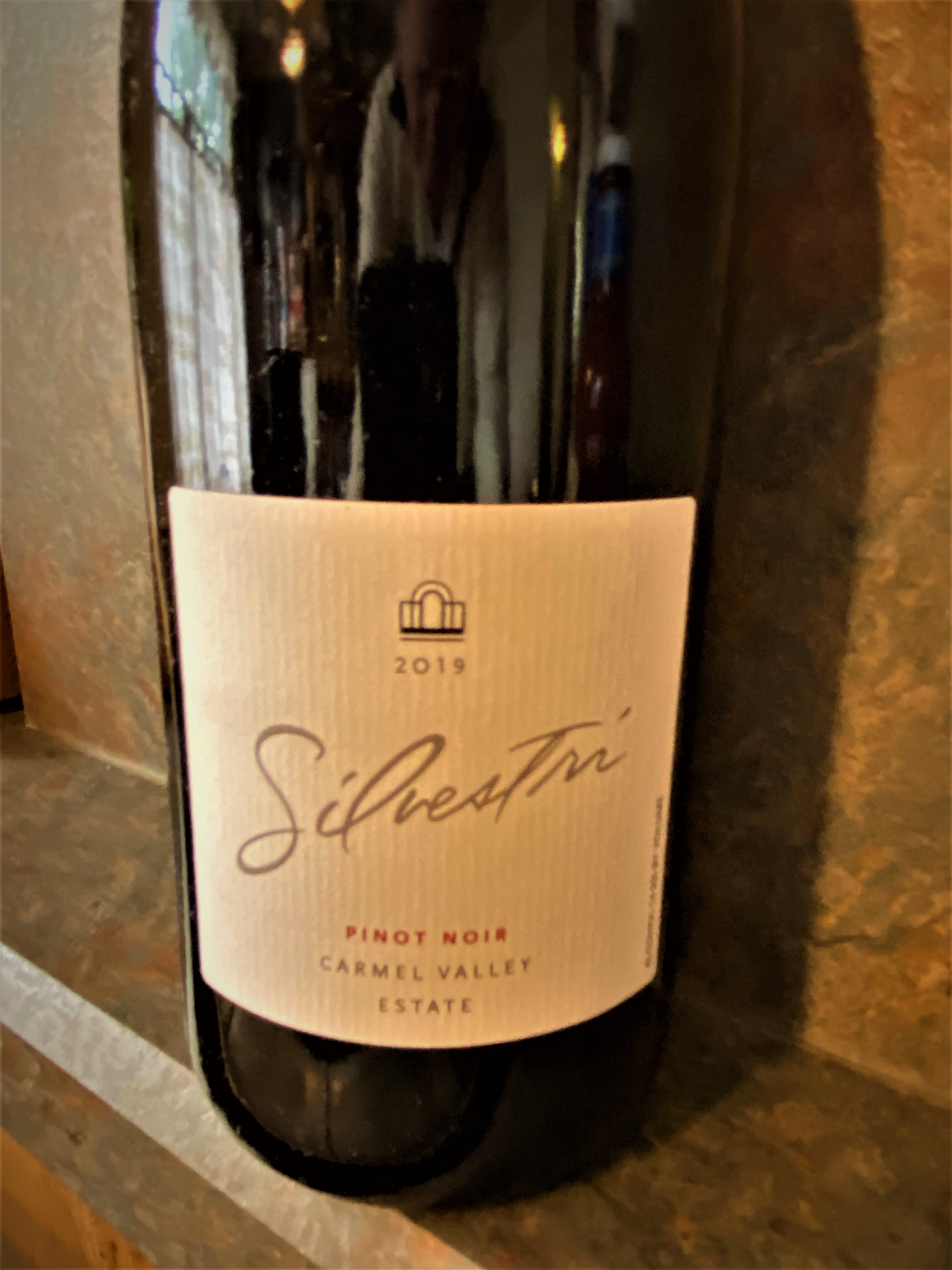
The first bottle was Silvestri Vineyards Pinot Noir Carmel Valley 2019.  Alan and Sandra Silvestri and family moved from Los Angeles to the Carmel Valley in 1989, where Alan had a career in film music, which he still enjoys.  The area was perfect for wine growing, being only fifteen miles from the Pacific Ocean and enjoying the cooling temperature that the marine influence offers the valley.  The vineyard is on the benchland and hillsides, several hundred feet above sea level.  After harvest, the Pinot Noir is de-stemmed and whole berries are put into fermenters where they cold soak for a day, before yeast is added.  After another day, the wine is “punched down” three times a day for about two weeks.  With the Initial Fermentation and Maceration done, the juice undergoes Malolactic Fermentation for a month, then it is transferred to French Oak barrels, of which almost half are new, and is aged for about one year, before bottling.  They produced nine-hundred-twenty-seven-cases of wine.  The wine is described as offering notes of cherry and raspberry, and spices.  On the palate a continuation of the tones of cherry and raspberry, with some vanilla, a tinge of cola, bright acidity, and soft tannins.

The second wine in the carton is Big Sur Vineyards BSV Red Monterey 2021.  Big Sur Vineyards began as an olive grove and they also made artisan soaps, on the edge of the Ventana Wilderness.  They began planting Rhone varietals as a hobby to see what would happen, and they eventually began producing their Big Sur Vineyards Red; recently they officially became a Rhone Ranger.  There is little information about the wine.  It is a blend of Grenache, Syrah and Petite Sirah.  Their tasting notes lists “lush ripe fruit and a “satiny” tannin structure.  Plum, red currant and blueberry merge with a subtle minerality in the wine along with kirsch, springtime floral notes and a hint of mocha.”

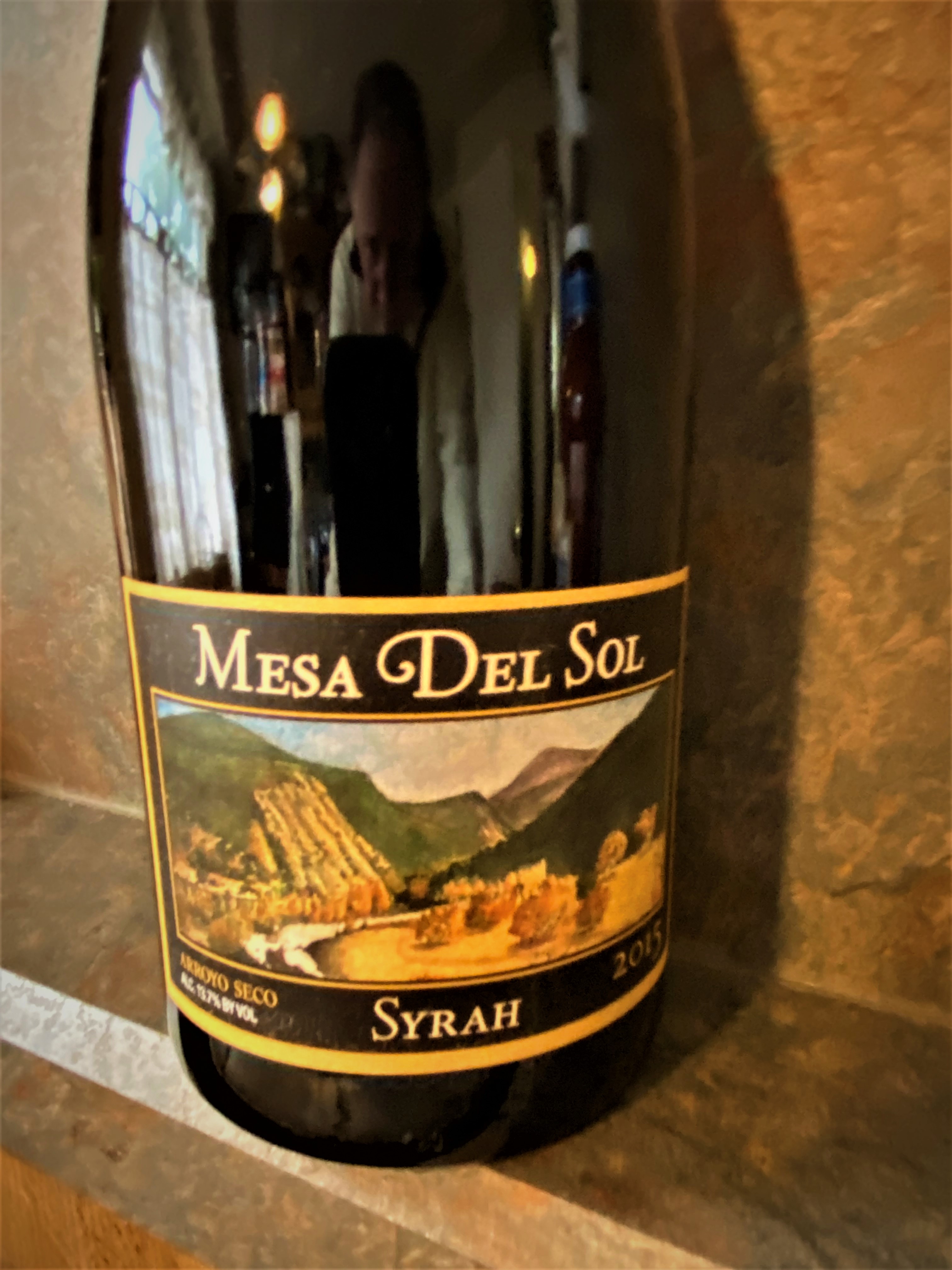
The last bottle in the shipment was Mesa Del Dol Syrah Arroyo Seco 2015. Mesa Del Sol Estate Retreat & Winery is located on an upland promontory at the junction of three major watersheds, and has been a favorite place for travelers for over a century.  There is a small stone water house and a portion of one of the cabins that date back to the 1800’s and it is believed to be a stop for the overland conveyance from the Mission San Antonio to the Carmel Valley.  The hot dry air of the Arroyo Seco Highlands became a health center for those suffering from tuberculosis and other similar ailments.  One of the more prominent visitors back then was Teddy Roosevelt.  In 1927, a California Senator Fred Weybret purchased the property for his family and the new main home was built in 1936, and the family resided there until his death in 1945.  The property then was purchased by a noted lettuce baron from Salinas, who named the property Mesa Del Sol, adding more buildings, gardens, and a pool for his family.  In 1998 another Salinas agricultural family purchased the property, they planted the vineyards and a trout pond was reinstalled.  Since the gentleman’s death his widow has continued to restore the fourteen-acre vineyard estate, won awards for the wines, and also has crops of fragrant Provence Lavender that is used in sachets, lotions and oils.  The winery leaves no information about their wines, other than a limited advertising statement referring this as “the Marilyn Monroe of wines; voluptuous and luscious, with nice structure and lots of legs.”  The tasting notes are “lively and elegant on the nose, palate and finish.  Hints of elderberry and currant, lavender, black pepper, and sweet tobacco… soft and lively tannins on the finish.”

Posted in Wine | Tagged , , , , , , , , , , , , | Leave a comment

Tres Sabores “Por Que No?” and a Petite Sirah

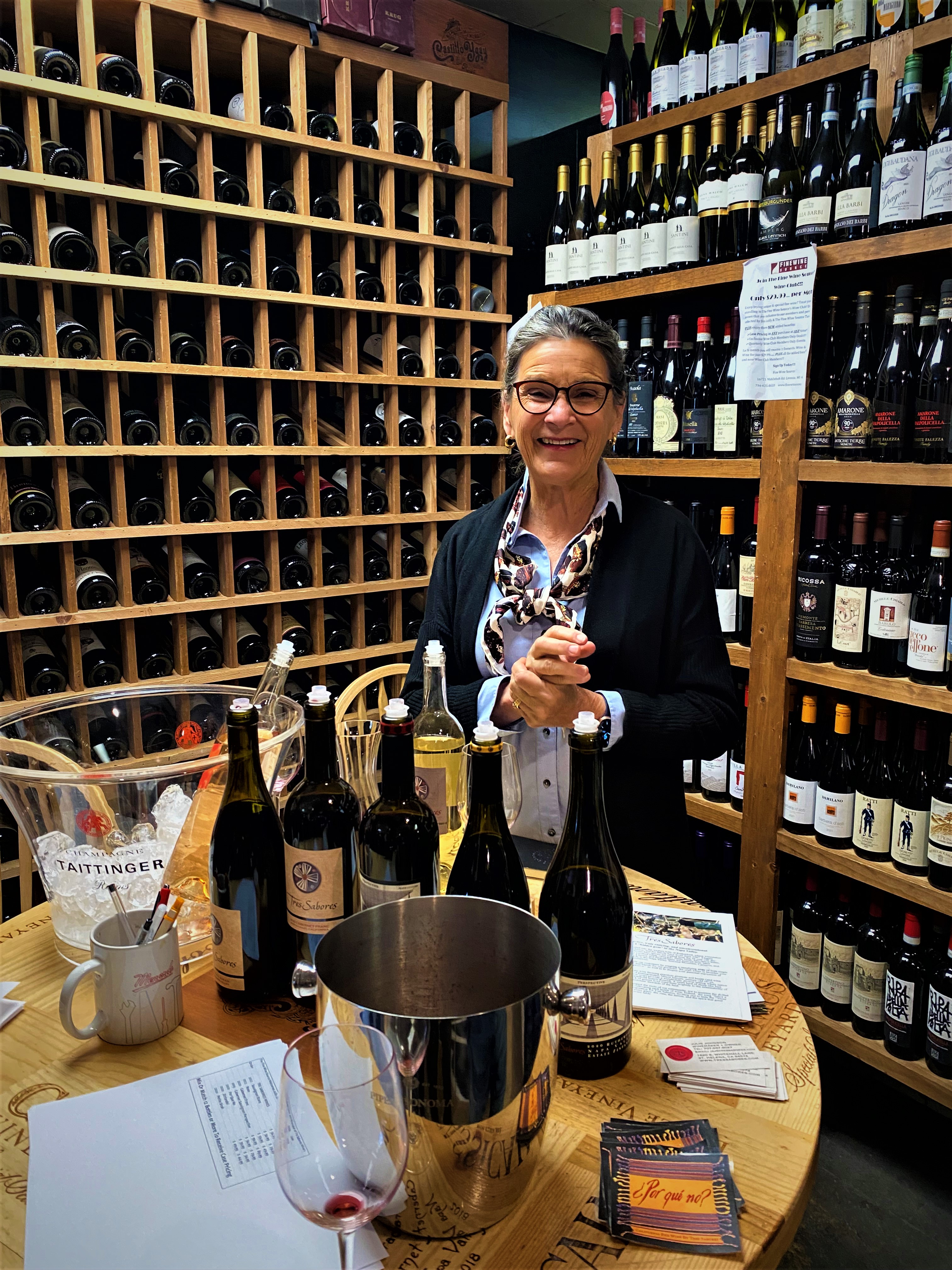
We were coming up to the end of the end of a great tasting managed by Julie Johnson the winemaker and owner of Tres Sabores Winery while she was visiting The Fine Wine Source in Livonia, Michigan. The winery is only five minutes from Highway 29, but it is in a quiet almost idyllic setting within the valley abutting the Mayacamas mountains and surrounded by other vineyards and native vegetation. I just have a feeling that Julie Johnson likes the slower pace on her estate versus the agitation and noise encountered by wineries that are along the “wine strip” of the valley.  Also, as a side note, she produces her own olive oil from her grove, as well as a Pomegranate Vinaigrette from her orchard.  

The penultimate wine of the tasting session was Tres Sabores Por Que No? California Red Wine Blend 2020.  Por Que No? translates to English as “Why Not,” and that is her philosophy of ingenuity.  When she had two-thousand-cases of wine that were being stored in a warehouse that was damaged by arson, she took the damaged wine and created Por Que No? Fire-Roasted Zinfandel Marinade.  This also set her to create a “salsa” wine that is affordable and easy drinking.  The wine is a blend of forty-nine percent Petite Sirah, thirty-nine percent Zinfandel, eleven percent Cabernet Sauvignon and one percent Petit Verdot.  The fruit was harvested from Rutherford, Sierra Foothills, and Mendocino County; hence the California AVA. The wine is a deep purple-ruby color that offers notes of dark and red fruits, mocha, espresso, and spices.  On the palate a robust wine with tones of plums and black cherries, pepper and full tannins followed by a finish of some terroir and fruit.  

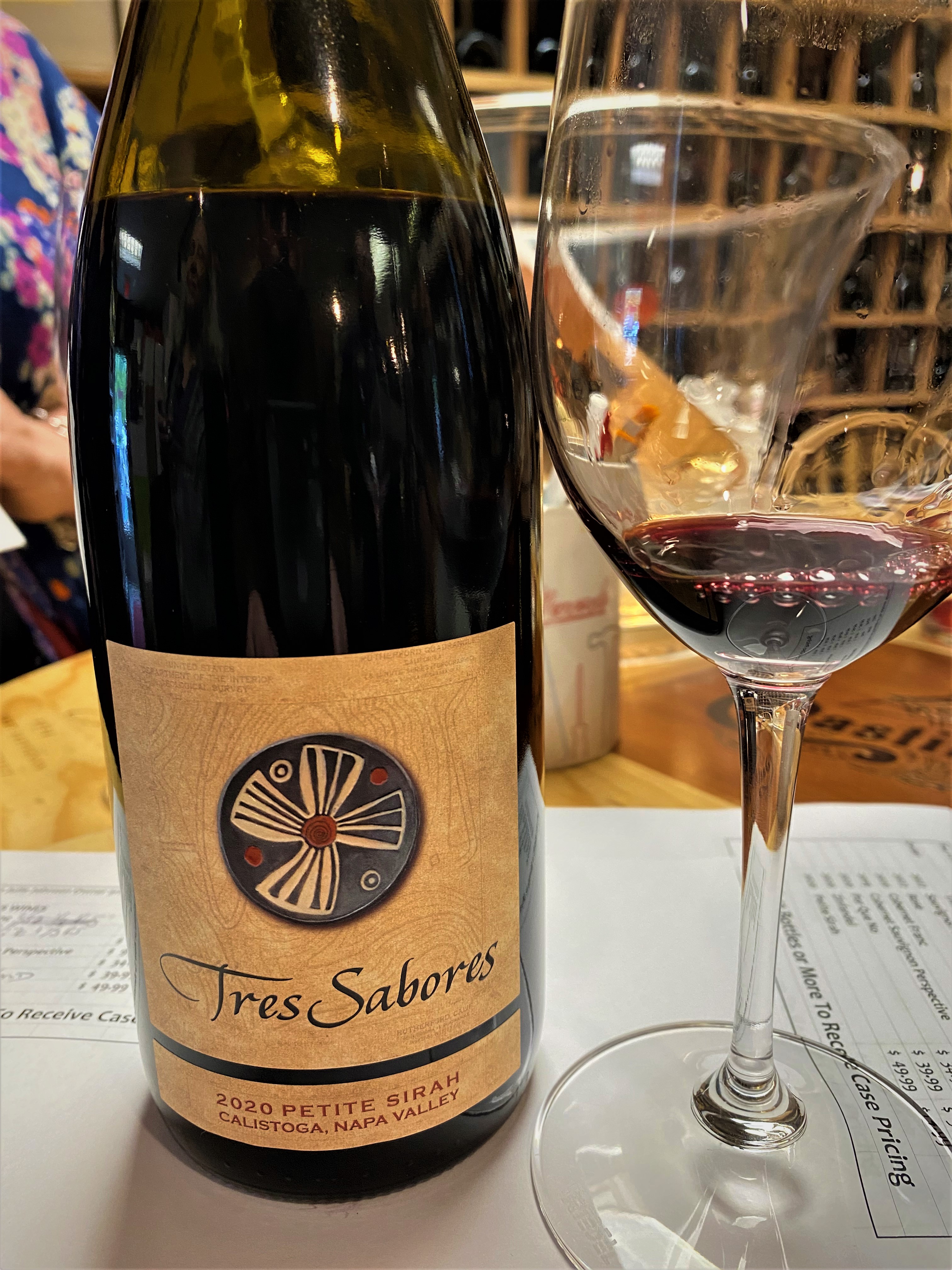
The final wine of the tasting was Tres Sabores Petite Sirah Calistoga, Napa Valley 2020 and Petite Sirah is called Durif, named after its discoverer, Dr. Francois Durif.  The vines were planted in 1972. Petite Sirah produces very dark and inky colored wines, because of the high skin to juice ratio from the small berries, and this also causes a large concentration of tannins which leads to big, earthy flavors.  This very deep purple with garnet highlights wine offered notes of dark fruit, violets, pepper, and tea.  On the palate a big wine that grips and had tones of blueberry and plums, chocolate, leather, and full tannins that were quite balanced to the wine.   

Posted in Wine | Tagged , , , , , , , , , , , , , | Leave a comment

Tres Sabores “Perspective” Wines

Julie Johnson of Tres Sabores Winery in Rutherford, Napa Valley, California was having a grand old time pouring wines and answering questions at The Fine Wine Source in Livonia, Michigan.  The wine tastings at the shop are more casual and not like attending a lecture hall, so it is breezy and one cannot rely on a set patter or dialogue, especially when you may have six or eight people around a table, and not everyone is even on the same bottle tasting.  While it may appear to be anarchy or chaos, it really is a great way to learn, because you may have already tasted a wine, and something new was either questioned or brought up about the last wine, to let you absorb, and sometimes, you may even have to go back and retry a wine.

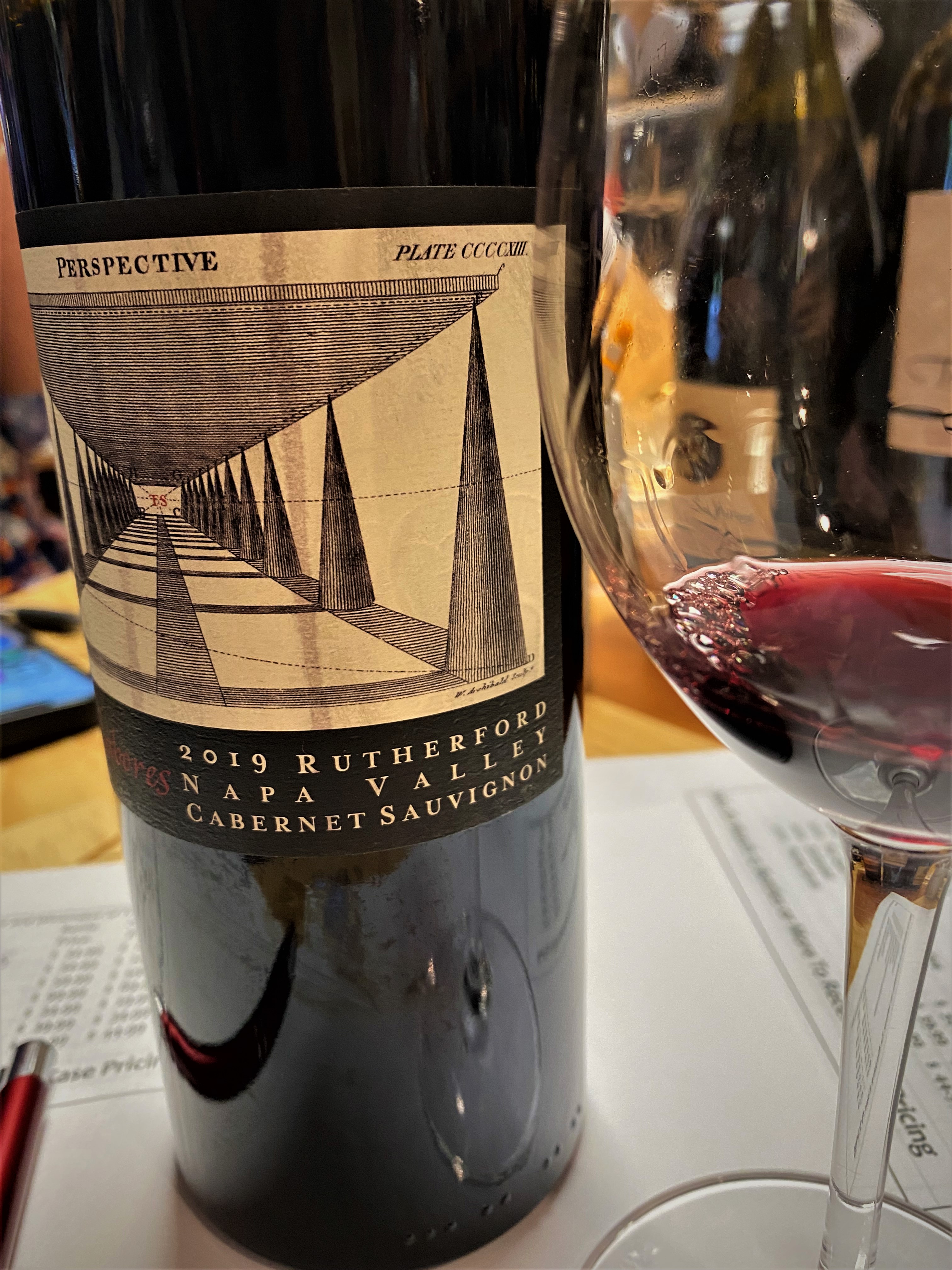
We then began trying the Tres Sabores Perspective Cabernet Sauvignon Rutherford 2019.  This is an estate wine and pure Cabernet Sauvignon. The estate is certified organic and they practice dry-farm techniques.  In the Initial Fermentation they use fifty percent wild yeast in small bins, and hand punch-down. The wine is aged for twenty-two-months in French Oak, of which thirty percent is new.  They limit the production to their best ten barrel, which generally breaks down to about three-hundred-bottles per barrel, so three-thousand-bottles total.  When I was learning about wines, the descriptors would say “this is a classic Rutherford Cabernet Sauvignon.” This is a classic Rutherford wine.  A pretty garnet-red offering notes of black and red fruits, cedar and oak, and plenty of spices.  On the palate blackberry, dark plums, and cherry fruit, and vanilla intermingle with fine tannins in a big wine that finishes with a nice long finish of fruit and terroir.  It was drinking very easily in its youth, give it about ten years of maturity and I think it will be awesome.  

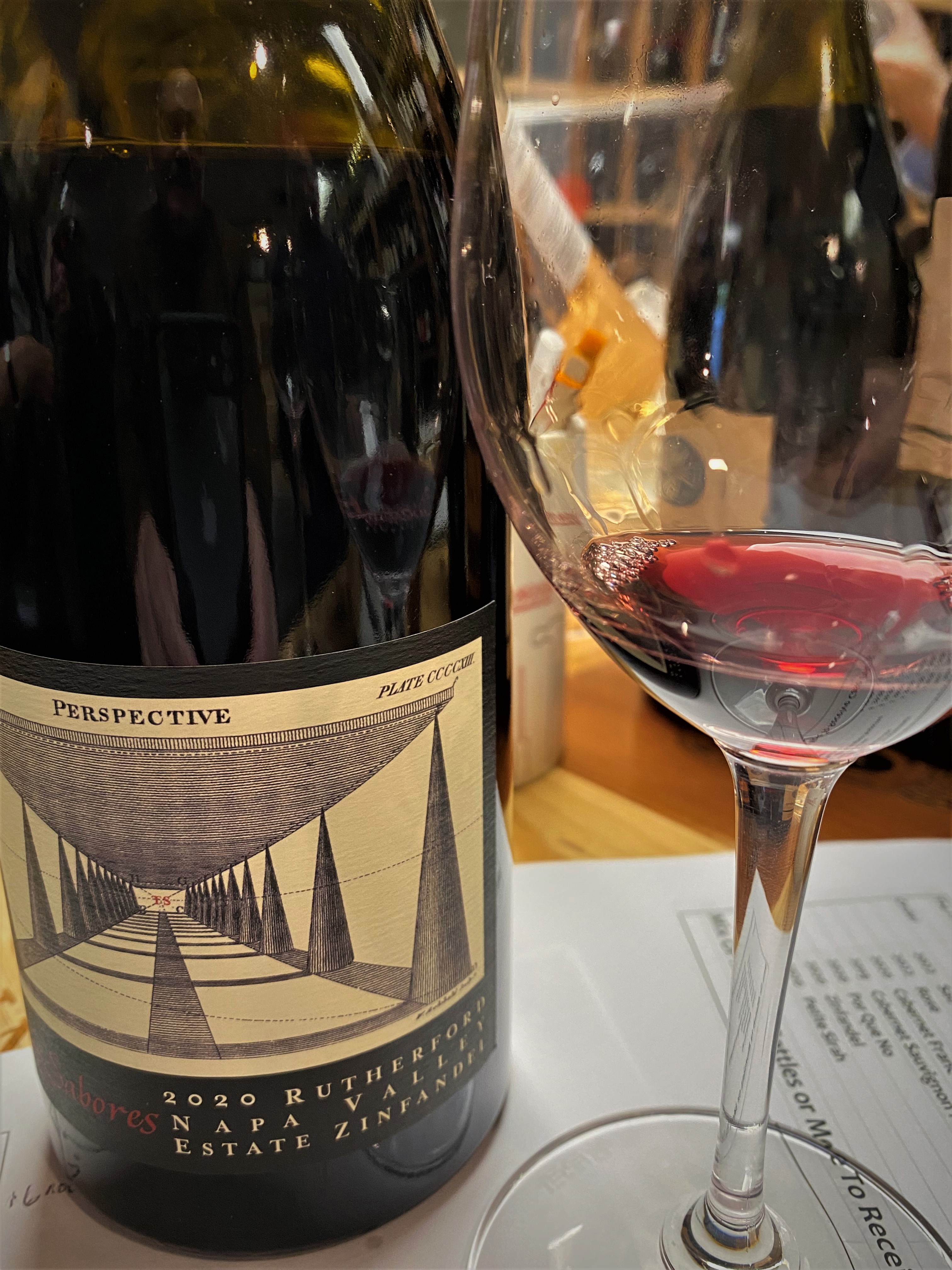
After the Cab, we followed with Tres Sabores Perspective Zinfandel Rutherford 2020.  This was a very interesting wine, but alas, I didn’t ask enough questions on this wine. This is another estate wine, actually Julie says the wine came from the vineyard in her front yard.  The entire estate is certified organic and they practice dry-farm techniques. This plot is hand harvested over a three-week period, as the clusters have to be inspected for ripeness.  The vines are forty-eight-years old.  I will venture to say that this wine undergoes Initial Fermentation in small bins with partial wild yeasts, especially since the fruit is harvest over three weeks.  Aged in oak, probably for nine months.  To me this was a very tasty wine, as it wasn’t a typical California Zin that is big and jammy, this was an elegant, almost genteel Zin.  This deep purple wine offered notes of red fruits, smoke, cedar, and pepper.  On the palate there were notes of raspberry and strawberry, pepper and spices, with tight tannins and excellent balance.  The wine finished with a nice medium count of terroir.  I think some aging would also expose more layers of supple fruit and spices.

Posted in Wine | Tagged , , , , , , | Leave a comment

Tres Sabores Rosé and Cabernet Franc

It is always a pleasure watching a winemaker pour their wines and work a crowd, and Julie Johnson of Tres Sabores was working her magic enthralling all the eager wine devotees at The Fine Source in Livonia, Michigan.  The theme that day was “Women Winemakers.”  You could definitely tell that this was not the first rodeo for either of the two ladies, as they were pouring wines and relating stories and enjoying the moment, and wine should always enhance the moment or raconteurs may be out of a job.

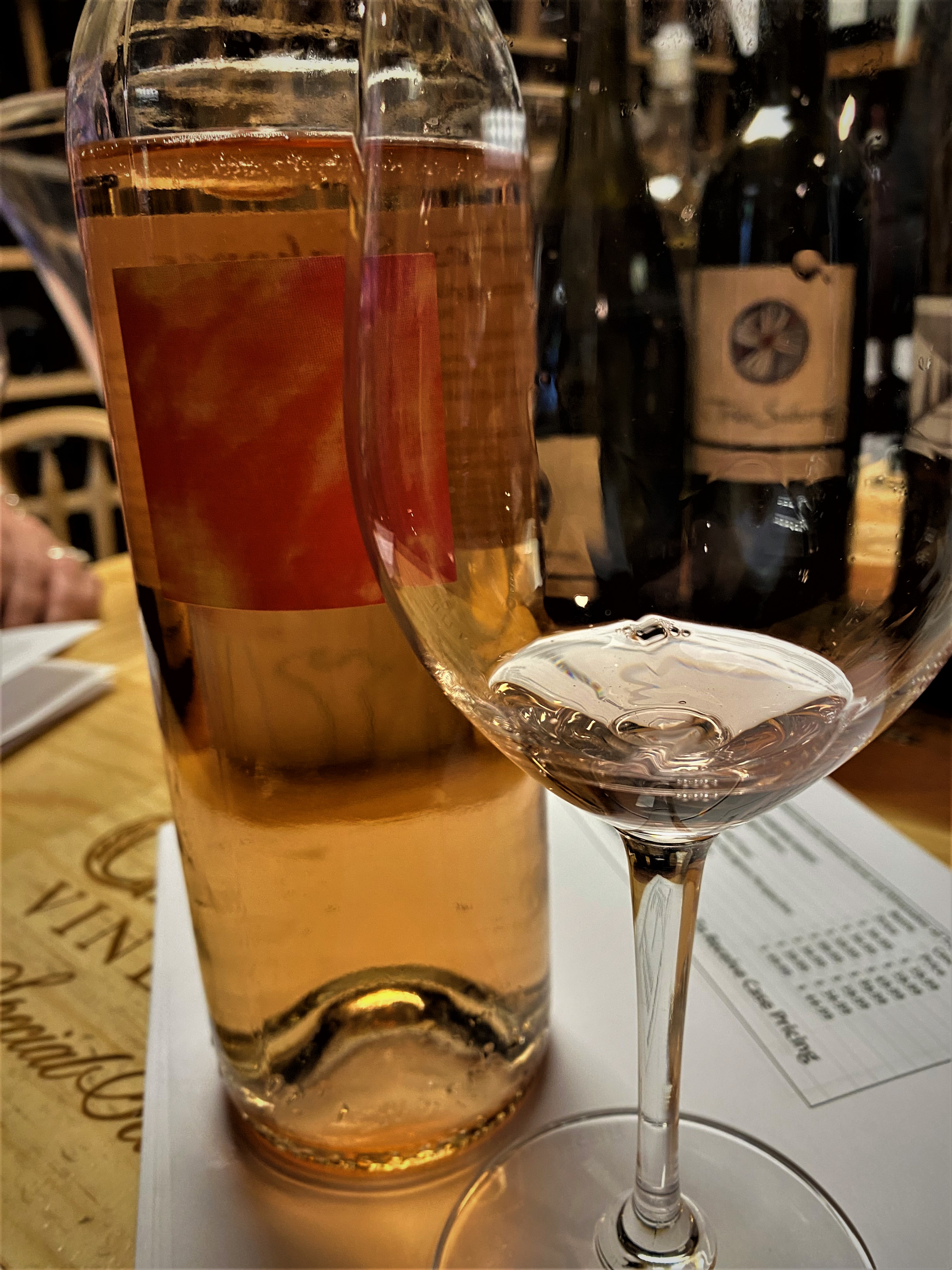
Julie Johnson poured us tastes of Tres Sabores “Ingrid & Julia” Rosé Napa Valley 2022.  The label looks out of focus, but that is the front label, the back label has all the information. The wine is named after two “named” roses; Ingrid Bergman and Julia Child.  This wine has a Napa Valley appellation and is a blend of two-thirds Rutherford Zinfandel and one-third Calistoga Petite Sirah.  The Zinfandel is from the estate and is dry-farmed, organic and sustainable.  The Petite Sirah is from the Guarino Vineyard.  Domenic Guarino, retired and purchase eight acres and the vineyard is planted predominately in Petite Sirah, his favorite grape, and his sons have maintained that growth. The fruit is picked early and whole cluster-pressed to capture just a tinge of skin color.  I am sure that Fermentation and aging are done in Stainless-Steel and maybe six months of aging (just my guess).  There were six-hundred-cases made of this wine.  A very pale-pink wine offering notes of fresh strawberries.  On the palate there are tones of ripe peaches and watermelon and a tinge of grapefruit to balance the sweetness, a refreshing dry wine with perfect acidity and reminds me of a beautiful wine from Provence.

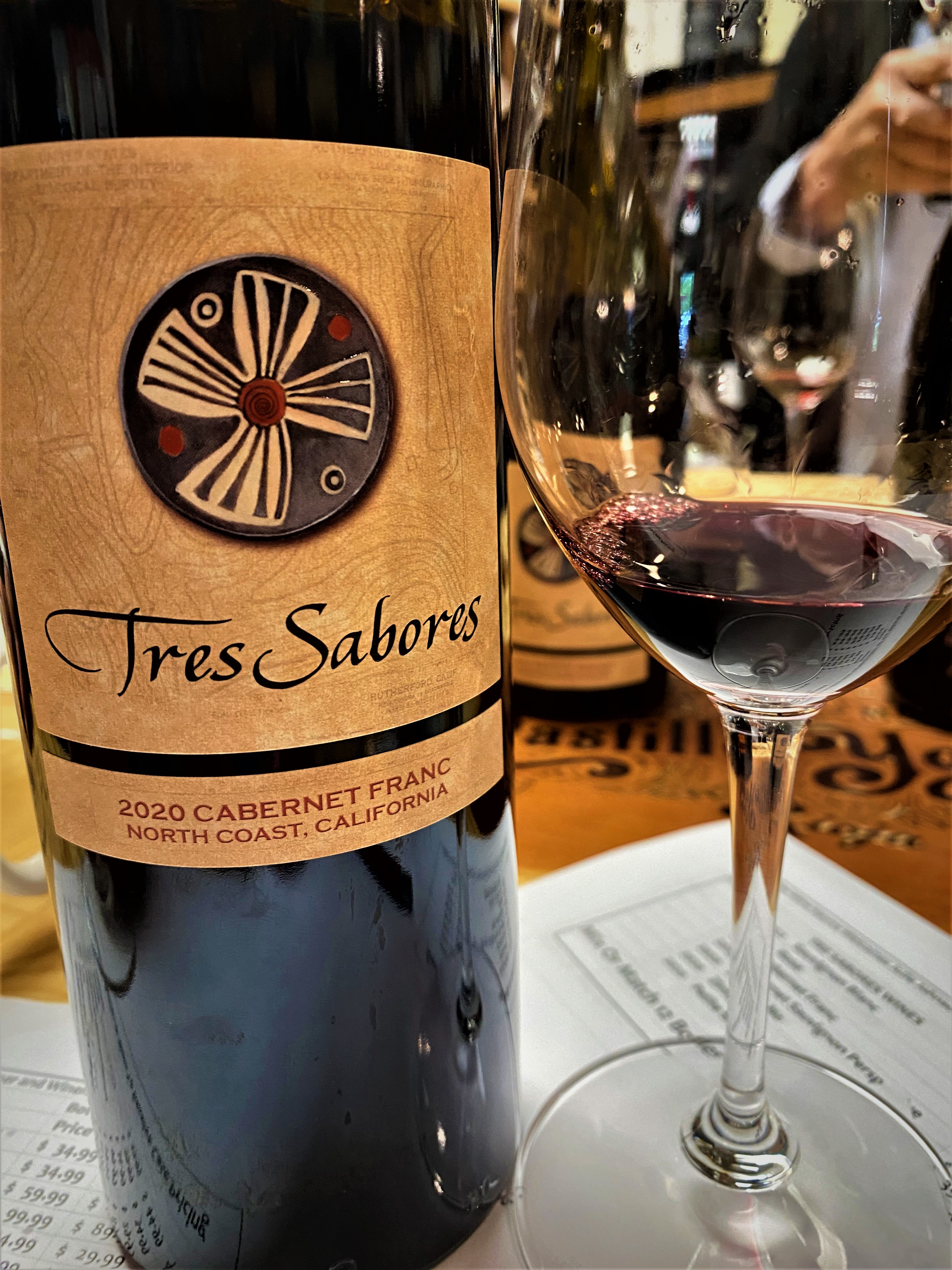
We followed the Rosé wine with Tres Sabores Cabernet Franc North Coast 2020.  This wine carries a North Coast appellation as the fruit comes from two distinct mountain districts, and mountain wines have a different feel and taste that is all their own. At about 700 feet, on MountVeeder AVA the vineyards are planted on rocky, clay-rich, ancient seabeds, that require hand-harvesting. Mount Veeder is in Napa Valley, but it seperates Napa from Sonoma. Further north and further up, at 2,400 feet on Pine Mountain AVA is a very vertical series of vineyards and it is the apex of Sonoma, Lake, and Mendocino Counties.  Both sets of vineyards are sustainably farmed.  The wine is aged for twenty-two months in French Oak.  This deep ruby wine offered notes of dark cherry, leather, and spice.  On the palate this medium-bodied wine offered tones of black cherry, cranberry and some licorice and had a nice medium count finish with some terroir.

Posted in Wine | Tagged , , , , , , , , , , , , | 4 Comments

Julie Johnson and Tres Sabores Winery

My local wine shop, the Fine Wine Source in Livonia, Michigan was having a special event of a wine tasting, featuring two female winemakers and I will discuss each of the women, their winery, and their wines in sequence.  As always in the shop they like to feature Old World and New World and now it was time to meet a female owner and winemaker of the New World.  Julie Johnson represents her Tre Sabores Winery, nestled into the western Rutherford bench land of Napa Valley. Tres Sabores (“three tastes”) was founded in 1999 to explore “three savory flavors” in every glass of wine; the taste of the vine, the terroir and the good company at the table. Besides grapes, in her words; she also grows pomegranates, lemons, olives, her children, Golden Retrievers, Guinea Hens, and sheep.

Julie Johnson, a graduate of Bowdoin College and the Columbia University School of Nursing and Public Health, was originally a mother of three, a nurse and a successful wine marketer, when she arrived in Napa Valley.  With her first husband John Williams, and partner Larry Turley, she founded and owned Frog’s Leap Winery.  In partnership with Mihaela Rodeno, founding CEO at St. Supery Winery, she founded “Women for Wine Sense.” And now she is owner and winemaker at Tres Sabores, not to mention the leading publicist for the winery at tastings where ever they are being held.

The first wine of the tasting with Julie Johnson was her Tres Sabores Farina Vineyard Sauvignon Blanc Sonoma Mountain/Sonoma County 2022.  She has had a long history with the Farina Family and their vineyard in Sonoma County and they practice organic viticulture.  Sonoma Mountain was designated in 1985 and the soils are mostly volcanic, made up from old lava flows and ash from millions of years ago and largely devoid of organic materials and perfectly suited for vines.  There are sixteen rows of Sauvignon Blanc planted in the Farina Vineyard on a sun-swept hillside.  This was such a refreshing wine, I am sure that I can state that the juice went through Initial Fermentation, Maceration, Malolactic Fermentation, and aging in Stainless-Steel; and three-hundred-fifty cases were produced.  The pale straw yellow wine offered notes of stone fruit and white florals.  On the palate a crisp and fresh wine offering tones of apples and nectarines and lemongrass, supple and well-balanced with a creamy finish.        

Posted in Wine | Tagged , , , , , | Leave a comment

Wine Club Selections – June 2023

I know that you will be surprised to find out that I stopped at The Fine Wine Source in Livonia, Michigan for two reasons.  We bought a case of wine, that I haven’t even wrote about and at two different events, the wine was a hit, so I thought I better get another case.  I promise that I will reveal the wine soon.  The other is that I thought that I better get a head start on picking up the June Wine Club Selections.  I tend to write articles ahead, so if the muse doesn’t show up, I am not behind, my self-imposed quota of articles; so, I had to make sure that June was covered, before it was July.

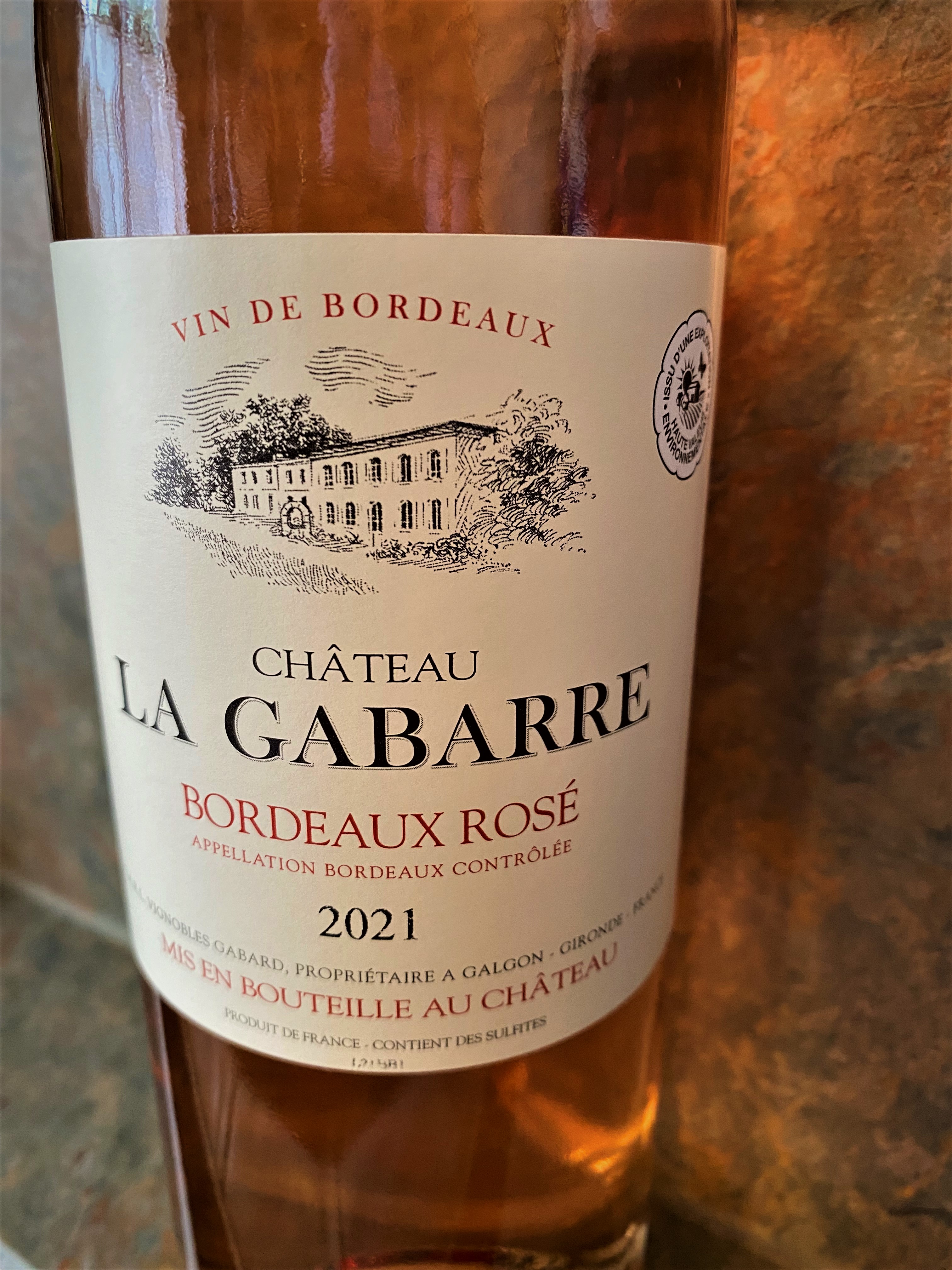
The first wine for the month and representing the Old World is Chateau La Gabarre Rosé Bordeaux 2021 from Vignobles Gabard and is a Michael Corso Selections.  Stephane and Paola Gabard took over the family estate in 1999.  The Chateau is located in the canton of Fronsac, dates back to 1791, and has been passed on for several generations.  The vineyard consists of forty-two hectares, located at a place called Queynac, of the heights of the commune of Galgon, where the remains of an ancient Knights Templar church resided.  This estate has been with the family since the 1800’s and is on the Right Bank, just north-west of Lalande-de-Pomerol. They practice sustainable farming and the vineyard is a mix of gravel, clay, and sand.  The wine is a blend of Cabernet Sauvignon, Merlot, and Cabernet Franc; and the age of the vines are from fifteen to thirty-five-years of age. The wine is aged for nine months in Stainless-Steel and a production of eight-hundred-fifty-cases.  The wine is described as a soft pink wine with notes of strawberries and raspberries.  On the palate tones of watermelon and strawberries with good minerality, and a pleasant texture and a long clean finish.

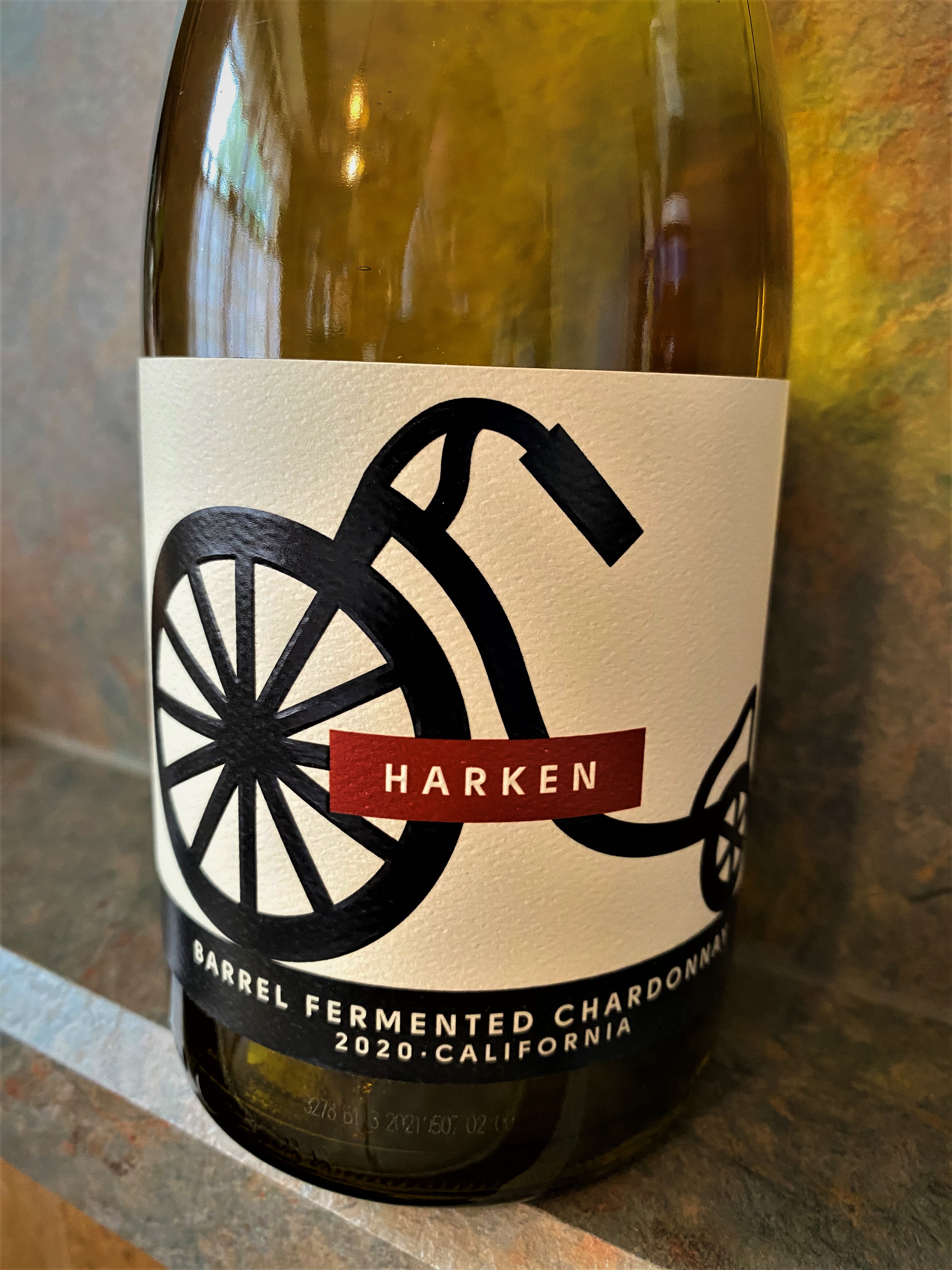
The wine representing the New World is Harken Barrel Fermented Chardonnay California 2020.  Jeff O’Neil was trying in his mind to come up with a way to create the classic California Chardonnay, but make it affordable.  He sourced his Chardonnay grapes from Monterey, Clarksburg, and Paso Robles; all respected areas for that varietal.  The other big expense was French or American Oak, and both are expensive propositions for a winemaker.  He came up with his own solution, the Harken Fusion Barrel, a hybrid that has alternating staves of French and American Oak.  All of the juices go through Initial Fermentation, Maceration, Malolactic Fermentation and aging in his special barrels for over eight months, with stirring every two weeks, until all the wine is ready to be blended and bottled.  A pretty golden-yellow wine that offers notes of grilled bread, charred wood, butter, and spices.   On the palate tones of ripe pear, vanilla and toasted almonds in a big-bodied wine.

Posted in Wine | Tagged , , , , , , , , , , , , | Leave a comment

Le Puy Rolland and Cuvee Hercule

As were going to enjoy the last two wines poured by Anne Charlotte Melia Bachas of Chateau de la Font, du Loup where she is both owner and winemaker, at my local wine shop, The Fine Wine Source in Livonia, Michigan.  I have had the pleasure of tasting many fine wines since I became a club member at the wine shop, but this was a first to try several wines from the historic Chateauneuf-du-Pape district.  Anne Charlotte also has put an emphasis on environmental stewardship at the vineyard.  The soils are fertilized with organic composted sheep manure and grape pomace.  Where possible she also likes to leave vegetation between vines to improve soil structure and resist erosion.

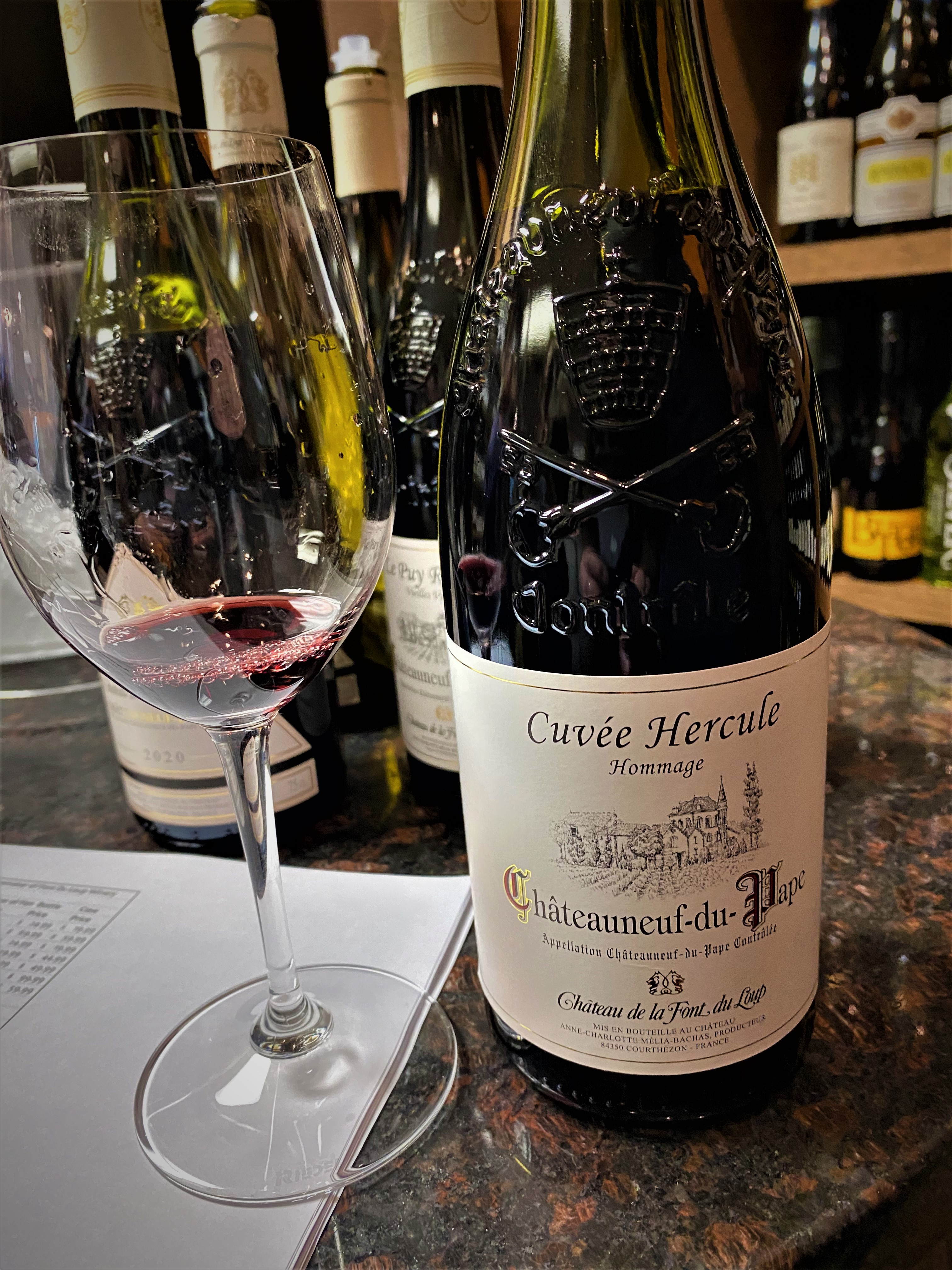
The penultimate wine of the tasting was Chateau de la Font, du Loup Cuvée Hercule (Hommage) Chateauneuf-du-Pape 2019.  As the label shows, this wine is an Homage to Hercule, and Hercule is a French name for the local shipper’s father, who was the first in America to represent her wines.  Anne actually shipped bottles of the unfished individual varietal wines to the son, who has taken over the business from his father.  He and Anne, then began the unique work of creating a special blend for the cuvée during a Zoom session, talk about fun. While eighteen varietals are allowed for this wine, the winery used their four varietals: Grenache, Syrah, Mourvedre and Cinsault.  The vines are all about forty-five years of age, the blend may be proprietary, but we know that each variety was fermented separately and processed in the same manner as her Chateauneuf-du-Pape.  A garnet-colored wine offering notes of red and black fruits, herbs and spices, and florals.  On the palate tones of cherries and plums, spices, a tinge of mint in a medium-bodied wine with ripe tannins, balanced with a nice finish of terroir and fruit.

The final wine for the tasting was Chateau de la Font, du Loup Chateauneuf-du-Pape Le Puy Rolland 2020.  In 1992, the estate purchased a four-hectare plot of one-hundred-year-old Grenache vines, and these vines are used to produce Le Puy Rolland.  The soil is predominately sand with stones, on high elevation sloping vineyards with north-facing plots, that require an additional two weeks ripening period compared to the basic appellation wines.  The soil, elevation, and varietal are also found in the legendary Chateau Rayas in Chateauneuf-du-Pape.  The Initial Fermentation using indigenous yeasts and Maceration occur in Concrete tanks.  The juice is then aged for eighteen months in large French Oak barriques; one-thousand-two-hundred-cases are produced.  A garnet-ruby colored wine that offers notes of Kirsch, orange peel, cloves, and tobacco.  On the palate, a big, fresh wine tones of brandied cherries, strawberries, black fruit, cloves, licorice, silky tannins, an elegant wine that ends with a long finish of Kirsch.   

Posted in Wine | Tagged , , , , , , , , | Leave a comment

Chateauneuf-du-Pape and Les Demoiselles

The Gods were smiling down on us, a we were enjoying wines from Chateau de la Font, du Loup along with winemaker and owner Anne Charlotte at my local wine shop, The Fine Wine Source in Livonia, Michigan.  Over the years, I have had the pleasure of enjoying Chateauneuf-du-Pape wines, but never multiples in a tasting, it was such a treat.  While the name is drenched in history, up until the early Twentieth Century, the wines were usually lumped into a general Avignon wine.  Baron Le Roy of Chateau Fortia, drafted a document centering on quality wine production conditions, and this document became the precursor of France’s appellation system.  Originally thirteen varieties were approved for production and after a 2009 review, eighteen varieties are now approved. The other unique proviso about Chateauneuf-du-Pape is that they drafted a law forbidding flying saucers from taking off, landing, or flying over the vineyards and it is still enforced to this day.

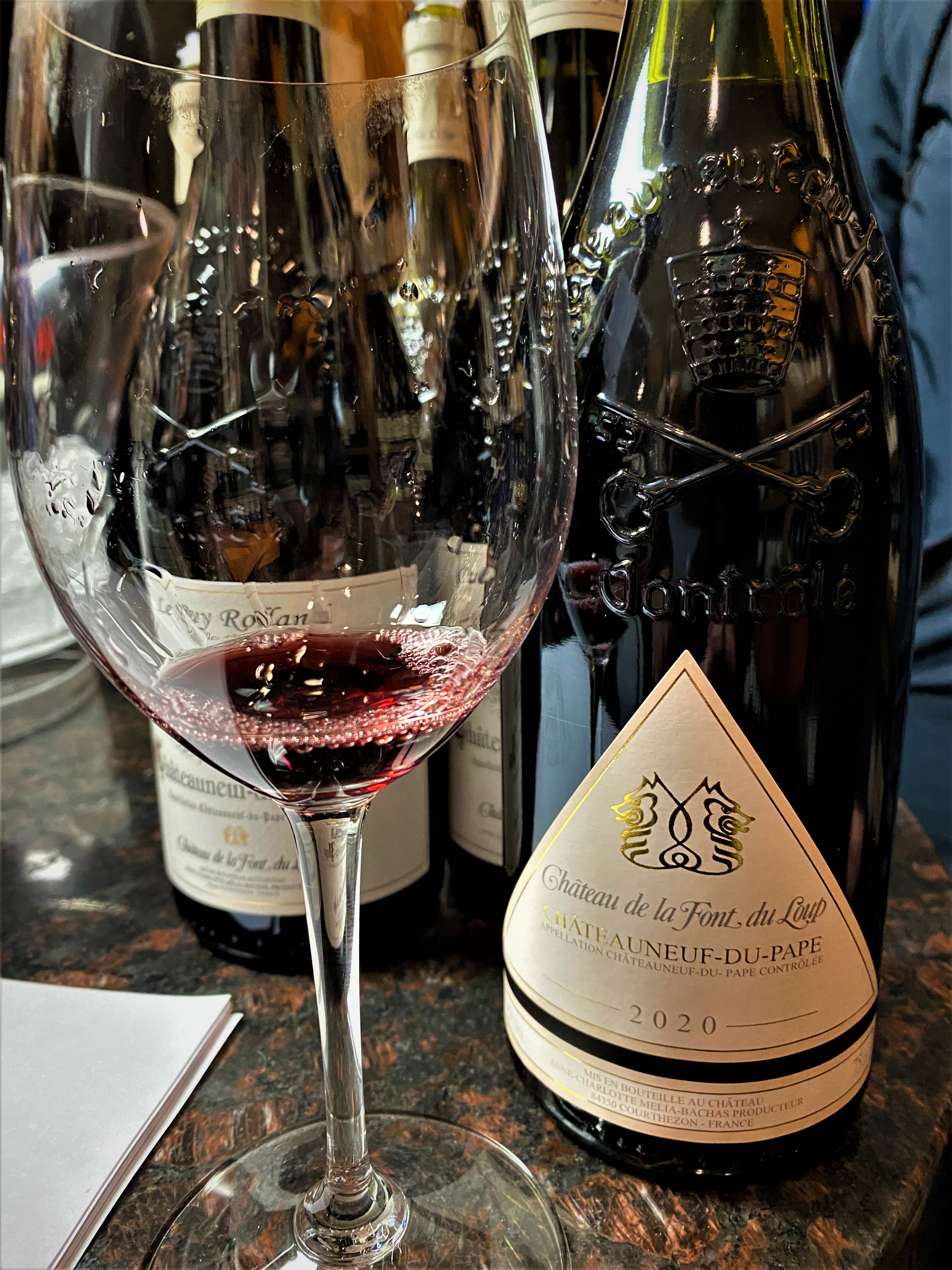
We then tasted Chateau de la Font, du Loup Chateauneuf-du-Pape 2020 and an estate wine.  The estate is located on one of the highest points in the area, and the soil is mostly sand with rocks.  While sand is not good for the vines normally, because it won’t keep enough water, the land is naturally hydrated by the natural spring on the property that it is named for.  It is also one of coolest places in the appellation and hence slow ripening grapes.  The wine is a blend of sixty-five percent Grenache, twenty percent Syrah, ten percent Mourvedre and five percent Cinsault, and these vines average about forty-five-years of age. The fruit is hand-harvested, destemmed, and meticulously inspected.  The grapes are fermented separately.  Initial Fermentation and Maceration lasts for three weeks in Concrete tanks with daily pumping for soft extraction and they use indigenous yeasts.  The grapes are fermented separately: the Grenache is aged in a combination of tanks and foudres, the Syrah is aged in used French Oak barrels and half-muids, and the Mourvedre is aged in demi-muids (and not cataloguing for the Cinsault).  The different wines are aged for sixteen to eighteen months, then racked and blended in concrete tanks for an additional six months. They average two-thousand cases annually of this wine.  A nice garnet colored wine offering notes of red fruits, herbs, and florals.  On the palate a good medium bodied wine offering tones of cherries, spices, a tinge of mint with ripe tannins and very well balanced with a medium length finish with a bit of terroir.     

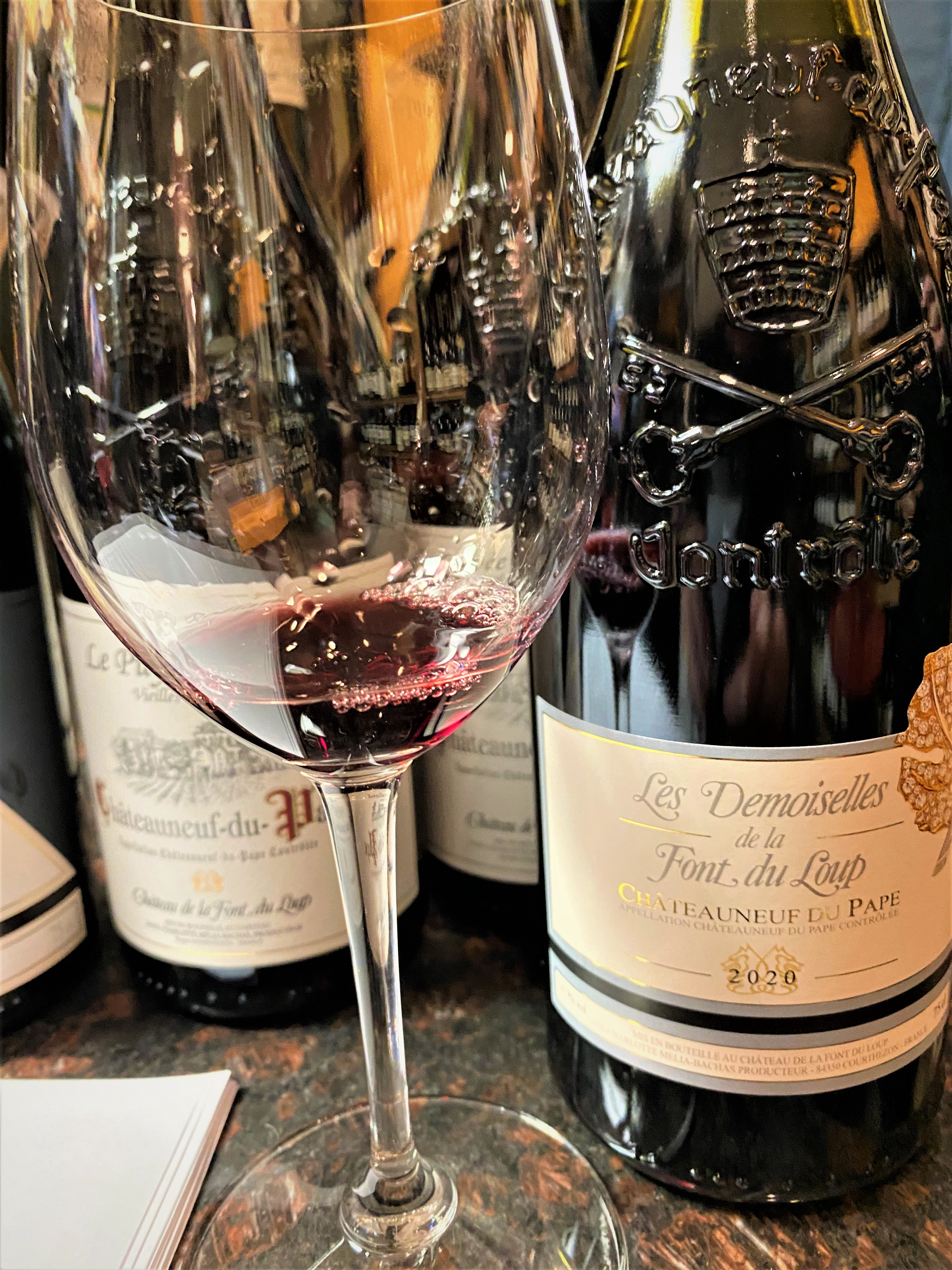
We then had Les Demoiselles de la Font, du Loup Chateauneuf-du-Pape 2020 another estate wine. Since they are located on one of the highest points of the appellation, the soil is sandy with stones.  The fruit is hand-harvested, destemmed, meticulously inspected, and it is eighty percent Grenache and twenty percent Syrah.  Initial Fermentation and Maceration for three weeks using indigenous yeasts in a Concrete tank.  The wine is then aged for nine months in Concrete tanks.  The wine is called Les Demoiselles, or in English, The Ladies and I concur, as this is the most elegant and feminine wine of the tasting; and when I say feminine, it goes back to my earliest years of learning about wines, when wines that were delicate and with finesse were described as feminine, as compared to in-your-face big jammy wines.  This garnet-red wine with violet accents offered an excellent nose that required a couple of pauses as it offered notes of cherries and strawberries, orange zest, some smokiness and dried tobacco.  On the palate, a medium-bodied wine with cherries and strawberries, soft tannins and a nice finish of fruit and smoky herbs.  A very pleasant and pleasurable wine to have with friends and a good jovial chat.

Posted in Wine | Tagged , , , , , , , , | 2 Comments