Julie Johnson and Tres Sabores Winery

My local wine shop, the Fine Wine Source in Livonia, Michigan was having a special event of a wine tasting, featuring two female winemakers and I will discuss each of the women, their winery, and their wines in sequence.  As always in the shop they like to feature Old World and New World and now it was time to meet a female owner and winemaker of the New World.  Julie Johnson represents her Tre Sabores Winery, nestled into the western Rutherford bench land of Napa Valley. Tres Sabores (“three tastes”) was founded in 1999 to explore “three savory flavors” in every glass of wine; the taste of the vine, the terroir and the good company at the table. Besides grapes, in her words; she also grows pomegranates, lemons, olives, her children, Golden Retrievers, Guinea Hens, and sheep.
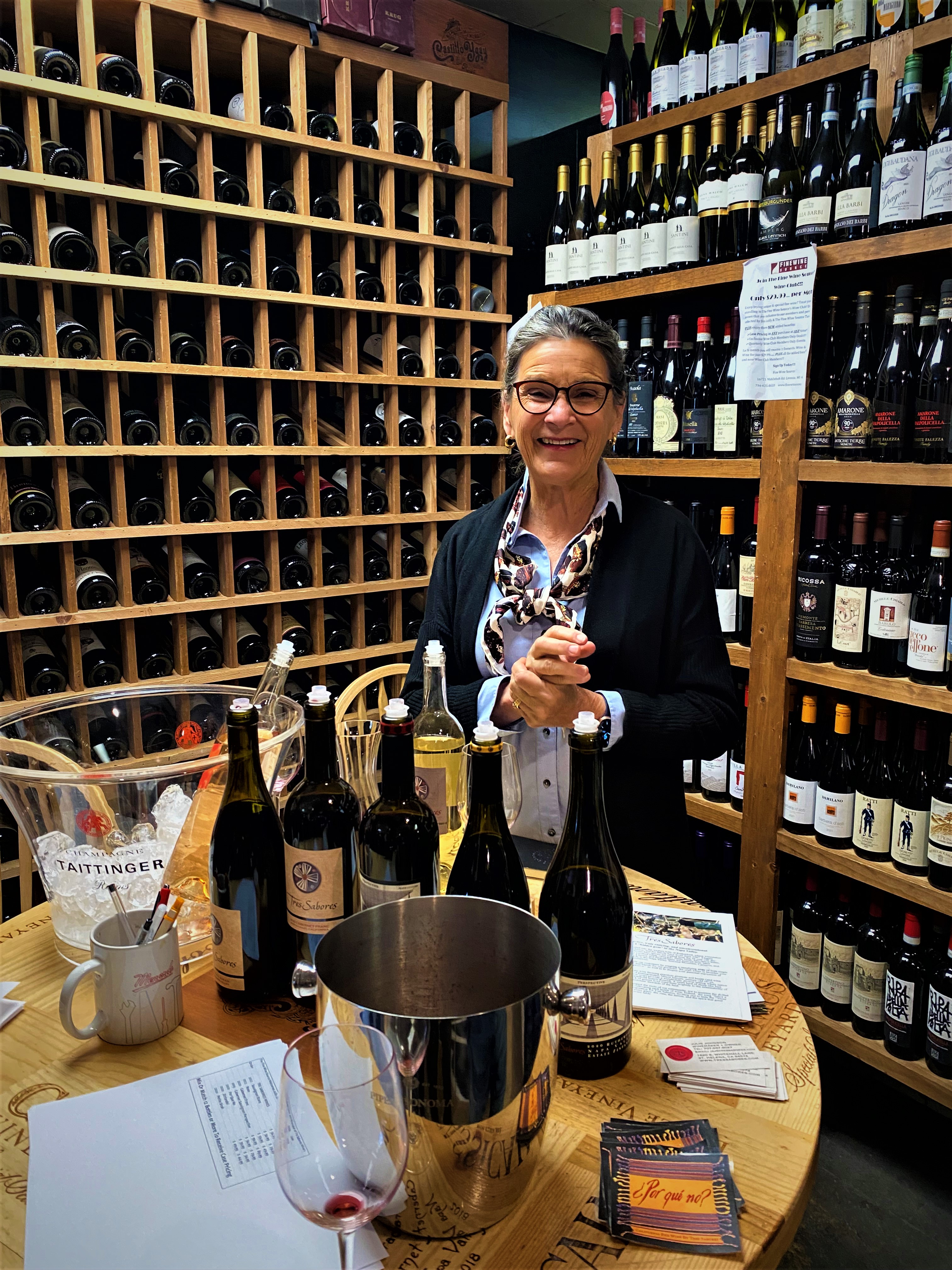
Julie Johnson, a graduate of Bowdoin College and the Columbia University School of Nursing and Public Health, was originally a mother of three, a nurse and a successful wine marketer, when she arrived in Napa Valley.  With her first husband John Williams, and partner Larry Turley, she founded and owned Frog’s Leap Winery.  In partnership with Mihaela Rodeno, founding CEO at St. Supery Winery, she founded “Women for Wine Sense.” And now she is owner and winemaker at Tres Sabores, not to mention the leading publicist for the winery at tastings where ever they are being held.

The first wine of the tasting with Julie Johnson was her Tres Sabores Farina Vineyard Sauvignon Blanc Sonoma Mountain/Sonoma County 2022.  She has had a long history with the Farina Family and their vineyard in Sonoma County and they practice organic viticulture.  Sonoma Mountain was designated in 1985 and the soils are mostly volcanic, made up from old lava flows and ash from millions of years ago and largely devoid of organic materials and perfectly suited for vines.  There are sixteen rows of Sauvignon Blanc planted in the Farina Vineyard on a sun-swept hillside.  This was such a refreshing wine, I am sure that I can state that the juice went through Initial Fermentation, Maceration, Malolactic Fermentation, and aging in Stainless-Steel; and three-hundred-fifty cases were produced.  The pale straw yellow wine offered notes of stone fruit and white florals.  On the palate a crisp and fresh wine offering tones of apples and nectarines and lemongrass, supple and well-balanced with a creamy finish.        
Posted in Wine | Tagged , , , , , | Leave a comment

Wine Club Selections – June 2023

I know that you will be surprised to find out that I stopped at The Fine Wine Source in Livonia, Michigan for two reasons.  We bought a case of wine, that I haven’t even wrote about and at two different events, the wine was a hit, so I thought I better get another case.  I promise that I will reveal the wine soon.  The other is that I thought that I better get a head start on picking up the June Wine Club Selections.  I tend to write articles ahead, so if the muse doesn’t show up, I am not behind, my self-imposed quota of articles; so, I had to make sure that June was covered, before it was July.

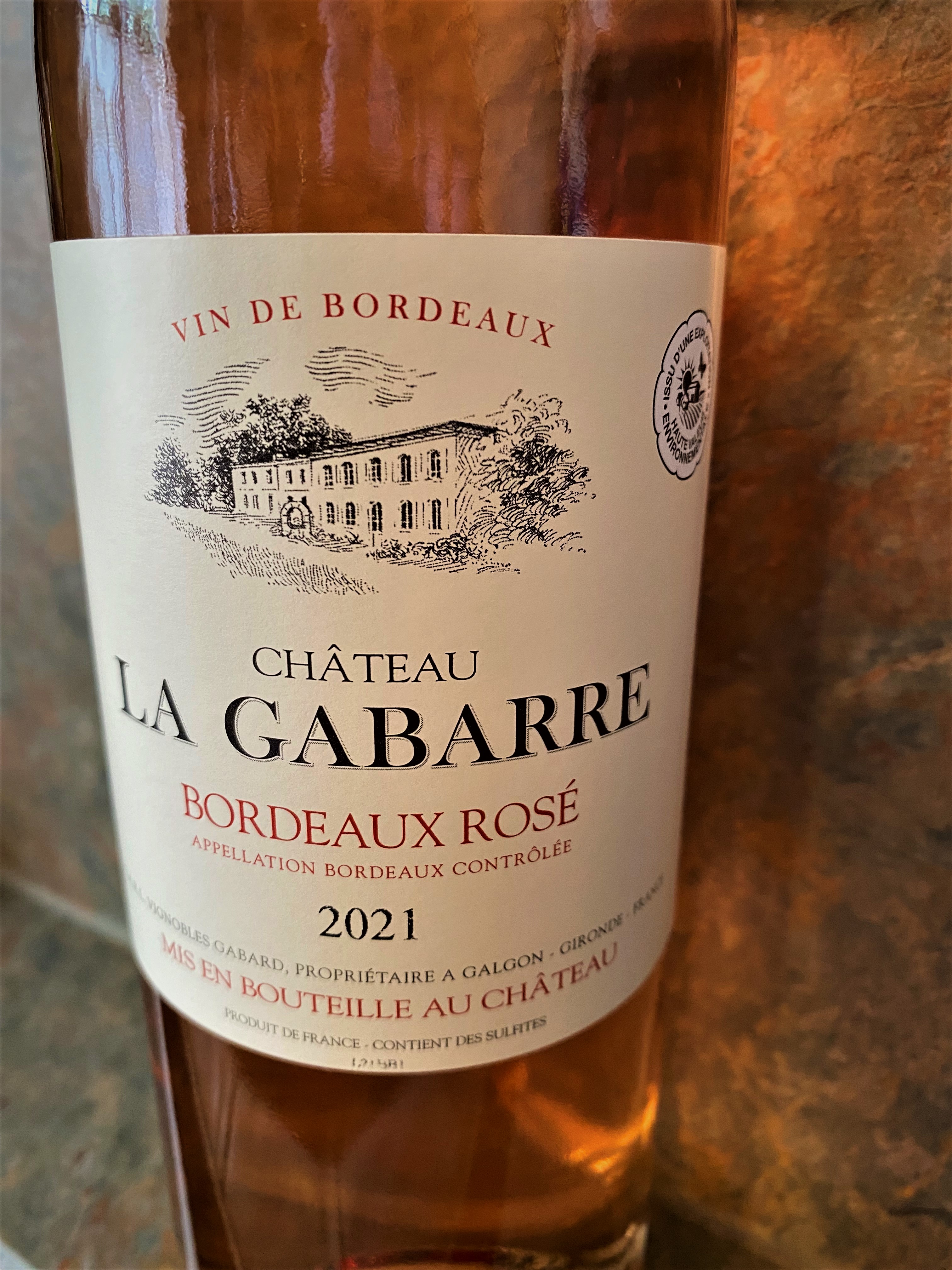
The first wine for the month and representing the Old World is Chateau La Gabarre Rosé Bordeaux 2021 from Vignobles Gabard and is a Michael Corso Selections.  Stephane and Paola Gabard took over the family estate in 1999.  The Chateau is located in the canton of Fronsac, dates back to 1791, and has been passed on for several generations.  The vineyard consists of forty-two hectares, located at a place called Queynac, of the heights of the commune of Galgon, where the remains of an ancient Knights Templar church resided.  This estate has been with the family since the 1800’s and is on the Right Bank, just north-west of Lalande-de-Pomerol. They practice sustainable farming and the vineyard is a mix of gravel, clay, and sand.  The wine is a blend of Cabernet Sauvignon, Merlot, and Cabernet Franc; and the age of the vines are from fifteen to thirty-five-years of age. The wine is aged for nine months in Stainless-Steel and a production of eight-hundred-fifty-cases.  The wine is described as a soft pink wine with notes of strawberries and raspberries.  On the palate tones of watermelon and strawberries with good minerality, and a pleasant texture and a long clean finish.

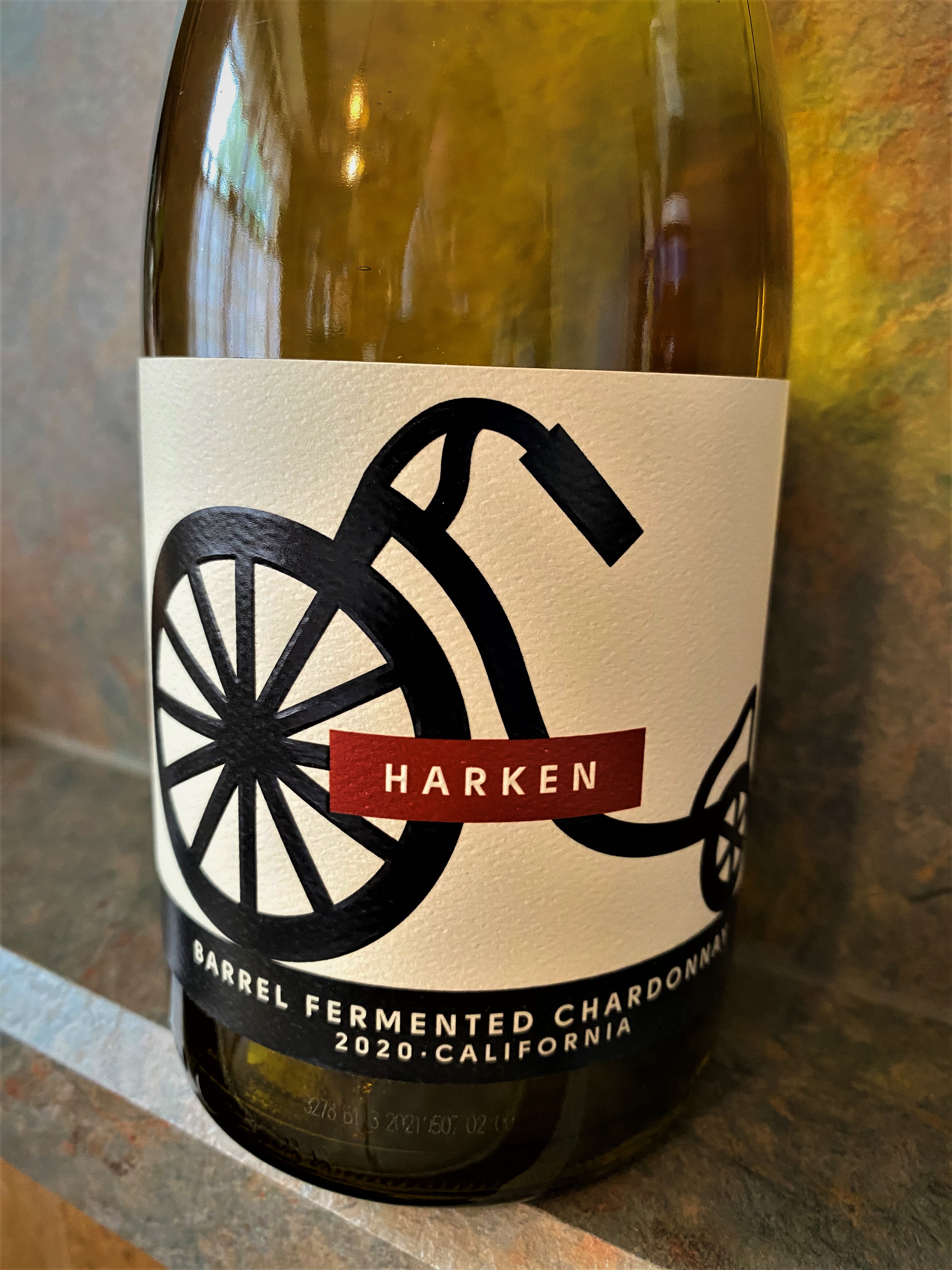
The wine representing the New World is Harken Barrel Fermented Chardonnay California 2020.  Jeff O’Neil was trying in his mind to come up with a way to create the classic California Chardonnay, but make it affordable.  He sourced his Chardonnay grapes from Monterey, Clarksburg, and Paso Robles; all respected areas for that varietal.  The other big expense was French or American Oak, and both are expensive propositions for a winemaker.  He came up with his own solution, the Harken Fusion Barrel, a hybrid that has alternating staves of French and American Oak.  All of the juices go through Initial Fermentation, Maceration, Malolactic Fermentation and aging in his special barrels for over eight months, with stirring every two weeks, until all the wine is ready to be blended and bottled.  A pretty golden-yellow wine that offers notes of grilled bread, charred wood, butter, and spices.   On the palate tones of ripe pear, vanilla and toasted almonds in a big-bodied wine.

Posted in Wine | Tagged , , , , , , , , , , , , | Leave a comment

Le Puy Rolland and Cuvee Hercule

As were going to enjoy the last two wines poured by Anne Charlotte Melia Bachas of Chateau de la Font, du Loup where she is both owner and winemaker, at my local wine shop, The Fine Wine Source in Livonia, Michigan.  I have had the pleasure of tasting many fine wines since I became a club member at the wine shop, but this was a first to try several wines from the historic Chateauneuf-du-Pape district.  Anne Charlotte also has put an emphasis on environmental stewardship at the vineyard.  The soils are fertilized with organic composted sheep manure and grape pomace.  Where possible she also likes to leave vegetation between vines to improve soil structure and resist erosion.

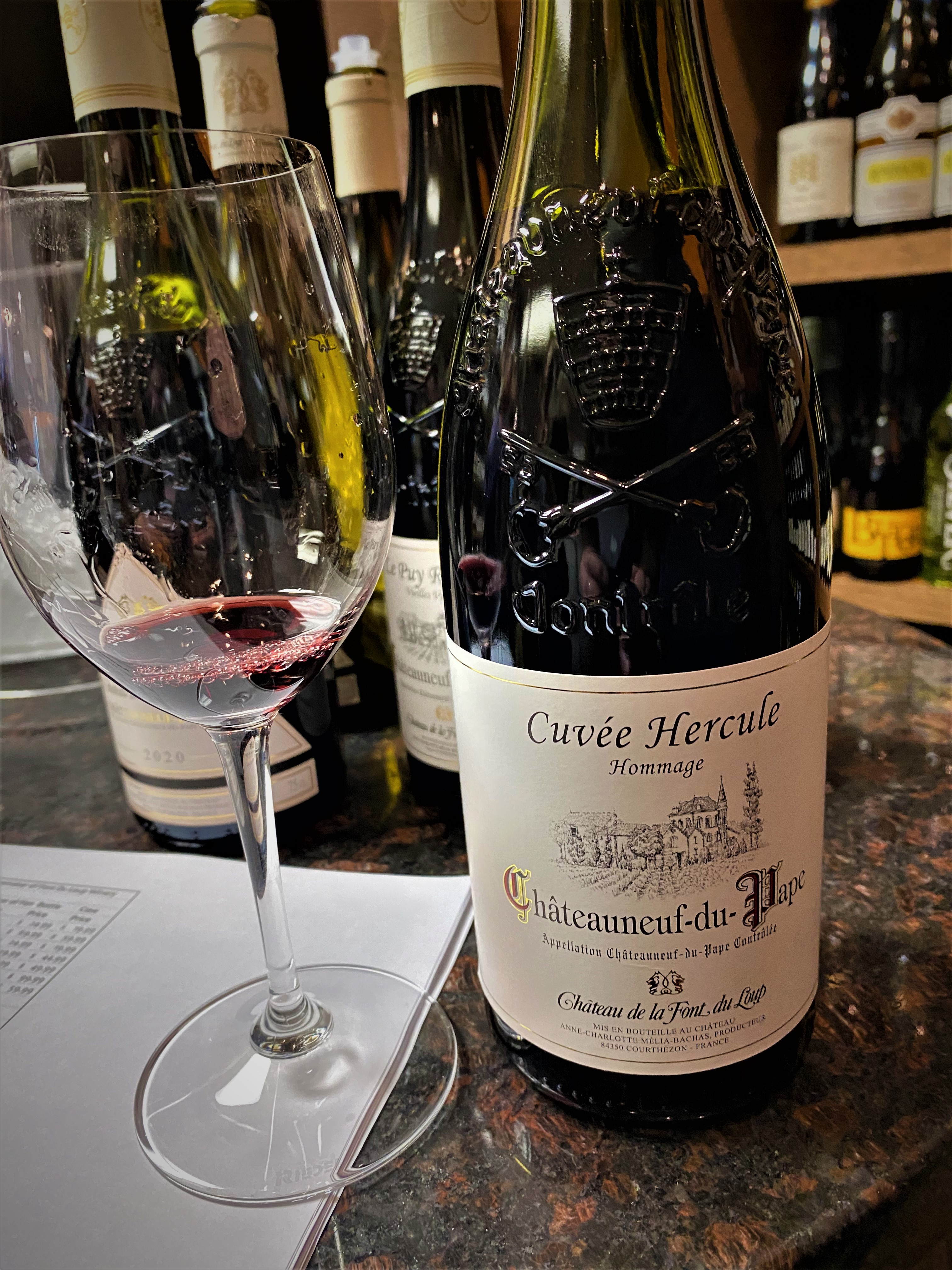
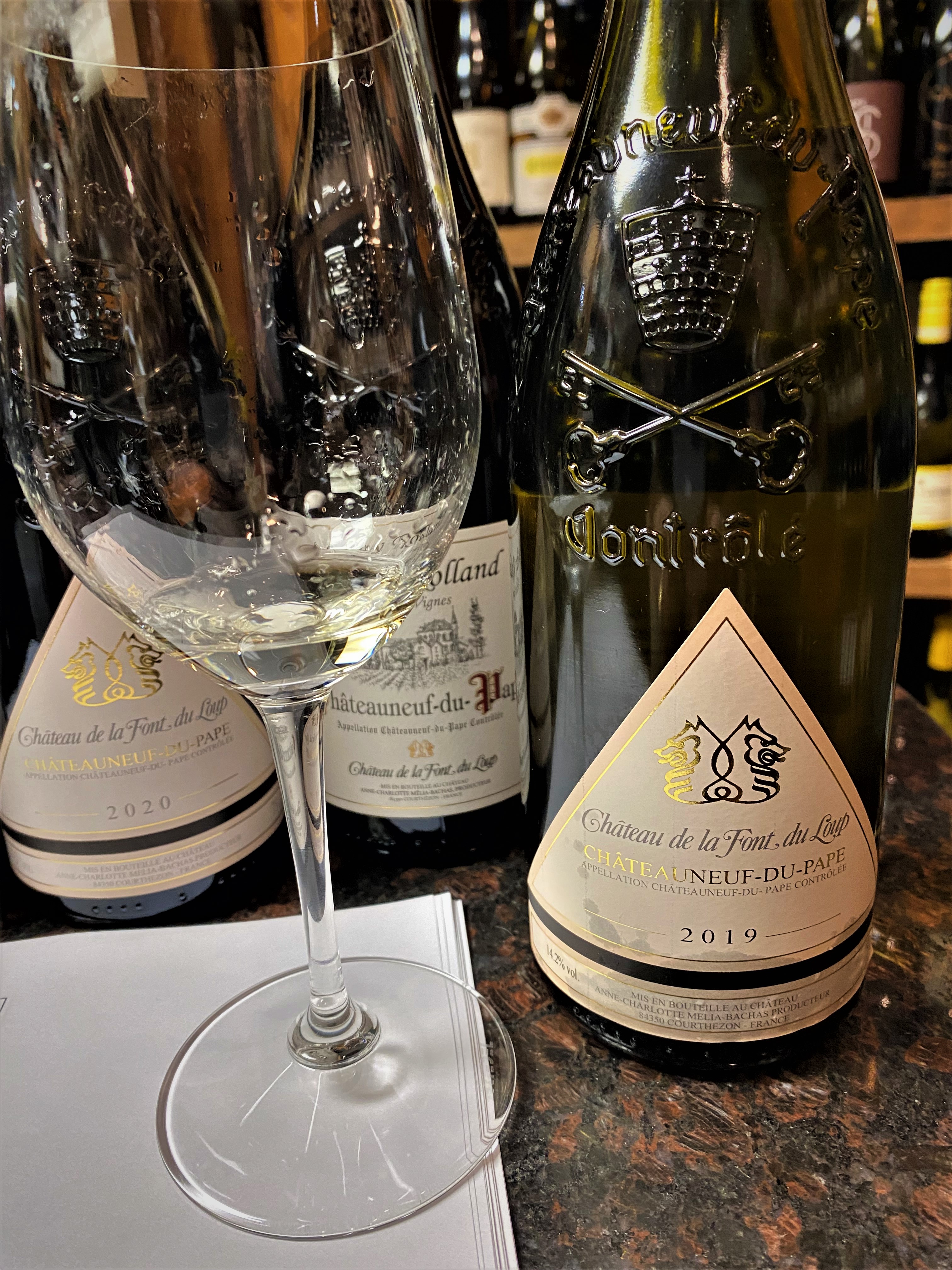
The penultimate wine of the tasting was Chateau de la Font, du Loup Cuvée Hercule (Hommage) Chateauneuf-du-Pape 2019.  As the label shows, this wine is an Homage to Hercule, and Hercule is a French name for the local shipper’s father, who was the first in America to represent her wines.  Anne actually shipped bottles of the unfished individual varietal wines to the son, who has taken over the business from his father.  He and Anne, then began the unique work of creating a special blend for the cuvée during a Zoom session, talk about fun. While eighteen varietals are allowed for this wine, the winery used their four varietals: Grenache, Syrah, Mourvedre and Cinsault.  The vines are all about forty-five years of age, the blend may be proprietary, but we know that each variety was fermented separately and processed in the same manner as her Chateauneuf-du-Pape.  A garnet-colored wine offering notes of red and black fruits, herbs and spices, and florals.  On the palate tones of cherries and plums, spices, a tinge of mint in a medium-bodied wine with ripe tannins, balanced with a nice finish of terroir and fruit.

The final wine for the tasting was Chateau de la Font, du Loup Chateauneuf-du-Pape Le Puy Rolland 2020.  In 1992, the estate purchased a four-hectare plot of one-hundred-year-old Grenache vines, and these vines are used to produce Le Puy Rolland.  The soil is predominately sand with stones, on high elevation sloping vineyards with north-facing plots, that require an additional two weeks ripening period compared to the basic appellation wines.  The soil, elevation, and varietal are also found in the legendary Chateau Rayas in Chateauneuf-du-Pape.  The Initial Fermentation using indigenous yeasts and Maceration occur in Concrete tanks.  The juice is then aged for eighteen months in large French Oak barriques; one-thousand-two-hundred-cases are produced.  A garnet-ruby colored wine that offers notes of Kirsch, orange peel, cloves, and tobacco.  On the palate, a big, fresh wine tones of brandied cherries, strawberries, black fruit, cloves, licorice, silky tannins, an elegant wine that ends with a long finish of Kirsch.   

Posted in Wine | Tagged , , , , , , , , | Leave a comment

Chateauneuf-du-Pape and Les Demoiselles

The Gods were smiling down on us, a we were enjoying wines from Chateau de la Font, du Loup along with winemaker and owner Anne Charlotte at my local wine shop, The Fine Wine Source in Livonia, Michigan.  Over the years, I have had the pleasure of enjoying Chateauneuf-du-Pape wines, but never multiples in a tasting, it was such a treat.  While the name is drenched in history, up until the early Twentieth Century, the wines were usually lumped into a general Avignon wine.  Baron Le Roy of Chateau Fortia, drafted a document centering on quality wine production conditions, and this document became the precursor of France’s appellation system.  Originally thirteen varieties were approved for production and after a 2009 review, eighteen varieties are now approved. The other unique proviso about Chateauneuf-du-Pape is that they drafted a law forbidding flying saucers from taking off, landing, or flying over the vineyards and it is still enforced to this day.

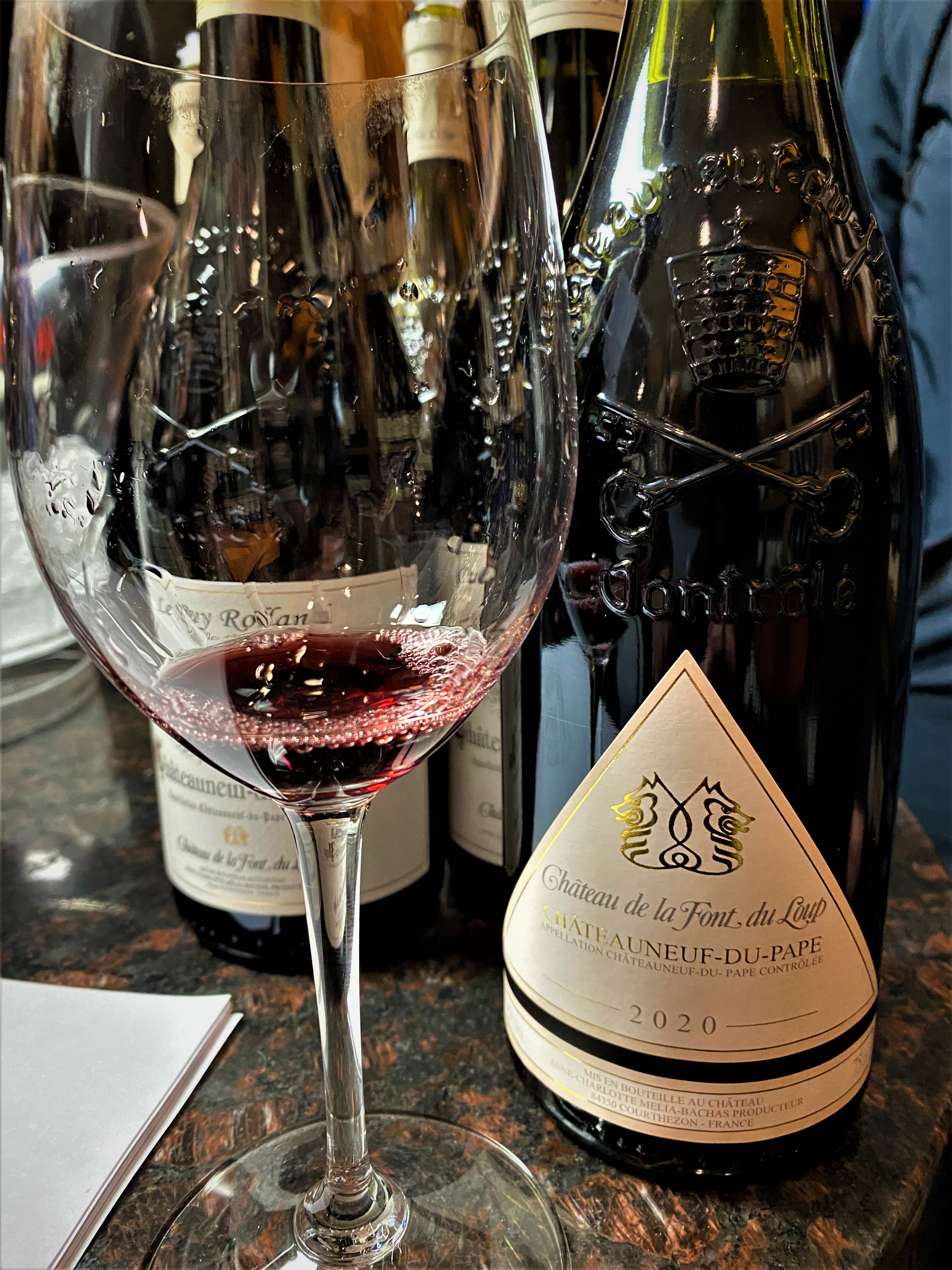
We then tasted Chateau de la Font, du Loup Chateauneuf-du-Pape 2020 and an estate wine.  The estate is located on one of the highest points in the area, and the soil is mostly sand with rocks.  While sand is not good for the vines normally, because it won’t keep enough water, the land is naturally hydrated by the natural spring on the property that it is named for.  It is also one of coolest places in the appellation and hence slow ripening grapes.  The wine is a blend of sixty-five percent Grenache, twenty percent Syrah, ten percent Mourvedre and five percent Cinsault, and these vines average about forty-five-years of age. The fruit is hand-harvested, destemmed, and meticulously inspected.  The grapes are fermented separately.  Initial Fermentation and Maceration lasts for three weeks in Concrete tanks with daily pumping for soft extraction and they use indigenous yeasts.  The grapes are fermented separately: the Grenache is aged in a combination of tanks and foudres, the Syrah is aged in used French Oak barrels and half-muids, and the Mourvedre is aged in demi-muids (and not cataloguing for the Cinsault).  The different wines are aged for sixteen to eighteen months, then racked and blended in concrete tanks for an additional six months. They average two-thousand cases annually of this wine.  A nice garnet colored wine offering notes of red fruits, herbs, and florals.  On the palate a good medium bodied wine offering tones of cherries, spices, a tinge of mint with ripe tannins and very well balanced with a medium length finish with a bit of terroir.     

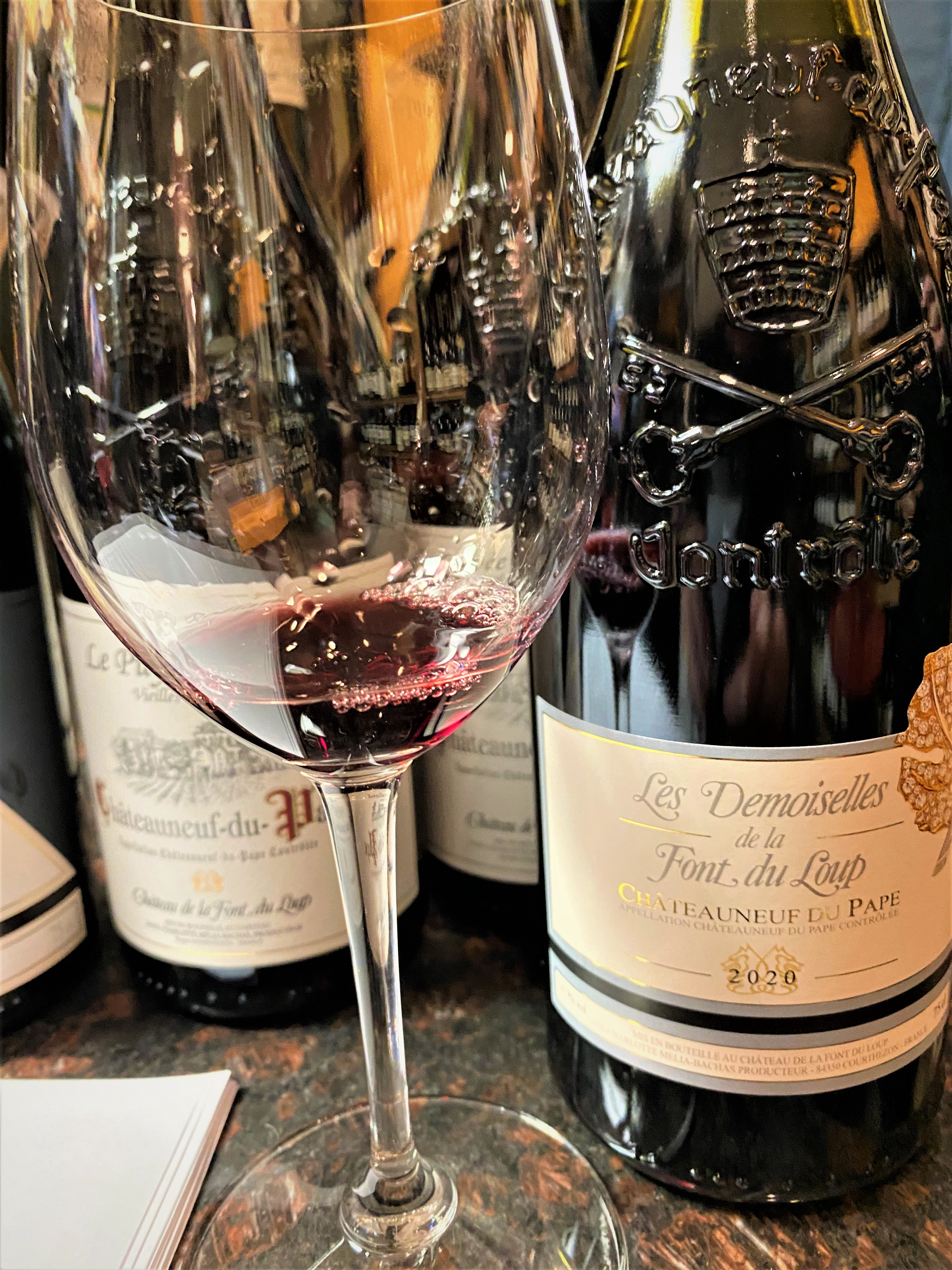
We then had Les Demoiselles de la Font, du Loup Chateauneuf-du-Pape 2020 another estate wine. Since they are located on one of the highest points of the appellation, the soil is sandy with stones.  The fruit is hand-harvested, destemmed, meticulously inspected, and it is eighty percent Grenache and twenty percent Syrah.  Initial Fermentation and Maceration for three weeks using indigenous yeasts in a Concrete tank.  The wine is then aged for nine months in Concrete tanks.  The wine is called Les Demoiselles, or in English, The Ladies and I concur, as this is the most elegant and feminine wine of the tasting; and when I say feminine, it goes back to my earliest years of learning about wines, when wines that were delicate and with finesse were described as feminine, as compared to in-your-face big jammy wines.  This garnet-red wine with violet accents offered an excellent nose that required a couple of pauses as it offered notes of cherries and strawberries, orange zest, some smokiness and dried tobacco.  On the palate, a medium-bodied wine with cherries and strawberries, soft tannins and a nice finish of fruit and smoky herbs.  A very pleasant and pleasurable wine to have with friends and a good jovial chat.

Posted in Wine | Tagged , , , , , , , , | 2 Comments

Signature by la Font, du Loup

A great time for us to try some new and interesting wines at my local wine shop, The Fine Wine Source in Livonia, Michigan.  We were enjoying a tasting session with Anne Charlotte Melia Bachas, the grand-daughter of the founder of Chateau de La Font, du Loup.  Her enthusiasm is wonderful, but she downplays her part and mentions that her vineyards are at the top of a hill, facing north, and all similar attributes to the legendary Chateau Rayas; her philosophy is to never over-extracted, cool temperature vinification and no new oak.  

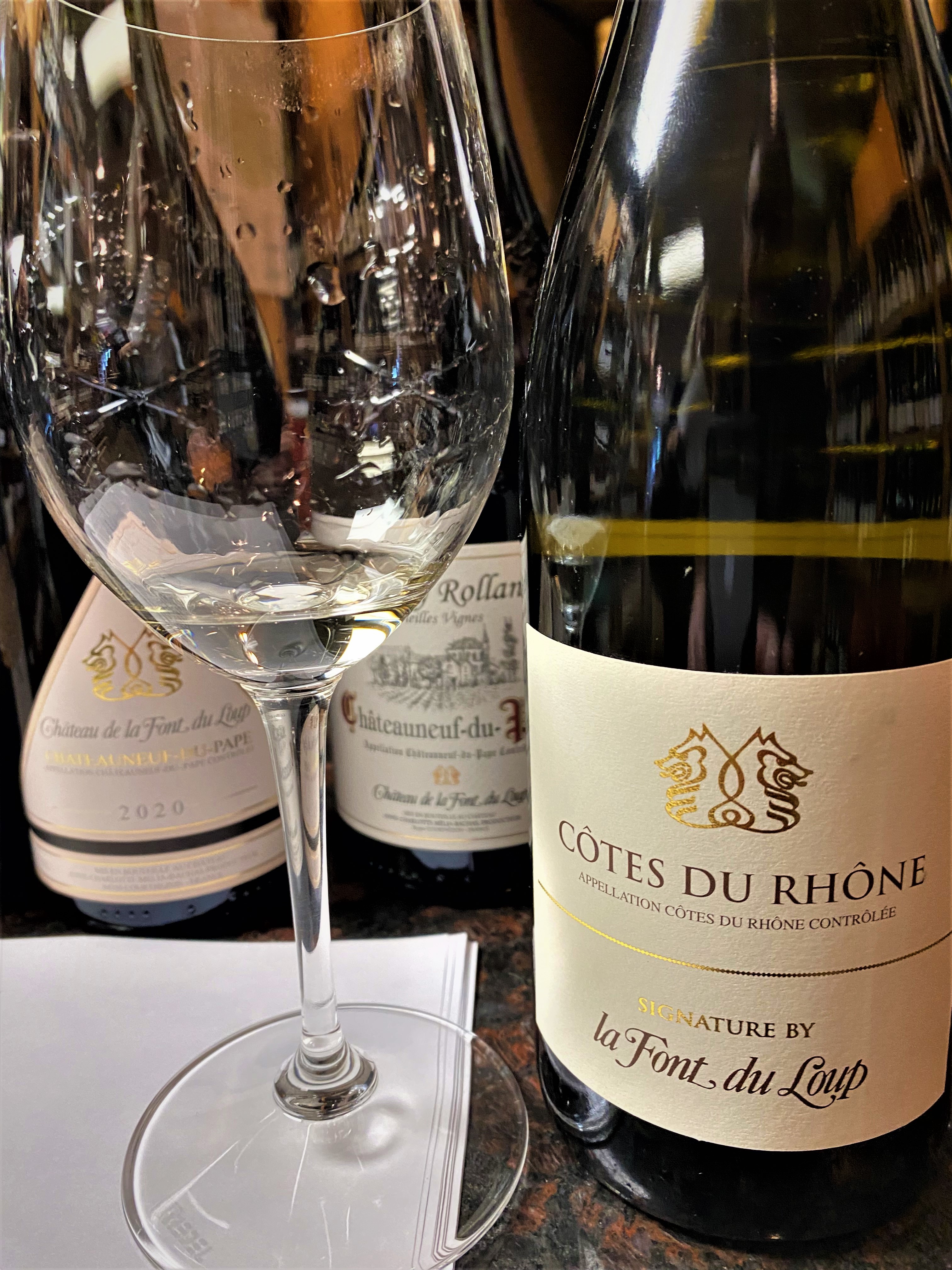
They offer two wines under the label “Signature by” as the properties are leased and not owned by the winery.  Signature by la Font, du Loup Cotes du Rhone Blanc 2021 comes from a one-hectare parcel of forty-year-old vines on sandy soil.  The vines are tended and nurtured per the Chateau’s requests of responsible farming, hand-harvesting and meticulous selection of the grapes.  The wine is a mix of fifty percent Grenache Blanc, twenty-five percent Viognier, and twenty-five percent Clairette. The fruit is fully destemmed, and grapes are vinified separately and blended just before bottling.  The juice was aged in a mix of Concrete tanks and Stainless-Steel tanks.  Malolactic Fermentation is prevented during aging.  A very pale straw-yellow wine offering notes of exotic fruits, white flowers, and a touch of mint. On the palate tones of ripe pear and apple, a little spice, and a little honey in a fresh wholesome wine with a great mineral (terroir) finish.

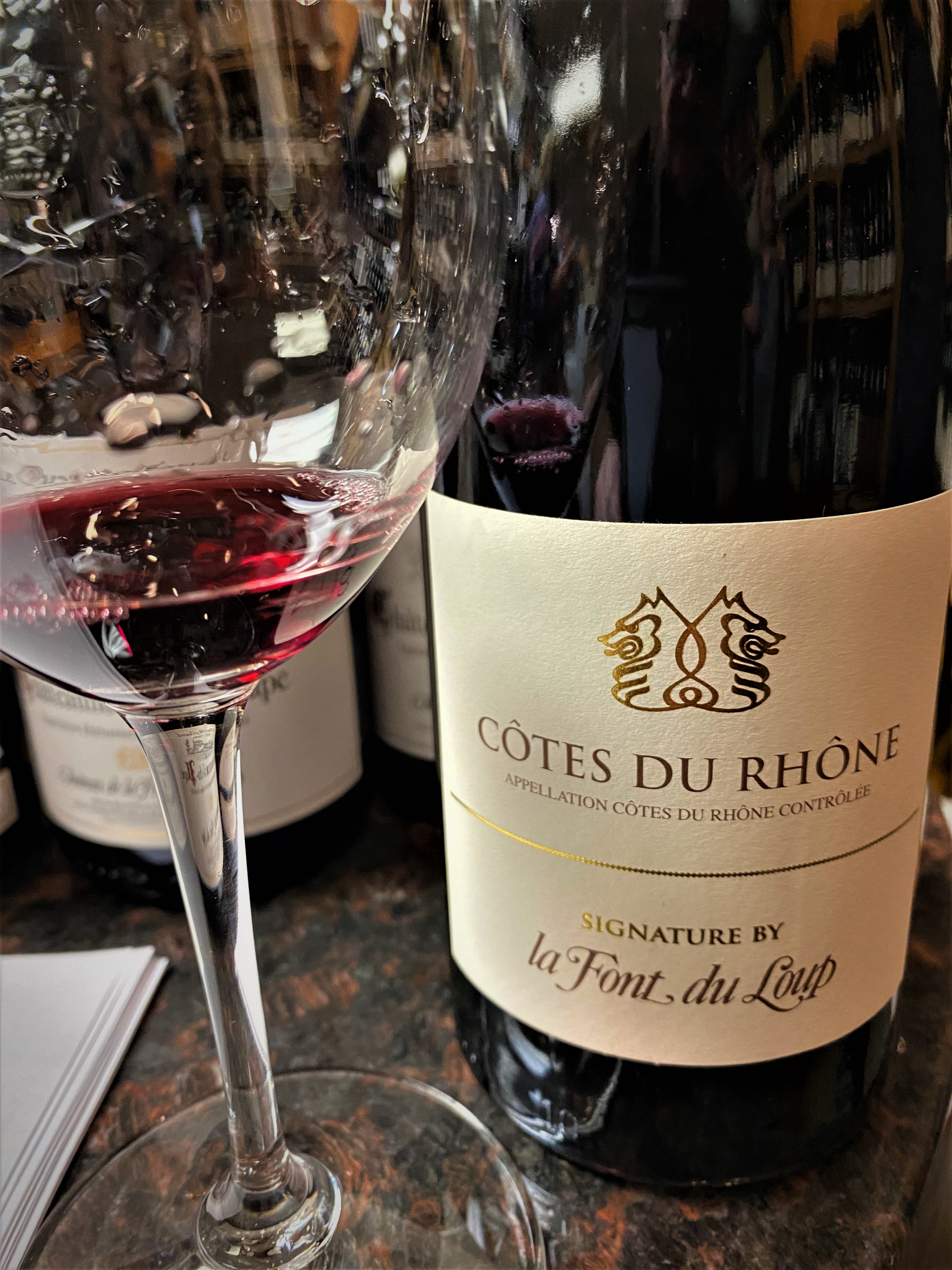
We then had Signature by la Font, du Loup Cotes du Rhone Rouge 2021 which is from a rented one-hectare parcel of fifty-year-old Grenache and Syrah grown on the same sandy soil.  The vines are once again tended and nurtured per the Chateau’s request of responsible farming, hand-harvesting and meticulous selection of grapes.  The wine is ninety percent Grenache and ten percent Syrah.  The fruit is fully destemmed and grapes are vinified separately and blended just before bottling.  Initial Fermentation and Maceration last for three weeks in concrete tanks, with daily pumping over for a soft extraction.  Then the juice is aged further in a mix of Concrete tanks and Stainless-Steel tanks.  A nice garnet-red wine that offers notes of red cherries and black currants and lavender flowers.  On the palate a medium-bodied wine that offers fresh tones of black cherry, black plum and black raspberry mixed with strawberry, pepper, mocha and silky tannins and medium acidity. A very pretty Cotes du Rhone wine.       

Posted in Wine | Tagged , , , , , , , , | Leave a comment

Anne Charlotte and Chateau de la Font, du Loup

My local wine shop, the Fine Wine Source in Livonia, Michigan was having a special event of a wine tasting, featuring two female winemakers and I will discuss each of the women, their winery, and their wines in sequence.  I find the concept of women winemakers as just part of the natural process.  I automatically think of the Grande Dame of Champagne, the pioneering lady who overcame hurdles in her day and made her wine international is Veuve Clicquot (Widow Clicquot).  In my fifty years of wine enjoyment, I have discovered many women in the trade, so I guess it has become normal.

Anne Charlotte Melia Bachas likes to claim that she was born under a foudre (a large wine cask).  The Melia family acquired Chateau de la Font, du Loup (the fountain of the wolf) in 1942, is the name of a natural spring in the center of the estate, and legend held that wolves from Mount Ventoux would stop to drink from the spring.  Today Anne Charlotte the grand-daughter of the founder and her husband oversee the estate and the winemaking. The estate is within the commune of Courthezon and part of the legendary Chateauneuf-du-Pape, or the “the Pope’s new castle;” when Pope Clement V moved his papacy to Avignon in 1308.  In 1936 Chateauneuf-du-Pape was the first AOC in the Rhone, as well as one of the first in France.  A unique wine that can be made using up to thirteen grape varieties, though the main grape is Grenache, followed by Syrah, Mourvedre, and Cinsaut.

We started off with Chateau de la Font, du Loup Chateauneuf-du-Pape Blanc 2019, which is a bit rarer, at least to me.  The estate is one of the highest points of the region.  The estate is basically on sand, but because of the natural spring, the vines stay hydrated naturally and some of the vines on the estate are at least a hundred-years old.  The wine is a blend of thirty-five percent Grenache Blanc, thirty-five percent Roussanne, twenty percent Clairette, and ten percent Bourboulenc.  Hand-harvested, the grapes are vinified separately and blended just before bottling.  Malolactic Fermentation is prevented.  Clairette and Bourboulenc are aged on lees for nine months in epoxy resin vats; while the Grenache Blanc and Roussanne spend time in once-used barrique seasoned by a single vintage at Chateau d’Yquem and in demi-muids (600 Liter) from Burgundy.  A very light-straw-yellow wine that offers notes of white fruit, toasted almonds, and flowers.  On the palate a fresh and delicate taste offering tones of subtle fruit, almonds, and butter, with fuller texture and a medium finish.  A very delicate and expressive wine with its own panache.     

Posted in Wine | Tagged , , , , , , , | 1 Comment

Julia Child at The Henry Ford Museum

We went and made a day of it, but especially to see the new Julia Child exhibit at The Henry Ford Museum.  I don’t know what genius came up with the idea of calling The Henry Ford Museum and Greenfield Village “The Henry,” but I find it odious and demeaning.  We maintain yearly passes to the estate, as it is a great way to get our daily walk in and see or learn something new at the same time.  When I was a boy, some of us, would ride our bikes from Detroit to the grounds to spend a Saturday; and I still find it a fun place to visit.

The Julia Child is a new travelling exhibit and from what I understand, this is the debut of its appearances.  There was some great photos and history of Julia that is not usually covered in articles and even documentaries.  There were oversized editions of cookbooks for people to take selfies with, or use as backdrops.  And then they even had a claw foot bathtub with a cut out, to make getting into the tub easier, if people wanted to duplicate the Valentine’s Day card that the Childs mailed to their friends one year.  One of the restaurants in the Henry Ford Museum is managed by Plum Market and they took advantage of the exhibit by offering their versions of some of Julia’s dishes for the term of the exhibit.  My Bride had the “All Natural” Coq au Vin with a Beet Salad and Haricot Verts and Garlic.  I had the Cassoulet of Pork with Orecchiette con Broccoli di Rapa (Broccolini) and Haricot Verts and Garlic.  My Bride had the better choice, as my dish was almost as much fat as meat.

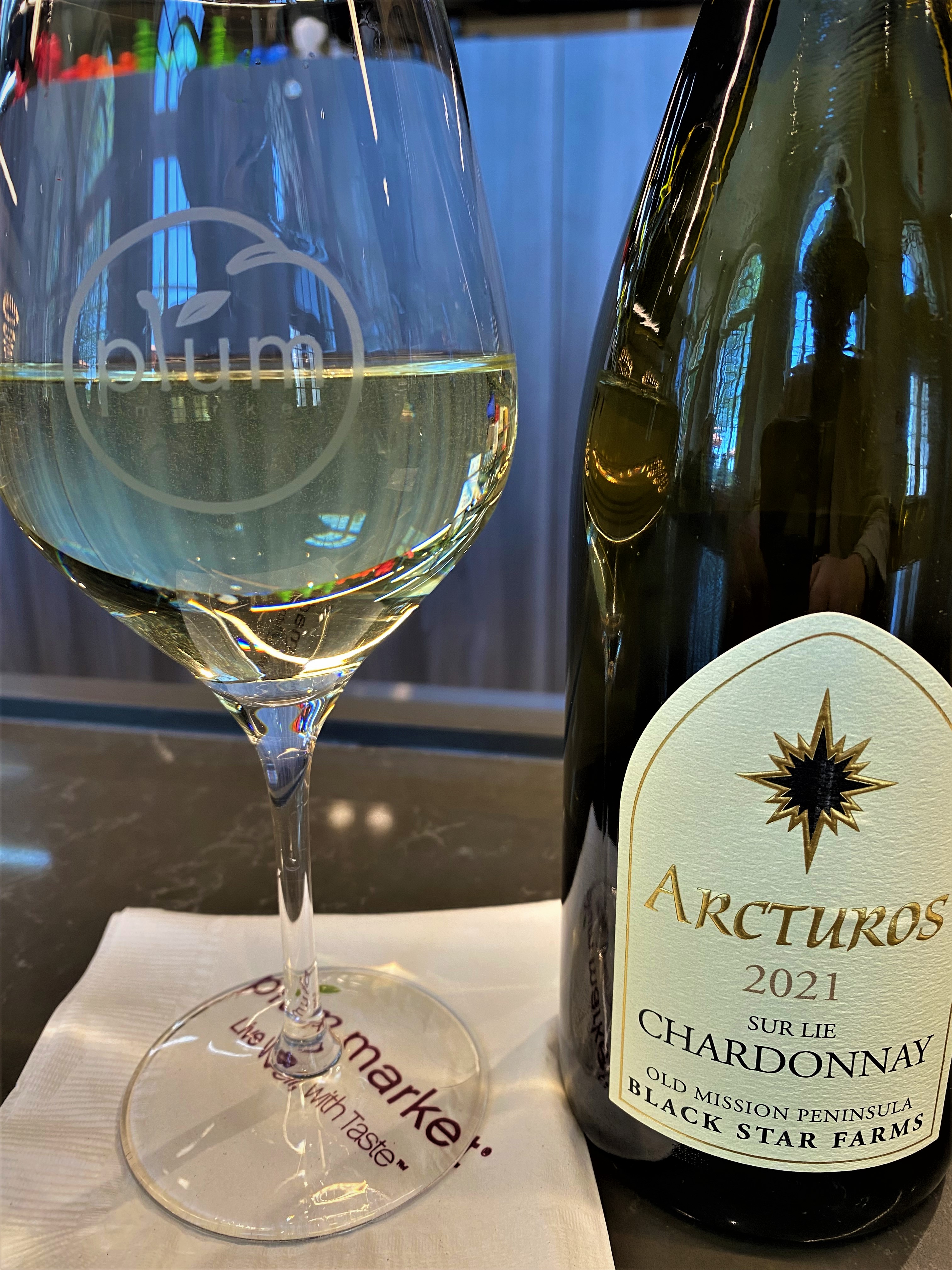
We both had glasses of Black Star Farms Arcturos Sur Lie Chardonnay Old Mission Peninsula 2021, to remind people that Michigan has a fine wine industry.  Afterall, Michigan is the seventh largest producer of table wine in the United States of America.  This is a non-oaked style wine, which I presume to mean that it is produced using Stainless Steel vats.  The wine had a beautiful soft-gold color with lush floral notes.  On the palate tones of citrus, apple, and pear in a medium bodied wine with a short finish with a subtle mineral tinge.  I am sure that Julia would have preferred a Bourgogne Blanc, but I went with what was available.      

Posted in Dining, Wine | Tagged , , , , , | Leave a comment

Argiolas and Two IGT Wines

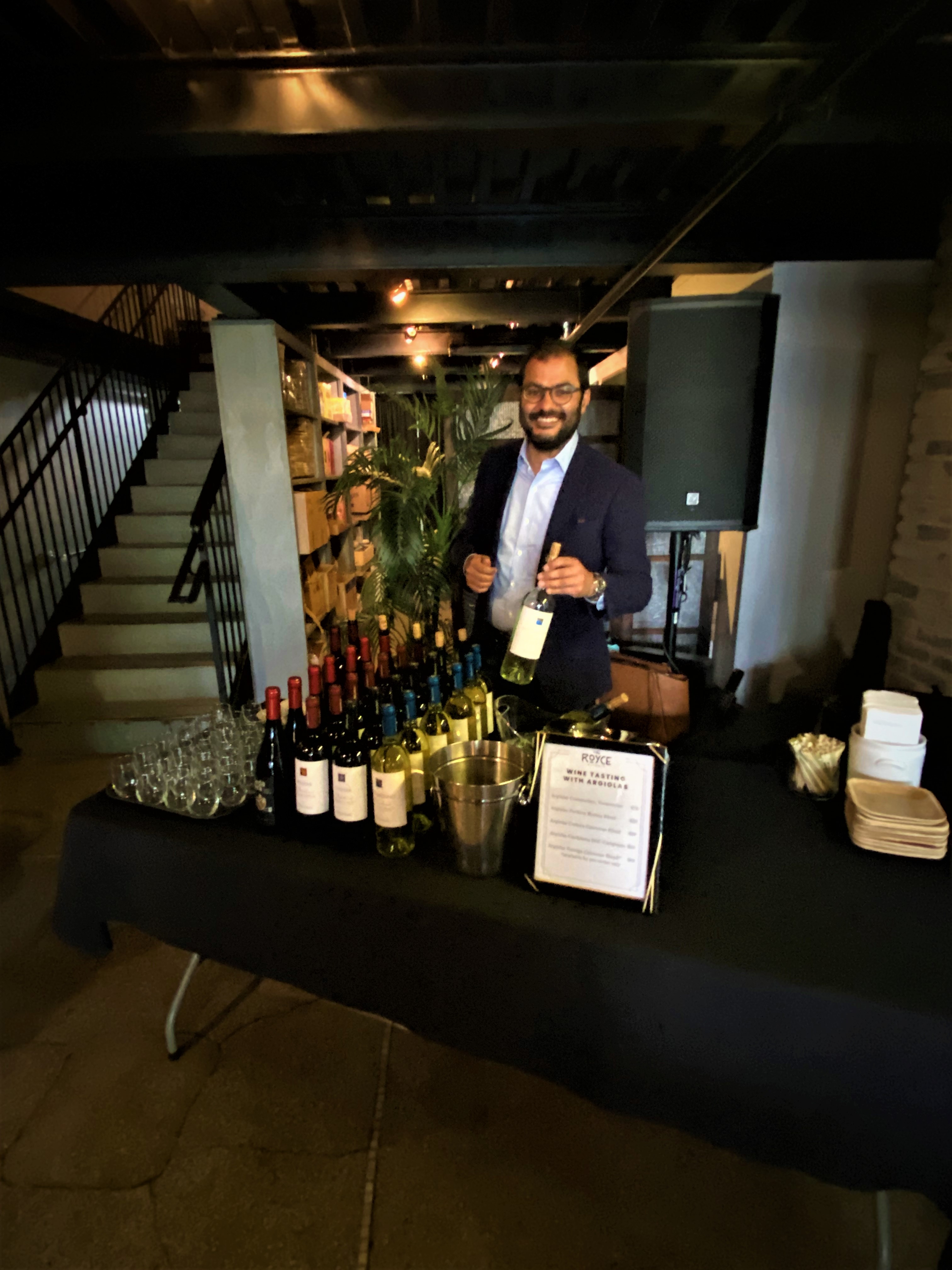
Antonio Argiolas was concluding his wine tasting presentation at The Royce wine bar in Downtown Detroit.  In the old days IGT would have had people shy away, thinking it was mere “table wine” until things changed dramatically in Italy.  Now you are seeing IGT being flaunted not just in Tuscany, but all across Italy. The Argiolas family has worked hard to become a leader in Sardinian winemaking both in classic and prestige lines of wine in Sardinia and by using native Sardinian grapes. Giacomo Tachis, called the “Father of Super Tuscan Wines,” believed southern Sardinia possessed the “true soul of the island,” and helped create the prestige offerings of Argiolas.  He helped them bottle wines under the “Isola del Nuraghi IGT” and aged wines in French barriques.

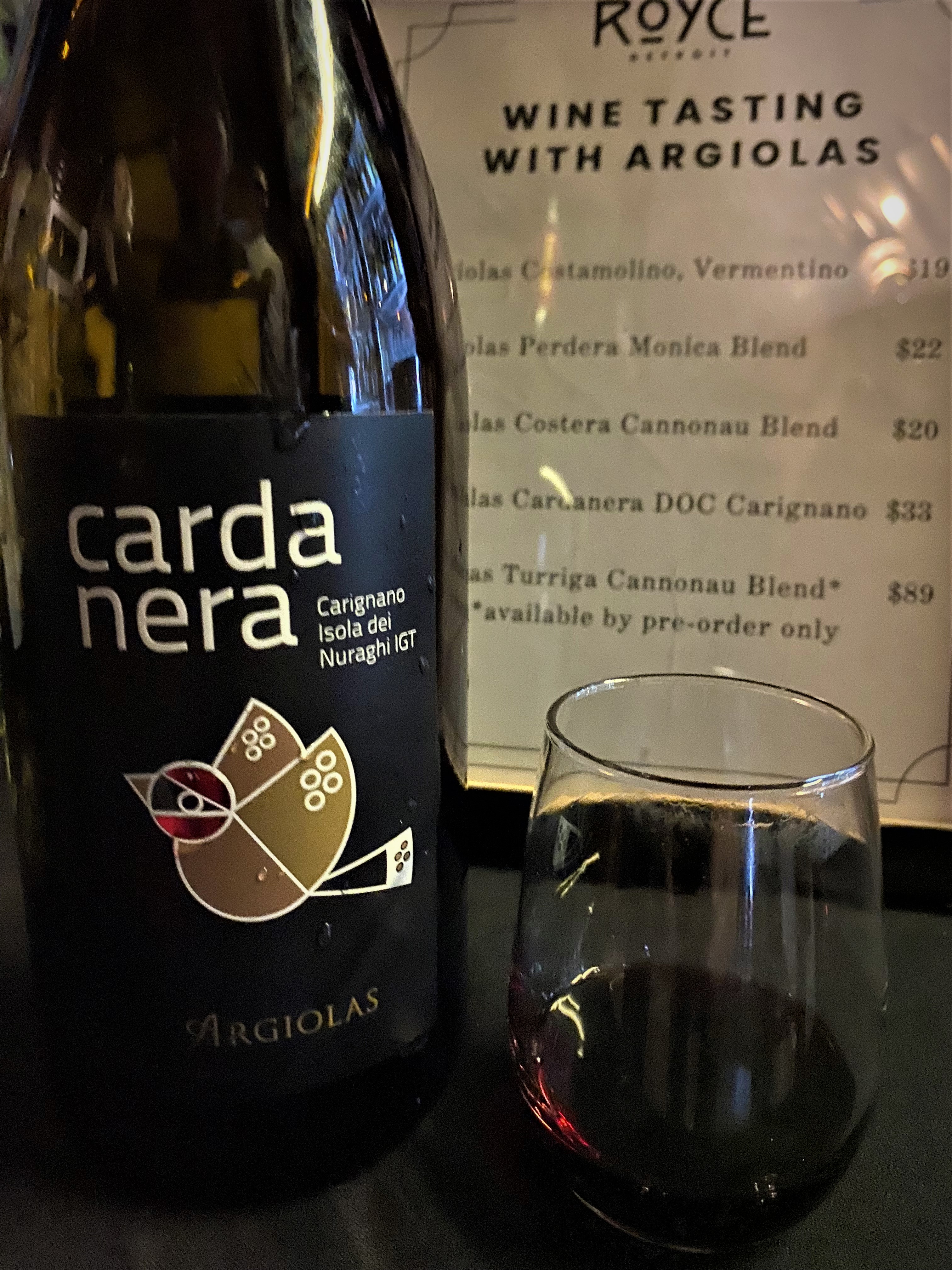
The penultimate wine of the evening was Argiolas Cardanera Carignano Isola dei Nuraghi IGT 2021.  Isola dei Nuraghi IGT wines may be red, white, or rosé and may apply to both native and varietal wines. According to the restrictions of the label, a wine may be a single varietal, the name of the grape must not appear on the front of the label.  The Nuraghi are conical stone towers that dot the landscape often in key strategic and defensive positions.  There are still about 7000 or so surviving structures on the island, but the that name is not recognizable to most people and there is move suggested to change the designation to “Sardegna IGT” perhaps in the future.  This particular wine is pure Carignano and the vineyard is very close to the sea side of southern Sardinia.  The soils are a combination of sand and clay, and there is no irrigation, but the humidity from the sea keeps the soil hydrated.  Initial Fermentation is for fifteen days, followed by fifteen days of Maceration and all-in Stainless-Steel tanks.  Malolactic Fermentation follows in the six months of aging in Concrete vats, followed by forty days in the bottle.  A nice ruby red color, this wine offers notes of red fruit perfumed by the sea coast to me, a very unique nose ideal for basic dishes.  On the palate tones of cherries, and plenty of assorted spices with complimentary tannins and the wine had a fresh and savory finish to it. I think it would be wonderful with Sea Bass or any meatier fish and of course red or white meats. 

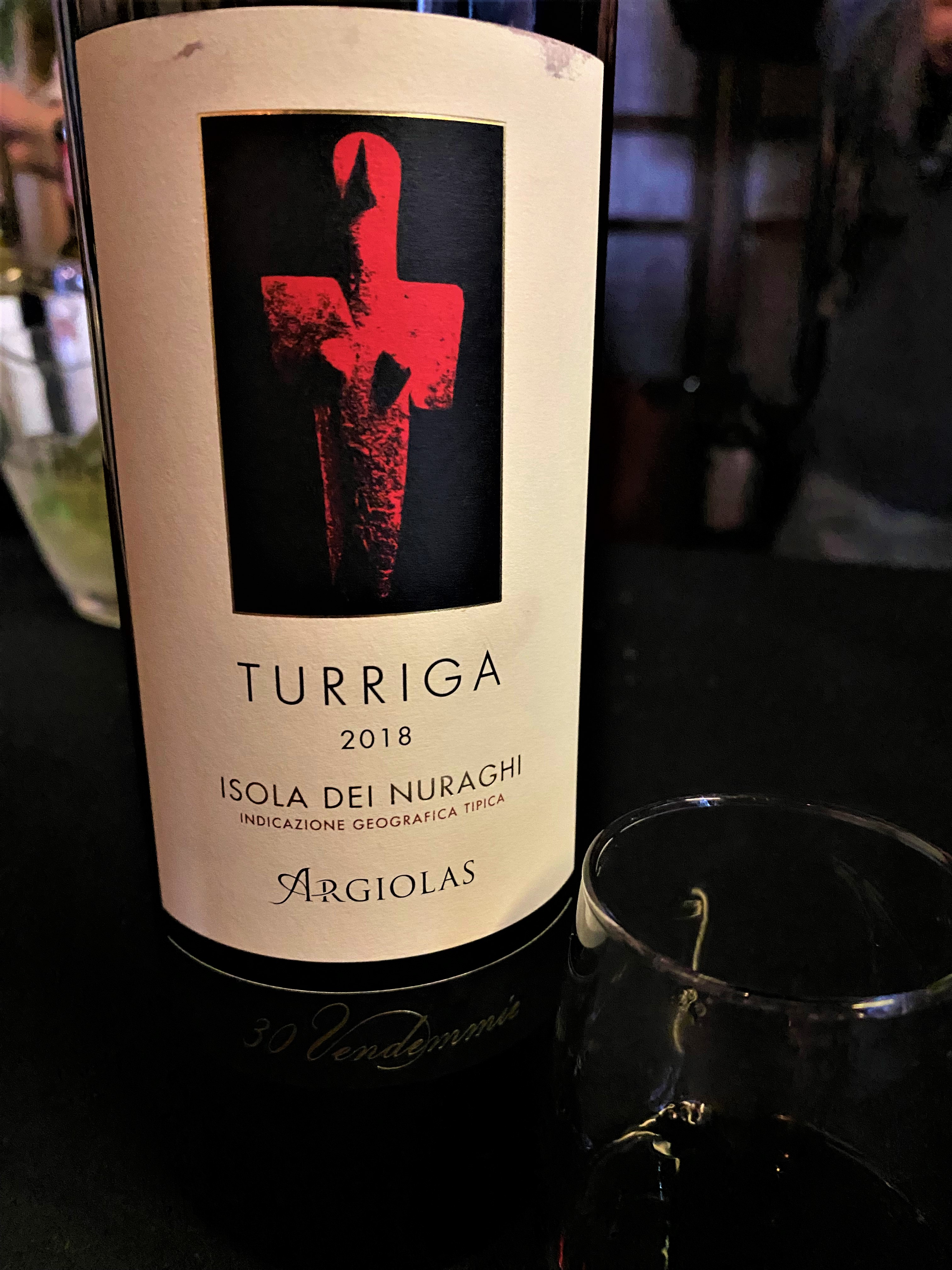
We finished the evening off with Argiolas Turriga Isola dei Nuraghi IGT 2018.  Turriga is the benchmark red wine of Sardinia, as conceived by the Argiolas family and Giacomo Tachis.  The concept was to create a long aging wine using only Sardinian varietals.  This is considered one of the highest rated wines of Sardinia.  This wine is made from a fifteen-acre plot of The Turriga Vineyard on calcareous and rocky soil.  The plot was planted in 1970 and the first vintage was 1988.  The wine is a blend of eighty-five percent Cannonau, five percent Carignano, five percent Bovale Sardo and five percent Malvasia Nera (a varietal found in the Mediterranean area, used usually for blending).  Initial Fermentation for about fifteen days, followed by about eighteen days of Maceration in Stainless-Steel tanks.  Malolactic Fermentation occurs in a mix of brand-new French Oak barrels and Concrete vats for twenty months, followed by twelve months in the bottle.  A very dark ruby red wine the offers note of dark fruits, exotic florals, and Mediterranean spices.  On the palate deep tones of black cherry, cassis, tobacco, licorice and coffee with bold tight tannins and a nice long finish of fruit and coffee.  While not being practical for a wine tasting, this wine could have used some decanting, because it was a bit different, but really tasty, this is the wine that I would have gone back for seconds, if I could have.   

Posted in Wine | Tagged , , , , , , , , , , , , | Leave a comment

Argiolas Featuring Monica and Cannanou Grapes

It was an interesting wine tasting conducted by Antonio Argiolas representing Argiolas wines of Sardinia.  The tasting was being held at The Royce, a wine bar in Downtown Detroit.  Sardinia is the second largest island in the Mediterranean Ocean and is west of Italy’s mainland.  The kingdom of Aragon ruled Sardinia for over four-hundred-years and consequently there are indigenous vines on the island that originally came from Spain during that period of time.  The island can be divided into three regions for wine-growing; the north which specializes in Vermentino, the southwest that features Carignano and the Trexenta hills north of the capital of Cagliari that features Nuragus, Monica and Cannonau.

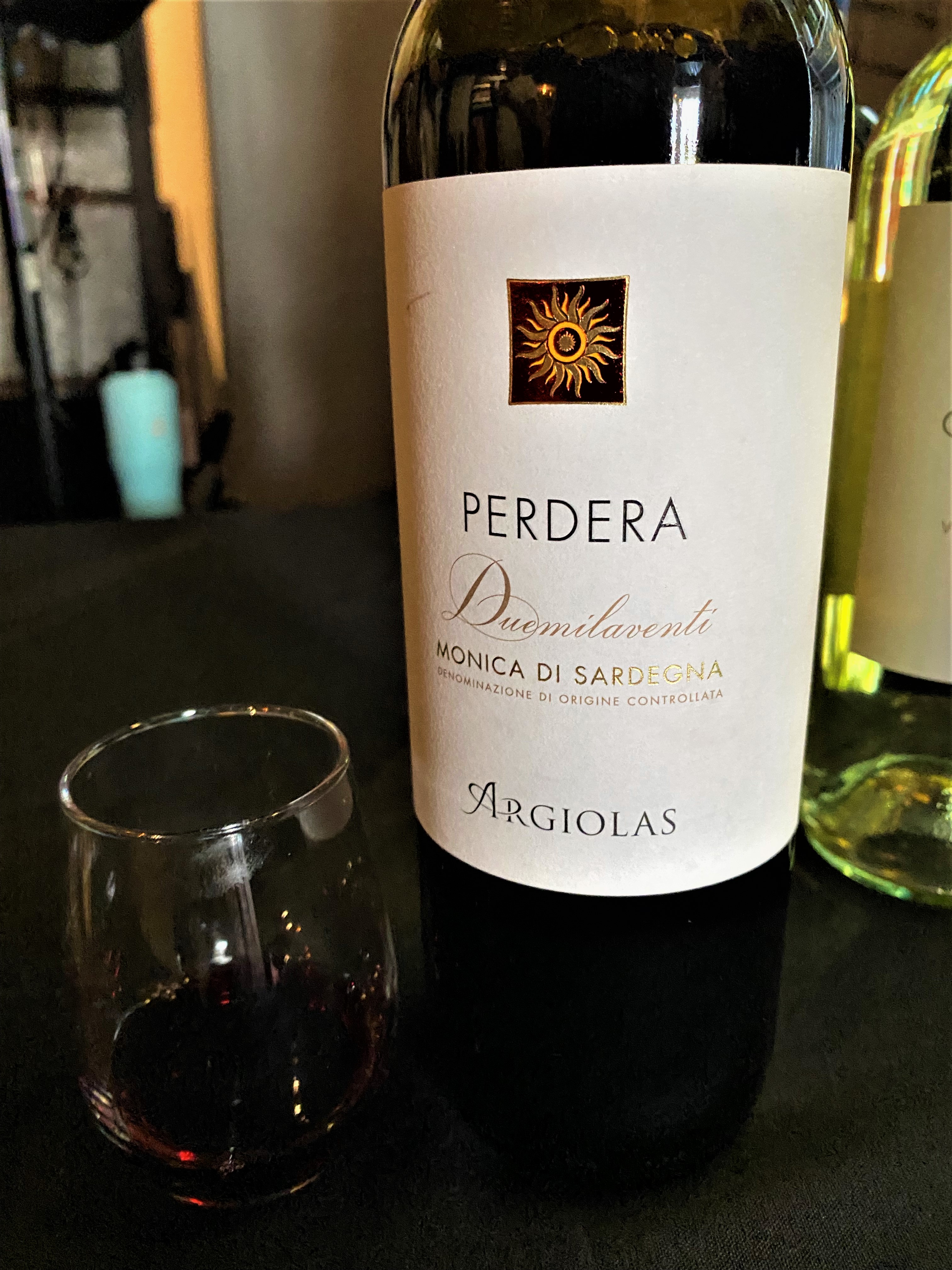
The second wine being offered for the tasting was Argiolas Perdera Monica di Sardegna DOC 2020.  Perdera, means “place of many stones” and is from the grape Monica, that grows exclusively on the island of Sardinia.  Some feel that it is from Spain, but no genetic links have been discovered.  The grape offers low levels of acidity and must be harvested early, otherwise it ends up with excessive alcohol levels.  It is found in both still and frizzante style wines and in a dry and sweet fortified style. The wine is a blend of ninety percent Monica, five percent Carignano and five percent Bovale Sardo.  Initial Fermentation for about eight days, followed by about another eight days of Maceration and then Malolactic Fermentation all-in Stainless-Steel tanks. The wine is then aged for about eight months in French Oak, followed by four months in Concrete vats, with an additional two to three months in the bottle. A ruby-red colored wine offering tones of red fruit, florals, and spices.  On the palate, the wine is medium-bodied with tones of cherry and plum, and gentle tannins and a short finish.  A good table wine for charcuterie.

The next wine was Argiolas Costera Cannonau di Sardegna DOC 2020. Costera is a name referring to hills and it is made from Cannonau (Garnacha or Grenache).  The workhorse grape of the island, some people feel that the grape came from Spain, while others feel that the grape was taken to Spain from Sardinia. It is the second most planted grape in Spain. This wine is a blend of ninety percent Cannonau, five percent Bovale Sardo and five percent Carignano.  Bovale Sardo is native to Sardinia and is sometimes known locally as Muristellu though some feel that it is originally from Spain. It is found throughout the island and is commonly blended with Monica and with Cannonau.  Carignano (Carignan in France, Carinena in Spain and Carignane in America) is a black-skinned grape that is probably native to Aragon and is a popular blending varietal for the Mediterranean region. The wine starts with about four weeks of Initial Fermentation, a cold soak Maceration for about another four weeks followed by Malolactic Fermentation all-in Stainless-Steel tanks.  The wine is then aged for about ten months in used French Oak barriques followed by five months in Concrete vats and then settling for a month in the bottle.  A deep ruby red wine offering notes of strawberries, cherries, and spices.  On the palate this a bigger wine with notes of black cherry, herbs and a touch of vanilla with medium tannins and medium finish of fruit.   

Posted in Wine | Tagged , , , , , , , , , , , , , , , | Leave a comment

Antonio Argiolas and his Wines

I had a chance to meet Antonio Argiolas and taste some of his wines from Sardinia (Sardegna) with the label of Argiolas Wines.  The tasting was held at The Royce a wine bar in Downtown Detroit, that my Bride and I have ventured to a couple of times.  While we were there, we met a couple that actually lived in the apartments upstairs and I asked if they knew any of the history of the building, as I have tried to place the building as I know that I passed it often, especially on my way home from high school as I went to catch the municipal bus back home, back then we didn’t have school busses.  The couple told me, that the building was originally built as apartments for the employees of S.S. Kresge, the “five and dimes” stores, that we called “dime stores.”  The Kresge Company eventually became “Kmart” and Detroit was still home base. I am sorry, but I find that information fascinating.

Antonio Argiolas was conducting the wine tasting and he is a direct descendant of Antonio Argiolas who founded and planted the estate in 1938.  He is regarded as the father of modern winemaking in Sardinia and he lived to the age of 102, giving credence to some that Sardinian wines are beneficial to a long life.  Antonio Argiolas inherited seven acres of wines from his father in 1938 and was the first to convert to modern viticulture.  The winery is now two-hundred-eighty hectares to the north and east of the city of Cagliari.  His sons, Franco and Giuseppe replanted the vineyards in the Eighties with the goal of reducing yields and focusing on Sardinian grapes. They produce over two-million bottles a year and the winery is now run by the grandchildren.

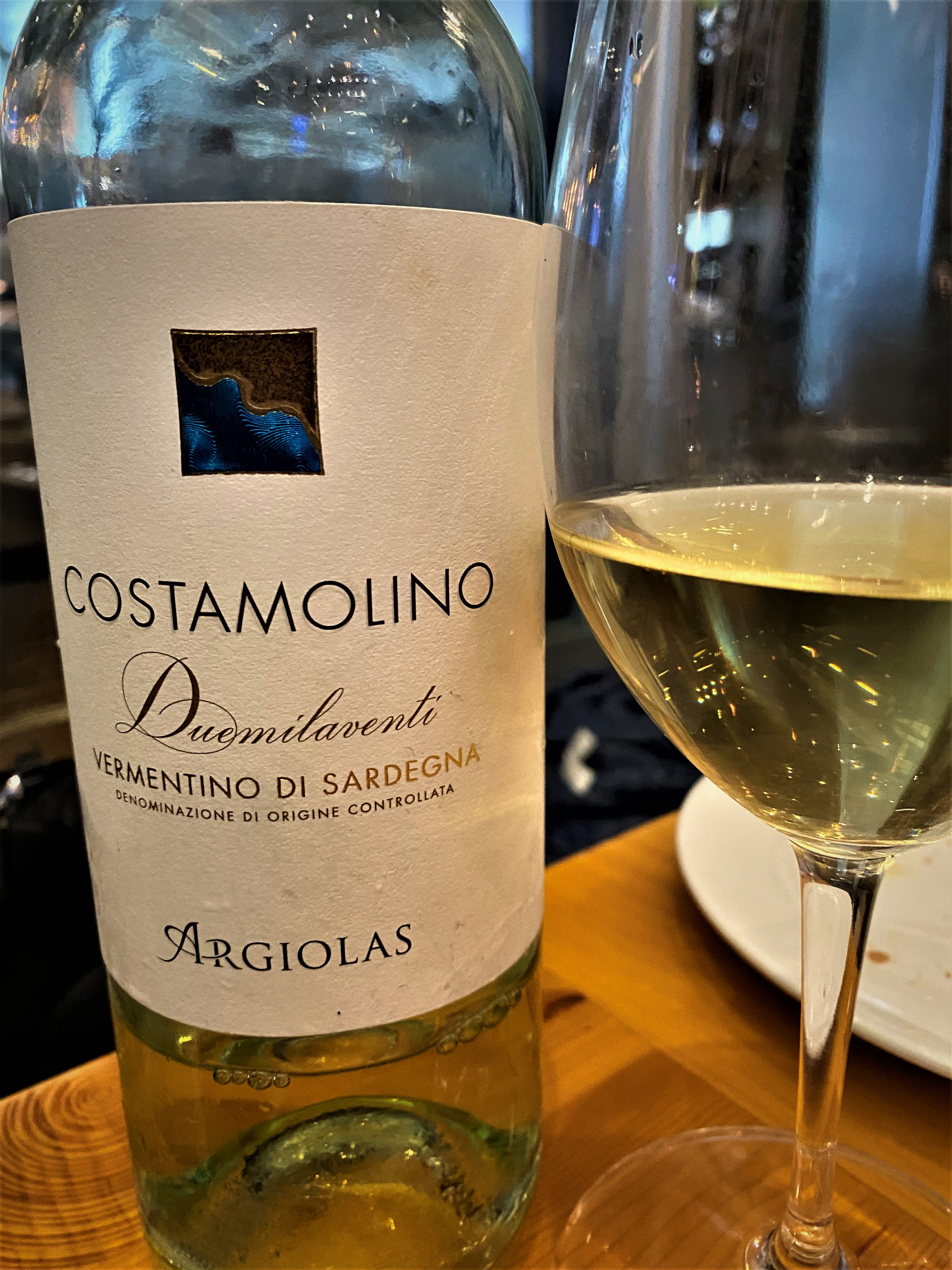
The first wine of the evening was Argiolas Costamolino Vermentino di Sardegna DOC 2020.  Vermentino di Sardegna DOC was established in 1988 and spans the entire island.  The origin of the grape is murky, in Italy it is Vermentino, in Provence and the Languedoc is Rolle for many centuries and some feel that it came from Spain.  The vineyards are basically limestone and marl and they received over three-hundred-days of sunshine and ocean breezes.  Costamolino is named for the area where Argiolas grows the grape.  The grapes are harvested in August and September.  They are totally involved with Stainless Steel vats for the Initial Fermentation for about thirty days and a small percentage of the wine also undergoes Malolactic Fermentation.  The wine is aged for about four months, with an additional aging in bottle for about three months.  The wine has a straw color and offers notes of stone fruits, citrus and a touch of pine.  On the palate a very nice dry wine with tones of white fruit, lemon zest, bright acidity and an abundance of mineral salinity that makes the wine seem so refreshing.    

Posted in Wine | Tagged , , , | Leave a comment