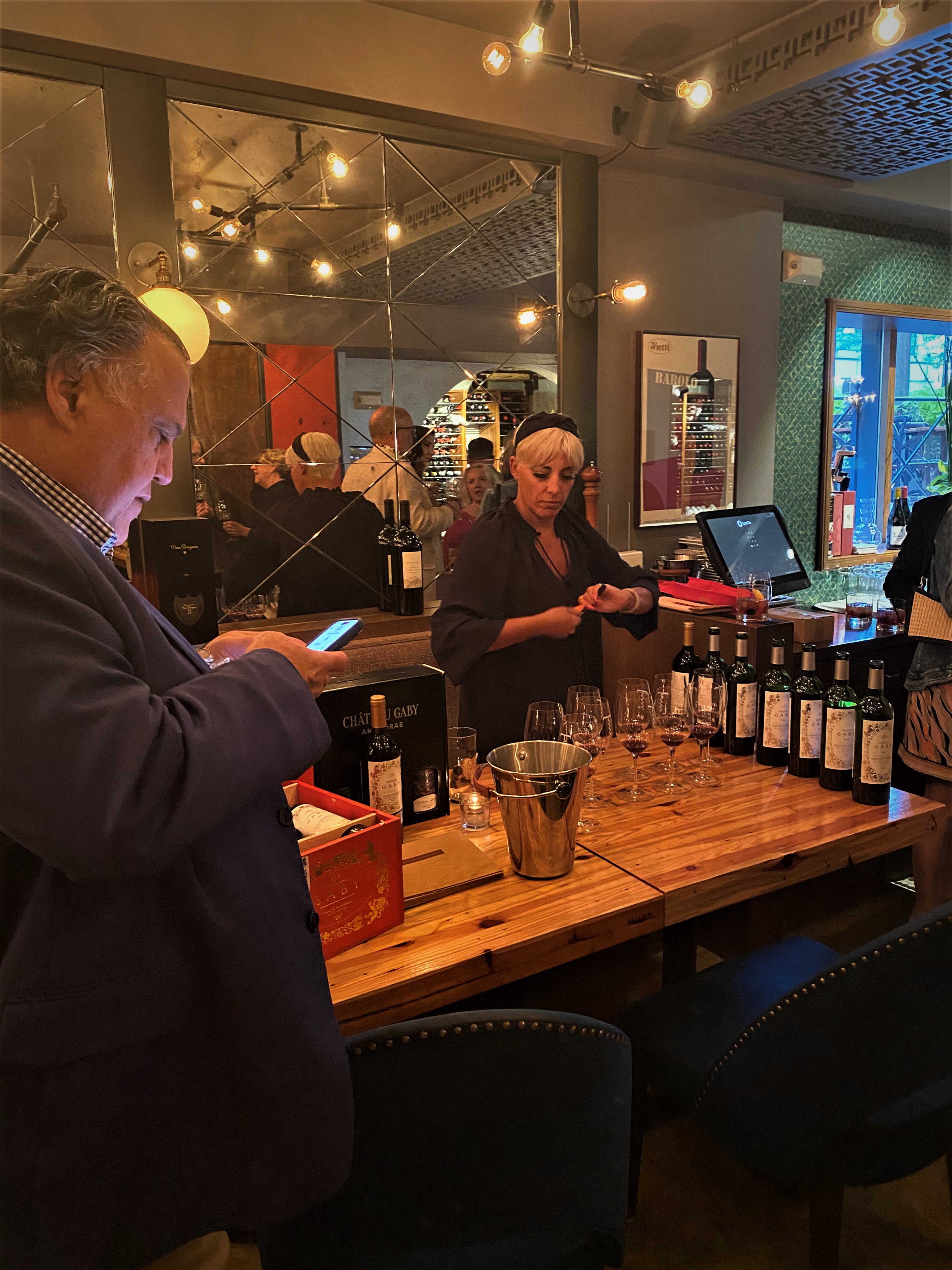
You may have noticed that over the years I have mentioned my local wine shop/club that I visit quite often, well they also own a wine-centric restaurant Vertical Detroit in the historic Ashley Hotel in Downtown Detroit. The restaurant opened in September 2015, but closed during the mandated lockdown period which ruined many establishments. They reopened and continue with their concept of over two-hundred-fifty different vintages by the bottle and nearly forty-five by the glass. The word vertical in wine-talk refers to trying the same wine over the course of at least three years, and they even offer several selections of verticals there as well. My Bride and I were invited to Vertical for a vertical tasting of wines by Chateau Gaby of Canon-Fronsac by Jim Lutfy, his wife Livvie, and their daughter Remy. The tasting was conducted by the winemaker Damien Landouar
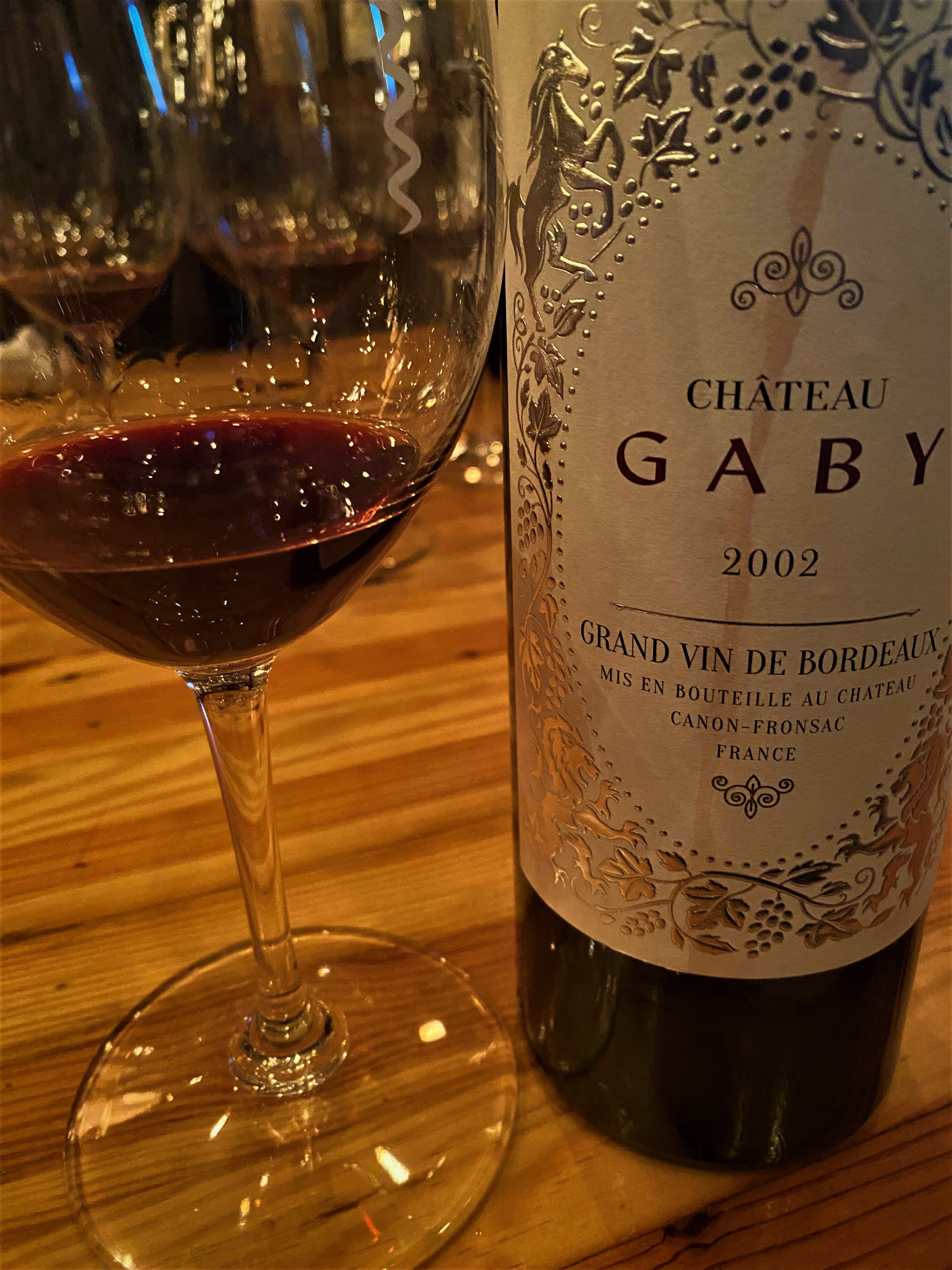
We were going to be tasting a vertical of six wines from Chateau Gaby. The estate is an hour drive east from the city of Bordeaux, and the jewel of the Canon-Fronsac appellation. The 18th Century chateau is nestled on a hilltop overlook the vineyards. The first vines were planted in the 1600’s, and the estate underwent a restoration in 2006; and is considered one of the finest panoramic views in all of Bordeaux. At one time the wines of the Dukes of Richelieu. The soils are more sandstone and limestone, instead of clay, and this aids the vines resistance to hotter weather. We started with Chateau Gaby Canon Fronsac 2002. The early fall prior to harvest was a blessing for this wine. The wine is a blend of eighty percent Merlot, ten percent Cabernet Sauvignon, and ten percent Cabernet Franc. The fruit is harvested by hand, traditionally in the second week of October. The wine is aged for twenty-four months in French Oak, of which half is new. A pretty ruby color that offered notes of red fruit, and fresh tobacco. On the palate the wine offered tones of cherry and cassis, balanced with a medium count offering fruit and terroir.
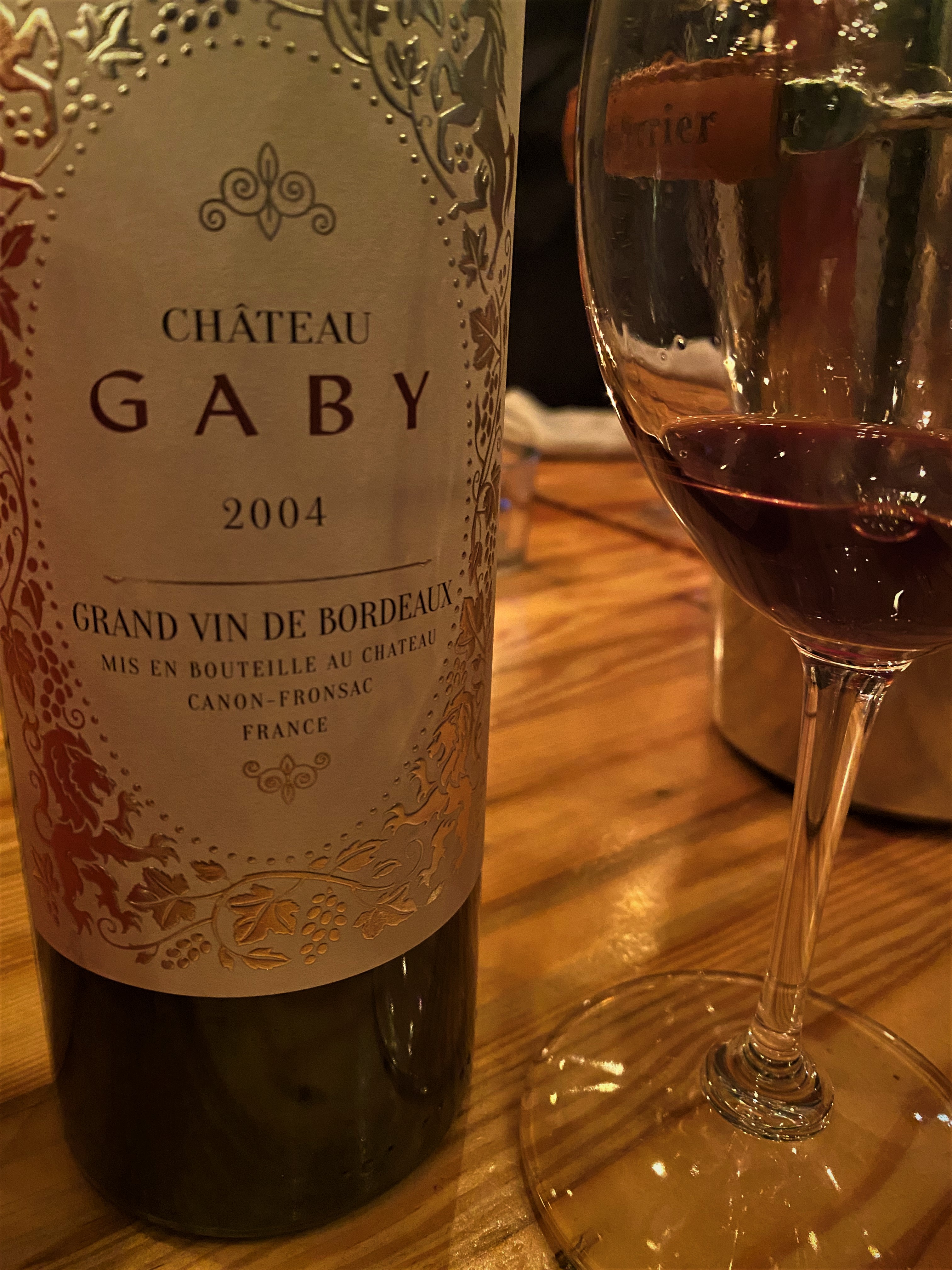
The second wine of the vertical tasting was Chateau Gaby Canon Fronsac 2004. Another vintage where the early fall was a boon for this wine, according to the winemaker. The wine is a blend of eighty percent Merlot, ten percent Cabernet Sauvignon, and ten percent Cabernet Franc. Hand-harvested in the second week of October. The wine is aged for twenty-four months in French Oak, of which half is new. The wine was a deeper ruby color and offered great notes of black fruits, tobacco, and cedar. On the palate, the tones of the black fruits were more intense, very well balanced, with a big and creamy feel and good finish of terroir. I thought I liked the 2002, until I tasted the 2004.
We both like museums and history, not to mention meals with wine. We covered all the basics with a trip to Frankenmuth, Michigan. Now keep your lederhosen on, and we will get back to Frankenmuth soon enough. I really wanted to see the Michigan Heroes Museum since I first heard about it on the radio. The museum is not about war, or battles; rather it is unique in that it honors the men and women of Michigan and their individual ordinary lives, caught up in and sometimes ended by the experience of war. There are over nine-hundred exhibits, most of which rotate, because of the lack of space, starting with the Spanish-American War to the War on Terrorism, and with a side exhibit honoring the Michiganders in the Space Program. It also features more Medals of Honor than any other museum in the United States. The volunteers that were there were truly dedicated, and one said that during the lockdown in the state, they received massive amounts of material honoring individuals from their families, as people had time to see what were in their attics and basements. With all of the memorabilia that was displayed in the cases and above the cases, I really could have stayed there all day, if not a couple of days longer.
We went to a wine bar in Frankenmuth called Prost, owned by a couple from Sault Ste. Marie, Ontario, Canada. We actually went kind of light for lunch. We started with a Michigan Whitefish Dip with Riesling, capers, cream cheese and dill with Balsamic Onion Jam, Ciabatta bread and crackers. My Bride had a Caesar Salad with Ciabatta croutons and grated Parmigiano cheese topped with an Amish Chicken breast. I had a grilled Avocado topped with Lobster Claw salad on a bed of spring greens tossed with Lemon. We had a charming bottle of wine with lunch, that I could find very little information about. We had Evolucio Furmint Tokaj, Hungary 2022. Tokaj is a region that is famous for its dessert wine of the same name. Tokaj is a UNESCO World Heritage Site and it has one of the oldest wine classification systems which started in 1730. The vineyards are a variety of different volcanic soils that retain heat and a remarkable mineral character. The grape Furmint is taken from the word “Froment” for the wheat-gold color of the wine. Furmint can be produced in a range of wine styles from bone dry to extremely sweet wines. I couldn’t find any background information on Evolucio. The wine is a blend of eighty-five percent Furmint and fifteen percent Harlslevelu; between these two grapes, it accounts for ninety percent of the grapes grown in Takaj. Harlslevelu also is susceptible for “noble rot.” It tends to add spiciness and/or smokiness, some honey pollen and elderflower. The vines are about fifteen years of age and grow on slopes with no irrigation. The grapes are hand-harvested, destemmed, pressed gently, fermented in Stainless-Steek tanks with no further aging. A pale-gold colored wine with notes of green apple, pear, pineapple, and white florals. On the palate, the bright acidity blending with tones of apricot, melon, and minerals while it ends with a decent finish of dryness for all that fruit and some more acidity that calls for another sip.
And it was a delightful day-trip to Frankenmuth, which is almost like a Bavarian village transposed to Michigan. The shops on the main drag after going through a gate greeting you all have folksy Germanic feel, and I am sure that the lederhosen come out for the many events that are celebrated in the town. They are famous for their chicken and butter noodle dinners. It was also good that it was a day-trip and we used up the day as tourists, because they are also famous for Bronner’s where it is Christmas year-round and the largest Christmas store in the world. I often think of flying a drone over our house to see if Bronner’s is painted on our rooftop. There is a huge glockenspiel clock that is an event, all of its own four times a day. When you enter Frankenmuth, you are greeted with Willkommen and when you leave, it is Auf Wiedersehen.
I keep having a difficult time typing or saying Statler without Hilton, and not because of the two characters in the private theater box on the Muppets, because for years on Washington Boulevard and Grand Circus Park stood the Statler-Hilton Hotel. In my youth, that hotel was where the Armenian Youth Federation held a conference, a convention and even an Olympics with all the dances were held, such great memories. The hotel was torn down, and a much smaller footpad and many less floors, one can find the City Club Apartments. One can also find the Statler French American Bistro, part of the Joe Vicari Restaurant Group in Michigan and the city of Las Vegas, and if my memory was correct, the restaurant is about the same location as the old Trader Vic’s which was the restaurant in the flagship locations of the old hotel chain.
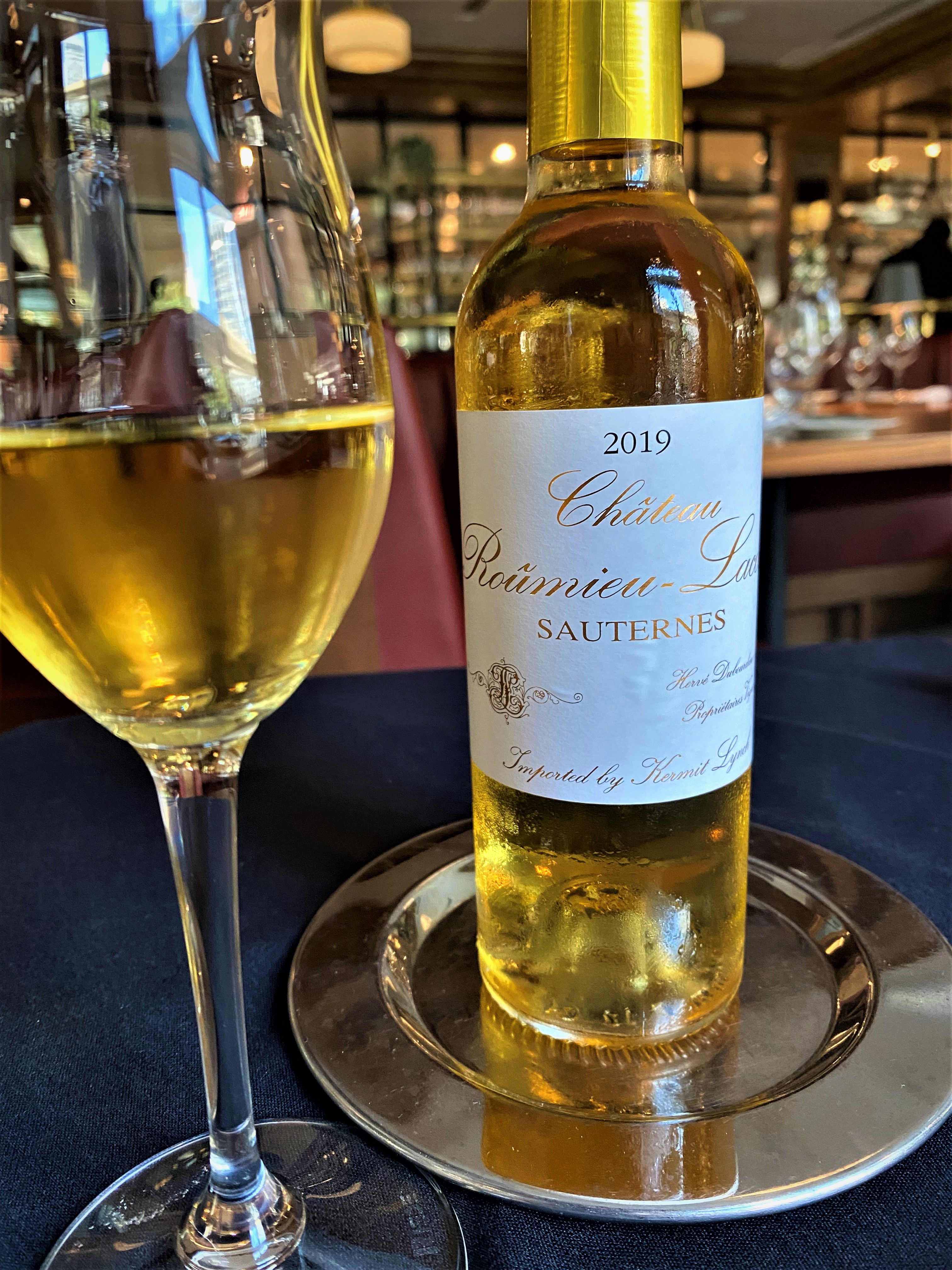
We were there to have dinner, before going to see Barry Manilow, and we were going with one of my Bride’s best friends, who instigated the entire evening and got sick and was quarantined just a couple of hours, before the night’s festivities were to begin. Since there was just the two of us, my Bride and I decided to share an order of Seared Foie Gras, with a crispy waffle, Sauternes reduction, and lingonberry jam. We also were going to share a glass of Sauternes, but our waitress had the bar, divide the wine into two equal servings for us; which were glasses of Chateau Roumieu-Lacoste Sauternes 2019. The estate is owned by Herve Dubourdieu who also has Chateau Graville-Lacoste and Chateau Ducasse. The Sauternes estate originates from his mother’s side of the family and dates to1890. The estate is six hectares of vineyards on shale and limestone on fissure rocks with red iron and gray flint, the vines are at least forty-five years of age. The wine is made from pure Botrytized Semillon, that is fermented in Stainless-Steel and then aged in Bordelaise Oak, seventy percent new, for eighteen months. A deep golden colored wine at a young age offered notes of dried fruits, spices, and smoke. On the palate, a very fresh and dense wine with tones of dried fruits and a nice finish of fruit and a tinge of terroir.
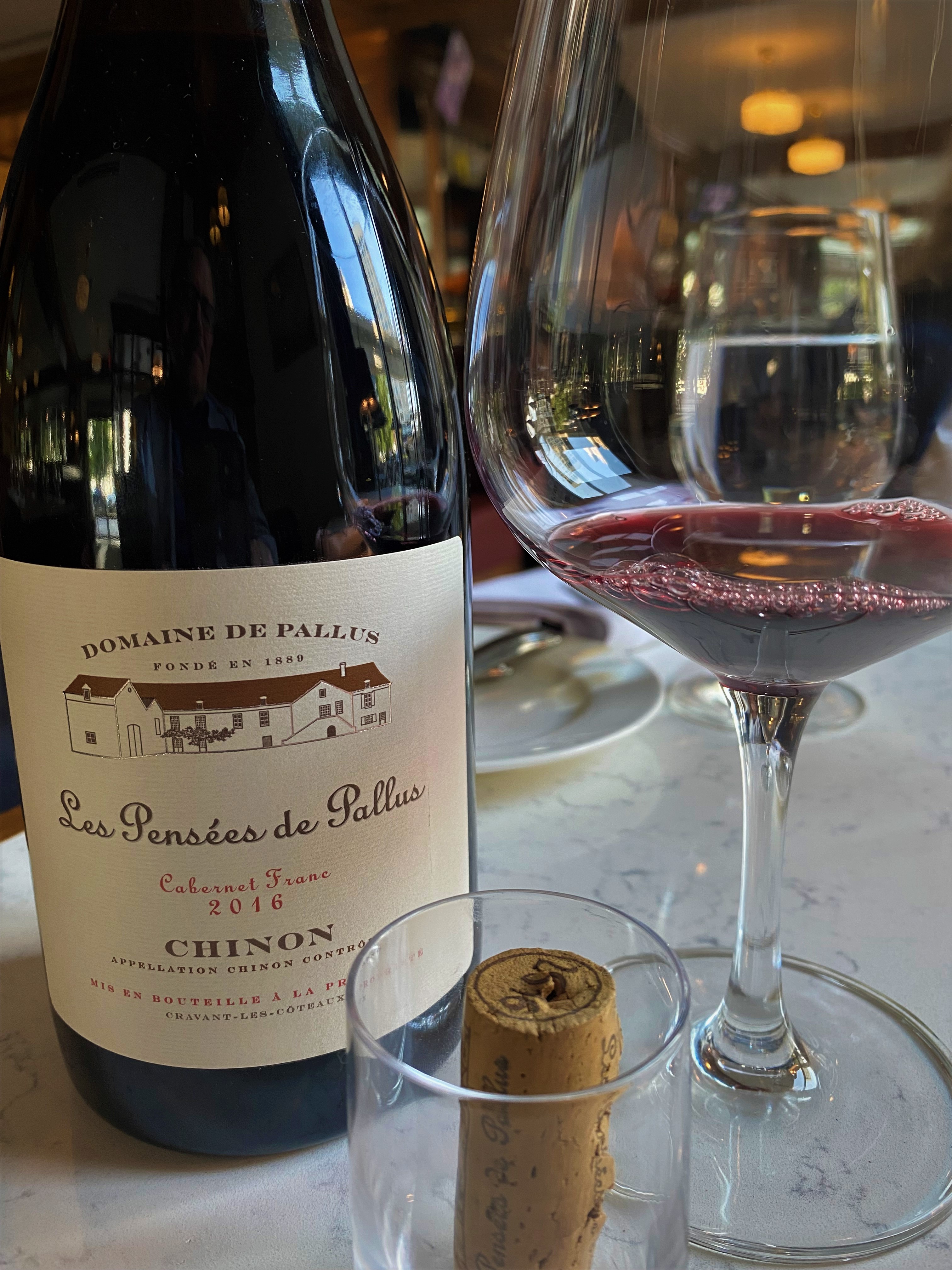
My Bride surprised me and she wanted a Truffle Burger with three cheeses, sautéed mushrooms, and Truffle Aioli with Truffle Fries. I had the Norwegian Salmon with Lobster, and sauce vin blanc. We enjoyed a bottle of Domaine de Pallus “Les Pensées de Pallus” Chinon 2016. Domaine de Pallus has twelve hectares of now biodynamically farmed hillside vineyards dating back to 1889 and still in the same family. The plots for this wine are from shallow mid-slopes planted on sand and fine-grained limestone and since 2013, only the best vines are chosen for this cuvee. The juice undergoes fermentation and maceration in concrete tanks using indigenous yeasts for twenty-one days. The wine is then aged for twelve months in barrels, followed by an additional six months back in the concrete tanks. A nice dark ruby color that offered notes of red fruits and florals. On the palate, a classic interpretation with tones of cherry, currants, raspberry, and strawberry, a little citrus in the background, with bell pepper and bay leaves, good acidity, medium tannins and a nice dry finish. A perfect wine for food, as it just complimented the fats and richness of the dishes.
The legendary Copacabana (named after a beach in Rio de Janeiro) was at 625 West 51’st for one night was at Little Caesars Arena in Detroit. It may not have had the glamor of the famed one continuous film shot of Goodfellas, but Barry Manilow did his best to bring his famous songs to the arena. We had a whole evening orchestrated by one of my Bride’s best friends and an hour before she was going to leave her house, she called to tell us, that she had been stricken with the bug, that you have to be tested for, to see if you have it.
Neither my Bride, nor myself had been to the Little Caesars Arena, which is relatively new for Detroit, but then we are not really sports enthusiasts. We couldn’t find any wine, while we were wandering around the stadium in search for a t-shirt of this event for one of our grandchildren. I didn’t find any wine beyond what we had at the other stadium, and we weren’t in the mood for bulk wine. We decided to have Margaritas, another mistake, I am not sure what the “bartender” made, be neither of us could decide what the drink was. We ended up with a t-shirt and the two “drinks” and discovered that seats that we had paid such a premium for, were way on the side of the stage and in the nose bleed section. Just after, we had gotten comfortable, an usher scaled up the stairs to where we were, and asked if we would be interested in a complimentary upgrade to floor level seats, we graciously accepted them, and we ended up eye level with the stage and just slightly off from the center. A perfect location to enjoy the concert, unfortunately I didn’t like any photo I took at the concert, so I am enclosing the upgraded tickets instead, not nearly as exciting, but I hope you can appreciate the effort.
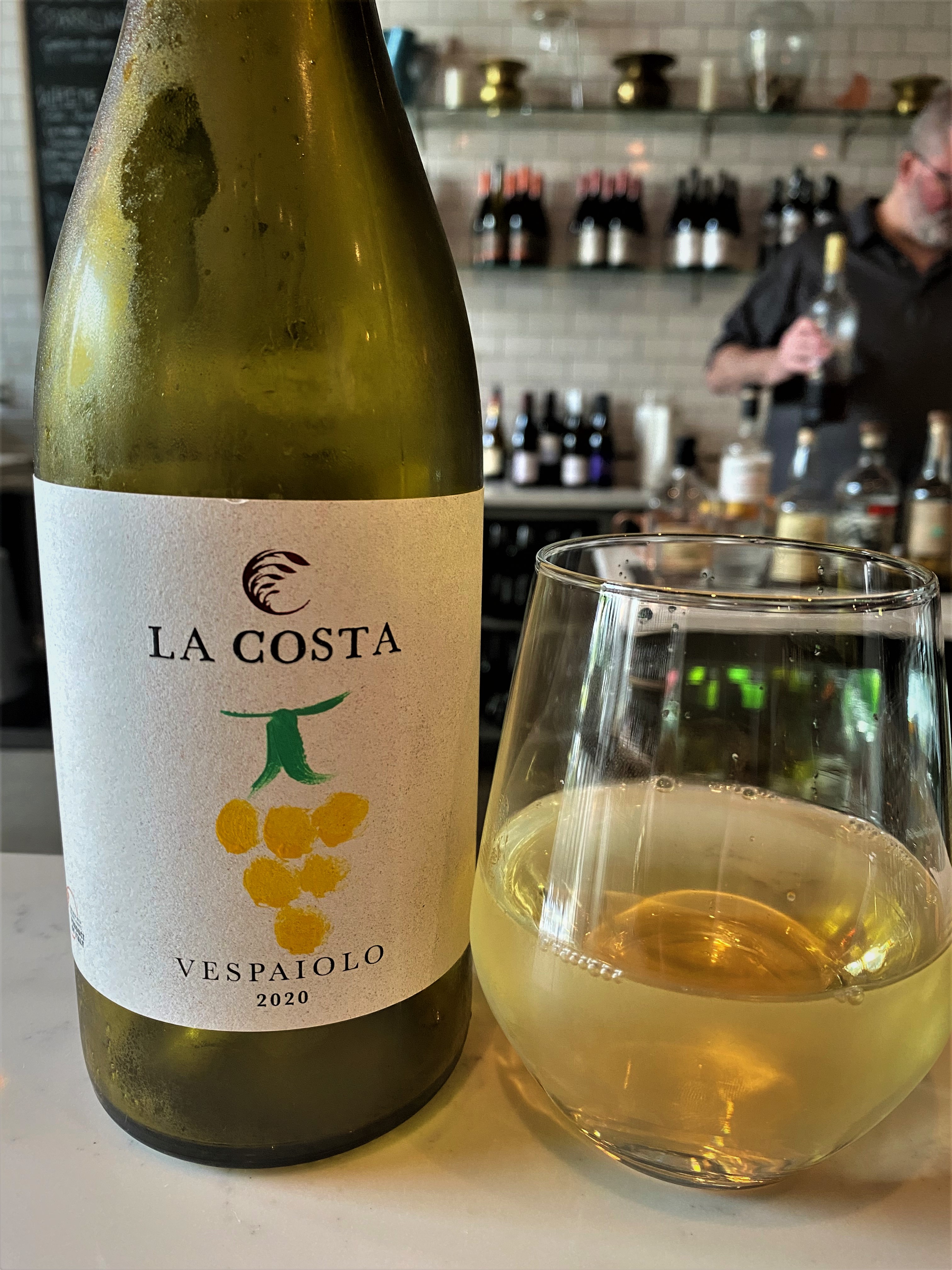
In case, you were concerned, as this article is written out of sequence for the day, we did have a chance to enjoy some real wines at two different venues prior to the concert. We had arrived downtown early to secure a good parking spot, for a rapid departure after the show, so we had plenty of time to wander about a bit before our dinner reservations, and for me to get my bearings straight about the location of the stadium to my geographic memories of this section of the outskirts of old Downtown Detroit. Our first stop was The Royce for a couple of glasses of wine to fight off the summer heat. We had a glass of La Costa Fattoria Sociale Vespaiolo IGT Veneto 2020. La Costa Fattoria Sociale is in the Breganze region of the Veneto, which is the fourth oldest DOC in this area, dating back to 1969. The owner of the winery had a son that was diagnosed with a disability, and the winery created a “social farm” that helps refugees, the disabled, the homeless and the unemployed, as well as those who suffer from addictions. They provide employment, housing, medical and social services, and training. The winery is organic, self-sustainable, using solar-panels, capturing rainwater for irrigation and sheep to manage vegetation growth. Vespaiolo is basically only found in the Veneto region of Italy, and is most famous for Breganze Torcolato, a sweet wine from Breganze. There were no winemaking notes that I could glean from my research. The wine is a straw-yellow color offering notes of elderberry. On the palate tones of white currants and quince with bright acidity and freshness and a rather short finish of almonds and terroir. I think it may have been a bit more interesting with a tin of sardines and some crackers, instead of just being on its own.
Now purists might argue that the Lions actually played at five stadiums, but I will be ego-centric and only claim the three that were used in my life time, and that is a long enough span of time. I can go all the way back to when they actually played at Tiger Stadium, and back then, you had to willing to endure the elements, just like the players and when the NFL got their other acronym of “Not For Long.” They are famed for always having a traditional Thanksgiving Day, and the only team that has never played in a Super Bowl. In spite of their fame for losing; the Honolulu Blue jerseys have been a mainstay in Detroit, since when they did win before the Super Bowl was created. All this is because we have season tickets on the fifty-yard line, on the visiting team’s side, and we usually just sell the tickets to friends that are really fans. This year my Bride decided to not try to look for a purchaser for an exhibition game, so we went to see the arena.
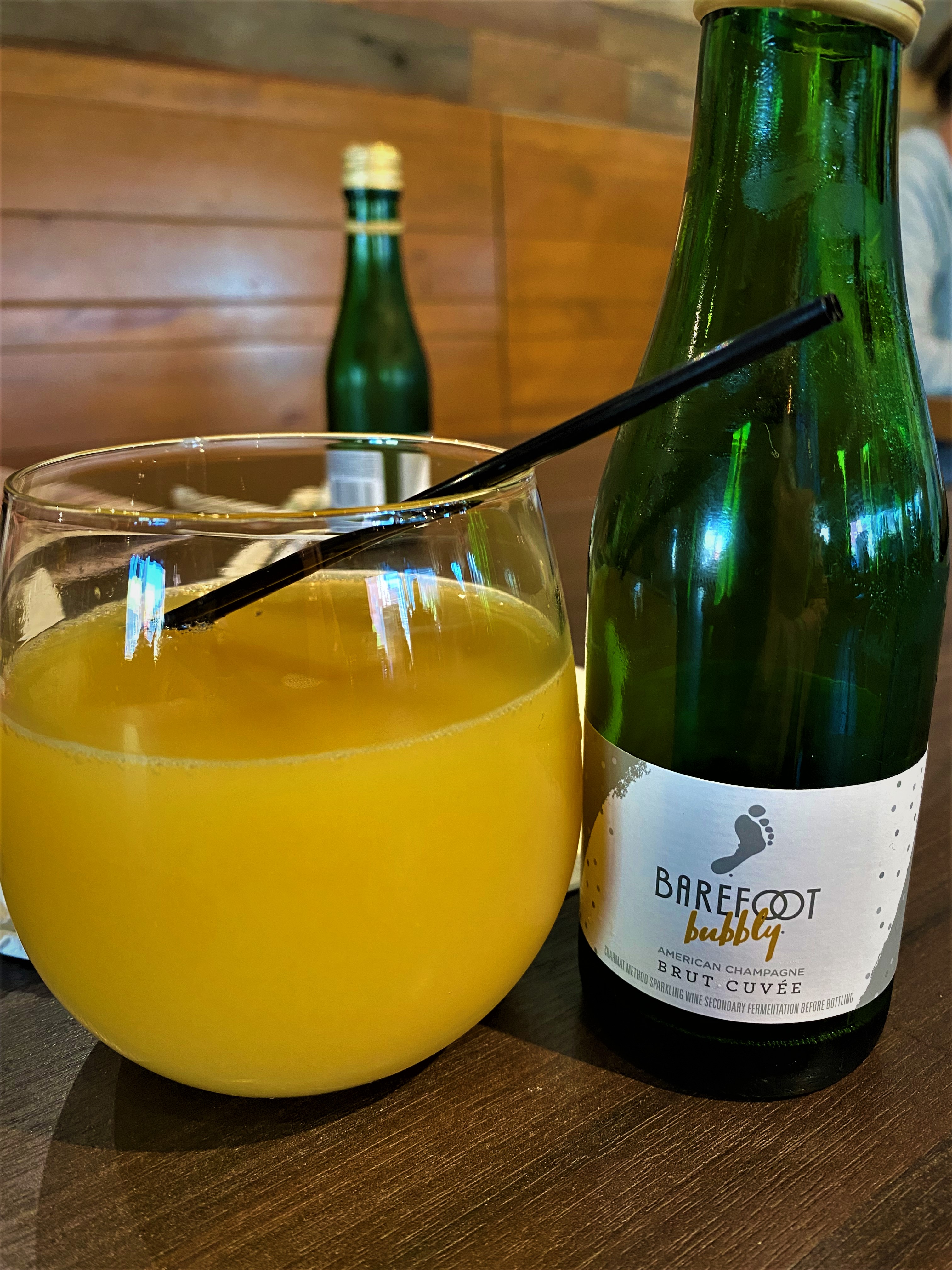
We got downtown early to have lunch and some wine, before the game. We also got the privilege of paying forty dollars to park our car, where we usually only pay ten dollars. As I said the Lions are still a major draw. We went to Basement Burger Bar, and the downtown location is the only one of their three locations that isn’t in a basement. Their gimmick is that they have a menu where you write all the parameters of your burger on the menu and then bring it to you. My Bride had a Chicken preparation with Truffle-Oil French Fries and I had a “Wagyu-style” burger with Onion Rings on the side. Both selections were big, filling and a bit sloppy to eat, but we were adventurous. We also had Mimosas, which was a bad choice, because they brought us a glass of orange juice neither of us could stand, and with the addition of an airline wine bottle of Barefoot bubbly American Champagne Brut Cuvee California NV. We even ordered a second split each of the sparkling wine to see if it could mask the taste of orange juice, but to no avail. Barefoot Cellars has a huge selection of value-driven wines, with their iconic footprint label evoking the concept of bare feet stomping and crushing the grapes. The winery began in 1986, and they were purchased in 2005 by E & J Gallo, which explains how they can call themselves “American Champagne” from a loophole that was agreed upon, when France sued and won the case that sparkling wine made here could not use “Champagne” except for a few wineries that were grandfathered in. This wine looked like a pale straw-yellow as I was pouring the second bottle into the Mimosa and is pure Chardonnay and made from the bulk method, also known as the Charmot Method. There was not much nose being offered, and I didn’t try any, as I didn’t want to drink it from the bottle in the restaurant.
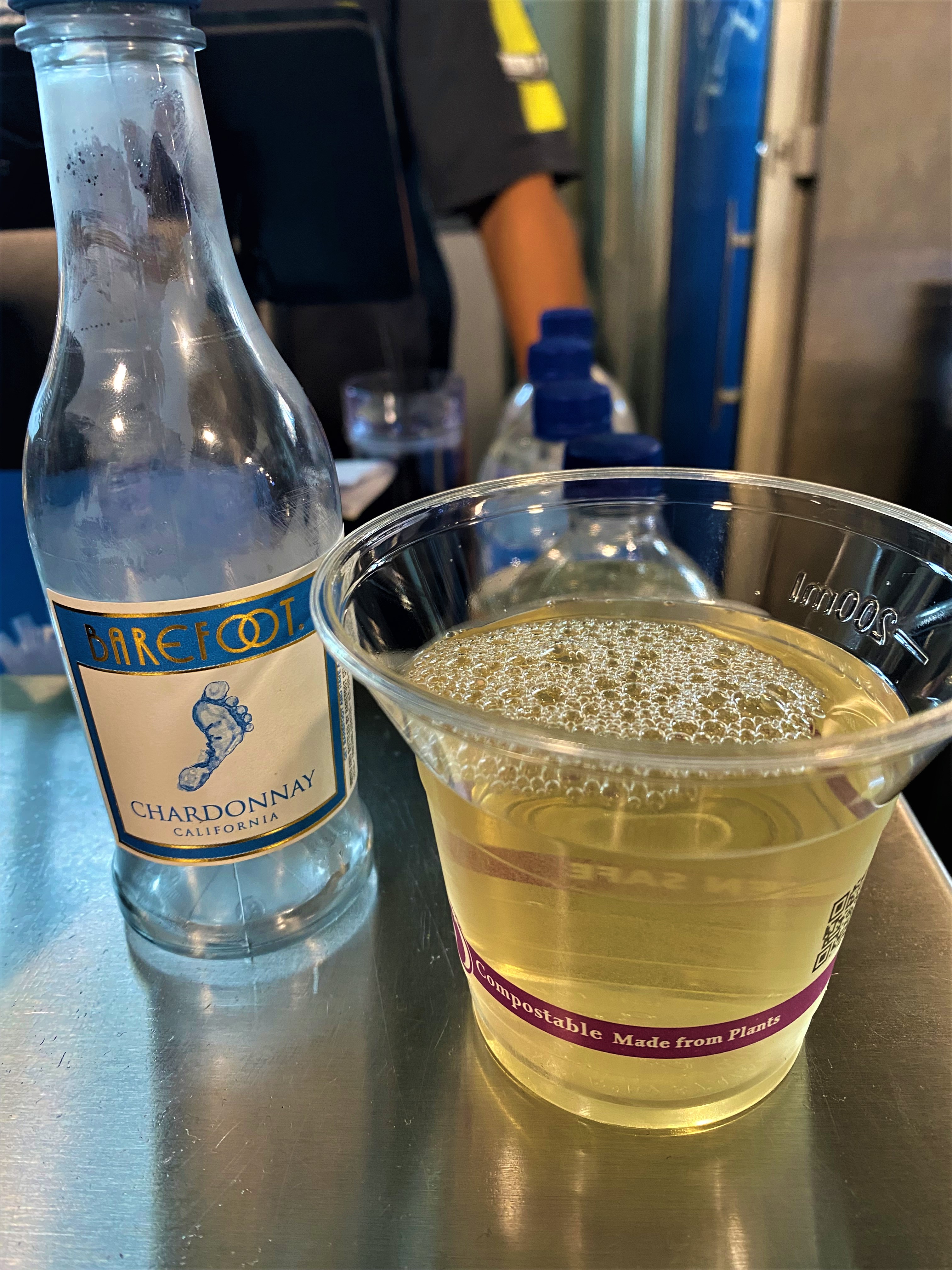
After our lunch, we walked over to Ford Field, named after the Ford family, of automotive fame, and the owners of this lauded football team. I actually got to see for myself the wonderful seats that we own with two others. There are six seats twenty-two rows up with nothing to impede the vision of the entire field. We also went wandering around the stadium and I had a chance to witness how different brands were selling or not selling, though we didn’t check out any of the restaurants that are in the stadium. I really didn’t see wine listed at the beverage booths, and my Bride said that she wanted a Bloody Mary, that came out in a plastic replica of a caning jar with all sorts of different garnishes sticking out of the container. She said it was good, and very spicy, but she ended up throwing away the garnishes. I asked if they had any wine at this booth and the lady produced an individual serving bottle of Barefoot Chardonnay California NV. When Barefoot Cellars began, they only produced a Sauvignon Blanc and a Cabernet Sauvignon. Slowly, they introduced new varieties and in ten years, they had achieved coast-to-coast distribution. After they were purchased by E & J Gallo, they are now considered one of the largest wine brands in the world with annual production averaging around twenty-one-million cases. Even though I get razzed a bit, when I write about brands like this, I still think that they may be the product that will entice a customer to discover other Chardonnay wine. The wine had a pale gold color and offered notes of fruit and butter, which is surprising since I am sure that wine is produced in huge Stainless-Steel tanks, unless oak chips are added to the tanks along with the juice. On the palate, this wine offered tones of apple, peach, and vanilla (once again, it must be oak chips) and a short and sweet finish.
It was a great day; we were having Italian drinks at the bar. Arta’s Italian is out in Brighton, an Italian restaurant located in a medical enclave outside of the downtown area. Since our friend had never been there, I am sure that is probably true for a sizable amount of the locals, but people that enjoy dining out, eventually find out about a new venue. I don’t have a problem telling people about a restaurant that we enjoy, even if it means that it will be harder to get a last minute reservation down the road.
Curwood
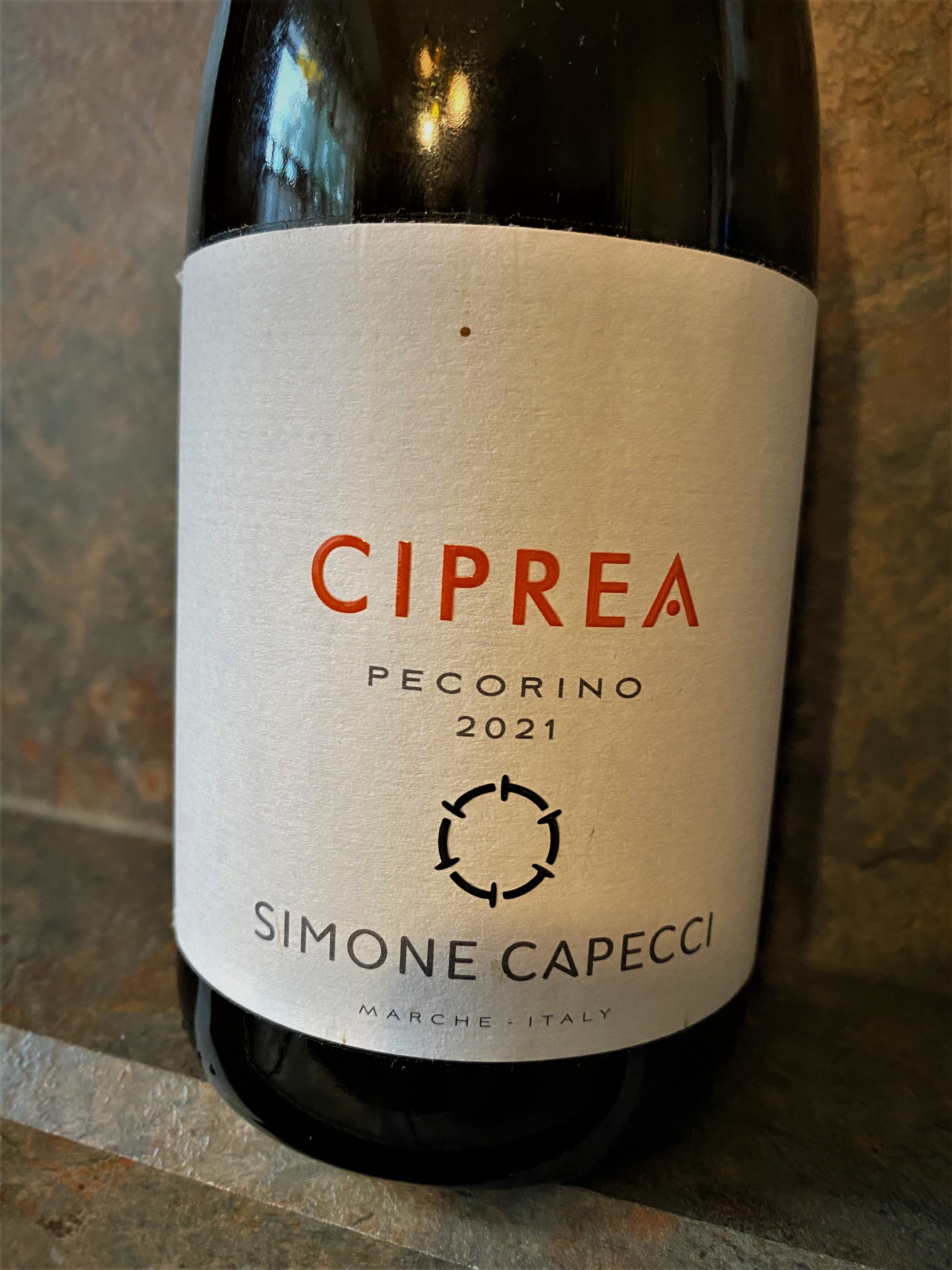
We started off by sharing a couple of appetizers. We had the Carpaccio di Filetto, choice tenderloing, thinly sliced, topped with grain mustard, baby arugula and shave Parmigiano-Reggiano. We also shared Capesante Proscuitto or seard sea scallops wrapped in Prosuitto de Parma on a bed of arugula and polenta with a roasted red pepper coulis. The ladies had Fruti di Mare Misto, a medley of grilled salmon, scallops and shrimp with herbed garlic lemon butter, with grilled asparagus and mushroom rice pilaf. While I had the Ravioli alla Aragosta or Zebra-striped lobster stuffed ravioli with a seafood saffron cream. The hardest thing with the meal was selecting a wine, and everyone reading this, will say, a piece of cake, just get a white wine. Which was the plan, but you realize that my Bride wanted the same wine, that we had the last time we were here, and I told her, that I have to switch things up. Our waitress was a trainee, and the wine arrived a little late, and I forgot to take a photo of the bottle, cork and glass of wine, but it is good that I take the empty home as a muse, until a write the story. We had a bottle of Simone Capecci “Ciprea” Offida Pecorino DOCG Marche 2021, and the winery was formerly known as Poderi Capecci San Savino and that they are all organic. The town of Offida is located in the Marche region of central Italy, and received classification in 2001 and then DOCG status in 2011. The white wines must either be Offida Passerina or Offida Pecorino and Pecorino only has official status in Offida. Pecorino means “little sheep” and the grape even though indigenous was rescued from obscurity (in the 1980’s), as it was being replaced by Trebbiano, but it thrives in higher altitudes with plenty of sun and cool breezes. The vineyard is twenty-sis years with clay and silty soil. Hand-harvested grapes in bunches, with a short maceration and fermentation in concrete tanks in September, and then aged on the dregs until Spring for bottling. A nice straw-yellow with distinct green tints with notes of yellow fruit, sage, pepper, and like a touch of peat. On the palate the wine is very crisp with fresh acidity, refreshing salinity and a nice medium count finish of terroir and spice.
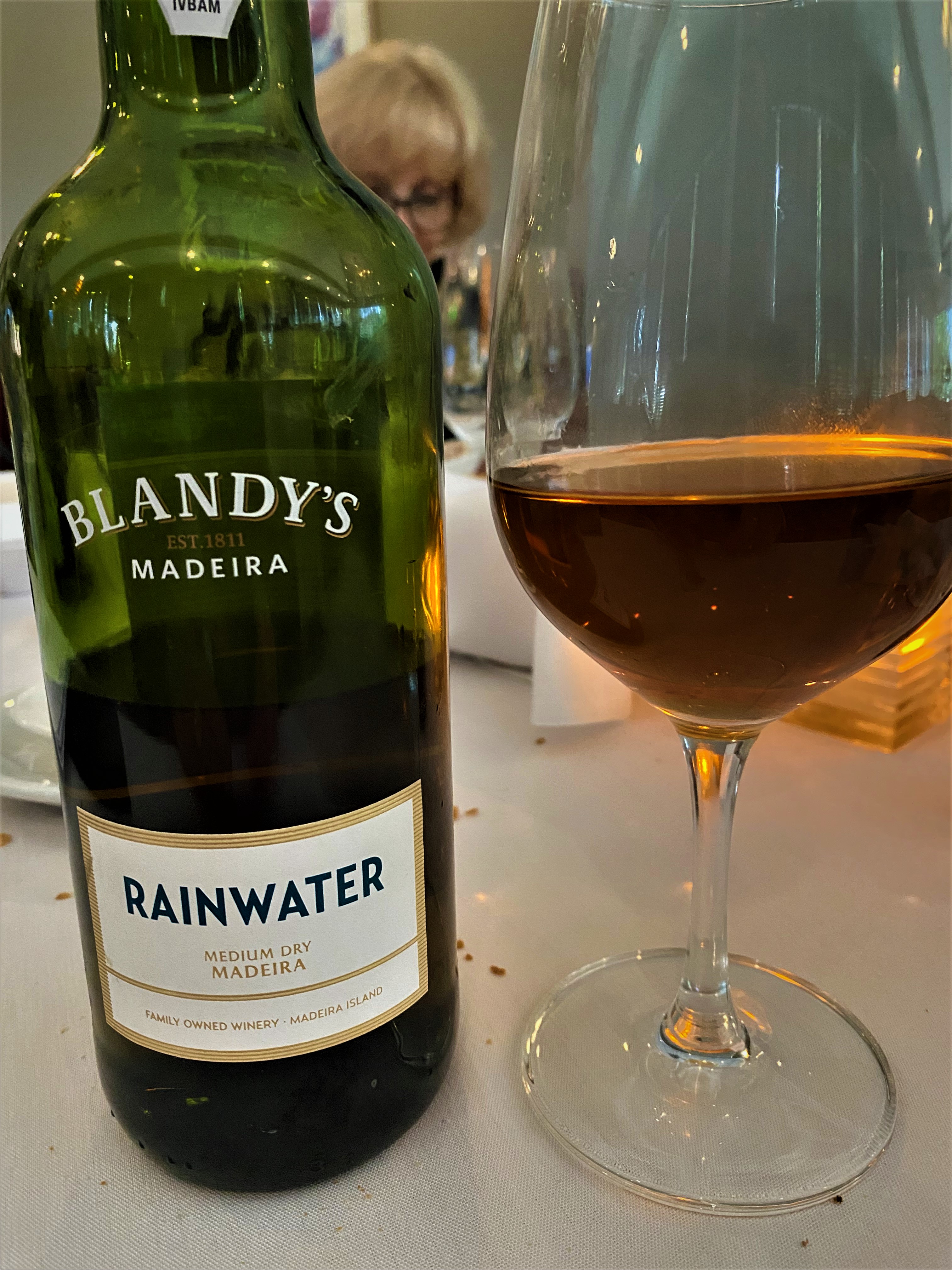
The ladies had Cappuccinos and shared some assorted gelato and sorbet offerings. I really didn’t want the evening to end, so I had a glass of Blandy’s Madeira Rainwater Medium Dry NV. Blandy’s Madeira was founded by John Blandy in 1811, is well-known and one of the original houses of the Maderia wine trade, and is still the only family to own and operated their original wine company. With interest waning in Madeira wines, all the houses united under the Madeira Wine Association in 1925, with the Blandy family heading the group. The Association merged with the Symington family of Port producers and it became the Madeira Wine Company in 1989. The Blandy family headed the association and was able to stay in business while many individual Madeira companies ceased to exist. Madeira lacked the popularity it once had so in order to expand the global market, the Blandy’s offered the Symington family (Port producers since the 19th Century) a partnership in the newly named Madeira Wine Company in 1989. Blandy’s is famed for their vintage Madeiras that have been capable of aging for 150 years. The wine is made using Tinta Negra Mole, which accounts for at least seventy percent of production on the island. It is popular because it is disease resistance and prolific yields. Since 1983, Madeira wines must be at least eighty-five percent of this varietal, and this wine is pure. It is felt to be a cross of Grenache and Pinot Noir. Rainwater Madeira is a lighter, dryer style and one still hears of bottles still being opened from the 19’th Century. There are romantic stories of how the wine evolved, but from a technical and logical view, the wines are on such steep slopes, there is no irrigation, so the vines survive on the rain waters. The rules for Rainwater is rather easy going, so the few houses that produce it, have their own procedure, but Blandy’s has a tradition. The grapes are tank fermented in Stainless Steel, and the fermentation is stopped after four days by the addition of neutral grape spirit. All the wines are then heated for months, sometimes years in a process known as “estufagem” – designed to mimic the original barrel storage under the hot roofs of Madeira houses in American Oaks casks for three months. After the warm environment, the wines are moved to a cooler environment, for three years with scheduled racking, the wines become oxidized, which creates the characteristic flavors of the island wines and then fined before bottling. The wine is a garnet color with some brown hues from the oxidation and offers notes of Crème Brulee, almonds and a touch of orange zest. On the palate it was just fresh, bright and an appealing ‘nuttiness” especially in the long finish accompanied by a salty tang. I think I get tongue-tied trying to verbalize this wine, even still after all of these years, but I still continue the sensation.
I am still a tourist in the state of Michigan and I have lived here forever. By good fortune, I chanced upon an article about Curwood Castle in Owosso, Michigan. James Oliver Curwood (12 June 1878 – 13 August 1927) who was in his day one of leading American action-adventure writer and conservationist. Though he lived in Michigan, his stories were set in the Hudson Bay, the Yukon or Alaska, and he immortalized and romanticized the Royal Mounted Police with their red jackets and campaign hats. At least one-hundred-eighty motion pictures have been based on or inspired by his novels and short stories, from the silents to modern day talkies. At the time of his death, he was the highest paid (per word) author in the world.
He built Curwood Castle as a place to greet guests and as a writing studio, only a couple of blocks from his family home. After his death, the castle was bequeathed to the city of Owosso and it was used in many different ways over the years. The castle is listed on the National Register of Historic Places and is now used as a museum and operated by volunteers. His typewriter and desk are there in one of the turrets, overlooking the Shiawassee River and there is a complete collection of his published books, and they even sell the duplicates that they acquire. There are three floors to see and there is a wealth of information on his life and family, his career, and even the building and history of the castle itself. We went to see the castle and we had invited one of my Bride’s friends and a fellow co-worker. If you will beg me a little silly indulgence, I kept wanting to type “Kerwood” instead of Curwood, but you have to be of my era and the use of the “Way-back Machine” to remember the “Kerwood Derby” as opposed to Durwood Kirby.
After the tour of the castle, we also toured an art gallery that was on the same street on the other side from where we had parked the car. I have been in the process of getting my Bride to slow down and relax a bit, and talked her into taking the country byways to get to our restaurant for the evening. It was a quick jaunt by freeway, but a much longer, but leisurely way, the way we went. We didn’t have time, but as we drove past downtown Owosso, I realized that I would like to return at some time to actually walk around there, as it appeared to be still viable and would be a good walking tour.
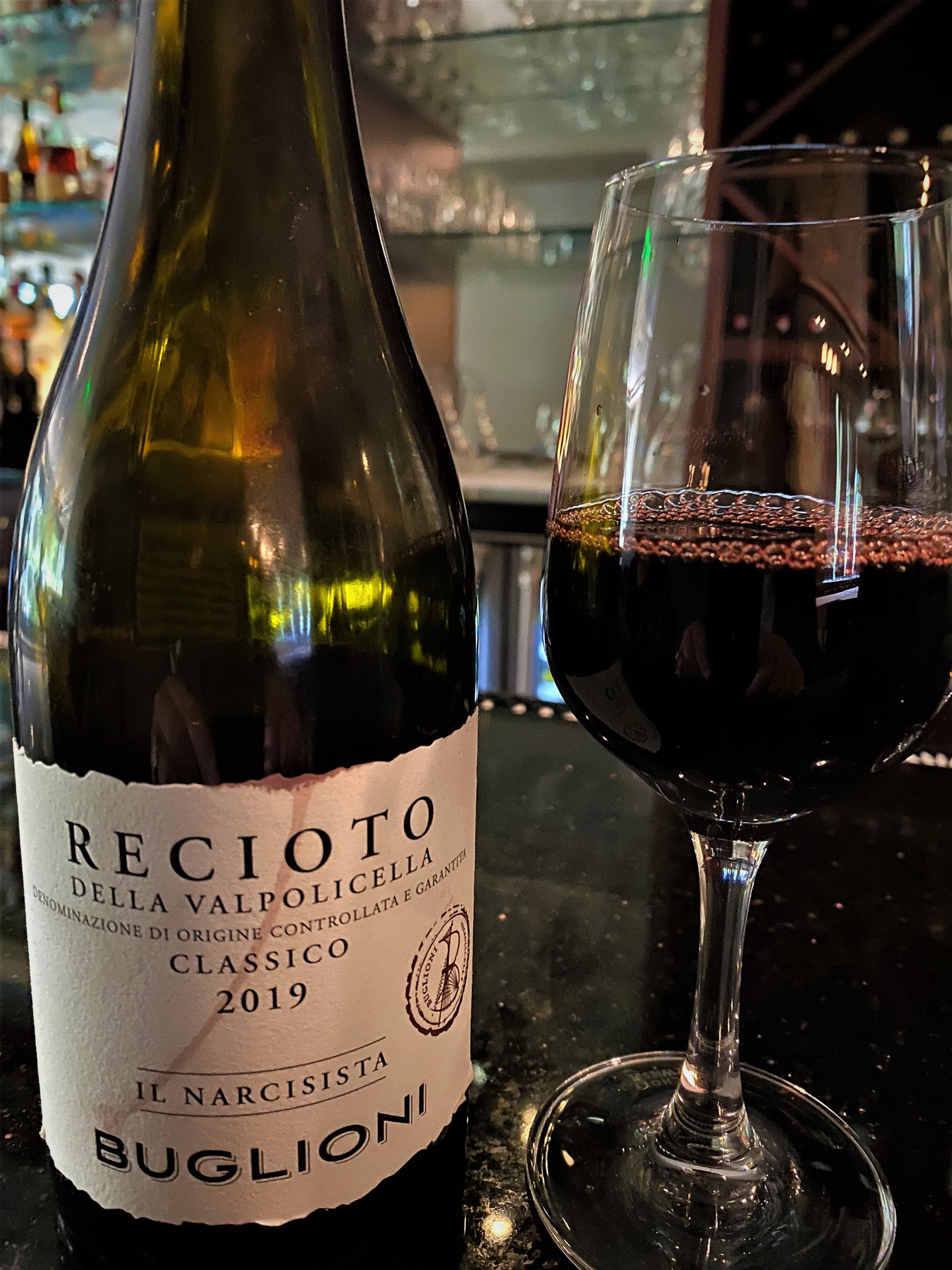
We eventually got to the restaurant Arta’s Italian in Brighton, Michigan, one of our favorite haunts these days. My Bride’s girlfriend who lives in Brighton never ate there, so it was our job to introduce her. We got there a little early, the restaurant wasn’t open yet, but the bar was. The ladies had Negroni’s and I spotted something very interesting on one of the shelves on the back of the bar. I had a glass of wine that is both enjoyed as an aperitif or as a dessert wine. I was enjoying a glass of Cantina Buglioni “Il Narcicista” Recioto della Valpolicella Classico 2019. Cantina Buglioni is an Italian estate in the Veneto, and was founded in 1993 with three hectares, today it has one-hundred-fourteen hectares of vineyards. They produce all the classic wines associated with Valpolicella along with several Spumante Brut wines, a Bianco delle Venezie and a Grappa di Recioto della Valpolicella on their gravel-rich alluvial soils. Recioto della Valpolicella Classico is a sweet version of the famed Amarone della Valpolicella. The technique to produce the Amarone and the Recioto is take whole bunches of the grapes and then keep them in drying rooms, for about three months, with warm temperatures and low humidity, which concentrates the natural sugars and aromatics in their wines. The wine is a blend of sixty percent Corvina, Twenty percent Corvinone, ten percent Rondinella and ten percent Croatina, all grown from their Sant’Ambrogio Vineyard with fifteen-year-old vines). With hand-harvesting at the end of September, Initial Fermentation occurring in February (after the drying period), maceration occurring for about twenty days with skin contact, then Malolactic Fermentation. The wine is aged for twelve months in the Slavonian Oak, then an additional six months in Stainless-Steel tanks, and then an additional six months in the bottle maturing, before being released. A dark ruby-red colored wine that offered notes of black cherries, plums and raisins stewed in alcohol, with secondary notes of cocoa, vanilla, and tobacco. On the palate, a velvety and round blend of black fruits, jam, figs, licorice, dry tannins, and a trace of hazelnuts. It was a perfect way to start the dinner off.
The joys of a quality wine shop like the Fine Wine Source in Livonia, Michigan is enjoying the wines that are offered to you. Some days it will be whites and rosés, sometimes sparkling wines, and other times it will be reds. And I will say always, that there is a great chance of trying varietals and districts that you have never encountered. It will always make you smarter for the future, when you are in a restaurant, because you can make wine assessments much easier, with the more knowledge that you have.
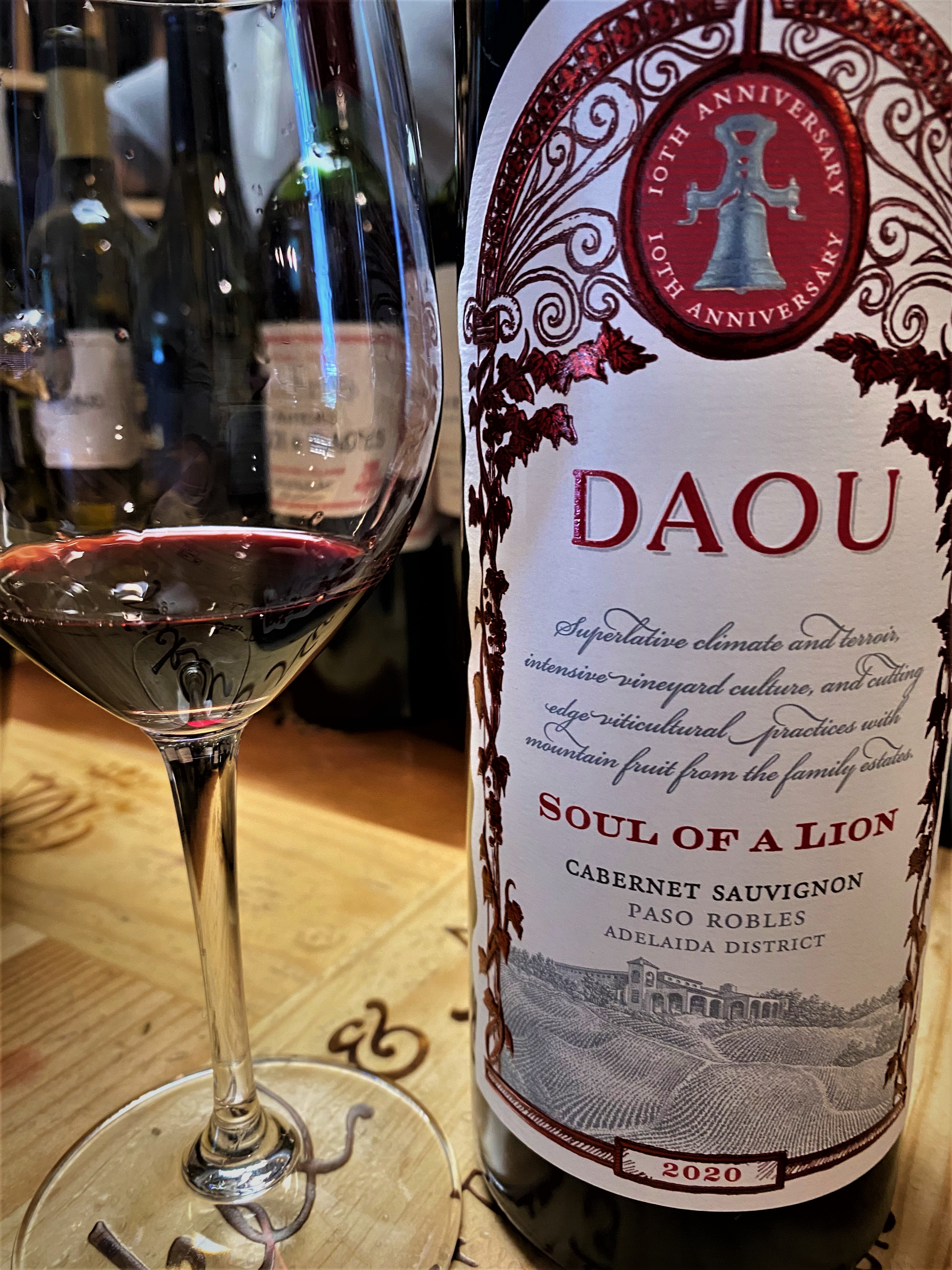
I had a chance to taste Daou Vineyards “Soul of a Lion” Cabernet Sauvignon Adelaida District/Paso Robles 2020, which is the Tenth Anniversary of this wine. Daou Vineyards is famed for their Cabernet Sauvignon, and their Bordeaux-style blends; as well as Rhone styles and Burgundian style wines. Their wine portfolio is divided into four tiers at different price points. The top-level is their Estate Collection, which made from estate-grown fruit and “Soul of a Lion” is their flagship wine. The estate was established in 2007 by brothers George and Daniel Daou, who previously had a successful IT business. The initial purchase was for part of the Hoffman Mountain Ranch, and in 2012 they purchased the balance of the estate and now have two-hundred-twelve-acres of vineyards. The Hoffman Ranch was the first modern commercial winery in Paso Robles after Prohibition. It was established by Stanley Hoffman with the help of winemaker Andre Tchelischeff. The “Soul of a Lion” was named for their father with the intention of making the finest Cabernet Sauvignon from DAOU Mountain. The wine is a blend of eighty-one percent Cabernet Sauvignon, thirteen percent Cabernet Franc and six percent Petit Verdot. The wine was aged for twenty-two months in new French Oak. A very deep purple wine with garnet reflections and offered notes of black fruit, tobacco, leather, florals, and a whiff of dark chocolate. On the palate, this was a big wine offering great tones of black cherry, currants, cassis with secondary tones of figs, truffles, baking spices, ripe tannins, and limestone. With a nice long count for a finish evoking more black fruit, espresso, pepper, and terroir. This wine could easily accept ten to twenty years in the cellar.
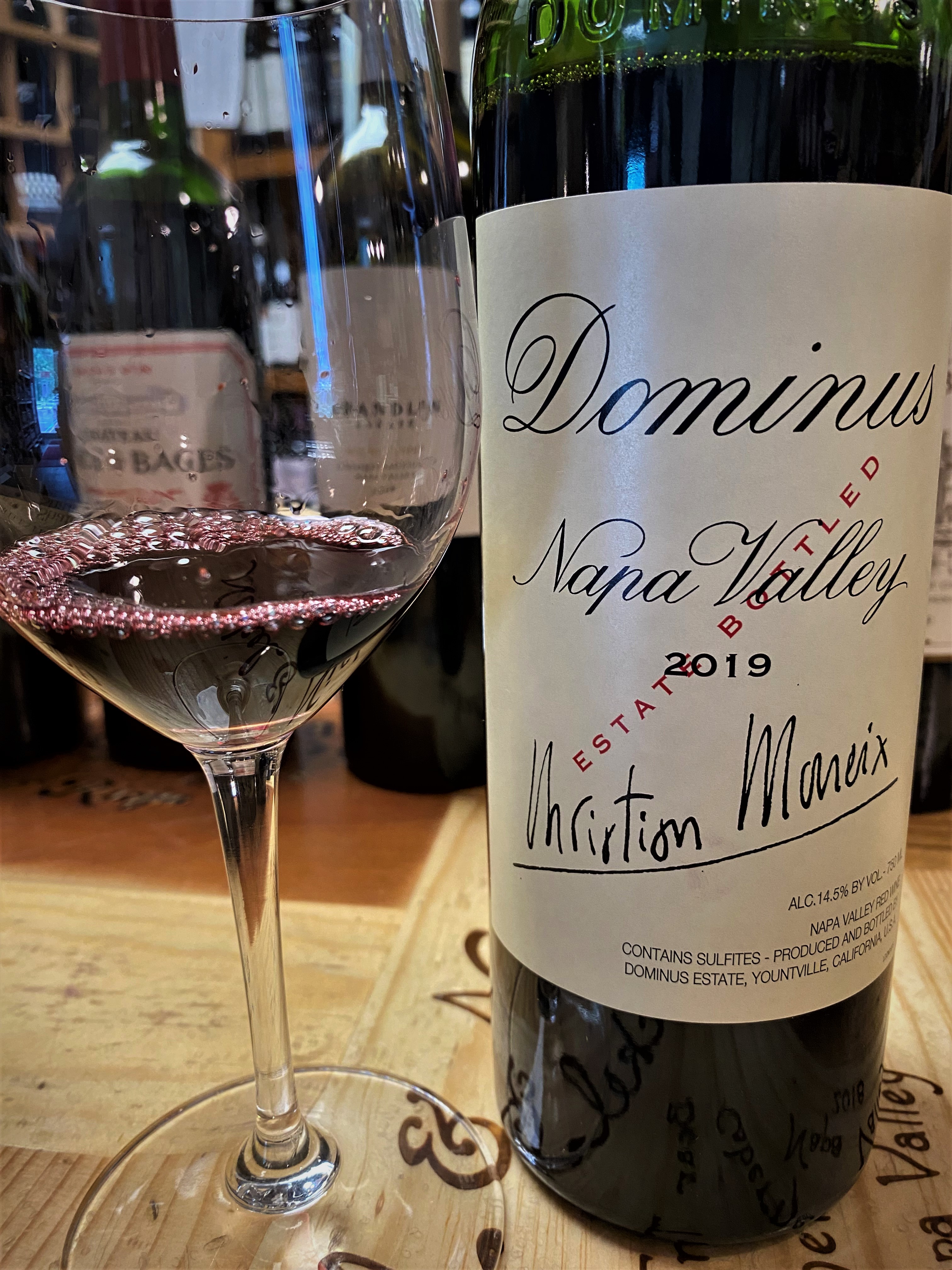
The wine to follow was also a show-stopper. We enjoyed Dominus Estate Christian Moueix Napa Valley 2019 as I was curious to see how a new vintage would taste like. Dominus is Latin for “Lord of the Estate.” I am sure that Christian Moueix knew that he would be pressed to live up to that title. Christian Moueix comes from a famed wine family from Bordeaux, France and among the many wineries that they own is Chateau Petrus (which alas I have never had) and Chateau Trotanoy both from the Commune of Pomerol. He acquired the old Napanook Vineyard in Napa Valley and has made it his own. The estate is based around the Napanook Vineyard which was originally planted in 1838 by George Yount. Originally the estate was one-hundred-twenty-four-acres and ten more acres have been added over the years. The estate is organic and they use dry-farming techniques, first used at Chateau Petrus, on a gravely-clay-soil with gentle sloping for natural drainage. Some of the common procedures that they use for each vintage are cluster sorting by hand, optical sorting of berries, gentle pump-overs to delicately extract aromas, color and tannins, and hand-racking barrel to barrel every three months. The wine is a blend of ninety percent Cabernet Sauvignon, four percent Cabernet Franc, and six percent Petit Verdot. The wine is oak, of which forty percent is new for about twenty months. A deep ruby-red offering notes of black fruits, tobacco, jasmine, and spices. On the palate tones of black cherry and cassis are first, followed by currants, licorice and silk tannins and then ends with a long count finish of plums and graphite. Definitely a good ten years in the cellar to make this wine truly memorable, even though most will enjoy it young.
One of the joys of going into my local wine shop, the Fine Wine Source in Livonia, Michigan, is that I never know what will occur. If they are really busy, I know that I can always come back, rather than disturbing a private wine tasting session. Even though the customer had basically made his choices, and they were great, the shop introduced us both to a couple of wines from Emile Beyer from Alsace. Alsace, while now in France, has had a long and checkered history belonging both to the early French and early German territories. It is the only French region to grow significant amounts of Riesling, Gewurztraminer, and Pinot Gris. The fourteen generations of the Beyer family date back to 1580.
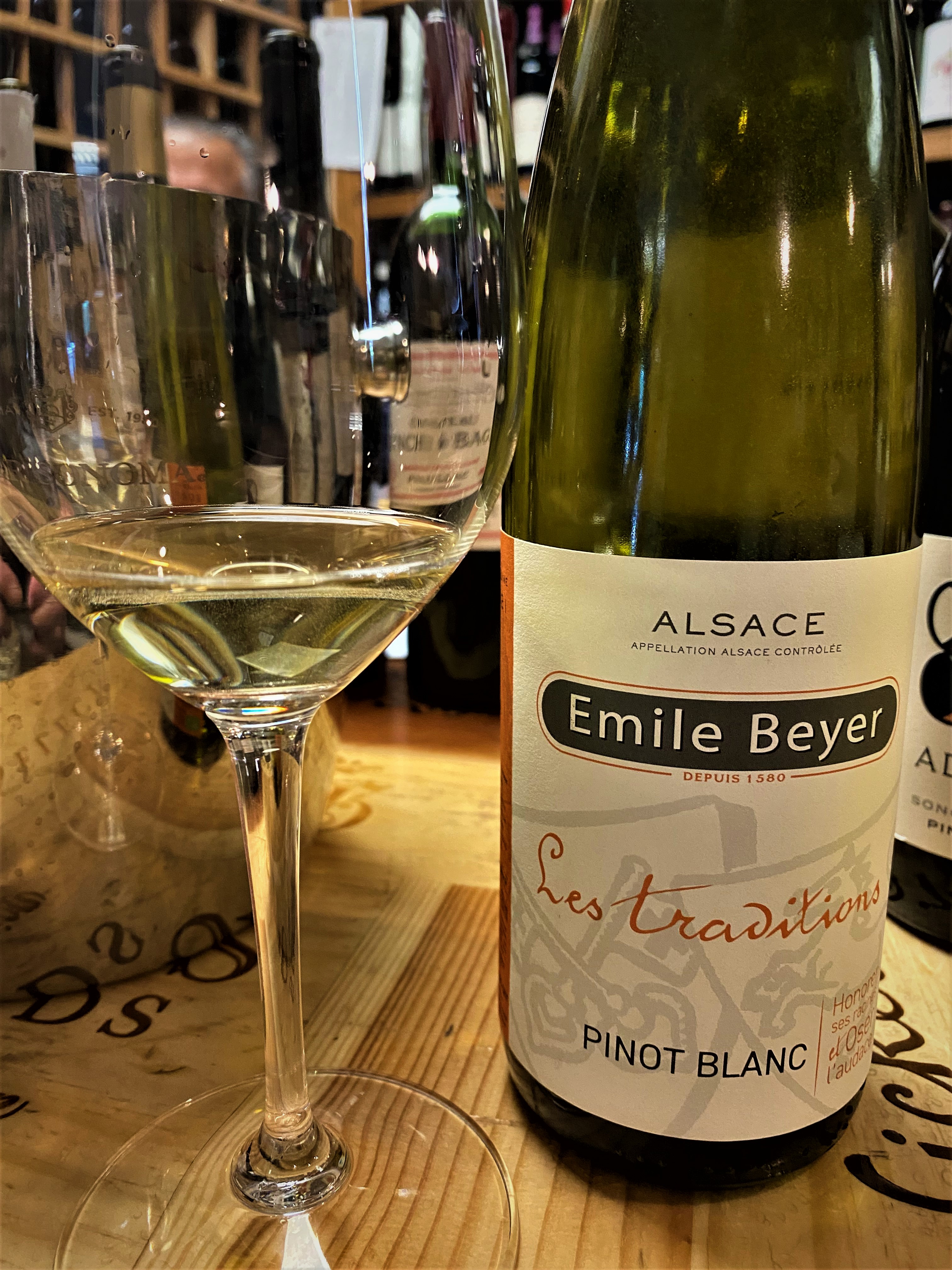
Today, Christian Beyer and his wife, represent the Fourteenth generation of the Beyer family in Eguisheim. He is the current steward of the land that has been written about in documents going all the way back to Old French and Old German. Beyer makes three levels of wine: the “Tradition” line are wines meant to be consumed young, showing the true varietal character of the grapes of Alsace, “Eguisheim” which is a series of varietal wines produced from estate fruit and older vines, and “Terroir” wines those grown in single vineyard sites and Grand Cru rated vineyards. The first wine that we tried was Emile Beyer Les Traditions Pinot Blanc Alsace 2021. The winery is in the process of conversion to total sustainable practices. The soil is clay and limestone. The wine is a blend of seventy percent Auxerrois and thirty percent Pinot Blanc, with vines from ten to twenty-five years of age, coming from both estate and purchased grapes. The harvested grapes are pressed slowly and gently, and the juice is allowed to settle, before a cool and long fermentation in Stainless-Steel tanks; the aging continues in the tank on the lees for several month. A pale straw-yellow colored wine offering notes of fresh apples and white florals. On the palate there were tones of fresh fruit with creaminess, wonderful acidity, bright and crisp, with dry finish beckoning for another taste. It could easily be my favorite white of the year, for a go-to wine in the cellar, so refreshing and definitely food friendly.
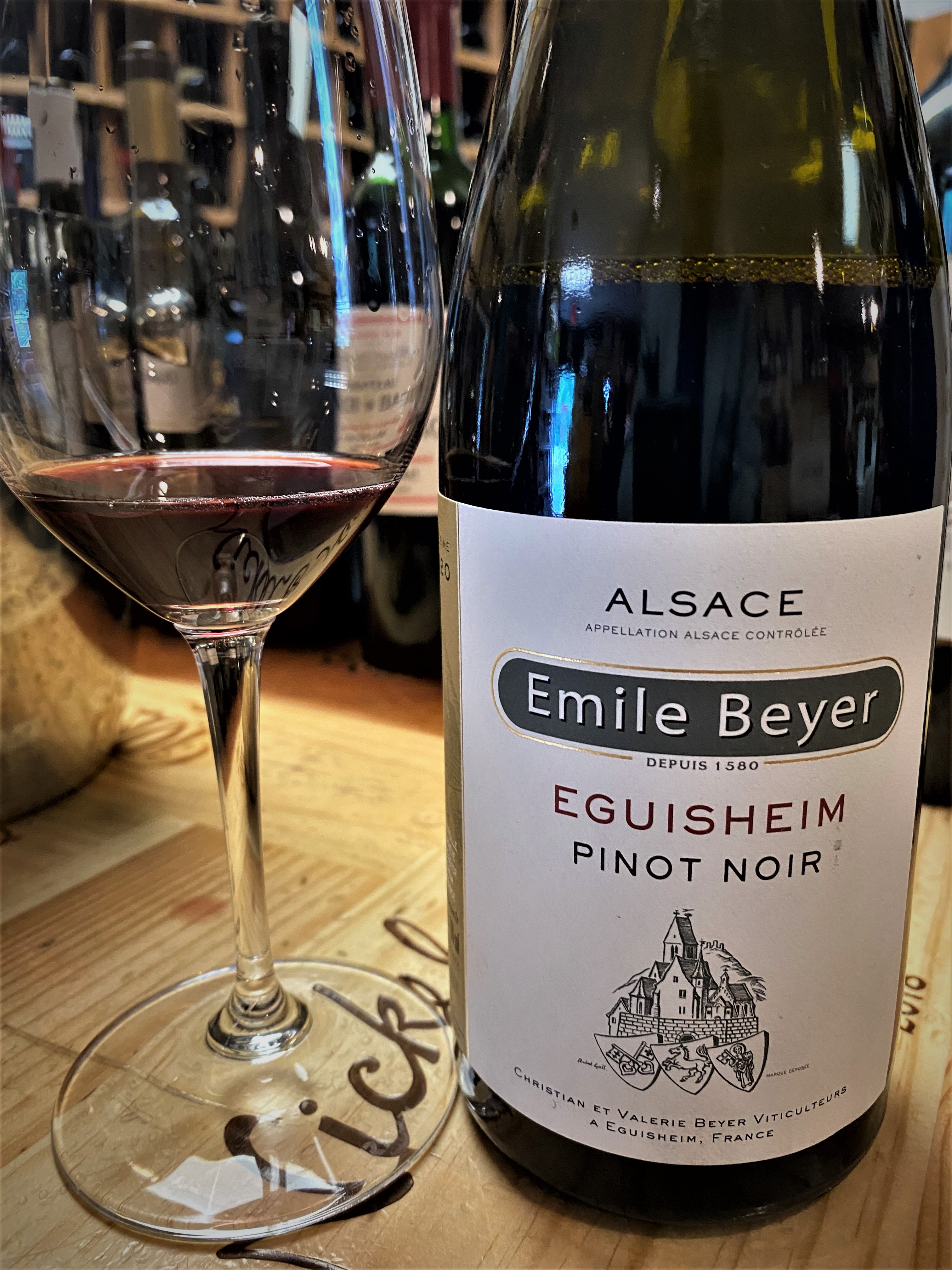
We then enjoyed Emile Beyer Eguisheim Pinot Noir Alsace 2020. Christian Beyer joined the family business after studying oenology in Burgundy and work professionally at Chateau Rieussec in Sauternes and Schloss Johannisberg in the Rheingau. The “Eguisheim” collection was certified as organic in 2014. The fruit is from estate vineyards, where the vines are forty-years or older and from limestone and marl grounds. The wine is pure Pinot Noir and the fruit is manually harvested, and the grapes are gently pressed and undergo a long, cool fermentation in a tank. Aging is done in a combination of one- and two-year-old barrels, and a neutral tank for almost a year. The wine is a black-cherry color with bright garnet reflections and offers notes of first of vanilla and spices, and then red fruits; a nose that needs a few minutes to open up. On the palate great tones of black cherry, layered in wood, with silky tannins and a medium count finish.
It feels like ages since, I walked into the Fine Wine Source in Livonia, Michigan, after all of our side adventures, but it was time to get the club selections. I am a firm believer in the selections that I get, they are some of the best values out in the market, as they have all been curated by the owner and his staff. I am positive that he doesn’t even carry ten percent of what is available in the state, because, if it doesn’t get passed his cultivated palate, he will not suggest it to his client.
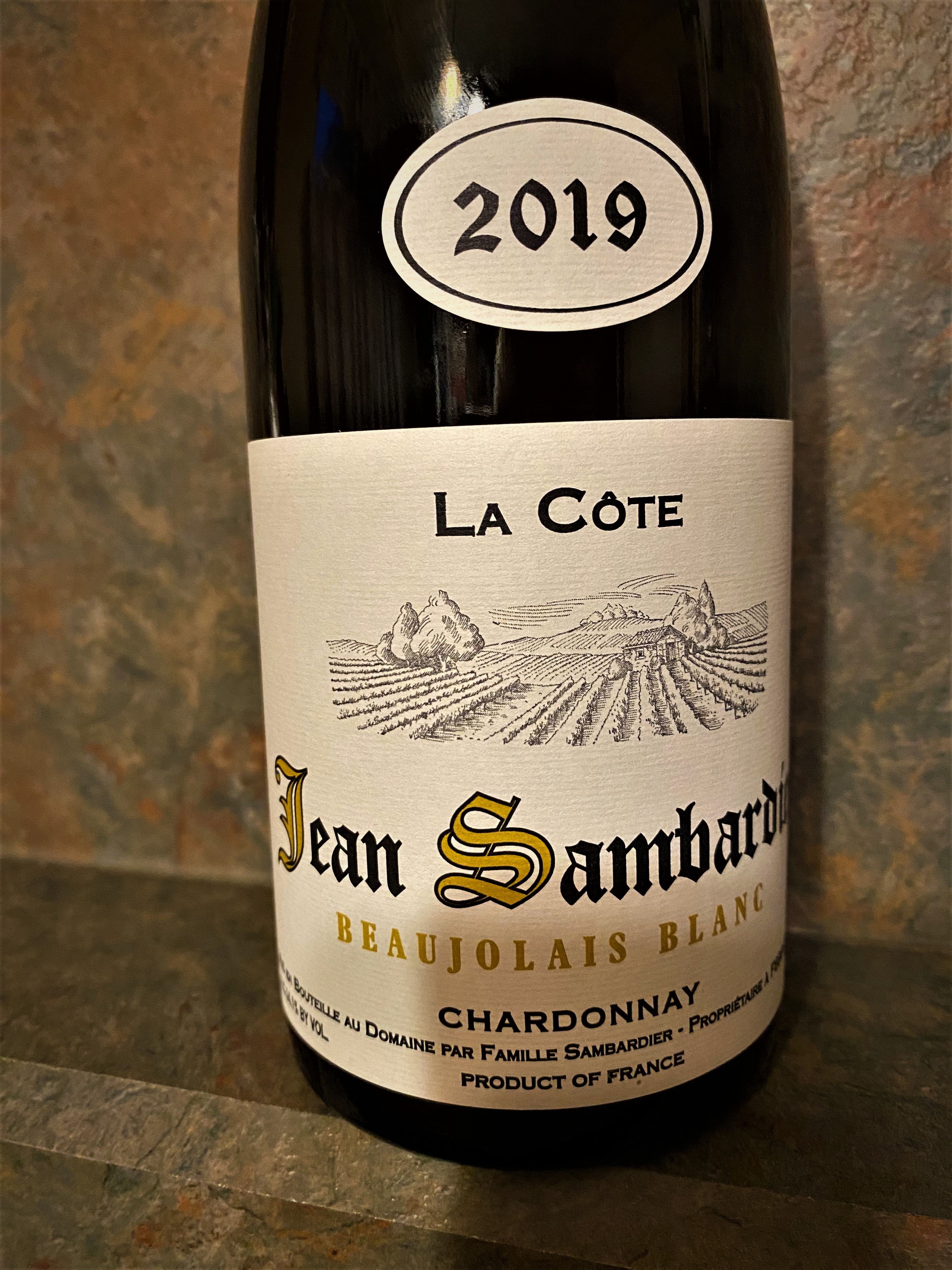
The first wine of the monthly selection represents the Old World and this time it is Jean Sambardier Beaujolais Blanc 2019. From almost the first century, grape vines have been growing in the region and from the Ninth to the Fourteenth Century the house of Beaujeu held sway separating the Maconnais from the Lyonnais. After the fall, the monks returned as the stewards of the land. The Sambardier family has been in the heart of Beaujolais since 1850 in Denice, south of Burgundy. They have thirty-four hectares including Grand Cru designations, divided into fifty separate vineyard sites. Brothers Fred and Damien Sambardier are the current generation and they prefer the traditional methods without the enhancement of additional chemicals. While the region is famed for the Gamay, estates are allowed to grow fifteen percent white grapes, and here it is Chardonnay. This wine is grown at a site known as “La Cote” on a south slope from Denice. The soil is stony with marl further down. The fruit is allowed to enjoy “over-maturity” and hand-harvested. The wine undergoes cold Initial Fermentation and then is aged on fine lees, for about five months in Stainless-Steel vats and less than seven-hundred cases are produced. The wine is described as offering notes of white fruits, tropical fruits, white florals, and almonds. On the palate there are tones of pear, tropical fruit, vanilla with balance and roundness.
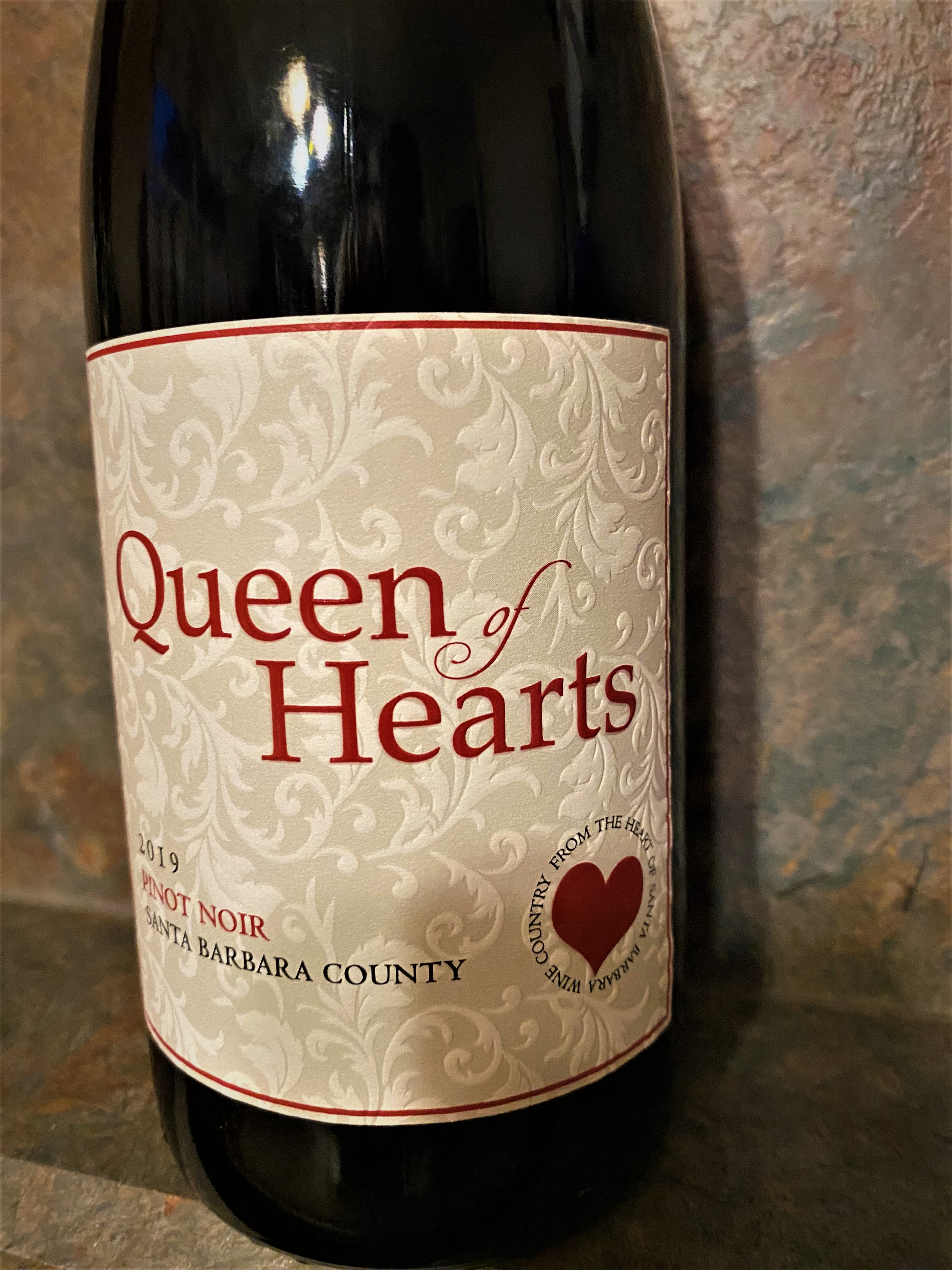
The New World this month is represented by Lucas & Lewellen Vineyards “Queen of Hearts” Pinot Noir Santa Barbara 2019. Louis Lucas, a third-generation grape grower, and Superior Court Judge Royce Lewellen met in 1975. Louis was a well-respected grower who had been supplying premium wine grapes for reputable Napa and Sonoma wineries for decades. Royce Lewellen was a passionate wine enthusiast with a vision for the future of the Santa Barbara County wine industry. Over the next twenty-five years, the Lucas and Lewellen families would grow in a deep friendship that would serve as the foundation for Lucas & Lewellen Vineyards, a Solvang, California based winery with four hundred estate acres situated among three of Santa Barbara County’s separate and distinct climate zones, three major wine labels, two popular tasting rooms in downtown Solvang, and a state-of-the-art winery. The fruit was harvested from two of their estate vineyards: Goodchild and Los Alamos. Some of the vines are around forty-years of age, brought over from Europe and are planted both on hilltops to clay and gravel river beds. The fruit is hand-harvested. The tasting reviews mention the wine offers notes of strawberry, raspberry, and cola aromas. The palate is described as tones of bold ripe strawberry, lively acidity and silky tannins.






 The Wine Raconteur