We were still tasting French Champagne at my local wine shop The Fine Wine Source in Livonia, Michigan. All the wines were from the House of Louis Roederer of Reims in 1776, and then later a nephew Louis Roederer took over and renamed the house after himself; and still family owned. In 1845, they were far-sighted enough to purchase several grand cru vineyards to add to the estate, instead of solely relying on the local growers for grapes. Today they own six-hundred acres of land in the Montagne de Reims, Vallee de la Marne and the Cotes de Blancs. By 2012, they had achieved a twenty-five percent managed biodynamically estate, and Cristal is made from biodynamically farmed grapes.
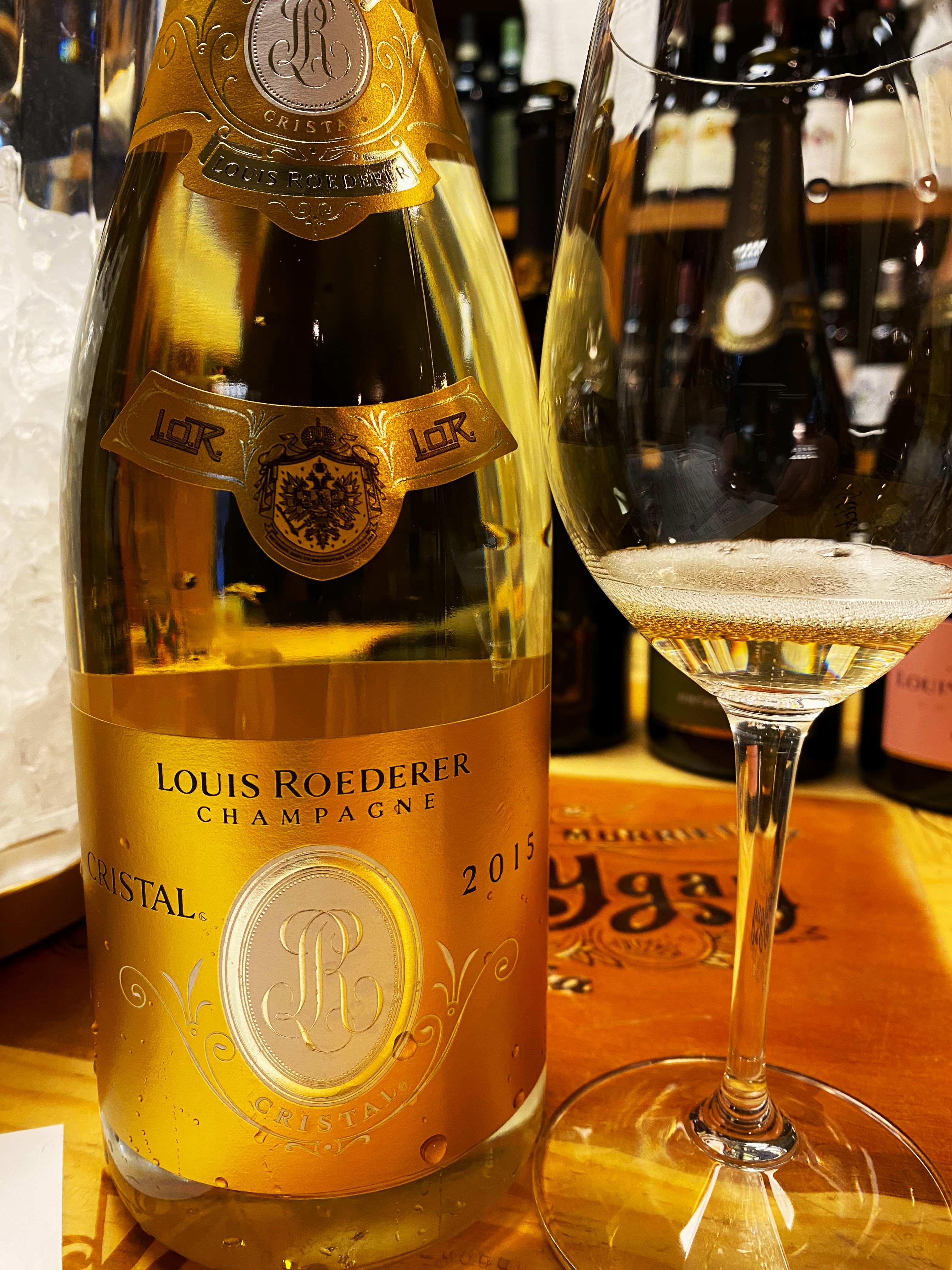
What better way to bring in the New Year than by tasting Louis Roederer Cristal Brut Millesime 2015. Louis Roederer attempted to capture foreign markets and was a favorite of the Russian royal family. They went so far, as to create a special bottle that was clear and had a flat bottom (no punt), because Tsar Alexander II was paranoid and thought that the traditional style bottle could be used to hide explosives. The wine is produced using about sixty percent Pinot Noir and forty percent Chardonnay, and portions of the blend are aged in oak barrels for a time. This vintage also saw fruit harvested from all forty-five estate plots where the vines are at least twenty years of age. Cristal wines are released under the Vinotheque label, which is a combination of late disgorging and extended lees aging, as well as further time cellared in the bottle. It is aged for six years on yeast and a further eight months in the bottle. A beautiful golden-yellow wine with very energetic tiny bubbles and it offered notes of red fruit and yellow fruit, wheat, yeast, and almonds. On the palate the tones of lemon and mandarin are immediate, blended with nuts and spices, bracing and refreshing, silky brioche, great salinity, some oak, perfectly balanced and all leading to a great long finish of fruit and chalky terroir. I don’t drink Champagne that often, so I had to write my notes quite quickly and I also listen to the professionals when they discuss the wines as well.
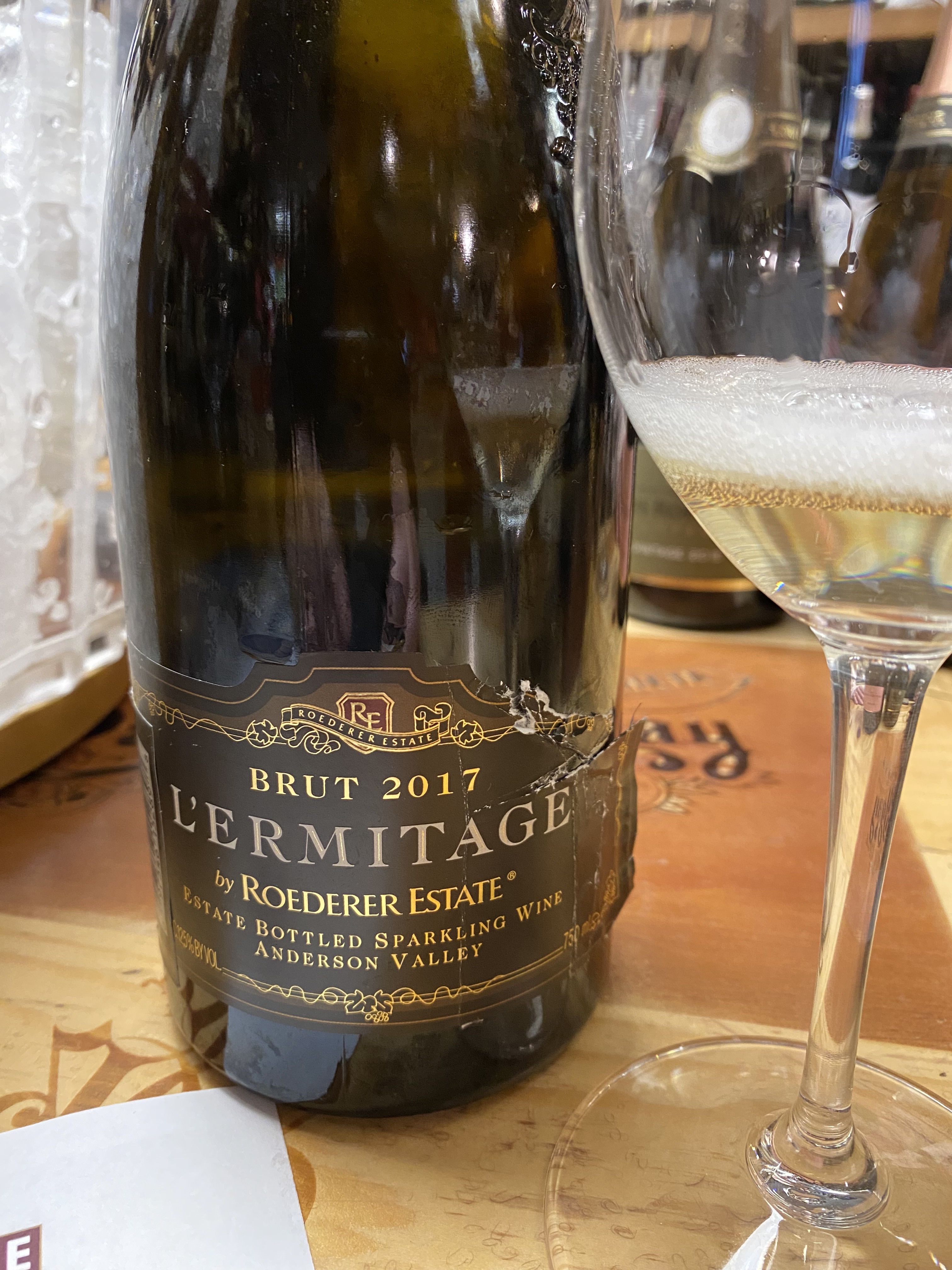
The last tasting was Roederer Estate L’Ermitage Brut Anderson Valley 2017. Roederer Estate was created by Louis Roederer Champagne in Anderson Valley in 1982 and their first release was in 1988. The sparkling wines are made using Pinot Noir and Chardonnay with the Methode Traditionnelle. The estate is six-hundred-twenty-acres of vineyards farmed with organic and biodynamic methods; the estate grown fruit is able to ripen slowly and retain acidity, which is key to the production of sparkling wine. Only the first pressing of fruit (roughly seventy percent) is used. Fermentation is done in Stainless Steel tanks, and the wines are blended with oak-aged reserve wines and spend a minimum of two years on the lees, prior to disgorgement. L’Ermitage is Roederer’s prestige cuvée and only made in exceptional years from the estate’s best Pinot Noir and Chardonnay and the first vintage was 1989. The wine is a golden-yellow with fine tiny bubbles and offers notes of yellow apple, pear, white flowers, brioche, and hazelnuts. On the palate a crisp wine with tones of pears, brioche, acidity, and a soft finish of fruit.
I had the chance to do a wine tasting at The Fine Wine Source in Livonia, Michigan centering on Champagne. Champagne is that mysterious sparkling wine that gets bundled with all of its distant relatives. To be Champagne, the wine must come from the designated district of Champagne, otherwise in France the wines are either called Cremant or a Sparkling wine. The name is now protected world-wide, though there are a few wineries in the United States that have been grandfathered in as “American Champagne.” Five wines were offered at the tasting and all were from the Reims based house of Louis Roederer. Although founded in 1776, it was in 1833, when Louis Roederer took over the company from his uncle and renamed the house after himself.
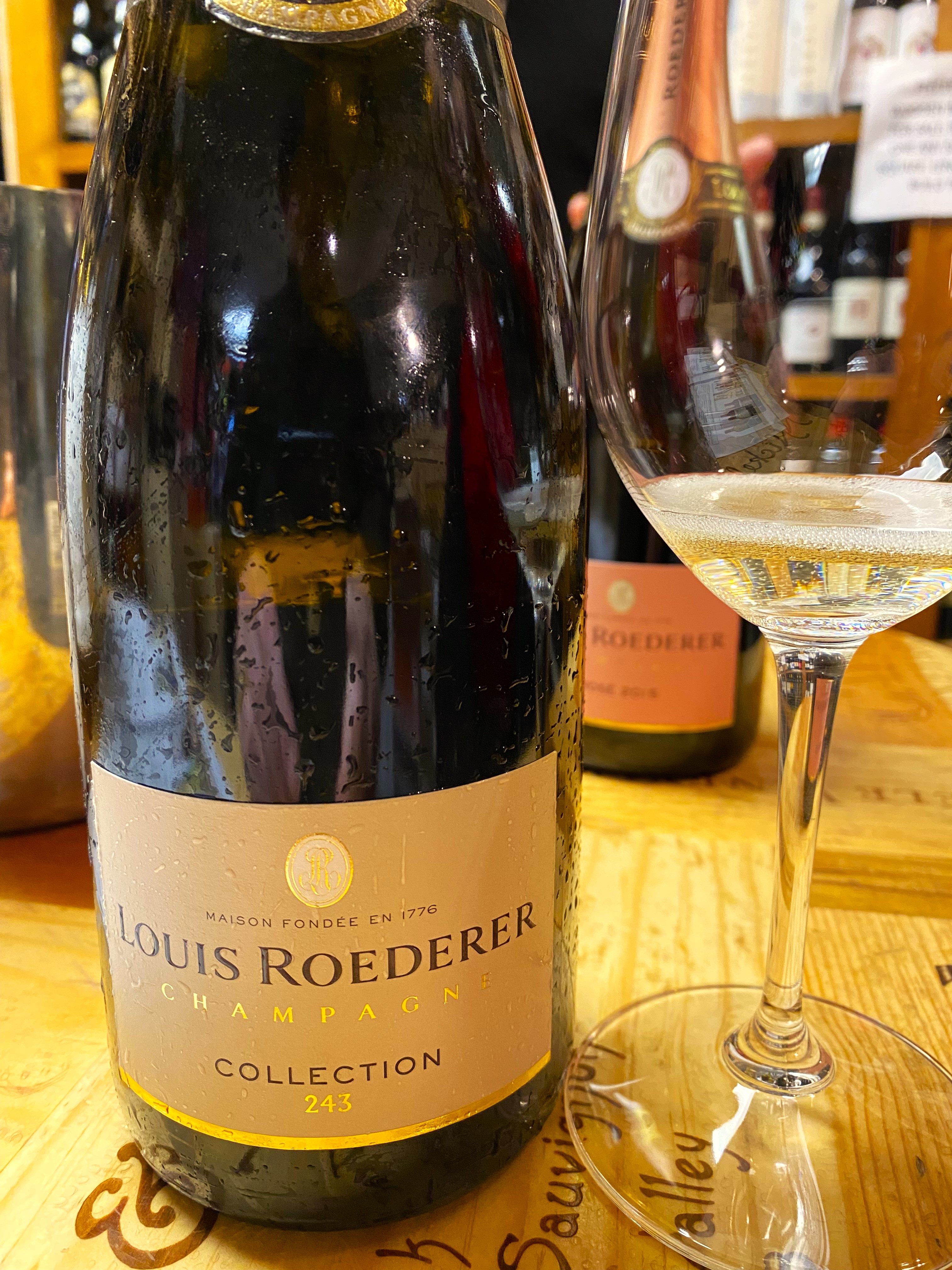
We began the tasting with Louis Roederer Champagne Collection 243 NV. Collection 243 is based on the year 2018 and the fruit is harvested from three of their estate vineyards, as well as from some of their contract grower estates. It is a blend of forty-two percent Chardonnay, forty percent Pinot Noir and eighteen percent Meunier. This juice is also blended with their “Reserve Perpetuelle” created in 2012. This collection is fifty-nine percent of 2018 vintage, and thirty-one percent Perpetual Reserve of 2012,13,14,15,16,17, and ten percent Reserve wines aged in oak from the same years. A pretty golden color with shimmering highlights from the constant flow of tiny bubble. The wine offered notes of yellow fruits, citrus, white florals, and baked pastries. The palate produced tones of plums, lemons, and jasmine in a taut structure with a refreshing salinity and a nice finish of tart fruit and limestone terroir.
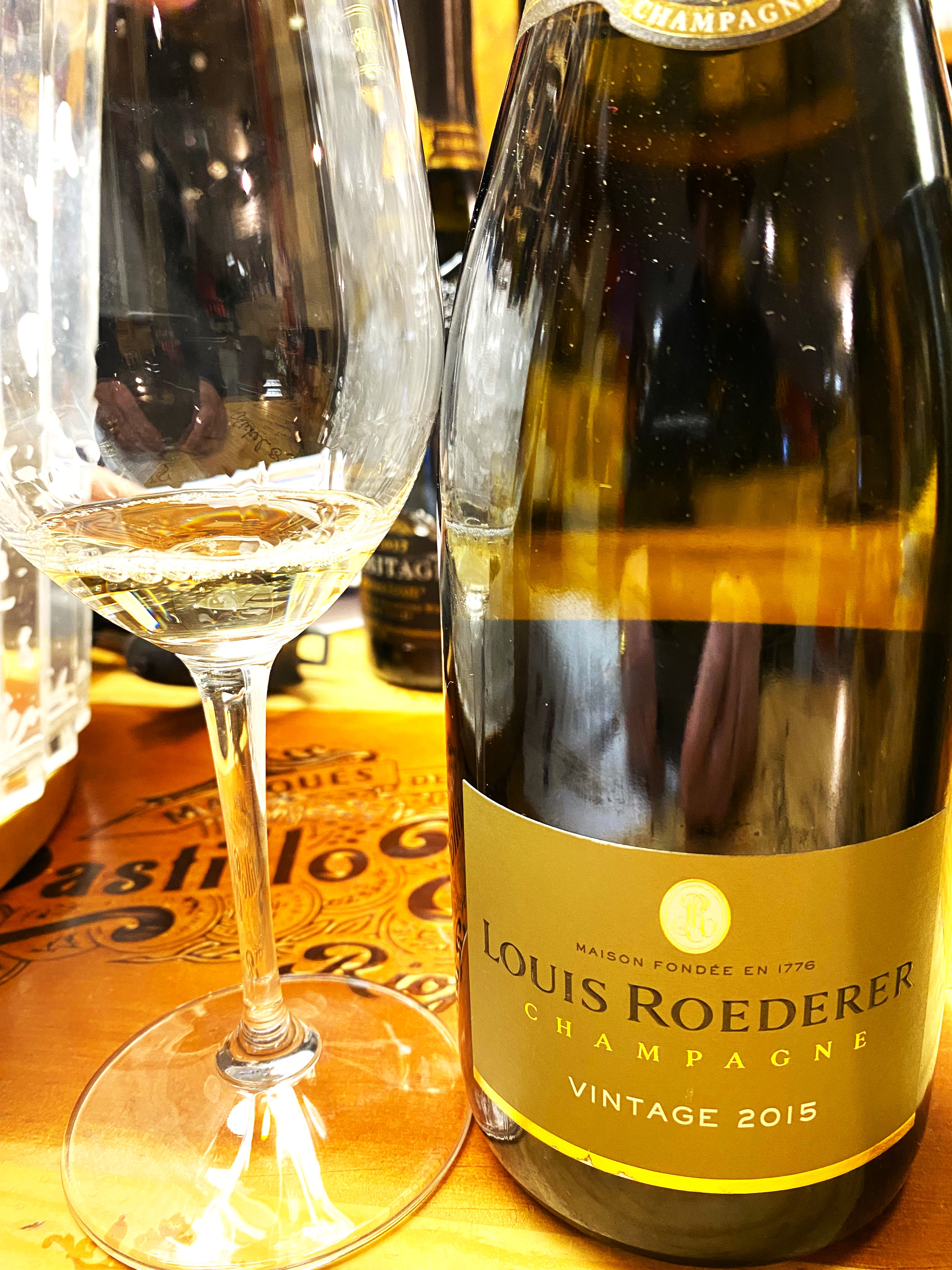
We then went with Louis Roederer Champagne Brut Vintage 2015; which is also the year that the Champagne region was recognized as a UNESCO World Heritage Site. It was a year of some record breaking hot and sunny days, and followed by a second half of August which brought some welcome rain and created juicy and concentrated grapes. The fruit came from two Crus: Verzy and Chouilly; and from their “La Montagne” estate vineyard. The wine is a blend of seventy percent Pinot Noir and thirty percent Chardonnay, with thirty percent of the wine aged in oak. A yellow wine with golden tints and lively bubbles, this wine offered notes of currants, plums, peaches and a dash of pepper and spices. On the palate tones of concentrated red and yellow fruits, with some cocoa, big acidity, some salinity and a finish of fruit and terroir.
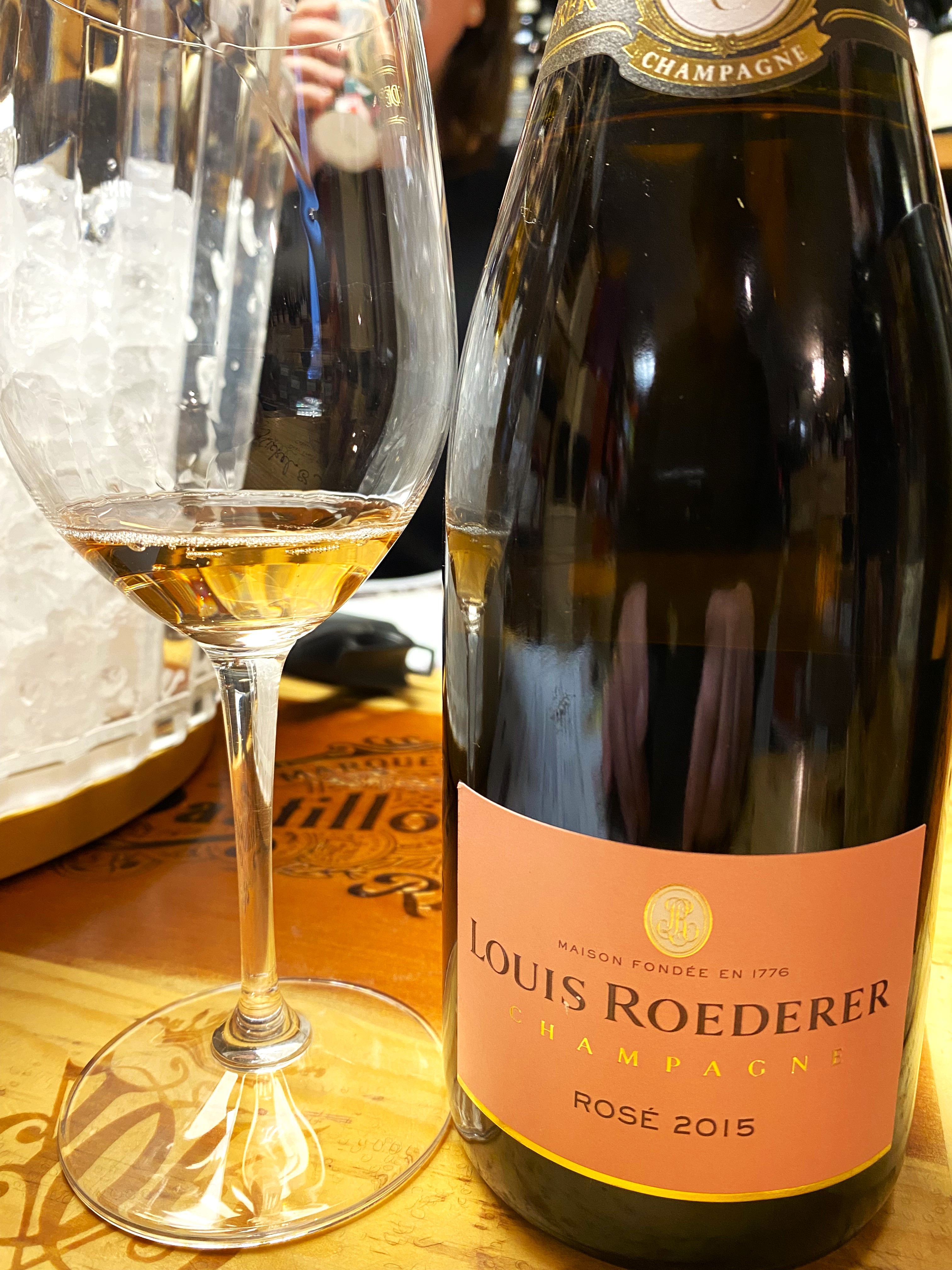
We then had a chance to compare it to the Louis Roederer Champagne Brut Rosé 2015. Champagne Rosé is the appellation for Champagne tinted pink by the dark pigment contained in the skins of Pinot Noir and Pinot Meunier grapes. An extraordinary vintage for Champagne and the fruit for this wine comes from two Crus: Cumieres and Chouilly and from their La Riviere estate vineyards. The wine is sixty-two percent Pinot Noir and thirty-eight percent Chardonnay with eleven percent of the wine aged in oak. The rosé was created by a long, gentle infusion of Pinot Noir, and adding some Chardonnay juices to the Pinot Noir during maceration, to ferment together for the perfect integration of the two grapes. The salmon-colored wine with fine energetic bubbles offered notes of currants, blood orange and a touch of cocoa. On the palate the tones of blood orange were prominent, with florals blending with saline for a tangy and ending with a finish of fruit and terroir.
It just wouldn’t be Christmas without The Wine Raconteur, Jr., a sobriquet that he gave himself, when he guest wrote a couple of articles for me. We met when I was posting a job at his college and he immediately responded and we have been pals ever since. Even our Brides get along, and they probably both think that I am daft, but that is a common perception. He wanted to host, to make it easier for his children to do their thing, after dinner, they would probably be bored at our house. So, we brought the wine.
We started out with some appetizers, assemble charcuterie snacks, mixed olives, and freshly roasted nuts. And I brought out a bottle that my Bride and I have been waiting to have, but it had to be with the right couple that could appreciate the wine. I brought a bottle of a rather unknown white wine that carries the Appellation Bordeaux Controlee, which would not be all that remarkable, except that this wine is Chateau d’Yquem “Y” Ygrec Bordeaux 2017 and not Chateau d’Yquem Sauternes that was famous and still has representation in the wine cellar of Thomas Jefferson. Chateau d’Yquem is by far the most famous dessert wine in the world and has definitely made the Sauternes district of Bordeaux prime real estate. In the Classification of 1855 of the Medoc, it was the only estate to be rated as Premier Cru Supereiur and it still is, and while most say it will be great for a good fifty years, there are others that feel that it is the longest-lived wine and may be eternal. The Yquem estate was owned by the King of England in the Middle Ages and has been producing late-harvest wines since at least the late 1500’s. It is a two-hundred-ninety-acre vineyard situated on the highest hill in Sauternes. Possibly the ideal setting to produce sweet wine; a warm, dry topsoil of pebbles and course gravel over a subsoil of clay that retains water reserves which aids the development of “noble rot” and the property has about sixty miles of drains to prevent waterlogging. There have been nine vintages that were never produced in the last century, because the wine did not meet the specifications required. The estate was under the Lur-Saluces family from 1785 to 1999 when it was sold to the luxury brand LVMH. Y or Ygrec is a rather rare wine for the estate as they produce about ten-thousand bottles each year. It was originally made at the end of the harvest with the last bunches of grapes since 1959 and in 1966 the selection of the grapes changed and the wine is basically Sauvignon Blanc (eighty percent) picked at the beginning of the harvest and a small amount of Semillon with Botrytis (twenty percent) and in 2004 the brand was to be produced every vintage. They now have a state-of-the-art vat room just to make this wine and it is vinified first in Stainless Steel vats, and no Malolactic fermentation; and the aging on the lees take place in French Oak, of which half is new, for an average of ten months, and regularly stirred for the ten months. There is no second label for either wine produced at the chateau. A beautiful golden colored wine that offered notes of grapefruit and tangerine. On the palate tones of peaches, apricots, and pears with refreshing salinity and bright acidity that finally ends with a fantastic finish of dried mango and pineapple and a wonderful slate terroir. This was just beyond any White Bordeaux that you will ever encounter. Dinner could have ended here.
The second course was a Rosted Pork Tenderloin with a side of Smashed Potatoes, and both were exceptional. The wine we had was Familia Fernandez de Manzanos “Manzanos Red Wine 1955 Spain.” Bodegas Manzanos is a large wine producer in Spain, founded in 1890 and is now run by the fifth generation of the Fernandez de Manzanos family. They are in the top three of Navarra and the top five in Rioja for production and they own ten wineries. The original winery for the family is in the Rioja Alta zone back in 1890. The newest generation has been going through all the facilities on all the properties. Around 2020 they discovered a cache of bottles under canvases, forgotten and untouched since they bottled the wine 1961 Vino Tinto, so probably 1964/5. They originally must have thought that the wine could use some additional maturation time in the bottle, and it was forgotten about in a hillside cellar. History sometimes has a way of repeating itself. A hidden cellar was discovered with three hundred some bottles of a 1955 vintage. They contacted the Rioja Association who oversaw that each bottle was opened using inert gas and checked to have no flaws, poured into a Stainless-Steel vat. Then new bottles, new labels and they ended up with about one-hundred pristine bottles of Familia Fernandez de Manzanos “Manzanos Red Wine 1955 Spain.” Some background on the wine. This wine is a blend of Tempranillo and Garnacha (Grenache) from vineyards of predominantly alluvial and clay-ferrous soils. The fruit was harvested in the manner of the mid-Twentieth Century tradition of hand-picking in small baskets. The aging was done in old oak barrels. This wine offers a window into how Rioja wines were from that era. The wine still had a nice garnet color with bright highlights to it, in the glass and it offered notes of dried fruits, spices, cocoa and an unmatchable nose of tradition and age. On the palate there were tones of dried fruit, totally different from fruit-bombs that are the rage these days, and blended in with layers of sous bois (a descriptor that I seldom use, but for this wine, I guess it is imperative, and it is used to convey a wet forest floor – earthiness – an ethereal term) and old tobacco.
For dessert The Wine Raconteur, Jr. made a Pear Tartine; he is much more elegant and refined than I am, and a far superior man in the kitchen. I brought a bottle of dessert wine that took my breath away, and then the same thing happened when my Bride tasted it. We opened a bottle of Roberts + Rogers Louer Family Cabernet Sauvignon Port Napa Valley NV. I had no information about this wine, nor could I find any, it was like it didn’t exist. I called and got ahold of Roger Louer, who I have met a couple of times at The Fine Wine Source and he gave me some information. After the Cabernet Sauvignon vines were picked for the wines, they went out a picked whatever late-harvest berries were left on their St. Helena estate and they were reading around 25 brix and after fermentation they added brandy and got the wine down to nine percent sugar reading. They only made one barrel of this wine, and they aged the barrel for one year. They produced about forty cases, because they were the smaller 375ml bottles. The wine was really made for their family and friends’ usage, but the wine shop and the winery have a long record of association and the shop got a few cases. They have only produced this wine perhaps every five years or so, and I was told that in the future the bottles would read “Port-style.” The wine was a deep-dark red wine that offered notes of dried fruits, candied nuts, and spices. On the palate there were tones of figs, black fruit, caramel, mocha, and nuts with a very long finish of dried fruit and nuts. I just teased The Wine Raconteur, Jr. with tidbits of the wines I was going to bring, and his culinary skills paired flawlessly and it was a memorable meal.
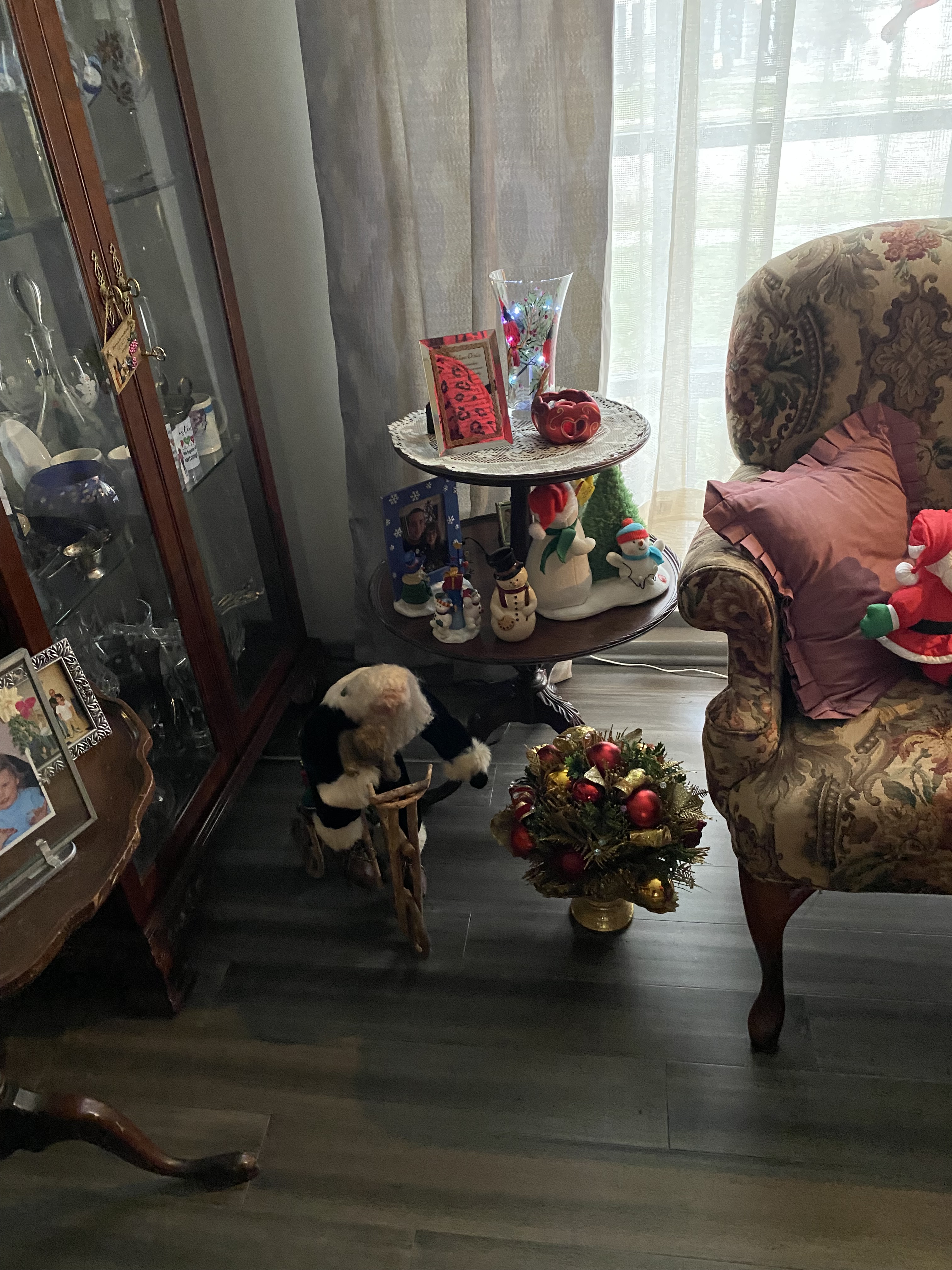
My Bride and I wish everyone a Merry Christmas as we slowly adjust to our new found independence as retirees. We are slow to change habits, like having everything done and out of the way before Thanksgiving. A habit left over from my retailing days, as my hours would increase, and if I had a day or night off, I did not want to spend it in another store. The other bonus to that scheme, is that all the costs were paid for in December, and then we could think about a well-deserved vacation in January or February.
We enjoy the Christmas season to spend time with family and friends and wish the best for everyone. I even love the music, which so many seem to castigate with scorn. I remember the last business I helped, they allowed their “manager” full reign and he wouldn’t play Christmas music, unless it was totally undecipherable as Christmas music. I actually had to complain, to get the business to play music that the customers were expecting to hear. Oh well, perhaps I am old-fashioned, but I do make a great curmudgeon. The customers enjoyed the music and even stated it, so not everything old is wrong.
Also, after Christmas, comes the New Year, which we can celebrate with good cheer. Then Orthodox Christmas appears in January and it is subtle and understated; and to me and many others it signals that the decorations can come down for another year. As a retired retailer, I still enjoy the seasons, but Christmas should not appear until after Thanksgiving, I think it is appalling to see it appear after “Back to School” promotions in September. Allow my Bride and I, once again a chance to wish you a Merry Christmas with plenty of good health, happiness, luck and love.
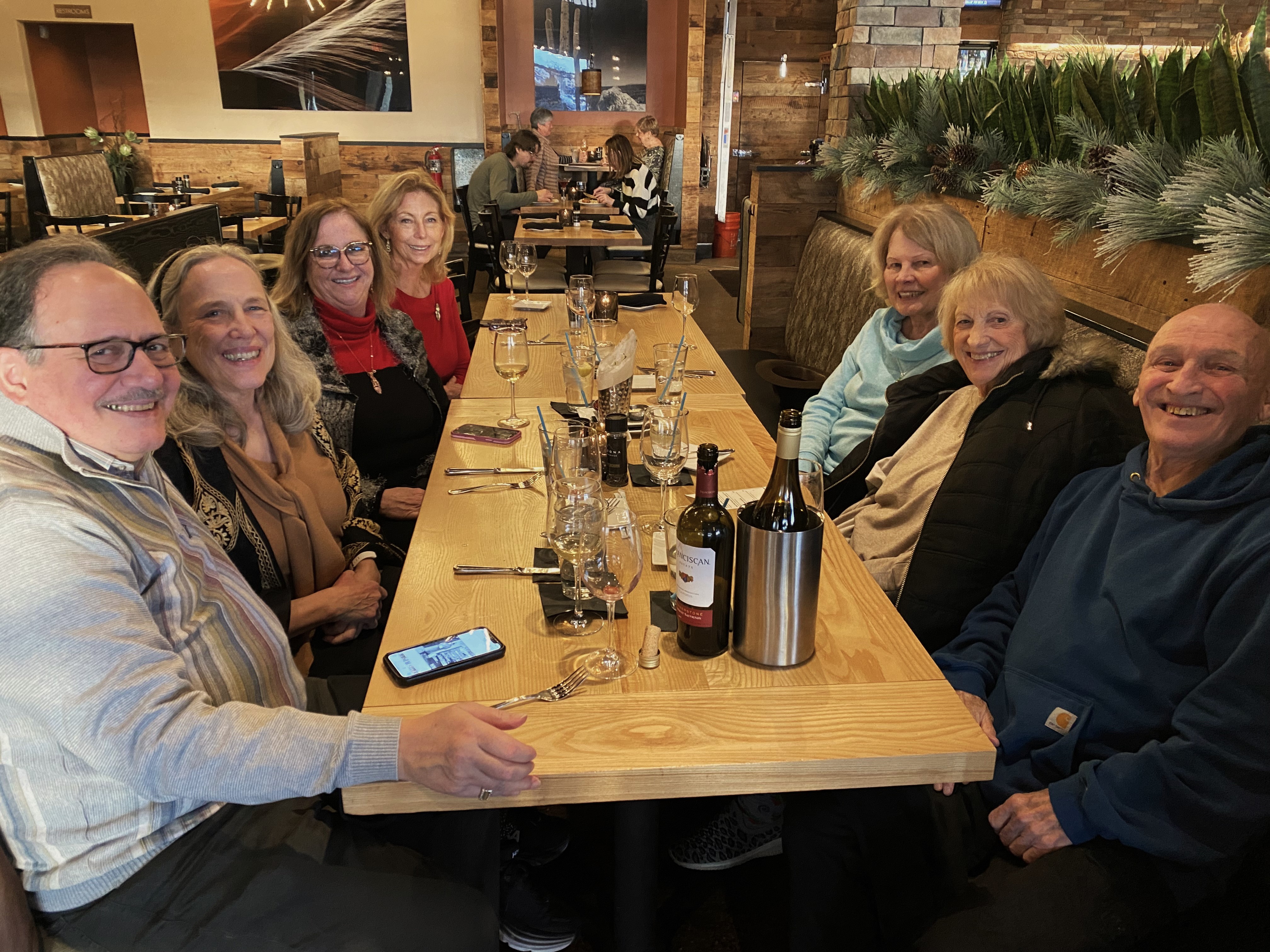
Ms. Yoga has arrived for one of her business trips and she had a chance to have dinner with some of her former business acquaintances, who have joined the ranks of retirement. She came into town the other days, saw some of her family, went to have some appointments, met us all and then she was going to the west side of the state for more business. She is always on the go. She had asked me to make a dinner reservation for eight people at three on a Monday afternoon, and where she wanted to go, was not going to happen. Since our state is still recovering from draconian shut downs, the restaurant industry has not recovered and everyone is still on abbreviated hours, as there are no longer employees left in the industry. I finally found two places that would work logistically, and she chose one of the two. She then went shopping the day before with one of her nieces and tried the restaurant ahead of time.
My Bride and I got to the mall, where the restaurant was, and we walked the premises upstairs and downstairs to get some our “steps” in. We got to the restaurant about ten minutes early, but they wouldn’t seat us, until the specific time and after there was a few more to arrive for our party, as they had allotted us two hours for the dinner. I thought it was rude of them, but I stayed civil. We were finally seated and everyone tried to make some sense of the menu and we started out with some appetizers. To begin with, I ordered a bottle of Hess Select Chardonnay Monterey County 2021, part of the Hess Family Estates of Napa, which is now Hass Persson Estates; as Ms. Yoga loves Chardonnay. Donald Hess began the saga in 1978 with an original purchase of nine-hundred-one acres of land in what is now Mount Veeder in Napa Valley and with land to remain underdeveloped in support of local wildlife. In 2008, it was one of the first ten wineries to receive a Napa Green certification and they have continued to strive for other designations since them. They have survived the Napa Earthquake, fires and mudslides, which all led to renovations and upgrades to the winery, the visitor center and the art museum for the now renamed Hess Persson Estate, to acknowledge his daughter Sabrina and husband Tim Persson. They created the Hess Select division when they entered Monterey County. This wine is a blending of their Chardonnay grapes, using seventy-five percent aged in Stainless Steel and twenty-five percent in new French Oak. I have been a fan of Monterey County for Chardonnay and Pinot Noir wines, because of the ideal climate of cooling fog, coastal breezes and a longer growing season. A pretty golden-yellow color that offered notes of pineapple, star fruit and vanilla. On the palate there were notes of peaches, golden delicious apples with great acidity and balance, a crisp wine that proclaims Monterey and not Napa. It was very refreshing and tasty, especially for a popular priced wine.
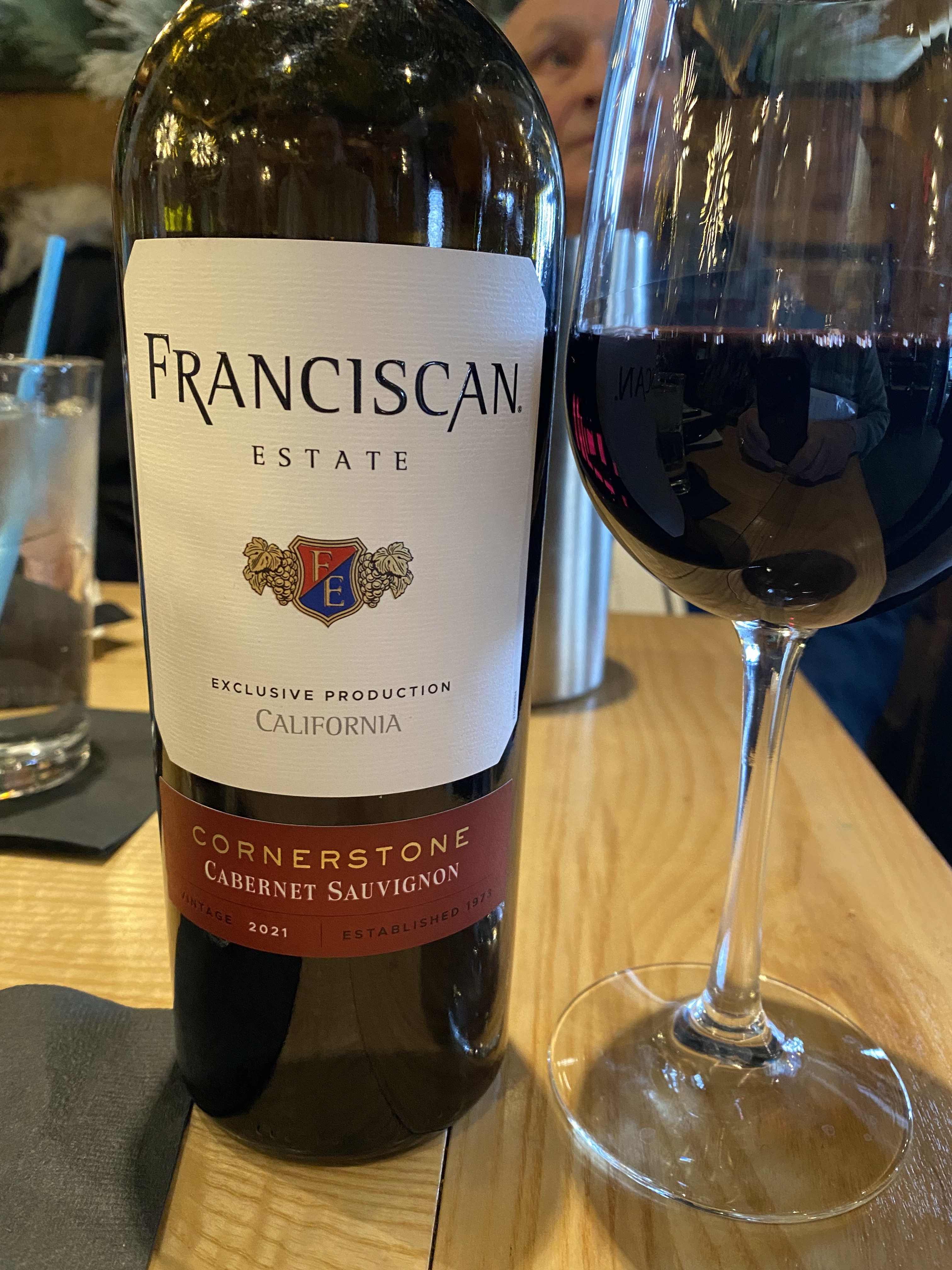
For the main dishes, it was across the board from burger and sliders, to steaks and salmon. Though for dessert, the flourless chocolate cake seemed to be the winner, and the coffee was done French-press. My Bride is fond of this restaurant, as it is one of the restaurants that she meets her friends, as they go to the mall for their walking regimens. I also ordered a red wine to go with all of the dinners, though this restaurant is very beer oriented. We had a bottle of Franciscan Estate Cornerstone Cabernet Sauvignon California 2021. Franciscan Estate was established in 1973 by Justin Meyer, who was the winemaker at Silver Oak Winery and with the help of Augustin Huneeus, owner of Quintessa Winery. They began with two-hundred-forty acres in what is now the Oakville appellation, along with contracts across the Napa Valley. They are famed for their flagship Magnificat Cabernet Sauvignon blend. The winery is now owned by E&J Gallo who has become a buyer of quality properties these days. I couldn’t find any production notes for this wine and because it carries a California appellation, I will surmise that it is a bulk wine production, but I was pleased with the wine. It was a deep-dark red wine that offered notes of blackberry, plum and touches of black tea, and clove. On the palate, a rich “jammy” wine of black fruit with a touch of caramel and chocolate and a decent finish of fruit. For a popular priced wine, I found no objections to it, and the people at the table all seemed to enjoy it.
As everyone is getting ready for the Holiday Season, I had to make a stop at my local shop, The Fine Wine Source in Livonia, Michigan. Once a month, I enjoy getting the curated wines that they select for the club as well as to admire some one-of-a-kind wines that they occasionally get, that would get any wine lover excited. The club membership, besides the monthly pair of wines, also gets the member case-pricing on any purchase, which is a great perk. Plus, the staff is so knowledgeable, it is always a pleasure to stop there.
The first club selection representing the Old World is The Furst Cremant D’Alsace NV which is produced by Cave Vinicole de Kietzenheim-Kaysersberg. Cave Vinicole de Kietzenheim-Kaysersberg is a cooperative of one-hundred-thirty landowners in the villages of Ammerschwihr, Kientzheim, Kaysersbert and Sigolsheim and covers one-hundred-seventy hectares of vineyards. This cooperative is part of a much larger cooperative of successive merger and is now called Bestheim. Cremant d’Alsace is an appellation created in 1976 covering the sparkling (Methode Traditionelle) white and rosé wines of the Alsace region. The wines must spend a minimum of nine months maturing on their lees, before disgorgement and the dosage; all vital and required steps to comply with the appellation. The Furst is produced in concert with the Dopff au Moulin Estate with seventy hectares of vineyards, and currently in the thirteenth generation of wine makers. The Estate is located in the historic Riquwhir at an altitude of 300 meters in the foothills of the Vosges Mountains. The Estate is also credited with the creation of Cremant d’Alsace and the creation of the distinctive tall, slender Alsatian wine bottle. This wine is a blend of fifty percent Pinot Blanc and fifty percent Pinot Auxerrois. The wine is described as having cidery aromas notes, and that on the palate the tones of apple, pear, lemon zest compliments a delicate mousse, and ending with a savory finish.
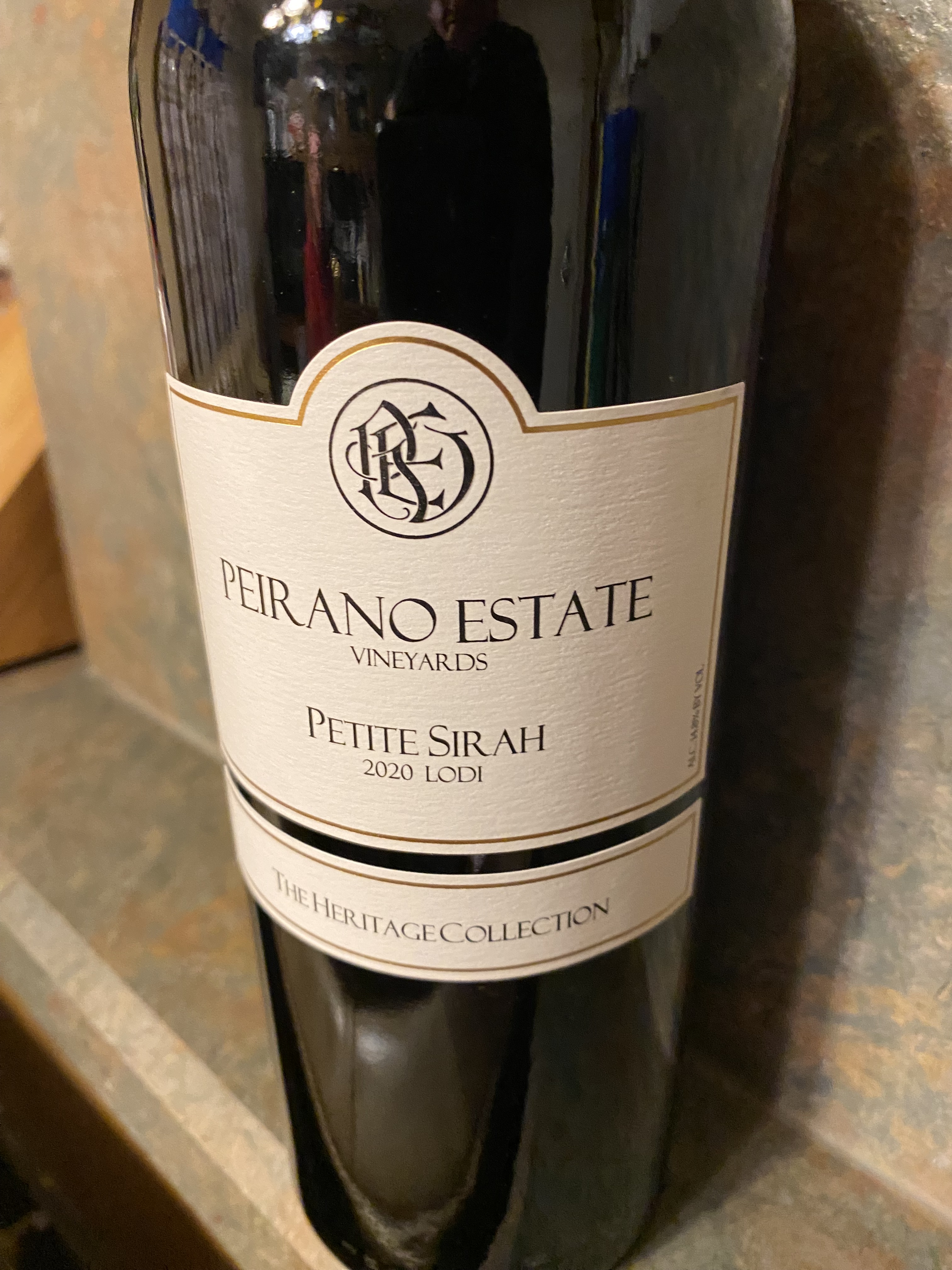
The second wine representing the New World is Peirano Estate Vineyards The Heritage Collection Petite Sirah Lodi 2020. In 1879 Giacomo Peirano, a grape farmer from Genoa, Italy immigrated to San Francisco in hopes of becoming a gold miner, he realized that he was too late and moved to Lodi, home of many mining camps. He opened up a shop to cater to the miners’ needs, he was successful, and went back to Italy to fetch his wife and brought back Italian Zinfandel cuttings as well. He bought a three-hundred-acre farm and planted seventy-five acres of vines. The family has been successful to this day with five generations. The wine is pure Petite Sirah and the fruit is hand-harvested and it undergoes a rotary fermentation, which constantly blends the skins and pulp with the juice to extract all the flavor of this variety. After the Initial and Malolactic Fermentation is done, the wine is transferred to French and American oak barrels, of which fifteen percent are new; for about thirteen months. The wine is described as inky-black and offers notes of blackberries, boysenberries, and dark plums. On the palate the tones of blueberries, plums, blackberries, and dark chocolate blend with harmonious tannins ending with a finish evoking more blueberries.
We were meeting The Caller and his charming wife at a new location, this time at Ciao Italian Bistro in Fenton for a leisurely lunch. Now The Caller lives out in the wilds of Michigan, where even the GPS on our phone system, let alone the phones always work. So, we try to meet somewhere in between and this was a new restaurant for us to try in the city of Fenton. It was funny, because my Bride and I, both have the same iPhone and the same phone service carrier and our GPS gave us two different routes to get to the restaurant. Usually, she teases me that my iPhone knows that I like roads, instead of freeways, but the route was the same in the beginning using the freeway, but they diverged when we got on the roads, two different routes, same travel time, and we did get there. We even got there early before the reservation, so she wanted to go to a bakery, since we had time. As we started to walk to the bakery, The Caller yelled out to us from the parking lot, to get him a cherry pie, so we became a delivery service as well. They went in and got the table, and they started with out us with cocktails.
The restaurant had two parts, a long narrow bar side with booths, and the adjacent restaurant with tables and booths; we sat in the restaurant at a table and commandeered a booth to hold all the stuff we had bought at the bakery. We are very casual diners and food tends to get shared, so we just ordered a couple of appetizers to start off with, along with the bread. We had an order of Shrimp Luca, jumbo shrimp lightly breaded and flash-fried topped with a lemon garlic cream sauce and an order of Calamari, flash-fried and served with homemade aioli sauces. We then all ended up with pasta orders; Pasta Rustica with sautéed Italian sausage, red onions, banana peppers and spinach in a roasted garlic marinara sauce tossed with penne pasta; Lobster Ravioli with claw meat stuffed saffron pasta, tossed with shrimp, spinach, and roasted tomatoes in a Sherry cream sauce; Pasta Primavera, penne pasta sautéed with onions, tri-color peppers, mushrooms, and cherry tomatoes tossed in a garlic, olive oil, fresh herbs and lemon sauce; and Shrimp and Sausage Scampi with sautéed jumbo shrimp and Italian sausage with artichokes, asparagus tips, sliced garlic and fresh herbs in a white wine lemon butter sauce on fettuccine pasta. All followed by sorbets and “Baked Alaska” with Neapolitan ice cream center.
We were going to start with a white wine and then go with a red, but all interest was leaning towards a red and we ended up getting two bottles of Vietti Castiglione Barolo DOCG 2019. Vietti is a wine producer in Piedmont, known for their Barolo and Barbera wines, along with being one of the proponents of resurrecting the Arneis variety. The estate began producing its first wines with the family name in 1919 and they were one of the original wineries to ship Barolo to the USA. Most of the Nebbiolo grapes come from the vineyards in the Castiglione Falletto which is a mix of sand, chalk, and clay soils. The Castiglione Barolo is their traditional Barolo interpretation and the vines are between ten and forty-five years old. The grapes are hand-harvested, separated by individual cru locations, then gently pressed, and the juice is fermented for almost a month on the lees for about a month in a Stainless-Steel tank. Malolactic Fermentation takes place in wood, during the thirty months in large barrels and a small portion in barriques. Each cru is vinified separately and assembled before bottling. The wine was a dark ruby color that offered notes of plum, black cherries, blackberry, and secondary notes of rose petals and tobacco leaf. On the palate tones of the black cherry was prominent and blended nicely with smooth tannins and a touch of classic leather, ending with a medium to long count finish of fruit, spices, and terroir. We look forward to our next meeting with The Caller in the spring.
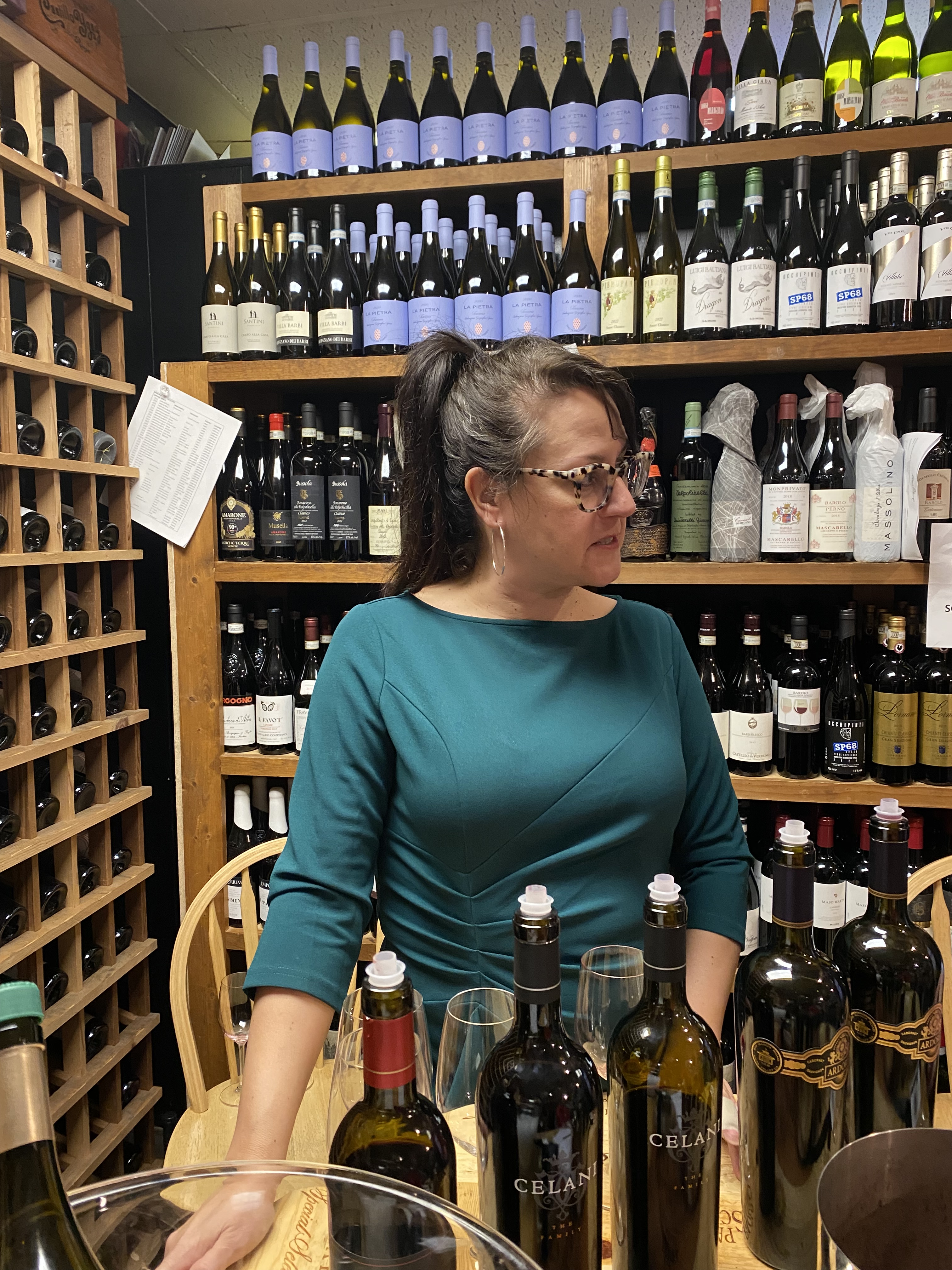
There I was ready to enjoy four more wines from Tom Celani’s Celani Family Vineyards at The Fine Wine Source in Livonia, Michigan. Tom had a busy day and while he was autographing wine bottles and regaling the wine tasters, his assistant Vanessa Thomas was pouring the wines at one of the tables in the shop. The wines are made from estate grown Merlot, Chardonnay and Cabernet Franc and the Cabernet Sauvignon comes from select vineyards in Coombsville and Mount Veeder. A perfect afternoon for any wine lover, and the shop was full and more people were coming through the doors, even though people were making appointments, others were coming in early, didn’t make an appointment, or some even came in to buy other wines and weren’t even aware of the tasting. Regardless, I am happy to report that everyone was well taken care of, and having fun. Now, if they could only get rid of the guy in the sport coat and hat, taking photos and asking arcane questions.
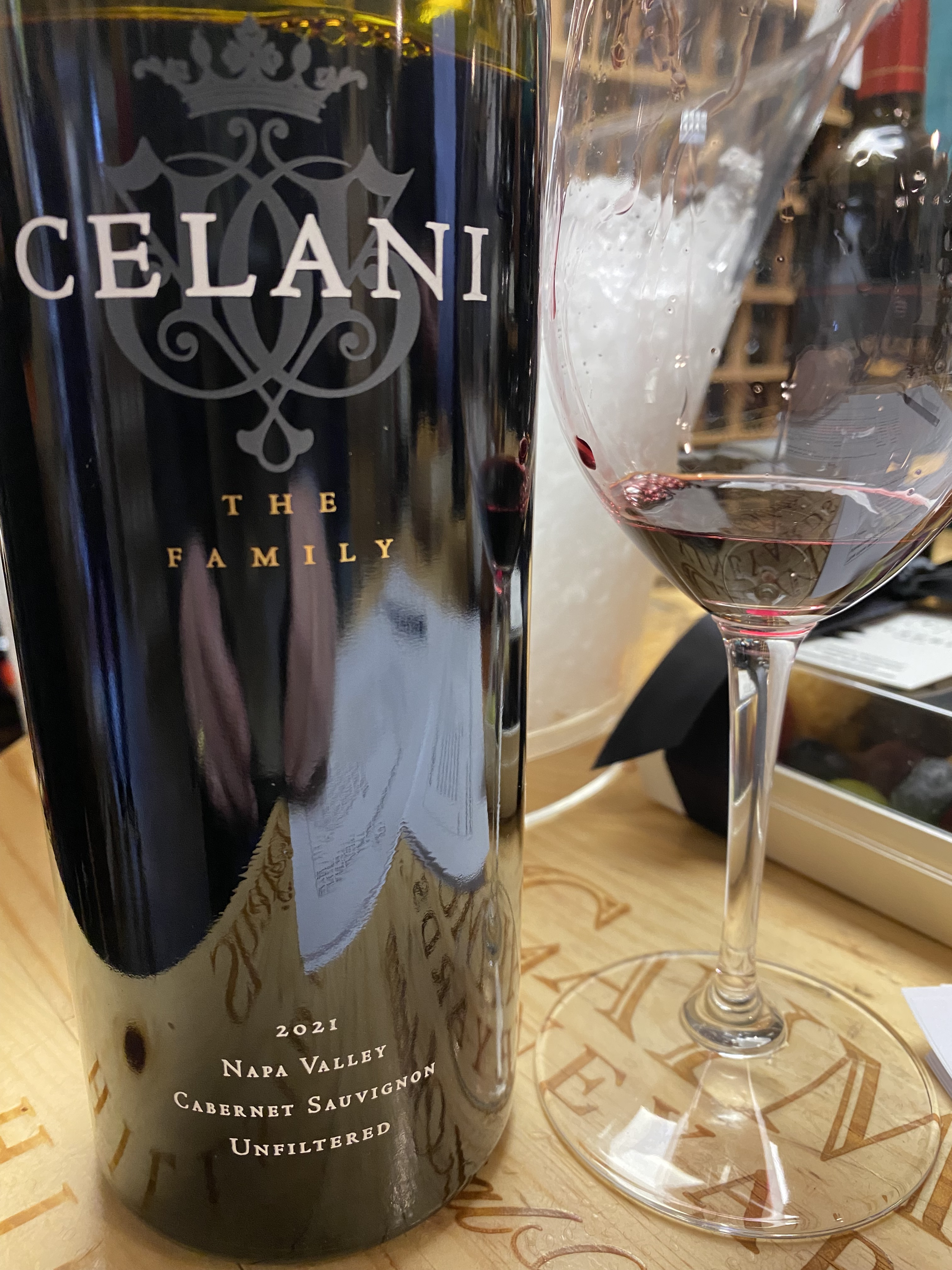
We had a chance to taste two vintages of the Celani Family Vineyards “The Family” Napa Valley 2018 and the Celani Family Vineyards “The Family” Napa Valley 2021. The production notes for both of these wines were similar. They were aged for twenty months in French Oak of which ninety percent was new and bottled without fining or filtration. The 2018 was a classic interpretation of Cabernet Sauvignon with deep garnet coloring and offering notes of black fruit, violets, and graphite. On the palate the black cherries and blackberries led the parade of flavors, with hints of cardamom, cigar box, dark chocolate, blending with fine tannins and a good finish of fruit and terroir. This wine was drinking perfectly and still had fifteen to twenty years of cellaring to even get more complex. The 2021 was just released and we were the lucky recipients of having the first taste. My notes led off with terroir. This dark garnet wine offered notes of black and red fruits, violets, and terroir. On the palate the wine was big and powerful with tones of black cherries, cassis, and then secondary tones of tobacco, almonds, cardamom, and licorice and then finally ending with more terroir and fruit. It may be that this wine is so young, that the terroir led and really impressed me, not a cookie-cutter Cab, by no means. It will be interesting to try this wine over the next twenty years to see how the tannins merge with terroir and fruit.
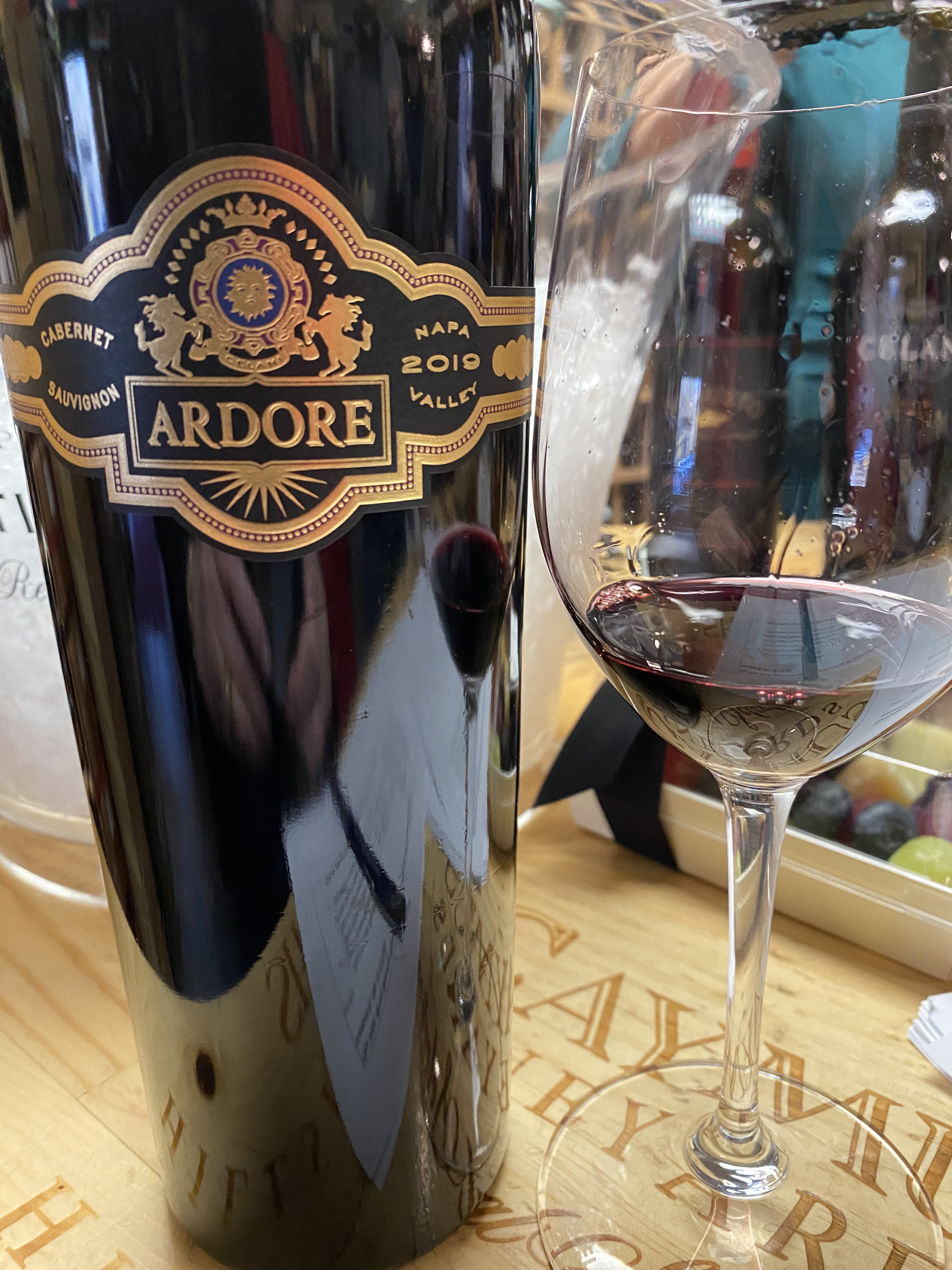
For our last two wines, we once again treated to trying two different versions of the “Ardore” wine, one from a magnum, and one from a standard bottle. The “Ardore” also evokes Tom Celani’s passion for a great cigar, as the label reminds one immediately of a cigar wrapper. We tried the Celani Family Vineyards “Ardore” Napa Valley 2018 and the Celani Family Vineyards “Ardore” Napa Valley 2019 and this is their flagship wine. The production notes are the same for the two vintages. The wine is made from a careful selection of ten barrels of Cabernet Sauvignon from the most exceptional vineyard sites in the Coombsville AVA. The wine is aged for twenty-two months in pure new French Oak, and the wine is never fined, nor filtered. The 2018 vintage which came from a magnum is a dark garnet wine that offered notes of blackberries, strawberries, cassis, black tea with hints of violets, tobacco, mocha, and graphite. On the palate the tones of the fruits have merged smoothly with the velvety tannins wrapped up in supple oak and finishing with a long count of fruit and terroir. A powerful wine, that is totally drinkable now and could cellar for twenty-five to thirty years. The 2019 vintage of “Ardore” immediately caught my fancy, as the first word that I wrote was “spectacular” and then I went back to being my quiet self. This dark garnet wine offered notes of blackberry, strawberry, currents, raspberries, followed by chocolate, cigar box, leather, bramble, and graphite. On the palate the dark fruits were elegant and supple, blending with very fine tannins and ending with a very long finish of fruit and terroir. While easily drinkable now, another twenty years in the cellar would not be out of the question. After I sneaked in second taste of each, while the 2018 was big, the 2019 really appealed to me, with its more ethereal qualities that truly finished this tasting.
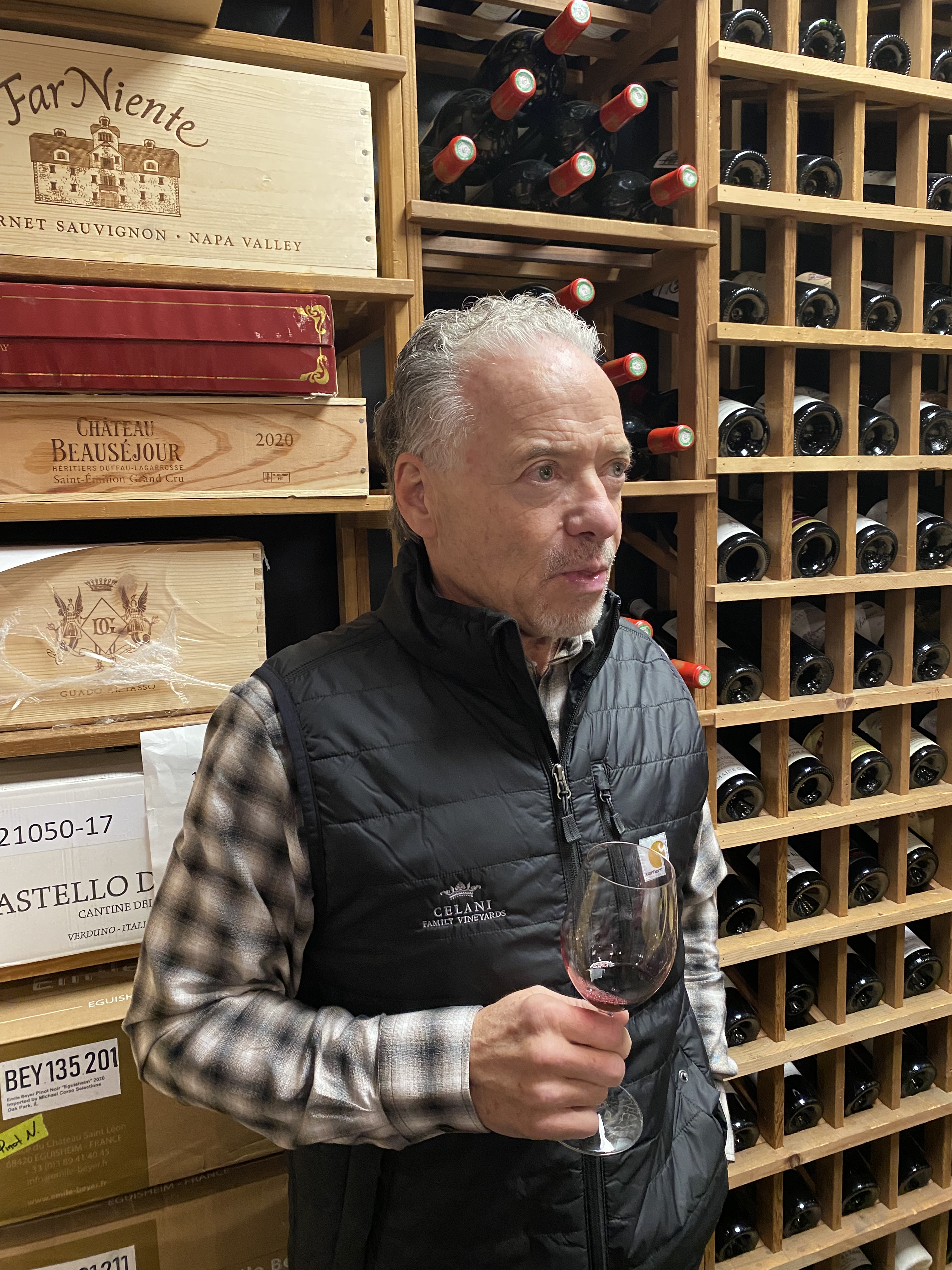
It was a pleasure to go to my local wine shop, The Fine Wine Source in Livonia, Michigan as I knew that Tom Celani was conducting another wine tasting and he would be autographing bottles while he was there. I joked with him, that it was truly a Tom Celani Day, as I was hearing him being interviewed on the radio for his matching funds for a food drive for two local charities called “Hunger Free in the D,” as I was doing errands, before attending the wine tasting. Since my earliest days as a clothier, I had stopped listening to music on the radio and listened to the top news radio station in the Detroit area, so that I, as a clothier could speak rather intelligently with the customers, a trait that has been lost, I have noticed among the clerks that I now encounter. I lead in with this introduction, because for years I had heard Tom Celani and all the philanthropic work he has done in the Detroit area, long before he had a winery. Tom Celani is lauded in the Detroit area for his largesse for charitable organizations that he helps in a grand manner. He and his father ended up creating one of the largest Miller distribution companies in the United States along with other beers and wines. Tom Celani fell in love with wines, first as a drinker and a collector and finally acquiring a Tuscan-style estate with seventeen acres of grapes and one-hundred-twenty olive trees in the foot hills of the Vaca Mountain range in Napa Valley. As the proprietor of the Celani Family Vineyards he has chosen to bottle wine without costs becoming a consideration, to him wine is about quality and not quantity. In fact, he was joking that he is not sure if the winery, will ever truly show a profit, because of his concern about getting the best wine each and every time.
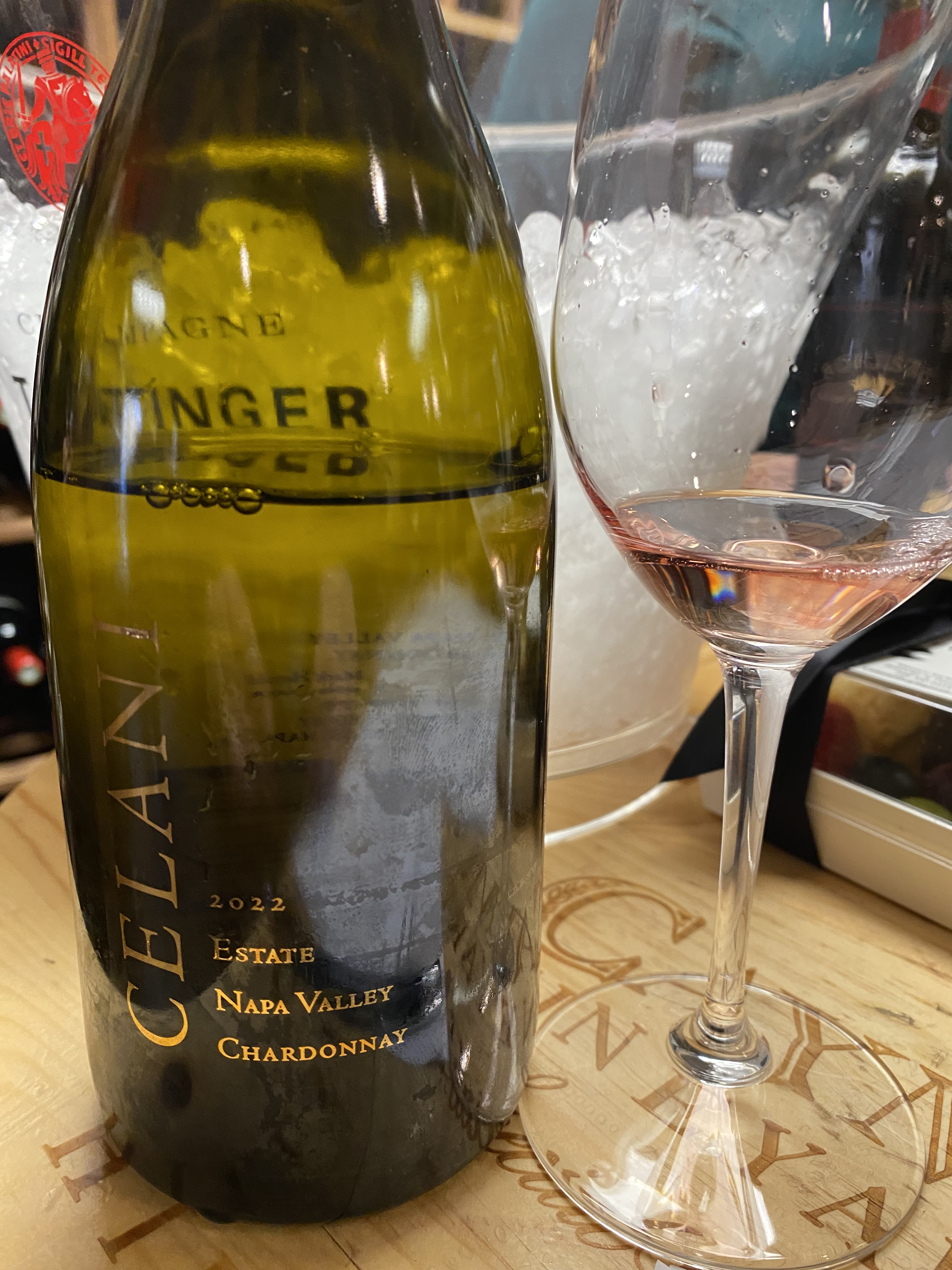
The tasting began with Celani Family Vineyards Chardonnay Napa Valley 2022 from the Oak Knoll District. The Chardonnay comes from estate grown Wente 2A clone grapes and was whole-cluster pressed and fermented on its lees for ten months using thirty percent new French Oak and seventy percent in self-stirring egg-shaped concrete fermenters. To maintain the natural acidity of the Chardonnay, malolactic fermentation was inhibited. The wine was a nice soft golden color and offered notes of apple, pear, tropical flowers and brioche and some soft notes of spices and jasmine. On the palate there were tones of fruit and floral flavors with crisp acidity, balanced and with a very decent length finish of oak and roasted nuts. This Chardonnay was big and impressive and they feel that it will cellar for about ten years.
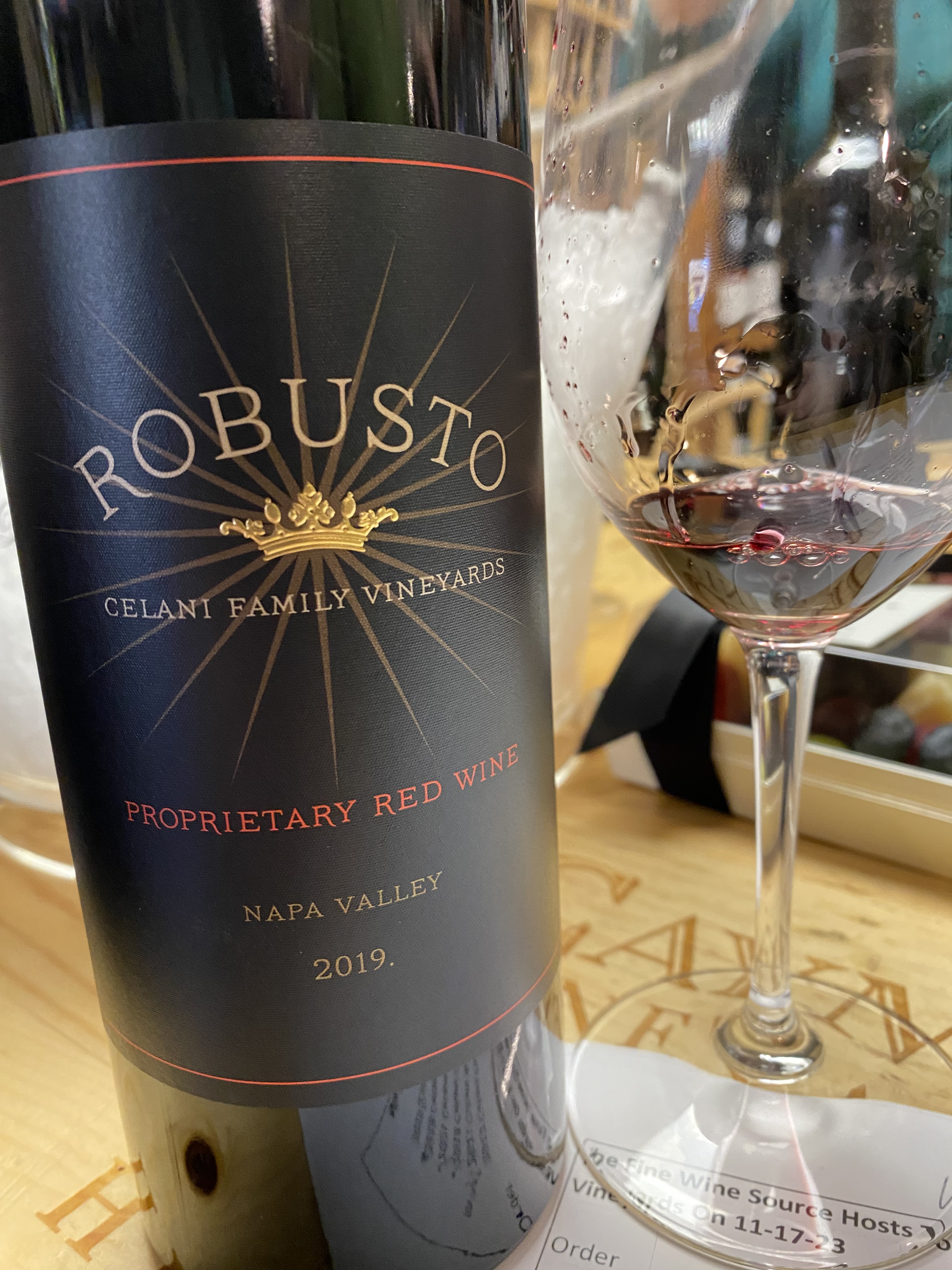
The following wine was the Celani Family Vineyards Robusto Napa Valley 2019. Tom Celani really enjoys a great cigar, and Robusto is a classic shape cigar, and one of his other charities that he hosts is “Cars and Cigars.” The original Robusto was a Proprietary Red Wine, but it now is pure Merlot and aged for nine months in a mix of French Oak barrels. I have never denied that Merlot is one of my first loves, back in the Sixties and Seventies when I first started learning about wine. This estate wine is just a deep inky wine with notes of red and purple fruits, pepper, and secondary traces of new leather, licorice, and a dash of orange peel. A nice wine with balanced tannins and on the palate tones of cherry, plum, pomegranate, currants with a nice medium finish ending with some fruit and graphite terroir. Another wine that is touted for ten plus years of cellaring, and I believe it, though I may never know. I drink Robusto before meals, as well as during meals, it is great with appetizers and conversations, and I like it with pizza, as well as fancy elaborate meals, this is one wine that we try to keep an inventory of in the house, as well as a guaranteed hit when we are dining out.
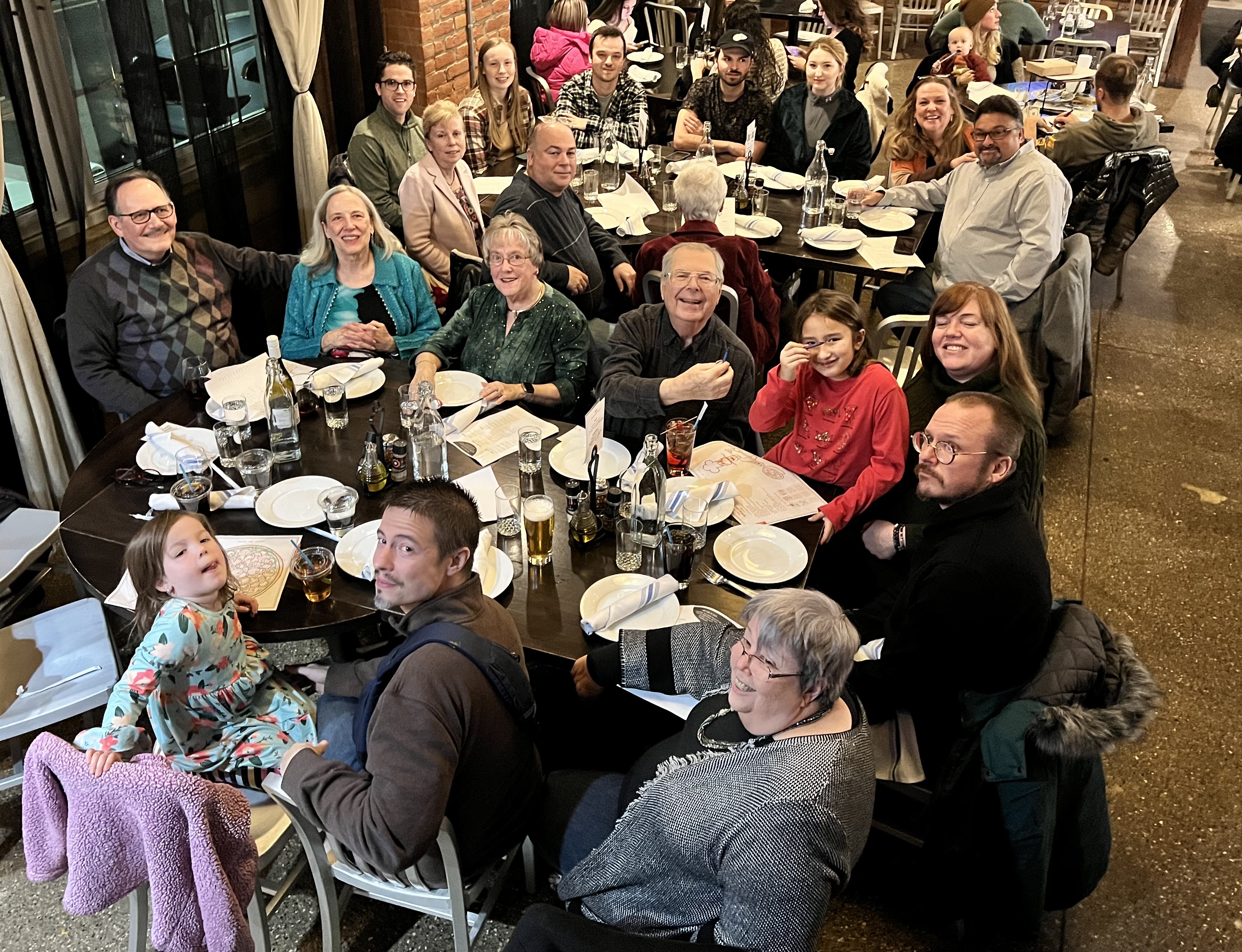
We all decided to get together for dinner at Bigalora Cucina in Royal Oak. The crowd has met at several of the different locations of this local pizzeria chain over the years, because they can accommodate our crowd. I think that we had twenty-two show up, which is a great showing. Two were AWOL who went to see the Michigan State football game (alumni and son). Also, two spouses of the next generation skipped the festivities as well. I think that the restaurant had hoped that we would take over the second-floor loft, but the steps were too difficult for a couple of our crowd. This chain and a couple of other restaurants are owned and managed by a talented chef, that my Bride and I discovered when we first got married, as his first place was near our home. We basically ate there every Saturday night, as our date night, with the same table and the same waiter. We still continue going to his other restaurants as well, but they are a bit more dear, compared to the original venue, but life goes on.
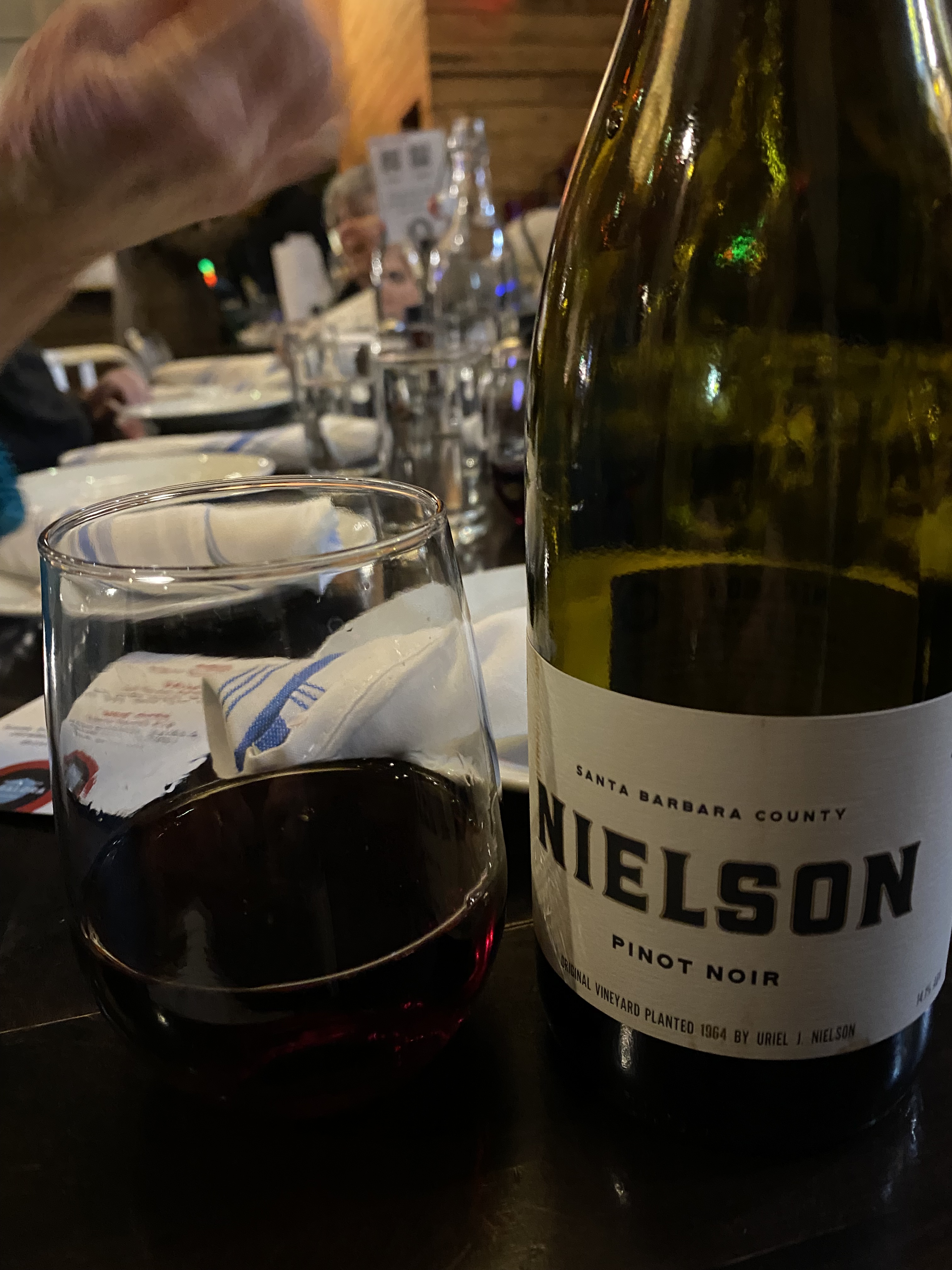
Biga, if you do crossword puzzles, refers to the pizza dough. The chef went to Italy and researched plenty of local pizzerias and small eateries to find the dough that he wanted. His quest was to find a dough that would not be heavy on the stomach as some could be, he wanted one that would be easily digested. After trial and error, as he has a complete kitchen in his headquarters, where he can experiment with new dishes or tweak older classics. The pizzas are perfect for two, or for one hungry individual. The other caveat is that he feels that the dough, because of its texture should only have a couple of toppings on each pizza. The other secret ingredient, which is right out in the open in each of his pizzerias is a large wood-fired oven for intense heat and flavor, this oven is so important that he has the same oven installed on two travelling busses that he rents out for parties. Down at our end of the table, a Pinot Noir was requested to start with. We had a bottle of Nielson Wines Pinot Noir Santa Barbara County 2021, which originally was called Byron Winery. Nielson Wines pays homage to Uriel J. Nielson, who in 1964 planted the first commercial vineyard in Santa Barbara County, against the common collective that the region was too cold for grapes; fifty years later, there are about a hundred wineries and thousands of acres of vineyards there. The vineyard is located eighteen miles from the ocean and is one of the first districts that witness the fog burn-off each morning. The winery is Certified Sustainable and they use small-lot techniques, such as hand-pruning, block by block harvesting, barrel fermentations and aging on the lees. A garnet-colored wine that offered notes of red fruit, and a touch of tea leaf. On the palate tones of red fruit permeate, with a bit of sweet caramel and a soft finish of terroir.
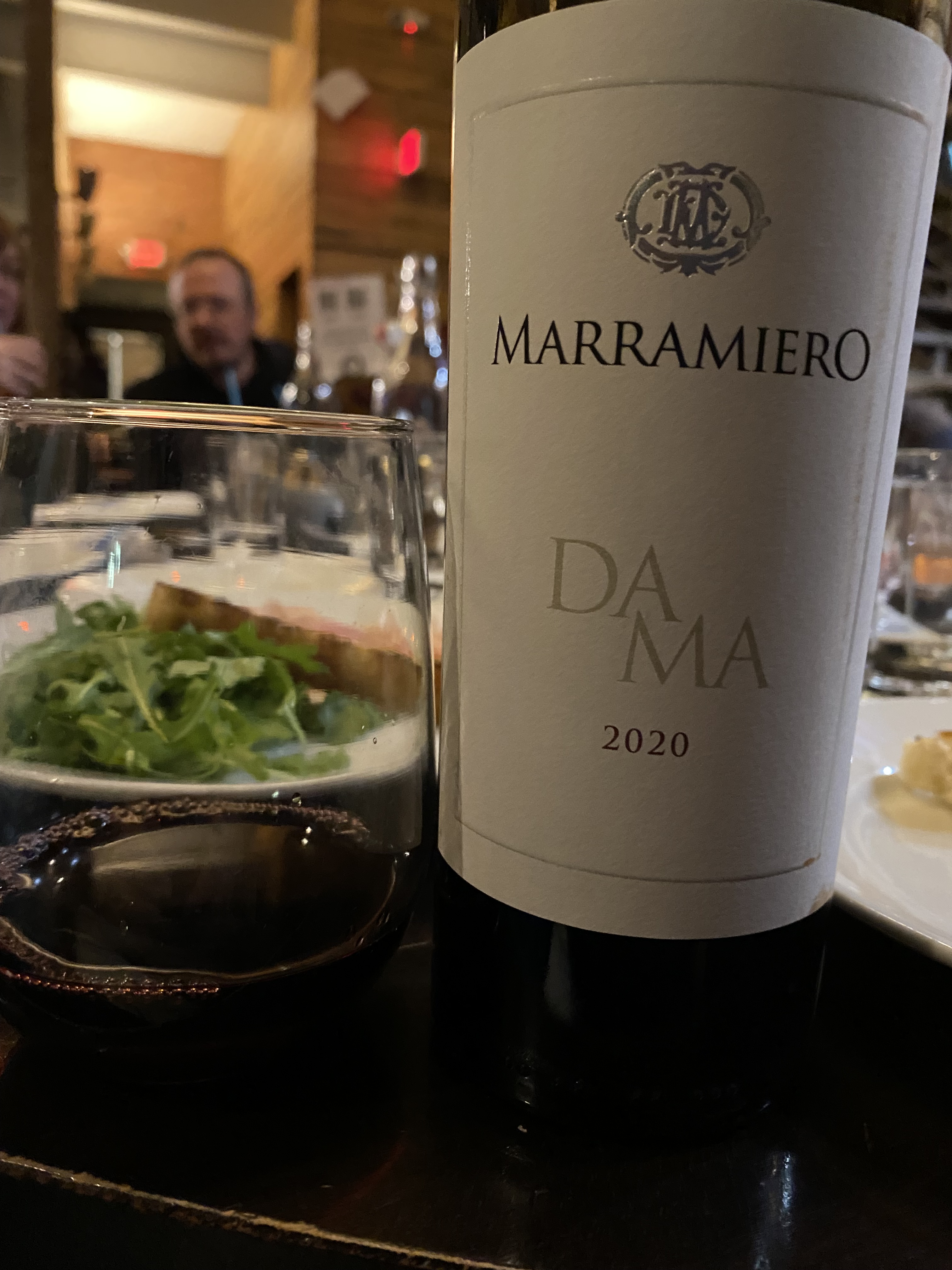
As we were looking at the menu, my Bride heard that they had a Butternut Squash soup, so that was how she wanted to start off. I got us a plate of Prosciutto di Parma, Grana Padana, arugula, and Focaccia bread, that we shared. We then shared a Pepperoni Pizza with House-blend Mozzarella, House-made tomato sauce and Oregano. There was no “doggie bag” for us. As we were getting closer to food time, I switched the wine over to something Italian. We had a bottle of Marramiero Dama Montepulciano d’Abruzzo DOC 2020. The winery was begun by Dante Marramiero in the early 20th Century and followed by his son Enrico on land from Gran Sasso through the hills of Rosciano to the sea planted with vineyards and olive groves. The wine is pure Montepulciano, basically from the Rosciano vineyards which are deep, rich, and basically clay. The first year of production for this wine was in 1994. Fermentation begins in Stainless Steel vats with a long maceration, the wine goes from Stainless Steel to barriques an then in bottle for a total of eighteen months of aging before being released. A deep purple wine that offers notes of black fruit, spices, and licorice. On the palate there were tones of black cherry, oak, soft tannins, and plenty of spiciness with a decent finish of fruit and some leather.






 The Wine Raconteur