Almost Show Time

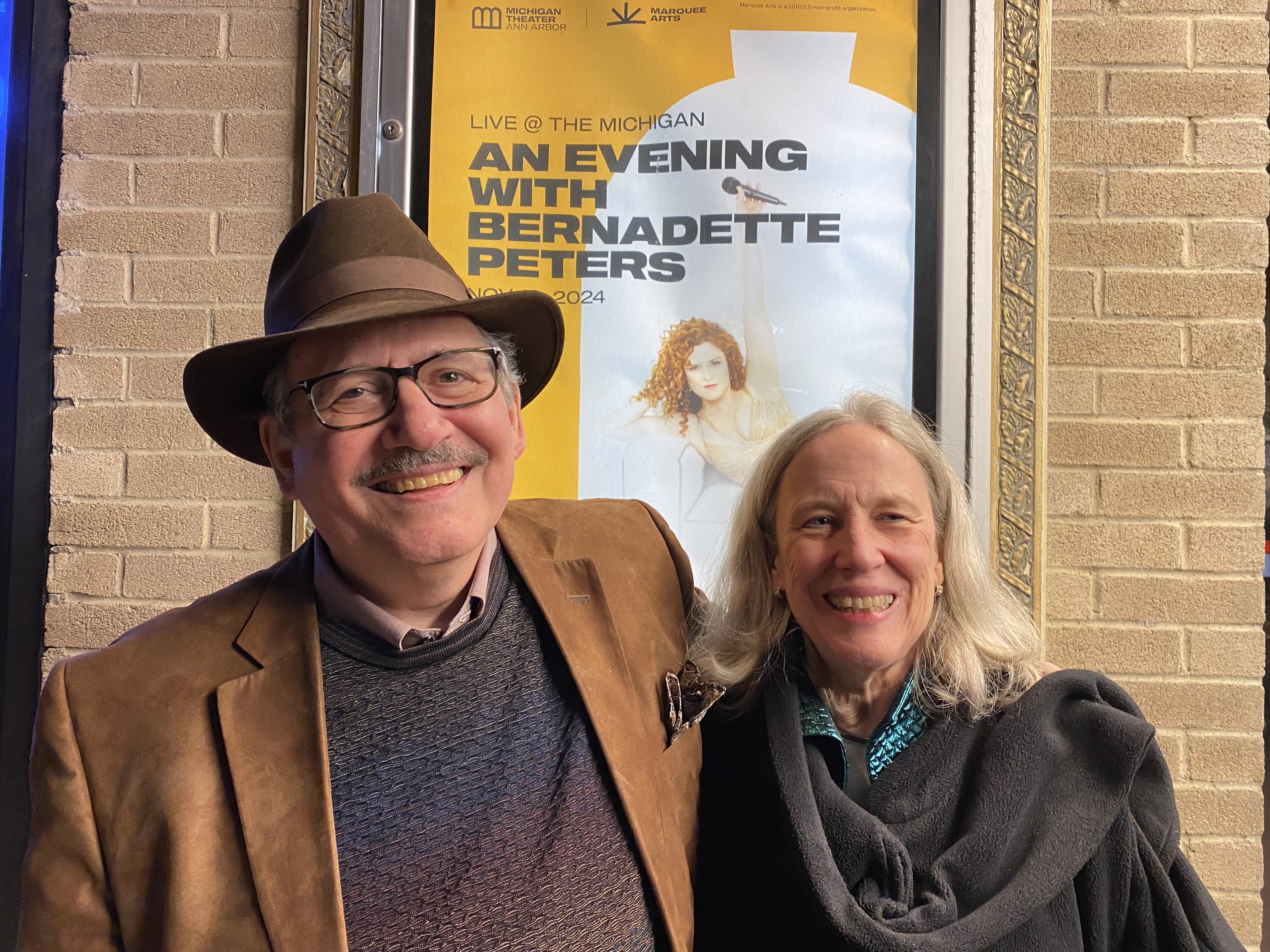
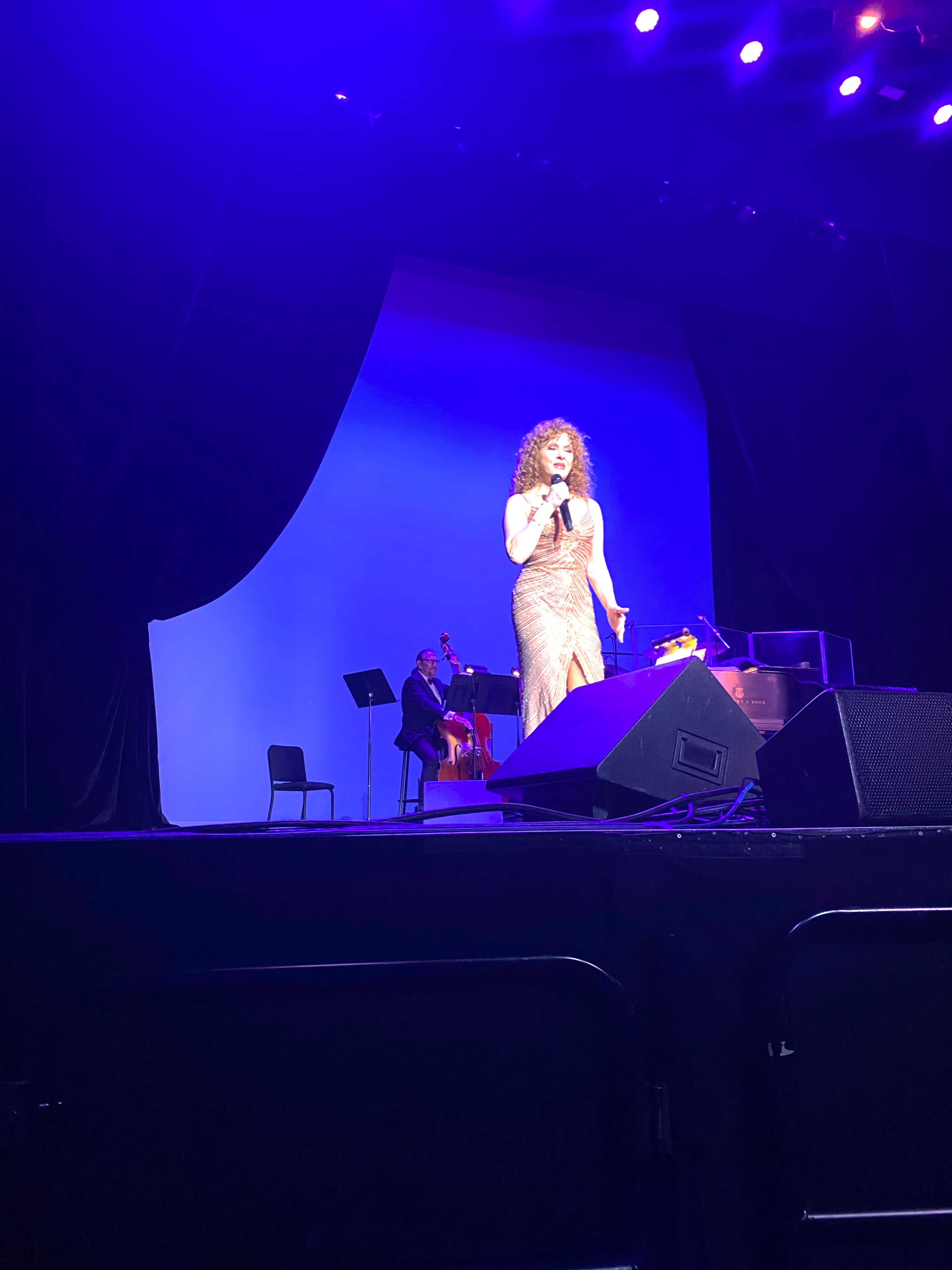
We were finally on our way to see Bernadette Peters and her one woman show at the Michigan Theater in Ann Arbor.  I think we were both looking forward to seeing the show, perhaps me, a bit more, but my Bride does enjoy theatrical performances, and I think that I truly do as well.  In elementary school we were taught to project our voice using our diaphragm, and we I hear singers that have weak voices, I get disappointed.  An entertainer needs to be able to “work” the room, and to project.    I had seen her years ago, before she became famous, and I was impressed, and I was sure that she still had that quality.   My generation may be the last to have seen all-around entertainers, because I did get to see the last of the vaudeville stars, the dinner club stars, and the elites of show business who enjoyed years, no decades of rave reviews.

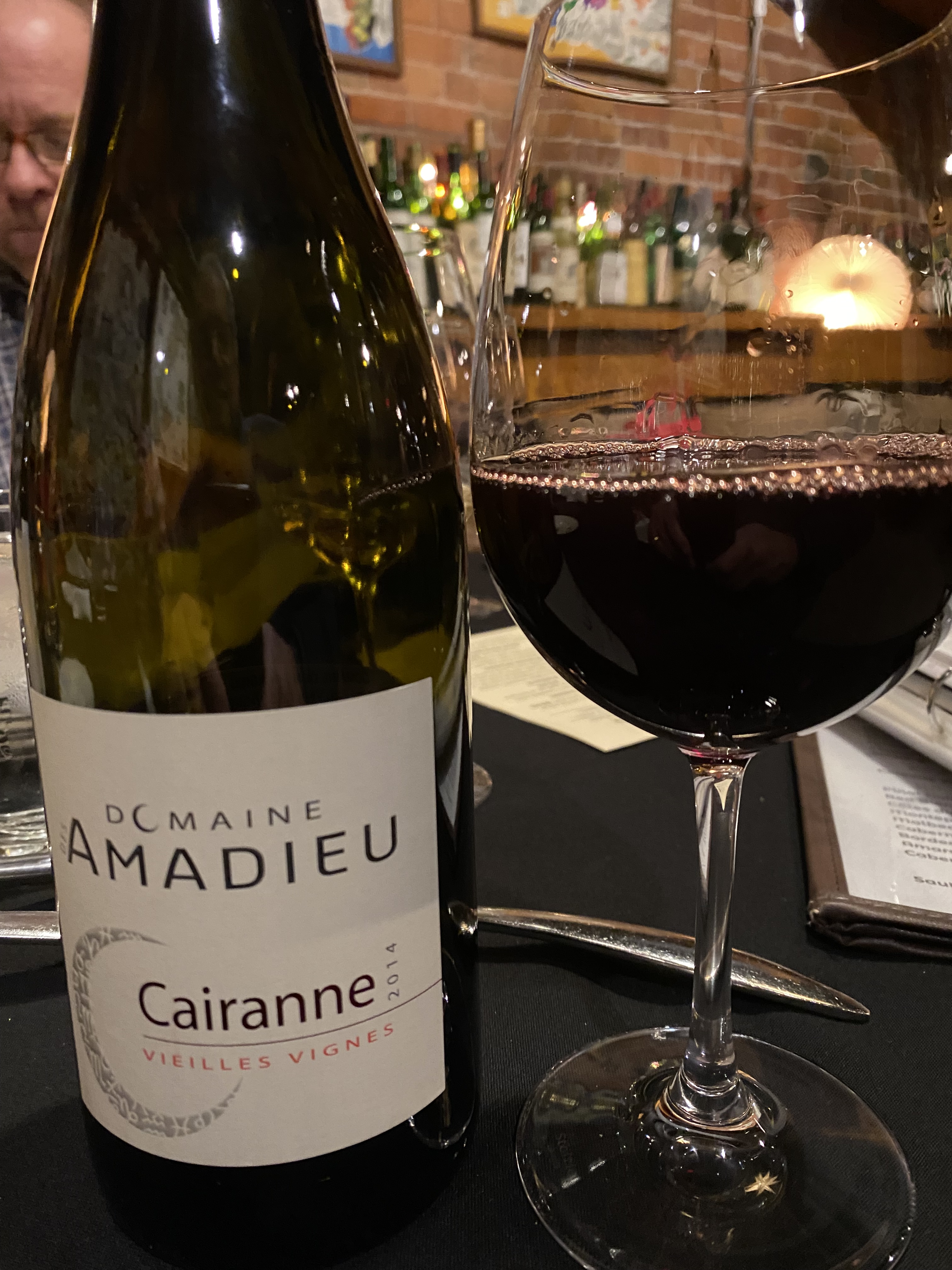
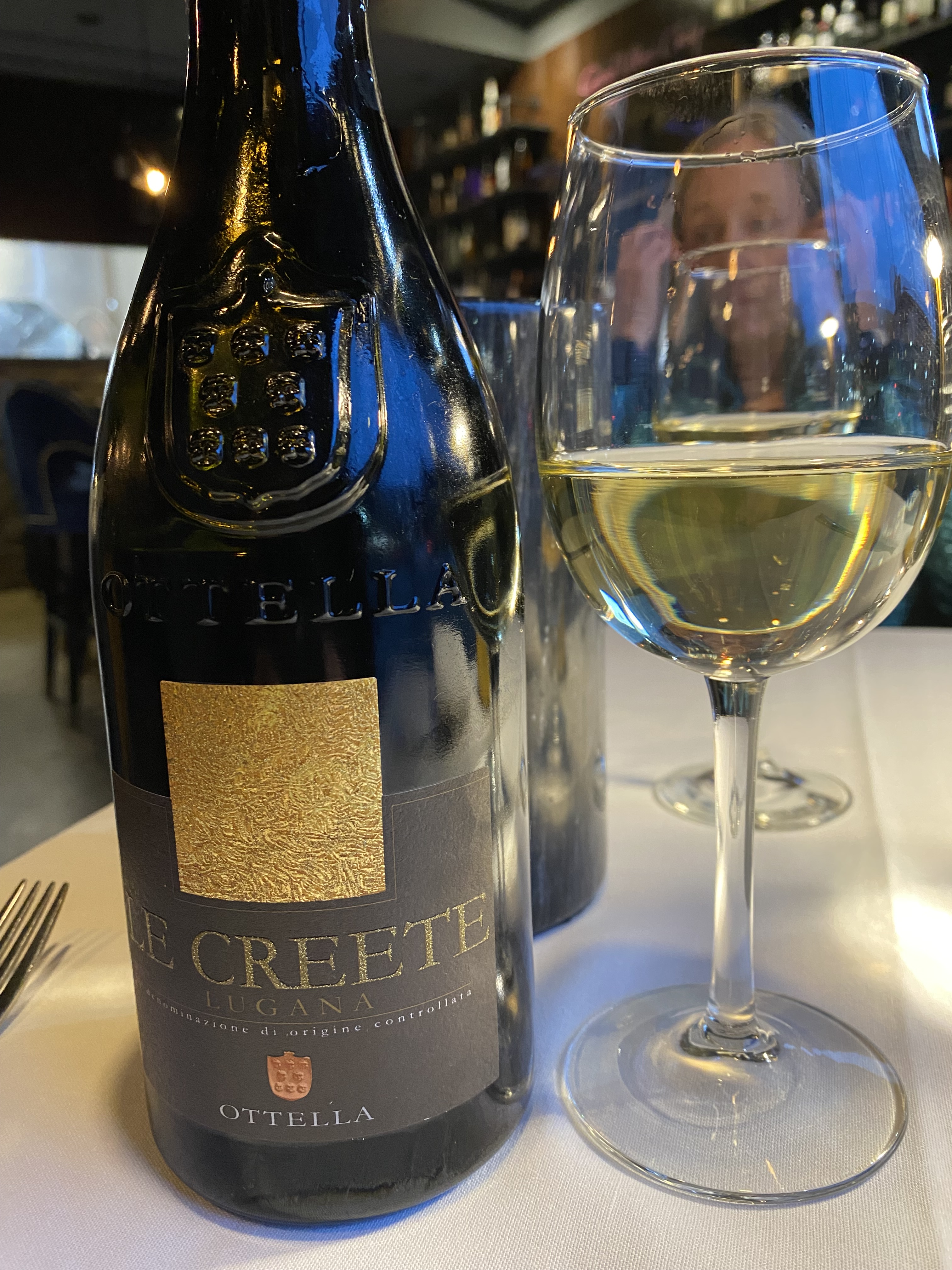
We started our evening off at Taste Kitchen, which is conveniently only several doors down on the same side of the block of the theater.  My Bride immediately got excited, because she saw the man who she claims makes the best Spanish Coffee drinks ever.  They also seated us in the adjacent room, that I thought was only used for parties, and we had a wonderful table for people watching as they strolled by, and many paused to peruse the menu that was posted as well.  My Bride was very pleased as she started off with Butternut Squash Soup with fried carrots, coconut milk, apple, red curry, and ginger.  While I had the Tuna Carpaccio with paté, chives, truffle oil, wasabi-soy aioli, and crostini.  For her entrée, my Bride had the Seared Diver Scallops with shitake, apple, fennel, arugula, miso-butternut squash purée, and coconut curry.  While I had the Sakura Pork Loin with Brussels sprouts, carrots, daikon, butternut squash polenta, and demi-glace.  We also had a bottle of Ottella Le Creete Lugana DOC 2022 from Azienda Agricola Otella.  Lugana is a white wine specific region that straddles Lombardy and Veneto but is considered part of Lombardy.  There are a couple of different designations for Lugano, but it seems that the wine has to be ninety percent of a locally known varietal known as Turbiana.  I have seen this wine listed as being Verdicchio, and I have seen it listed as Trebbiano di Lugano.  I have also seen where some that study the grapes scientifically have crossed off the possibility of Verdicchio, so I will call it Turbiana.  The Montresor family has been running Ottella for four generation, and it has been attested that the Montresor family was the only ones to produce Lugana in the province of Verona in 1905.  In 1964 the family began delineating the lands and they began working to get a DOC designation.  This wine is pure Turbiana (Trebbiano di Lugana) and from the vineyard owned by Le Creete, twelve hectares on the southern end of Lake Garda on limestone and clay soils.  The fruit is hand-harvested using small crates.  The majority of the fruit is pressed whole cluster and a small amount with light destemming.  Slow fermentation and then aging for about eight months on fine lees in Stainless-Steel tanks.  A soft yellow-golden wine that offers notes of pineapple, guava, lemons, and white florals.  On the palate tart tones of passion fruit, pineapple, lemon zest in a crisp, well-balanced wine that ends  with a good medium count of fruit and chalk (limestone).  

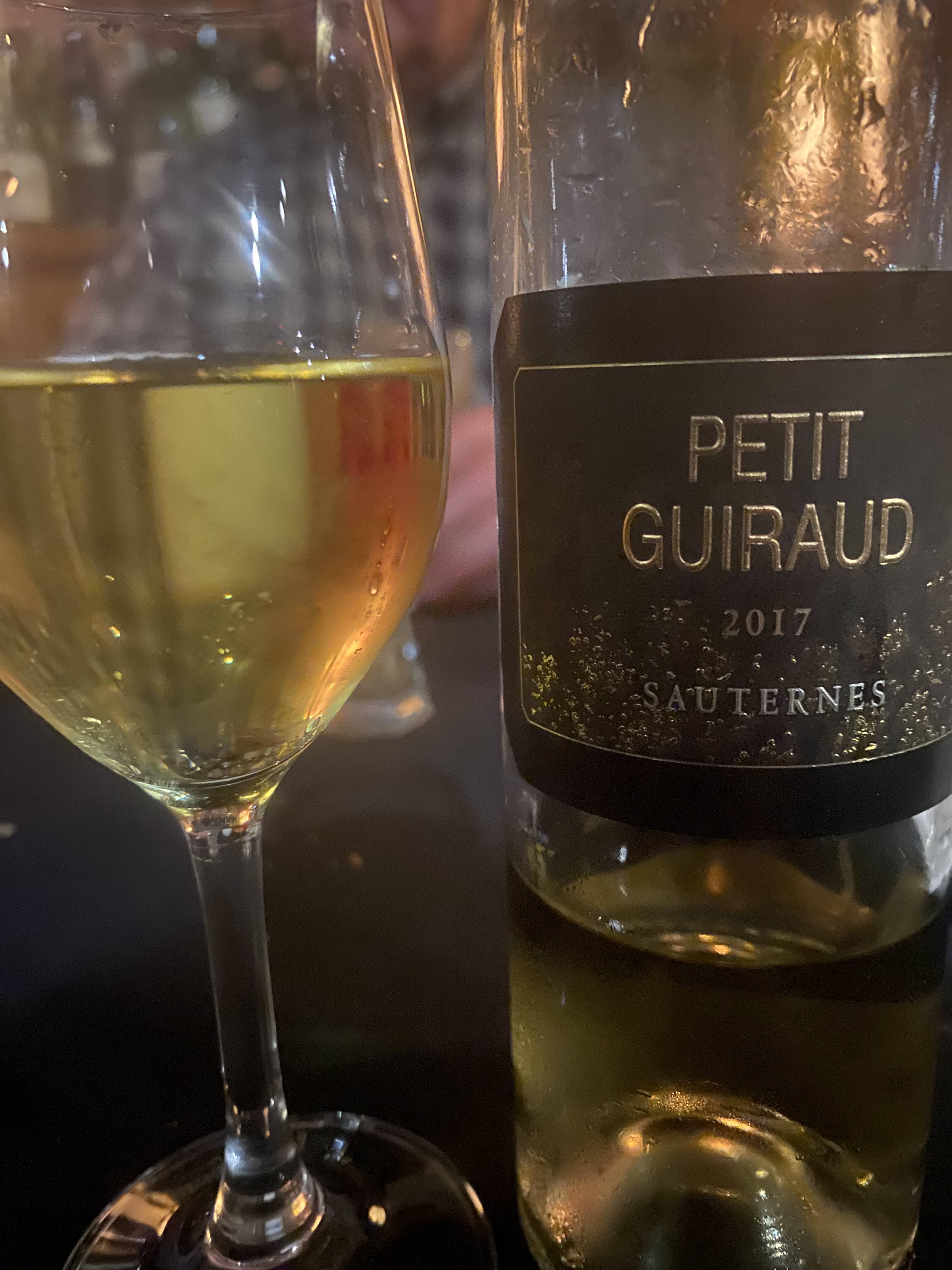
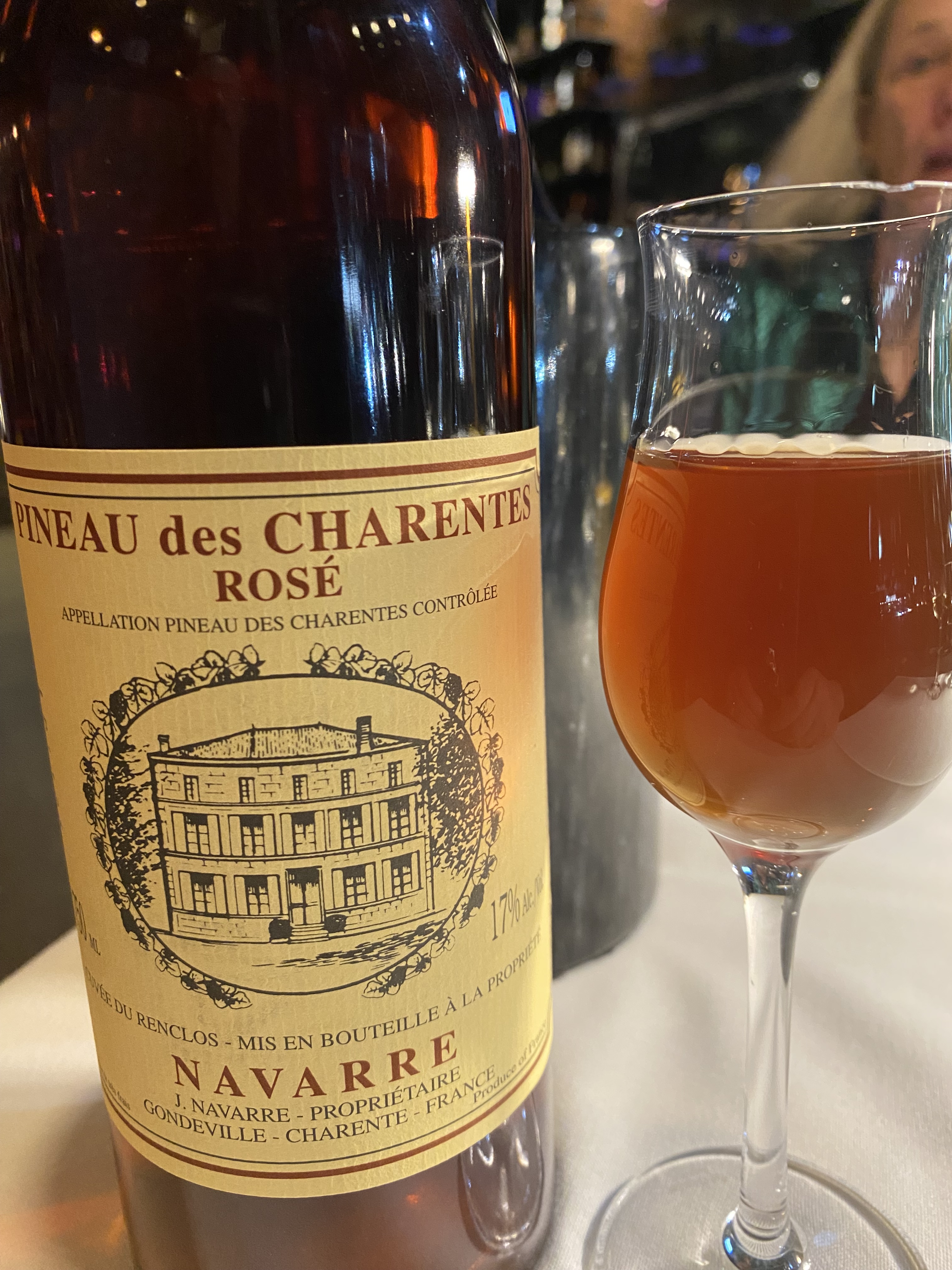
As the countdown for the show was getting closer, we decided to share a Coconut Rice Pudding with coconut-orange cake, toasted coconut, coconut sorbet, and pineapple-rum caramel.  It may sound excessively sweet, but it was actually very subtle and delightful.  She told the waiter that she wanted to make sure that the beverage manager made her Spanish Coffee, while I just had a coffee…and a glass of Vin de Liqueur by R. Navarre Pineau des Charentes Cuvee de Renclos Rosé NV.  Vin de Liqueur, also known in France as Mistelle, is a term for an alcoholic beverage produced by adding a high proof spirit, in this case Cognac, to an unfermented or slightly fermented fruit juice. It is made by adding the last year’s Cognac to fresh grape must of the current vintage, and last year’s Cognac must still be in a barrel.  Red and Rosé Pineau need only spend eight months in oak barrels and leave the winery after twelve months.  The Navarre estate, which is located entirely within the Grande Champagne district of Cognac was founded in 1811, and they are family owned.  They have eleven hectares, and one hectare is reserved exclusively for the production of Pineau des Charentes.  They have a 10hl Copper still to produce this special wine.  The AVA was established in 1945.  The grapes grown on the estate and used for this wine are: Merlot, Cabernet Franc, Cabernet Sauvignon, Ugni Blanc, Colombard, Folle Blanche, Jurancon Blanc, and Montils (aka Aucarot and Chalosse).  The amber colored wine offers notes of red cherries, apricots, and nuts.  On the palate there were tones of red fruits, toasted and honeyed nuts, and ending with a nice medium count finish of marzipan, spices, and terroir. 

Posted in Dining, Wine | Tagged , , , , , , , , , , , , , , , , , , , , , , , | Leave a comment

Fine Wine Source Club Selections – November 2024

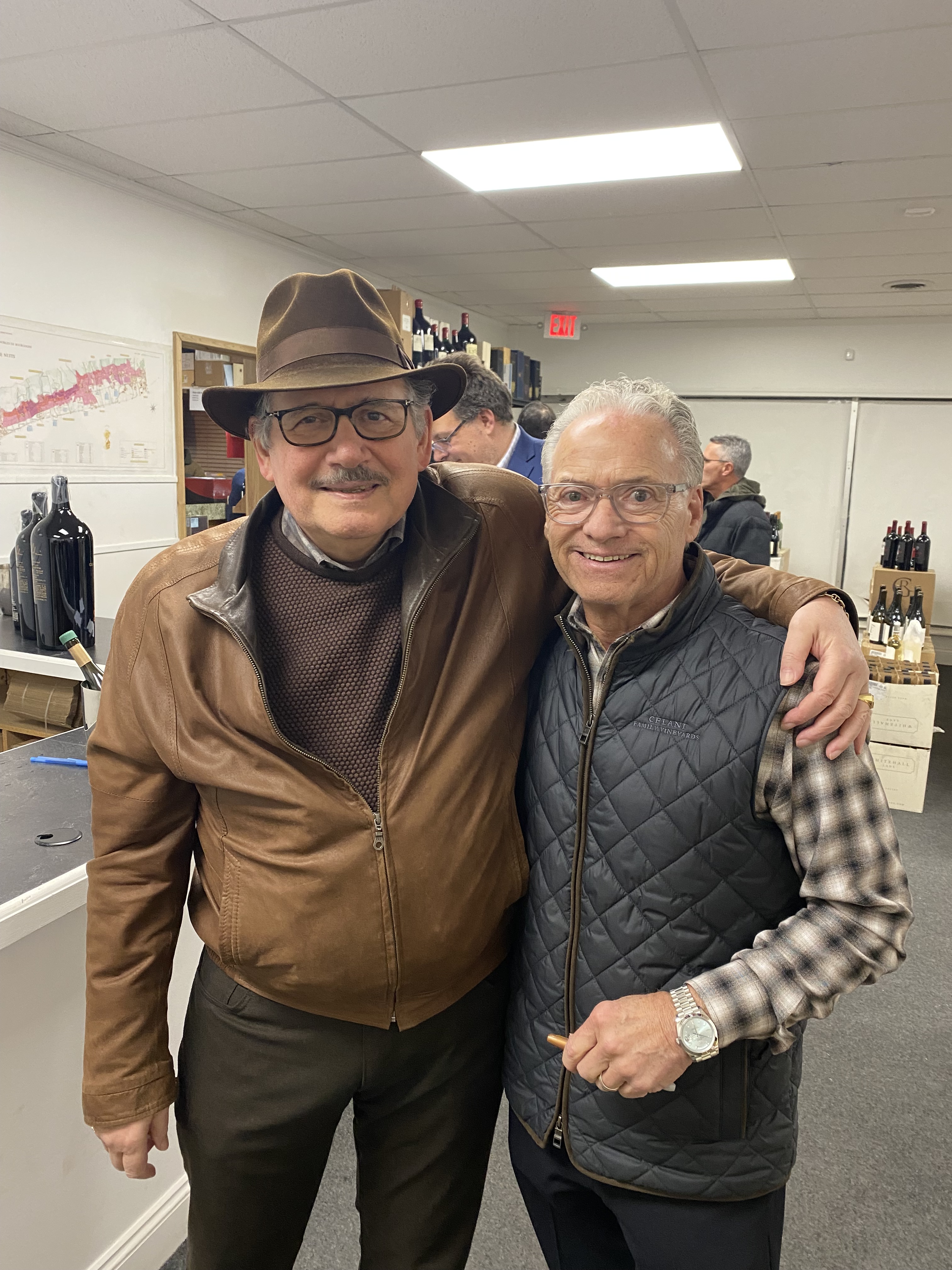
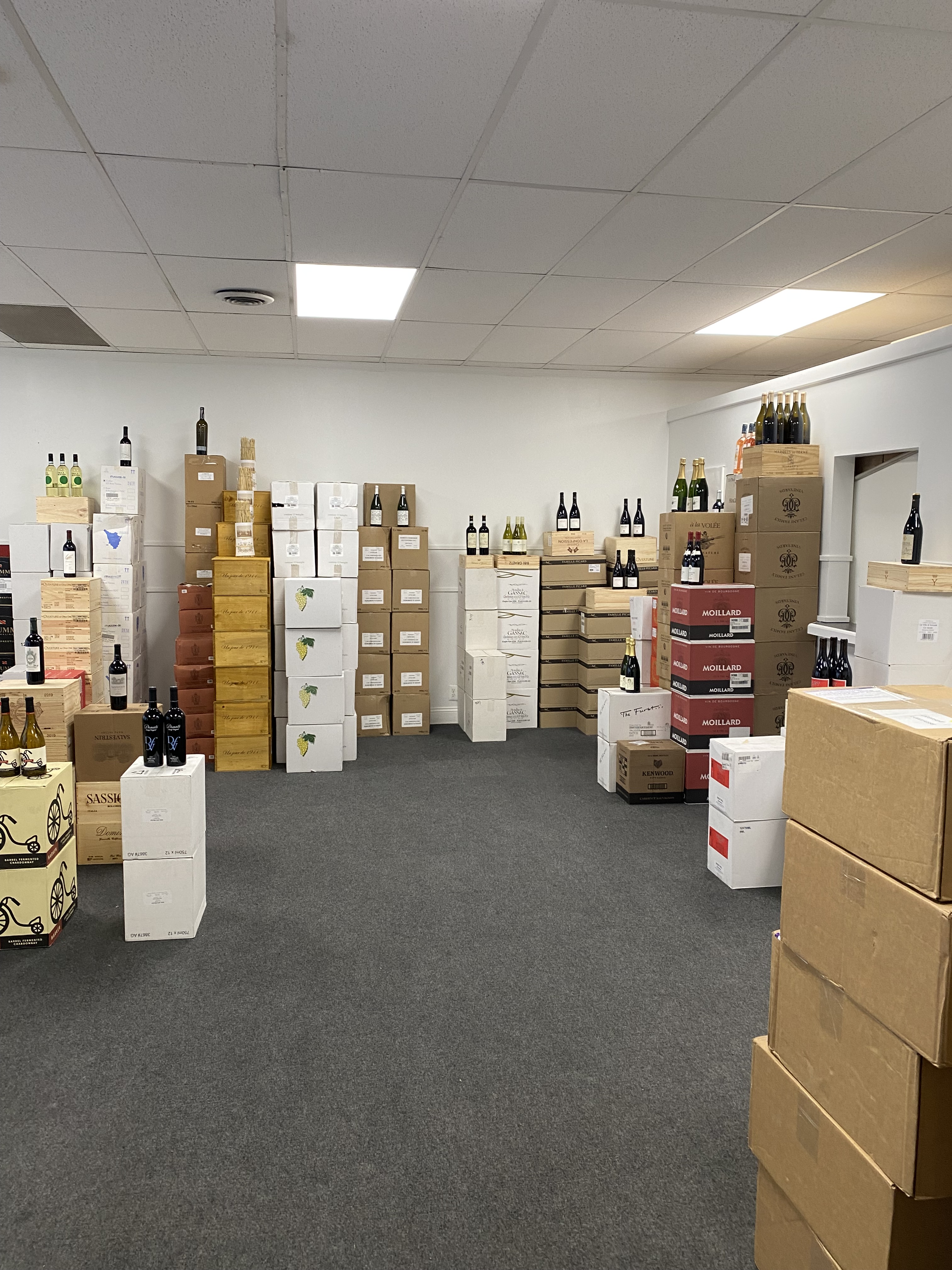
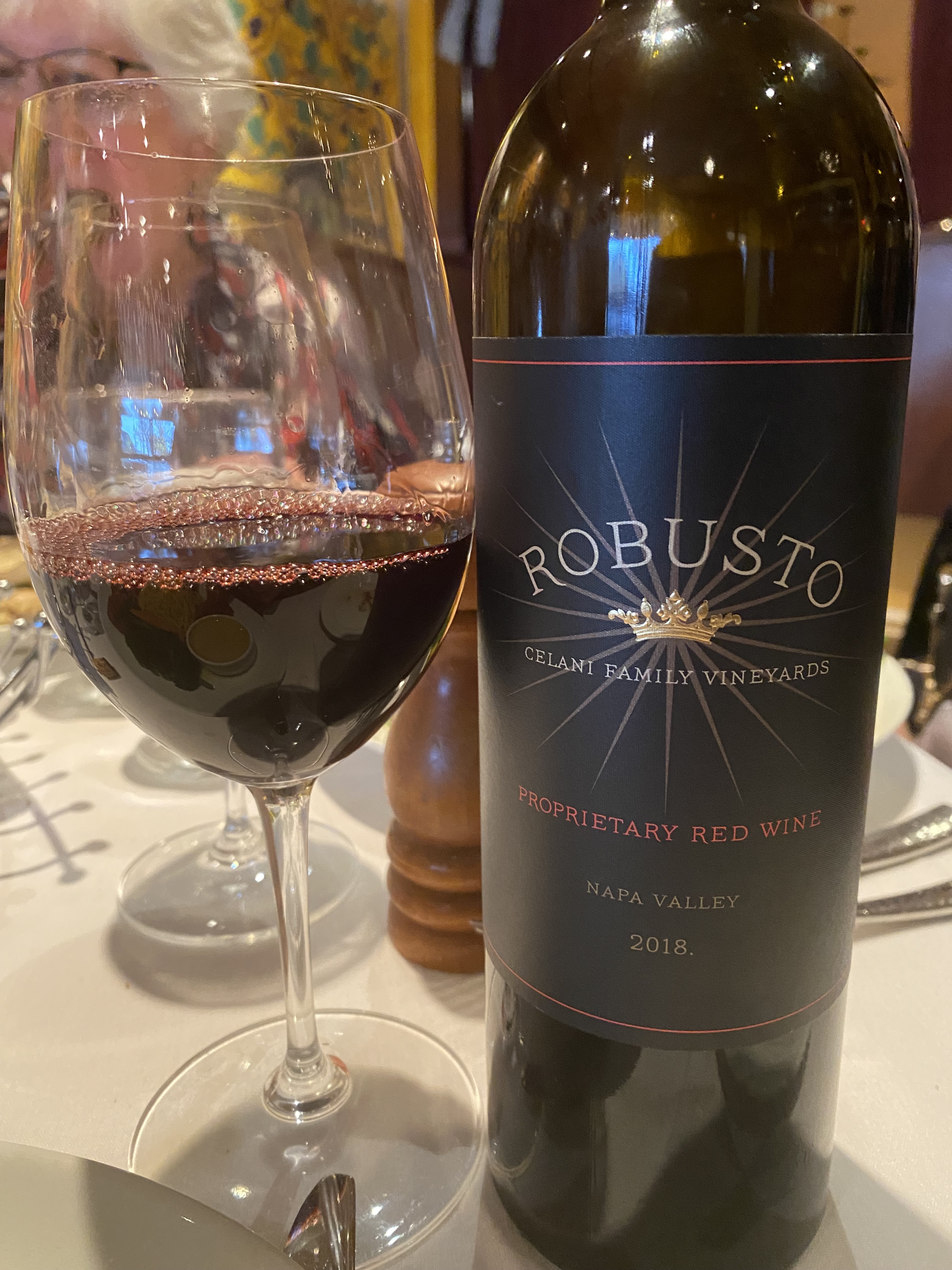
We were on our way to pick up the wine club selections from the Fine Wine Source in Livonia, Michigan.  We were also going to pick up two bottles of Rogers + Roberts Louer Family Cabernet Sauvignon Port Napa Valley NV for The Caller, as he was intrigued about this wine while I was describing it to him over our lunch at Ciao Amici.  While we were driving from the restaurant to the shop, The Caller called us and asked if we could pick up three bottles of Celani Family Vineyards Robusto Proprietary Red Blend Napa Valley, that we had just had with lunch.  So, now we were on a real mission.  I also was curious as to how the new room was progressing.   

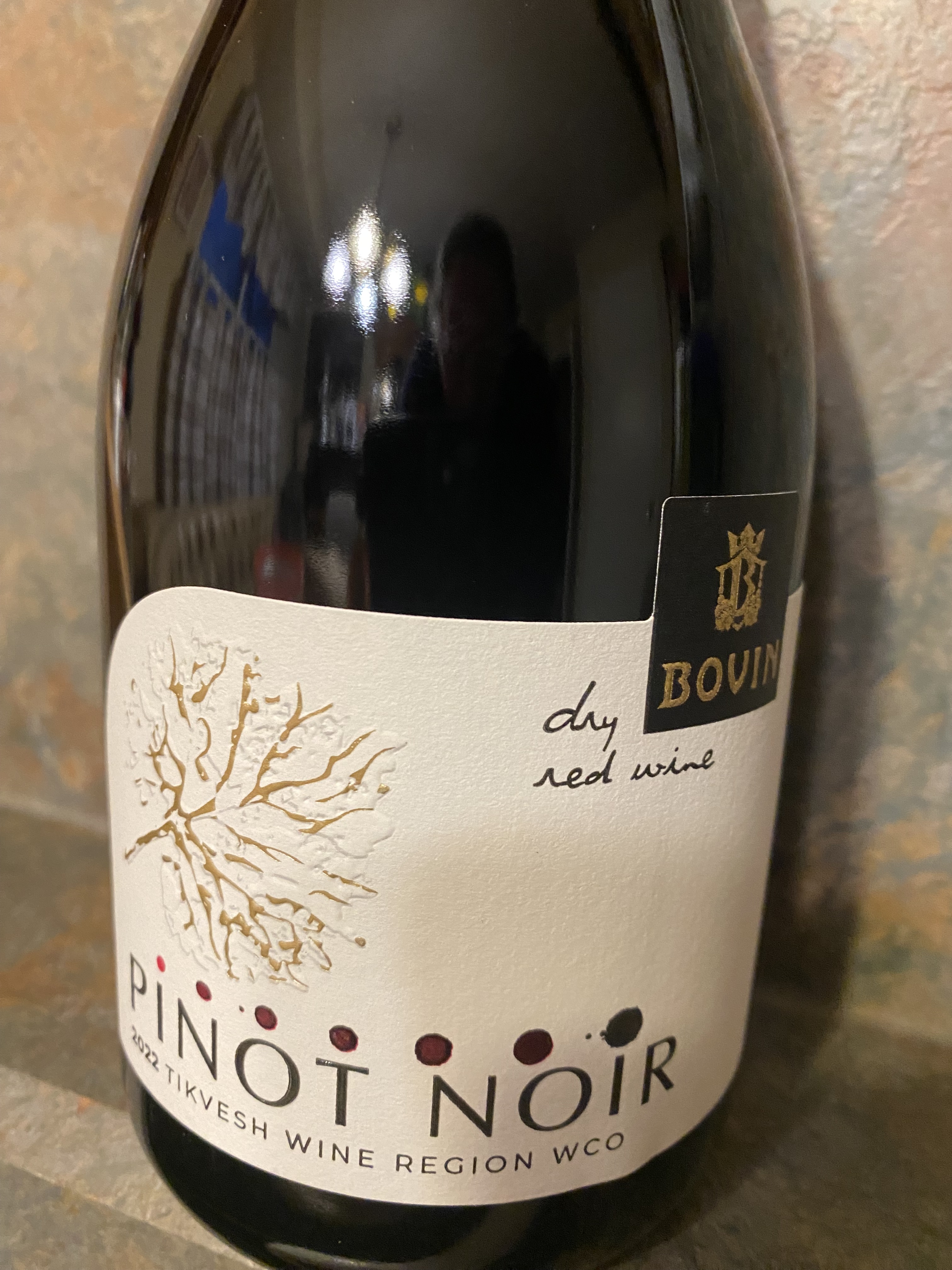
The first wine representing the Old World is Bovin Winery Pinot Noir Tikvesh Wine Region Macedonia 2022.  Macedonia is an area that has been in the crossroads of the region since the days of Alexander, and is interwoven with the history of Byzantine, Slavic, and Turkish influences.  The Tikvesh region has been recorded in the annals of man as being in wine production from at least 4th Century AD.  Bovin Winery is the first privately built winery in Macedonia and was established in 1998.  The Tikvesh Wine Region is at similar latitudes as Bordeaux in France, and the winery is in the center of the region.  This Pinot Noir is described as a dry red wine and offering notes of red berries, strawberries, violets and sous-bois.  On the palate  a dry, soft and fruity; rich with soft tannins. 

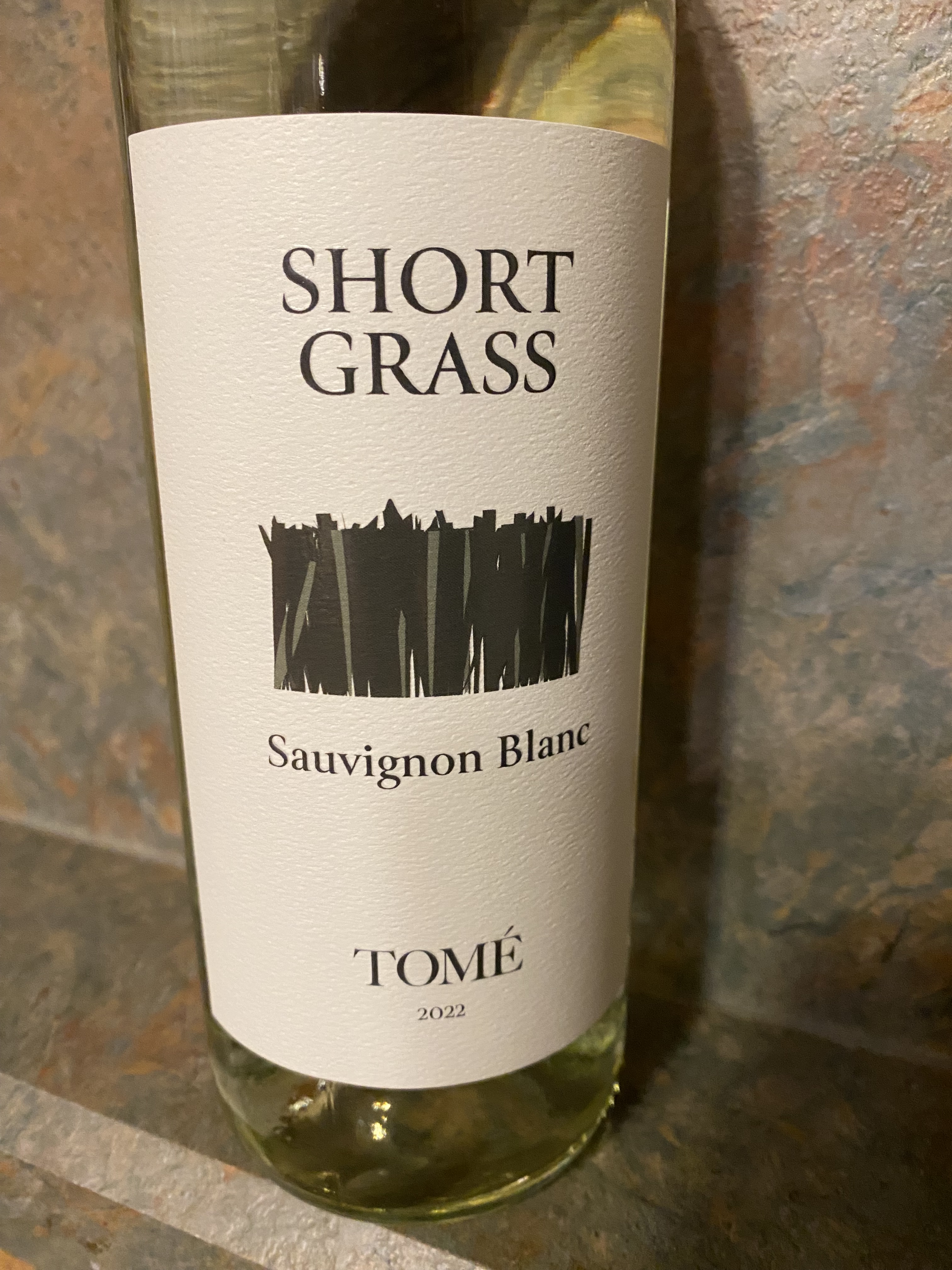
The wine representing the New World is Tomé  “Short Grass” Sauvignon Blanc Royal Slope AVA/Columbia Valley Washington State 2022.  Robert Tomé is the founder and CEO of Tomebrands. Robert was born in Toronto, Ontario, Canada; his father was an immigrant from Friuli Venezia Giulia home of some of his favorite vineyards, and his mother is a third-generation Canadian of Scottish descent, from where he learned to love golf. His earliest memories of wine are the wines made in his family’s garage by his father and uncles.  Years later he found himself working at a golf club, where he developed a passion for the game, as well as the hospitality industry, where he eventually received a full scholarship and then a degree in hospitality and tourism.  By the nineties he was working full time in the wine industry, and in 2004 he launched his own wine importing agency in Canada.  In 2017, he sold his interest in the agency and fulfilled his dream and created Tomé Group of Brands, making wines from Washington State and in Italy.  As with his other wines, they are named after golfing terms, and “short grass” is always a great position to be in.  This wine is pure Sauvignon Blanc and went through fermentation and aging in Stainless Steel tanks for an estimated three months; with six-thousand-cases produced.  The wine is described as pale yellow and offering notes of elevated citrus, tropical fruits, and .herbs.  On the palate the wine has tones of passion fruit, melon, ruby grapefruit, and ending with a fresh and crisp finish of minerality

Posted in Wine | Leave a comment

Catching Up with The Caller at Ciao Amici

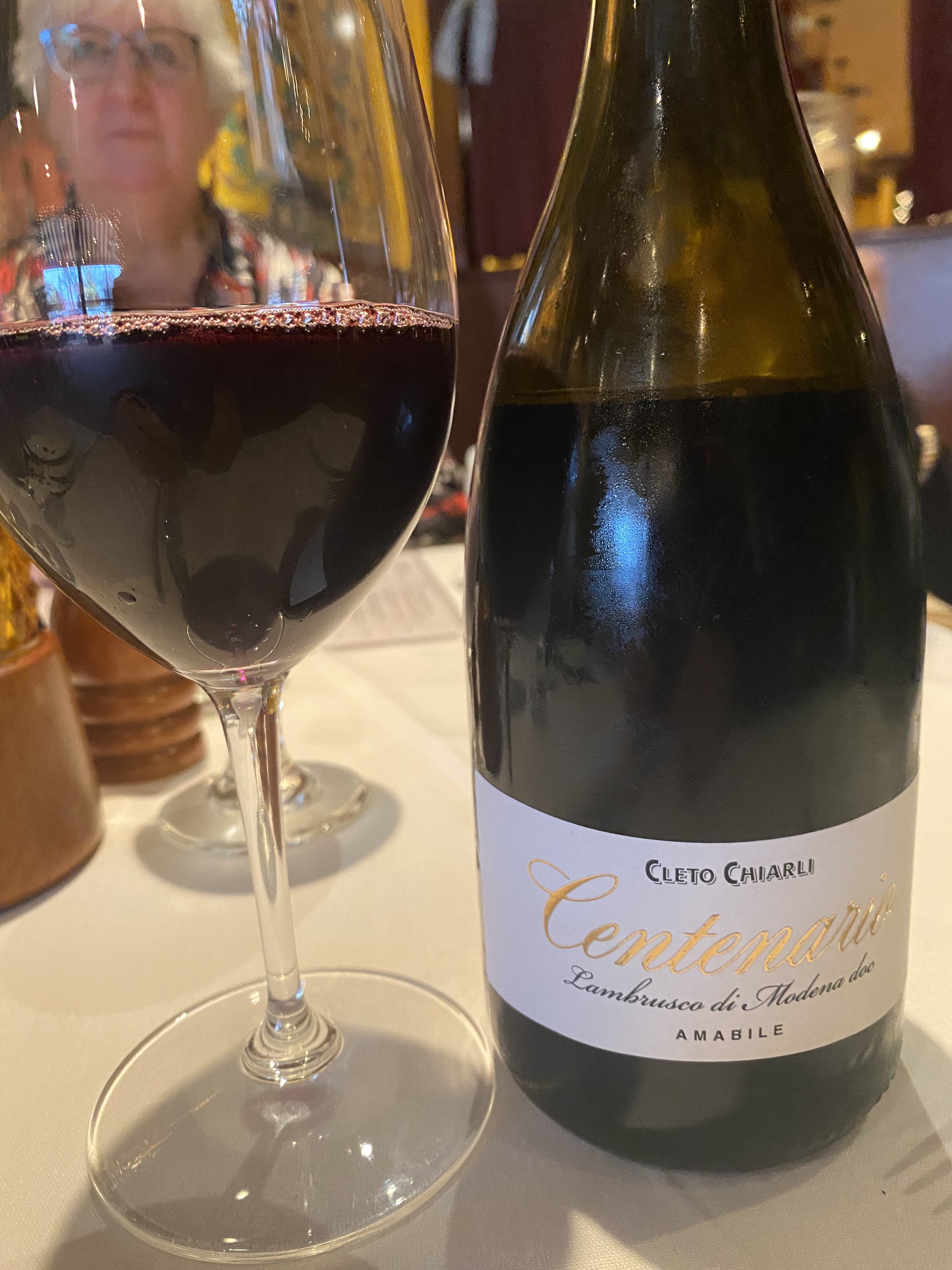
My Bride and I were meeting The Caller and his wife at Ciao Amici in Brighton, which is about the halfway point between our two houses.  We left early, and because of construction and traffic backups, because of the construction, we took the leisurely drive on the old stage coach road from Detroit to Lansing; and even with traffic lights, we probably made it there in the same amount of time.  While everyone else had a cocktail I had a glass of Cleto Chiarli Centenario Lambrusco di Modena DOC Amabile NV.  Cleto Chiarli Tenuta Agricole, the winery and company was founded in 1860 in Emilia-Romagna with over one hundred hectares of vineyards.  The label Cleto Chiarli was founded in 2000 with a modern facility and technology, while still honoring the traditions of the company.The wine is made from the Lambrusco grape and undergoes a thirty-six hour long maceration for Initial Fermentation followed by a Second Fermentation using a “cuvee close” method or “tank method” or Charmat Method; for bulk production.   A dark red wine with slight frothiness at the rim offered notes of fresh fruit.  On the palate this was a semi-sweet wine of raspberry and strawberry tones and a very short finish.  

There was an assortment of classic Italian dishes, but we all seemed to end up ordering from the dinner menu, which was fine.  The reason is that most of the plates ordered from the lunch menu were listed as appetizers, and the dinner portions just sounded better.  As I looked at the wine carte, a wine that my Bride and I order all the time was listed at a very reasonable price.  I took the liberty of ordering a bottle of Celani Family Vineyards Robusto Proprietary Red Wine Napa Valley 2018.    Tom Celani is lauded in the Detroit area for his largesse for charitable organizations that he helps in a grand manner.  He and his father ended up creating one of the largest Miller distribution companies in the United States along with other beers and wines.  Tom Celani fell in love with wines, first as a drinker and a collector and finally acquiring a Tuscan-style estate with seventeen acres of grapes and one-hundred-twenty olive trees in the foot hills of the Vaca Mountain range in Napa Valley.  The winery was established in 2005.  As the proprietor of the Celani Family Vineyards he has chosen to bottle wine without costs becoming a consideration, to him wine is about quality and not quantity.  This is truly a Proprietary Red Blend, as there is no information even on the trade notes, but the winery grows Cabernet Sauvignon, Merlot and Cabernet Franc and they are partial to new French Oak.   Though in talks with Tom at a couple of tastings, he told me that this vintage was pure Merlot.  When our waitress uncorked the wine, The Caller immediately made mention of the nose and he was all in on the wine.  This deep garnet wine offered notes of black plums, black cherries, and blackberries, along with notes of vanilla, tobacco, and chocolate.  On the palate, this is a rather full bodied wine for being affordable and the tones of the dark fruits, blended well with the softer tannins offering a fruit-forward, but not jammy wine that was easy to drink with the food, and ending with a good medium-count finish of fruit and spices.

For dessert, The Caller and his wife shared a Spumoni Bombe, while my Bride had a dish of raspberry sorbet.  I was decadent and hedonistic and had a glass of Dow’s 20-Year-Old Tawny Port NV.  Dow’s is a family-owned Port house with a history of over two hundred years.  Originally founded in 1798 by Bruno da Silva, a Portuguese wine merchant who moved to London, ended up with a Letter of Marque.  His grandson wanting to expand the business, merged with another Port house, Dow and Co.; the new company became Dow’s.  Since 1961, Dow’s has been owned by the Symington family, who have had historical ties with the Port Industry.  There are more than forty indigenous grapes allowed in a Port blend, and some have probably been lost to mankind over the years.  The five main ones are: Touriga Nacional, Touriga Franca, Tinta Roriz (Tempranillo), Tinta Barroca, and Tinta Cao.  Aged Tawny Port is a long and complex barrel-aging process, where older wines are replenished with younger wines; with considerable evaporation and concentration, and the skill of a Master Blender.  The original wine for a Twenty-year-old through evaporation is about 35% from the start.  A dark orange amber to brown amber wine offering notes of honeysuckle and butterscotch.  On the palate there were tones of red fruit, mellow tannins, tobacco, and spice, with butterscotch toying with the taste buds, and ending with some elegant dry tones and terroir (actually hard for me to put into words, but very enjoyable and elegant.

Posted in Dining, Wine | Tagged , , , | Leave a comment

“Lee” and Lindeman’s

After our dinner we walked over to the Michigan Theater to see a film called “Lee.” My Bride knew of this film, and this was her second “bio-pic” that she has enjoyed, the first was Reagan, and she not only saw it with me, but she went and saw it three other times with friends and relative.  I was afraid that this might have been a case of déjà vu, but the story is a bit more gripping.  The movie is about Lee Miller, who began as a model and “muse” during the years after World War I in Paris, she became a photographer after she realized that glamor only lasts for so long. She ended up in London and became a war photographer, and she was only one of four female photographers accredited as war correspondents.  She was the first to photograph the camps after their liberation and how the war took its toll on her, and the people she knew.  She also took a famous photograph of herself in Adolf Hitler’s bathtub in Berlin, before going back to London.   She would have probably sat on the photos, but her publishers at Vogue found a way.

We had been to the sister theater the Senate, which is just around the corner, but this is truly a Grande Dame for cinema viewing.  Originally built and owned; then his heirs leased both theaters to the Butterfield Theatre chain.  Now they are managed by the non-profit Marquee Arts and they are maintaining the tradition of offering vaudeville, independent and commercial cinema, touring productions, and live concerts.  Audiences have been entertained by the likes of Jack Benny, Bing Crosby, Paul Robeson, and Ethel Barrymore.  I would say that it is probably still the finest theater in Ann Arbor.  I still would have liked to have seen the film from the balcony, but it was cordoned off, so we sat in what I would term as the “loge” of the auditorium, in the front row of the section with a very wide aisle, so that even if someone insisted on wearing a large hat, it would not have hindered the view.   The loge area was surrounded by beautiful wooden paneled walls, the seats were a mix of wooden arms and back trim, with blue seat and back upholstery with gold M in a crest embroidered on each seat.

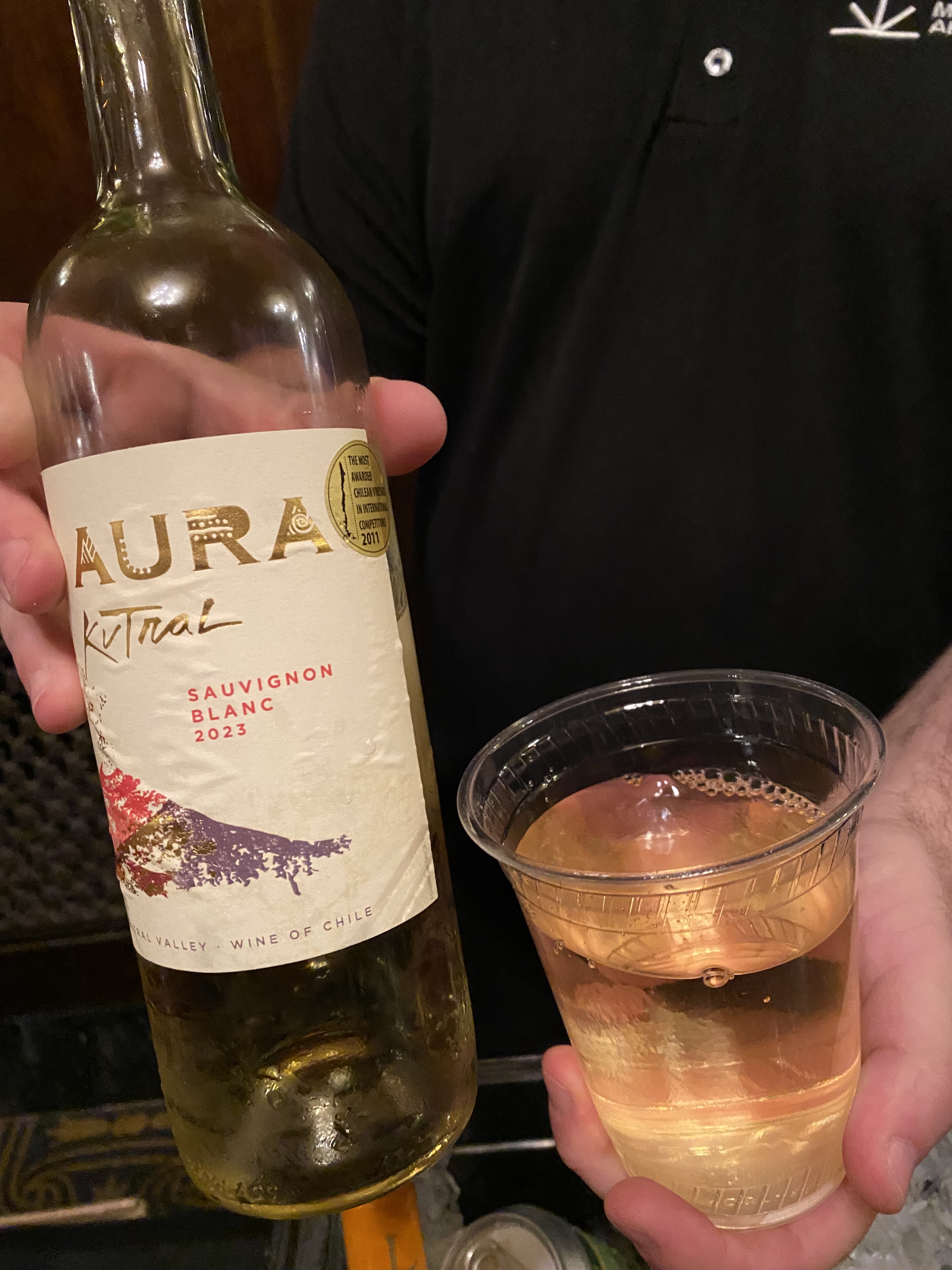
It was a tough internal debate, since we had just had a wonderful dinner, so we all refrained from having some real hot-buttered theater popcorn, and it really had a great aroma.  We could hear the Barton Theater Pipe organ already being played and making the guests feel at home.  There was also a small collection of libations behind the candy counter and I knew that our throats perchance might get a bit parched, so we each had a glass of (Dr. Henry John) Lindeman’s Bin 95 Sauvignon Blanc South Eastern Australia 2023.  Lindeman’s is a large Australian wine producer based in Hunter Valley, encompassing all types of wines.  Dr. Henty Lindeman was born in England, fell in love with wine in Europe and settled in Australia to make wine.  In 1843 he planted vines on his three-hundred-thirty-hectare property in Hunter Valley.  In 1850, an arsonist burned down his winery and cellar, and he was forced to be a doctor again to regain his funds, and the first Lindeman wines were exported to England in 1858.  The company has grown and added several vineyards in Australia.  The Bin Series is their largest and most recognizable range at a reasonable price.  Lindeman’s is now part of Treasury Wine Estates and their extensive range of wine brands.  I was not anticipating anything but a bulk wine, but it was fine for drinking in the theater watching the movie.  A soft-yellow golden wine that offered notes of grass, tropical fruit, and asparagus.  On the palate, it was a crisp white wine with tones of grass and grapefruit, with a very short finish that was crisp and clean. 

Posted in Uncategorized, Wine | Tagged , , , , | 4 Comments

An Albarin, a Chablis, and a Sherry

In case you never noticed my Bride can be impulsive, or as Micheleen Flynn would say “impetuous.” While we were making our reservations for seeing Bernadette Peters, she saw a movie poster for a film, that I had not heard of, but she had, she immediately called one of her girlfriends, and Ann Arbor is a halfway point for her and us, and she agreed to meet us for dinner and for a movie.  We had enough time to buy movie tickets and then we went back to Taste Kitchen to make a second dinner reservation, but this time for three.  

We basically all arrived at the same parking structure at the same time and walked around a bit, and then went to the restaurants.  The ladies started the meal with Butternut Squash Soup with a fried carrot, coconut milk, apple, red curry, and ginger.  I went with Smoked Salmon Rillettes with shallot, dill, aioli, trout roe, and crostini.  We started with Vinedos y Bodega Pardevalles Estate Albarin Blanco Leon 2023.  Leon is an historical wine producing area at the intersection of two major pilgrim routes to Santiago.  The district Leon, until 2019 was known as Tierra de Leon and is a recently new DO status; though viticulture has been recorded there, going back to the Tenth Century.  The area did suffer from phylloxera in the late 1800s, and slowly recovered, but during the Franco dictatorship, the area was concerned with quantity over quality.  Pardevalles Estate was founded in 1949 by Rafael Alonso, who came from a long heritage of grape farmers and winemakers, and his children and his grandchildren are now operating the estate.  The estate has thirty-eight-hectares planted to Prieto Picudo and Albarin Blanco on quaternary soils with a large number of rounded stones, which absorb the heat of the day, and keeping the soil warm during the nightfall.  The wines are stored in a subterranean cave that has been used for the area for the last three hundred years, and the estate has 125 barrels there made of French and American Oak. This wine is pure Albarin Blanco, mechanically harvested.  It undergoes maceration for two days, and then resting another two days, before Initial Fermentation in Stainless Steel tanks.  The straw-yellow wine offers notes of white stone fruits, citrus, white florals, and herbs.  On the palate a well-balance wine with good acidity and tones of jammy tropical fruits and florals; ending with a short crisp finish of terroir.  

The ladies were having a good time and they both had the Seared Diver Scallops with Shiitake, apple, fennel, arugula, Miso-butternut Squash Purée, and coconut curry.  I always have to be the odd one, and I had the Halibut with a vegetable Escabeche, marinated mussels, sunchoke purée, and chive oil.  We then had Marcel et Blanche Fevre-Fevre Chablis 2022.  This fifty-hectare estate is considered by some to be a benchmark independent winery.  Gilles Fevre and his wife Nathalie, have been recently joined by their daughter Julie to become a fourth-generation winery.  This is a proper family-owned domaine and not part of one of the large cooperatives.  Thirty-three-hectares of the property is Village Chablis all on the classic Kimmeridgian limestone that the area is noted for; and no oak is used.  This soft golden-yellow wine offered notes of citrus, stone fruit, tree fruit, sous-bois, spices, smoke, and minerals.  On the palate, a very crisp wine with ample layers and tones of stone fruit, tree fruit, citrus and citrus zests, followed by tinges of earth, honey, mouth-watering salinity then finally ends with a good medium-count finish of a mineral-rich terroir.

Then we settled for a three-way sharing of “Pawpaw Crème Brulee” with charred lemon curd and Maple Tuilé.   As you can figure out, the Gold-dust Twins had the legendary Spanish Coffees that my Bride is such a fan of.  I enjoyed a glass of El Maestro Sierra Jerez 1830 Pedro Ximenez Jerez de la Frontera NV.  El Maestro Sierra is known for having one of the oldest soleras in the region, getting close to one-hundred-years.  The bodega was established in 1830 by José Antonio Sierra, a master cooper for some of the other Sherry houses.  For years, the production was sold to the larger Sherry houses, as they had sold their vineyards in the 1930s and 1940s; and then in 1992 when they had an inaugural bottling for export under their own brand.  To this day, they still use an artisanal approach, and they even maintain their own in-house cooper.  One of the key assets of the bodega is that it sits on the top of a bluff with full exposure to the winds from the Atlantic Ocean, which promotes a vigorous flor growth, flor is a crucial part of biological ageing of Sherry wines, and flor is a special blanket of yeast that lives on the top of a cask of sherry that feeds off of oxygen, basically a natural vacuum seal for the wine beneath it; which allows the wine to age almost forever in the solera system.  Aged Sherry has a unique taste all its own, and this dark-amber colored wine offered notes of prunes, candied orange, candied cherry, nougat, and sweet spices.  On the palate this slightly viscous wine offered tones of raisins, orange marmalade with a long-count finish of rich dried fruits and chocolate.               

Posted in Dining, Wine | Tagged , , , , , , , , , , , , , , , , | Leave a comment

Bernadette Peters and Vin Santo

My Bride needs to gets plenty of support and praise from me, because I am, and will always be a pain in the arse about certain things.  While I know that she carries a torch for Jimmy Stewart and for Sam Elliot, she has put up with my crush for Sophia Loren and for Bernadette Peters.  Sophia came understandably from the years of going to “art films” with my parents as a child, and Sophia was a star, already by then; and for my 62nd birthday she took me to see a live session with Sophia, after a dinner downtown.  Now for Bernadette, in another life, I was sitting at a private table for two with my elbow that could rest on the main theater stage at the Riviera Casino and Hotel, to see the star Rich Little (from Windsor, Ontario, Canada) and his opening act was Bernadette, and there was a small set of stairs from the stage to the theater floor, and she came down those steps and leaned over my table and was singing only to me (at least that is how it felt at the moment); the second crush began that moment.  All of this is to set the stage, because we were having dinner at a restaurant that had changed hands, and while my Bride was away, I was checking on social media, and there was an ad for a one night only performance in Ann Arbor with Bernadette Peters.  I guess I have been a good boy, because we tried calling to get tickets, because the online process was rather convoluted, and we were told that if we got to the theater, before they closed that evening, we should be able to get the tickets.  It also gave us the reason to go have a wonderful after dinner drink that was not available, where we were at.

So, Nick and Nora, left after dinner and drove to Ann Arbor to go to the Michigan Theater, and our date night was getting more interesting and fun.  The Michigan Theater was designed by Detroit architect, Maurice Finkel, originally designed to show silent movies in 1928.  It has a fully operational stage, orchestra pit and a Barton Theater Pipe organ and can comfortably seat seventeen-hundred ticket holders.  It also makes me smile, as it has a sweeping staircase for seating in the balcony, shades of my youth.  The organ was built in 1927 and is almost played daily, preceding most events that are held there.  The theater was restored in 1979 and has been named an Outstanding Historic Theater in North America by the League of Historic Theaters.  And they have a movie marquee like I remember, and it was a pleasure watching one of the employees changing the wording, one letter at a time.  The presentation of films is very eclectic, from silents, to nights of classic cartoons, classic films, and even modern films and documentaries.  The theater also has a small selection of drinks, including wines, and for some of you who can appreciate it, a real movie-house popcorn maker, as compared to the pre-popped popcorn that is heated up, that is found in most cineplexes these days.

Now that we had a future date, we had to book dinner, and just about seven doors down is Taste Kitchen, which we found one night by accident, and gets my Bride glowing over the thought of sitting at the bar and having one of their versions of a Spanish Coffee, she didn’t even think of having anything else.  The restaurant has a nicely curated wine carte, including some after-dinner selections.  I think that as I have mellowed and matured (?) I have developed more of an appreciation for this type of wine as well.  So, while Nora had her hot drink, Nick had a chilled glass of Badia a Coltibuono Vin Santo del Chianti Classico DOC 2014.  Vin Santo (Holy Wine) has been made since the Middle Ages, and was recognized by the DOC in 1997, prior it was Vini da Tavola.  Badia a Coltibuono is a wine estate located in the (Gaiole) Chianti Classico zone.  It was founded in 1051 by an offshoot of the Benedictine order, however under Napoleonic rule, the monks were forced to leave in 1810, and by a lottery it was purchased by Guido Giuntini and is still managed by his direct descendants the Stucchi Prinetti family.  The estate is seventy-four-hectares of organically farmed vineyards on clay and limestone soil.  The wine is made from a blend of Trebbiano (Ugni Blanc) and Malvasia, hand harvested and then carefully selected and left to dry on straw mats in well-ventilated rooms during the winter, up to about six months.  The dried grapes are then pressed and the must is placed in small oak casks and they use indigenous yeasts for fermentation; after fermentation is complete the casks are sealed and placed in the attic for seven years of aging.  A deep amber colored wine that offers notes of honey, dried fruits, and toasted almonds.  On the palate a very rich and sweet wine, totally balanced by bright acidity, with tones of apricots, orange blossoms, dried figs; followed by caramel, nuts, raisins and ending with a very long count of honey and cream.  

Posted in Wine | Tagged , , , , , , , , | 2 Comments

Some Bargain Odds and Ends

After the Chanel themed wine tasting, there was a bit of a surprise going on at my local wine shop The Fine Wine Source in Livonia, Michigan.  The wholesaler that arranged for the Chanel tasting, brought some of his odds and ends from his warehouse, we got there late, and people were taking advantage of the bargains, and besides buying wines from the tasting, we also picked up some of these as well, in fact, some of them were being poured, so that helped as well. 

The first wine that was poured for us was Chateau Giscours Margaux 2011, in half-bottles, and the wine is a Troisiemes Crus (Third Growths).  A little side note is that Margaux is probably my favorite commune in the Medoc and the wines from there are the most easily to encounter; and there are twenty-one Grands Crus Classes wine from this one commune.  Over the years it has been described as “an iron fist in a velvet glove.” Chateau Giscours dates to 1552, when Pierre de Lhomme bought a house called Guyscoutz, enlarged the property and planted the first vines.  The vineyard is one of the largest on the Left Bank with 165 hectares, of which 102 hectares is in the Margaux appellation.  The wine is a blend of seventy-five percent Cabernet Sauvignon, twenty percent Merlot, and five percent Petit Verdot.  The fruit is manually and optically scanned, and Initial Fermentation, and Maceration occurs in both Concrete and Stainless-Steel vats for a period of thirty-five days.  Then the wine is aged for seventeen months in French Oak, of which half is new barrels.  The dark ruby-red wine offers notes of black cherry, blueberry, currants, and traces of cocoa.  On the palate, this medium-bodied wine offered tones of black fruits, cedar, chocolate, well-balanced with silky and velvety tannins; it ends with a good medium-count finish of fruit and cedar.  

2003

Another wine that was poured was Zenato Amarone della Valpolicella DOCG 2003.  Zenato is an important producer in the Veneto, with estates in Lugana and Valpolicella.  The Amarone wine is grown and made at their Costalunga estate at Sant’Ambrogio di Valpolicella.  On the estate they grow Corvina, Rondinella, Oseleta, and Croatina and this wine is eighty percent Corvina and twenty percent Rondinella; and I guess a wink and a nod of Oseleta and Croatina.  After harvest, the grapes are dried for three to four months, then crush in January and then aged for thirty-six months in Slovenian Oak barrels.  This deep ruby-red wine offered notes of black cherry, figs, plums, cassis, florals, cinnamon, and almonds.  On the palate this full bodied-wine had abundant tones of black ripe fruit, some strawberry jam, Christmas spices, grippy tannins, high acidity, with an ending of a good medium-count of ripe fruit, licorice, and a touch of bitter almonds and chestnuts.

The other wines that we didn’t taste, but we added to our purchases were kind of a hodgepodge of interesting wines.  I anticipate that I will be writing about these wines in the next couple of years and I look forward to the challenge.  Chateau Doisy-Vedrines Grand Cru Classe Sauternes 2006.  Chateau Poitevin Medoc Cru Bourgeois 2005.  Altesino Quarto d’Altesi Toscana IGT 1997.   Coudoulet de Beaucastel Cotes du Rhone 2002.  Chateau D’Issan Grand Cru Classe Margaux 2012. Chateau Recougne Bordeaux Superieur 1998. Chateau La Canorgue Cotes du Luberon 2005.      

Posted in Uncategorized | Leave a comment

Chanel and Chateau Rauzen-Segla

The wine tasting was still proceeding at The Fine Wine Source in Livonia, Michigan and Juliette Allegre, the Brand Ambassador for the Chanel Wine Group was doing a wonderful job.  Chanel is a luxury fashion house founded in 1910 by “Coco” Chanel in Paris.  It is privately owned by French brothers, Alain and Gerard Wertheimer, through the holding company Chanel Limited, established in 2018 and based in London.  It goes to reason that they would venture into the wine industry.

One of the most esteemed vineyards on the Left Bank of Bordeaux is Chateau Rauzen-Segla.  The chateau was founded under the name Domaine de Rauzan in 1661 by Pierre Desmezures, an important figure in Bordeauq’s history, as back then he also owned Chateau Margaux and Chateau Latour. During the history of the property, it came under the ownership of the Baroness of Segla, Catherin de Rauzan, who named it Rauzan-Segla for herself.  They estate has been famous almost from the beginning and in the Classification of the Medoc of 1855, it earned the title of Deuxiemes Grand Cru Classe (Second Growth) following Chateau Mouton-Rothschild, which since has been elevated to Premiers Cru, so now the estate leads the grouping.  In 1994, it was purchased by Chanel, and the wineries are under the guidance of Nicolas Audebert.  We started with Chateau Rauzan-Segla “Segla” Margaux 2015, their second label.  The soils are clay gravels on a Quaternary River terrace with areas of deeper fine gravel.  The wine is a blend of fifty-five percent Cabernet Sauvignon, forty-three percent Merlot, one percent Petit Verdot and one percent Cabernet Franc.  The wine is aged for fifteen months in French Oak, of which twenty-five percent is new barrels.  The ruby-red wine offered notes of blueberry, blackberry, a hint of licorice, and oak.  On the palate a medium-bodied wine with tones of black fruit, cassis, cedar, tobacco, and velvety tannins, well-balanced and ending with a medium-count finish of fruit and terroir.

We then had our first wine from a magnum pour of Chateau Rauzan-Segla Margaux 2018.  The estate is seventy-hectares, with sixty-two percent planted to Cabernet Sauvignon, thirty-six percent planted with Merlot and a small amount devoted to Cabernet Franc and Petit Verdot.  Since being acquired by Chanel, machine harvesting has been eliminated and are now classified as organic.  This wine is a blend of fifty-six percent Cabernet Sauvignon, forty percent Merlot, two percent Cabernet Sauvignon, and two percent Petit Verdot.  Individual parcels are vinified, into Stainless Steel vats using gravity flow.  This wine was aged for eighteen months in French Oak, of which sixty-five percent was new barrels.  A very deep-dense garnet colored wine that offered notes of black cherry, strawberries, violets, sous-bois, tobacco, and smoke.  On the palate this big wine leads with tones of black cherry, plums, blend harmoniously with velvety tannins and ending with a nice long-count finish of fruit and terroir.

We finished off the Chanel wine tasting with Chateau Rauzan-Segla Margaux 2020.  Another major change since Chanel bought the property was that the large tanks were replaced by smaller capacity Stainless Steel vats that matched the number of parcels in the vineyards.  The wine is a blend of sixty percent Cabernet Sauvignon, thirty-six percent Merlot, three percent Petit Verdot, and one percent Cabernet Franc.  Initial Fermentation and Malolactic Fermentation are done in the vats.  The wine is then aged for eighteen months in French Oak, of which sixty percent is with new barrels.  A very deep inky-garnet colored wine that offered notes of black cherry, currants, violets, cigar box and tobacco, and spices.  On the palate this full-bodied wine offered tones of dark and black fruits, cinnamon, espresso, and dark cocoa, blend perfectly and balance with velvety tannins and ending with a nice long finish of fruit, cocoa, and terroir.    

Posted in Wine | Tagged , , , , , , , , | Leave a comment

Chanel and Chateau Canon

In the cosmic world there is usually a normal schedule in life for wine tastings at The Fine Wine Source, but I received an invitation for a Friday afternoon tasting featuring two estates from France under the Chanel umbrella.  The tasting was being led by Juliette Allegre the Brand Ambassador for the Chanel Wine Group.  Juliette had an interesting route from the Languedoc to Bordeaux and now to New York City.  Gabrielle Bonheur “Coco” Chanel was the famed French designer of post-World War I, who created a new style in couture clothing, jewelry, handbags, and fragrance, not to mention her signature monogram logo.  She will always be endeared to wine lovers with her famous quote “I only drink Champagne on two occasions, when I am in love, and when I am not.”  In 1994 the Chanel organization bought Chateau Rauzan-Segla in Margaux, in 1996 they bought Chateau Canon in Saint-Emilion, and then in 2015 they purchased St. Supery Estate Vineyards & Winery in Napa Valley; and after that announcement I was in communications with them, as I have a Lifetime Tasting Pass, which they assured me would be honored by the new owners.

At the tasting we started with five wines from Chateau Canon of Saint-Emilion.  A Jacques Kanon with associations with Quebec was recorded as purchasing the vineyard in 1760, and then the vineyard and later the estate has changed hands, and even the origins of the name may not have been based on Kanon.  Chateau Canon is a Premier Grand Cru Classe chateau with a large core parcel abutting the town of Saint-Emilion, and the parcel is almost entirely walled in, hand-harvested and ploughed by horses. The estate has also been established as organic.  The main vineyard is planted with Merlot, and some of their other vineyards have been planted with Cabernet Franc.  The estate is thirty-two hectares of vineyards on a limestone plateau with clay veins.  Their second label is Croix Canon an eleven-hectare vineyard that border Chateau Canon.  We began with Chateau Canon Croix Canon Saint-Emilion Grand Cru 2016.  This wine was formerly called “Clos Canon.” The wine is a blend of seventy-six percent Merlot and twenty-four percent Cabernet Franc.  The wine was aged for eighteen months in French Oak with twenty-five percent new barrels.  A deep reddish-purple wine that offers notes of red and black cherry and baking spices.  On the palate this medium-bodied wine offered tones of cherry fruit, vanilla, cinnamon, blended with supple tannins, well balanced and ending with a good medium count finish of dark fruit and terroir.  

We then had the good fortune to try a vertical of four wines from Chateau Canon Premier Grand Cru Saint-Emilion.  The first was Chateau Canon Premier Grand Cru Saint-Emilion 2017.  This wine was seventy-seven percent Merlot and twenty-three percent Cabernet Franc.  The wine was aged for eighteen months in French Oak with fifty-six percent new barrels. A deep reddish-purple wine that offered notes of black currants, blueberries, and black cherries, with additional notes of straw, florals, spices, eucalyptus, and sous-bois.  On the palate, a full range of dark fruit, harmoniously blended with firm tannins, vanilla, and rosemary, well balanced and ending with a nice long count of dark fruit and chalk (terroir).  We then had Chateau Canon Premier Grand Cru Saint-Emilion 2019.  This wine was a blend of seventy-six percent Merlot and twenty-four percent Cabernet Franc.  The wine was aged for eighteen months in French Oak, of which fifty percent was new barrels.  A deep reddish-purple wine that offers notes of red ripe fruits, florals, and crushed rocks.  A very refreshing medium-bodied wine on the palate that had tones of strawberries, raspberries, and red cherries, sweet spices, and vanilla, in a well-balanced blend with silky tannins and ending with a long finish of juicy fruit and terroir.  We then enjoyed the Chateau Canon Premier Grand Cru Saint-Emilion 2020.  This wine was a blend of sixty-eight percent Merlot and thirty-two percent Cabernet Franc.  The wine was aged for eighteen months in French Oak of which fifty-percent were new barrels.  This deep reddish-purple wine offered notes of red fruits, florals, peat, and cedar.  On the palate, this was a big wine, with creamy qualities of raspberries and cherries, very elegant, with richness accentuated with a delightful salinity and ending with a nice long count finish of fresh fruit and terroir, and a desire for another taste.  We finished with a Chateau Canon Premier Grand Cru Saint-Emilion 2021 that wasn’t even going to be arriving at the shop until a week later for pre-orders.  This wine is a blend of seventy-one percent Merlot and twenty-nine percent Cabernet Franc.  The wine was aged for eighteen months in French Oak with fifty percent new barrels.  A very dark ruby-red wine that offers notes of raspberry, strawberry, and cherry with florals, smokiness, herbs, and spices.  On the palate a heady medium-bodied wine with red fruits, with tinges of orange blossom, almond, a dash of honey (without any sweetness), coffee; all well balance with firm tannins and ending with a long finish of juicy fruit and terroir.  My picks would be 2020, 2019, 2021, and then the 2017.        

Posted in Wine | Tagged , , , , , , | Leave a comment

Durfort-Vivens and Trinite Estate

The afternoon session with Stanislas (Stan) O’Byrne was coming to an end at The Fine Wine Source in Livonia, Michigan.  He was showing some of the wines from his company Jubilee Wine Selections, that he introduced to the owner of the shop at last year’s En Premiere in Bordeaux.

The last of the French wines that we were tasting was Chateau Durfort-Vivens Margaux 2016, a Deuxiemes Crus (Second Growths) from the 1855 Classification of the Medoc.  The estate was one that was visited by Ambassador Thomas Jefferson, before he became the President of the United States who rated the chateau just under Lafite, Latour, and Margaux. Similar to many other estates after the French Revolution, the chateau had many different owners until it was purchased by the Lurton family in 1937, who also at the time had a stake in Chateau Margaux.  In 1962, Lucien Lurton bought the estate and in 1992, his son Gonzague took over, who revamped the cellars and converted the estate to organics and biodynamics.  They now have a range of wooden and concrete vats sized to specific vineyard parcels.  The estate is fifty-five-hectares of vineyards planted on deep gravel soils over a sand and clay base.  This wine is a blend of ninety-four percent Cabernet Sauvignon and six percent Merlot.  It was aged for eighteen months in French Oak, of which sixty percent was new.  A deep ruby-purple wine that offers notes of plums, blueberries, violets, lavender, and cedar.  On the palate there were tones of plums, cassis, black cherry, tinges of cinnamon and vanilla, with a nice long count of fruit and terroir.          

We then went and discovered Trinite Estate “Amaino” Sonoma County 2016, a California venture from Claire and Gonzague Lurton, which began in 2012.  They found a ten-hectare vineyard in the heart of Sonoma County, in Chalk Hill, at the intersection of three appellations: Russian River, Knight’s Valley, and Alexander Valley.  They had to basically start from scratch as there were no winemaking facilities on the estate, and the vineyard had to be partially replanted.  Amaino, refers to the volcanic stone or volcanic ash found in the soils in the foothills of Mount St. Helena, derived from the Pomo language of a local native American tribe.  The wine is a blend of sixty-three percent Merlot, twenty-nine percent Cabernet Sauvignon, and eight percent Petite Sirah.  A deep garnet colored wine that offered notes of cassis, black cherry, graphite, and minerals.  On the palate black cherry, plums, chocolate, almonds, black pepper, and pencil shavings, blending with good acidity, firm tannins, and a good medium count finish of fruit and terroir. 

The final wine of the set was Trinite Estate “Acaibo” Sonoma County 2016, a project that had G&C Lurton emigrate to California with their children for three years.  The “Acaibo” project, was Gonzague and Claire’s desire to create a great California terroir wine.  The soil is clay loam, on compacted volcanic ashes, since they are on the base of Mount St. Helena.  They also had to learn and to adjust to the different climate in Sonoma County compared to Bordeaux.  “Acaibo” is a created word combining California and France; in the native American Pomo language ACA refers to fish and water, and IBO means three and refers to the Lurton’s Bordeaux roots, the Bordeaux arms are three intertwined crescent moons, their three children, their three Classified Growths and the three Bordeaux varieties chosen for the blend.  The wine is a blend of seventy-two percent Cabernet Sauvignon, eighteen percent Cabernet Franc and ten percent Merlot.  All vinification methods are the same as practiced in Bordeaux and the wine is aged for sixteen months in French Oak, of which eighty percent is new.  A very deep garnet colored wine that offered notes of black fruits, florals, cinnamon, licorice, and minerals.  On the palate, a medium to full bodied wine that offered red and black fruits, harmoniously blended with chewy tannins, tinged with vanilla, cinnamon, espresso; and ending with a long count finish of fruit, and a saline terroir that calls for another taste.  Not that I am such a mavin, but in a blind tasting, I might think this wine was Bordelais.

Posted in Wine | Tagged , , , , , , , , , , , , | Leave a comment