Independence Day 2024

When I was growing up, Independence Day was quite the holiday.  When I was a kid, the day started with a parade, that wasn’t even a block away from our house to watch, then we had a barbecue, and then a walk to George S. Patton Park, where there was room for everyone with eighty-four acres, for a tremendous display of fireworks, and yes, it holds great memories for me, and just about everyone else that I grew up with.  I am kind of old-fashioned, because I still refer to national holidays by their original name like: Independence Day, Decoration Day, George Washington Day, Abraham Lincoln Day, and across the river up down south in Canada, my family also celebrated Dominion Day.  The parade was disbanded by a former mayor of Detroit, and the fireworks were usurped by the International Fireworks celebration on a day before either of the two countries celebrate, though my current city has a wonderful fireworks celebration tied into their anniversary of going from a township to a city, but the barbecue continues.  I have to admit that neither my Bride or I are barbecue chefs.  Our one son is, and he has an elaborate smoker and barbecue apparatus, and he invited us for dinner, as he was making ribs, we also brought seven filets for him to make as well.  The ribs fell off the bone, I was a very happy camper. 

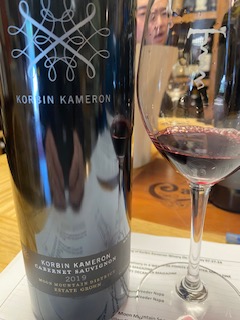
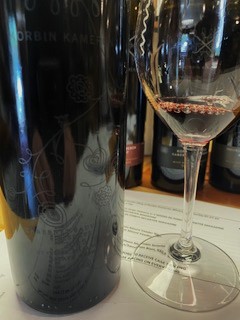
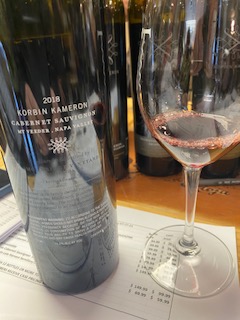
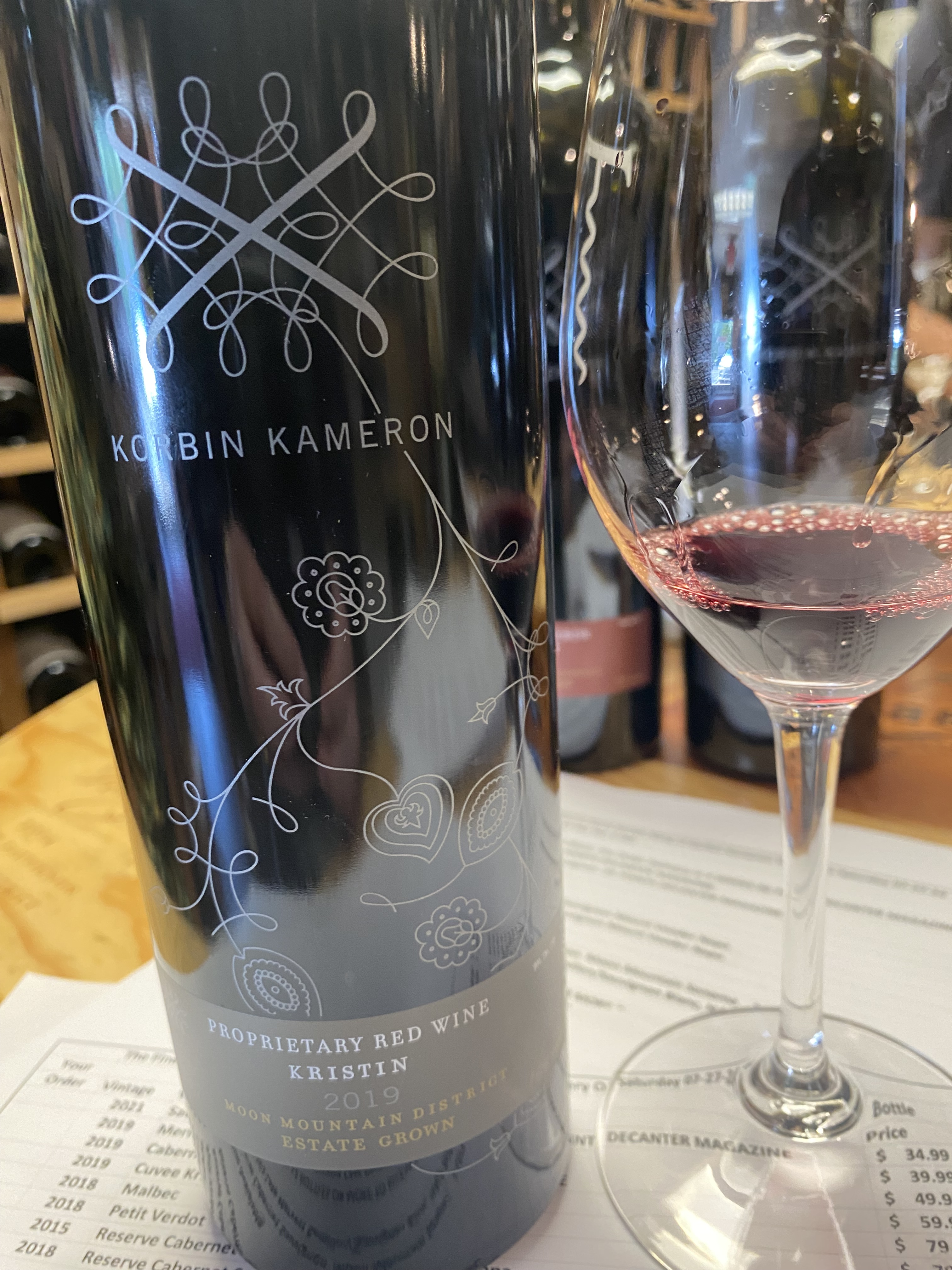
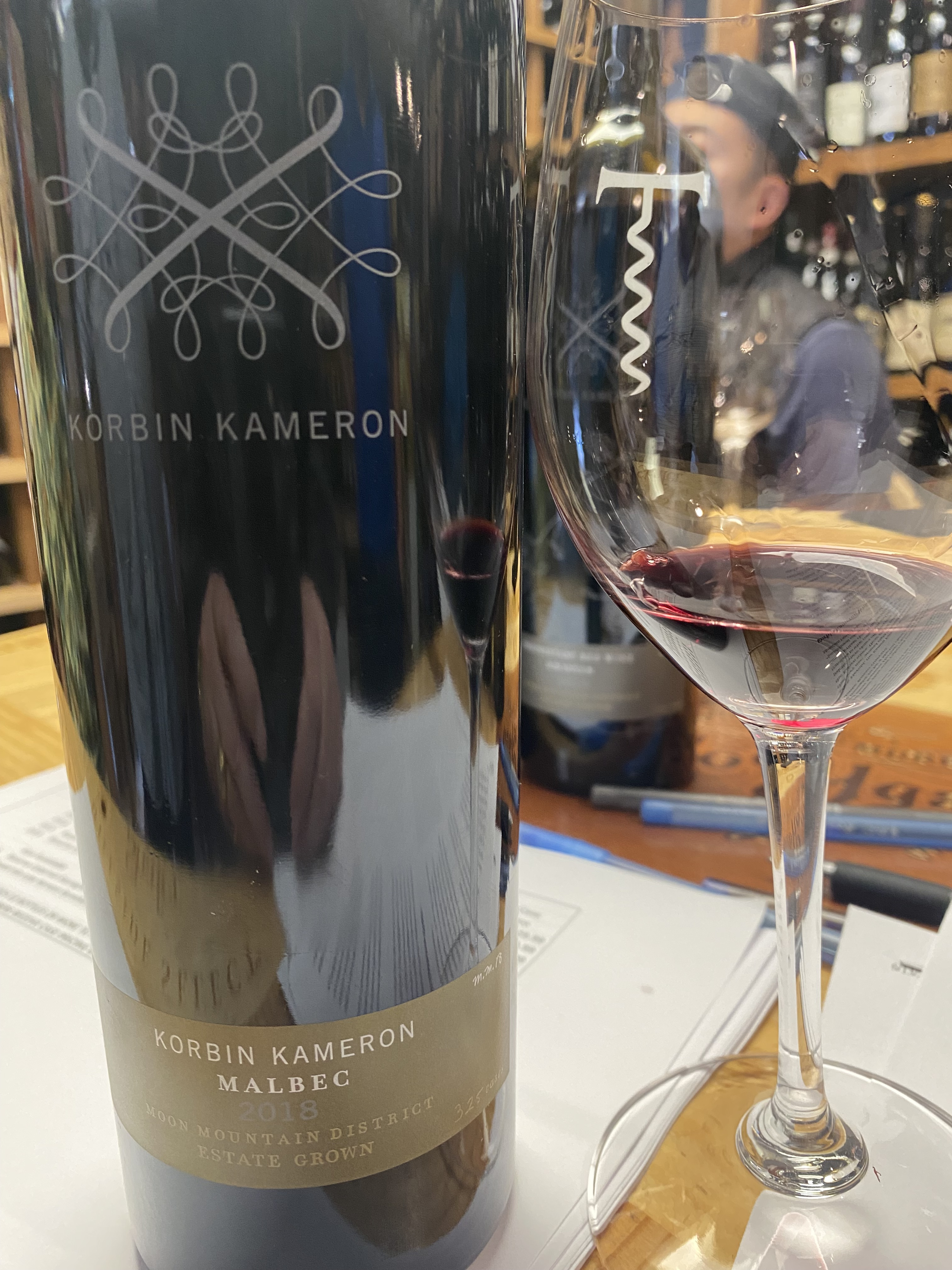
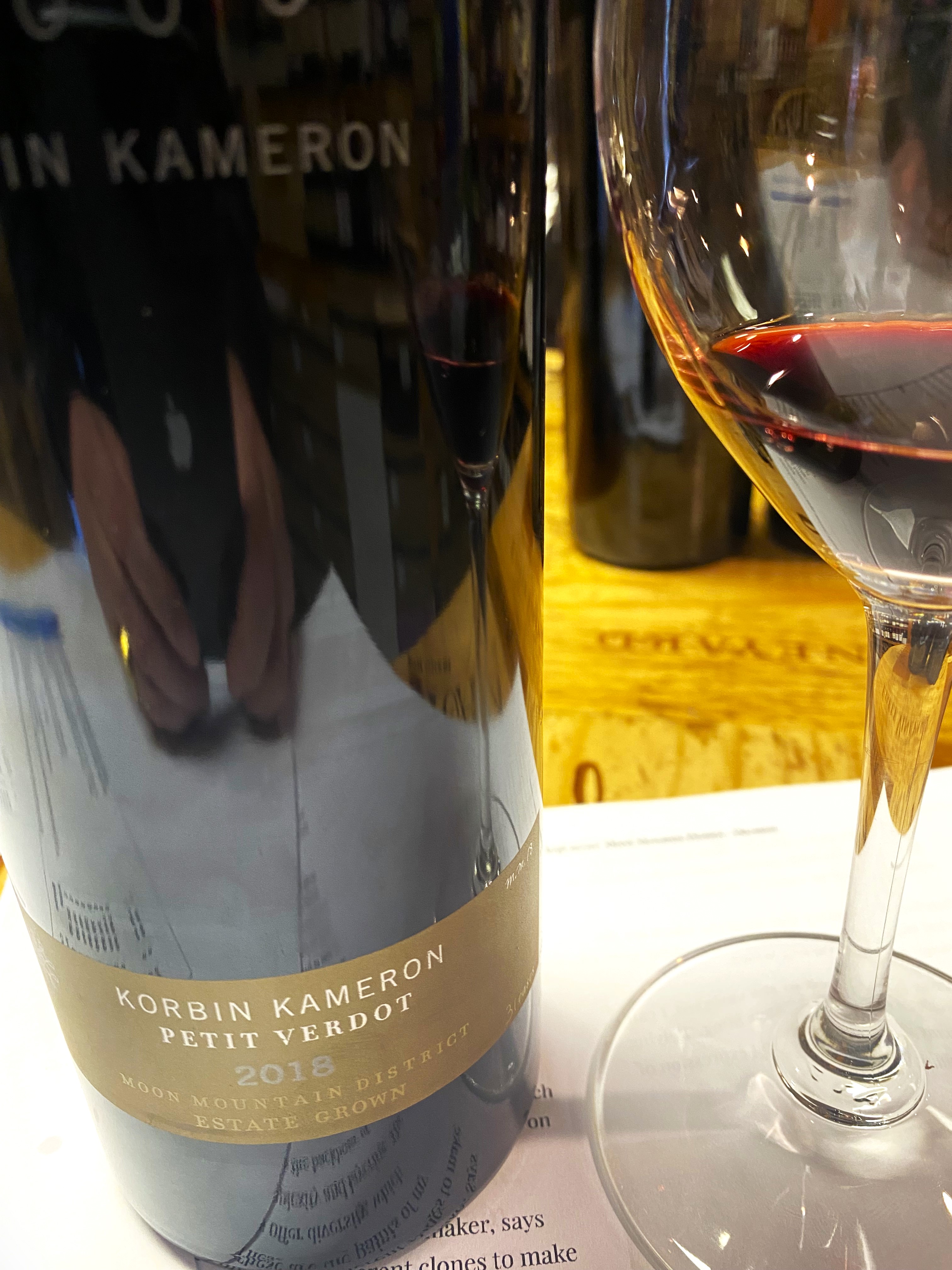
Beside bringing the filets, we brought some wine, as if you might be surprised.  We started off with Korbin Kameron Semillon Moon Mountain District 2018. For years, I would hear how some of the famed Medoc houses made a barrel or two of white wine for their own consumption.  I also heard how some of the great houses of Sauternes would make a barrel or two of dry white wine for their own personal consumption as well. I guess that I would lump this wine with those, as there was only one barrel made, or to make it easier to understand, there were twenty-five cases produced.  Normally, I try to have all the notes for this wine, I had originally tasted this wine, a day prior to the official tasting, and I bought what I could be allotted, as the following day, the entire twenty-five cases were sold.  The wine is organically made, using indigenous yeasts, it started in Stainless Steel and finished in new French Oak.  A very pretty yellow/golden colored wine which at the age of six, was still showing youthful appeal of citrus and white florals.  On the palate there was still fresh citrus, and ripe pear mingling together and ending with a nice long finish of fruit and a touch of terroir.

 I also raided the cellar for a wine that we fell in love with, when we tasted it at the winery, shipped it home, illegally at the time, put it on the rack and let it rest for a little while.  We had a bottle of St. Supery Vineyards & Winery Meritage Napa Valley Red Wine 1995.  In 1988, The Meritage Association (now The Meritage Alliance) was created to promote handcrafted wines blended from traditional noble Bordeaux varieties.  Meritage is a coined word combining merit and heritage, and is pronounced to rhyme with heritage.  The first wine with the term Meritage was the Cosentino Winery “The Poet” 1986.  This wine is a blend of Cabernet Sauvignon, Merlot, and Cabernet Franc and the fruit came from their Dollarhide Ranch and Rutherford Estate Vineyard.  The winery it appears now call this wine “Elu” and is still being made by winemaker Michael Scholz and consultant Michel Rolland; and the “Elu” is aged for twenty-months in French Oak, of which forty-seven percent is new, so I will go out on a limb and opine that the production for the Meritage must be quite similar.   When I removed the capsule, I thought the cork looked perfect, so I used my waiter’s key, but I had to finish opening it with The Durand, which I am glad that I packed, just-in-case.  For a twenty-nine-year-old wine, the deep garnet red color was showing no signs of foxing.  The wine offered notes of black cherries, blackberries, currants and secondary notes of graphite, anise, spices, and oak.  On the palate the tones of the fruit had mellowed along with the tannins and reminded me of many thirty-plus-year-old Medoc wines that I have had over the years.  I was very impressed, especially after I noticed that the back label said to “drink now through 2010.”    

Posted in Dining, Wine | Tagged , , , , , , , , , , , | 1 Comment

Dinner at Alpino Detroit

I had just touched on the beginning of our dinner at Alpino Detroit in Corktown, after we had toured the renovated Michigan Central Station.  I was happy to have read that when Alpino Detroit was being designed they eliminated the communal tables, as I didn’t think that a restaurant that had the potential of being on the pricier side should avoid having private tables. 

The second small plate that we ordered and divided between the two of us was the Gurkensalat, which is German for “cucumber salad” and the dish was Persian Cucumbers, Pickled Shallots, Crème Fraiche, Dill, and Marigold.  It was refreshing and reminded me of the summer salads my mother made when I was a boy.  I was still in cooling-off mode, and while I normally don’t have wine with a salad, since it wasn’t a vinegar-based dressing, I thought I would try something different, that they had listed as an “Orange” wine, which seems to be a bit of a rage, but over the course of the last couple of years I have shown restraint.   I had the Perusini Ronchi di Gramogliano Ramato Colli Orientali del Friuli 2021 from Perusini Societa Agricola s.s. Perusini is one of the fifty members registered as an historical winemaker, as he tried to preserve native vines during the “fashion of the French wines” in the last century.  Giacomo Perusini, grandfather of the present owner, was responsible for the selection and planting in the Colli Orientali.  The family tradition has continued at the estate on the hills of Gramogliano edging on the Judrio River, which marked the border between Italy and Austria until 1918.  The area originally known as Colli Orientali del Friuli from 1970, became Friuli Colli Orientali (Eastern Hills of Friuli) in 2011; and known mostly for its white wines.  The soil is known as Flysch di Cormons, alternating layers of marl and sandstone.  The vineyards due to the altitudes are terraced.  The wine comes from Pinot Grigio vines planted on the top of Mount San Biagio and has a north-eastern exposure.  The unique color is obtained by a five-day cryomaceration, a pre-fermentation cold maceration process in a nitrogen saturated environment.  This eliminates the use of chemical preservatives without oxidation.  During a four-day period, with the lack of alcohol, the gentle extraction from the berries creates the unique color and the distinct flavors and nose.  The Initial Fermentation takes twelve days at low temperature to maintain the freshness of the juice.  The coppery colored wine with brick color toning offered notes of strawberries and tropical fruits.  On the palate it was a full-bodied wine with great tones of the fresh fruit promised by its nose, and finished with a good medium count of minerals (terroir).  Without the wine carte or label, I would not have thought this wine was a Pinot Grigio, as it was unique and totally interesting.

My Bride surprised me and had the Diots au Vin Blanc, French Pork Sausages, with White Savoie wine, Onion Broth, and a Mustard Rouille and a side of Rotkraut or Braised Red Cabbage.  I had the Wienerschnitzel, a Breaded Veal Cutlet, Morel Rahmsauce (a German Cream Gravy with Morel Mushrooms), topped with a Shaved Cremini Mushroom salad with a Pickled Mustard Seed Vinaigrette.   We definitely were sharing each other’s choices.  We then had Elena Walch Lagrein Alto Adige 2022, and Alto Adige is the most northerly wine region of Italy and famed for Pinot Grigio, Lagrein and Schiava.  Elena Walch has fifty-five hectares of vineyards around Alto Adige.  Elena Walch was an architect by trade and married into one of oldest wine families of the region, and now her daughters are representing the fifth generation of managing the family business.  Lagrein is considered a native of the region, as it has been recorded as far back as the 16th Century.  It exemplifies the north-Italian acidic structure that is admired and noted in the finer wines.  The fruit is hand-harvested from calcareous soils with clay and sand.  Traditional temperature-controlled Initial Fermentation for about ten days in Stainless Steel tank, followed by Malolactic Fermentation in French and Slavonian oak barrels, followed my maturation in large wooden barrels.  The wine is a deep garnet red and offered notes of wild berries, cherries, spices, and cocoa.  On the palate, I was pleased with a fresh, full-bodied wine that blended distinct tannins with red fruit, good acidity, and a finish beckoning another sip.

We should have finished, but the evening was delightful and the restaurant was filling up quite quickly.  I saw a dessert that also reminded me of my mother, a Rhubarb Tarte on Shortbread, Zabaione Mousse (a sweet and frothy custard), Braised Rhubarb, and Sweet Pistachio Pesto.  We shared the dessert and we shared a glass of Giacomo Bologna Braida Brachetto d’Acqui DOCG 2022 from the Piedmonte.  Giacomo Bologna Braida is an estate in Monferrato and is associated with Barbera wines; and they also produce other red wines, white wines and two dessert wines.  The current estate dates back to 1961 when Giacomo Bologna inherited vineyards from his father, including his nickname “Braida;” his son and daughter now run the estate.  In 1967, they began making Brachetto d’Acqui, sometimes known as Acqui, and this particular wine received its DOCG in 1966, for frizzante, spumante, passito and a rosé (2017), as long as the wine is made using the Brachetto grape variety.  There are twenty-six communes that can use this designation.  Brachetto is a black skinned grape, that is normally not blended, and in the past, there were some attempts to make a dry wine, but since the designation status, those wines are preferred.  The wine is produced by macerating the must with the grape skins for two days, to get the deep color.  After the fermentation is completed, the wine is aged in the bottle for three months or more, before being released.  The ruby red wine with fine frizzante perlage offers notes of raspberries, strawberries, and roses in a bold aromatic manner.  On the palate, the delicate frizzante accentuates the fresh fruit flavors, a very soft and a nice medium count finish of fruit.

Posted in Dining, Wine | Tagged , , , , , , , , , , , , , , , | Leave a comment

Michigan Central Station and Corktown

At one time Detroit was competing with Manhattan for being the most impressive city, because of commerce.  Architecture was grand, craftsmanship and pride were at an all time high.  A Beaux-Arts Classical style train station was built, by the same team that created the Grand Central Terminal, but this was the tallest station in the world; thirteen stories with two mezzanines. The station opened in 1914 and closed in 1988.  The owner of the station allowed the building to fall into disrepair and neglect and it became the poster child for all that was negative about Detroit.  In 2011, serious discussions about the renovation began, and Ford Motor Company stepped in at 2018, and $740 Million later (original price of building the station was $15 Million), the building has reopened and will become a campus for one of their divisions.  The marble, fine woods, and all the trim for interior and exterior have returned. I remember going there at eight years of age to go by rail from Detroit to Hamilton, Ontario, Canada; it was frightening and exciting at the same time and exhilarating as well.  The train was like pitch dark as it traversed the train-tunnel underneath the Detroit River to Canada, and I remember that it was a “milk-run” which meant it stopped at almost every whistle-stop along the route; and there was a mother with her children and she would announce each stop and the children would spell out the name.  Needless to say, I felt like a country lad visiting the city for the first time when we returned to see the glory of the refurbished building.   The original tickets to be Mr. & Mrs. First Nighter was done on the computer, and the first hour it was opened, it crashed from the demand.  We waited until some of the hoopla was done and one didn’t need computer generated tickets to do the tour, and the turnout was still huge.

As we entered Michigan Central Station from Roosevelt Park, we were in Corktown, the oldest extant neighborhood in the city and now on the National Register of Historic Places, and there is a section of Michigan Avenue that still is driven over the original brick paver stones. Corktown was a term used by the Old Guard of Detroit for the sudden massive influx of migrants from County Cork after the Great Famine of Ireland.  The area then saw it as a haven for German, and later Maltese and Mexican immigrants lured to Detroit for the automobile industry and Detroit was one of the original homes of the Middle Class, because of all the hard workers that came to start or support a family.  We had some time to kill so Nick and Nora, after being tourists motored over maybe four blocks from the Corktown boundaries and went to one of the original Mexican restaurants in Detroit to get a couple of Margaritas and some fresh chips and hot sals to beat the extreme heat of the day.  Then we got back in the car, as we had reservations to a restaurant that I had been wanting to try, but I had to figure out a way to make it work, as Corktown is off the beaten track, even from my old original stomping grounds.  We were going to Alpino Detroit, which as the name suggests offers cuisine from the Italian, Swiss, and French Alps, and even the majority of the wines are from the same regions.  Prior to becoming Alpino Detroit, the location housed two different Irish restaurants; St. CeCe’s Pub and Lady of the House.  We sat in their parking lot and admired some of the architecture of the original homes and buildings that we could see, until they opened the doors.

We were still in the throes of a summer heat, that evolved from heavy rains earlier in the day, which had thankfully disappeared by the time we started out adventure, but the humidity was still hovering around a hundred.  As we studied the well created regional menu, our waiter suggested we start with two small plates, so we divided the plates between us, and my Bride ordered the Rosti, a Swiss Potato Pancake with Smoked Salmon, Crème Fraiche, and Mustard Greens.  Very refreshing and a nice appetizer.  We began with Frey-Sohler Rosé Cremant D’Alsace Brut NV.  Frey-Sohler is south of Strasbourg and twenty kilometers from Germany.  Frey-Sohler estate is the sole distributer of wines belonging to the Sohler family.   It is six generations old and is now run by Damien Sohler and his daughter Aude.  The family has an estate of thirty hectares and then has another estate Terra Vitis which is a network of French winegrowing regions.  Cremant d’Alsace appellation was created in 1976, and like all Cremant wines the Methode Traditionelle must be employed, and they must spend a minimum of nine months maturing on their lees.  For rosé wines, only Pinot Noir is permitted.  The making of sparkling wines in the region is relatively recent, as they began during the Alsace-Lorraine era under German control.  The salmon-pink colored wine offered delicate bubbles and notes of strawberry, raspberry, and chamomile tea.  On the palate there are tones of strawberries, raspberries, baked bread, and a slight bitter finish of lemon rind.   

Posted in Dining, Wine | Tagged , , , , , , | Leave a comment

A Taste of Monterey – Summer 2024

We just received our wine club shipment from “A Taste of Monterey” that we joined by accident when we discovered the shop and that they could ship to Michigan, because then we were a Felony State for wine shipments, and the governor back then was sued to eliminate this, now she is back trying to eliminate Americans from buying gas stoves for their kitchens.  Regardless, of that, “A Taste of Monterey” is celebrating their thirtieth anniversary, we have been with them since 10 February 2003 and always with the Reserve Wine Selections, in anticipation of getting wines that otherwise won’t get to Michigan, because of production quantities.

The first wine that came out of the carton was Le Mistral White Witch Arroyo Seco AVA 2022.  Folktale Winery and Vineyards was originally founded in 1982 by Bob and Patty Brower, as Chateau Julien Wine Estate and they wanted to replicate their wine experiences in France to the Carmel Valley.  In 1996 they expanded the property and structures to ensure that they were making great wines, and my Bride and I visited Chateau Julien each time we had holidays in Carmel-by-the-Sea.  In 2015, the property was purchased by local winemaker, Gregory Ahn, and renamed Folktale Winery and Vineyards; and as a side note, from what I gather the label Chateau Julien is still property of the Brower family.  The five-acre vineyard at the winery is one-hundred percent organically farmed, and they are working towards this goal in the three-hundred acres in the Arroyo Seco that they maintain.  The name “White Witch” was coined by owner Greg Ahn for Monterey’s daily barrage of coastal fog and wind that moves from the cool Pacific Ocean down the Salinas Valley every afternoon.  The wine is a blend of thirty-eight percent Roussanne, thirty-four percent Marsanne, twenty-two percent Grenache Blanc, and six percent Viognier, and grown on the estate.  Each variety was harvested and pressed separately, before being racked to barrel for Initial Fermentation, and then continued through for Malolactic Fermentation.  Then the individual wines were blended in the spring, barrel aged until mid-summer, when the wine was bottled.  The wine has an estimated aging potential of about eight years.  The winery suggests the nose will offer notes of peach, apricot, honeydew melon, pear along with chalk, almond husk, and hay.  On the palate, the fruit tones continue with moderate acidity, balanced, and a soft texture and creaminess.

The second wine was Big Sur Vineyards Big Sur Red Monterey 2022.  Big Sur Vineyards began as an olive grove and they also made artisan soaps, on the edge of the Ventana Wilderness.  They began planting Rhone varietals as a hobby to see what would happen, and they eventually began producing their Big Sur Vineyards Red; recently they officially became a Rhone Ranger.  The family wine business has been evolving since their first bottling in 2013 and offering Pinot Noir, Pinot Noir Reserve, Chardonnay, and Big Sur Red.  A little later they began offering bottling of other individual varietals.  This wine originally was a blend of three varietals, but now they have added a fourth; Syrah, Petite Sirah, Mourvedre, and Grenache.  No production notes, but the wine is said to have an aging potential of seven to nine years. The wine is described as a ruby red color offering notes of thyme, marjoram, oregano, crushed violets, and raspberry jam.  On the palate a medium-bodied wine with tones of tart cherry, boysenberry, cassis, and blueberry with secondary tones of black pepper, cumin, and chili powder with a savory and saline finish.

The last wine in the carton was Russell Joyce Winery Syrah Santa Lucia Highlands 2021.  The origins of this winery was when Russell’s father could set up his dentistry practice, and a race shop, as he competed as a professional race car driver as well, as the property was near the Laguna Seca raceway.  In 1986, he planted a small five-acre vineyard around the family home and Joyce Winery was created.  The fruit for this wine comes from the stewardship of Joe Alarid and his Tondre Grapefield which is SIP Certified.  There are four acres are planted to Syrah, which they contract for, on the well-drained gravelly loam soils.  The fruit is hand-harvest, and sixty percent undergoes whole-cluster Initial Fermentation with indigenous yeasts in small open-top temperature-controlled tanks.  Afterwards, the wine is aged on the lees for ten months in neutral French Oak, then racked to tanks and allowed to settle for one month prior to bottling, and it is bottled unfined and unfiltered.  The wine is described as offering notes of chocolate covered cherry, cooked cranberry, with violets, and vanilla.  On the palate tones of fresh raspberry, fresh blackberry, black tea, and dried pine needles.    

Posted in Wine | Tagged , , , , , , , , , , , , , , , , , , , , | 1 Comment

Bibi Graetz, Lindes de Remelluri, and Vietti

After the wonderful tasting dinner at Vertical Detroit, I then went to The Fine Wine Source to pick up the wines that we ordered the night before.  I also got a chance to say hello to Alexandra Sineau, the Export Director of Famille Picard, and Manou Chahmirzadi of David Milligan Selections the import house one more time, as they were doing a wine tasting at the shop on Friday and Saturday as well.  It was very busy and crowded so, I tried to keep myself occupied, which is so hard for me to do at a wine shop, and I also retasted all the wines, to make sure I still agreed with my original notes.

I also saw a great display of the few wines that they have left from the Bibi Graetz vertical and wine tasting that we had attended just a little while ago.   Bibi Graetz is an artist who studied at the Accademie d’Arte in Florence (and his artwork can be seen on the labels of the wines) and a Tuscan wine producer in Fiesole, in the hills northeast of Florence.  Bibi Graetz is recognized as a very innovative winemaker, sometimes unconventional, especially in Tuscany and he is championing for indigenous and sometimes forgotten grape varieties.  There were a few Library offerings still available in magnum, double magnum, and imperial bottles.  Then there were some six-packs of the Testamatta with the special metal work covers that I had mentioned, but neglected to photograph; am I a terrible reporter or blogger, and people had written to me asking to see the art.  Also, there was the Collezione Verticale which offered the Colore Rosso Toscana IGT 2015, 2016 and 2020.  The 2015 vintage was the first time being offered in America and only with the commemorative set, which also included a copy of his artwork that is used for the label.  A great recent wine memory.     

Then I saw a brand-new collection since the last time that I was there, a special six-pack from Granja Nuestra Senora de Remelluri “Las Lindes de Remelluri” Rioja DOCa 2020 in a horizontal presentation with an accompanying map showing the sites.  A vertical collection offers a set of different vintages from the same site, where a horizontal collection offers the same vintage from different plot, showcasing the different terroirs.  Remelluri is a family winery near Labastida in the Alavesa zone of Rioja and known for their use of Tempranillo.  The estate was founded by monks in the 14th Century, though the vineyards probably preceded that time. The estate has changed ownership over the years, but in 1967 it was purchased by Jaime Rodriguez, and in 2010 his children took over.  Fruit from established contract growers in the nearby village goes into the wines sold under the Las Lindes de Remelluri label.  Each is named for the village in question: Sanillas de Buradon, Labistida, Rivas de Tereso, San Vincente de la Sonsierra, Pecina and Abalos.  The vinification for these wines is essentially the same, using native yeasts, little new oak is used, light filtration and fining and ten months in French Oak.  For comparison the Labastida vineyards lay at a higher altitude, hence the wine is higher in acidity and lower in alcohol than the San Vincente; consequently, each designation will be unique.  I think this may be a wonderful way to feature a special wine tasting event.

We went from a vertical, to a horizontal and finally just a unique wine pour as my bill was being tallied.  I enjoyed some Vietti Trevigne Barbera D’Asti DOCG 2021.  Vietti is a wine producer in Piedmont, known for their Barolo and Barbera wines, along with being one of the proponents of resurrecting the Arneis variety.  The estate began producing its first wines with the family name in 1919 and they were one of the original wineries to ship Barolo to the USA.  Barbera D’Asti is from the hilly areas of Asti in the eastern Piedmont, with elevations from 90 – 300 meters, though historically the best spots of soil and exposure are reserved for Nebbiolo grapes which mature on the vine slower and require more time.  The Barbera grapes for this wine are sourced from three vineyards in the region.  The process begins with cold maceration, and then Initial Fermentation in Stainless Steel for about two weeks, followed by post-maceration on the skins.  After the racking, the wine is then transferred to barriques for Malolactic Fermentation and aging for about twelve months.  This ruby-red wine offers notes of black cherries, plums, violets, and vanilla.  On the palate tones of black cherries and blackberries, blended with soft tannins delivers a crisp and balanced wine that finishes with a taste of red cherries.

Posted in Wine | Tagged , , , , , , , , , , , , , , , , , | Leave a comment

Domaine Levert-Barault and the Third Course

Our evening was progressing very well, and everyone was enjoying our hosts The Fine Wine Source and their restaurant Vertical Detroit.  We were having a wine tasting and pairing dinner, while being regaled by Alexandra Sineau, the Export Director of Famille Picard, and Manou Chahmirzadi of David Milligan Selections the import house.  The third course of the meal was Pan Roasted Salmon with Almond Romesco over a bed of Confit Baby Potatoes and Kale.  I know that we will be having Romesco Sauce at the home very soon, as my Bride was very thrilled with the taste and texture on the salmon.  I might add that Pinot Noir is one of our favorite choices when having salmon.  Then the dinner ended with a Crème Brulee with assorted fresh berries.   Before the evening ended, all the guests were introduced to the chef Matt Barnes, who is a native of the Detroit area and the Midwest.

The first wine to be paired with the entrée was Domaine Levert-Barault Mercurey Cuvee L’Automne 2020 and part of Famille Picard.  Mercurey is one of the five communal titles of the Cote Chalonnaise, which is a sub-region of Burgundy, and hence the red wines are Pinot Noir.  Domaine Levert-Barault is one of the oldest wine-growing estates in Mercurey, and the Levert family dates back to the 16th Century.  The estate is a nine-and-a-half-hectare vineyard and has a couple of iconic blocks, and it was acquired by Famille Picard in 1997.  They maintain two “cuvees” Le Printemps and L’Automne which display interesting terroir.  Cuvee L’Automne comes mainly from their Les Vaux plot, with very old vines with perfect exposure and a small portion from Les Montelons on the Mercurey plateau, opposite Rully.  The Cuvee Le Printemps is in the reverse proportion.  The vines are grown organically, with mechanical work on the soil, while the fruit is hand-harvested, sorted, and totally destemmed, with the berries conveyed directly to the vat, without bruising or crushing prematurely.  Traditional Burgundy vinification, in thermos-regulated vats.  The wine is then aged for ten months in large used barrels.  A nice deep burgundy colored wine that offered notes of ripe cherries, cranberries, spices, and intense minerals.  On the palate the tones of red fruit, blending seamlessly with silky tannins, toasted oak and a medium count finish of fruit and terroir.

The second wine of the pairing and the final wine of the evening from Famille Picard was Domaine Levert-Barault Mercurey Premier Cru Champs Martin 2020.  While there are five communal titles in the appellation Cote Chalonnaise, almost a quarter of Mercurey’s vineyards are classified as a Premier Cru with thirty-two recognized for that designation.  Domaine Levert-Barault has two Cuvees and six Premier Cru wines:  Clos des Barraults, Les Combins, Champs Martin, La Vasée, Clos des Montaigus, and La Chassiere.  Champs Martin is one of the larger Premier Cru vineyards in Mercurey, and they are known for a fine white (Chardonnay) and a fine red (Pinot Noir).  The vineyard is 8.7 hectares and twenty percent is planted with Chardonnay and the balance is Pinot Noir.  Given the large size, most of the producers that have vines there, produce both a white and a red wine of note.  The Chardonnay is planted on dark marlstone soil, and the Pinot Noir is planted in the classic clay and limestone of Burgundy, but with a heavy ferrous influence in the soil.  The vineyard is at 300 meters with southern to southwestern exposure; and the vines have been planted from the 1970’s to the 1990’s.  The soil is tended by mechanical labor, but the fruit is hand-harvested, destemmed, and the berries are conveyed directly to the vat, to maintain non-bruising or premature crushing.  Traditional Burgundy vinification methods are used, as the wine initially goes into thermos-regulated vats.  Then the wine is aged for fifteen months in oak barrels, of which thirty percent is new.  The wine had a deep burgundy color that offered notes of black cherries, plums, violets, and traces of balsamic and leather.  On the palate there were tones of concentrated ripe fruit, blended with fine tannins, anise, and black pepper, mouthwatering and savory, with a nice long finish of fruit, minerals, and a whiff of smoke.  This is where the bulk of our purchase went and I can’t wait to let this wine cellar a few years more.   

Posted in Dining, Wine | Tagged , , , , , , , | Leave a comment

Domaine Voarick and the Second Course

My Bride and I were at Vertical Detroit, the wine-centric restaurant owned by the wine-centric The Fine Wine Source of Livonia, Michigan. There were about twenty of us invited for a dinner and tasting of wines from Famille Picard, and while the wines were known in France, this was basically the first time in America.  For the evening Famille Picard was featuring wines from Domaine Voarick and Domaine Levert-Barault from the Burgundy region of France.   The tasting was conducted by Alexandra Sineau, the Export Director of Famille Picard, and Manou Chahmirzadi of David Milligan Selections the import house.  The Second Course was a Mushroom Risotto with varied Wild Mushrooms, Caramelized Onions, and Parmesan Cheese; it was decadent in flavor and texture.

The first wine poured to pair with the risotto was Domaine Voarick Mercurey 2019.  Domaine Voarick has wines featuring not only the appellation Mercurey, but also the designations “Under the Rocks.” Les Vignes Blanches, Premier Cru Clos du Paradis, and Premier Cru Clos du Roy.  Mercurey is one of five communal appellations in the Cote Chalonnaise and the appellation was created in 1936 for Mercury and for Saint-Martin-sous-Montaigu.  The Cote Chalonnaise was once known as the Region de Mercurey.  The appellation laws pertaining to yields are similar to the Cote de Beaune as compared to the requirements for the Cote Chalonnaise.  The wine is pure Pinot Noir on limestone soils and the vines have been planted from the 1950’s – 1980’s.  The fruit is mechanically-harvested, and is vinified in the classic Burgundian method. And is aged for twelve months in oak vats.  The wine is garnet in color and offers notes of cherry, raspberry, and currants.  On the palate there were tones of the red fruits, in a juicy blend with tight tannins and finishing with a nice smoke and terroir.  

There was another pairing with the Second Course of the meal and it was a Domaine Voarick Mercurey Premier Cru Clos du Roy 2020.  Almost twenty-five percent of Mercurey’s vineyards are classified as Premier Cru and there are thirty-two recognized and delimited climats with designations.  There are more stringent production requirements that must be achieved to use the Premier Cru designation.  It is a small climat that has natural protection from the cold, northerly winds and enjoys a more continental climate.  The soil is a limestone-clay with small stones and pebbles, which force the roots to dig deep and hence concentrated flavors.  The wine is pure Pinot Noir, and the vines have been planted from the 1950’s – 1990’s.  The fruit is mechanically-harvested, and is vinified in the classic Burgundian method.  The wine is aged for fifteen months in oak barrels, of which thirty percent is new.  The wine is a deep garnet in color and offered notes of black plums, blackberries, blueberries, and raspberries and oakiness.  On the palate tones of dark fruits, licorice, vanilla, and pepper blended with silky tannins, balanced, with a nice medium to long finish of fruit, smoke, and some saltiness.

Posted in Dining, Wine | Tagged , , , , , , , , | Leave a comment

Domaine Voarick and the First Course

We finally found our seats at the table for dinner at Vertical Detroit, along with the parent company of The Fine Wine Source of Livonia, Michigan.  You couldn’t as for better seats as I was seated adjacent to Manou Chahmirzadi of David Milligan Selections, across from Jim Lutfy proprietor of the two establishments, and kitty-corner from Alexandra Sineau the Export Director of Famille Picard, which is the umbrella of both Domaine Voarick and Levert-Barault; while my Bride was to my left, just absorbing all that was going on.  The first course of the meal was the Charcuterie and Cheese Plate and House-made Focaccia.  The selection of cured meats, chunks of cheeses along with Honeycomb, Grapes, Marcona Almonds, Olives, Roasted Peppers, and Whole Grain Mustard was sublime.  Several of the guests mentioned to Alexandra about the wonderful appetizer of grapes, that is a signature dish of Grapes, coated with Brie and rolled on crushed pistachios and drizzled with gastrique; and lo and behold an order appeared for her to try, which she shared some of us nearby. 

The first wine poured with the Charcuterie and Cheese Plate was Domaine Voarick Givry Blanc Cote Chalonnaise 2020.  Famille Picard Grand Vins de Bourgogne has five concept wine divisions all devoted to the Burgundy region.  Famille Picard is now located in Chassagne-Montrachet, and was founded in 1951 by Louis Felix Picard, owner of two hectares of vineyards in the commune of Chagny.  His son Michel joined him a few years later and in the early Seventies took over the family vineyard.  In the Eighties he began acquiring estates and now has one-hundred-forty-hectares over four areas between the Cote Chalonnaise and the Cote de Beaune and now under Francine Picard.  In 1991 they acquired Domaine Voarick, a sixty-eight-hectare vineyard of varied soils between Saint-Martin-sous-Montaigu and Mercurey.  Here they use the “vigneron” approach from vinification and maturity to bottling, by the necessary block-by-block work and size, and maintaining environmentally-friendly management.  Givry is one of five titled subregions (awarded in 1946) of the Cotes Chalonnaise and the Givry Blanc is rather rare as it is only ten percent of the plantings and is all Chardonnay.  The vineyards are planted on limestone-rich slopes and clay around neighboring quarries.  The fruit is mechanically harvested and undergoes traditional Burgundian fermentation in barrels and aged for ten months.  A golden colored wine that offered notes of stone fruits, apples, and a touch of citrus.  On the palate there was bright acidity from the tones of crisp fruit flavors, very balanced and refreshing with a finish of more fruit and minerality.

We then had our first red wine with the first course Domaine Voarick Bourgogne Pinot Noir Cote Chalonnaise 2019.  This wine came from numerous plots in Saint-Martin-sous-Montaigu on mostly clay-limestone soils.  The vines are quite varied as planting goes from 1960 to 2000.  A wonderful vintage for Burgundy and there were three heatwaves, so quantities were moderate and well received.  Organic vinification and classic Burgundian approach using wooden vats for fermentation and maturation for twelve months.  A ruby-red wine that offered notes of fresh cherries, strawberries, violets, leather, and spices.  On the palate moderate acidity with cherries, strawberries, and vanilla mingling with soft tannins, balanced and a decent finish of fruit.      

Posted in Dining, Wine | Tagged , , , , , , , | Leave a comment

A Wine Dinner at Vertical Detroit

Vertical Detroit and The Fine Wine Source were hosting a wine dinner as they welcomed Alexandra Sineau of Famille Picard and Domaine Voarick and Manou Chahmirzadi of David Milligan Selections.  A night of Burgundian wines was the theme and the wines were through David Milligan Selections.  David Milligan Selections began in 1995, with the concept of bringing French wines he loved to the consumer. In 2006, his son joined him on the mission.  Manou oversees sales in the Midwest, and also spearheads National Accounts for the organization.

When I was at The Fine Wine Source, I was told that this was the first that they had learned about Famille Picard and Domaine Voarick, and Jim Lutfy’s knowledge is immense.  All I know is that he tried the wines in the shop, and bought every wine that was poured for him, and that usually does not happen, his palate in wines is very well regarded.  So, when I heard that my Bride and I were invited for the initial tasting along with dinner, I wanted to do some research, so imagine my surprise that the winery is unknown (retail-wise) in America.  I could find some bare-bones information and that was about it.  My curiosity was indeed whetted by this fact, and I was looking forward to meeting Alexandra Sineau, who is the Export Director for Famille Picard and Domaine Voarick.  All I could think of, is that she is going to be very busy, once the firm gets a toe-hold and is accepted into the Byzantine nature of how wine is sold in America.

We began the evening with a “Reception Wine” and while this wine was not from Burgundy, but from Provence it was another wine from David Milligan Selections.  We began with Famille Quiot Domaine Houchart Cotes de Provence Rosé 2023.  Famille Quiot is a wine producer with numerous estates in southern France.  They have been making wine since 1748, starting in Vaucluse in Chateauneuf-du-Pape at Domaine du Vieux Lazaret.  The Domaine is run by the thirteenth-generation member Jerome Quiot and what was originally a few hectares is now one-hundred-ten hectares.  In 1890, they acquired the sixty-hectare estate of Domaine Houchart near Aix-en-Provence.  The family estate has its roots and was farmed during the Roman era, and is located in the plain between Sainte Victoire and Aurelien mountains, and has its own climate.  The land is clay and limestone soils, from the decomposition of the scree from the surrounding mountains.  The wine is a blend of Cinsault, Grenache Noir, Syrah, and Tibouren; with the average age of the vines being thirty-five-years.  The fruit is harvested in September, with direct pressing for most of the varieties, with vatting for almost two weeks in I surmise Stainless-Steel to maintain freshness; the wines are bottled in December.  This salmon-pink colored wine offers notes of citrus and strawberries.  On the palate the wine offers tones of red currants, watermelon, with great acidity and ending with a nice medium count finish of fruit and terroir.     

Posted in Dining, Wine | Tagged , , , , , , , , , | Leave a comment

Fine Wine Source Club Selections – June 2024

Once a month I go to my favorite wine shop The Fine Wine Source of Livonia, Michigan to pick up the club selections, of course by now, you realize that I tend to stop there more often than once a month.  They were quite busy there with the logistics of receiving about twenty cases of wine for an upcoming wine tasting.  I was also getting some information for a friend that had asked me a question, that I wanted to double-check on, as I try never to presume.   I was actually early for the wine club selections, but since they were prepared, they forgave me, and even poured a couple of wines for my opinion.

The club selections always begin with a wine from the Old World and we began with Domaine de Coste Chaude Cotes du Rhone Villages Visan Trilogy 2017.  The commune of Visan became a named Cotes du Rhone Villages designation in 1966 and is known predominately for its Grenache and Syrah based wines, but it also covers the rosé and white wines.  Visan is one of twenty-two favored locations that may append their name to Cotes du Rhone Villages; which would be two steps up from the generic Cotes du Rhone, but a step below “Cru” status.  The village of Visan forms part of the ancient Papal enclave formed in the 14th Century when Pope Clement V moved his seat to Avignon (Chateauneuf-du-Pape).  Domaine de Coste Chaude was founded in the 1960’s and encompasses twenty-three hectares of gravel and clay covered with rolled pebbles at an altitude of 360 meters.  The vineyard was taken over by Marc and Marianne Fues in 1994, and they converted it to organic agriculture certified by Ecocert. In 2018, the domaine was acquired by Vincent Tramier.  The wine is one-third Roussanne, one-third Viognier and one-third Grenache Blanc. The fruit is hand harvested in the evenings, and undergoes gentle and progressive pressing.  The juice then is clarified by natural sedimentation before cold Initial Fermentation.  Twenty percent of the wine is aged in double barrels, and eighty percent remains in Stainless Steel tanks probably for about nine months.  A shiny golden wine that offers notes of white fruits, white florals, wet stones, and dash of grapefruit zest.  On the palate, tones of grapefruit, off set with some sweet lemony acidity in a well-rounded and fresh wine that has a medium-count finish of fruit and terroir.  I have to admit that I have not only tasted this wine, but have already laid some down in our cellar collection.

For the New World there was a bottle of Donati Family Vineyard Merlot Paso Robles 2021.  The Donati family started arriving in the Paicines region of the Central Coast in 1998, when they purchased the land that would become the family estate and vineyard.  Since then, they have planted the vineyards and built a state-of-the-art winery.  Paicines is the southernmost AVA in the San Benito County and in the 1980’s and 1990’s the area was associated with the production of bulk wines, but a few wineries are attempting to correct that image.  To this day, much of the fruit is grown and then sent to wineries in other parts of California.  It is still home to the five-hundred-acre Vista Verde Vineyard that was previously owned by Almaden Vineyards, before the company was sold and split up in the 1980’s.  The sandy soils of gravel and limestone have forced the vines to develop deep root systems, because of the good drainage and has strengthened the vines.  This wine is ninety-nine percent Merlot and one percent Cabernet Sauvignon.  The wine began with Initial Fermentation in Stainless Steel with twice daily punch-downs.  Then is aged for eighteen months in a mixture of wood, of which seven percent is new French Oak, twenty-two percent is new American Oak and seven percent is new Eastern European Oak.  There were eight-hundred-forty-eight cases produced.  The wine is described as having notes of cherry, blueberries, plums, and spices.  On the palate there are tones of the above fruits along with white chocolate, hazelnut, Crème de Cocoa with a good medium finish featuring fruit and toasted oak.

Posted in Wine | Tagged , , , , , , , , , , , , , , , | Leave a comment