Fine Wine Source Club – August 2024

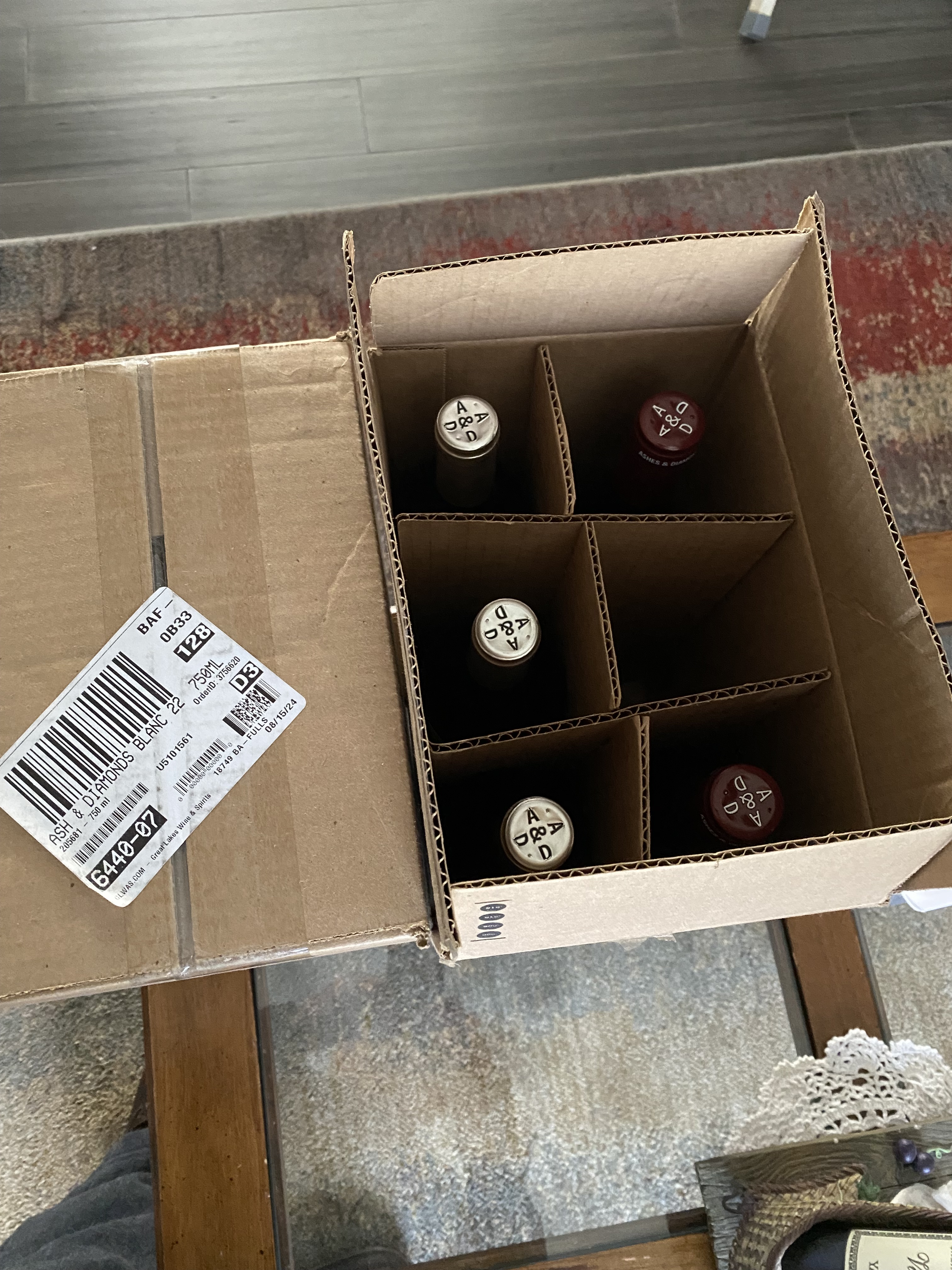
While we were on our little getaway, I received a message about a new wine the Fine Wine Shop in Livonia, Michigan was getting, and we decided to order some, before it disappears from their shelves, so I asked that they put some aside for us.  When I got there, they also had the wine club selections ready; so that was opportune.  I also got a chance to taste some other new wines that had arrived, so it was an excellent day, of course, it always is when I visit there.

There are always two wines for the club selection and the first represents the Old World.  We began with Famille Quiot Domaine Houchart Cotes de Provence Rosé 2023.  Famille Quiot is a wine producer with numerous estates in southern France.  They have been making wine since 1748, starting in Vaucluse in Chateauneuf-du-Pape at Domaine du Vieux Lazaret.  The Domaine is run by the thirteenth-generation member Jerome Quiot and what was originally a few hectares is now one-hundred-ten hectares.  In 1890, they acquired the sixty-hectare estate of Domaine Houchart near Aix-en-Provence.  The family estate has its roots and was farmed during the Roman era, and is located in the plain between Sainte Victoire and Aurelien mountains, and has its own climate.  The land is clay and limestone soils, from the decomposition of the scree from the surrounding mountains.  The wine is a blend of Cinsault, Grenache Noir, Syrah, and Tibouren; with the average age of the vines being thirty-five-years.  The fruit is harvested in September, with direct pressing for most of the varieties, with vatting for almost two weeks in I surmise Stainless-Steel to maintain freshness; the wines are bottled in December.  This salmon-pink colored wine offers notes of citrus and strawberries.  On the palate the wine offers tones of red currants, watermelon, with great acidity and ending with a nice medium count finish of fruit and terroir.

The second wine is always a representation of the New World.  The second selection is Vinum Cellars Petite Sirah Clarksburg 2021.  Vinum Cellars was founded in 1997 by first generation, California family winemakers Richard Bruno and Chris Condos in the Napa Valley financing their dream on credit cards. Their focus was then, and remains searching California’s coastal vineyards and special microclimates in search of the best vineyards grown by the state’s best growers. The long-term partners consider their humble roots in the development of products and mandate that each wine offer considerable high quality-to-price ratio. What this means is each wine is literally hand crafted from single vineyards and made with a small lot philosophy. From Coastal Chardonnay and Pinot Noir to Napa Valley Cabernet Sauvignon, Vinum makes varietal wines from single vineyards and appellations throughout California.  Clarksburg AVA is nestled among the Sacramento Delta waterways, just east of the San Francisco Bay Area, and the appellation extends into three counties: Yolo, Sacramento, and Solano. Vinum Cellars is celebrating their twenty-fifth vintage of Petite Sirah.  The fruit is from the Wilson Farms, a fourth-generation farm established in 1922.  The wine has been aged for sixteen months in two-year-old French Oak barrels. Petite Sirah is known for its deep inky purple wine with teeth staining concentration and the wine offers notes of boysenberry, plum, huckleberry, black pepper, dried flowers, with a touch of licorice and tar.  The wine is full-bodied with tones of blueberry, vanilla, cocoa, intermingling with elegant dry oak tannins and ending with a medium finish of coffee and terroir.

While I was there, I also picked up the Bibi Graetz Testamatta Toscana IGT 2020 that they were holding for me, made by the artist and winemaker.  This was the wine that got people to stand up and take notice of Bibi Graetz’s work and he named it after the sobriquet that was given to him in this youth.  A pure Sangiovese wine, a Super Tuscan displaying old vines from soils rich in stones and plenty of minerality.  According to Bibi Graetz the entire growing season was perfect and peak of quality since his first vintage.  It took almost three weeks of hand-harvesting, some parcels required eight times to pick the grapes at the perfect point of ripening.  The fruit was selected from the best five vineyards of the winery in different areas of Tuscany; Lamole Vineyard at 600 meters altitude, and Montefili Vineyard at 400 meters altitude and both in the heart of Chianti Classico, Vincigliata Vineyard at 280 meters altitude in Firenze, Londa Vineyard north of Firenze towards the Rufina valley, and Siena Vineyard pressed.  The Initial Fermentations are conducted using natural and indigenous yeasts, in open top barriques for the smaller parcels of vineyards, and the larger vineyards were in barrels or Stainless-Steel with six manual punch-downs and pump overs each day. After about ten days of maceration, the different parcels are moved into old barriques and barrels for twenty months.  A nice garnet-ruby red wine that offered notes of black cherries, red berries, anise, sous bois, and vanilla.  On the palate a medium-bodied wine featuring cherries and strawberries, and plums balanced with velvety tannins and great mineral terroir.     

Posted in Wine | Tagged , , , , , , , , , , , , , , , , , , , , , , | Leave a comment

Russo Ristorante & Mercato

I have been on social media for over twelve years and I have met many people, and most have been interesting and a pleasure, and a small percentage that have not.  I became reacquainted with plenty of former classmates and people from the old neighborhood over the years which has been a bonus.  Another plus is that sometimes a friend of a friend starts following me, and vice-versa, and this is what happened with John Russo.

The Russo family can go back to the 1700’s for when they became part of the food and wine industry in Sicily.  In 1902 a member of the Russo family began a food kiosk catering to the food desires of the Italian tradesmen that had moved to Grand Rapids to work in the furniture industry that made the city famous.  They ended up with different locations over the years with restaurants (including the first pizzeria for the area), markets, wine, and a catering hall that not only did weddings, but also featured entertainers like Nat King Cole, Al Green, and the Supremes.  Demographics of the city changed and John representing the fourth generation, and his children the fifth generation opened a new market, bar, and restaurant at the Tanger mall in Byron Center.  My Bride and I decided to stop there on our way back home, after another stop and we ordered a Giovanni Deluxe pizza that had a blend of cheeses, tomato sauce, pepperoni, sausage, Salami, mushrooms, onions, and green peppers.

My Bride immediately went for a glass of bubbly, which was Academia Prosecco DOC NV by Societa’ Agricola Collina Del Sole.  The Bottega began as tenant farmers for the Counts of Collalto, back in 1635, eventually gaining their freedom to farm their own lands. Since, the 17th Century the family has been growing grapes and their company has been creating wines and liqueurs and are now found in 160 countries. They have also open restaurants, Prosecco bars, and in 2014 opened their first bar on a Viking Line ship in Scandinavia.  The wine is made from the Prosecco (Glera) grape in the province of Treviso (Veneto) from the Conegliano hills to the foot of the Valdobbiadene hills known for the mild climate and the alluvial clay soils.  After harvest the grapes are cradled to prevent mechanical damages and premature oxidation, and the grapes are gently pressed, stems removed, the must is removed from the skins and cleaned.  The Initial Fermentation occurs in Stainless Steel tanks with the addition of selected yeasts.  Then the wine while in a closed cuvee undergoes a Second Fermentation using the Martinotti Method (Charmat Process), then cold stabilized, filtered and bottled and they used seven different bottle colors for the wine.  The straw-yellow colored wine had small bubbles and offered notes of tree fruit, mainly apple, peach, and pear followed by some notes of white florals.  On the palate a very easy drinking with good acidity offering tones of fruit and just a touch of sugar.  

John Russo came and sat with us off and on while we were there as he gave us a history of his family’s businesses since the early Grand Rapids days.  He was also pleased to let us know that he was and still is a negocient for the company’s house wines.  I had a glass of Russo Legacy Grillo Sicily 2023.  Grillo is a grape rather shaded by mystery as it appeared in writings in the mid-19th Century as a native to Sicily, perhaps progeny of Catarratto and Muscat of Alexandria, while others have opined that it came from the Roman wine Mamertino or from Puglia.  It is well suited for the dry climate of Sicily, as it has high levels of sugar, a good option for fortification like Catarratto, which became the preferred choice for Marsala wines.  Originally grown for quantity, it is now being grown for quality in Sicily.  The grape has also been called Riddu, Rossese Bianco, Ariddu, and Volpicello.  The wine is a deep straw-yellow color that offered notes of apples, lemons, and nuts.  On the palate this was a bright and fresh wine with tones of apples, and citrus with good balance with a finish that reminded me of filberts.  We also were treated with a bottle of another negocient wine from John, his Amante Pinot Noir Russian River Valley 2019 and this wine will be mentioned in another article as we took home additional bottles after his largesse.       

Posted in Dining, Wine | Tagged , , , , , , , , , , , , , | 4 Comments

Our Fourth Trip to Butch’s Dry Dock

I am always preaching to my Bride that we can’t keep going to the same restaurant or to continue drinking the same wines; I tell her that my blog can be boring enough to some without all the repetition.  Then there is the caveat that some locations require repeats, either the food is so wonderful, or the wine carte is wonderful, or the restaurant in question has no competition.  Butch’s Dry Dock in Holland, Michigan gets a yes vote for each point in the caveat.  I learned about the restaurant years before we ever got to Holland, and it is because they have been a recipient of the Wine Spectator’s Best of Award of Excellence, since I can remember.

Alas, we no longer dine like we used to, but there are times when indulge, either by overeating, eating food that we know we shouldn’t or creating a menu, that wasn’t how the restaurant had envisioned; yes, again to this threesome as well.  We started by sharing a plate of La Belle Farms Foie Gras, seared with Fig Marmalade, Pickled Fennel, an Onion Herb Salad, and Crostini. The bar was open about an hour before the restaurant begins, so I went and asked the bartender what the restaurant usually pours for Foie Gras, and she asked me, if I would like to try a sample, to which I consented (someone has to).  We enjoyed Chateau Rieussec “Les Carmes de Rieussec” Sauternes 2018, the second label of Chateau Rieussec, a First Growth Sauternes. “Carmes” is in deference to the Carmelite monks that owned the estate, until the French Revolution, and today is now owned by Domaines Barons de Rothschild.  The soil is gravel layered over alluvial deposits.  The wine is a blend of Semillon and Sauvignon Blanc, and the berries are hand picked in the field as there is no sorting table used.  This wine is aged for eighteen months in oak.  A golden yellow wine that offered notes of tropical fruits and florals, honey, and orange zest.  On the palate an uncomplicated wine offering peaches and honey, a tropical fruit salad with soft acidity and a finish of fruit and a trace of terroir. 

Our dinner was rather unique I guess as we shared the Black Garlic Caesar Salad with Grana Padana, Red Onions, Anchovies, and Breadcrumbs; a sidenote that my Bride was ecstatic over this salad, that had a blend of Romaine and field greens, and a chef-driven dressing that she is going to try to duplicate.  For her “protein” she had an appetizer plate of Seared Scallops with Roasted Asparagus, Foie Gras Butter, Shallots, and Beurre Blanc.  While my “protein” was Prime Tartare with Remoulade, Capers, Cornichons, Cured Egg Yolk, and Crostini.  We shared each other’s “protein” choice.  After we decided on our menu, I went and shopped for our wine, as Butch’s Dry Dock is a wine shop and a restaurant, they have some wines that are recommended on the menu, but most are sold by the bottle at retail and a corkage fee is added on.  We had a bottle of Domaine Tollot-Beaut Chorey-Les-Beaune 2019.  Domaine Tollot-Beaut has bottled their own wines since 1921, and one of the first domaine-bottled Burgundies imported into the United States.  The estate has twenty-four hectares in four communes from Bourgogne level to Grand Cru and they are known for their high proportion of old vines from Pinot Fin (the original clone of Pinot Noir) and they have their own nursery to develop clones, and this is attributed to the high quality of their Chorey-Les-Beaune that is grown in heavy clay soil.  The estate does not use fertilizers, they use green harvests to limit yields, and manually harvest on a plot-by-plot basis.  Red fruit is mostly destemmed to avoid crushing, before going into the fermentation tanks, with pump-overs for the first couple of days, followed by twice-daily punch-downs for about ten days.  The wine is aged for about eighteen months in untoasted oak barrels, of which twenty percent is new.  Chorey-Les-Beaune is basically Pinot Noir with a small amount of Chardonnay also produced there and is located in the plains under the Cote d’Or escarpment, so there are no Premier Cru vineyards.  A nice deep burgundy colored wine offering notes of black fruit, rose petals, smoke, and sous bois.  On the palate a moderate-bodied wine with tones of black cherries, soft tannins, and a nice medium count finish of fruit and terroir.  I didn’t want anything too overpowering for the scallops, and it worked.

My Bride wanted a dessert and coffee and chose the Dark Chocolate Mousse with Raspberries, Amaretto Cream, and Caramel Crumble.  She liked the coffee so much, that our waitress got her the name of the coffee, and it comes only in beans.  Actually, she liked the dessert so well, as the first one disappeared and we had to get a second one to share.  I treated myself to a glass of Bodegas Yuste “Aurora” Pedro Ximenez Sherry Andalucia, Spain NV.  Pedro Ximenez is a white wine grape known for the production of Sherry wines as it has very low acidity and works best in fortified wines.  While the grape is associated with Jerez, most is grown in Montilla-Moriles.  The method is to sun-dry the grapes to the point where the juices concentrate and the skins begin to raisin.  The small amount of liquid is extracted and then partially fermented, the fermentation is arrested by the addition of neutral grape spirit and then aged in a solera system of continual fractional blending.  Bodegas Yuste began their wine heritage in the 1920’s, and they have since become known for their restoration and care of historic wineries. They continue to warehouse and store centuries-old soleras for themselves and others, and they believe that American Oak exerts a wise influence to the wines.  This dark mahogany colored wine offers notes of raisins, figs and dates, honey, and fruit compotes with secondary notes of baking spices. On the palate a full-flavored wine with tones of velvety fruits with good acidity to prevent the wine from being cloying; and hence ideal for accompanying desserts, especially dark chocolates.        

Posted in Dining, Wine | Tagged , , , , , , , , , , , , , , , , , | Leave a comment

Waverly Stone Gastropub

My Bride and I took a quick getaway to Holland, Michigan.  She wanted to see a couple of her cousins that could not attend the cousin’s reunion that she had taken upon herself to coordinate, and since she is married to a curmudgeon, she figured that where we were going to end up meeting was not far from Holland, so off we went.  We had a little traveling music, and we actually travelled light; which was a good thing as where we stayed the night had no elevator, and we were on the second floor, and we both only required one trip up and down the stairs.  We walked the ten or so blocks of the downtown, as she has already begun her Christmas shopping, and as for me, I just need to lose some weight, and walking is good; ask my Bride, as she is already on her second “fit-bit” watch, but now this one is attached to her iPhone and she thinks that she is so cool, doing a Dick Tracy impersonation.

She was looking forward to having a light snack and some wines at the Waverly Stone Gastropub, as we enjoyed it the last time we were there.  A father and son restaurant with training at the Culinary Institute of America in New York.  They began in a small way in 2014 when they created Macatawa Ale Company, and in 2018 they opened the Waverly Stone.  We had a great table at window side to watch the foot-traffic in town.  I was disappointed that the staff inside was too busy discussing the thermostat settings at their apartments; while one waitress was running around covering all the outside tables for dining and drinking.  We had developed a thirst, but I had to get up and ask, if we had to service our own table, or did the poor young lady working outside, was also working inside.  A “manager” sent me back to the table and took our requests, along with my little peccadillo about having a bottle of wine to be placed adjacent to the glass of wine for my limited photography skills.

My Bride wanted a glass of something sparkling and saw a wine on the carte that sounded like a Cremant de Bordeaux, as it was listed as Maison Idiart Lightly Sparkling Brut NV Bordeaux, France.  Her glass of wine came out with no bottle, I was informed that it was poured from a keg and they suggested that I get my visual art from their website.  Nicolas Idiart started his career in wine age the age of 19, after graduating from Blanquefort, and began his resume in the Loire Valley, then New Zealand and then Australia.  Then went into wine sales in Canada, back to France, and then global wine sales for the North American market.  He founded Maison Idiart in 2014.  He offers nineteen wines in bottles, two different wines in cans, six still wines and two sparkling wines in a Key Keg system.  The Key Keg system is a “bag-in-ball principle” and double-wall technology to keep wine and can keep a wine fresh and consistent for up to three months.  I could find no wine offered that fit the description from the wine carte that comes close to what was being offered. Suffice it to say that it was a pretty golden colored wine with a small steady stream of bubbles.  Coming in from a hot humid day, the wine worked.

I had a glass of Mary Taylor Wine Cotes de Gascogne Blanc IGP 2023 and I have a fondness, nay a desire to have an affinity for the most famed Gascon D’Artagnan as I am an old romantic.  Mary Taylor Wine was created over two decades of work creating a fun system or approach to wines from Franc, Italy, Portugal, and Spain representing the place name or appellation of the wine.  Gascony has had a colorful history in France going back to the Roman era.  The region is nestled between the Atlantic Ocean and the Pyrenees, and gets both Oceanic winds and Saharan Desert winds. There are three sub-zones of Cotes de Gascogne IGP and this wine is from the Bas-Armagnac region with soil of red clay and sand, and alluvial subsoil.  The wine comes from the Gessler family that began farming there in 1928 after moving from Switzerland and is now in the fourth generation.  The wine is a blend of fifty percent Colombard, twenty-five percent Gros Manseng, twenty percent Ugni Blanc and five percent Sauvignon; and the vines are about twenty-five years of age.  The family practices sustainable farming and are in the process of converting to certified organic agriculture.  The wine is fermented and aged in Stainless Steel tanks to preserve the freshness of the grapes.  This pale-yellow wine offers notes of citrus fruits, white fruits, tropical florals, and lemon tarts.  On the palate there were tones of grapefruit, lemons, some good acidity and ending with a nice finish of green apples, peaches, and pears.       

Posted in Dining, Wine | Tagged , , , , , , , , , , , | 8 Comments

My Favorite Daughter and a Whirlwind Visit

My Favorite Daughter came in for a visit, she did give me the dates, but then I never heard from her again.  Then I saw a post on a social media site from a granddaughter and she said that she was in Detroit, which surprised me.  Then My Favorite Daughter called me and slotted us in for the last day.  It turned out that she figured that it might be her last family getaway, as her brother (our son) was moving back, and she would have no one to watch her menagerie.  Not only did she bring her children, she brought her nephew and niece (more grandchildren) and their friends as well, so she was herding ten teenagers; almost like herding cats.  Upon arriving, they immediately drove south to Sandusky, Ohio to see Cedar Point Amusement Park.  Cedar Point is the second oldest amusement park in America and has seventeen roller-coasters; the third highest collection.  If that wasn’t enough, they all attended a Detroit Tigers baseball game, and then they all went to a party that was tossed for my daughter.

Dear Old Dad, was channeled into the time slot between hotel check-out and flight home.  She had wanted to go see Greenfield Village, but it was so hot, that she chose the Henry Ford Museum instead.  They left 120ºF (49ºC) and dry, and came here to 92ºF (34ºC) and almost 100% humidity, and they complained that it was too hot.  Which was fine, as the museum, besides having their usual displays also had a special exhibit of “Dinosaurs in Motion.” An interactive life-size metal dinosaur display utilizing recycle material, kinetics, biomechanics, and robotics.  The creatures were made by sculptor John Payne of Asheville, North Carolina who did consultations with paleontologist Dr. Mark Norell for accuracy.  I am not sure if the ten teenagers were having more fun with the pulleys and levers controlling the robotics, or the grade-school age children that were doing the same things.

We also took everyone out for lunch while we were at the museum, and they have a restaurant/market operated by Plum Market. I quickly grabbed a glass of Black Star Farms Arcturos Sur Lie Chardonnay Michigan 2022 and went and staked out tables for all of us to eat at together. Afterall, Michigan is the seventh largest producer of table wine in the United States of America.  Black Star Farms is rather unique in that it has vineyards and tasting room facilities on both peninsulas, so that they are kind of surrounding Traverse City which is kind of the focal point for all of the wineries in the area.  In 1998 Black Star Farms purchased Sport Valley Farm which was a one-hundred-twenty-acre equestrian facility, and the stylized black star was part of the architectural décor in the main house.  In their Twentieth year, they were honored to receive the 19’th Annual Canberra International Riesling Challenge (CIRC) -Best Wine of the 2018 Challenge and only the second time an American wine came out on top.  This is a non-oaked style wine, which I presume to mean that it is produced using Stainless Steel vats.  This particular wine carries a Michigan appellation, and hence it could be from fruit from both peninsulas (Old Mission Peninsula and Leelanau Peninsula).  The wine had a beautiful soft-gold color with lush floral notes.  On the palate tones of citrus, apple, and pear in a medium bodied wine with a short finish with a subtle mineral tinge.  My Bride and I have membership at the Henry Ford Museum and Greenfield Village, so we got a discount for all the lunches (except for my glass of wine).  She looked at me and smiled and said that we have had bigger lunch tabs; also, everyone wanted to take advantage of our membership cards to buy souvenirs.  It was a great afternoon for us and wonderful to see the grandchildren and My Favorite Daughter.

Posted in Dining, Wine | Tagged , , , | Leave a comment

Three Cabs from Korbin Kameron

It was totally a pleasure to see Korbin Ming as he was pouring his wines from Korbin Kameron at my local wine shop The Fine Wine Source in Livonia, Michigan. When I first met Korbin, he was the Associate Winemaker at Korbin Kameron Winery and their Moonridge Vineyards; and now he is the Winemaker.  They are located up in the Mayacamas Mountain Range, in fact they are located above the fog line of Napa Valley, and the reason that mountain wines are so popular, is that they actually get more hours of sunlight and a longer growing season.

Korbin Kameron Cabernet Sauvignon Moon Mountain District, Sonoma County 2019 was the first of the Cabs that we tried.  Over the years, I have had the good fortune to try the Cabernet Sauvignon wines going back to 2006 and considering that the vineyard was planted in 2000, that was definitely one of the earliest issued wines.  Moon Mountain District AVA is a sub-appellation of Sonoma County, just north of the city of Sonoma and on the eastern edge of Sonoma County and is the western slopes of Mayacamas mountains between Sugarloaf Ridge and Carneros; while Mount Veeder AVA encompasses the eastern slopes.  Fermentation and Aging is done in French Oak, of which fifty percent is new, and the barrel time is eighteen months.  With a production of six-hundred-twenty-cases produced.  A deep garnet colored wine that offers notes of black fruit, figs, cassis, lavender, and some molasses.  On the palate black cherry and blackberries, cocoa, espresso and traces of leather, mingling with tight tannins, and ending with a nice finish of fruit and terroir.

Then we had the Korbin Kameron Cabernet Sauvignon Reserve Mount Veeder, Napa 2015 from their Library Collection.  So far, I have been mentioning wines made on the Sonoma side, but now a wine and another vineyard is on 186-acre property on Mount Veeder in Napa. The area is famed for having a very long growing season, so the grapes can fully mature and become fully balanced.  This reserve wine was fermented and aged in pure new French Oak for eighteen months with a production of sixty cases.  This is a much bigger wine compared to the basic Cabernet Sauvignon from Moon Mountain District.  This was a deep purple colored wine that offered notes of black fruits, sage, and sous bois.  On the palate tones of red cherry to blackberry, baking spices, mellowing tannins, and ending with a long finish of fruit and slate (terroir).

The last wine of the tasting was Korbin Kameron Cabernet Sauvignon Reserve Mount Veeder, Napa 2018.  This wine was fermented and aged in French Oak, of which seventy-five percent was new and it was aged for twenty months; and a production of fifty cases.  Another deep purple wine and offering notes of dark fruit, cassis, eucalyptus and sous bois.  On the palate there were tones of black cherries, blackberries, plums, cocoa, tight tannins, and a nice long finish of fruit and terroir.   

Posted in Wine | Tagged , , , , , , , | Leave a comment

Three Special Wines from Korbin Kameron

Korbin Ming was pouring his wines at my local wine shop The Fine Wine Source in Livonia, Michigan and I think he was having as much fun as those that were there to taste the wines.  Now when I say special wines, to the wine maker, they are all special, but to the public, those that enjoy wines can appreciate the junctures that are sometimes offered.  Mitchell Ming first fell in love with the wines of northern California, then he found a property that he also fell in love with, and hoped that it would be ideal for his entire family to make wines together.  Korbin Ming is now the General Manager, Viticulturist and Winemaker, while his twin sister Kameron is the Wine Club Manager, and the younger sibling Kristin Ming is the Director of Design for Moonridge Vineyards.  Which bring us to Korbin Kameron Proprietary Red Blend Cuvee Kristin Moon Mountain District, Sonoma County 2019.  The Proprietary Red Blend is a mix of Cabernet Sauvignon, Merlot, Cabernet Franc, Petit Verdot, and Malbec.  The wine is fermented and aged in French Oak, of which seventy-five percent is new, and ages for eighteen months; and one-hundred-fifty-five cases were made.  A nice deep garnet colored wine that offered notes of dark fruit, figs, and rose petals.  On the palate this was a big chewy wine, which is how I like them, as well as a good candidate for staining your teeth and offered tones of blueberries, dark cherries, cola, baking spices, and some pink peppercorn to entice you to have another glass.

Now for a limited production wine, that is not always offered, the last was from the 2016 vintage and we still have a couple of bottles left.  We had some Korbin Kameron Malbec Moon Mountain District, Sonoma County 2018.  Malbec is one of the forgotten grapes of the Medoc, as it gets so much attention from Cahoors and from Argentina.  The wine was fermented and aged in French Oak, of which half was new, for eighteen months; and there were thirty-five cases produced.  It was a classic inky-dark-purple color and offered notes of dates, plums, chocolate, and sous-bois.  On the palate it was fruit forward with tones of concentrated dark bramble fruit, tannins, and a medium count finish of terroir. 

Then we had another limited production wine, and the first one that I had encountered from the winery.  We had a glass of Korbin Kameron Petit Verdot Moon Mountain District, Sonoma County 2018. Petit Verdot is also one of the “Holy Five” varietals of the Medoc, and has mostly been used for blending, and mostly less than ten percent of the blend.  It is also a grape that appreciates the additional hours of daily sun that a mountain grown wine can get, as it usually requires a longer growing season.  The wine also enjoyed fermentation and aging in French Oak, of which half was new, for eighteen months; and thirty-one cases were made.  Another varietal that is appreciated for its deep-dark red color and offered notes of dark fruit, anise, violets, and dried herbs and spices.  On the palate a full-bodied wine that offered tones of plums, blackberries, dark cherries, hazelnut, vanilla blended with robust tannins, bright acidity, and a nice dry finish.     

Posted in Wine | Tagged , , , , , , , , , , , | Leave a comment

Another Tasting of Korbin Kameron Winery Offerings

A wonderful way to spend some time at The Fine Wine Source in Livonia, Michigan is with Korbin Ming, winemaker at Moonridge Vineyards, as he poured and showcased some great wines started by his father who named the winery after his twins Korbin and Kameron.  The nineteen-acre estate was planted in 2000 and it sits on the ridge of Mt. Veeder on Mayacamas Mountain Range and straddles the Napa/Sonoma County line at 2,300 feet in elevation.  The majority of the estate is in Sonoma County and they can look out and see Santa Rosa, Sonoma Mountain and on a clear day the Pacific Ocean.  Then if you turn around you are looking at Oakville and Rutherford, below the fog line.  That is the beauty of a mountain winery and one of the added benefits is a couple of hours of extra sunlight for the vines.

We started off the tasting with Korbin Kameron Sauvignon Blanc Moon Mountain District, Sonoma County 2021. Moon Mountain District AVA which is a sub-appellation of the Sonoma County AVA.  Moon Mountain is for the western slopes of the Mayacamas mountai ns between Sugarloaf Ridge and Carneros; while Mount Veeder AVA encompasses the eastern slopes.  The AVA is named after Moon Mountain Road which runs through the area and means “valley of the moon” in the local Native American dialect.  The AVA was granted in 2013, because of the region’s iron-rich volcanic soils, quite distinctive form the sedimentary soils of the surrounding area.  Initial Fermentation is in Stainless Steel followed by Malolactic Fermentation in French Oak barrels, eighty percent neutral and twenty percent new, for four months.  With two hundred twenty cases of wine produced.  A pale straw-colored wine offering notes of lemongrass, guava, and lime.  On the palate there were strong tones of yuzu, grapefruit, and honeydew with bright acidity and a medium finish.

The rest of the tasting featured red wines and we began with Korbin Kameron Merlot Moon Mountain District, Sonoma County 2019.  When Mitchell Ming began planting the estate, all five red Bordeaux varieties, as well as Semillon and Sauvignon Blanc were selected, after initial soil analysis.  Phil Coturri, the Vineyard Manager has been there since the beginning, and it has been said that no one has more experience farming mountain vineyards in Sonoma with thirty-five years pioneering organic and biodynamic winegrowing in California.  This wine was aged for eighteen months in French Oak, of which fifty percent was new; with eighty cases produced. A nice deep garnet color wine that offered notes of cherries, dark berries, alluring scents of cinnamon and cloves.  On the palate tones of black cherries, cola, and spices, blended with mellow tannins and a nice medium count finish.      

Posted in Wine | Tagged , , , , , , | Leave a comment

Ygrec ’21

I had a chance to try a White Bordeaux at The Fine Wine Source in Livonia, Michigan and they were upset that my Bride was not with me, but I brought her there another day, after all, what I do for my blog (there is a big smile on my face).  It was a repeat for her of a still rather unknown white wine that carries the Appellation Bordeaux Controlee, which would not be all that remarkable, except that this wine is Chateau d’Yquem ‘Y” Bordeaux 2021 and not Chateau d’Yquem Sauternes that was famous and still has representation in the wine cellar of Thomas Jefferson

Chateau d’Yquem is by far the most famous dessert wine in the world and has definitely made the Sauternes district of Bordeaux prime real estate.  In the Classification of 1855 of the Medoc, it was the only estate to be rated as Premier Cru Supereiur and it still is, and while most say it will be great for a good fifty years, there are others that feel that it is the longest-lived wine and may be eternal.  The Yquem estate was owned by the King of England in the Middle Ages and has been producing late-harvest wines since at least the late 1500’s.  It is a two-hundred-ninety-acre vineyard situated on the highest hill in Sauternes.  Possibly the ideal setting to produce sweet wine; a warm, dry topsoil of pebbles and course gravel over a subsoil of clay that retains water reserves which aids the development of “noble rot” and the property has about sixty miles of drains to prevent waterlogging.  There is also normally about thirty acres of vineyard that is either fallow or with vines too young for the production of this noble wine.  The vineyard is seventy-five percent Semillon and the balance is Sauvignon Blanc.  There is a fine art to the winemaker’s craft and nothing is overlooked, including the almost continual hand harvesting of only the perfect grapes at each inspection to ensure that only fully botrytized fruit is selected or about one glass of wine per vine.  There have been nine vintages that were never produced in the last century, because the wine did not meet the specifications required.  The estate was under the Lur-Saluces family from 1785 to 1999 when it was sold to the luxury brand LVMH.  Our first time tasting this wine was the 2017 vintage.

The Chateau d’Yquem “Y” Ygrec Bordeaux 2021 was stunning and I will offer some background notes, because if you are like me, it is not a wine that one encounters that often.  It was originally made at the end of the harvest with the last bunches of grapes since 1959 and in 1966 the selection of the grapes changed and the wine is basically Sauvignon Blanc picked at the beginning of the harvest and a small amount of Semillon with Botrytis and in 2004 the brand was to be produced every vintage.  They now have a state-of-the-art vat room just to make this wine and the aging on the lees take place in the barrels, one-third of which are new and the lees are regularly stirred for ten months.  I thought I enjoyed White Bordeaux, but this was on a level, that I had never encountered before, it was so elegant with such finesse that I could barely contain myself, it was that awesome, almost ethereal in the finish. This is a white wine that is considered by many to cellar for twenty years.  If I thought it was wonderful, the look on my Bride’s face and in her eyes was scary as I started computing how expensive this wine would be, if she decided that this was her go-to wine and even though it is shipped in its own fancy wooden six-pack enclosed by cardboard for shipping, I was afraid that I would have to quit my retirement. A pale yellow wine with notes of pears, oranges, lime blossoms, vanilla, and almonds.  On the palate rich tones of white fruits, with traces of pear and lime, refreshing acidity, and a very long finish of saline, almonds, and terroir. I thought the 2017 vintage was awesome, this may be the freshest and liveliest white wine that I have ever tasted, and all my Bride said later, was who can we share this with?  Oh, by the way, if you are curious the “Y” is pronounced “ee-grek” in French. 

Posted in Wine | Tagged , , , , , , , | Leave a comment

A Family Reunion 2024

My Bride promised her mother to keep the family together, her mother was the last of eleven siblings, and I and a few others felt that it meant the immediate family, but she likes to push the envelope, I guess. She contacted all of her first cousins, and got about ninety responses, so she created a party.  Most of her relatives live on the east side of Detroit, so she and a sister that lives in a far north-eastern suburb got up one morning and stood in line at a municipal city hall to put a deposit, on an enclosed hall, plus a nearby pavilion that had a large barbecue grill adjacent.  The grounds were perfect, clean, and offered a water park, and children’s park, a small walkway out onto Lake Saint Claire and plenty of parking with a guardhouse.  She went and had t-shirts, visors, and signs printed for the event. 

That morning, we were up at six in the morning to pack up the car, I was thinking that we should have rented a truck, but the car and the springs held up.  We took a portable refrigerator, a big chest, chaffing plates, a roaster, kitchen stuff, first aid kit, outside armchairs, two hams, and Armenian pilaf.  The park was about an hour away for us and she wanted to be there at nine, when they opened to make sure that she had both buildings and we also covered all the picnic tables in the morning as we set up signs.  She even bought a collapsable wagon to make it easier to carry stuff from the parking lot to the building. Here other big endeavor was that she made a video to explain to the younger first cousins and all the children, how everyone was related by family and then the ensuing families with names.  She bought a brand new “smart television monitor” that would accept a thumb drive with the video that played continuously on a loop.  Another sister brought a family tree and a cousin brought copies of census reports.  She also coordinated with everyone else regarding food, so that no one was hungry.  Unfortunately, with all of the coming and goings there was no group photo taken, and she had brought her fancy camera with panoramic potentials, and I think everyone was photographed, but her.

The park would not allow glass bottles, at first, we thought that they did not allow adult beverages, but it was only the glass that was not allowed.  So, we rinsed out two 2litre plastic Pepsi bottles and filled them with wine. We filled one with two bottles of Broadway Vineyards Keanu Chardonnay Los Carneros Sonoma 2019. In 2002 a prime property was found just 2 miles south from the Historic Square in downtown Sonoma and purchased by Jim and Marilyn Hybiske. Six of their wine loving friends joined forces to develop a small vineyard and produce exceptional Sonoma County wines exclusively for their family and friends. Work was begun on the vineyard in the spring of 2004 and in 2006 the first harvest produced very promising fruit and Broadway Vineyards began to thrive. The wine is pure Chardonnay, using Dijon clones.  A nice soft gold color wine that offers notes of white fruit, hay, pine, jasmine, and lilies.  On the palate tones of pear, apricot, pineapple, and vanilla with good acidity and a nice finish of pear and banana.  The second bottle was filled with Famille Quiot Domaine Houchart Cotes de Provence Rosé 2023.  Famille Quiot is a wine producer with numerous estates in southern France.  They have been making wine since 1748, starting in Vaucluse in Chateauneuf-du-Pape at Domaine du Vieux Lazaret. In 1890, they acquired the sixty-hectare estate of Domaine Houchart near Aix-en-Provence.  The family estate has its roots and was farmed during the Roman era, and is located in the plain between Sainte Victoire and Aurelien mountains, and has its own climate.  The land is clay and limestone soils, from the decomposition of the scree from the surrounding mountains.  The wine is a blend of Cinsault, Grenache Noir, Syrah, and Tibouren; with the average age of the vines being thirty-five-years.  The fruit is harvested in September, with direct pressing for most of the varieties, with vatting for almost two weeks in I surmise Stainless-Steel to maintain freshness; the wines are bottled in December.  This salmon-pink colored wine offers notes of citrus and strawberries.  On the palate the wine offers tones of red currants, watermelon, with great acidity and ending with a nice medium count finish of fruit and terroir.  Of course, my Bride wanted a photo of me, totally casual and drinking from a plastic cup, but I decided against it, as it has been done before.  

Posted in Uncategorized | Leave a comment