Christmas With The Wine Raconteur Jr. 2024 – Part One

I have an appreciation for nom de plumes, and so does The Wine Raconteur Jr., as he gave himself that sobriquet years ago, when he asked me, if he could try guest writing a couple of articles.  I met him when I was posting a job notice at his university, and we have been together ever since.  We attended his wedding, and numerous other events over the years and his children, we consider as our own, and I am sure that they considered me a “crazy uncle” with the nice aunt. 

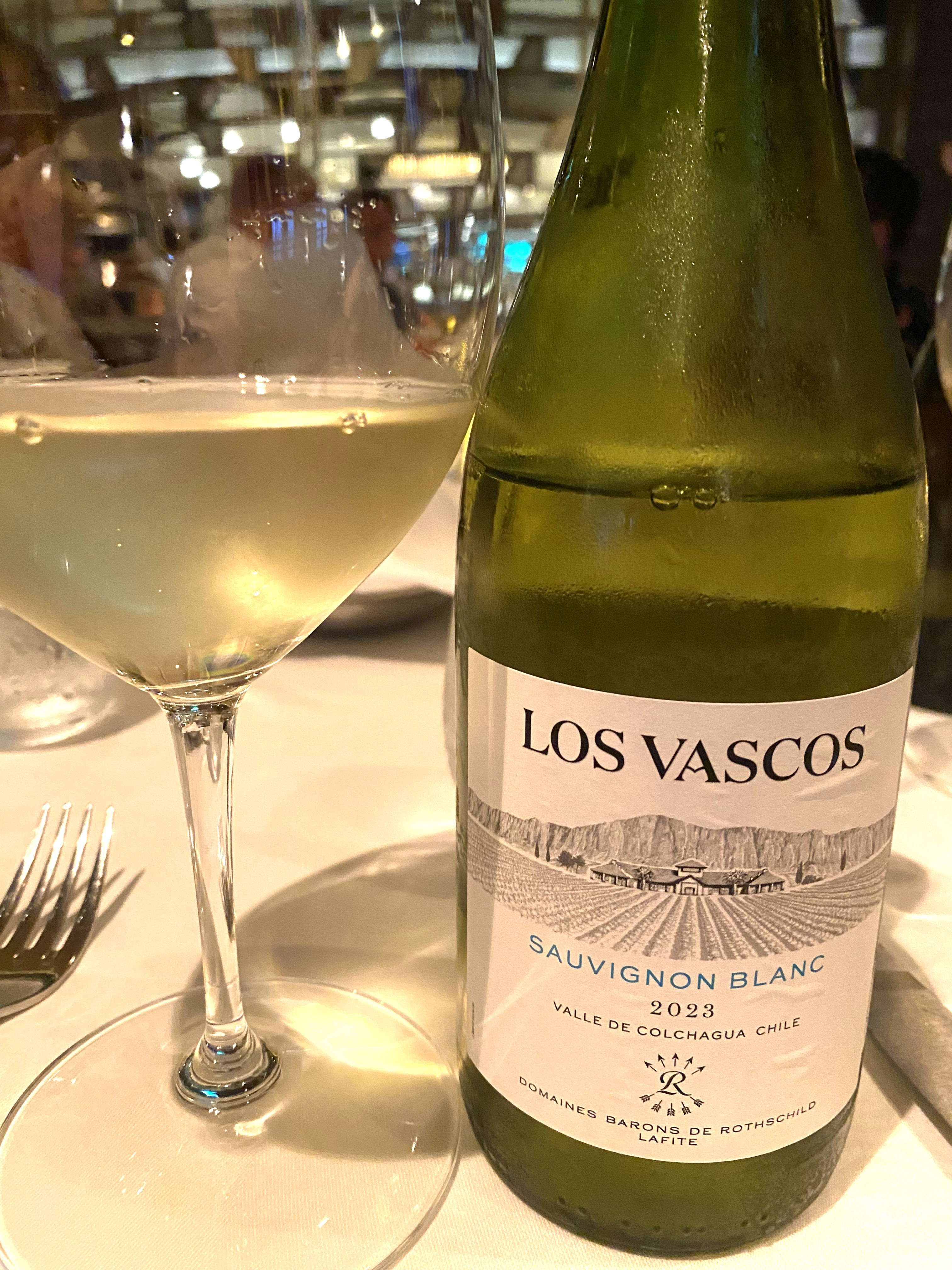
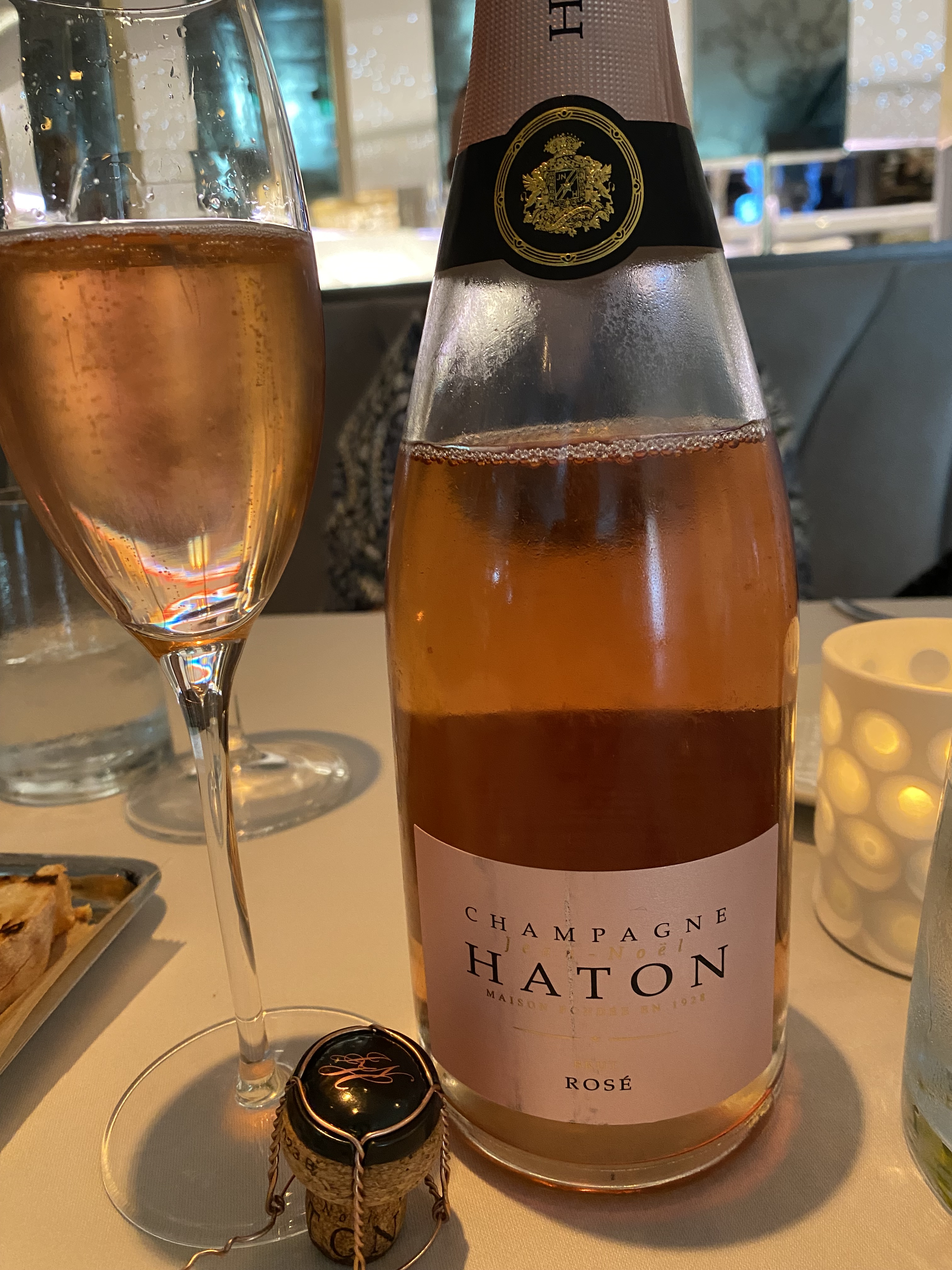
He is a much busier man, than I am, so I reached out for potential dinner dates, as well as whose house.  I mean his children can’t really disappear at our house as readily as they can at their own home, but they wanted to come here.  We started off with appetizers of cheese, crackers, vegetables, and shrimp; though I think the stuffed peppadews were the big hit.  I also scored some “brownie points” as I asked if it was alright for his children to have a  glass of bubbly, since they are nearing the age of majority and under the watchful eye of their parents; and they were appreciative of the offer.  We started the meal off with a bottle of Albert Bichot Crémant de Bourgogne Brut Rosé NV.  Domaine Albert Bichot is a major family-owned and run negociant house and estate owner in Burgundy, that began in 1831 and is now based in Beaune.  Their focus is Pinot Noir and Chardonnay wines and in their more southern holdings they also produce some Gamay in Beaujolais.  Alberic Bichot took over the reins in 1996 and is the sixth generation of family to run the holdings.  They own more than one hundred hectares of sustainably farmed vineyards divided among six estates, and the majority are run organically.  The wine is eighty percent Pinot Noir from the Cote Chalonnaise, ten percent, and more Chardonnay from Auxerrois and less than ten percent Gamay from the Maconnais.  Each grape variety is vinified separately to enhance the qualities of the varietal.  The base wine is thermoregulated in Stainless Steel vats, then blended and aged for at least twelve months on laths, with three additional months after disgorgement before it is released.  A nice coppery-salmon wine with fine even bubbles and offered notes of currants, raspberry, strawberry, and a touch of lemon citrus.  On the palate a bright, fresh wine that showed tones of the red berries, and ended with a nice dry finish. 

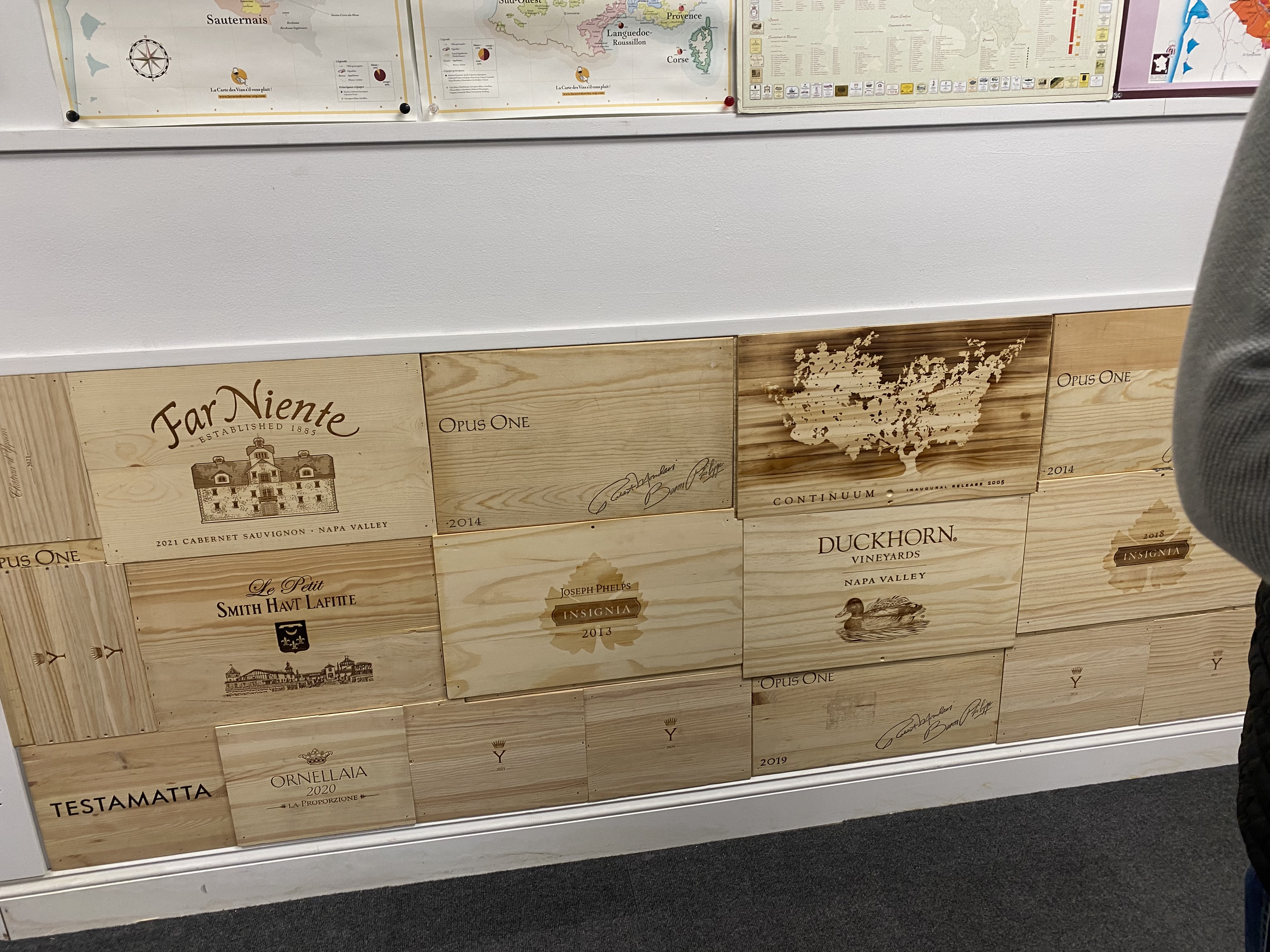
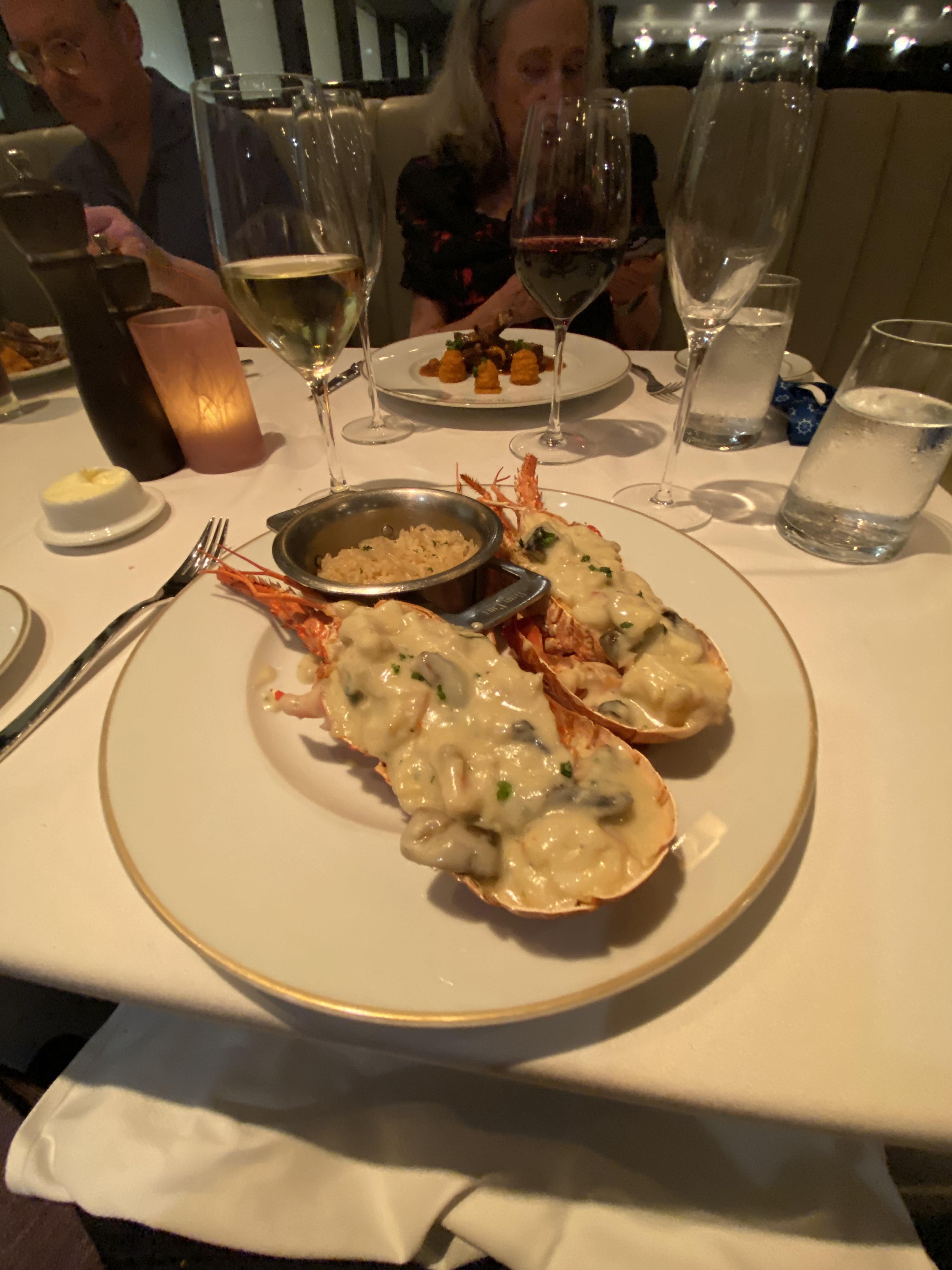
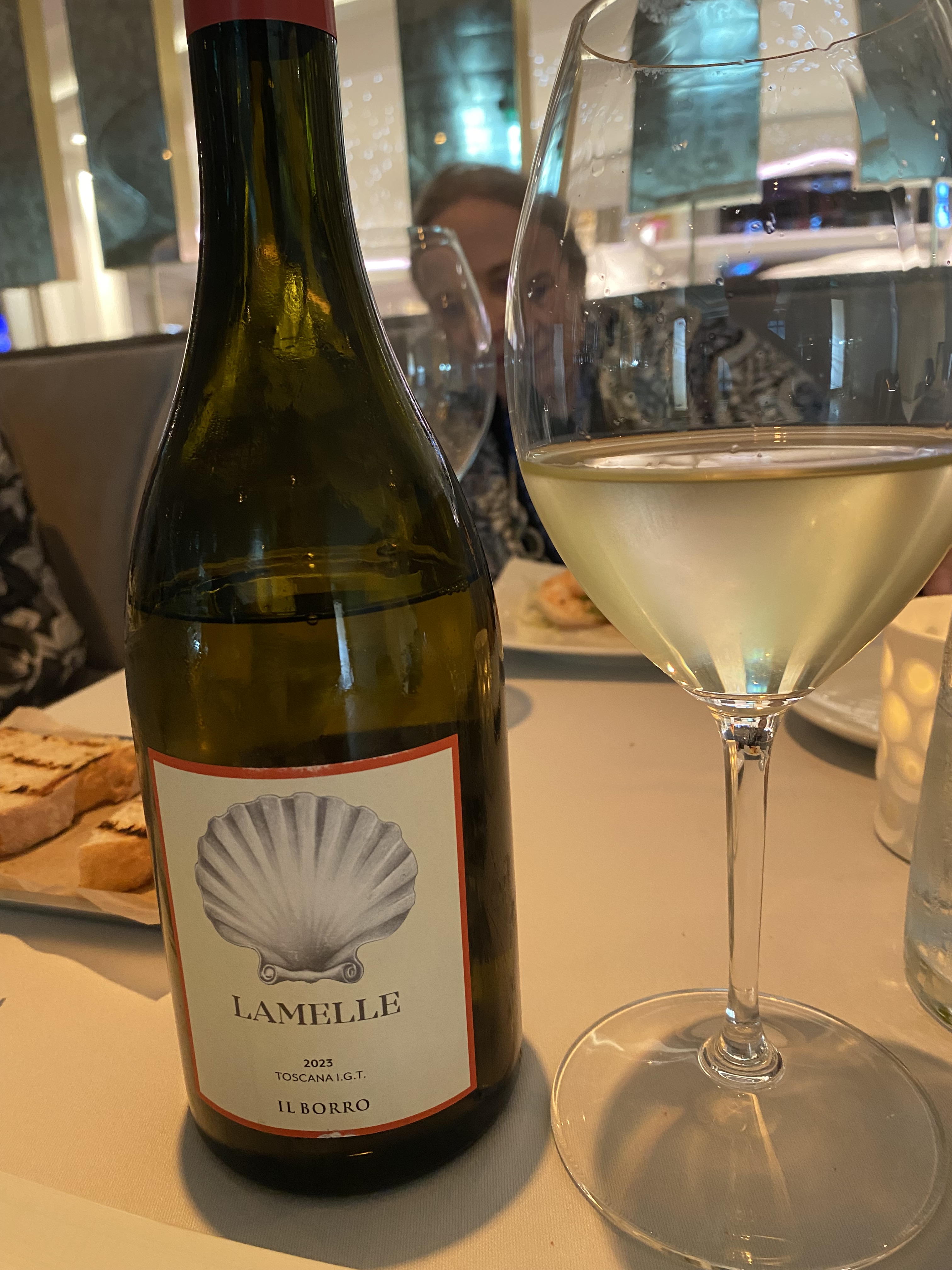
We then moved into the dining room for the next courses.  My Bride made her version of Coquilles St. Jacques al crème de Xeres, which is a fancy way of saying Sea Scallops sautéed with  mushrooms and garlic, pan sauced with Sherry and cream and served with Armenian Rice Pilaf.  We paired this course with Chateau d’Yquem “Y” Ygrec Bordeaux 2021, from one of the most legendary wineries in the world (if I may say) and it was stunning; I will offer some background notes, because if you are like me, it is not a wine that one encounters that often.  It was originally made at the end of the harvest with the last bunches of grapes since 1959 and in 1966 the selection of the grapes changed and the wine is basically Sauvignon Blanc picked at the beginning of the harvest and a small amount of Semillon with Botrytis and in 2004 the brand was to be produced every vintage.  They now have a state-of-the-art vat room just to make this wine and the aging on the lees take place in the barrels, one-third of which are new and the lees are regularly stirred for ten months. This is a white wine that is considered by many to cellar for twenty years, and while I do like to get multiple bottles of wine, this one bottle was my self-imposed allotment.  A pale yellow wine with notes of pears, oranges, lime blossoms, vanilla, and almonds.  On the palate rich tones of white fruits, with traces of pear and lime, refreshing acidity, and a very long finish of saline, almonds, and terroir. I thought the 2017 vintage was awesome, this may be the freshest and liveliest white wine that I have ever tasted, and all my Bride said later, was who can we share this with?  Oh, by the way, if you are curious the “Y” is pronounced “ee-grek” in French.

Posted in Dining, Wine | Tagged , , , , , , , , , , , , | Leave a comment

A Wine Delivery to The Caller

We were going to meet The Caller, as they live in a remote area, and they asked us to get them some wine.  Which was opportune, as we could get together to see them for the Christmas season, as they will begone for the next couple of months on one of their vagabond vacations.  When one doesn’t have children or grandchildren it is easier to get away.  My Bride would be lost.

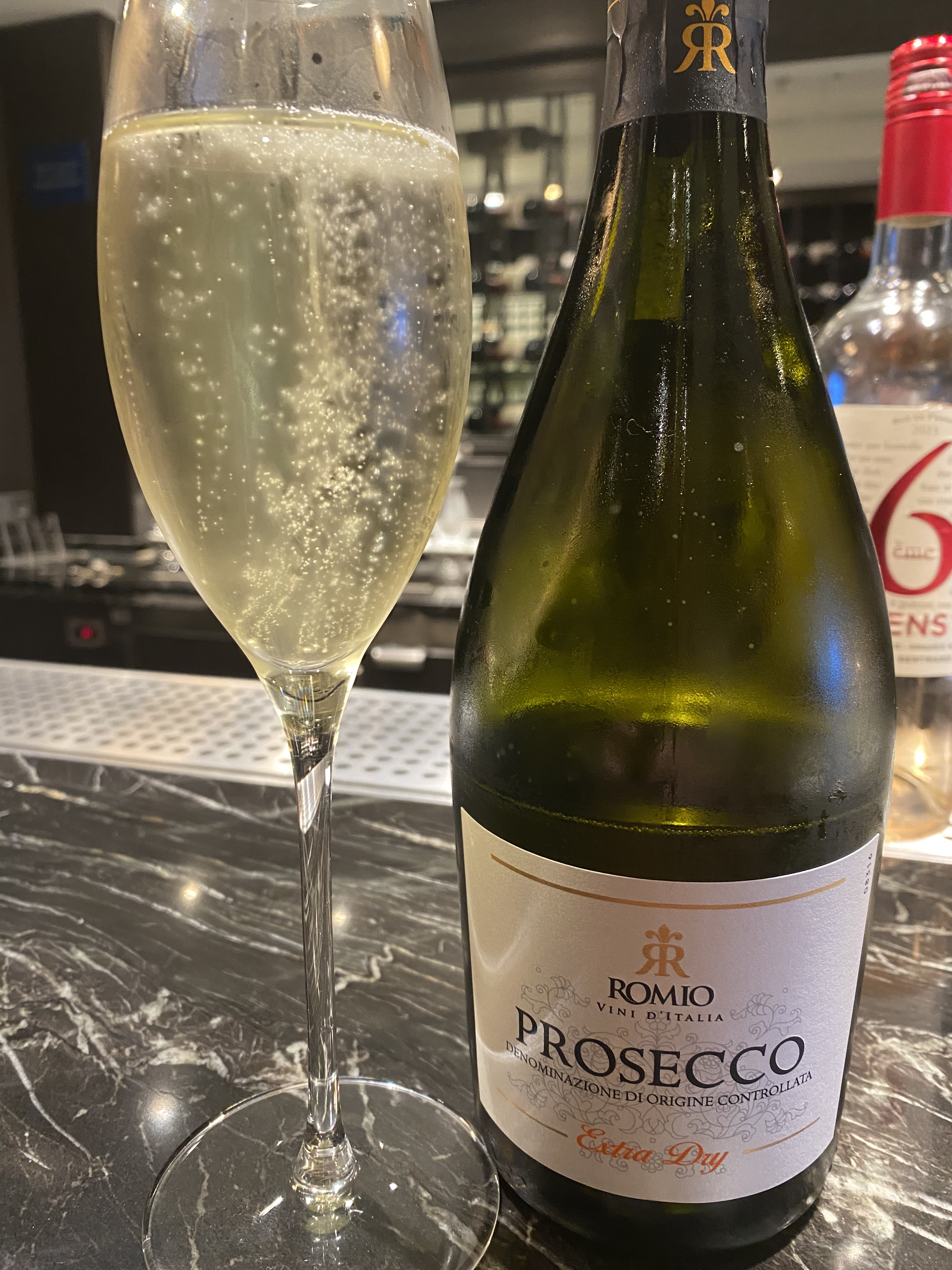
We always try to meet somewhere midpoint between our two homes, so we agreed on the Ciao Amici in Brighton, Michigan for lunch.  It was just the three of us, as his wife had made a quick trip to see some friends, before their extended road trip.  The Caller started lunch off with one of his exotic cocktails, that he is very partial too, and my Bride decided that she wanted a Negroni.  I, in keeping with the theme of my articles had a split of Da Luca Prosecco DOC NV.   Prosecco is a sparkling wine produced from nine provinces of the Veneto and Friuli-Venezia Giulia regions.  Prosecco wine is made from the Glera grape, but when it comes from the Prosecco DOC region, the grape is called Prosecco; and sparkling wines from outside of the region still use the name Glera.  It is one of the sparkling wines that is often referred to as “a poor man’s Champagne.” It is made using a low-pressure carbonation process, known as the Charmat Method, the Marinotti Method or the tank method; the bubbles tend to be bigger, lighter and less persistent.   This pale straw-yellow wine offers notes of peaches, apricots, and white flowers.   On the palate the wine offers tones of stone fruits, yellow apples and lemon candy in an off-dry style with crispness, bright acidity and a medium-count finish of pineapple.

After our drinks, we started looking at the lunch menu, but ended up ordering from the dinner menu, I guess we are just anarchists at heart.  The Caller had his Sausage Rustica, Italian sausage pan seared with sautéed banana peppers and onions.  My Bride had the Butternut Ravioli stuffed with Butternut Squash puree, walnuts and mushrooms in a creamy Marsala-sage sauce.  I had the Shrimp Luca, lightly breaded jumbo shrimp that was flash fried with fresh vegetables and polenta, finished with a lemon-garlic-cream sauce.  We shared a bottle of M. Chapoutier Belleruche Cotes-du-Rhone Blanc 2022.  The Chapoutier family has been in the Rhone since 1808 and have transitioned from just a grower to a Bwinemaker and a negociant, and a genuine force in the area and France; not to mention that they have holdings now in three other countries beyond France.  They have also included Braille embossing on their labels for some time now, since their estate in Hermitage was originally owned by the creator of the modern version of Braille.  The Belleruche label is their popular priced wine and readily available at many restaurants.  The wine is a blend of White Grenache, Roussanne, Viognier, Clairette and Bourboulenc grown on vineyards of stony marls and clay-limestone hills.  The fruit is mechanically harvested at night, light maceration, with fermentation at cool-controlled Stainless-Steel tanks, and five months on the lees.  A soft golden-yellow colored wine that offers notes of apricots, fennel and irises.  On the palate there were tones of citrus, pears and dried fruits, fresh and balanced with a medium finish with a trace of anise.

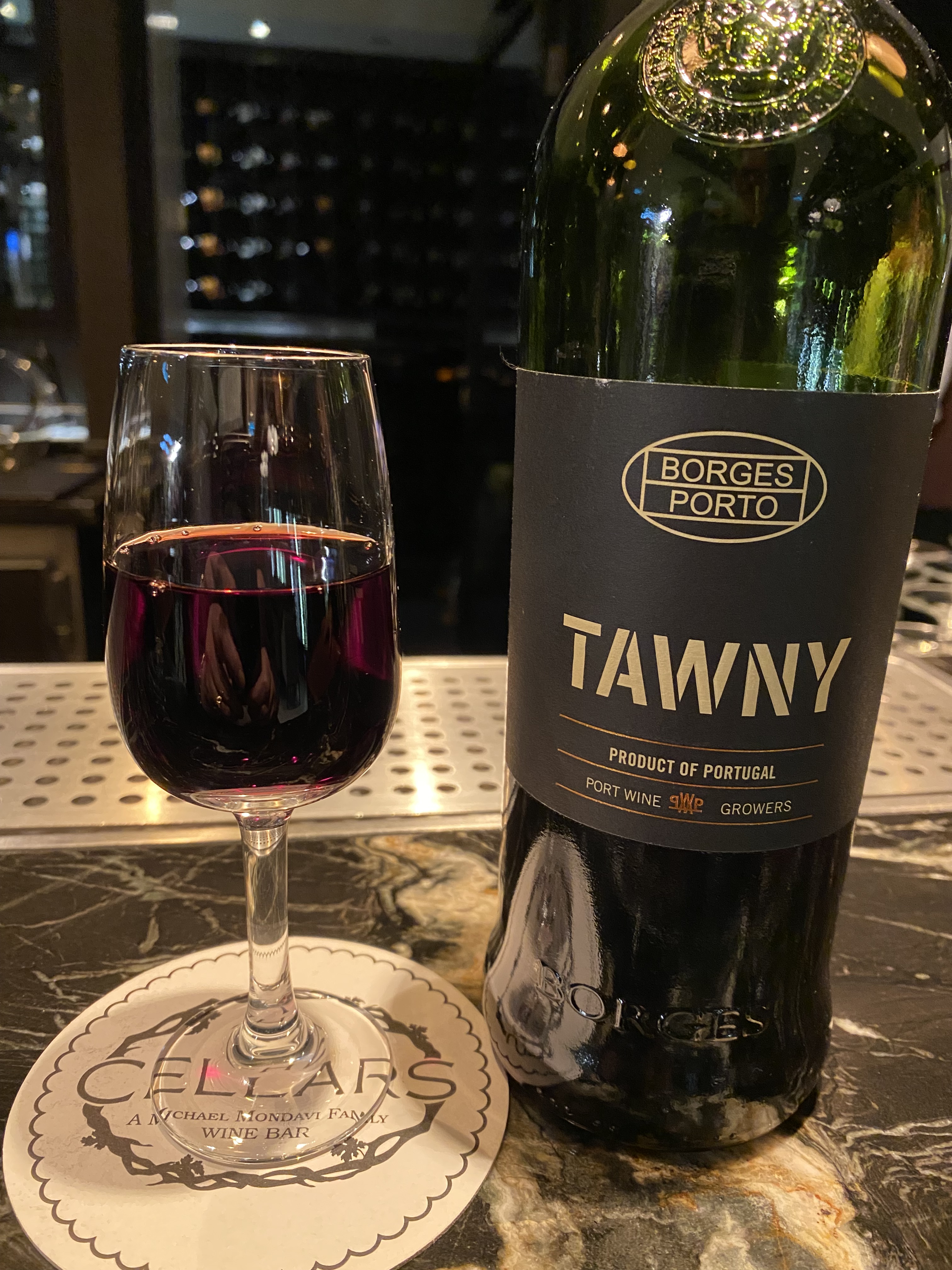
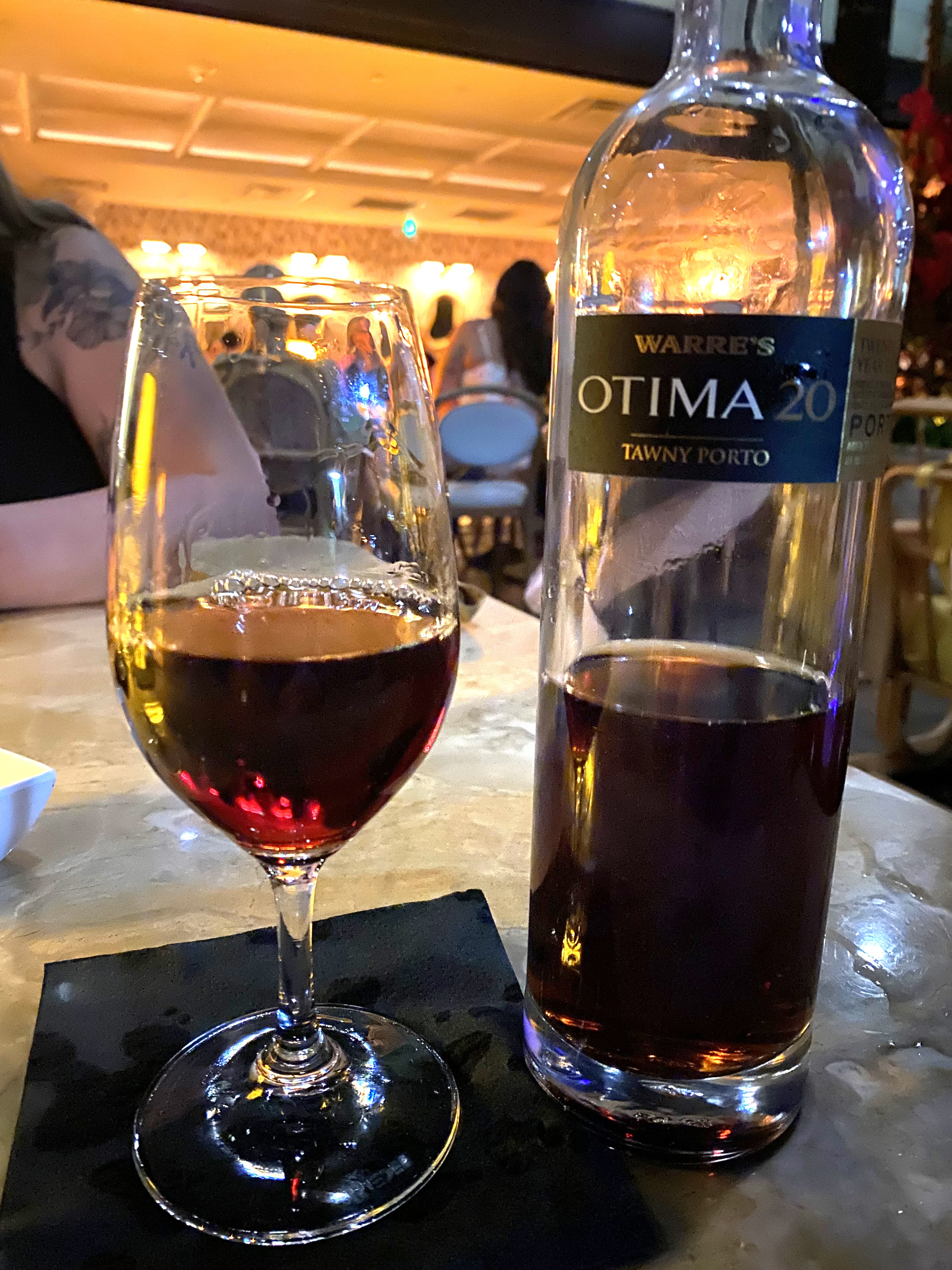
We were getting ready to enjoy some dessert, and while The Caller and my Bride were deciding, I was going to just have a glass of dessert wine, and maybe as I am getting older, I am enjoying my after dinner wines more and more.  I was going to have a glass of Warre’s Otima 10 Tawny Porto NV, and our waiter suggested that I get some Vanilla Bean ice cream, and he would drizzle some of the Tawny on the ice cream as well.  The other two’s ears perked up, and they wanted to try this as well.  Warre’s is one of Portugal’s most famous Port houses and it began in 1670.  William Warre became a partner in 1729 and then it was known as Clark, Thorton and Warre.   The house stayed exclusively in the Warren family until 1905, when Andrew James Symington was admitted as a partner of Warre and Co.  Warre’s is managed by the 13th generation of the Symington family, who also own the Dow’s and Graham’s Port houses.  The Otima 10 and Otima 20 Year Old Tawny was developed about twenty-five years ago aimed at a younger demographic group, than what is usually associated with Port drinkers.    While there are over eighty sanctioned grapes allowed in the production of Port, most have been forgotten, lost, and intermingled over the centuries.  The five main grapes used are: Touriga Nacional, Touriga Franca, Tinto Barroca, Tinta Roriz (Tempranillo), and Tinto Cao; and some other relatively common varieties are Sousao, Tinta Amarela and Mourisco Tinto.   Port wines are what is known as fortified wines, and is achieved by adding high proof grape spirit during the fermentation process as the spirit kills of the yeast before all the sugars have fermented, then it is aged in barrel, where the coloring comes from.  The wine is a golden red color and offers notes of golden raisins, figs, dried fruits and butterscotch.  On the palate there are tones of dried apricots, orange marmalade blending perfectly with raisins, figs, butterscotch and caramelized sugar with enough acidity to keep the wine fresh and not cloying, and the finish is a nice long count of dried fruit and barrel aging.  

Posted in Dining, Wine | Tagged , , , , , , , , , , , , , , , , , , , , , , , , , , , , , , | Leave a comment

Kamper’s

My Bride and I are still tourists in Detroit, even though I was born in the borough of Delray, then Southwest Detroit and went to school and college there, while my Bride had her first real job in downtown.  During the holiday season we went to see the pop-up retail establishments in Campus Martius and Kennedy Square; not to mention the ice-skating rink.  Campus Martius was adjacent to the Old City Hall, and after they tore down that building, they developed a huge underground parking structure with a big concrete topping and a fountain that was eventually removed.  The grounds were named Kennedy Square, many years after John F. Kennedy spoke during the Labor Day festivities while campaigning in 1960.

We decided to go to the Book Tower as my Bride had a thirst for a Spanish Coffee.  It was about an eight block walk and I still enjoy the architecture of Detroit,  The Book Tower was built by the Book brothers, who at the time were the wealthiest two men in Detroit and they had a desire to make Washington Boulevard competition to Manhattan’s Fifth Avenue.  They built the Book Cadillac  Hotel, and the Book Tower and both became instant Detroit Landmarks with their Roman-influenced designs and embellishments.  Both buildings along with others were designed by the architect Louis Kamper and they were built during the heyday of Detroit, before the Great Depression.  We decided to go to Kamper’s, which is the city’s largest rooftop bar and lounge and evokes a Basque tapas establishment.  It is on the 14th floor, but we had to get permission to go there, and security had to make sure that there was a table for us, then they contacted us on our phone that we could go up the elevator, the funny thing is that there was no 14th floor, but security tapped the controls in the elevator and then we were taken to our table.  The view was wonderful, as I saw structures for the first time, not from the street. 

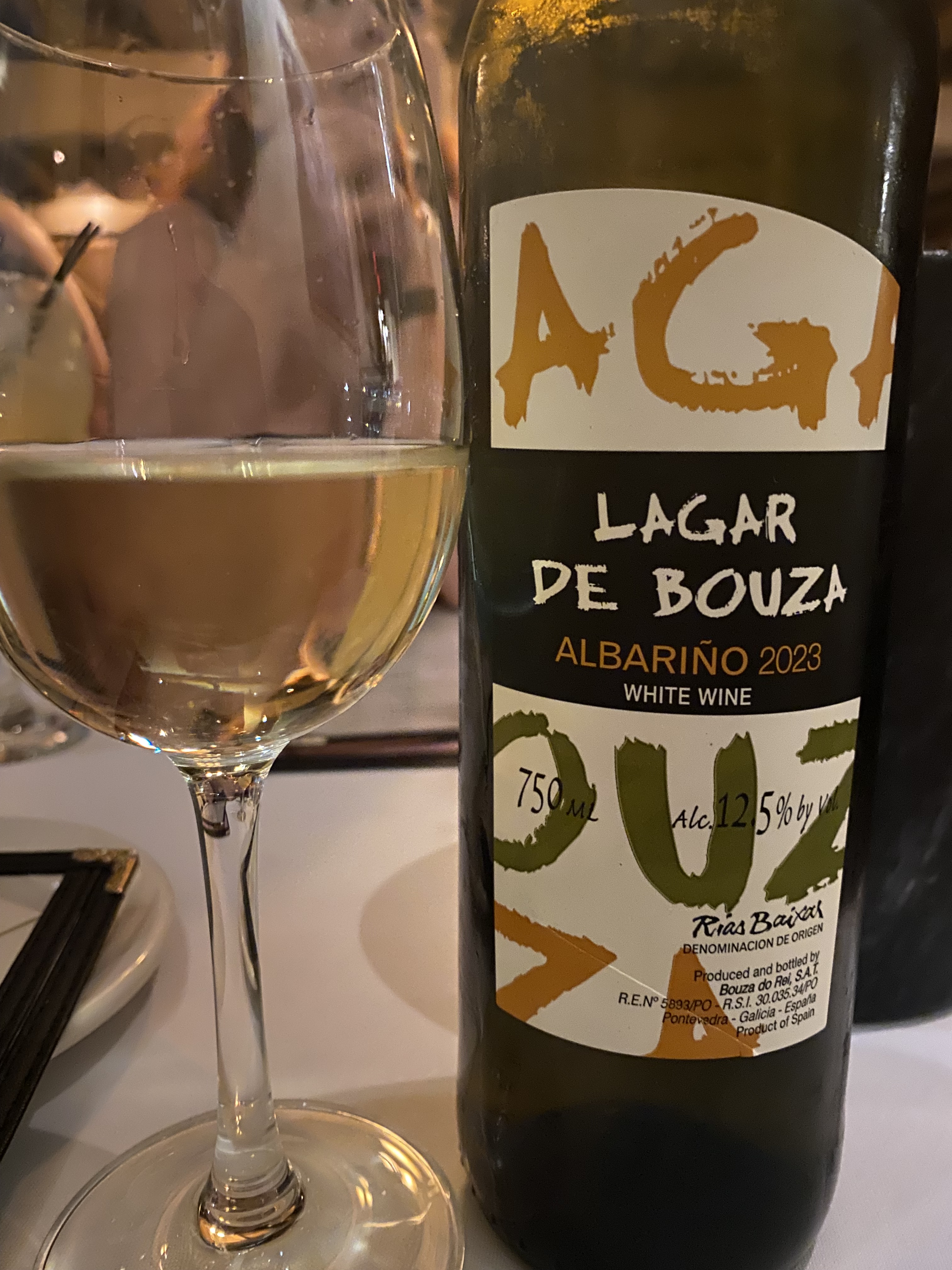
Alas, my Bride was disappointed again, first we tried on the main floor at Le Supreme for a Spanish Coffee (who didn’t have whipped cream or Crème Fraiche) and Kamper’s didn’t have coffee.  You would have been proud of us, as we were able to find an alternative, while admiring the scenery, as we stepped out onto the rooftop to be tourists.   While my Bride decided on having one of her backup drinks of a Negroni, I opted to maintain the theme of the room and had Bodegas Agro de Bazan Granbazan Etiqueta Verde Albarino Salnés Valley Rias Baixas 2023.  Bodegas Granbazan is considered a crown jewel of the region with its pronounced French chateau influence.  Albarino has been praised in the area since the days of the Galician kingdom.  The wine is pure Albarino from vines that are over thirty-five years of age, grown on high granite soils on the banks of an estuary with strong Atlantic influence.  The fruit is destemmed and undergoes cold maceration for six to eight hours, with controlled fermentation in Stainless Steel tanks.  The wine rests on fine lees without batonage, and then bottled four to five months after fermentation is complete.  A bright yellow wine offering notes of stone fruit, tropical fruits and white florals.  On the palate there were notes of white stone fruit, mandarin, touches of marzipan with refreshing acidity and a good medium count finish of salty air (salinity). Afterwards, when we arrived on the main floor, we found out that the Rotunda Bar could make a Spanish Coffee, and another trip and adventure.

Posted in Wine | Tagged , , , , , , , | Leave a comment

The Last Three Wines from the Korbin Kameron Tasting

This last sponsored tasting for the year at The Fine Wine Source in Livonia, Michigan featured Korbin Ming who also brought a library wine from Moonridge Vineyards to taste alongside his current offering, plus a dessert wine.  It couldn’t get any better eleven days before Christmas.

We had been tasting wines from there estate vineyard on Moon Mountain District which is on the Sonoma County side; the western slopes of the Mayacamas mountains between the Sugarloaf Ridge and Carneros.   We started off with Korbin Kameron Reserve Cabernet Sauvignon Mount Veeder Napa 2018; and Mount Veeder is located on the eastern slopes of the Mayacamas mountains.  This reserve wine was aged for eighteen months in entirely new French Oak barrels and about sixty cases were produced.  A deep, dark garnet colored wine that offered notes of blackberries, raspberries, cassis, cedar and traces of nutmeg.  On the palate this was a big chewy wine offering tones of blackberries, black cherries, vanilla, oak, black pepper blending with big tannins, great acidity and a long-count finish of concentrated fruit and terroir.   

We then followed the 2018 vintage, with the Korbin Kameron Reserve Cabernet Sauvignon Mount Veeder Napa 2019.  This wine was aged for eighteen months in French Oak, of which seventy-five percent was new, and they produced fifty cases.   I have to admit, that couldn’t really discern any great differences between the two vintages.  A deep, dark garnet-colored wine that offered notes of black fruit, cassis, cedar and sous-bois.  On the palate this was also a big chewy wine offering tones of blackberries, black cherries, currants, vanilla, oak and black pepper blending with big tannins, great acidity and a long-count of concentrated fruit and terroir. 

The tasting was completed with Korbin Kameron “Sweet Isla” Late Harvest Semillon/Sauvignon Blanc Moon Mountain District 2018.  . The wine is late harvested Sauvingnon Blanc with an addition of fifteen percent Botrytised Semillon. One week of cold soaking and fermented on the skins for an additional two weeks to pick up extra color and flavors, called phenolics, which was a really long and cool fermentation for intense aromatics. The wine was aged for eight months in neutral oak. .  A beautiful wine that was just magnificent and reminded me of a French Sauternes with a nose of honeysuckle, a silky texture offering notes of sweet lemons, apricots and marmalade with a nice long count in the finish.

Posted in Wine | Tagged , , , , , , , , , , , | Leave a comment

Three Single Varietals from Korbin Kameron

The next three wines that Korbin Ming poured from his Korbin Kameron wines were varietal grapes usually thought of as blending grapes, while we were at The Fine Wine Source in Livonia, Michigan.  These three grapes are now being seen more and more as producing wines by themselves, instead of just being part of the famous Bordeaux red blend.

The first wine that we had was Korbin Kameron Cabernet Franc Estate Grown Moon Mountain District 2021 from Moonridge Vineyards.  The Moonridge Vineyards is above the fog line at over eighteen hundred feet in elevation which allows this varietal to enjoy optimal ripening.  The evening also allows cool breezes preserving crucial acidity and the fine nuances that this grape is appreciated for. This wine was aged for twenty-two months in French Oak, of which sixty percent was new.   There were twenty-eight cases produced.   This deep garnet colored wine offered notes of black fruits with traces of green bell pepper, cigar, leather, sous-bois and minerals.  On the palate, this was a nice, elegant wine with tones of black fruits and licorice blended nicely with the silky tannins, well balanced and ended with a nice medium count finish of fruit and terroir.

The next wine that we had was Korbin Kameron Malbec Estate Grown Moon Mountain District 2021.  While one of the forgotten blending grapes of Bordeaux, because of its fame in Cahoors and Argentina, it seems to thrive on the high altitudes of the Moon Mountain District.  The wine was aged for about twenty months in French Oak, with a mix of new and once used barrels; and twenty-eight cases were produced.  A very deep inky-black-purple colored wine that one would think could easily stain teeth, offered notes of blackberries, dates, plums, chocolate and sous-bois.  On the palate this was a “California” style wine where the tones of the dark fruits, meshed with big tannins to produce an incredible and enjoyable wine with a long count finish of fruit and terroir.

The last of the three special varietal offerings was the Korbin Kameron Petit Verdot Estate Grown Moon Mountain District 2019.  Petit Verdot has only in the past ten to twenty years seems to have gathered a following, as traditionally it was usually used in less than ten percent for blending, because it can be quite a bold varietal, though it seems to being grown more and more.  This wine was aged for about twenty months in a mix of new and used French Oak and there were fifty cases produced.  This was a deep purple wine that offered notes of dark fruits, lilac, violets, smoke and herbs.  On the palate there were tones of cherry, plum, mocha, sage, vanilla blending well with bold tannins and a strong medium count finish of fruit and terroir. 

Posted in Wine | Tagged , , , , , , | Leave a comment

Korbin Ming Pours More Korbin Kameron Wines

It was quite an event at The Fine Wine Source in Livonia, Michigan; as Korbin Ming, the General Manager of Moonridge Vineyards and Korbin Kameron was pouring eleven of his family’s wines that day.

The rest of the tasting featured red wines and we began with Korbin Kameron Merlot Moon Mountain District, Sonoma County 2019.  When Mitchell Ming began planting the estate, all five red Bordeaux varieties, as well as Semillon and Sauvignon Blanc were selected, after initial soil analysis.  Phil Coturri, the Vineyard Manager has been there since the beginning, and it has been said that no one has more experience farming mountain vineyards in Sonoma with thirty-five years pioneering organic and biodynamic winegrowing in California.  This wine was aged for eighteen months in French Oak, of which fifty percent was new; with eighty cases produced. A nice deep garnet color wine that offered notes of cherries, dark berries, alluring scents of cinnamon and cloves.  On the palate tones of black cherries, cola, and spices, blended with mellow tannins and a nice medium count finish.

Korbin Kameron Cabernet Sauvignon Moon Mountain District, Sonoma County 2019 was the first of the Cabs that we tried.  Over the years, I have had the good fortune to try the Cabernet Sauvignon wines going back to 2006 and considering that the vineyard was planted in 2000, that was definitely one of the earliest issued wines.  Moon Mountain District AVA is a sub-appellation of Sonoma County, just north of the city of Sonoma and on the eastern edge of Sonoma County and is the western slopes of Mayacamas mountains between Sugarloaf Ridge and Carneros; while Mount Veeder AVA encompasses the eastern slopes.  Fermentation and Aging is done in French Oak, of which fifty percent is new, and the barrel time is eighteen months.  With a production of six-hundred-twenty-cases produced.  A deep garnet colored wine that offers notes of black fruit, figs, cassis, lavender, and some molasses.  On the palate black cherry and blackberries, cocoa, espresso and traces of leather, mingling with tight tannins, and ending with a nice finish of fruit and terroir.

The next wine that we had was Korbin Kameron Proprietary Red Wine Estate Blend Cuvee Kristin Moon Mountain District AVA Sonoma County 2019.   This blended Cuvee is named after Korbin’s sister, who is the Director of Design at the winery.   The wine is a classic Bordeaux blend of Cabernet Sauvignon, Merlot, Cabernet Franc, Petit Verdot and Malbec.  It is blended and aged for eighteen months in French Oak of which seventy-five percent is new.    There was one-hundred-fifty-five cases produced.  This deep garnet/purple wine offered notes of black and red fruits, rhubarb, figs and rose petals.  On the palate blueberries and black cherries lead with secondary flavors of cola, pink peppercorn and a nice medium count finish of fruit and terroir.

Posted in Wine | Tagged , , , , , , , , , , , | Leave a comment

Korbin Ming Hosts Korbin Kameron Wines

Korbin Ming hosted another wine tasting at The Fine Wine Source in Livonia, Michigan.  I have been watching the reconstruction of the winery after the Tubbs Fire in 2018, in which they lost buildings, homes and part of the vineyard.  The winery is named after Mitchell Ming’s twin sons Korbin and Kameron, and it high above Sonoma Valley on Mount Veeder, on a 186 acre property where they grow several diverse varietals.  Moonridge Vineyard is a family endeavor, and a home above the clouds at times.   The estate was planted in 2000, and it sits on the ridge of Mount Veeder on Mayacamas Mountain Range and straddles the Napa/Sonoma County line at 2,300 feet in elevation.  The majority of the estate is in Sonoma County and they can look out and see Santa Rosa, Sonoma Mountain and on a clear day the Pacific Ocean.  Then if you turn around you are looking at Oakville and Rutherford, below the fog line.  That is the beauty of a mountain winery and one of the added benefits is a couple of hours of extra sunlight for the vines.   Korbin is the General Manager, Viticulturist and Winemaker with degrees from Boston University and UC Davis. 

 We started off the tasting with Korbin Kameron Sauvignon Blanc Moon Mountain District, Sonoma County 2021. Moon Mountain District AVA which is a sub-appellation of the Sonoma County AVA.  Moon Mountain is for the western slopes of the Mayacamas mountai ns between Sugarloaf Ridge and Carneros; while Mount Veeder AVA encompasses the eastern slopes.  The AVA is named after Moon Mountain Road which runs through the area and means “valley of the moon” in the local Native American dialect.  The AVA was granted in 2013, because of the region’s iron-rich volcanic soils, quite distinctive from the sedimentary soils of the surrounding area.  Initial Fermentation is in Stainless Steel followed by Malolactic Fermentation in French Oak barrels, eighty percent neutral and twenty percent new, for four months.  With two hundred twenty cases of wine produced.  A pale straw-colored wine offering notes of lemongrass, guava, and lime.  On the palate there were strong tones of yuzu, grapefruit, and honeydew with bright acidity and a medium finish.

Beside bringing the filets, we brought some wine, as if you might be surprised.  We started off with Korbin Kameron Semillon Moon Mountain District 2022. For years, I would hear how some of the famed Medoc houses made a barrel or two of white wine for their own consumption.  I also heard how some of the great houses of Sauternes would make a barrel or two of dry white wine for their own personal consumption as well. I guess that I would lump this wine with those, as there was only one barrel made, or to make it easier to understand, there were twenty-five cases produced.  The wine is organically made, using indigenous yeasts, it started in Stainless Steel and finished in new French Oak.  A very yellow/golden colored wine which at the age of six, was still showing youthful appeal of citrus and white florals.  On the palate there was still fresh citrus, and ripe pear mingling together and ending with a nice long finish of fruit and a touch of terroir.

Posted in Wine | Tagged , , , , , , , , | Leave a comment

Fine Wine Source Club-December 2024 Selections

The month of December always catches me way behind with articles, as there is always more events and tastings to attend and report on.  I always like to write across the entire spectrum of wines that I encounter.  I always look for the next affordable wine, as writing only about the top wines is amply covered by others. 

At my local wine shop The Fine Wine Source in Livonia, Michigan; every wine is curated by the owner and his staff, and that includes the Wine Club selections, which I think they view as a “loss leader” to get the people into the shop.  The first wine representing the Old World is A La Volée Brut Crémant de Limoux Brut Nature Zero Dosage 2018.  Crémant de Limoux is an appellation created in 1990 to raise awareness of this wine from the higher and cooler region of the Languedoc-Roussillon.  Originally noted for the Mauzac grape or locally known as Blanquette de Limoux, but the new appellation allows for the use of Chenin Blanc and Chardonnay.  This wine is from a partnership with Pierre Calzergues and the Bouché Family and established in 2021.  The fruit is sourced from limestone and clay soils in the upper Aude Valley in Limoux.  The wine is a blend of half Chardonnay and half Chenin Blanc, and the fruit is hand-harvested, using small crates (to prevent premature damage to the grapes), destemmed and gently crushed.  The wine is made using the Champenoise Method. Initial Fermentation is in Stainless Steel for six weeks, and then bottled and aged for eighteen months.  The Secondary Fermentation occurs during disgorgement, with no additional sugar, just additional white wine to top off the bottle.   The light-gold colored wine is described as offering notes of buttered popcorn, melon and apples.  On the palate it is noted for having tones of candied fruit, toasted bread, crisp, well-balanced and a touch of bitters in the finish.    

The wine representing the New World is Farmstrong Vineyards Field Red California 2017.  Farmstrong Vineyards was founded in 2014, and the fruit is sourced from independent family-owned vineyards that practice sustainable farming.  They use lightweight glass, taint-free corks and no capsules.   There are three different wineries used; Hawkeye Ranch Vineyard in Mendocino, which for over eighty years has been growing “old vine” Carignane on gravelly loam on the bench of the Russian River with chunks of quartz in the soil as well.  KenMar Vineyard is located on the upper bench of Mendocino’s Redwood Valley, and they have over fifty-year-old Zinfandel vines.   The Syrah grapes are from Ledgewood Vineyard in the Suisun Valley AVA in Solano County.  The wine is a blend of fifty-three percent Zinfandel, twenty-eight percent Carignane and nineteen percent Syrah.  The fruits were both destemmed and whole cluster crushing using native yeasts for Initial Fermentation in Stainless Steel, then undergoing native Secondary Fermentation.  Then the different juices were blended and aged in French Oak, nine percent once used and the balance neutral for ten months.  There were fifteen barrels produced or three-hundred-seventy-five cases.  The wine is described as having notes of black fruit, pencil shavings, grilled bread and traces of white pepper.  On the palate there are tones of black plums, cranberry, and cherry blended with mellow tannins.

The was a surprise tasting offered to me, and I couldn’t say no to the request, and totally a unique moment.  I was poured a glass of Chateau Lynch-Moussas Pauillac 1981.  a Fifth Growth from the famed Classification of the Medoc of 1855.  Chateau Lynch-Moussas was once part of the large estate of Comte Lynch (and a former hunting lodge) that was divided in two in 1824, the other part became Lynch-Bages.  The chateau was founded in the 18th Century by a member of the Lynch family.  The “Moussas” name dates back to the 16th Century The property was purchased in 1919 by the Casteja family, who at the time also owned Duhart-Milon, and a member of the family has been in charge of the property since, though it is now part of the Borie-Manoux portfolio.  The estate is about fifty-five hectares of vines planted on silica and gravel over limestone; and planted around seventy-five percent Cabernet Sauvignon and twenty-five percent Merlot.  The wine is aged for about eighteen-months in oak, of which about half is new.  At an age of forty-three this wine still had a nice garnet color and still some notes of dark fruit.  On the palate it was a very mature wine with tones of charring, very mellow, and a blending of the tannins, fruit, and the acidity all becoming one.  A totally unexpected pleasure and we were saluting a customer that was glad to find his “vintage year” and it sounded like he was going to save the wines to celebrate his fiftieth birthday. 

Posted in Wine | Tagged , , , , , , , , , , , , , , , , , , , , , , , | Leave a comment

The Final Reds from the Ixsir Winery Tasting

We were down to last of the wines from Ixsir Winery at The Fine Wine Source in Livonia, Michigan.  Our guest host was Kelleen Hubbs, the Vice President of Sales for North America for Ixsir Winery.  The new addition for the store is greatly appreciated as there is a large counter for holding glasses and the wines, and we no longer all have to huddle around one of the barrel tables, though that still has some definite nostalgia for some of the veteran customers of the shop.

The penultimate wine of the tasting was Ixsir Winery Grande Reserve Rouge Batroun, Lebanon 2014.  The Batroun Mountain region is in norther Lebanon and vineyards are spread among the various towns in the mountains overlooking the coastal city of Batroun.  Batroun is one of the oldest cities in the world, going back to the Phoenicians, dating back to the 14th Century BC.  Over the years it was important to the Romans, a Crusader Citadel, and an administrative site for the Ottoman Empire.  It is home to a small group of wineries, and the area is also a tourist destination.  The fruit for this wine is Syrah and Cabernet Sauvignon and is from five distinct plots that all have clay and limestone soils: Bechouat, Kab Elias, Deir Ahmar, and Jezzine.  The wine has been aged in French Oak barrels, of which sixty percent is new, and forty percent was used once.  A deep garnet colored wine that offers notes of black cherries, red fruits, sous bois, smoky oak, and traces of leather.  On the palate beautiful tones of black cherry and oak blending harmoniously with tight tannins and a medium-count finish of fruit and terroir.          

The last wine of the tasting was Ixsir Winery “El Ixsir” Rouge Batroun, Lebanon 2016 and some critics have awarded this wine as the best of Batroun.  This wine is a blend of Syrah, Cabernet Sauvignon and Merlot; and was planted in a mix of ferric clay and limestone in the Ainata, Yamoune, and Hadath Baalbek plots.  The wine was aged in French Oak for twenty-four months, of which half were new, and half were used once.  A deep garnet colored wine that offered notes of red and black fruits, toasted oak, and a trace of eucalyptus.  On the palate black cherries and blackberries, cinnamon, vanilla, and cedar blend well with tight tannins, finishing with a long-count of fruit and terroir.  I think that the wine is still tight and could use a few more years in the cellar, which is very impressive for an eight-year old.   

In between tastings and discussions, I had mentioned to Kelleen Hubbs that we have at home a special three pack of EL Ixsir Cuvee X’eme Anniversaire Red Non-Vintage.  It was number sixteen of an issue of one-thousand, and the box held three bottles of this special edition wine as well as a beautiful “coffee-table” book The Wines of Ixsir.  Ixsir Winery was founded in 2009 in the northern part of Lebanon in Batroun which is a coastal area.  They are a mountain winery, and one of the highest in elevation for the Northern Hemisphere.  The name Ixsir derives from the Arabic word “Iksir” the original Arabic word for “elixir.” History has recorded that man has searched for the perfect elixir for eternal youth and for love.  The winery is very progressive and has been named one of the greenest buildings in the world.  The winery owns one hundred-twenty hectares in the Batroun with several different vineyards capitalizing on the terroir.  The winery grows Cabernet Sauvignon, Syrah, Tempranillo, Caladoc, Cinsault, Merlot, Obeidy, Viognier, Muscat, Sauvignon Blanc, Chardonnay and Semillon.  Quite impressive for a young company, as far as I am concerned.  The EL Ixsir Cuvee X’eme Anniversaire Red Non-Vintage is a special bottling of three very recent vintages of their EL, which is their top cuvee and a blend of fifty-five percent Syrah, thirty-five percent Cabernet Sauvignon and ten percent Merlot.  Each of the wines had aged for twenty-four months and then had been blended and aged in French Oak, of which half were new barrels. The concept of having the three bottles in the case was that the first bottle should be tasted in five years, and then at least ten years for the second bottle and the last should be held even longer.  As a reference point, this wine was issued 30 April 2019 and the Wine Advocate awarded it a score of 93 Points and a suggest “Drink Date” of 2022-2040.  When we tasted the wine, we were told that the 2014 vintage which was the real powerhouse of EL was leading this wine and it was big and inky and really overpowering; it was way too young and feisty to be properly enjoyed and there was real merit in cellaring this wine.  So, this is a gift that will be giving joy in the years to come.  We have cheated and had the first wine in 2022, and it was still too feisty, so I can wait for the next bottle to be opened.

Posted in Wine | Tagged , , , , , , , , , , , , , , , | Leave a comment

Two More Wines from Ixsir Winery

As I was enjoying a wine tasting of Ixsir Winery offerings at The Fine Wine Source in Livonia, Michigan; the tasting was hosted by Kelleen Hubbs I also remember the last tasting hosted by  Etienne Debbanne of Ixsir Winery.  Etienne Debbanne is the Co-founder and Chairman of Ixsir Winery.  He holds a master’s degree in agriculture from Reading University of the United Kingdom.  He has a passion for wine and his native home of Lebanon, and he co-founded the winery with a group of friends.  He is also a well-known business figure in the Middle East and one of the administrators of the Debbane-Saikali Group which is a majority shareholder in several companies and corporations.  The best part is that he was a charming, urbane gentleman who enjoyed talking about his wines, and he remembered plenty of past customers that came to taste his wines on a prior occasion, that unfortunately my Bride and I missed, but we made it a point to attend that tasting.

After having the white wines, we then had the Ixsir Winery Grande Reserve Rosé Lebanon 2023.  Ixsir Winery was founded in 2009 in the northern part of Lebanon in Batroun which is a coastal area.  They are a mountain winery, and one of the highest in elevation for the Northern Hemisphere.  The name Ixsir derives from the Arabic word “Iksir” the original Arabic word for “elixir.” History has recorded that man has searched for the perfect elixir for eternal youth and for love.  The winery is very progressive and has been named one of the greenest buildings in the world.  The winery owns one-hundred-twenty hectares in the Batroun with several different vineyards capitalizing on the terroir.  The winery grows Cabernet Sauvignon, Syrah, Tempranillo, Caladoc, Cinsault, Merlot, Obeidy, Viognier, Muscat, Sauvignon Blanc, Chardonnay and Semillon.  Quite impressive for a young company, as far as I am concerned.  The fruit for this wine comes from three diverse plots in Lebanon: Halwa, Jezzine, and Kfifane and each plot offered clay and limestone soils. This wine was forty percent Mourvèdre, forty percent Cinsault and twenty percent Syrah.  This was done in Stainless Steel for both fermentation and aging to maintain the fresh fruit of the wine.  A coppery-colored wine that offered a floral nose with subtle notes of red berries.  On the palate there were rich tones of red berries, bright and firm acidity and a nice lingering finish of citrus and terroir, very refreshing for a lighter wine.

We then had our first red wine of the tasting Ixsir Winery Altitudes Rouge Lebanon 2019.  The wine is a blend of Cabernet Sauvignon, Syrah, Caladoc and Tempranillo.  I will mention Caladoc, first produced in 1958 and is a cross between Malbec and Grenache.  It is not sanctioned in the AOC regions of France, but it is being used for blending in several areas quite successfully, for the richness of color and with flavors and nose of wild berries, balsamic and eucalyptus.  The fruit was harvested from several plots: Kfifane, Ibeil, Basbina, Jezzine and Bechouat and all on clay and limestone soils.  This wine was aged in French Oak for six months, with fifteen percent new.  The deep rich garnet-colored wine offered notes of mulberries and black fruits and a noticeable trave of oak.  On the palate great tones of black fruits and currants, well balanced with a  medium count silky finish.  It was a very easy drinking wine.

Posted in Wine | Tagged , , , , , , , , , , , , , , , | Leave a comment