It was a special wine tasting event at The Fine Wine Source featuring Matthieu Gille and his wines from Domaine Gille, represented by Michael Corso Selections. We were also allowed to order through MCS other vintages of some of the wines as well as Vosne-Romanée “Basses Mézières” 2022, Nuit-St. Georges “Aux Bousselots” and three vintages of Chambolle-Musigny 1er Cru.
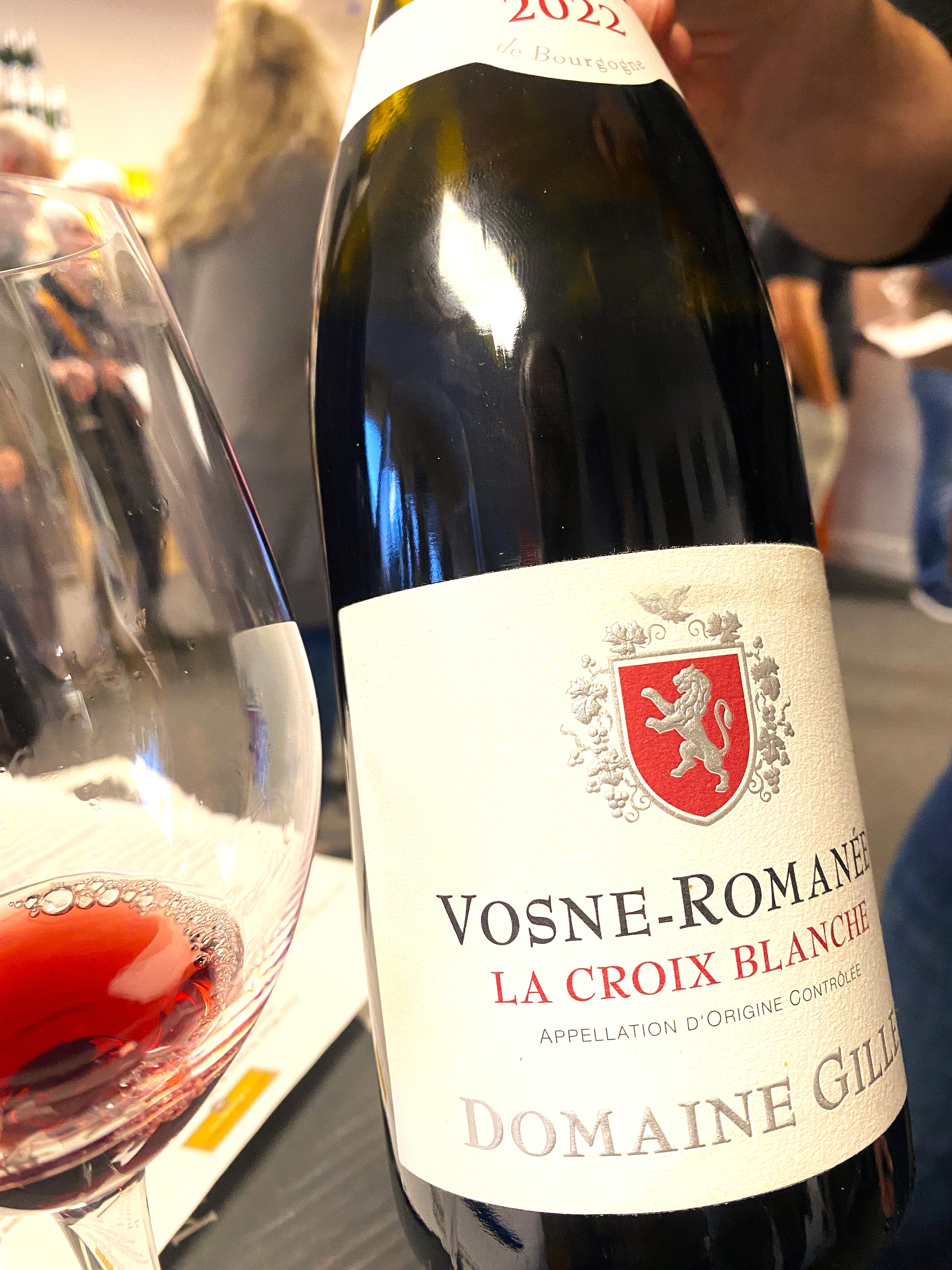
We proceeded with Domaine Gille Vosne-Romanée “La Croix Blanche” 2022. It was a pleasure having these wines and the estate discussed by Matthieu Gille and his family has resided in the village of Comblanchien since 1570. Today the nine-hectare estate is run by Pierre Gille and his son, Matthieu. In Burgundy the largest region is the Cote d’Or, which is basically divided into the Cote de Nuits and the Cote de Beaune. Cote de Nuits begins south of Dijon to Nuits-Saint-Georges and Corgolin and Comblanchien and then the start of Cote de Beaune. The small commune was originally Vosne, but applied the suffix of Romanée in 1866, in honor of the prized vineyard La Romanée. They have been growing grapes in this region for over a thousand years, and the total area is 151-hectares, of which a third is for 14 Premier Cru sites and 8 Grand Cru appellations (specific vineyards). Domaine Gille owns a .25-hectare parcel and produces a mere 120 cases per year of Pinot Noir from this famed commune. This parcel was established in 1900 and replanted in 1956 on Clay and Marlstone, with a Limestone subsoil. The grapes are harvested manually followed by five days of cold maceration and natural fermentation without external yeast or temperature control. The wine is aged for eighteen months in tine textured, medium toasted French Oak barrels, of which a third are new. The Lieu-dix (place name) of “La Croix Blanche” is at the southern border of Vosne-Romanée. The deep ruby-red wine offered notes of cherry, strawberry and cassis along with violets, truffles and sous-bois. On the palate this full-bodied, well-balanced wine displayed tones of the red fruit, the earthiness of truffles blending with ripe tannins ending with a long-count finish of fruit, sous-bois and terroir.
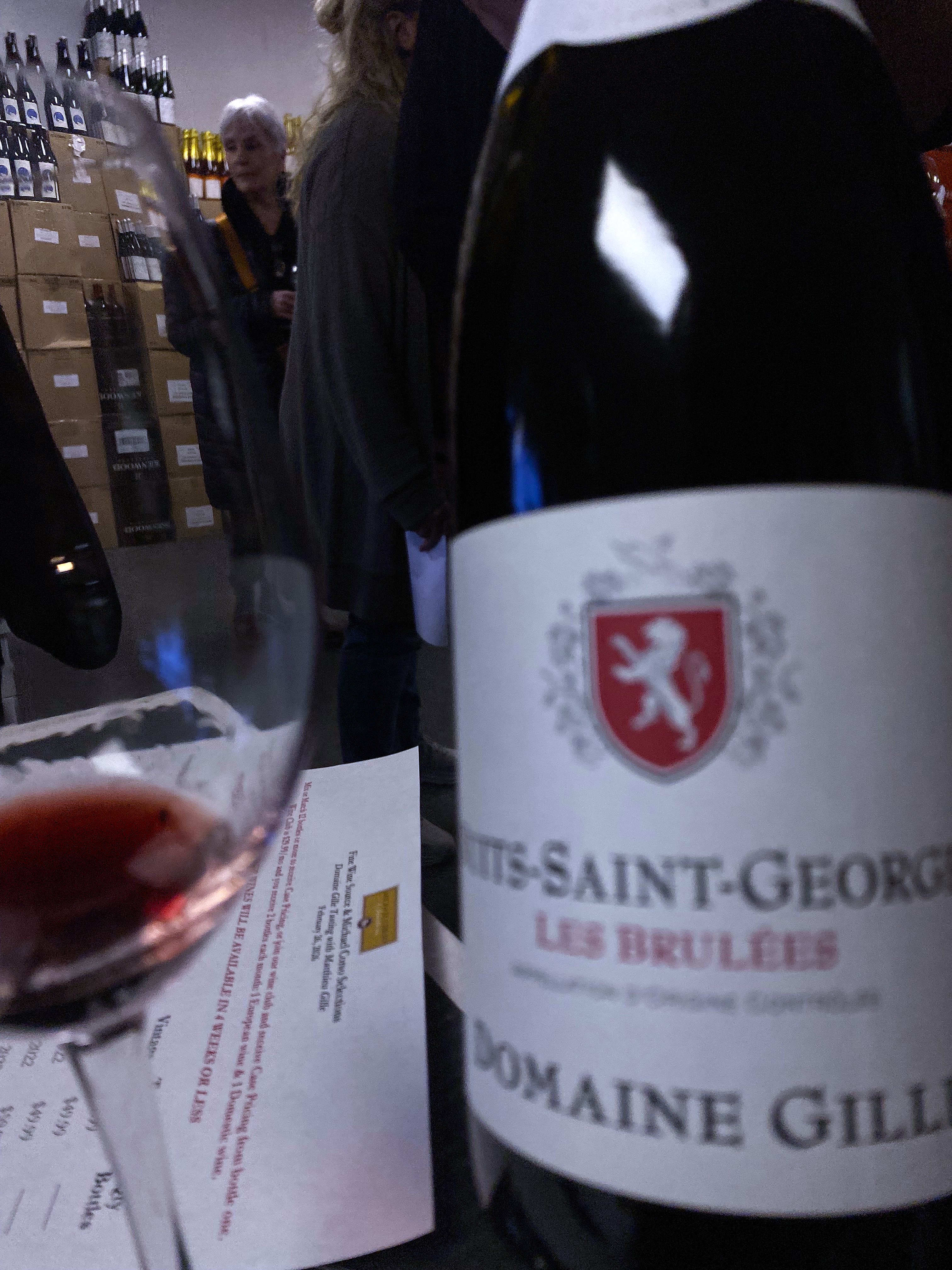
The penultimate wine at the tasting was Domaine Gille Nuits-Saint Georges “Les Brulées” 2018. Pinot Noir accounts for about ninety-five percent of all wine in the Cote de Nuits. Nuits- Saint-Georges has had its appellation since 1936, and the area has been respected for its wine for almost a century. The Saint-Georges vineyard has been famed for ages, and the town of Nuits (Latin for walnuts) appended its name to the famous vineyard, and this wine carries the appellation of Nuits-Saint-Georges Village. The lieu-dit vineyard of Les Brulées is south-east facing central Nuits-Saint-Georges, located directly beneath Les Poirets 1er Cru. The Domaine has 1.21-hectares of twenty-to-ninety-year-old vines planted on Limestone and Clay soil and produces about 6,500 bottles each year. The Domaine has all work done by hand, following traditional methods, using sustainable farming practices. After the manual harvest, the grapes undergo five days of cold maceration followed by natural fermentation without the use of external yeast or temperature control. The wine is aged for eighteen months in fine textured, medium toasted French Oak barrels, of which a third is new. This ruby red wine offered notes of red fruit and hints of blackcurrants, as well as violets and spices. On the palate this full-bodied, well-balanced wine displayed tones of red and black fruit blending with elegant tannins and ending with a long-count finish of fruit, vanilla and terroir.
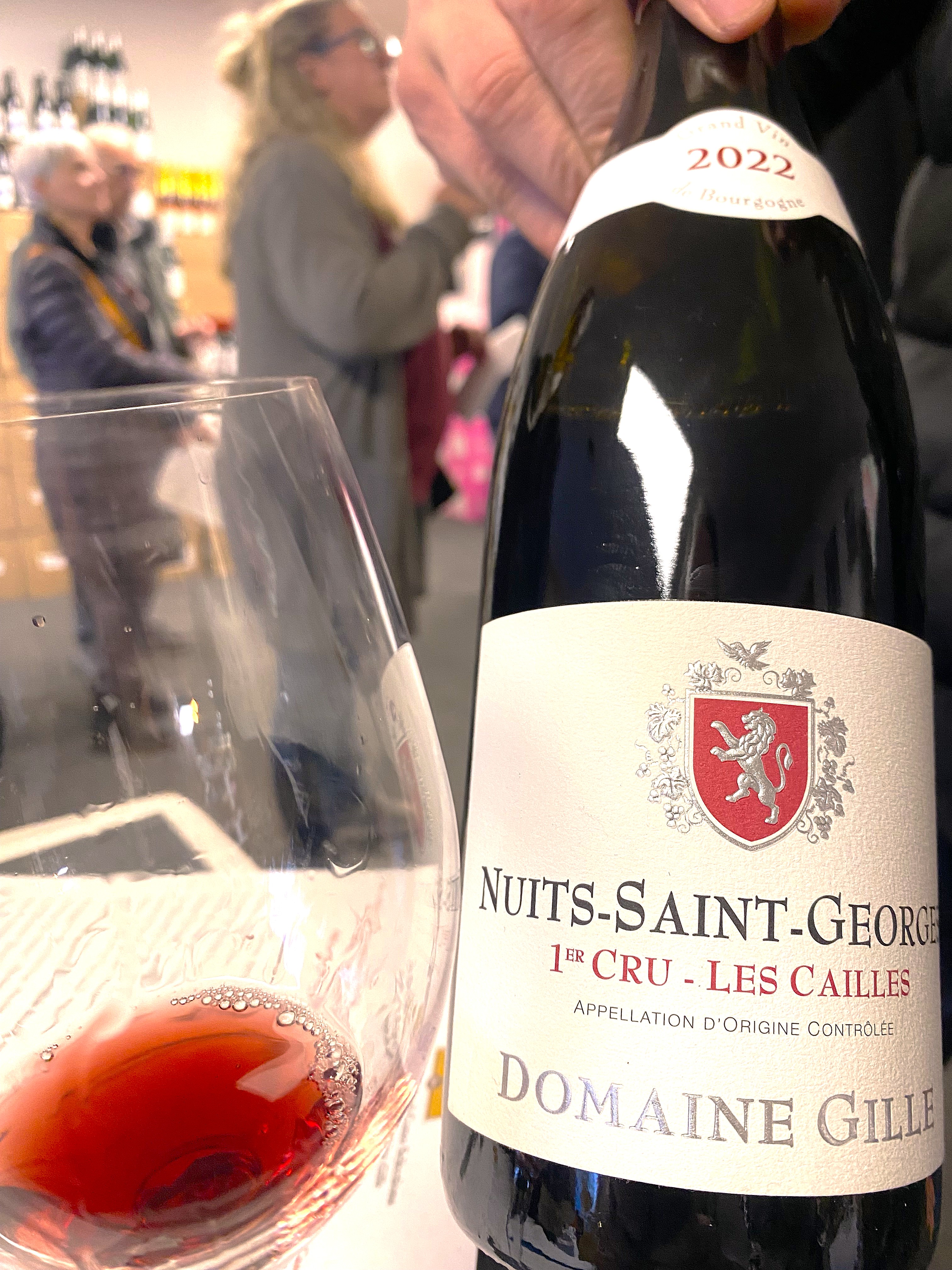
The last wine of the tasting was Domaine Gille Nuits-Saint-Georges 1er Cru “Les Cailles” 2022. Nuits-Saint-Georges is the second largest of the twenty-six communes in the Cote d’Or with three-hundred-twenty-hectares of Village and Premier Cru vineyards of which there are forty-one Premier Cru climats. The Premier Cru vineyard Les Cailles totals 7.11-hectares of stony limestone and clay with poor topsoil and is held in the same esteem as Les Saint-Georges. Domaine Gille has .43-hectare of this famed vineyard, and the Pinot Noir vines were replanted in 1975, and they average about 2,500 bottles each year. The Domaine has all work done by hand, following traditional methods, using sustainable farming practices. After the manual harvest, the grapes undergo five days of cold maceration followed by natural fermentation without the use of external yeast or temperature control. The wine is aged for eighteen months in fine textured, medium toasted French Oak barrels, of which a third is new. This deep ruby colored wine offered notes of cherry and blackcurrant, along with violets, rose petals, licorice, spices and crushed stone. On the palate this full-bodied, well-balanced wine displayed tones of red and black fruit, blending with bold acidity, silky texture, and dominated full tannins and ending with a long-count finish of fruit, vanilla and terroir.

 The Wine Raconteur