I have been a native Detroiter my entire life and I have never encountered this monumental structure, and it was just blocks from the original real center of power in the city, when the city was competing with New York City in status and grandeur.
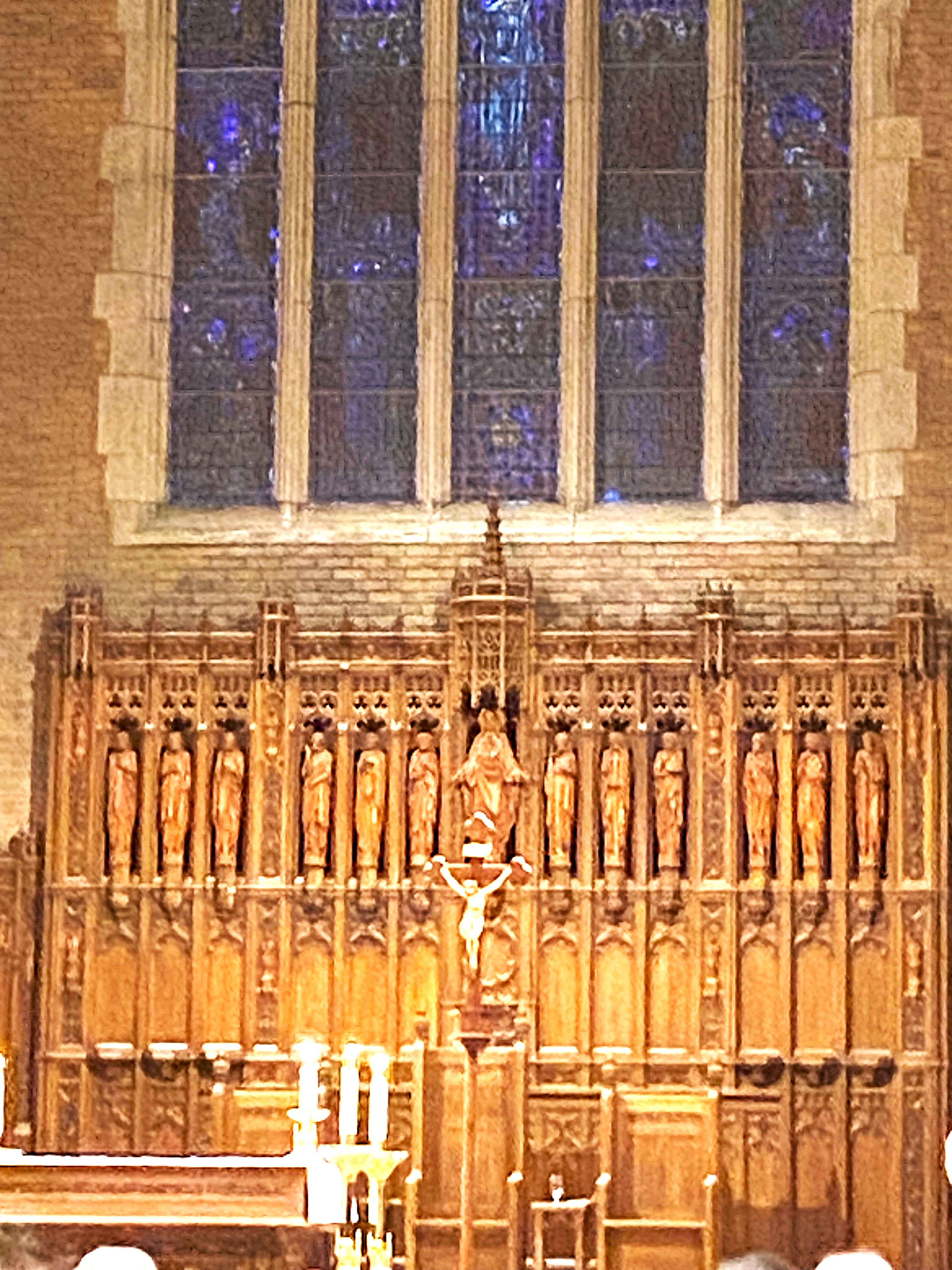
We went to the Sixteenth Annual Dinner for Life at the Sacred Heart Major Seminary, and it is affiliated with the Archdiocese of Detroit. The third time was the charm for creating a seminary in Detroit, and this institution was established in 1919. I am a major fan of cathedrals, and I was in Seventh Heaven as we wandered in the halls of this complex, and it is the second largest installation of Pewabic Pottery tile in the country. The brickwork, woodwork and stained glass were everywhere. I also found out that part of the basement was retrofitted during World War II to be a bomb shelter and the original signage is still there. Today there are 107 seminarians, representing eleven dioceses and two religious orders, along with 426 lay students (full and part-time). We attended a mass in the cathedral after walking halfway around the complex. The mass was officiated by the Archbishop of Detroit Edward Weisenburger and assisted by the Archbishop of Detroit Emeritus Allen Vigneron. This was one time that I didn’t complain that the mass was too long, as my Bride sometimes thinks I am a heretic or a heathen, as I was just enthralled by the majesty of the cathedral and the entire complex.
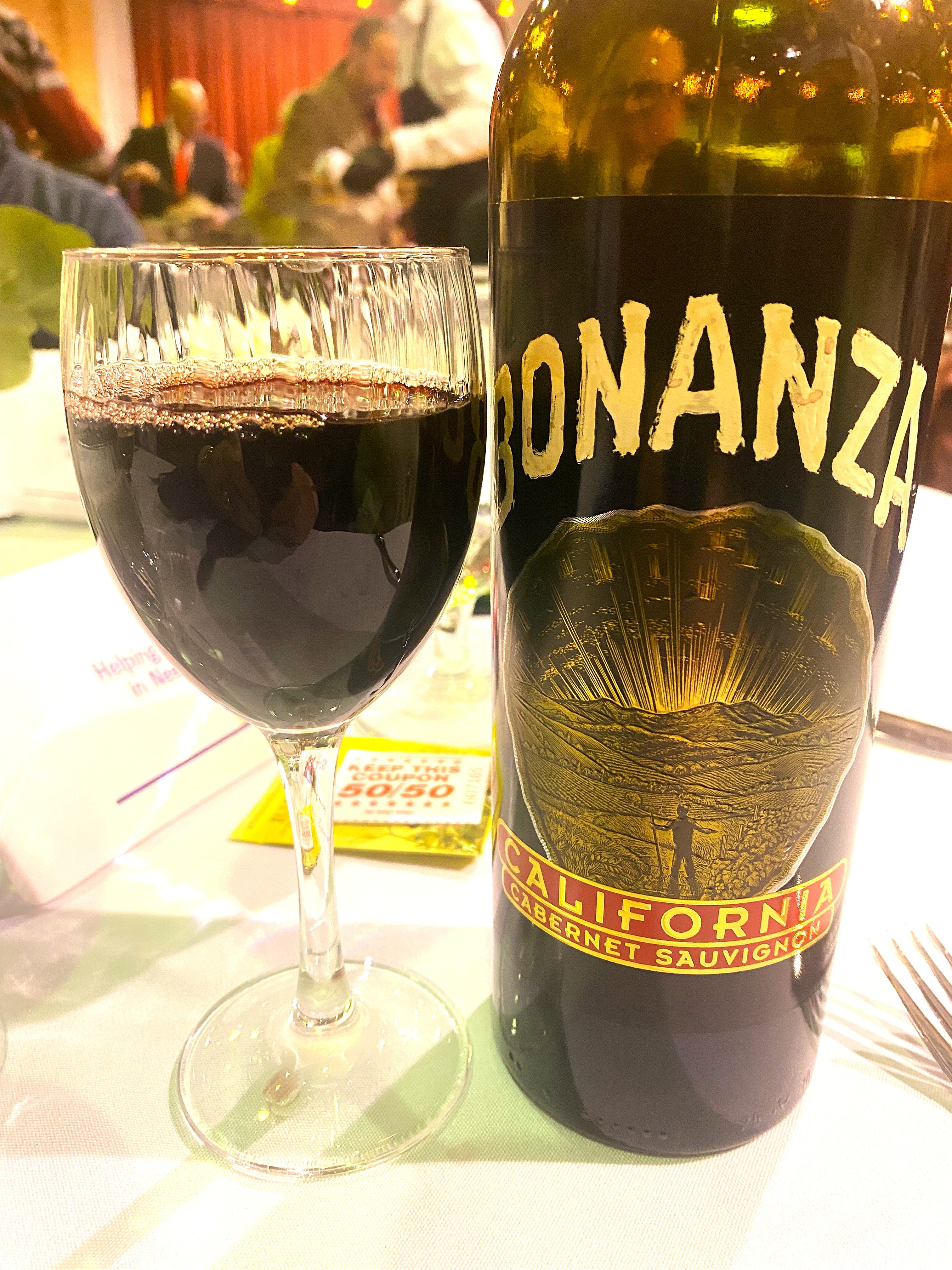
The dinner itself was created and prepared by the seminarians and there were a few asides mentioning the beginnings of this dinner and the spaghetti dinners. The dinner began with a Michigan Salad that you could construct yourself. Followed by Roasted Asparagus, Roasted Baby Potatoes, Roasted Turkey Breast and Roasted Salmon. The wines for dinner were both Bonanza, Bonanza Chardonnay Lot 1 California NV and Bonanza Cabernet Sauvignon Lot 9 California NV. Bonanza is part of the Wagner Family of Wine which includes Caymus Vineyards, Caymus- Suisun, Mer Soleil, Conundrum, Emmolo, Red Schooner, Sea Sun and Bonanza. Both wines are bulk production and run overseen by the grandson of Charlie Wagner Sr. The collection began in 2019. Chardonnay Lot 1 is a golden yellow colored wine that offered slight notes of orchard fruit, melon and florals. On the palate this light-bodied, balanced wine displayed tones of some fruit, and some acidity, ending with short-count finish of fruit and dry alcohol. This was made in Stainless-Steel as there was no notice of oak or butter at all. The Cabernet Sauvignon Lot 9 was a dark garnet colored wine that offered notes of black fruit, cassis and some cocoa and baking spices. On the palate this light-bodied, balanced wine displayed tones of blackberry and black cherry, blending with soft tannins and ending with a short-count finish of fruit.
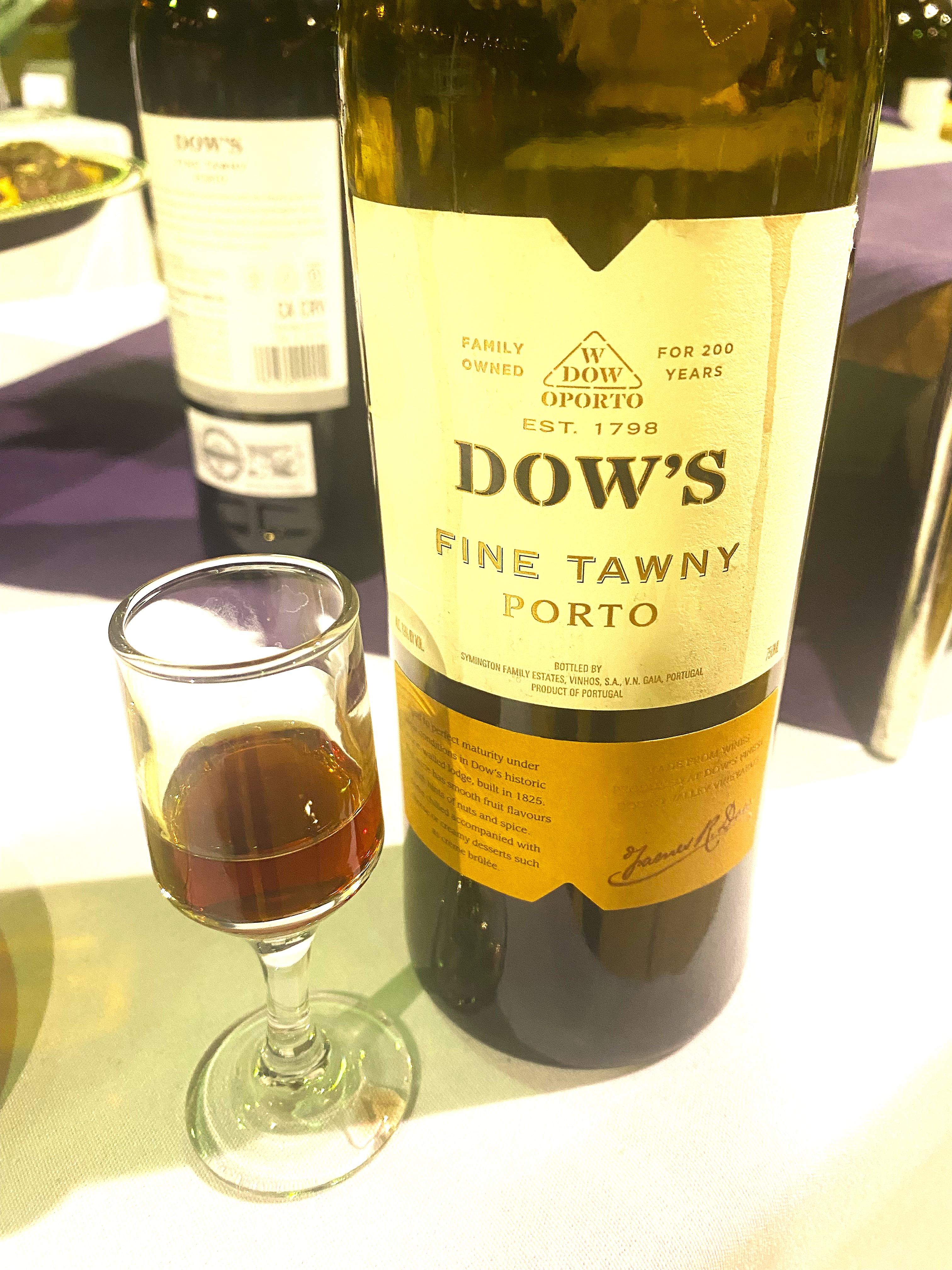
There was a dessert table set up afterwards with mini-cannoli, assorted macaroons and other bite size morsels. There were also small glasses filled with Dow’s Fine Tawny Porto NV, and forgive me, but I could in my mind’s eye envision Barry Fitzgerald as a Monseigneur approving the selection. The wines used to be called Port, but since the advent of other wineries years back, especially in America offering tepid imitations called Port, the great Port houses of Oporto renamed their wines Porto, and the Porto wines are legendary fortified wines. Most of the grand Port houses have a British name, which shows how much the British valued these fortified wines. Dow’s is over two hundred years old and has changed hands and is now part of the Symington Family Estates, but the quality and tradition has been maintained. Dow’s was the first house to receive Royal Assent and was allowed to maintain their own armed shipments of wine to Great Britain during the Napoleonic Wars. Dow’s also owns four famed vineyards in the Upper Douro Valley, and these are considered great vineyards and allow them to make all the different versions of Port wines, including when deemed proper, a vintage year; as not all years are declared a vintage year. The grapes used to make Port wines are a mix and perhaps not even the winemakers can agree on what the actual percentage of each grape is used. The most common varietals are Touriga Nacional, Touriga Franca, Tinta Barroca, Tinta Roriz (more famous and recognizable as Tempranillo), Tinto Cao and one can also find Souzao, Tinta Amarela and Mourisco Tinto. Dow’s Fine Tawny Porto is a three-year-old blend aged in small casks, which produces smoother and lighter wine and doesn’t require additional aging. This reddish-amber colored wine offered notes of caramel, apricots and raisins followed by hazelnuts and roasted chestnuts. On the palate this medium-bodied, well-balanced viscous wine displayed tones of ripe fruit, dried fruit and ended with a good medium-count finish of raisins and roasted nuts.

 The Wine Raconteur
What struck me most in your reflection is how naturally the evening seemed to move from Mass to meal — from altar to table — without losing its sense of reverence. There’s something deeply fitting about seminarians preparing the dinner themselves, as if the hospitality extended the liturgy into lived service.
The layers of history you mentioned — the 1919 foundation, the WWII bomb shelter, the preserved details — give the space a quiet continuity. It feels less like a building and more like a witness across generations.
Thank you for bringing both the grandeur and the grounded details together so thoughtfully.
Livora,
Thank you for all of your kind words and observations. I am just an old story teller that likes to find little nuggets of incidental information that tends to fascinate me.
– John