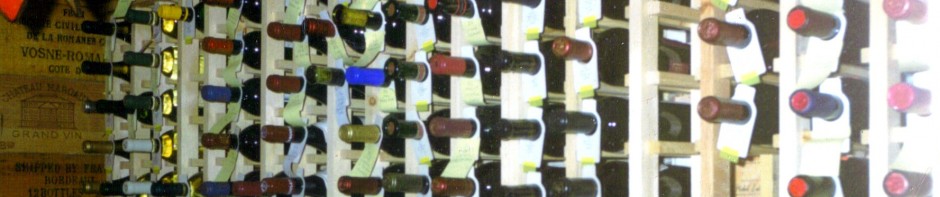
The first day that I claimed to have gotten my sea legs back, I had my Bride drive me to The Fine Wine Source in Livonia, Michigan. My surgeon had strongly recommended that I shouldn’t drive for at least two weeks, and in fact suggested that I really shouldn’t be a passenger as well, because of sudden stops and unusual shakes that one can encounter, especially on our terrible roads. While at the wine shop they asked if we had time to try some new arrivals, and of course, we both had the time and the inclination.
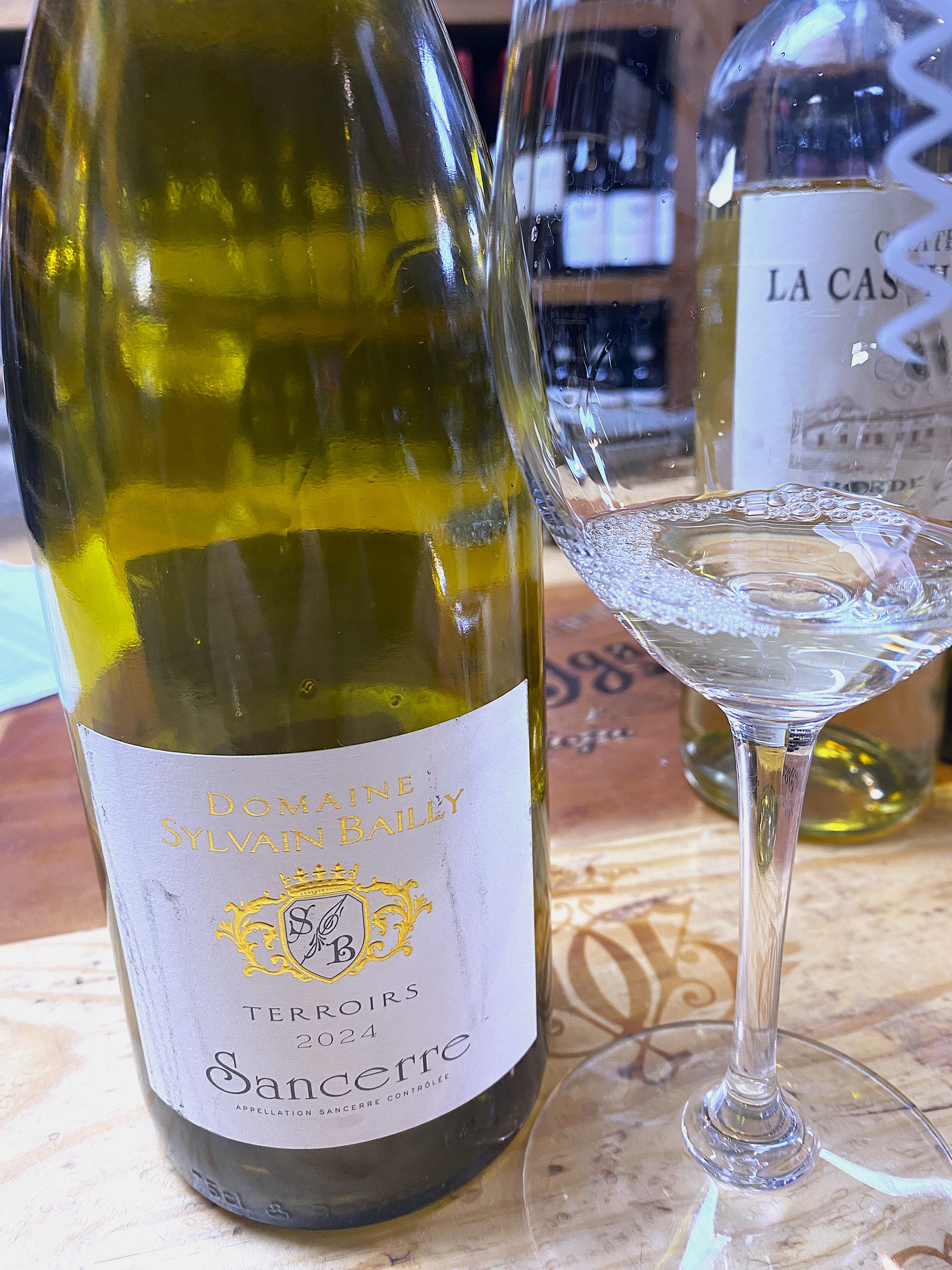
The first wine that was poured for us was Domaine Sylvain Bailly Sancerre Terroirs 2024. Domaine Sylvain Bailly has been a winemaker since the 18th Century with continuing generations of family. The Domain offers red, white and rosé wines; and is spread from the family farm in Bué in the center of Sancerre to Amigny, Crezancy and Montigny, and finally to Quincy. The white wines are planted on limestone soils, hard and stony from the Jurassic period. About seventy percent of the vines are grassed to limit erosion. The Sauvignon Blanc grapes are sorted on a table, and transferred by a conveyor belt, each lot is pressed separately and allowed to settle for about two days and then fermentation occurs in thermos-regulated vats, while the juice rests on fine lees. The wine is racked and then filtered. The pale-yellow colored wine offered a delicate nose of grapefruit and oranges. On the palate this medium-bodied, well-balanced wine displayed tones of grapefruit and oranges and ended with a medium-count finish of crisp citrus and minerality.
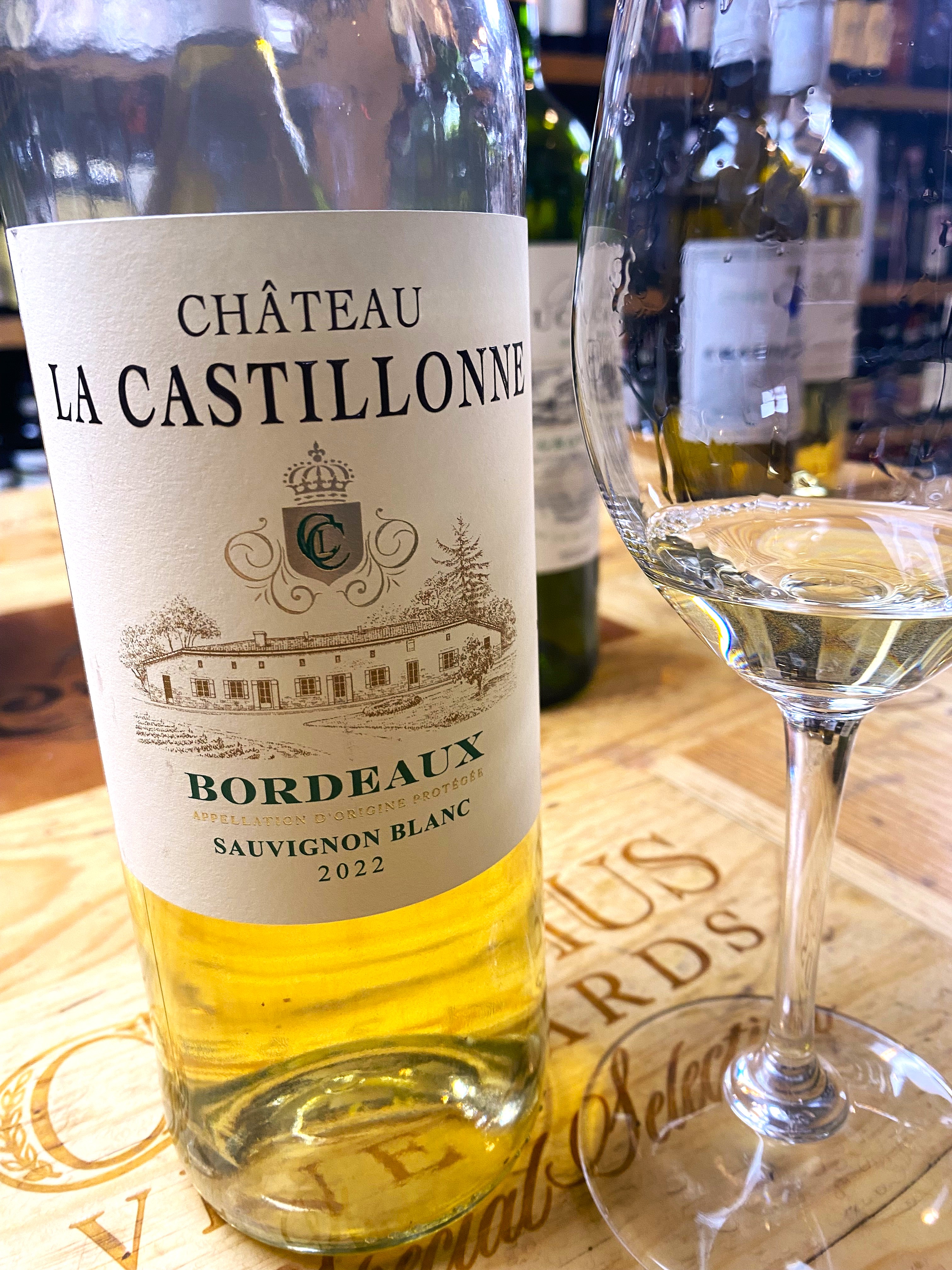
We then tried another Sauvignon Blanc wine from Bordeaux, being Chateau La Castillonne Bordeaux Blanc 2022. Chateau La Castillonne is in the commune of Saint-Ferme, and is affiliated with Maison Bouey, the owner of one of the largest wine cellars in Bordeaux. The wine is a blend of Semillon, Muscadelle and Sauvignon Blanc. The wine undergoes fermentation, blending and aging in Stainless Steel tanks. The pale-straw-yellow colored wine offered notes of peaches, pears, kiwis and white florals. On the palate this light to medium bodied, well-balanced wine displayed tones of peaches and flowers with bright acidity, ending with a medium-count finish of fruit.
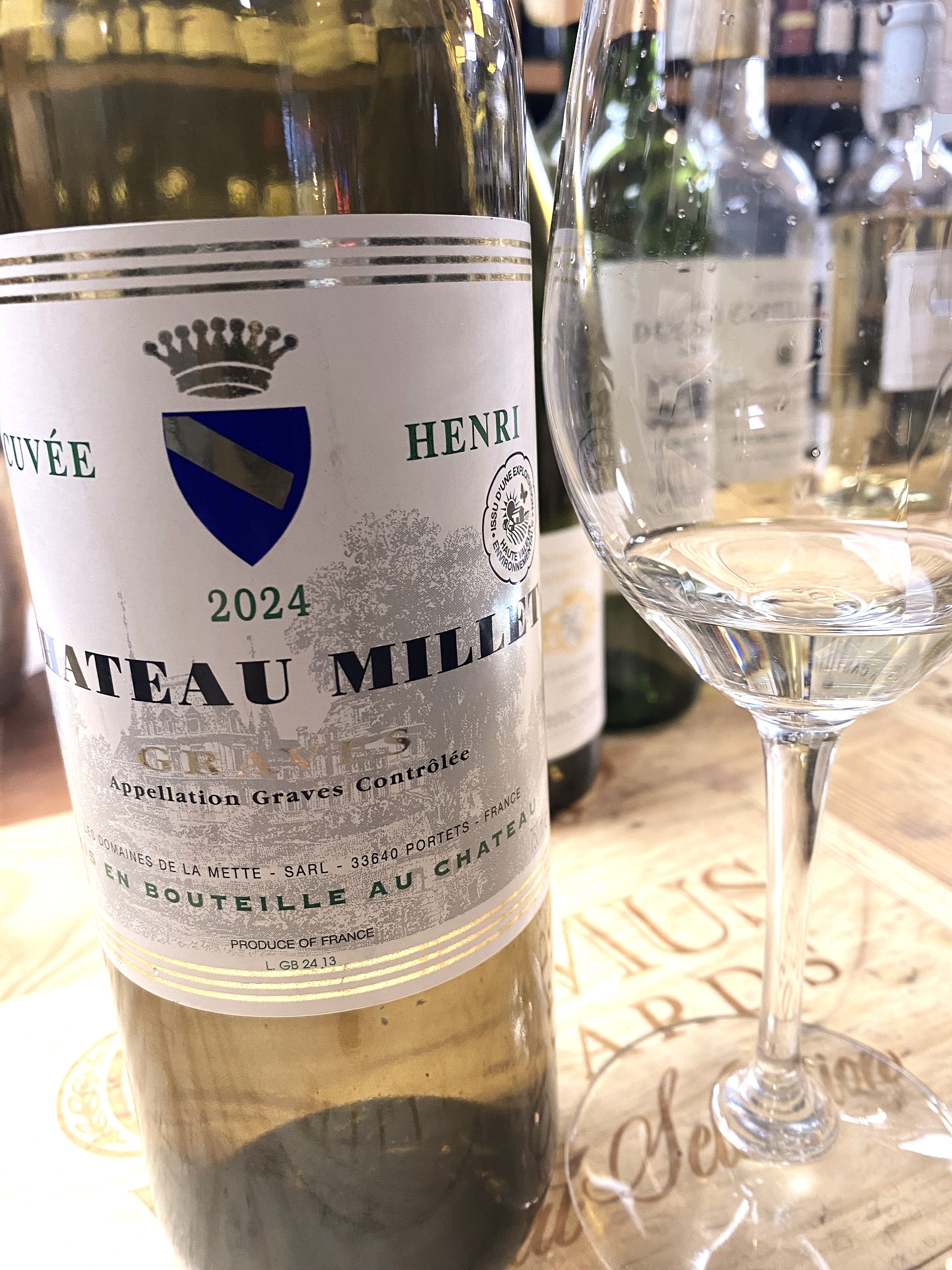
We then enjoyed Chateau Millet “Cuvée Henri” Graves Blanc 2024. Chateau Millet is the crown jewel of the Domaines de La Mette, a collection of chateaux comprised of sixty hectares of vines in Graves and twenty hectares in Bordeaux Supereiur. The Chateau is in the village of Portets, and the chateau was re-built on the foundations of a Medieval castle. The estate is under the care of Thierry de La Mette and Jean-Batiste Solorzano, who manage the day-to-day operations. Chateau Millet’s almost fifteen hectares of vines are planted on the gravelly soil of clay and limestone overlooking the Garonne River. One hectare is dedicated to Sauvignon Blanc, Sauvignon Gris and Semillon. “Cuvée Henri” is in homage to Thierry’s late father, Henri de La Mette. The wine is a blend of fifty percent Sauvignon Blanc, forty percent Semillon and ten percent Sauvignon Gris; with the age of the vines between fifteen to thirty years. The wine undergoes fermentation in Stainless Steel vats and then is aged in French Oak, of which a third is new, for six months. The pale-straw-yellow colored wine offered notes of white fruits, melon and vanilla. On the palate this light-to- medium bodied, well-balanced wine displayed tones of fruit and citrus in a supple texture that ended with medium-count finish of fruit and terroir.

 The Wine Raconteur