There were fifteen wines to be tasted from the Piedmont region at The Fine Wine Source in Livonia, Michigan and we will look at the next three wines. I had a bonus, as The Wine Raconteur, Jr. and his Bride was also at the tasting. I did notice that there must have been a couple of customers that were having the same tasting at other locations, as I watched some of the staff, grabbing a bottle of wine at times to take into the original room, which had two tasting tables as well.
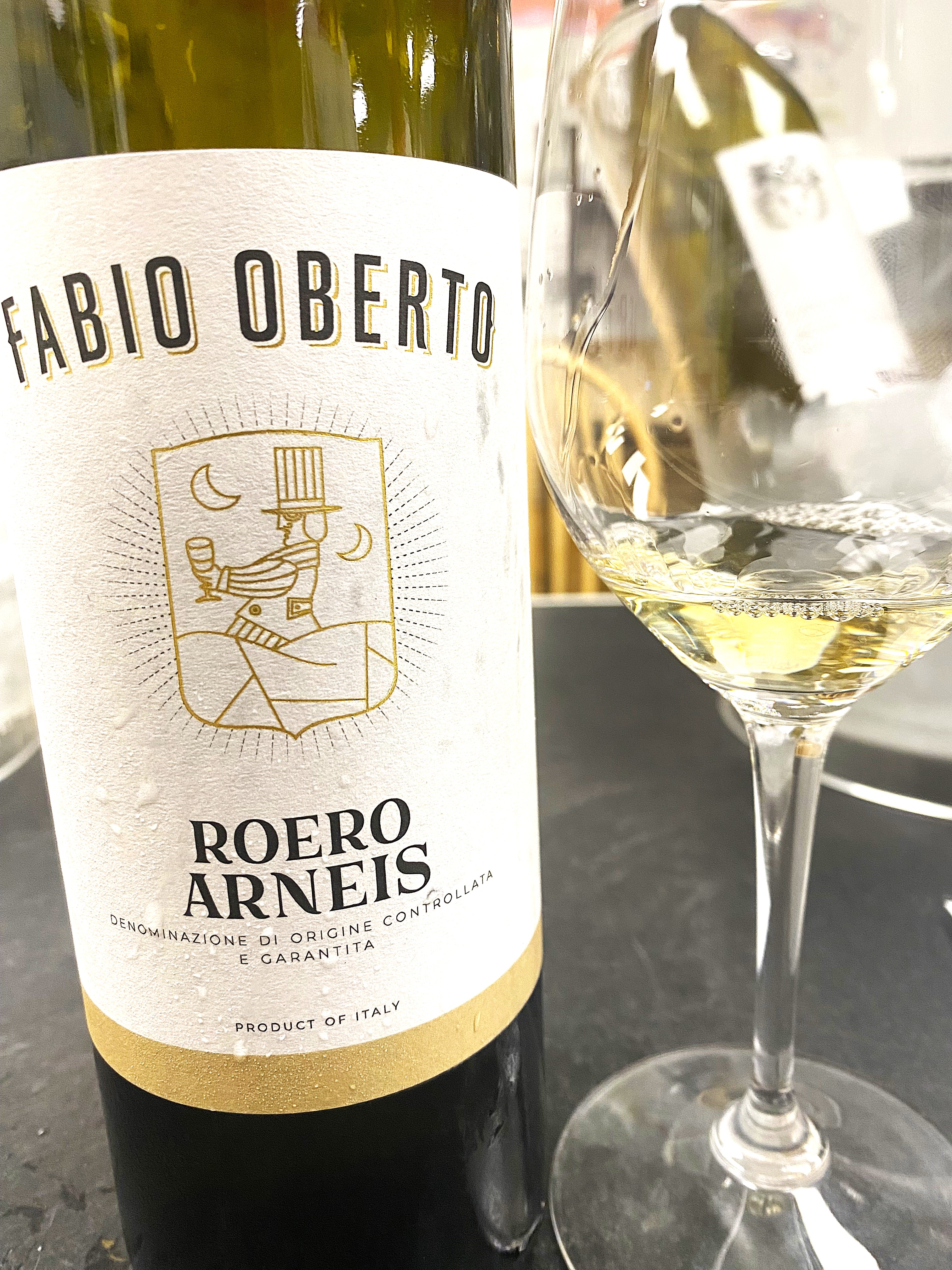
The next wine was Fabio Oberto La Collina di Dioniso Roero Arneis DOCG 2021. Paolo Oberto had a few hectares of vineyards in La Morra, one of the principle towns of Barolo. He died suddenly and his son Andrea left his career to take over the family farm. In 1978, he began bottling the family production instead of selling it to the local cantina sociale. Eventually the estate grew to eighteen hectares, including the famed Giada Vineyard with its eighty-year-old vines, as well as almost one hectare of Barolo’s true Grand Cru vineyards – Rocche del Annunziata. His son Fabio worked along side of his father for twenty-two years. In 2017, Fabio created his own company “La Collina di Dioniso da Fabio Oberto” which was employing his grandfather and father’s vineyards but producing wines in his own ideas. His vineyards are included in the list of heroic vineyards of the Piedmont region, as the average slope of the terrain is more than thirty percent. This wine is pure Arneis grapes from the Montaldo Roero region and was planted in 2001. The fruit is manually harvested, destemmed, pressed and the juice is in temperature-controlled Stainless-Steel tanks, including Initial Fermentation and Malolactic Fermentation on the lees, for three months, followed by another three months in the bottle before release. A straw-yellow colored wine that offered notes of pears, apricots, acacia flowers and honey. On the palate this medium-bodied wine is a dry wine with crisp acidity and displaying tones of white fruit and ending with a medium-count finish of fruit, a touch of hazelnuts and minerals.
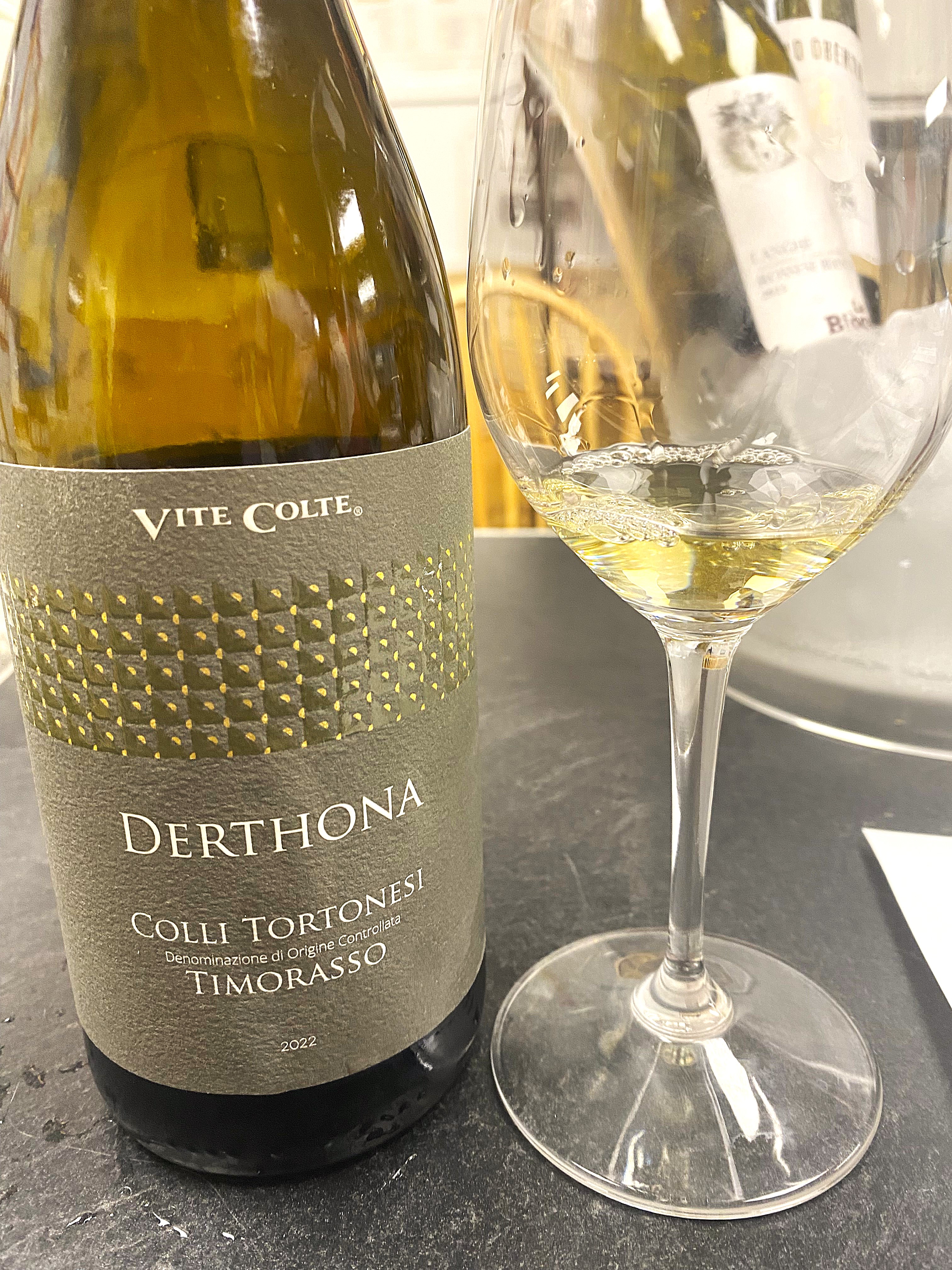
Our next wine was Vite Colte “Derthona Timorasso” Colli Tortonesi 2022 from Az. Agr. Terre da Vino. Terre da Vino represents 5,000 hectares of vineyards, by more than 2,500 wine growers. They are a major player in Piedmont for decades, and the growers must abide by the requirements demanded by Terre da Vino. Timorasso is an ancient Piedmontese grape variety that was almost extinct by the 1980s. Originally revived by Walter Massa of Vigneti Massa and has been rediscovered and witnessing a resurgence for dry white wines and for grappa production. Timorasso is a native to the Colli Tortonesi region and this region was awarded a DOC in 1973, just prior to Gavi. There are thirty communes in the province of Alessandria that can use this name. The wine must be at least eighty-five percent Timorasso, and the balance can be Moscato Bianco and Favorita (Vermentino). Colli Tortonesi is often labeled as “Derthona,” which is the local traditional name, and Derthona has also been proposed for a DOC. This wine is pure Timorasso, and after a soft crush and a short cold maceration period, the free run must is fermented in temperature-controlled Stainless-Steel vats, followed by twelve months on the lees. A deep straw-yellow colored wine that offered notes of peaches, honey, acacia and minerals. On the palate, this medium-bodied dry wine offers a complex texture of peaches, honey, with hints of nuts, good acidity and ending with a good medium-count finish of fruit, flint and minerals.
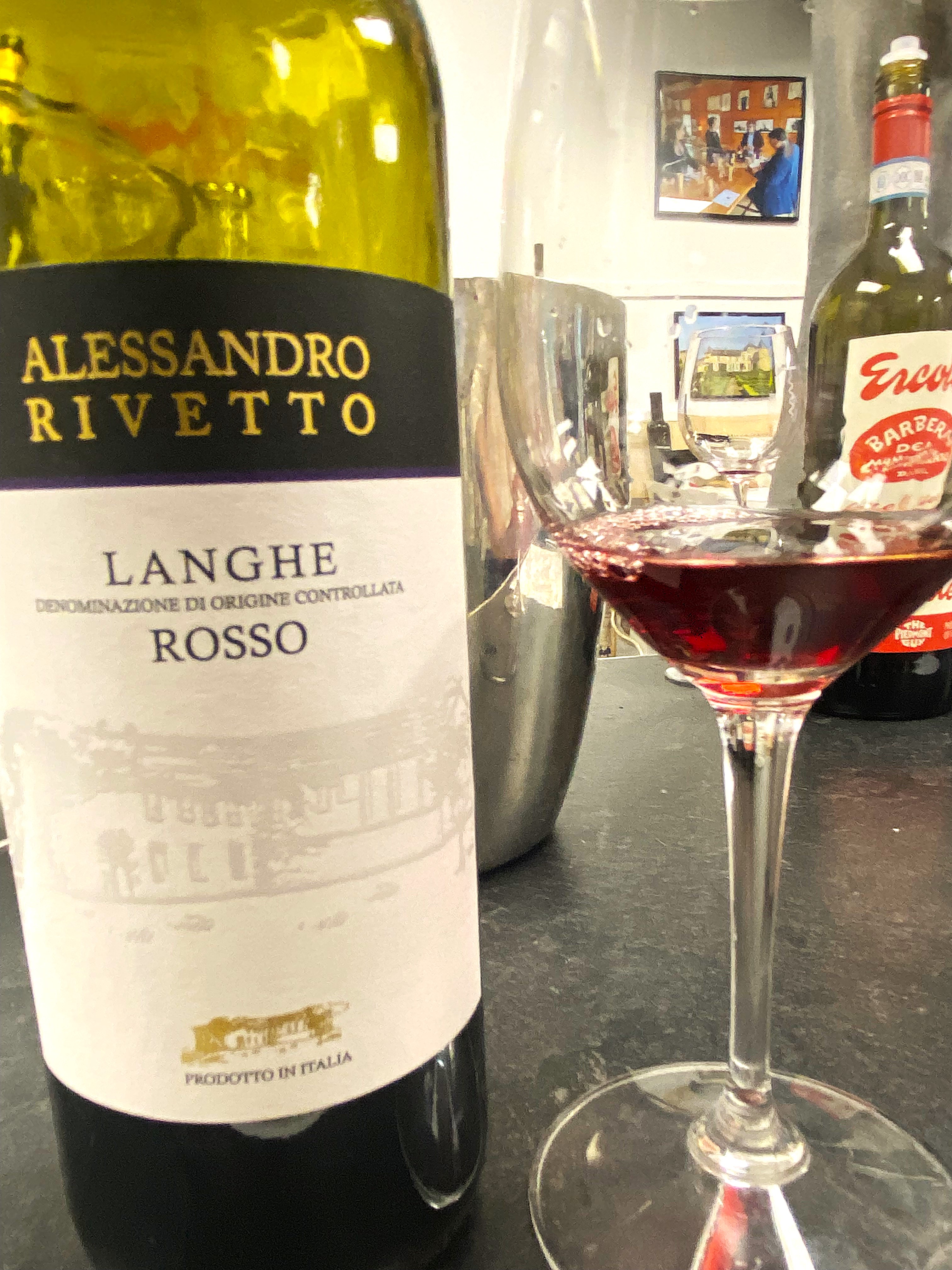
We then had our first red wine with Alessandro Rivetto Langhe Rosso 2022. A winery started in 2012 by Alessandro Rivetto and Alessandro Bonello, who grew up as friends and had gone to school together. The wine is a blend of seventy percent Nebbiolo, twenty-five percent Barbera and five percent Merlot from different Rivetto estate vineyards near the township of Sinio, Alba County on soil that is a combination of limestone and clay. The fruit is manually harvested, destemmed and crushed, the must is left with peels at cold temperature-controlled Stainless-Steel tanks for thirty hours, then the whole maceration and Initial Fermentation process lasts for twelve days with frequent punch-downs to extract extra color. The wine is then refined in wooden barrels and after Malolactic Fermentation the wine is aged for an additional six months, then bottled and cellared for an additional six months, the wine is aged for a minimum of one year before being released. This deep ruby-red colored wine offered notes of black cherries, raspberries, violets, orange peel, herbs and vanilla. On the palate, this medium-bodied, well balanced wine displays tones of cherries, raspberries, rosemary blending with soft velvety tannins and ending with a medium-count finish of fruit, cocoa and limestone.

 The Wine Raconteur