We were getting ready to taste the last three wines from Podere Ciona at The Fine Wine Source in Livonia, Michigan. Lorenzo and Jennifer Gatteschi were conducting the tasting and the crowd were all waiting for these wines.
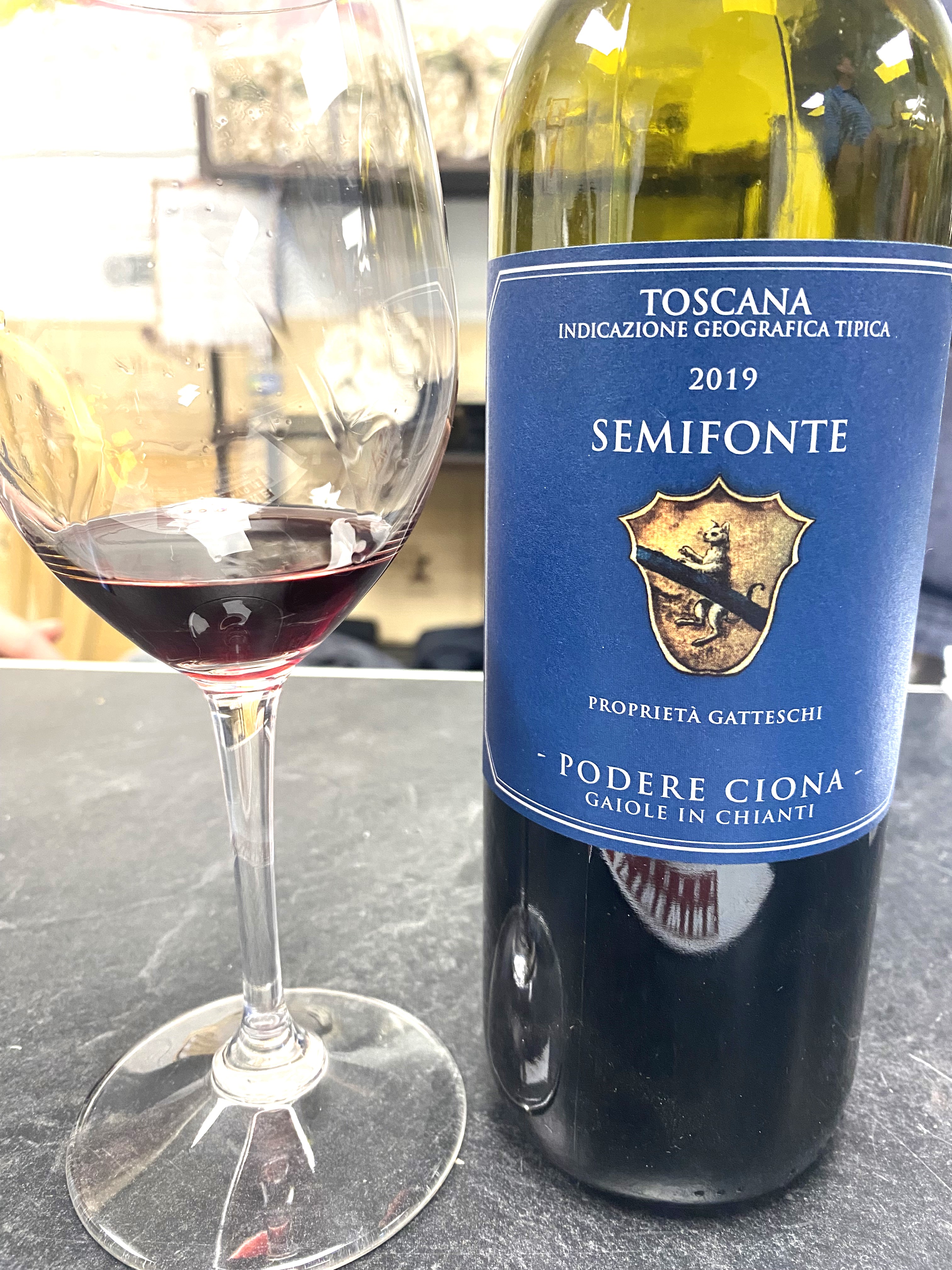
The first red of the tasting was the Podere Ciona Semifonte Toscana IGT 2019. This happens to be one of my favorites consistently from the winery as I think it offers a great bang for the buck, as we used to say when I was young. The soil of the vineyards is a mix of sandstone, clay schist and marl. Depending on the vineyard the vines are between seven to eighteen years of age. The wine is seventy-five percent Merlot and twenty-five percent Alicante Bouschet. They still maintain hand harvesting and Initial Fermentation is in Stainless Steel for about ten days with extended post-fermentation maceration on the skins for about a month, followed by Malolactic Fermentation, and then aged in French Oak for about eighteen months, finally refined for twelve months in the bottle. This purplish-red colored wine offered notes of red fruits and spices, and on the palate fresh fruit, soft tannins, and a velvety texture from the Merlot with a nice medium finish of fruit and terroir.
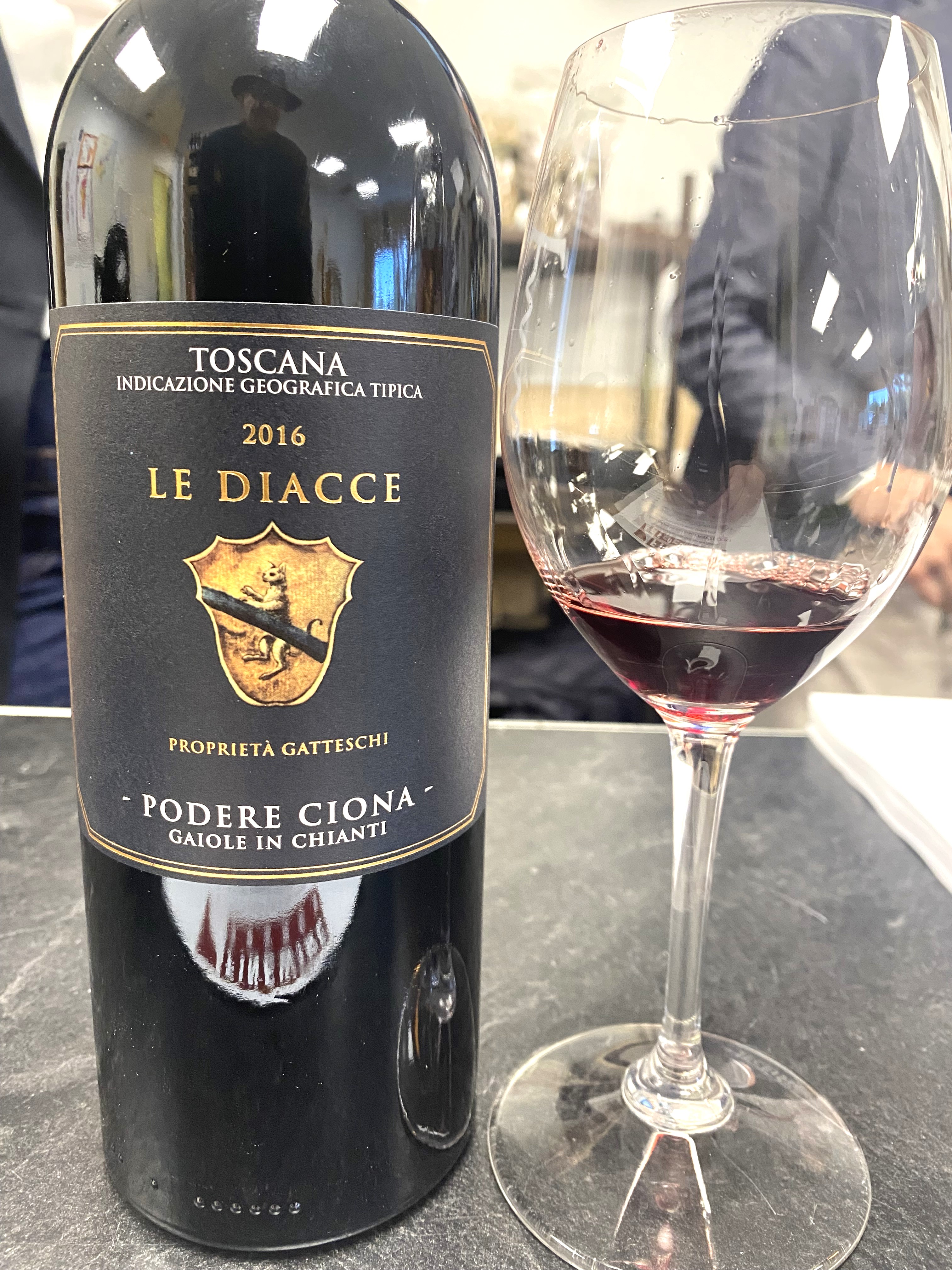
Then I was poured the Podere Ciona Le Diacce Rosso Toscana IGT 2016 and Le Diacce is the estate’s flagship wine featuring their finest Merlot grapes and a touch of Alicante Bouschet. Outside of Chianti Classico Riserva, Toscana IGT is the other famous designation of Tuscany, and Toscana IGT is the most famous of all the IGT designations in Italy. Back in 1984 when Sassicaia was granted its very own title of DOC Bolgheri Sassicaia, instead of Vino de Tavola, the floodgates were opened for Toscana IGT and whatever the winemaker can create. This wine is ninety-seven percent Merlot and three percent Alicante Bouschet. All hand-harvested and the best grapes are selected for this wine and the Initial Fermentation was for ten days in French Oak. This was followed by post-fermentation maceration on the skins for about thirty-five days and Malolactic Fermentation in French Oak. The wine was then aged in French Oak for twenty-four months, and then another twelve months in the bottle. There were three-hundred-thirty-three cases produced. A rich deep purple-red wine with notes of red fruit, chocolate and nuts. On the palate deep tones of cherry and red fruit (very fruit forward), totally balanced and lush with a nice long finish of fruit and terroir. This was a second tasting of this wine, and my notes were totally appreciative each time.

The final wine for the tasting was the Podere Ciona Gran Selezione Chianti Classico 2018. This new category was approved by the European Commission in early February 2014 and took effect immediately and any wine made starting with the 2010 vintage that met the requirements could go after this new elite designation. This wine from Podere Ciona is from a single vineyard that they have on a flatter plot. While the original rule was for ninety percent Sangiovese, this wine is pure Sangiovese. The wine is made in the traditional Chianti vinification and was aged for forty-two months in barrel and bottle, before being released. This deep garnet-red wine offered notes of black fruit, herbs, paprika, leather and tobacco, smokiness, sous-bois and terroir. This full-bodied wine displayed rich tones of black fruit, coffee, chocolate, cedar and smoke, tight tannins, well-balanced, showing heat and a nice long-count finish of fruit, chocolate nuts, earthiness and smoke. A delightful wine, with no seconds on the tasting as there were only a few bottles available for this tasting, offered as a pre-pay, pre-offer purchase and expected delivery in about forty-five days, and it was a Fine Wine Source exclusive and from the murmurs of the crowd, this initial Gran Selezione will be a sellout.

 The Wine Raconteur