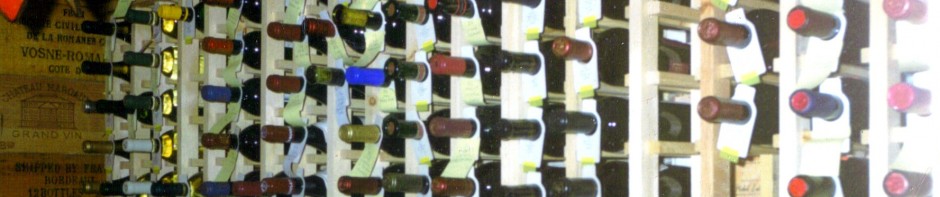
What could be better than enjoying a Bordeaux wine tasting at my favorite wine shop The Fine Wine Source in Livonia, Michigan? As usual, I just have to respond to the text announcement and say what time and how many, and if the time I picked is good, all is great, otherwise they might suggest another time; and of course they are always pleased if I am with my Bride, but this time I was stag.
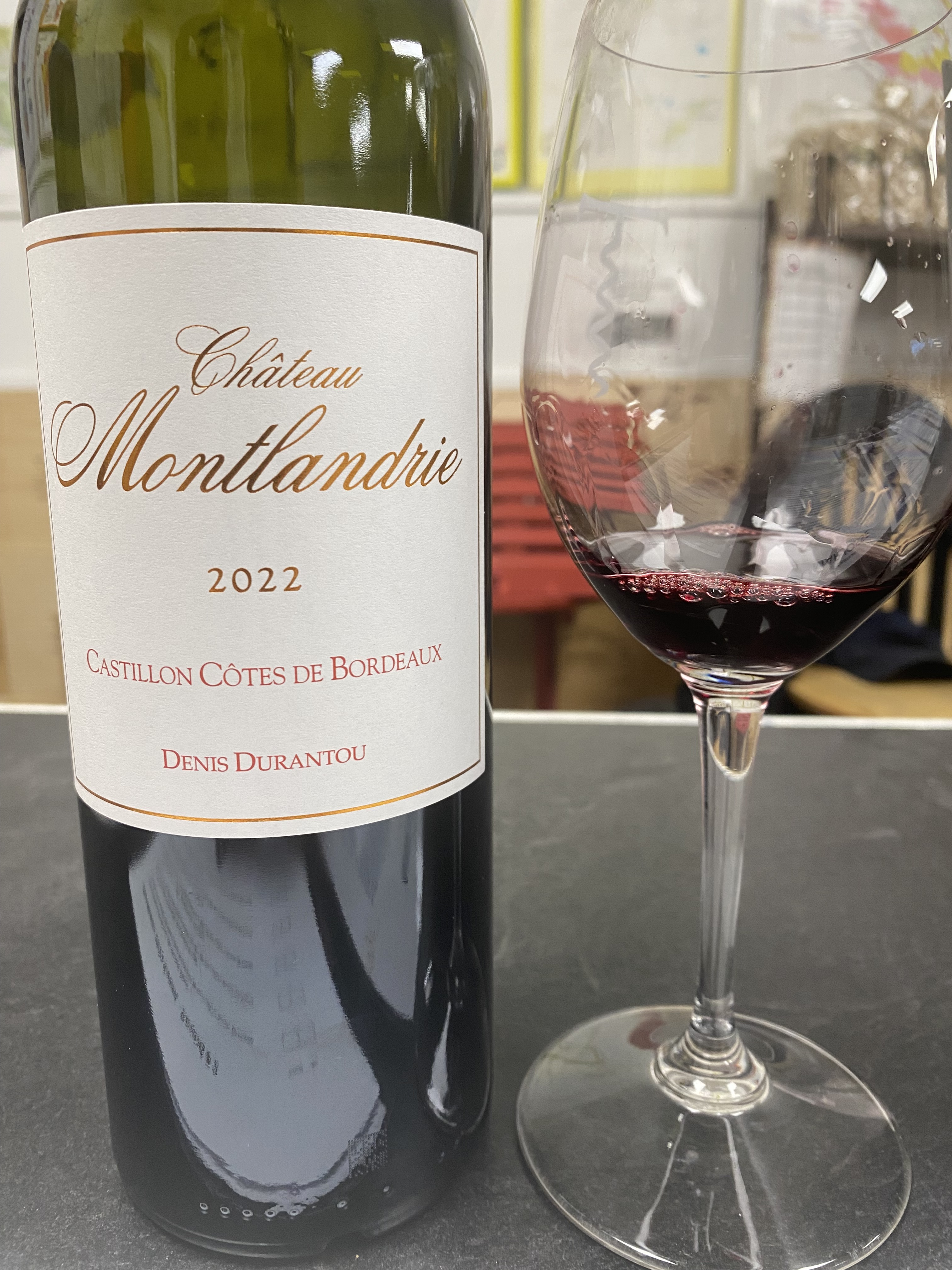
I will continue with the tasting with Chateau Montlandrie Castillon Cotes de Bordeaux 2022. The estate was purchased by Denis Durantou in 2009 of L’ Eglise Client, sadly he passed away in 2020, but his daughter, Noemie, who worked alongside her father has continued to produce the wine. The estate is an eleven-hectare vineyard on limestone and clay soil with twenty-five-year-old vines, originally sold as Cotes de Castillon and the appellation changed to Cotes de Bordeaux Castillon. This wine is seventy-five percent Merlot, twenty percent Cabernet Franc and five percent Cabernet Sauvignon. The vineyard is set up for fifteen parcel plots, and the parcels are vinified in fifteen small temperature-controlled, Stainless-Steel vats of assorted sizes. The Initial Fermentation and the Malolactic Fermentation occurs in these vats. The wine is then aged for fourteen months in French Oak, of which thirty percent is new. The deep purple wine offered notes of black and red berries, violets, truffles, cocoa, licorice and gravel. On the palate this medium-bodied wine displayed tones of rich fruit, good acidity, with grainy tannins and medium-count ending of fruit, graphite (terroir) and a saline finish.

We progressed to Chateau Bonalgue Pomerol 2022; the Bourotte-Audy family has owned the estate for almost the last one hundred years. Jean-Baptiste Audy is a family-run negociant firm based in Libourne and they own properties in Pomerol, Lussac-Saint-Emilion and Lalande de Pomerol. They own Clos de Clocher, Chateau Bonalgue, Chateau Monregard La Croix, Chateau du Courlat, and Chateau Les Hauts=Conseillants. The company was founded in 1906 and is now run by the great-grandson Jean=Baptiste Bourotte. Chateau Bonalgue was built by a Napoleonic captain and his estate is the embodiment of Pomerol terrain; clay, gravel, sand and iron-ore (which helps retaining heat, and allows the fruit to mature early). The estate is just over nine hectares and is planted with ninety percent Merlot and ten percent Cabernet Franc, but this wine is ninety-five percent Merlot and five percent Cabernet Franc. The wine undergoes Initial Fermentation and Malolactic Fermentation and is aged in French Oak, of which half is new, for eighteen months. A deep red purple wine that offered notes of dark fruits, violets and licorice. On the palate this full-bodied wine displayed tones of blackberry, black cherry and currants blended seamlessly with velvet tannins and terminating with a long count finish of fruit and terroir.
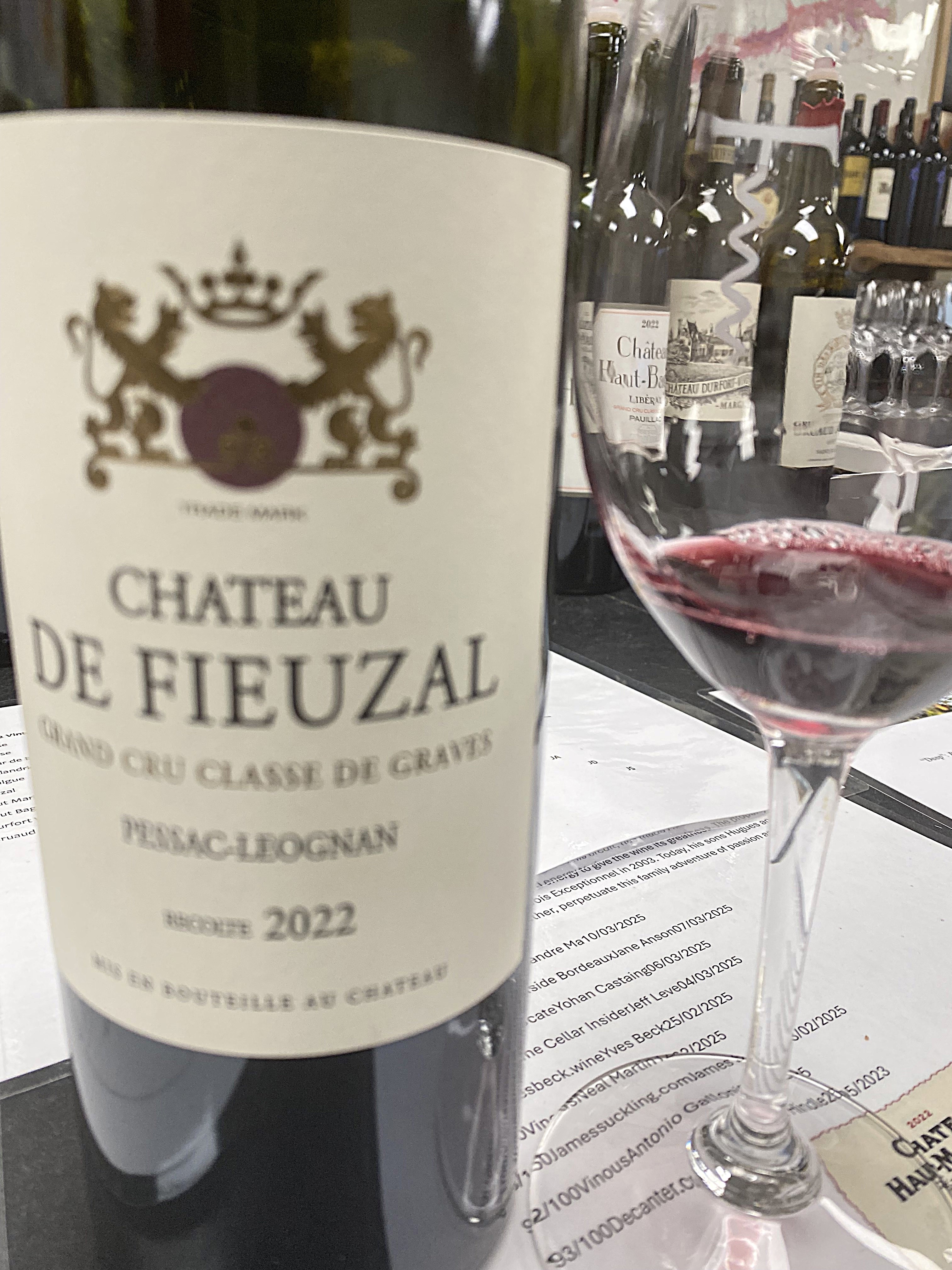
We then went and enjoyed Chateau Fieuzal Pessac-Leognan Rouge 2022, a classified Cru Classe de Graves in 1959. Chateau de Fieuzal is named after the family that owned the property until 1851. After the family sold the estate, it was broken into two separate chateaux, and it was until 1995 that the estate was re-unified and is now owned by Brenda and Lochlan Quinn. In 2006 they hired Hubert de Bouard of Chateau Angelus as a consultant winemaker and a new winery was opened in 2011; with Stephen Carrier as the winemaker. The estate is about seventy-five hectares, and the vineyards are planted with a mix of Cabernet Sauvignon, Cabernet Franc, Petit Verdot, Sauvignon Blanc, Semillon and Muscadelle; planted on soils of gravel, clay and sand. The vines on average are about thirty-five years of age, but some of the Petit Verdot plantings date back to 1908. The wine is a blend of fifty percent Cabernet Sauvignon, forty-five percent Merlot and five percent Petit Verdot. The red grapes are fermented in both Stainless-Steel and French Oak barrels, then blended and aged for about twelve months in French Oak. This ruby red wine offered notes of red and black fruits and sous bois. On the palate this full-bodied wine displayed tones of red and black plums, and tones of licorice, well-balanced and with ripe tannins and ending with a long-count finish of fruit and terroir.

 The Wine Raconteur