While my Bride and I were in recovery mode, believe it or not, we were not in the mood to drink wine. We did, but not in our usual way, and we certainly were not going to restaurants. Not a cheerful time, but we managed. If you follow me on a couple of social media sites, you may have noticed that I have been showcasing a different wine each day from the cellar, not to brag, but to remind myself what is down there. I have also been going through our collection of splits (it might not be the technical term, but it is what I use when talking about half-bottles).

We were basically having quick and easy dinners like a salad, followed by a filet with potatoes and a vegetable. The first bottle that I will discuss is a bottle of Galante Vineyards Cabernet Sauvignon Red Rose Hill Vineyard Carmel Valley 2001. The Galante family has a long personal history in Monterey County of California. Jack Galante’s great grandfather, James Frank Devendorf, was the founder of Carmel-by-the-Sea in 1900, and later built the Pine Inn and the Highlands Inn (which we have enjoyed a couple of times). In 1969, Jack’s parents purchased a seven-hundred-acre cattle ranch in what was then rustic Carmel Valley. In 1983, the Galante family began growing premium wine grapes on the property, specializing in Cabernet Sauvignon. In 1994, Jack Galante built a winery and used his grapes to produce his estate bottled wines. Red Rose Hill Vineyard sits above a large swathe of crimson rose bushes, higher up on the side of the valley to take advantage of the daily swings of temperature and the long growing season. This wine was pure Cabernet Sauvignon, and I didn’t want to take any chances, and I used my Durand working with a twenty-four-year-old. The cork came out in one piece, and after a half-hour of breathing, the wine was perfuming the kitchen all by itself and competing with the dinner being made. The wine still had a deep color, with just a trace of brownish red at the rim. The nose was black cherry and earthy, while the tannins had softened and were very mellow, the fruit was still rather fresh which pleased both of us and there was a nice long finish that evoked the terroir, and brought me full circle to the earthiness of the nose. It is kind of hard to describe an almost twenty-four-year-old wine, if one has never had it before, because so many of the modern wines are big fruit bombs and they never get a chance to be cellared. The cellar has been the perfect addition, as even the splits, which normally don’t age as well, have been pleasant surprises.
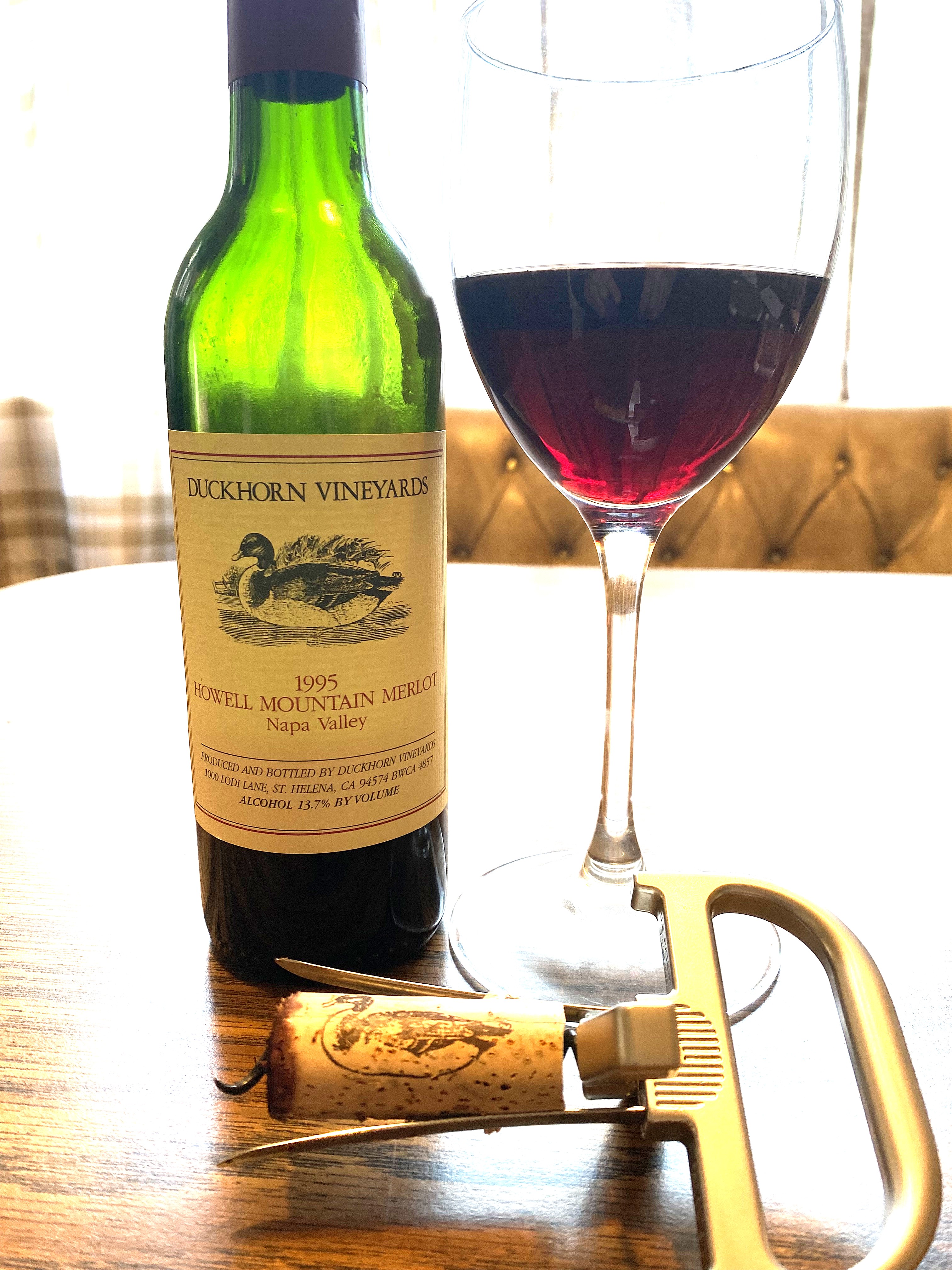
Another dinner, we enjoyed a split of Duckhorn Vineyards Howell Mountain Merlot Napa Valley 1995. Duckhorn Vineyards was one of the pioneers of Merlot in Napa Valley when everyone else was interested in Cabernet Sauvignon. Howell Mountain is one of the most prestigious sub-region AVAs in Napa Valley, and they were awarded the designation in 1984, Napa Valley was awarded their designation in 1981. There is no actual Howell Mountain, but it is a long and narrow hillside (mountain side) and named after the Howell Mountain Township, which is up above Calistoga. Since we had bought the wine at the winery and I am such a pack rat, which has helped over the years with writing about wine, I actually found the winery tech sheet. The wine is 76% Merlot, 14% Cabernet Sauvignon and 10% Cabernet Franc; and 96% of the fruit was harvested from Howell Mountain and the rest was from Napa Valley. The wine spent twenty months in French Oak of which half was new. I was a little concerned about the cork on a thirty-year old, but the Durand was the proper tool for the job. The nose was delightful and filled the room during the decanting period. The color had softened and was not as deep as a young Merlot would have been, as it had a little brown in the mix. The taste was sublime, the tannins had all mellowed out and there was so much sediment that had been caked on the side of the bottle and at the bottom that we only had a glass each.

The last split that I will discuss was Chateau Jacques Blanc “Cuvee du Maître” Saint Emilion Grand Cru 1999. The Blanc family has been part of the Saint Emilion annals since the completion of the Battle of Castillon in 1453. The estate changed hands in the end of the 18th Century and totally rebuilt and recognized as one of the leading producers in Saint Emilion. Since 1930 the Castle and estate changed hands several times and the property is now at twenty-one hectares. There are new owners that took over in 2012 and they have already increased the property by another six hectares. The Saint Emilion Grand Cru classification began in 1955 and the latest version of it was done in 2012 and there are plenty of rules and there have been plenty of opinions about the rules and politics of the region from all that I have gathered. The wine is a blend of Merlot and Cabernet Franc and probably close to a three to one ratio and aged for about year in oak. This was another fine version of a Saint Emilion wine and a region that has been close to my heart since I was a teenager and this wine drank well, with no worries for a twenty-six-year-old. The color was still dark with no foxing, though the nose was softer, there were still notes of cassis and violets. On the palate, the tones of fruit displayed were muted, the tannins were mellow and a nice medium-count finish of the wine with a trace of terroir.

 The Wine Raconteur