I don’t know how it is in your family structure, but certain families have certain holidays booked, basically for life. Which is great, as it makes sense and much easier to make plans. One of my cousins has had a lock on Christmas dinner for ages, and I was looking forward to having our son’s family join in, as they had just moved back and bought a house. It would be the first time that all second cousins could meet each other.
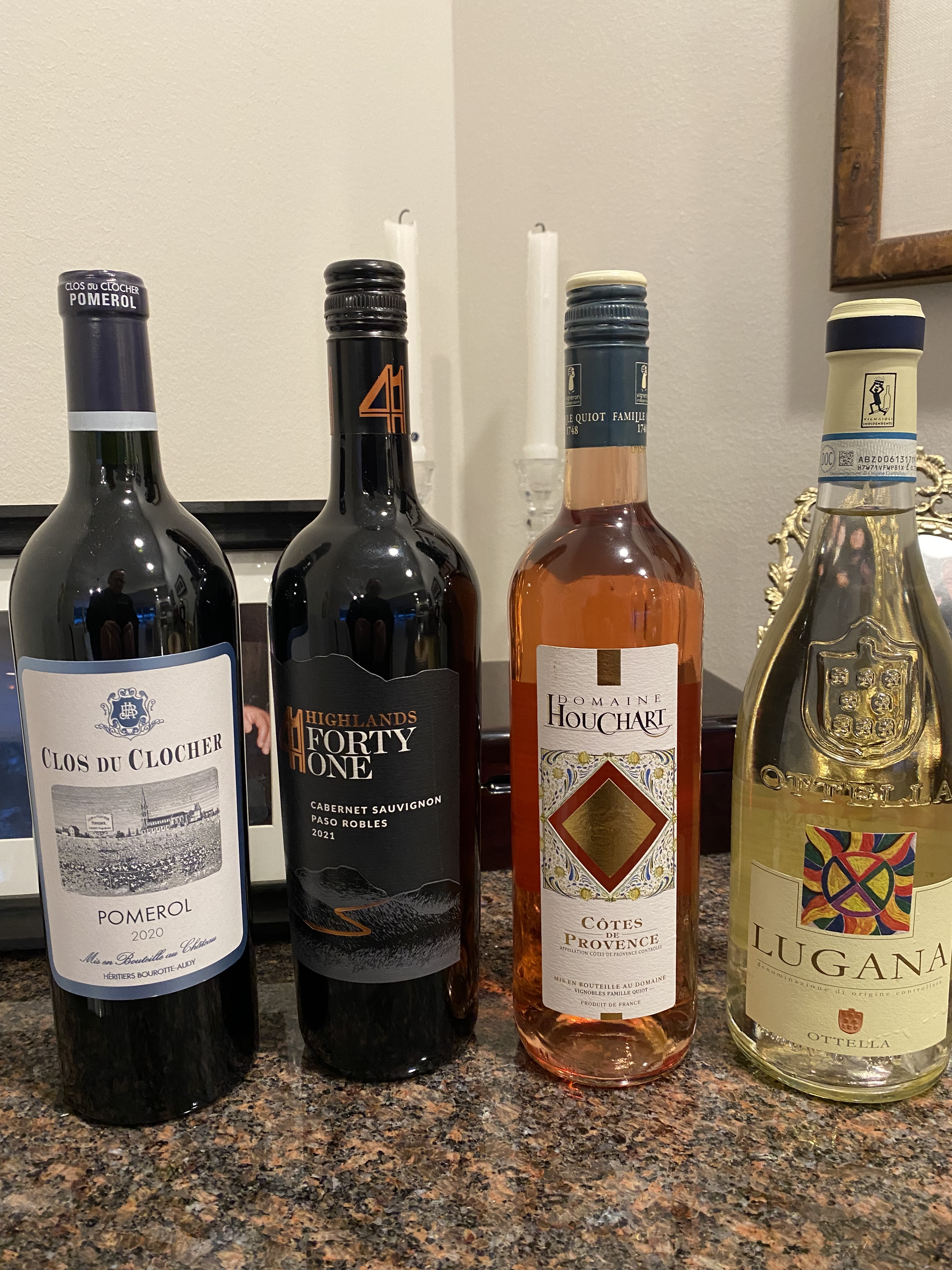
We were asked to bring my Bride’s now famous and requested Caesar Salad, and a half tray of paklavah (the Armenian pronunciation), as none of us eat as much sweets as we used to. I also brought four bottles of wine to add for the festivities. The first one is one of our go-to wines at our house Otella Lugano DOC 2021 from Azienda Agricola Otella. The second wine was Domaine Houchart Rosé Cotes de Provence 2023 from Vignobles Famille Quiot. The third wine was Close du Clocher Pomerol 2020 from Heritiers Bourotte-Audy. While the fourth bottle was Highlands 41 Cabernet Sauvignon Paso Robles 2021. I figured that group of four would accommodate any of the wine drinkers attending.
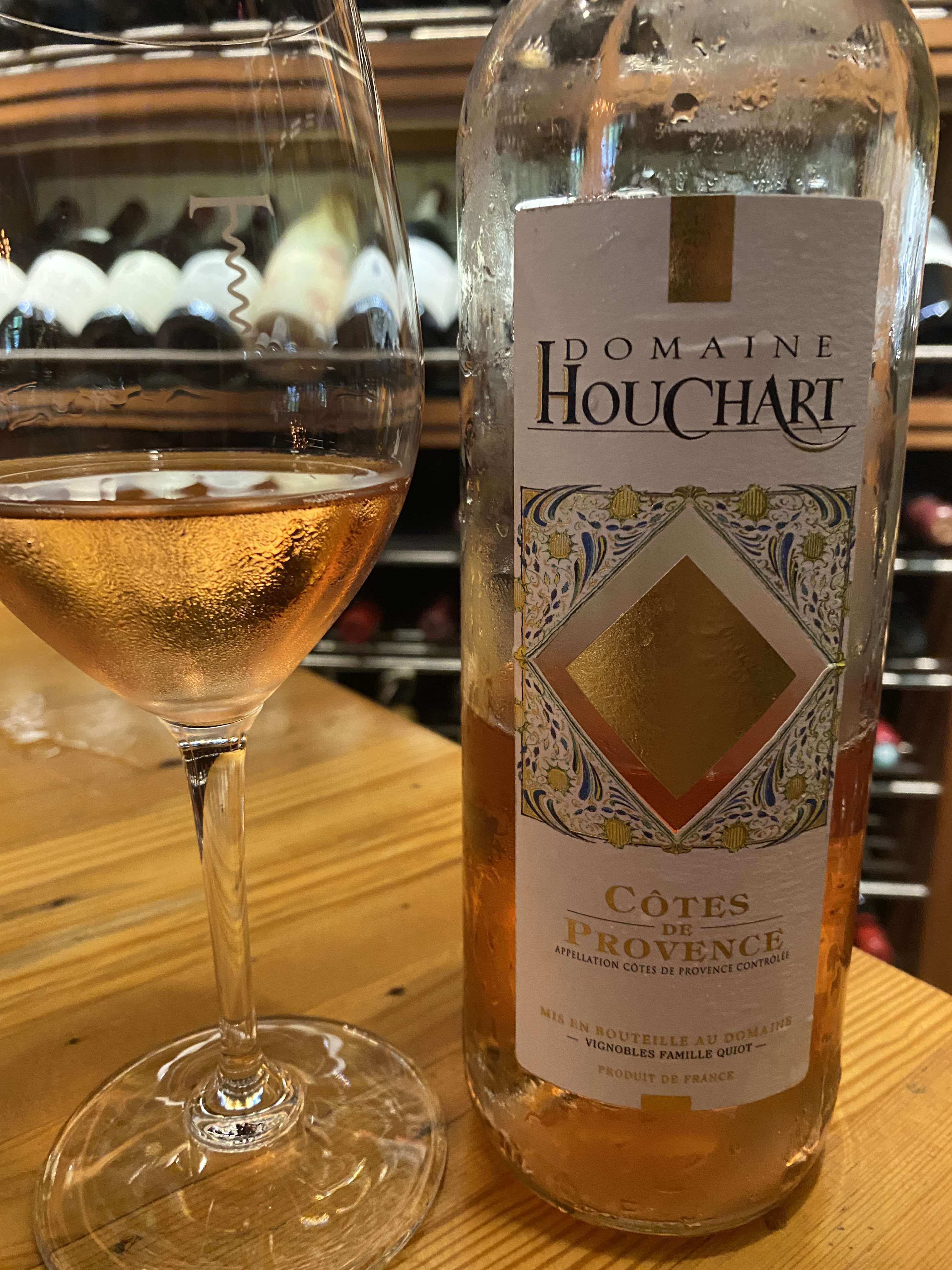
I figure that I will discuss two of the wines along with the meal. There was Cheese Boereg, a flaky pastry stuffed with a white brick cheese. There was Lahmajoon, the Armenian individual pizza for a lack of a better description, topped with sauteed ground lamb, onions, garlic and parsley. Another cousin brought this huge irregular long board that was finished and was a Charcuterie Board with several versions of olives, peppers, Armenian String Cheese and of course the cherished shavings of Basturmah. Now Basturmah is an acquired taste, because it is a dried beef that has been covered in spices and allowed to age and dry (as there was no refrigerators back then) and the meat is then cut paper thin. It sounds pleasant enough, but the spices make the meat deadly lethal in spicy hot tastes and then to boot, the spices emanate out of your pores for a couple of days after digesting the Basturmah. Needless to say, since I was in retail, I abstained for my customer’s sake. I will start with Famille Quiot Domaine Houchart Cotes de Provence Rosé 2023. Famille Quiot is a wine producer with numerous estates in southern France. They have been making wine since 1748, starting in Vaucluse in Chateauneuf-du-Pape at Domaine du Vieux Lazaret. The Domaine is run by the thirteenth-generation member Jerome Quiot and what was originally a few hectares is now one-hundred-ten hectares. In 1890, they acquired the sixty-hectare estate of Domaine Houchart near Aix-en-Provence. The family estate has its roots and was farmed during the Roman era and is located in the plain between Sainte Victoire and Aurelien mountains, and has its own climate. The land is clay and limestone soils, from the decomposition of the scree from the surrounding mountains. The wine is a blend of Cinsault, Grenache Noir, Syrah, and Tibouren; with the average age of the vines being thirty-five-years. The fruit is harvested in September, with direct pressing for most of the varieties, with vatting for almost two weeks in I surmise Stainless-Steel to maintain freshness; the wines are bottled in December. This salmon-pink colored wine offers notes of citrus and strawberries. On the palate the wine offers tones of red currants, watermelon, with great acidity and ending with a nice medium count finish of fruit and terroir. And as a side note, with all of the festivities, I forgot to take a photo of this wine, so I had to get another photo from a prior article, thankfully, we buy many of these wines by the case.
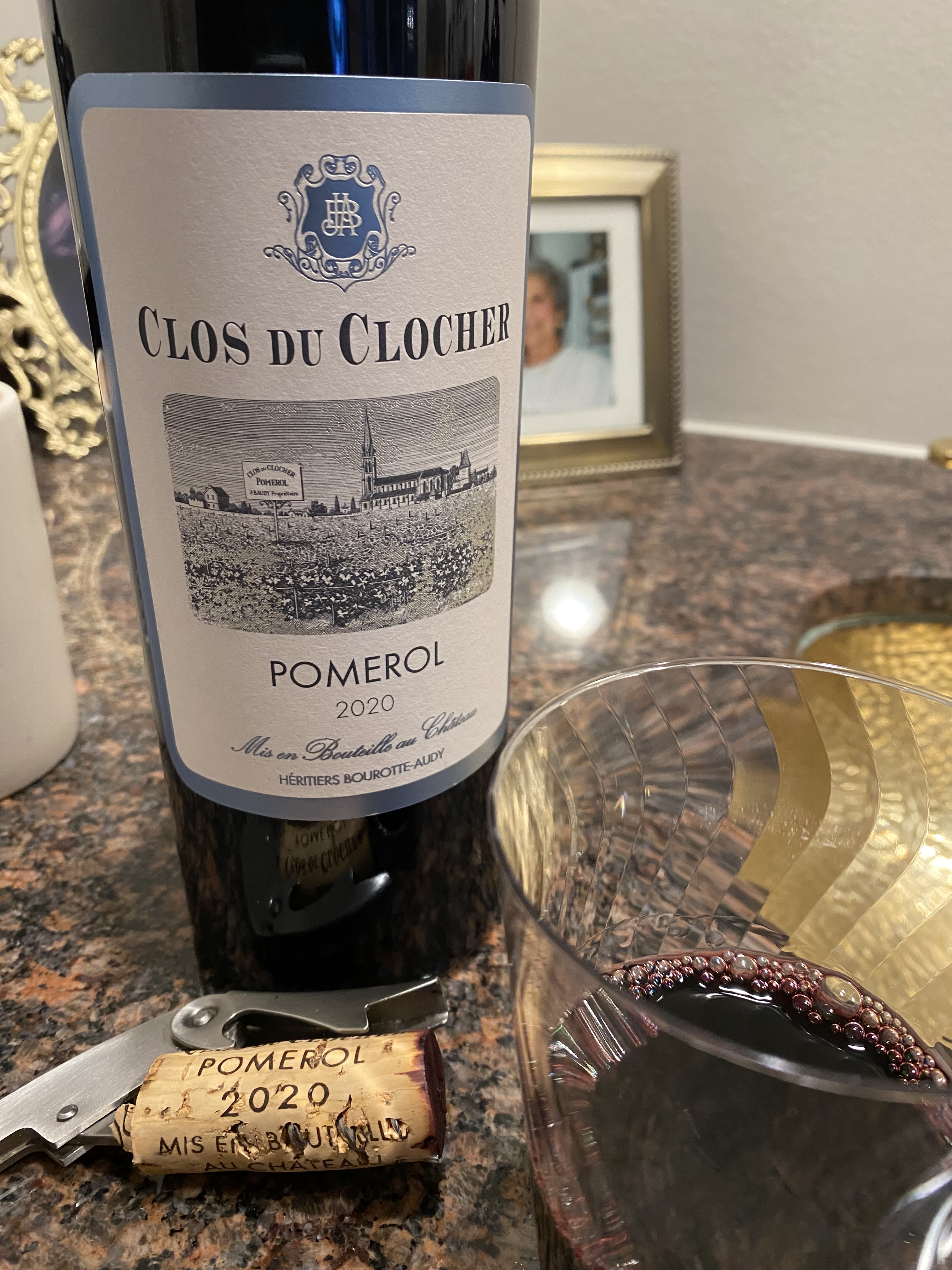
Now you have to understand that at an Armenian dinner after the appetizers, everyone says “I could have stopped after the appetizers,” but that never happens. My cousin had made as the centerpiece of the dinner this huge beef tenderloin that actually fed the troops, cooked with onions and garlic and other spices. There was Clams Spaghetti, my uncle’s favorite dish that is still served in his honor. There were several assorted sides of vegetables, and I have to say, that she still makes the best roasted peppers I have ever encountered. For the main course, I made sure that my Bride and I had the Clos du Clocher Pomerol 2020. Jean-Baptiste Bourotte was front and center, as the great-grandson of Jean-Baptiste Audy the founder of Clos du Clocher. The first vintage for this small, but consistent estate in Pomerol was in 1924. The winery is just shy of six hectares and is home to some truly ancient vines. The estate is set in four parcels and seventy percent of these parcels are dedicated to Merlot, and the balance is planted with Cabernet Franc. The average age for the vines is forty years and they are planted on clay and gravel parcels on the Pomerol plateau. No herbicides are used and organic treatments are implemented where possible. The fruit is hand harvested, double-sorted with a density bath, de-stemmed to create a homogenous final crop. Fermentation is done in small Stainless Steel and concrete tanks by parcel; hence the wines reflect the percentages of the grapes grown. The wine then is aged for eighteen months in French Oak, of which two-thirds are new. This was the first year that Organic conversion began and was officially instituted in 2021. This vintage must be indicative of what should be expected from the entire plateau as well as the rest of Pomerol. Another deep garnet-purple colored wine that offered big notes of black currants, black cherries, violets, and graphite. On the palette, this was a big wine of black fruits, bold tannins and a great finish emphasizing fruit and terroir. Then we all had to make room for the myriad of desserts, and the paklavah was only a small part of the selection.

 The Wine Raconteur