Some dinners are easier to plan than others. We have friends that are not wine drinkers like we are, and we have to create menus that will work for all concerned. My Bride had a friend and her husband come for dinner, and her friend goes back to elementary school, so they have a couple of years between the two of them. Her husband likes Bourbon, and he also likes Rum and Cola; so that was easy enough. We started with an assortment of appetizers, which is now called a charcuterie board, and years ago, we may have called it an antipasto plate. We had cheeses, meats, fish, peppers and assorted dips, crackers and the necessary accoutrements needed for the munchies. I was also trying to select an opening wine that might work.
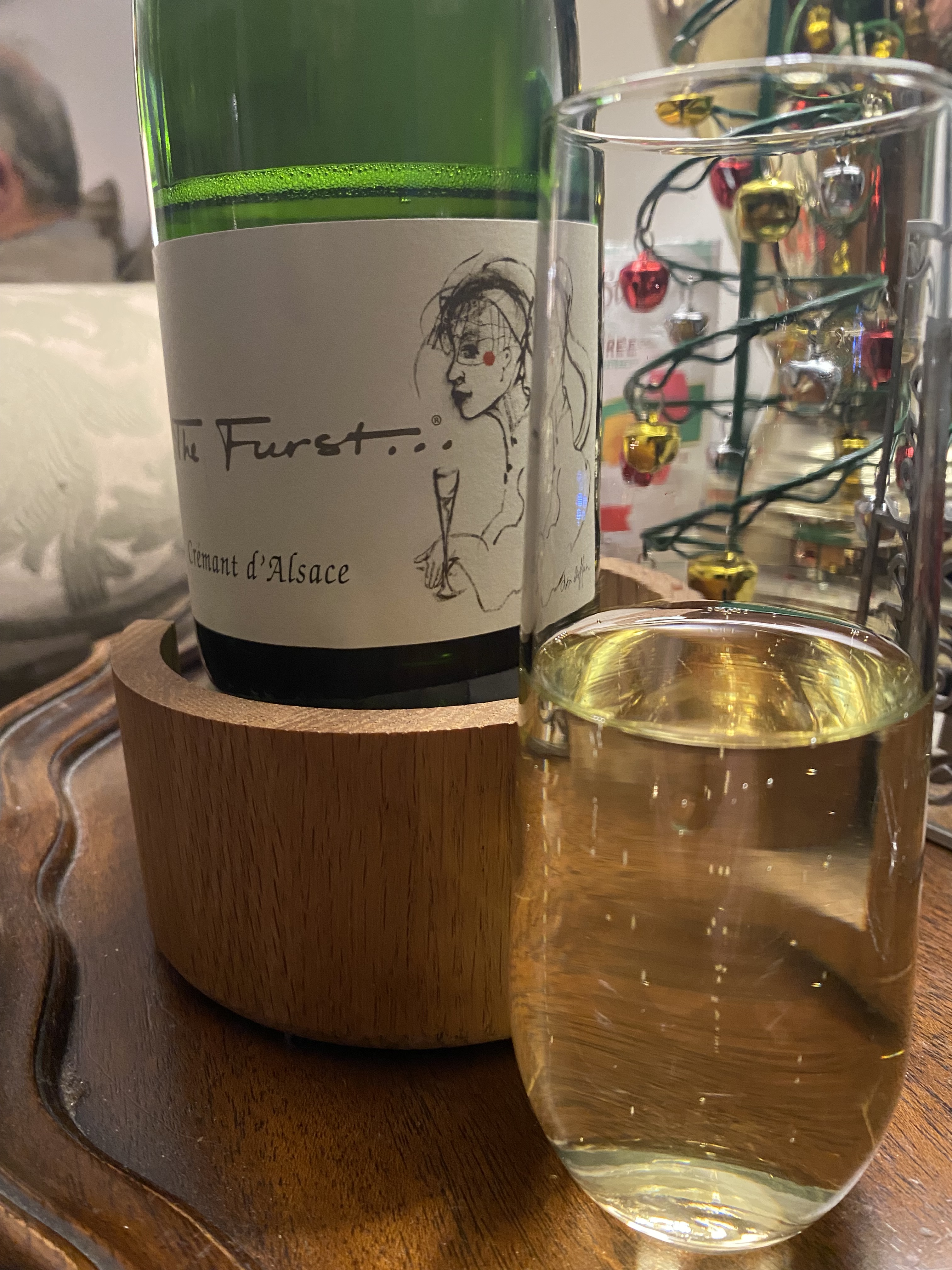
I decided on an easy to drink and understand bottle of bubbly. We started with The Furst Crémant D’Alsace NV which is produced by Cave Vinicole de Kietzenheim-Kaysersberg. Cave Vinicole de Kietzenheim-Kaysersberg is a cooperative of one-hundred-thirty landowners in the villages of Ammerschwihr, Kientzheim, Kaysersbert and Sigolsheim and covers one-hundred-seventy hectares of vineyards. This cooperative is part of a much larger cooperative of successive merger and is now called Bestheim. Crémant d’Alsace is an appellation created in 1976 covering the sparkling (Methode Traditionelle) white and rosé wines of the Alsace region. The wines must spend a minimum of nine months maturing on their lees, before disgorgement and the dosage; all vital and required steps to comply with the appellation. The Furst is produced in concert with the Dopff au Moulin Estate with seventy hectares of vineyards, and currently in the thirteenth generation of wine makers. The Estate is located in the historic Riquwhir at an altitude of 300 meters in the foothills of the Vosges Mountains. The Estate is also credited with the creation of Crémant D’Alsace and the creation of the distinctive tall, slender Alsatian wine bottle. This wine is a blend of fifty percent Pinot Blanc and fifty percent Pinot Auxerrois. The golden-yellow wine with small to medium size bubbles offered cidery aromas notes. On the palate there were tones of apple, pear, and lemon zest which complimented a delicate mousse, and ending with a savory finish.
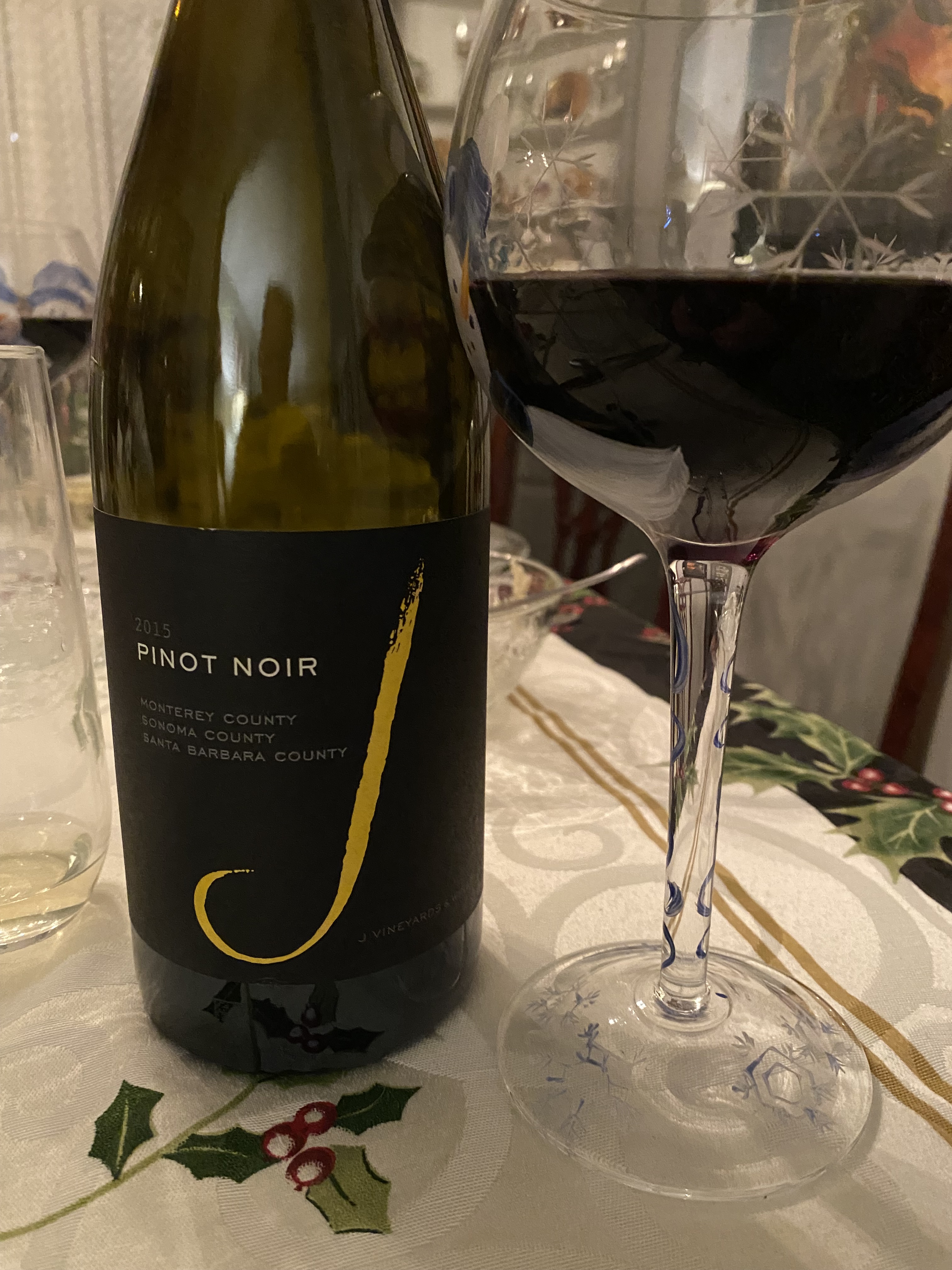
My Bride had made her signature dishes of Caesar Salad, Armenian Pilaf and her Bourbon and Brown Sugar Salmon. I knew our guest’s wife likes red wine, so I went with a bottle of J Vineyards & Winery Black Label Monterey-Sonoma County-Santa Barbara Pinot Noir 2015. The winery began in 1986 by Judy Jordan, the daughter of Tom Jordan, founder of Jordan Vineyard & Winery fame. The father and daughter team began as equal partners, until the daughter was able to buy out her father and she became sole proprietor. Originally, I only knew the winery for their sparkling wine and for the first ten years they only produced the J Vineyard Brut and what a fine job they did with it. In 2015 E&J Gallo bought J Vineyards & Winery and maintained the winemaker. The wine is a blend of Pinot Noir from three areas: seventy percent of the fruit came from the Olson Ranch in Santa Lucia Highlands in Monterey County and I have been praising the Pinots from that region for some time, twenty-six percent of the fruit came from the Russian River Valley and four percent was harvested from Santa Maria Valley AVA in Santa Barbara County. The different wines were aged for six to seven months in a mix of French and American Oak, then blended and bottled. The wine was a deep dark garnet color and offered notes of dark plums, vanilla and anise. On the palate this medium-bodied wine showed tones of plums and rose petals and finished with a medium count finish of fruit and a trace of terroir.
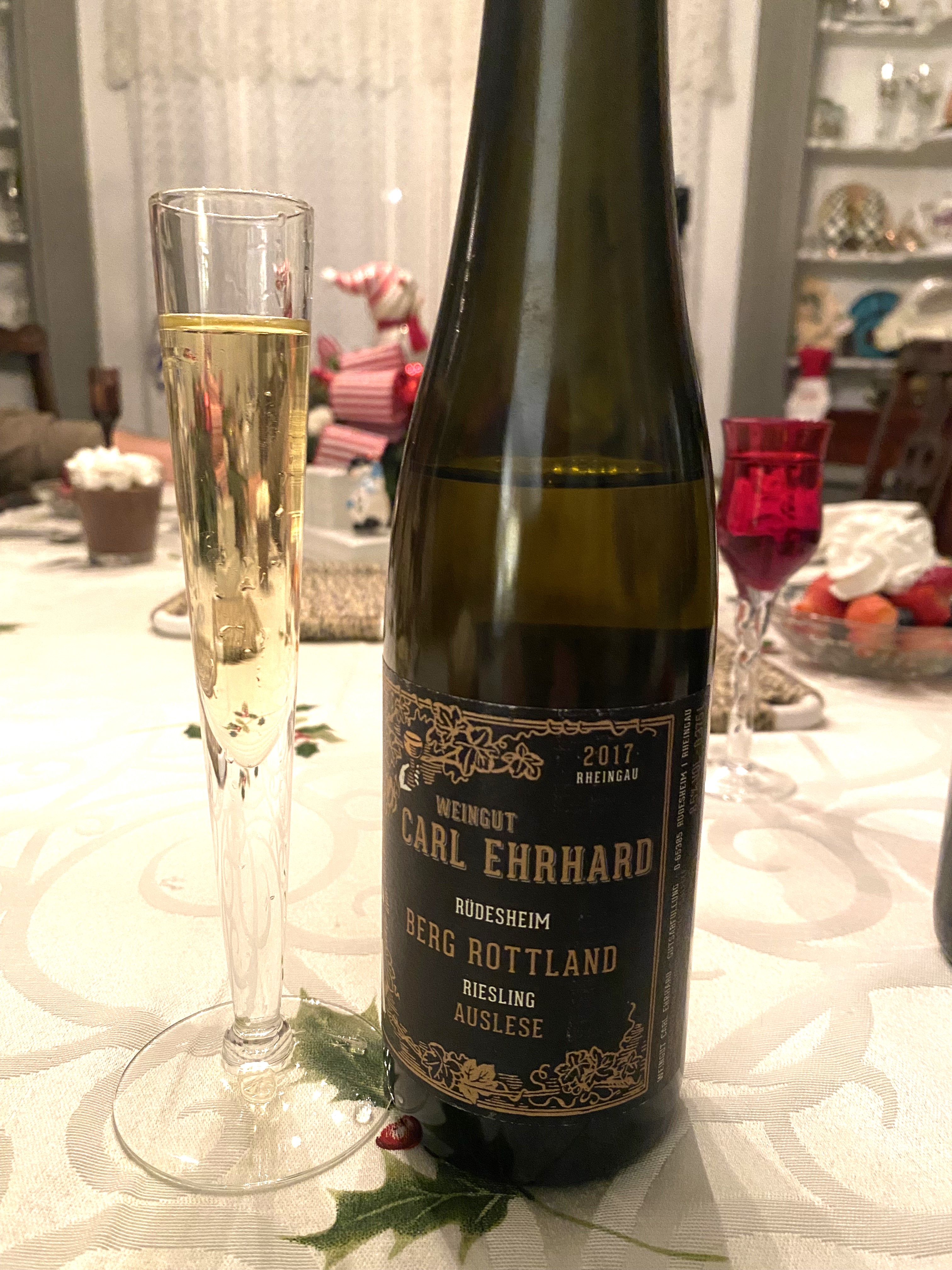
For dessert my Bride had stopped at our local Italian market and went to their bakery to buy an assortment of cakes, cookies and tarts. I knew that the husband enjoyed Riesling wines, as that is what we have given him other bottles as gifts in the past. So, we opened a bottle of Weingut Carl Ehrhard Rüdesheim Berg Rottland Riesling Auslese 2017 from the Rheingau. The Rheingau was first settled by Celts, followed by the Romans in the First Century. Rüdesheim is a town on the northern banks of the Rhine River and there are seven vineyards rated by the VDP as Grosse Lage (First Growths) and the best are west of the town with on the steep slopes with southern exposure and Berg Rottland is one of them. Here is one of the steepest slopes and the soil is slate, quartzite, gravel, and scattered loess. Weingut Carl Ehrhard is an historic family estate and winery founded in 1815 and is now organic and biodynamic. All fruit is hand-harvested, Initial Fermentation occurs spontaneously from indigenous yeasts in large neutral oak barrels. The juice remains in the barrels on their lees for over a year, and they like to release the wine seventeen months after harvest with no fining or filtering. The wine had a nice golden color and offered notes of ripe peaches and apricots, white florals, and honey. On the palate a rich full-bodied wine that had tones of ripe fruit, a touch of citrus with balanced acidity and a long finish of honey and terroir.

 The Wine Raconteur