The month of December always catches me way behind with articles, as there is always more events and tastings to attend and report on. I always like to write across the entire spectrum of wines that I encounter. I always look for the next affordable wine, as writing only about the top wines is amply covered by others.

At my local wine shop The Fine Wine Source in Livonia, Michigan; every wine is curated by the owner and his staff, and that includes the Wine Club selections, which I think they view as a “loss leader” to get the people into the shop. The first wine representing the Old World is A La Volée Brut Crémant de Limoux Brut Nature Zero Dosage 2018. Crémant de Limoux is an appellation created in 1990 to raise awareness of this wine from the higher and cooler region of the Languedoc-Roussillon. Originally noted for the Mauzac grape or locally known as Blanquette de Limoux, but the new appellation allows for the use of Chenin Blanc and Chardonnay. This wine is from a partnership with Pierre Calzergues and the Bouché Family and established in 2021. The fruit is sourced from limestone and clay soils in the upper Aude Valley in Limoux. The wine is a blend of half Chardonnay and half Chenin Blanc, and the fruit is hand-harvested, using small crates (to prevent premature damage to the grapes), destemmed and gently crushed. The wine is made using the Champenoise Method. Initial Fermentation is in Stainless Steel for six weeks, and then bottled and aged for eighteen months. The Secondary Fermentation occurs during disgorgement, with no additional sugar, just additional white wine to top off the bottle. The light-gold colored wine is described as offering notes of buttered popcorn, melon and apples. On the palate it is noted for having tones of candied fruit, toasted bread, crisp, well-balanced and a touch of bitters in the finish.
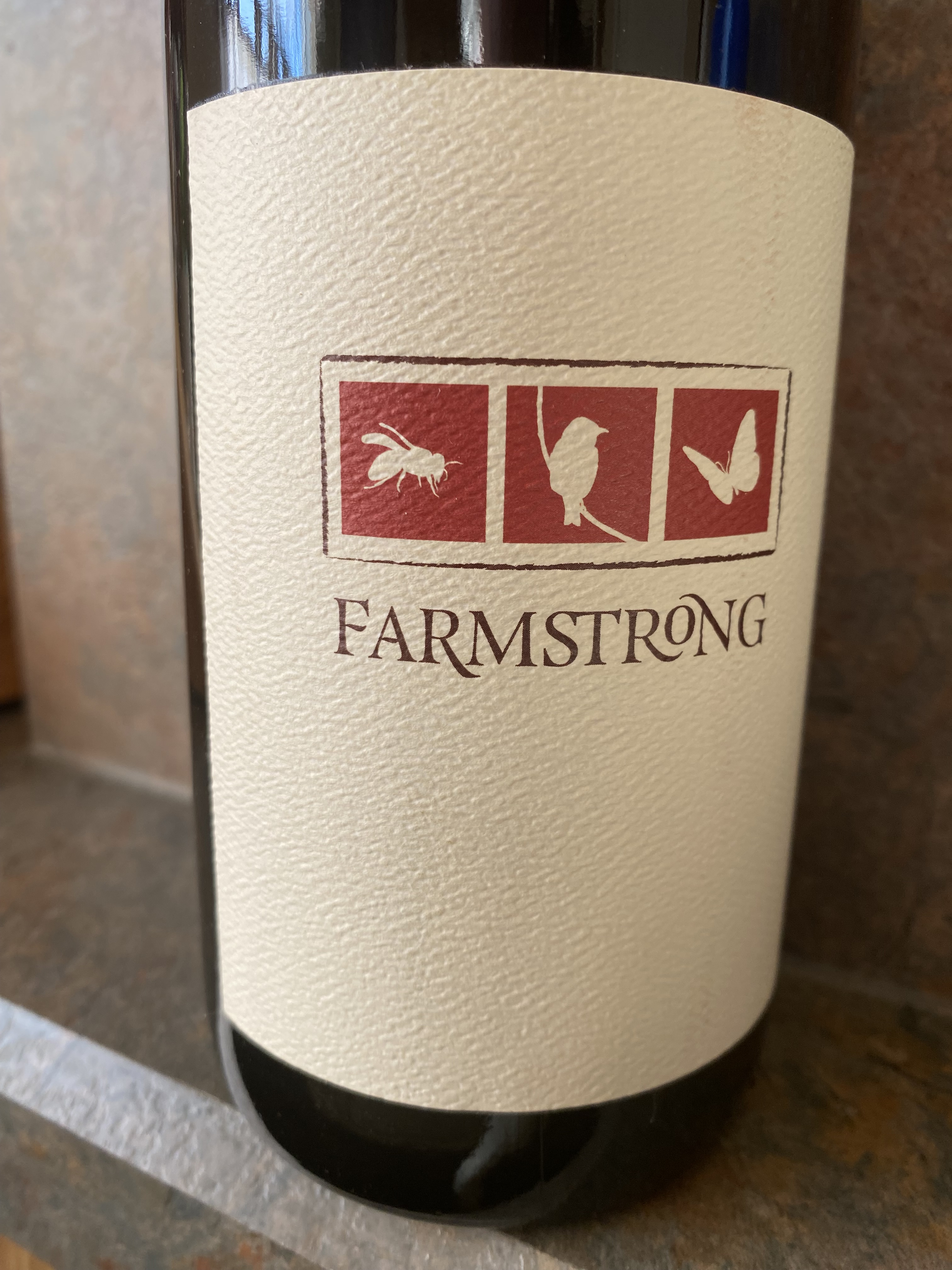
The wine representing the New World is Farmstrong Vineyards Field Red California 2017. Farmstrong Vineyards was founded in 2014, and the fruit is sourced from independent family-owned vineyards that practice sustainable farming. They use lightweight glass, taint-free corks and no capsules. There are three different wineries used; Hawkeye Ranch Vineyard in Mendocino, which for over eighty years has been growing “old vine” Carignane on gravelly loam on the bench of the Russian River with chunks of quartz in the soil as well. KenMar Vineyard is located on the upper bench of Mendocino’s Redwood Valley, and they have over fifty-year-old Zinfandel vines. The Syrah grapes are from Ledgewood Vineyard in the Suisun Valley AVA in Solano County. The wine is a blend of fifty-three percent Zinfandel, twenty-eight percent Carignane and nineteen percent Syrah. The fruits were both destemmed and whole cluster crushing using native yeasts for Initial Fermentation in Stainless Steel, then undergoing native Secondary Fermentation. Then the different juices were blended and aged in French Oak, nine percent once used and the balance neutral for ten months. There were fifteen barrels produced or three-hundred-seventy-five cases. The wine is described as having notes of black fruit, pencil shavings, grilled bread and traces of white pepper. On the palate there are tones of black plums, cranberry, and cherry blended with mellow tannins.
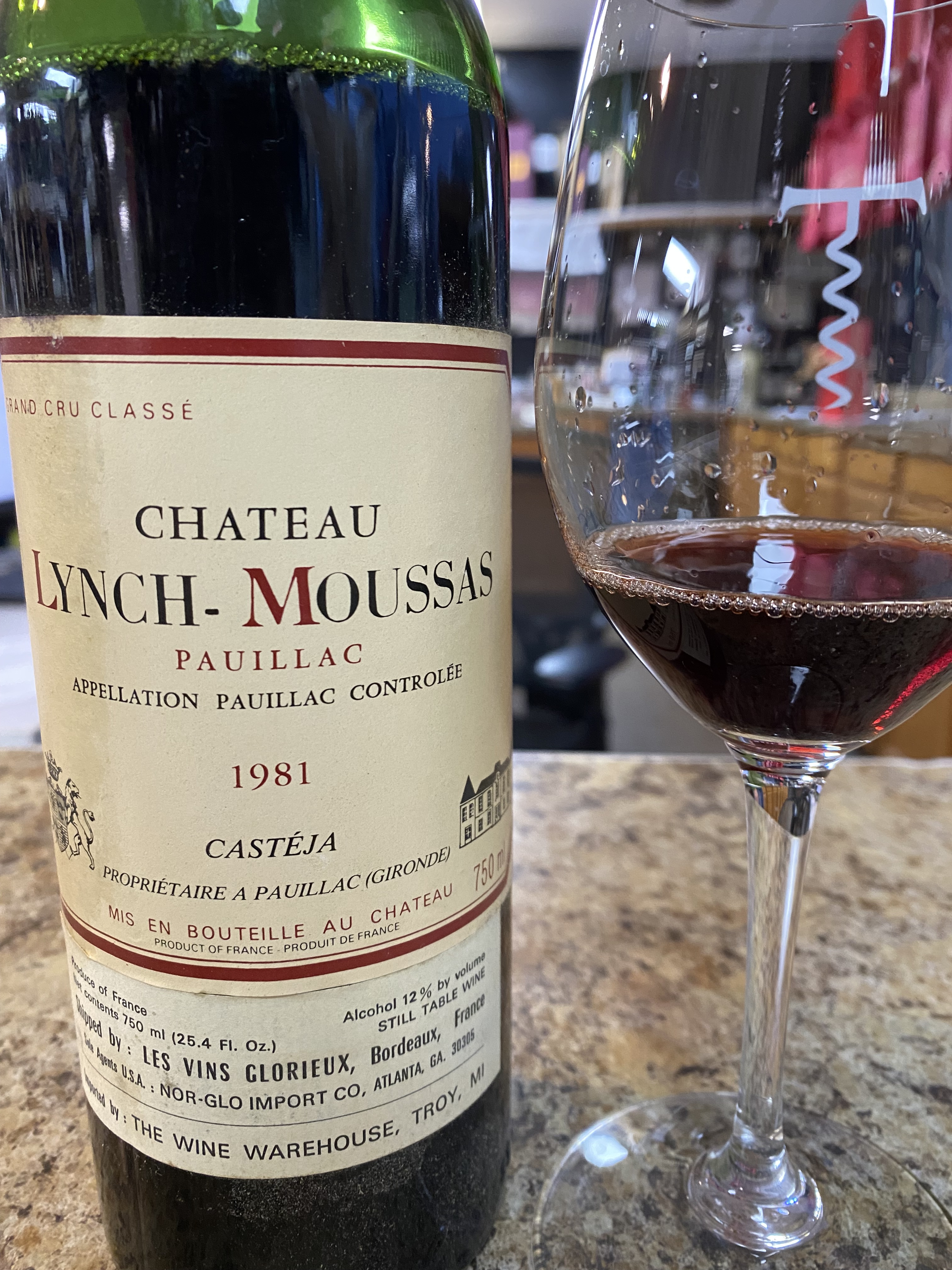
The was a surprise tasting offered to me, and I couldn’t say no to the request, and totally a unique moment. I was poured a glass of Chateau Lynch-Moussas Pauillac 1981. a Fifth Growth from the famed Classification of the Medoc of 1855. Chateau Lynch-Moussas was once part of the large estate of Comte Lynch (and a former hunting lodge) that was divided in two in 1824, the other part became Lynch-Bages. The chateau was founded in the 18th Century by a member of the Lynch family. The “Moussas” name dates back to the 16th Century The property was purchased in 1919 by the Casteja family, who at the time also owned Duhart-Milon, and a member of the family has been in charge of the property since, though it is now part of the Borie-Manoux portfolio. The estate is about fifty-five hectares of vines planted on silica and gravel over limestone; and planted around seventy-five percent Cabernet Sauvignon and twenty-five percent Merlot. The wine is aged for about eighteen-months in oak, of which about half is new. At an age of forty-three this wine still had a nice garnet color and still some notes of dark fruit. On the palate it was a very mature wine with tones of charring, very mellow, and a blending of the tannins, fruit, and the acidity all becoming one. A totally unexpected pleasure and we were saluting a customer that was glad to find his “vintage year” and it sounded like he was going to save the wines to celebrate his fiftieth birthday.

 The Wine Raconteur