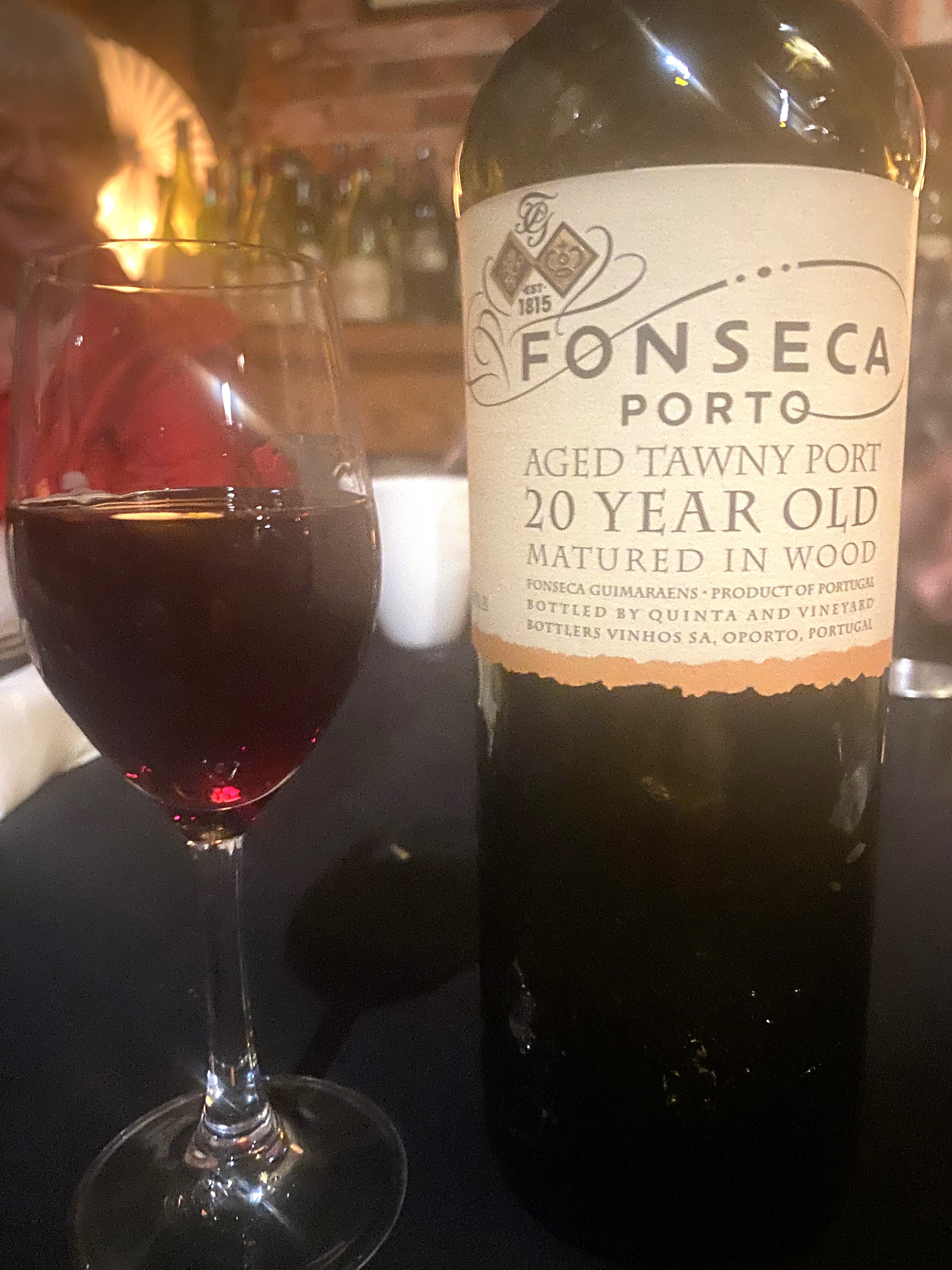
There were five of us having dinner at The Earle in Ann Arbor, all five I guess are “foodies,” but only four of us are really in to wine, the fifth will enjoy a glass of what we were having, but not to our extent. He also thought that we were all high-maintenance about the way we would ask questions about the dishes, not to mention the one person that had to keep requesting to have bottles of wine accompany the dessert choices. The dessert of choice was as there were five orders of coffee and three orders of Chocolate Chambord Mousse made with whipped egg whites folded into melted chocolate, raspberry juice, Chambord, and whipped cream, finished with shaved Callebaut Belgian chocolate and a raspberry. The Caller’s wife asked me to select a Port wine to go with the dessert she was sharing with The Caller. I went with a fine safe selection of Fonseca 20-Year-Old Tawny Port NV from Fonseca Guimaraens. Fonseca is a well-regarded Port house with three vineyard estates in the Douro region and the make the gamut of Port offerings from Reserve Ruby to Vintage Ports. Fonseca was founded in1815 by the Fonseca and Monteiro families, with the Guimaraens family taking over in the second half of the 19th Century. In 1949, the company was bought by Taylor, Fladgate & Yeatman, which had loaned Fonseca considerable sums since the outbreak of war in 1939. Despite the change of ownership, the house is run as a separate entity and the Guimaraens family still have key positions to this day. There are roughly eighty grape varietals sanctioned in the production of Port, and some are truly lost both in name and in the vineyards over the centuries. After twenty years, the wine has lost its deep red color and developed the “tawny” amber color, and the wine offers notes of ripe mature fruit, butterscotch, caramel, roasted nuts, and orange rind. On the palate there are tones of rich, complex mellow fruit blended with toffee, caramel, butterscotch, and spiced oranges, with oak tones, ending with a long-count finish of fruit and roasted almonds.
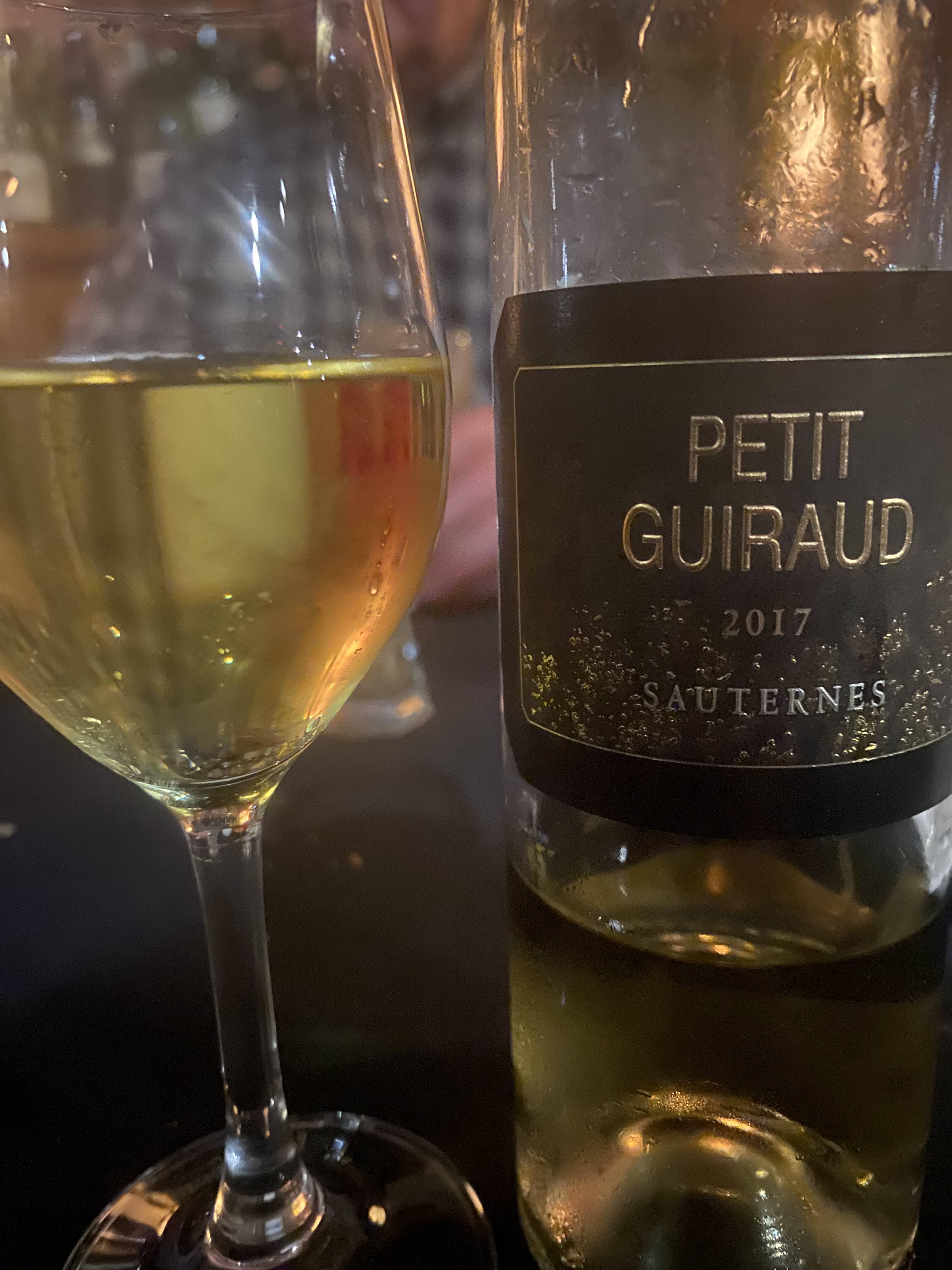
The Caller had a glass of Chateau Guiraud Petit Guiraud Sauternes 2017, the second label of Chateau Guiraud and is made from younger vines. The estate has eighty-five hectares planted with Semillon and Sauvignon with vines that average about thirty-five years of age on a soil of sandy and clay gravels, over red clay, limestone, and fossilized oyster beds; perfectly conducive for the spread of Botrytis Cinerea, or the Noble Rot that has made Sauterne wines immortal. The estate was originally the Noble House of Bayle and bought by Pierre Guiraud in 1766, and stayed in the family until the 1980’s when it was bought by a group of like-minded friends. The wine is a blend of sixty-five percent Semillon and thirty-five percent Sauvignon Blanc. Only grapes that have been affected by the Noble Rot are picked by hand and fermented plot by plot in new oak barrels. My notes for the Premier Cru is that once the level of sweetness is achieved it is aged for about twenty-four months in oak, before bottling (thought I am sure that the Petit Guiraud has a shorter maturation time). This youthful wine had a beautiful pale golden color and offered notes of peaches, tropical fruits, white florals, and nuts. On the palate there were tones of white peaches, honey-imbued fruits, fine acidity and a nice medium count finish of the honeyed-fruit and terroir.
I had a glass if Gould Campbell Vintage Port 1994 and to be truthful, I was not aware of this Port House, but my curiosity was piqued, and I didn’t know if I would ever encounter it again. Gould Campbell was founded in 1797 when Garret Gould left Ireland and established the firm of Messrs. Gould Brothers & Co. in both Lisbon and Oporto. Later he formed a partnership with Merchants and Bankers with James Campbell. In 1970, the firm was acquired by the Symington family who have been Port producers since 1882, while still retaining its private family business. The grapes are drawn from the Alto Douro area, known for their complexity and depth. While the wines are made in modern temperature-controlled fermentation tanks, a significant proportion of their Ports are still made in small estates around Pinhao, using the ancient method of treading the grapes by foot in stone tanks called Lagares. Symington Family Estates owns several major Port houses, including Dow’s, Warre’s, Graham’s and Altano. While there are over eighty sanctioned grapes allowed in the production of Port, most have been forgotten, lost, and intermingled over the centuries. The five main grapes used are: Touriga Nacional, Touriga Franca, Tinto Barroca, Tinta Roriz (Tempranillo), and Tinto Cao; and some other relatively common varieties are Sousao, Tinta Amarela and Mourisco Tinto. The deep black ruby colored wine offered notes of ripe fruit, violets and lavender, chocolate and minerality. On the palate a big wine with tones of red fruits, oranges, with noticeable acidity and a very pronounced mineral finish. I am still mentally debating with myself about this wine, as it was not what I was expecting from a vintage port, but then I am not that knowledgeable about the different houses. The Fonseca was the unanimous choice of the three dessert wines, as we all tasted each other’s wines.


 The Wine Raconteur