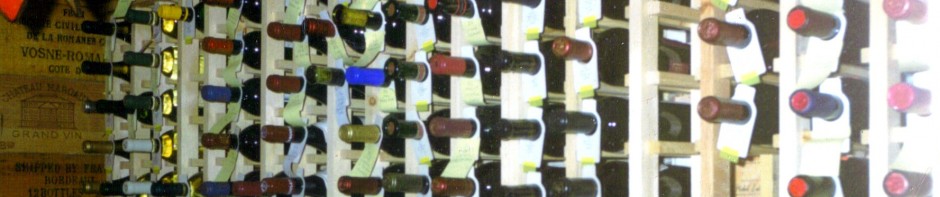
After the Chanel themed wine tasting, there was a bit of a surprise going on at my local wine shop The Fine Wine Source in Livonia, Michigan. The wholesaler that arranged for the Chanel tasting, brought some of his odds and ends from his warehouse, we got there late, and people were taking advantage of the bargains, and besides buying wines from the tasting, we also picked up some of these as well, in fact, some of them were being poured, so that helped as well.
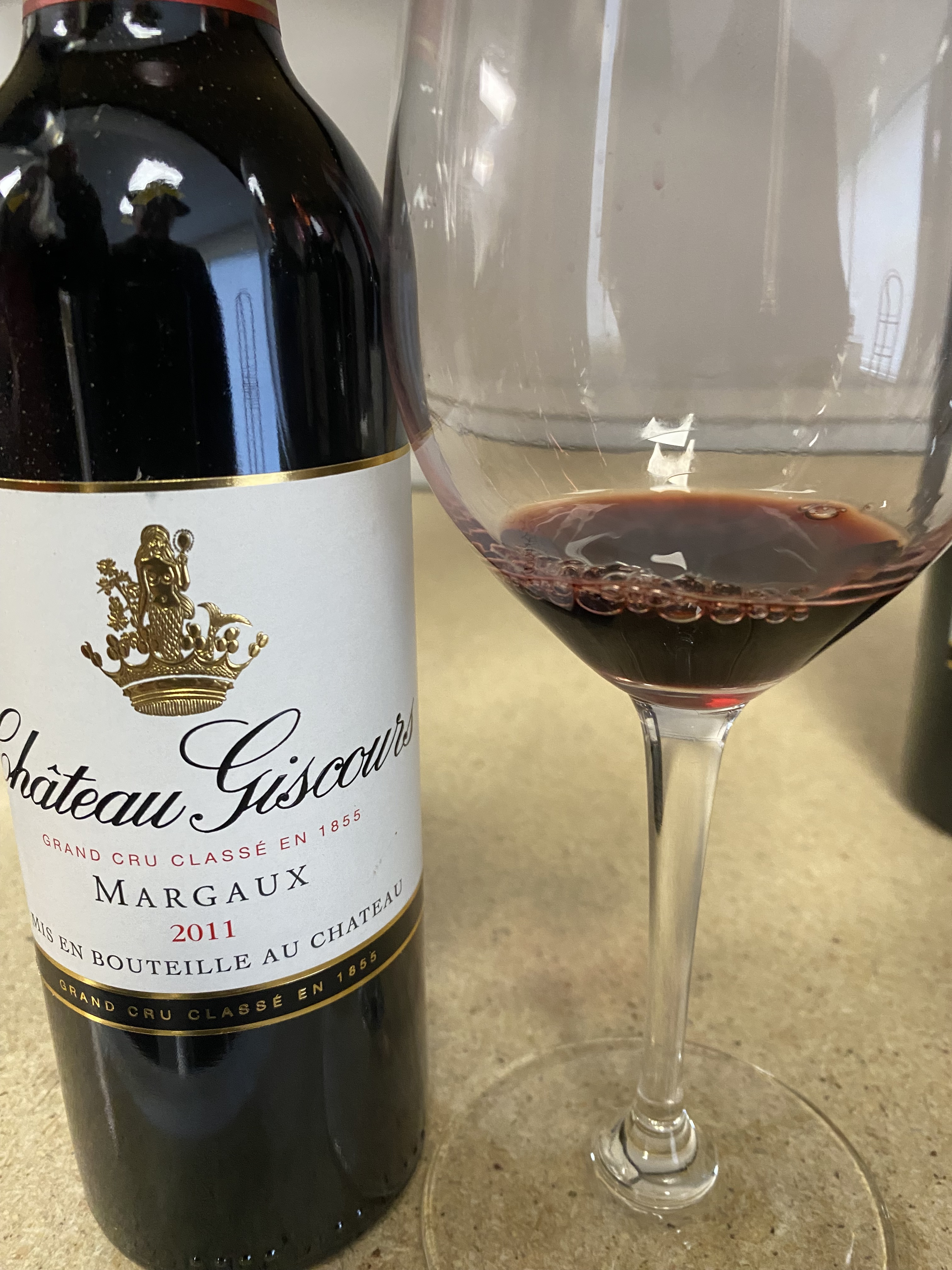
The first wine that was poured for us was Chateau Giscours Margaux 2011, in half-bottles, and the wine is a Troisiemes Crus (Third Growths). A little side note is that Margaux is probably my favorite commune in the Medoc and the wines from there are the most easily to encounter; and there are twenty-one Grands Crus Classes wine from this one commune. Over the years it has been described as “an iron fist in a velvet glove.” Chateau Giscours dates to 1552, when Pierre de Lhomme bought a house called Guyscoutz, enlarged the property and planted the first vines. The vineyard is one of the largest on the Left Bank with 165 hectares, of which 102 hectares is in the Margaux appellation. The wine is a blend of seventy-five percent Cabernet Sauvignon, twenty percent Merlot, and five percent Petit Verdot. The fruit is manually and optically scanned, and Initial Fermentation, and Maceration occurs in both Concrete and Stainless-Steel vats for a period of thirty-five days. Then the wine is aged for seventeen months in French Oak, of which half is new barrels. The dark ruby-red wine offers notes of black cherry, blueberry, currants, and traces of cocoa. On the palate, this medium-bodied wine offered tones of black fruits, cedar, chocolate, well-balanced with silky and velvety tannins; it ends with a good medium-count finish of fruit and cedar.
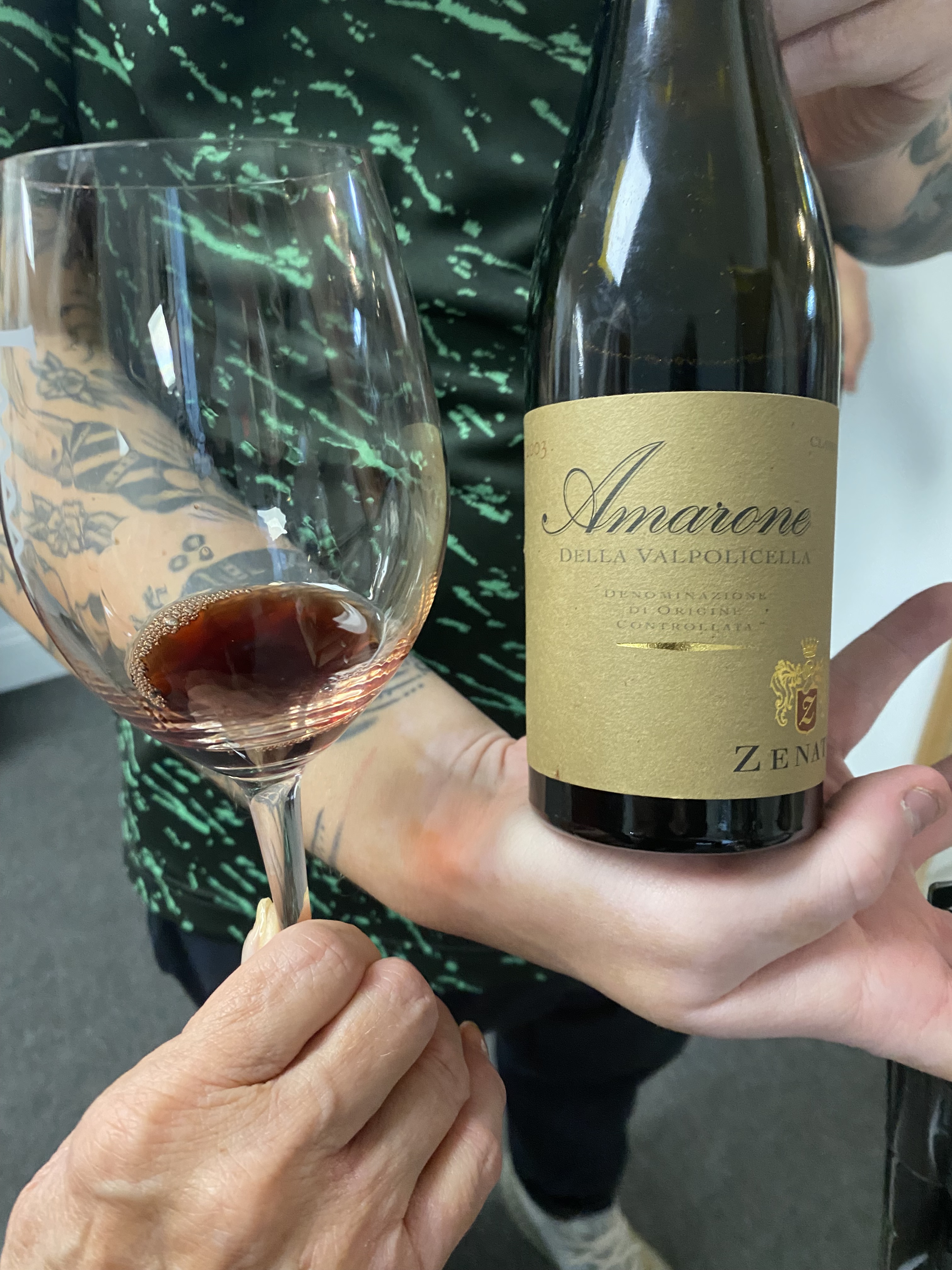
Another wine that was poured was Zenato Amarone della Valpolicella DOCG 2003. Zenato is an important producer in the Veneto, with estates in Lugana and Valpolicella. The Amarone wine is grown and made at their Costalunga estate at Sant’Ambrogio di Valpolicella. On the estate they grow Corvina, Rondinella, Oseleta, and Croatina and this wine is eighty percent Corvina and twenty percent Rondinella; and I guess a wink and a nod of Oseleta and Croatina. After harvest, the grapes are dried for three to four months, then crush in January and then aged for thirty-six months in Slovenian Oak barrels. This deep ruby-red wine offered notes of black cherry, figs, plums, cassis, florals, cinnamon, and almonds. On the palate this full bodied-wine had abundant tones of black ripe fruit, some strawberry jam, Christmas spices, grippy tannins, high acidity, with an ending of a good medium-count of ripe fruit, licorice, and a touch of bitter almonds and chestnuts.
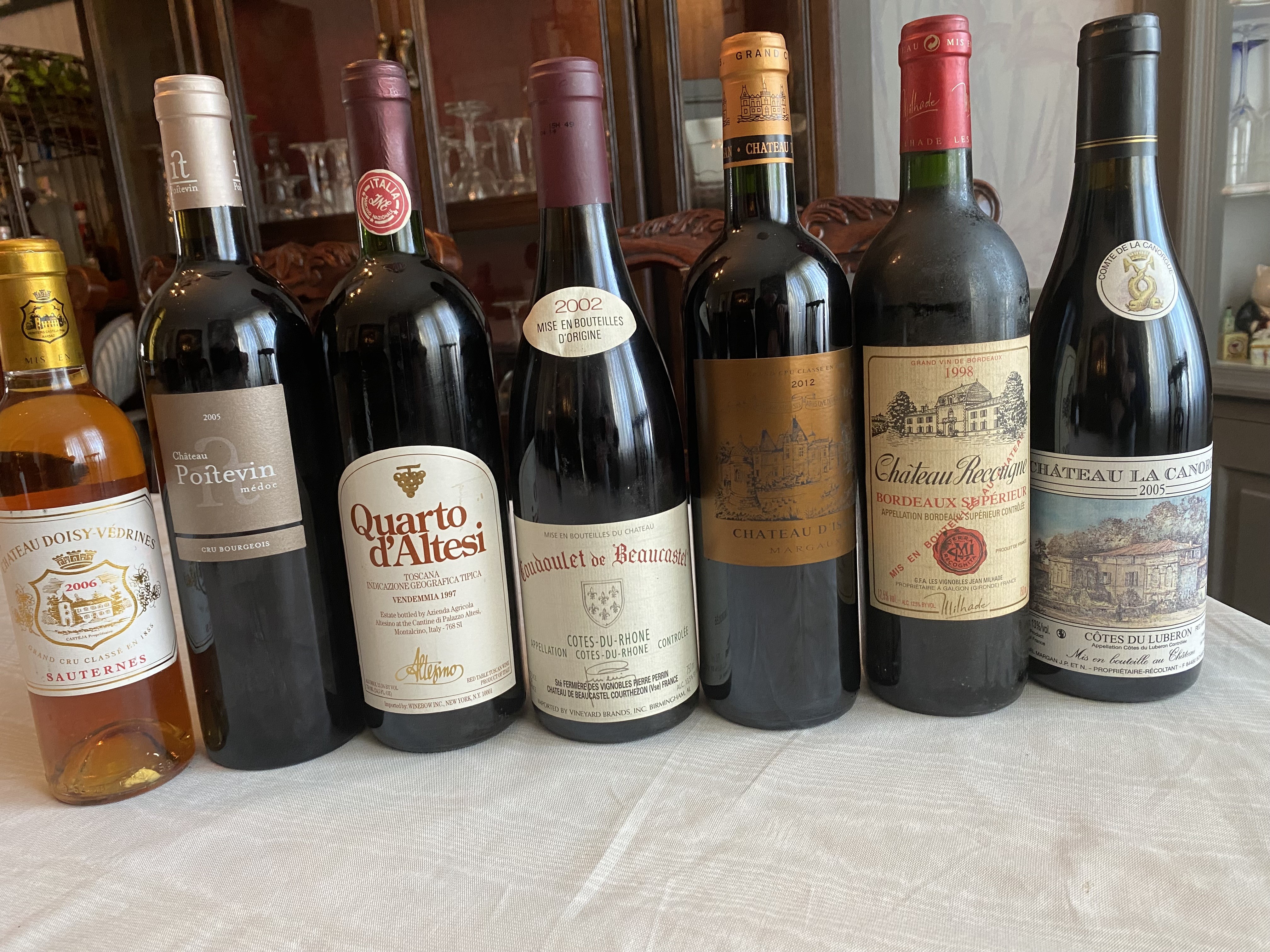
The other wines that we didn’t taste, but we added to our purchases were kind of a hodgepodge of interesting wines. I anticipate that I will be writing about these wines in the next couple of years and I look forward to the challenge. Chateau Doisy-Vedrines Grand Cru Classe Sauternes 2006. Chateau Poitevin Medoc Cru Bourgeois 2005. Altesino Quarto d’Altesi Toscana IGT 1997. Coudoulet de Beaucastel Cotes du Rhone 2002. Chateau D’Issan Grand Cru Classe Margaux 2012. Chateau Recougne Bordeaux Superieur 1998. Chateau La Canorgue Cotes du Luberon 2005.

 The Wine Raconteur