It was a wonderful afternoon of tasting wines at The Fine Wine Source in Livonia, Michigan. The new addition was just officially opened for business and Stanislas O’Byrne the founder of Jubilee Wine Selections was pouring some of his wine offerings. This group of three were from Pessac-Leognan, Pauillac, and Margaux. Some days, being a wine blogger is very tough.
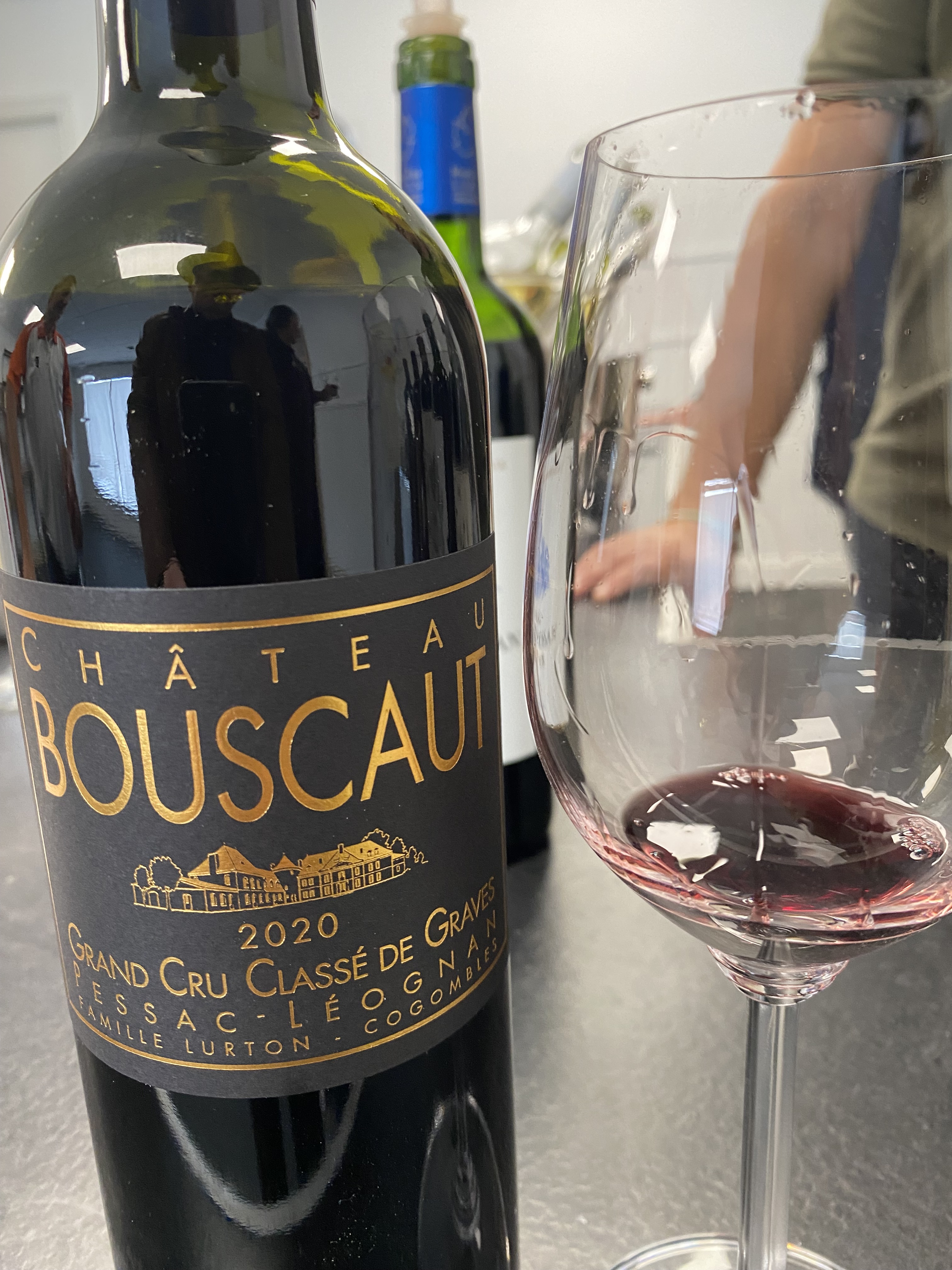
We started this set with Famille Lurton Chateau Bouscaut Rouge Grand Cru Classe de Graves Pessac-Leognan 2020. The estate is known as a Grand Cru Classé de Graves for both their white and their red wines. The vineyard dates to the 1600s, while the estate was originally known as Haut Truchon, but by 1881it had become Chateau Bouscaut. The chateau was burned to the ground in 1962, the cellars were unharmed, and the chateau was rebuilt according to its original architectural plans. In 1979, Lucien Lurton purchased the estate and then added an additional nine-hectares that was Chateau Lamothe-Bouscaut. The vines on average are thirty-five-years of age and planted on clay on limestone soil. The vinification process begins in Stainless Steel and Concrete tanks, and then aged for eighteen months in French Oak, of which forty percent is new. The wine is a blend of sixty-one percent Merlot, thirty-three percent Cabernet Sauvignon and six percent Malbec. The wine was a deep ruby/purple color and offered notes of black fruits, mocha, and cedar. On the palate this medium-bodied silky wine offered tones of black cherries, and berries, plums, with good secondary tones of licorice; blended with good acidity, firm tannins and then ending with a nice long-count finish of spices and a salty-mineral terroir finish.

We then had Chateau Haut-Bages Liberal Pauillac 2021, which is a Cinquieme Grand Cru Classe in 1855 (a Fifth Growth). The property is adjacent to Chateau Latour and the other half is behind Chateau Pichon Baron, with a third plot adjacent to Chateau Grand-Puy-Lacoste; and Haut-Bages refers to the upper part of the “Bages,” a large plateau between Pauillac and Saint-Julien. The “Liberal” is an homage to the Liberal family that ran the property in the 18th Century. For years the property was owned by the Cruse family and the wine was produced at Chateau Pontet-Canet. The property was sold to the Taillan Group, headed by Jacques Merlaut, and his granddaughter Claire Villars-Lurton has owned and managed the estate since 2000, along with her husband under the G&C Lurton group. The estate is thirty hectares and is certified organic and biodynamic in 2019, and is planted on deep gravel over a limestone base. The wine is ninety percent Cabernet Sauvignon and ten percent Merlot. The fruit is hand-harvested and then vinification begins using Stainless-Steel tanks and concrete vats. The wine is aged in French Oak, of which forty percent is new, but since 2018, twenty percent of the vintage is placed in amphorae and is all aged for sixteen months. The deep, dark ruby colored wine offers notes of currants, cassis, black cherry. On the palate, this elegant full-bodied wine offered tones of dark fruits, good acidity, fine tannins and ended with a long-count finish of dark fruit, and a desire for a second taste. Probably a good four to seven years, to achieve the start of its sweet spot, so a very good investment for the cellar.

The last wine of this group was Chateau Ferriere Margaux 2019, a Troisiemes Grand Cru Classe of 1855 (a Third Growth). The estate is eighteen hectares, almost entirely within the village of Margaux itself, and one of the smallest of the classed growths. The estate was founded by Gabriel Ferriere, a member of the court of King Louis XV and a wine broker. The Ferriere family owned the property until 1914, after which it changed hands a number of times; and for several years the wine was vinified at Chateau Lascombes. In 1988, it was bought by the Villars family and is now under the guidance of Clair Villars Lurton and G&C Lurton group. The estate is planted on soils of gravel deposits above limestone marl. The estate is now certified organic and biodynamic since 2019. This wine is a blend of seventy-five percent Cabernet Sauvignon, twenty-five percent Merlot, and five percent Petit Verdot. After initial vinification, the wine is aged for eighteen months in French Oak, of which forty percent is new, but twenty percent of the wine is aged in amphorae for the same period. The dark ruby wine offers notes of cassis and licorice. On the palate this full-bodied wine showed great tones of dark fruits, blended seamlessly with tinges of licorice, toasted oak, firm tannins, great acidity and a nice long-count finish of dark fruit and terroir.

 The Wine Raconteur