It was the first dedicated wine tasting in the new annex room at The Fine Wine Source in Livonia, Michigan. The tasting was on Saturday, and the city gave permission to use the new room the day before. Stanislas (Stan) O’Byrne is the owner and founder of Jubilee Wine and he and the owner of the shop met the year before at En Premiere.

The first wine was Vignoble Ollivier-Cottenceau Muscadet Sevre et Maine Sur Lie 2022. This domaine is located on the hills between the Sevre and Maine Rivers, with twenty-two hectares of vineyards with south-west exposure on sandy, gravely granite soil. This is a family estate that has been handed down since the 17th Century, and the prized grape of the region is the Melon de Bourgogne (Melon) or simply known as by the appellation of Muscadet of the western Loire Valley. Planted in 1709 after a severe winter; it had been expelled from the Burgundy region for being of little interest there, was a cold-resistant answer to the Loire region. The finest winemakers avail themselves to having extended lees contact during maturation (sur lie). The estate uses mechanical harvesting, with pressing within twelve to twenty-four hours after harvest. Fermentation occurs during the first seventeen days and then aged in the same Stainless-Steel vats with batonnage while still on the lees, and the wine is bottled and released in April following the harvest. The wine is a pale yellow-gold and offers notes of green apples, citrus, iodine, and minerals. On the palate there are tones green apples, lemons, and limes, with high acidity and tinged with maritime salt, and ending with a medium count finish of fruit, terroir, and iodine. A very easy drinking wine.
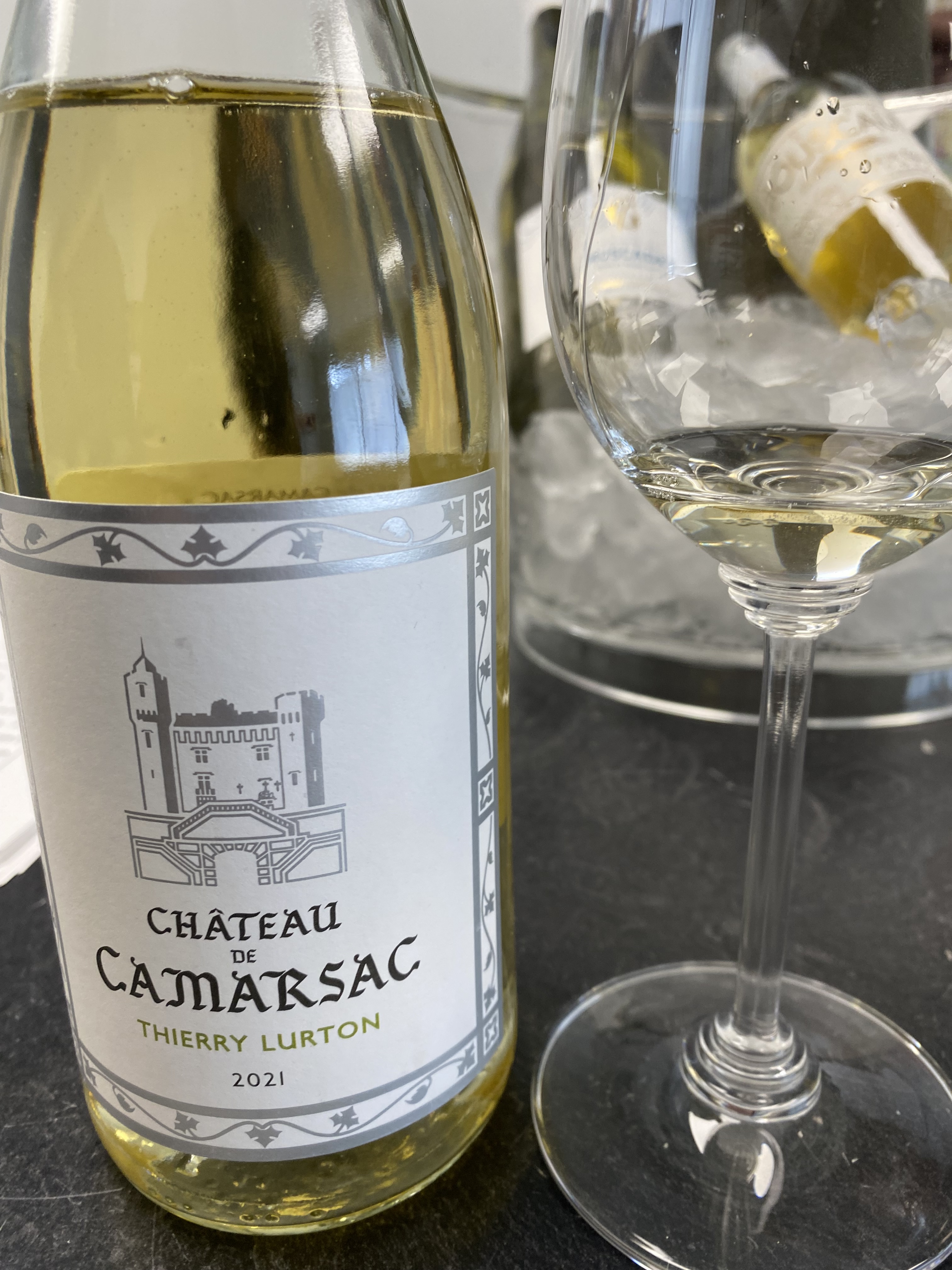
We then had Thierry Lurton Chateau de Camarsac Bordeaux Blanc 2021. The estate has over seven-hundred years of history located in the Entre-Deux-Mares region close to Bordeaux and Saint-Emilion, with parts of the chateau built in the 14th Century and during permittable weather, one can go on the roof and get a sweeping panoramic view of the vineyards and landscape of the district. Solange and Thierry Lurton have been there since 2007. They even offer a workshop where one can assemble a personalized wine as they teach the art of wine-blending and one can create a personalized souvenir bottle. The estate has clay-gravel soils that is used for growing Semillon, and clay-limestone soil that they grow the other white varieties on. The Blanc is a blend of forty-five percent Semillon, forty percent Sauvignon Blanc, ten percent Sauvignon Gris, and five percent Muscadelle. The different grapes harvested, crushed, fermented, and matured separately with some in Stainless Steel and some in oak, until blending. The wine is a pale gold in color and offers notes of citrus fruits, exotic fruits, and white florals. On the palate a medium-bodied wine with tones of grapefruit, pineapples, good acidity, and a medium count finish of fruit and minerals.

The final white wine of the tasting was Famille Lurton Chateau Bouscaut Pessac-Leognan 2020, and the estate is known as a Grand Cru Classé de Graves for both their white and their red wines. The vineyard dates to the 1600s, while the estate was originally known as Haut Truchon, but by 1881it had become Chateau Bouscaut. The chateau was burned to the ground in 1962, the cellars were unharmed, and the chateau was rebuilt according to its original architectural plans. In 1979, Lucien Lurton purchased the estate and then added an additional nine-hectares that was Chateau Lamothe-Bouscaut. The wine is a blend of seventy percent Sauvignon Blanc and thirty percent Semillon and these grapes are grown on soils of clay on limestone gravel. The wine is a light greenish-yellow and offered notes of tropical fruits, honey, herbs, and oak. On the palate a dry nice medium-bodied wine with creamy tones of pears, passionfruit, and currants with good acidity and a good medium count finish of passionfruit and terroir.

 The Wine Raconteur