It was a great day when I stopped by The Fine Wine Source in Livonia, Michigan as there were some wonderful wines being poured. It is now the only way to shop for wines and the selection is always great, because they curate their wines, before they ever get on the shelves. And I have to say that I have a fondness for Italian wines, and Saint-Emilion was one of my first go-to wines as a kid.

The first wine of this set was Azienda Agricola Commendatore G.B. Burlotto Dolcetto D’Alba DOC 2022. G.B. Burlotto is a small estate in the Piedmontese village of Verduno; known for their wines of Nebbiolo variety and a major owner of the Monvigliero Cru, considered by many to be the greatest of all Barolo wines. The estate was founded in 1850, one of the first to win medals, pioneered the selling of Barolo wines in the bottle and he was awarded the title of Commendatore. Giovanni Batista Burlotto passed away in 1927, and it wasn’t until his great-great-grandson Fabio Alessandria, as the winemaker brought back their fame. The Dolcetto variety is considered the third popular red in Italy after Nebbiolo and Barbera. The grape produces low acidic wines that are to be enjoyed in their youth. Dolcetto D’Alba is one of seven Dolcetto-focused DOC wines in Piedmont, and was granted status in 1974 and the vineyards overlap Barolo and Barbaresco on slopes with sandy, calcareous, and tufa-rich soils where Dolcetto thrives. The winery is very traditional with grapes crushed by foot, and very long maceration periods. The fruit is hand-harvested and transported in small boxes; the bunches are only partially de-stemmed, and during maceration pumping over and punching down are done daily. After Malolactic fermentation, the wine ages for nine months in Stainless-Steel tanks. The ruby-red wine offered notes of blueberries, cherries, lavender, mint, and other spices. On the palate this medium-bodied wine offered tones of blueberries, plums, and spices blended with low acidity and ripe tannins, and a medium count finish of fruit and almonds.
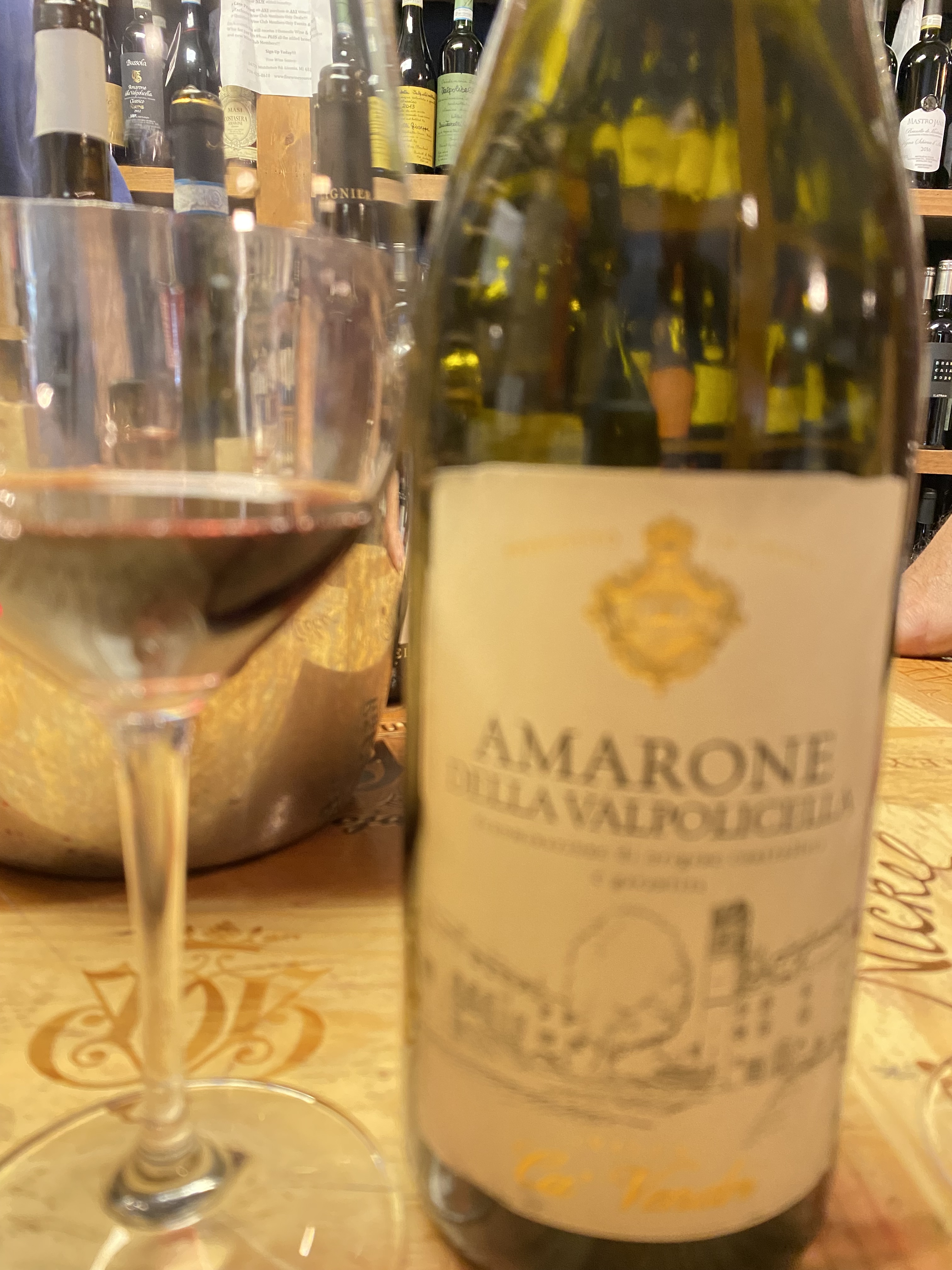
We then went with Villa Ca’Vendri Amarone della Valpolicella DOCG 2020 made by Ville di Antane. Ville di Antane has twenty hectares in the Antane district of Valpolicella. The wine is a blend of forty percent Corvina Veronese, thirty percent Corvinone and thirty percent Rondinella. The fruit is hand-harvested in small boxes where they dry for a period of about four months. The Apassimento Method is unique for Amarone wines and results in very concentrated, “raisiny” full-bodied wines with low acidity. The wine has a slow Initial Fermentation and Malolactic Fermentation before being aged in small barrels for about eighteen months. A deep ruby-red colored wine that offered notes of dark cherries, plums, figs, and hints of chocolate, tobacco, and spices. On the palate a full-bodied wine with tones of blackberries, currants, vanilla, licorice, balanced acidity, smooth tannins and a medium-count finish of fruit and terroir.

The last of the red wines was Chateau La Confession Saint-Emilion Grand Cru 2016 part of Jean-Philippe Janouiex Domaines. The family business was created by Joseph Janouiex of a Bordeaux winemaking dynasty in 1898. Jean-Philippe created his own branch of the business in 1994 with wineries in Saint-Georges-Saint-Emilion, Saint-Emilion Grand Cru, Pomerol and Bordeaux Superieur. Chateau La Confession is a seven and a half hectares estate on a clay-limestone soil with forty-year-old vines. The wine is a blend of seventy-two percent Merlot, and twenty-eight percent Cabernet Franc. The fruit was loaded into small open wooden vats without crushing, with punching of the vats every three hours, then every eight hours, and finally once a day, until the Initial Fermentation had taken place during the maceration for about thirty days. Malolactic Fermentation took place in half new barrels and half in old barrels, with maturing on the lees for six months. The wine had a deep reddish-purple color and offered notes of black fruit, violets, oak, spices, cigar box, smoke, and sous-bois. On the palate a lush full-bodied wine with tones of plums, cherries, blackberries, blending with polished tannins with traces of pepper, eucalyptus, and ending with a medium count finish of nuts and terroir. A delightful wine that still should get some cellar time.

 The Wine Raconteur