I had the good fortune to be invited for another wine tasting of some classic wines from the Medoc at my local wine shop The Fine Wine Source in Livonia, Michigan. The Cazes family have been the owners of Chateau Lynch-Bages since 1939, and over the years they have spread their sphere in viticulture, tourism, and hospitality. Our host for the event was Pierre Louis Araud representing Famille JM Cazes.
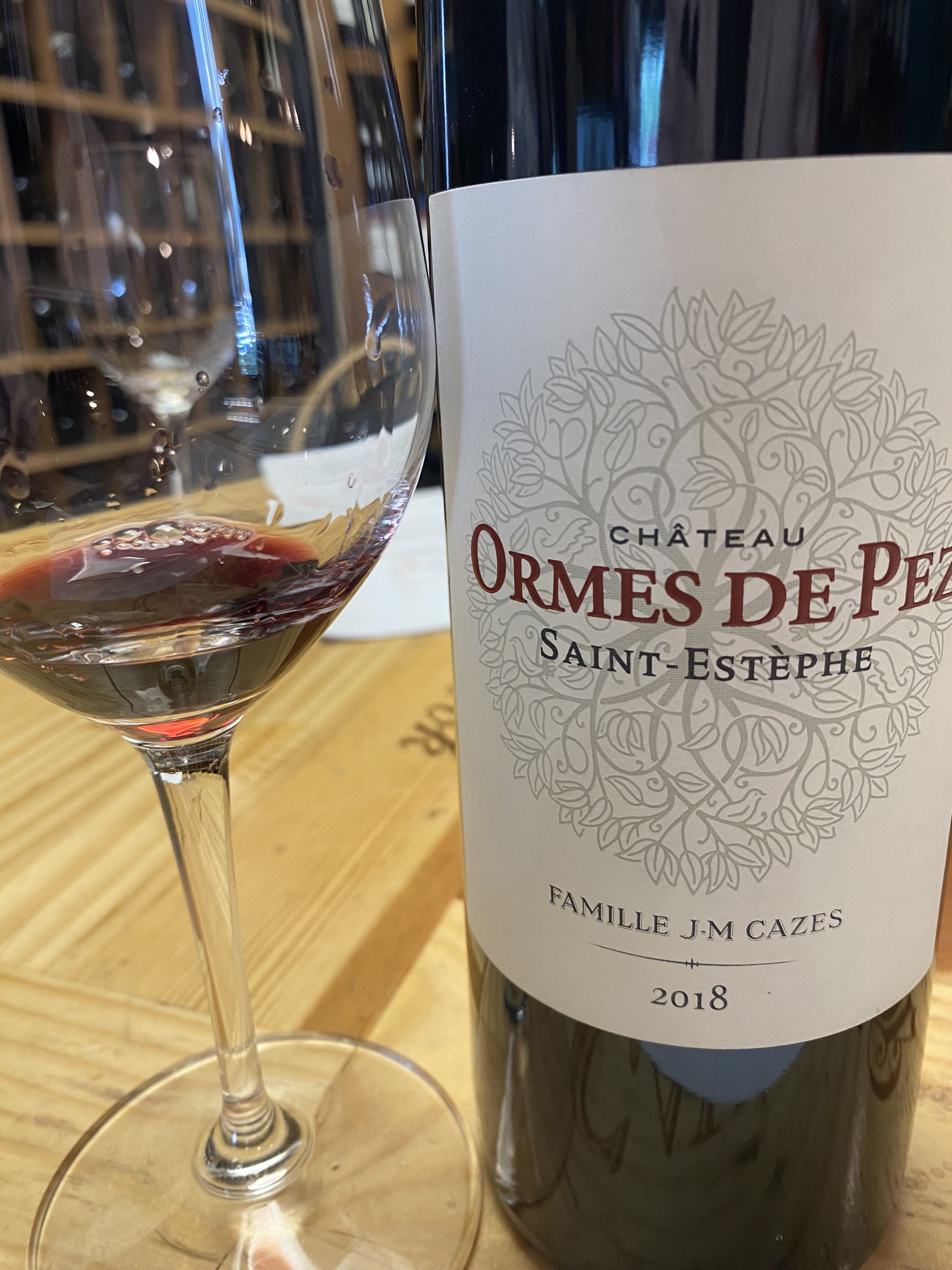
We began by enjoying Chateau Ormes de Pez Saint-Estephe 2018. The estate was formerly classified as a Cru Bourgeois Exceptionnel and when the classification was formally dropped in 2011, it became part of the marketing group Les Exceptionnels with five other former Cru Bourgeois properties. Prior to the French Revolution, the property was part of the Domaine de Pez in Saint-Estephe, once defined by the elm trees (ormes) once growing on the estate in the hamlet of Pez. After a succession of ownerships since the Revolution, the estate was purchased by the Cazes family in 1940. The estate is thirty-five hectares of vineyards; fifty-four percent is Cabernet Sauvignon planted on gravelly soils, and thirty-seven percent is planted with Merlot on sandy clay soils, while the balance is planted with Cabernet Franc and Petit Verdot. This wine is fifty percent Merlot, forty-one percent Cabernet Sauvignon, seven percent Cabernet Franc, and two percent Petit Verdot. The fruit is hand harvested and hand sorted. Initial Fermentation and Maceration lasts for about twenty days in Stainless Steel vats. The wine was then aged for sixteen months in French Oak, of which forty-five percent was new. A nice deep garnet red wine offering notes of red and black fruit, and a whiff of smokiness. On the palate a medium-bodied wine with tones of black cherry and currants, with good acidity, fine tannins; followed by secondary tones of sous-bois, chocolate, graphite and a fine medium count of licorice and terroir.
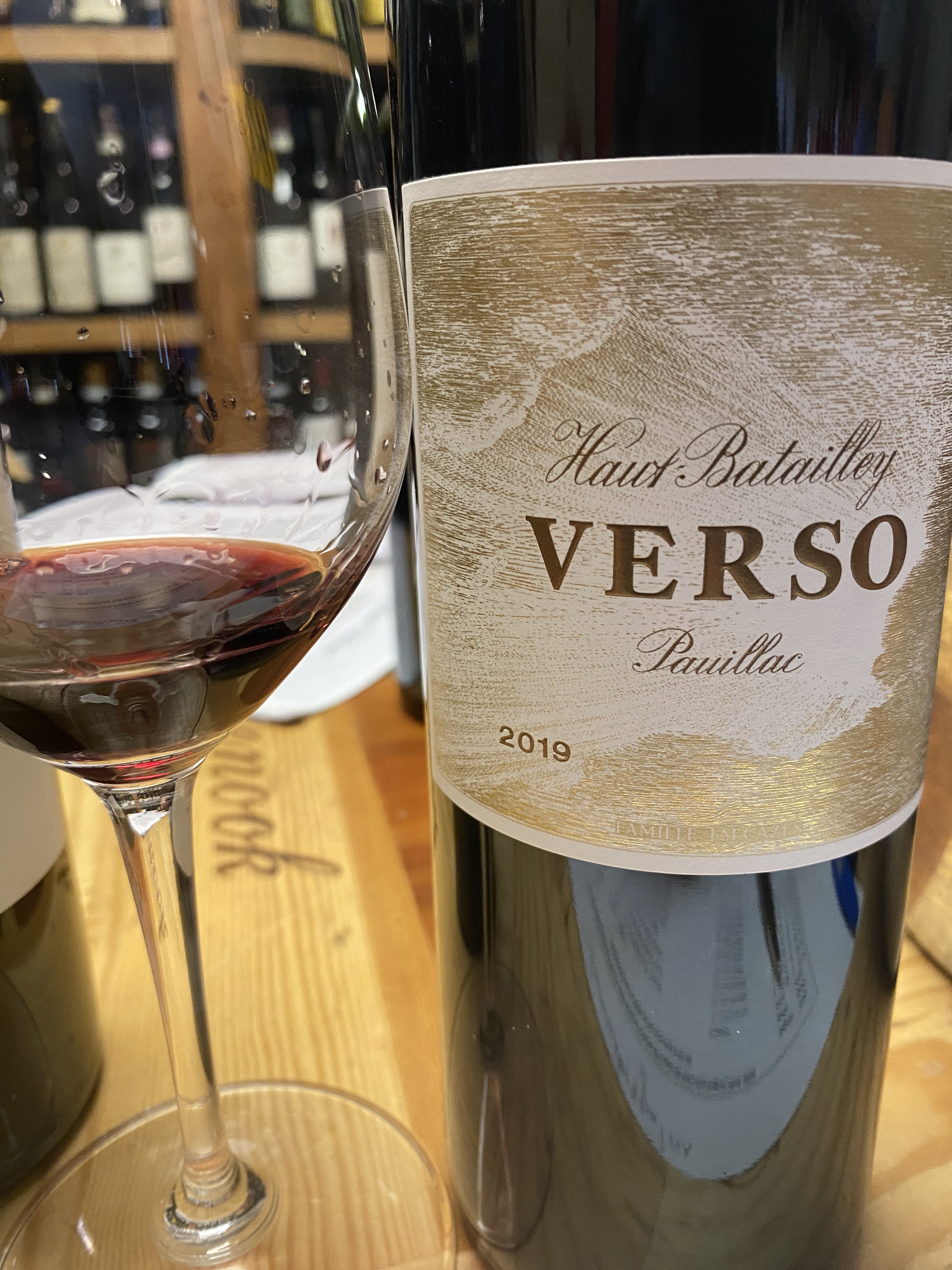
The second wine of the tasting was Chateau Haut-Batailley “Verso” Pauillac. Chateau Haut-Batailley is a Fifth Growth from the Classification of 1855 of the Medoc. The actual vineyard of Chateau Haut-Batailley was defined in 1942, when the estate was divided into two separate properties (Batailley and Haut-Batailley). The estate now has forty-one hectares of deep Garonne gravel and planted with Cabernet Sauvignon, Merlot, and Petit Verdot. In 2017 the Caze family took over the estate. “Verso” is the second label of the estate. The wine is a blend of sixty-five percent Cabernet Sauvignon and thirty-five percent Merlot. The fruit is hand-harvested, sorted, and destemmed from a twenty-two-hectare property on the estate. Initial Fermentation and Maceration and vatting for three weeks, while Malolactic Fermentation began after the juice was transferred to one-year-old barrels for eight months. The dark ruby-red wine offered notes of red fruit and spices and herbs. On the palate this medium-bodied wine offered tones of currants, blended with other red fruits, oak, pepper, and fine-grained tannins and a medium count finish of fruit and a touch of terroir.

The last wine of this group was Chateau Haut-Batailley Pauillac 2019. Chateau Haut-Batailley is a Fifth Growth from the Classification of 1855 of the Medoc. The actual vineyard of Chateau Haut-Batailley was defined in 1942, when the estate was divided into two separate properties (Batailley and Hut-Batailley). The estate has forty-one hectares of deep Garonne gravel and planted with Cabernet Sauvignon, Merlot, and Petit Verdot. In 2017 the Caze family took over the estate. The estate now has forty-one hectares, because the Caze family planted an additional nineteen hectares, that had never been reinstated after Phylloxera, and these blocks are bordering Saint-Julien. This wine is a blend of seventy-six percent Cabernet Sauvignon and twenty-four percent Merlot. The grapes were hand-harvested, hand-sorted, and destemmed. Initial Fermentation and Maceration and vatting for three weeks. Malolactic Fermentation started in the vatting process and continued during the aging in French Oak, of which sixty percent was new, for fourteen months. The deep ruby red wine offered notes of currants, cassis, and toasted oak. On the palate this wine offered tones of black cherry, currants, with secondary notes of cocoa and vanilla, great acidity, silky tannins, and a nice long finish of fruit, oak, and terroir. It was a treat to taste the first and second label wines from the same vintage.

 The Wine Raconteur