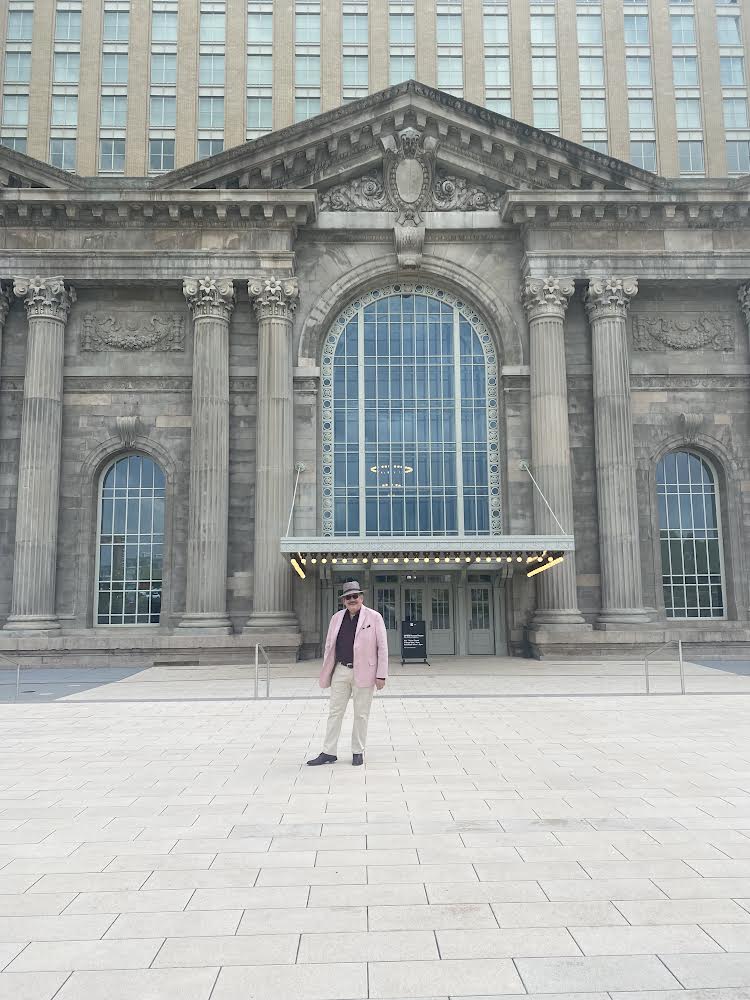
At one time Detroit was competing with Manhattan for being the most impressive city, because of commerce. Architecture was grand, craftsmanship and pride were at an all time high. A Beaux-Arts Classical style train station was built, by the same team that created the Grand Central Terminal, but this was the tallest station in the world; thirteen stories with two mezzanines. The station opened in 1914 and closed in 1988. The owner of the station allowed the building to fall into disrepair and neglect and it became the poster child for all that was negative about Detroit. In 2011, serious discussions about the renovation began, and Ford Motor Company stepped in at 2018, and $740 Million later (original price of building the station was $15 Million), the building has reopened and will become a campus for one of their divisions. The marble, fine woods, and all the trim for interior and exterior have returned. I remember going there at eight years of age to go by rail from Detroit to Hamilton, Ontario, Canada; it was frightening and exciting at the same time and exhilarating as well. The train was like pitch dark as it traversed the train-tunnel underneath the Detroit River to Canada, and I remember that it was a “milk-run” which meant it stopped at almost every whistle-stop along the route; and there was a mother with her children and she would announce each stop and the children would spell out the name. Needless to say, I felt like a country lad visiting the city for the first time when we returned to see the glory of the refurbished building. The original tickets to be Mr. & Mrs. First Nighter was done on the computer, and the first hour it was opened, it crashed from the demand. We waited until some of the hoopla was done and one didn’t need computer generated tickets to do the tour, and the turnout was still huge.

As we entered Michigan Central Station from Roosevelt Park, we were in Corktown, the oldest extant neighborhood in the city and now on the National Register of Historic Places, and there is a section of Michigan Avenue that still is driven over the original brick paver stones. Corktown was a term used by the Old Guard of Detroit for the sudden massive influx of migrants from County Cork after the Great Famine of Ireland. The area then saw it as a haven for German, and later Maltese and Mexican immigrants lured to Detroit for the automobile industry and Detroit was one of the original homes of the Middle Class, because of all the hard workers that came to start or support a family. We had some time to kill so Nick and Nora, after being tourists motored over maybe four blocks from the Corktown boundaries and went to one of the original Mexican restaurants in Detroit to get a couple of Margaritas and some fresh chips and hot sals to beat the extreme heat of the day. Then we got back in the car, as we had reservations to a restaurant that I had been wanting to try, but I had to figure out a way to make it work, as Corktown is off the beaten track, even from my old original stomping grounds. We were going to Alpino Detroit, which as the name suggests offers cuisine from the Italian, Swiss, and French Alps, and even the majority of the wines are from the same regions. Prior to becoming Alpino Detroit, the location housed two different Irish restaurants; St. CeCe’s Pub and Lady of the House. We sat in their parking lot and admired some of the architecture of the original homes and buildings that we could see, until they opened the doors.
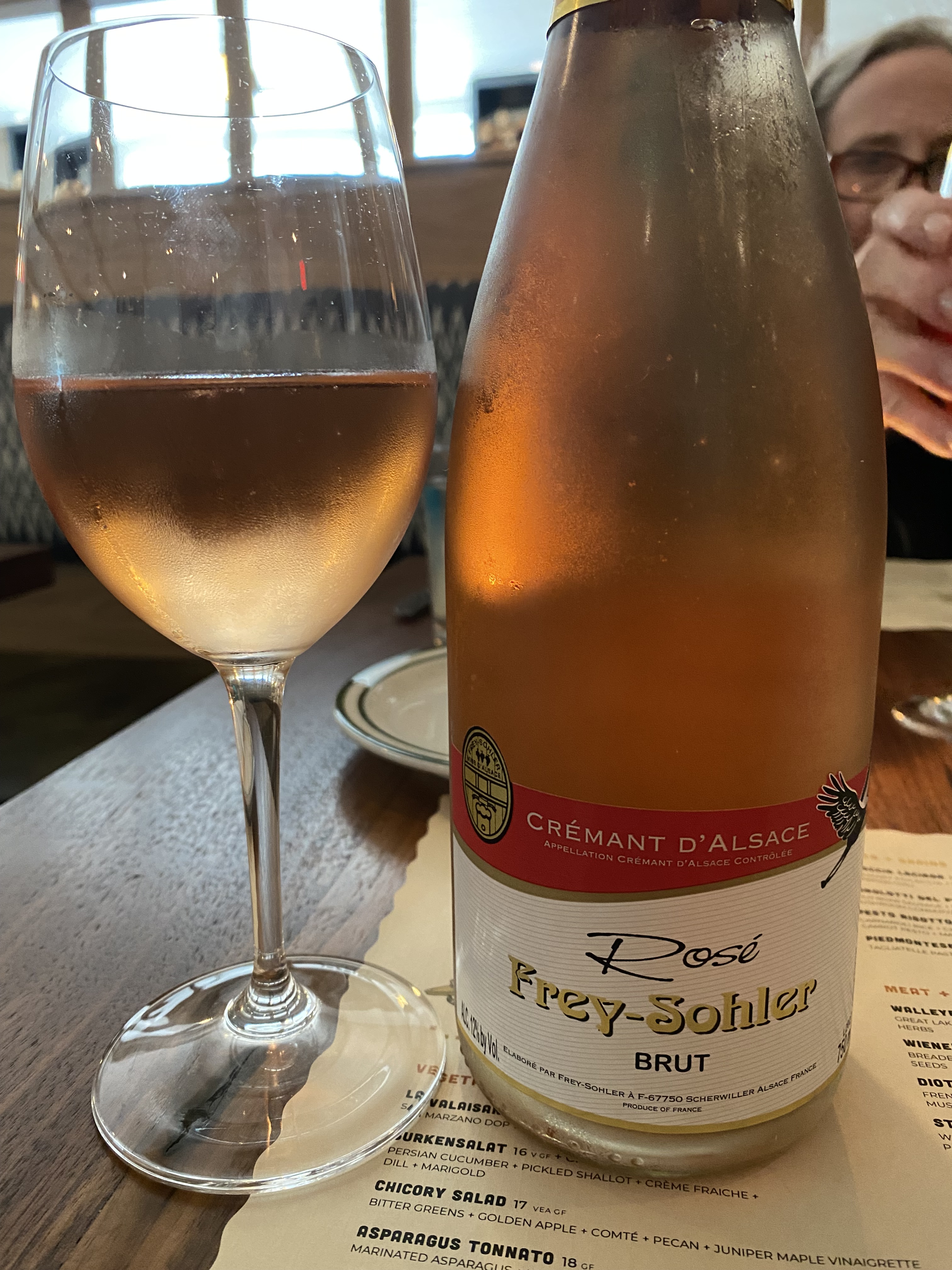
We were still in the throes of a summer heat, that evolved from heavy rains earlier in the day, which had thankfully disappeared by the time we started out adventure, but the humidity was still hovering around a hundred. As we studied the well created regional menu, our waiter suggested we start with two small plates, so we divided the plates between us, and my Bride ordered the Rosti, a Swiss Potato Pancake with Smoked Salmon, Crème Fraiche, and Mustard Greens. Very refreshing and a nice appetizer. We began with Frey-Sohler Rosé Cremant D’Alsace Brut NV. Frey-Sohler is south of Strasbourg and twenty kilometers from Germany. Frey-Sohler estate is the sole distributer of wines belonging to the Sohler family. It is six generations old and is now run by Damien Sohler and his daughter Aude. The family has an estate of thirty hectares and then has another estate Terra Vitis which is a network of French winegrowing regions. Cremant d’Alsace appellation was created in 1976, and like all Cremant wines the Methode Traditionelle must be employed, and they must spend a minimum of nine months maturing on their lees. For rosé wines, only Pinot Noir is permitted. The making of sparkling wines in the region is relatively recent, as they began during the Alsace-Lorraine era under German control. The salmon-pink colored wine offered delicate bubbles and notes of strawberry, raspberry, and chamomile tea. On the palate there are tones of strawberries, raspberries, baked bread, and a slight bitter finish of lemon rind.

 The Wine Raconteur