I may have been named after a Saint, but I certainly don’t refer to our home in such lofty terms. Saint John’s Resort has a history that began in the late Forties when St. John’s Provincial Seminary opened its doors and for over forty years it was an institution of Divine education and learning. It was created by the Catholic Archdiocese of Detroit, eventually being the retirement home of Cardinal Maida as well. In 1979, a semi-private golf course was built on the two-hundred-acre parcel of land and when the seminary closed, it became the St. John’s Conference Center and eventually added the Grande Ballroom while still maintaining the Romanesque architecture even with all the additional building. They also created the “5ive Steakhouse” as part of the new hotel and conference center. In 2021, the entire complex was purchased from the Archdiocese with the proviso, that all profits from the resort go to a charitable foundation. The latest addition to the complex is The Grotto, which is nestled under the original and still functioning chapel. This space was a place where the Seminary students could pray in peace, and now is a charming wine bar that is an off shoot of “5ive.” In 2023, the resort received the Wine Spectator award The Award of Excellence which recognizes restaurants with an exceptional wine list. Somehow, during all of the years of enjoying wines, the new sommelier of The Grotto and I have crossed paths at different wine tastings, and my Bride and I, broke from our usual practice and went to the grand opening of The Grotto.

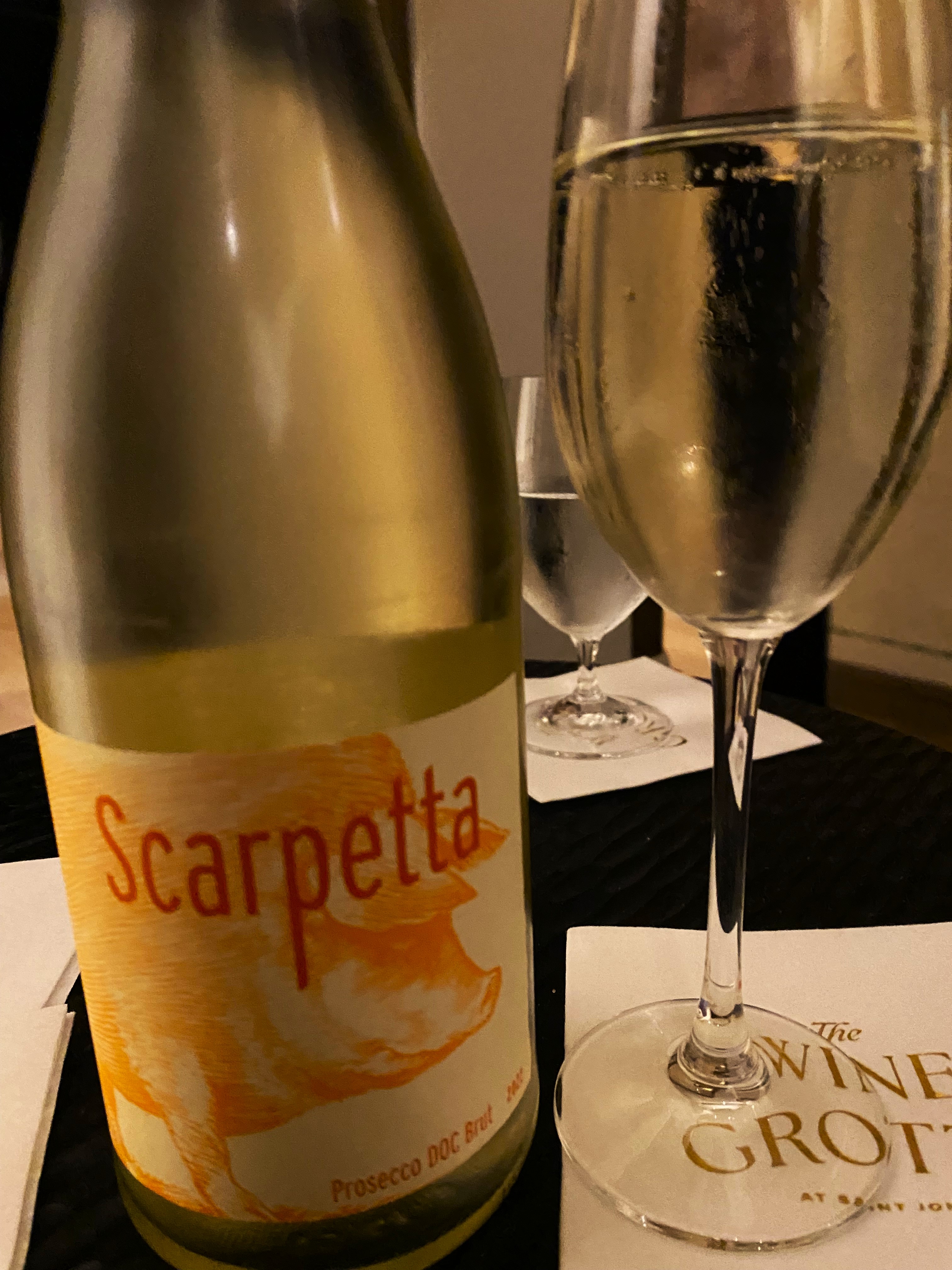
The Grotto features small plate dishes for sharing and for “munchies” and they were certainly not trying to offer “bar food.” We started off with some Shishito Peppers, with a chili crunch vinaigrette, and honey-citrus zest. Perfect finger food, as long as one knows that probably one out of ten peppers could have some real zing. My Bride had a glass of Scarpetta Prosecco DOC Brut NV. Scarpetta wines began in the Friuli-Venezia Giuli region in 2007 and since then has expanded into other regions of Italy as well. Scarpetta is an old Italian term for that last piece of bread that is used to soak up the last of the sauce on your dinner plate. With this wine being Prosecco DOC, the fruit is officially called Glera, for the rest of the world outside of Prosecco DOC, the grape is called Prosecco. Once considered a “poor man’s Champagne” Prosecco has been a work in process, and is now a truly recognized label of its own. It is made with the Charmat method, also known as the tank method or bulk method, to differentiate it from Methode Traditionelle, but as the years go on, I have to admit that the size of bubbles keeps getting smaller and definitely more numerous and persistent. This particular wine is a blend of Glera and Chardonnay, and according to the DOC regulations, the wine must be at least eighty-five percent Glera. The pale golden-yellow wine offered notes of fresh fruit, honeysuckle and a tweak of hazelnut. On the palate there were tones of green apples, honeydew melons and a nice crisp taste and finish, that I would call “sec” instead of the sometimes-overpowering puckering taste of “brut.”
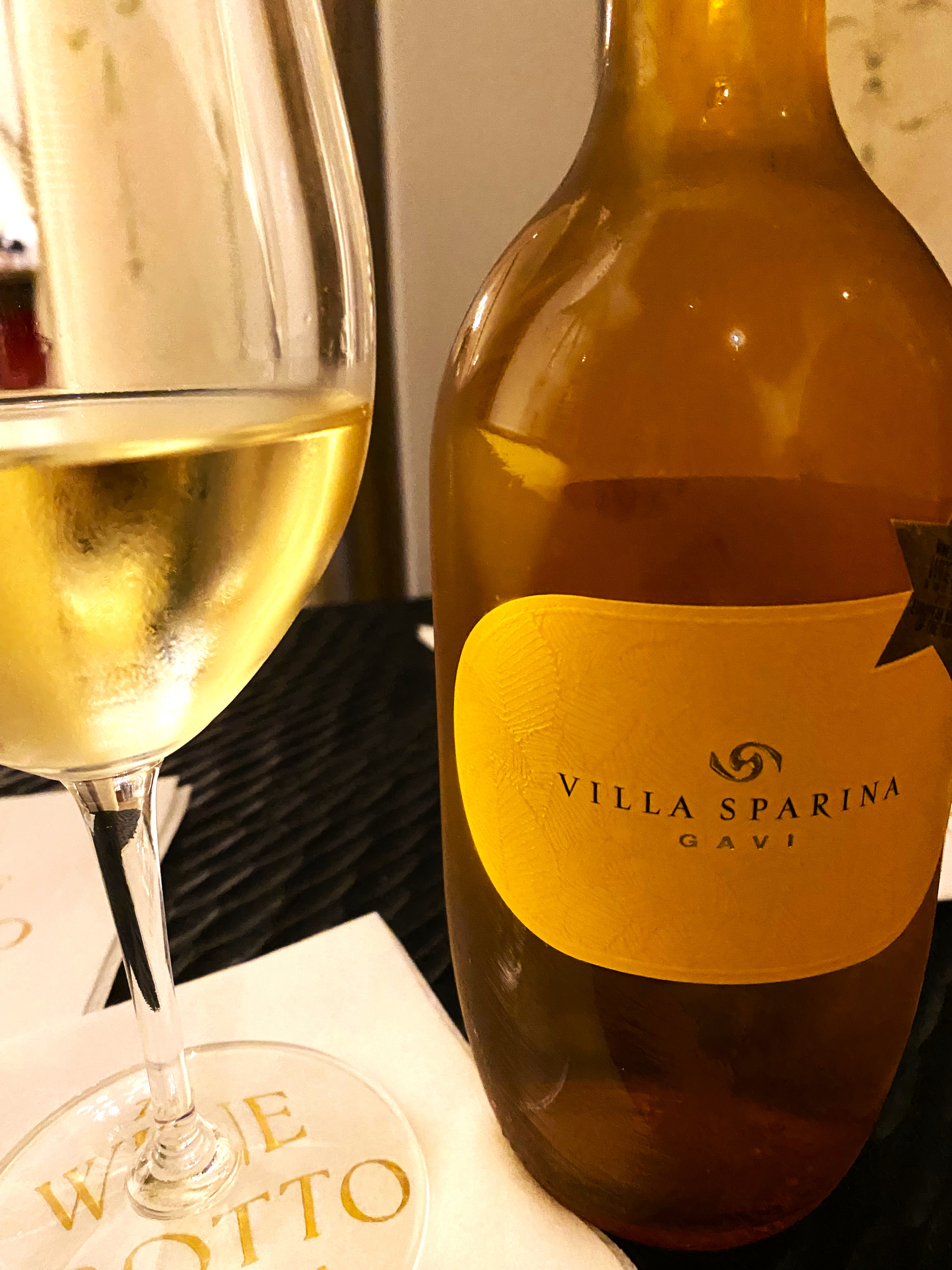
We also shared a Lobster Roll at The Grotto, which was made from claw meat, with spices, micro-sprouts, and a side of potato chips. I had a glass of Azienda Agricola Villa Sparina Gavi del Commune di Gavi DOCG 2021. This winery was purchased in the Seventies by the Moccagatta family. Villa Sparina is spread over one-hundred hectares of which seventy are reserved for the native varieties of Gavi (Cortese) and Barbera. Some of their vineyards are located on the hills of Monterotondo, which is considered a Cru region for Gavi. For the wines to carry Gavi di Gavi, the fruit must come from vineyards in the township of Gavi. The winery wishes to stay distinctive and they even created a golden-hued glass bottle based on an ancient vase found during the renovation of the winery. Gavi is considered the jewel of white wines in the Piedmonte, though it has the feel of Liguria as it is found to be more light and fruity. The Cortese grape has been recorded in the area since the 1600’s, Gavi di Gavi received its DOCG status in 1998. The wine is aged in Stainless Steel for about five months to keep its freshness and crispness. The wine is a straw-yellow color and offers notes of white fruits, white flowers, herbs, and almonds. On the palate there are tones of green apples, honeydew, citrus, and spices in a very bone-dry, crisp wine with bright acidity with a great finish of mineral-laden terroir.

 The Wine Raconteur