After enjoying many wines at the tasting, we had made a reservation for dinner, as we had no idea what to expect from the dinner. I had originally called to ask if I could get a table in the bar area, and yes, I still make reservations by phone. I was told that there were no tables in the bar area. One can dine at the bar, or they have some open booths along the wall that divides the bar from the restaurant.
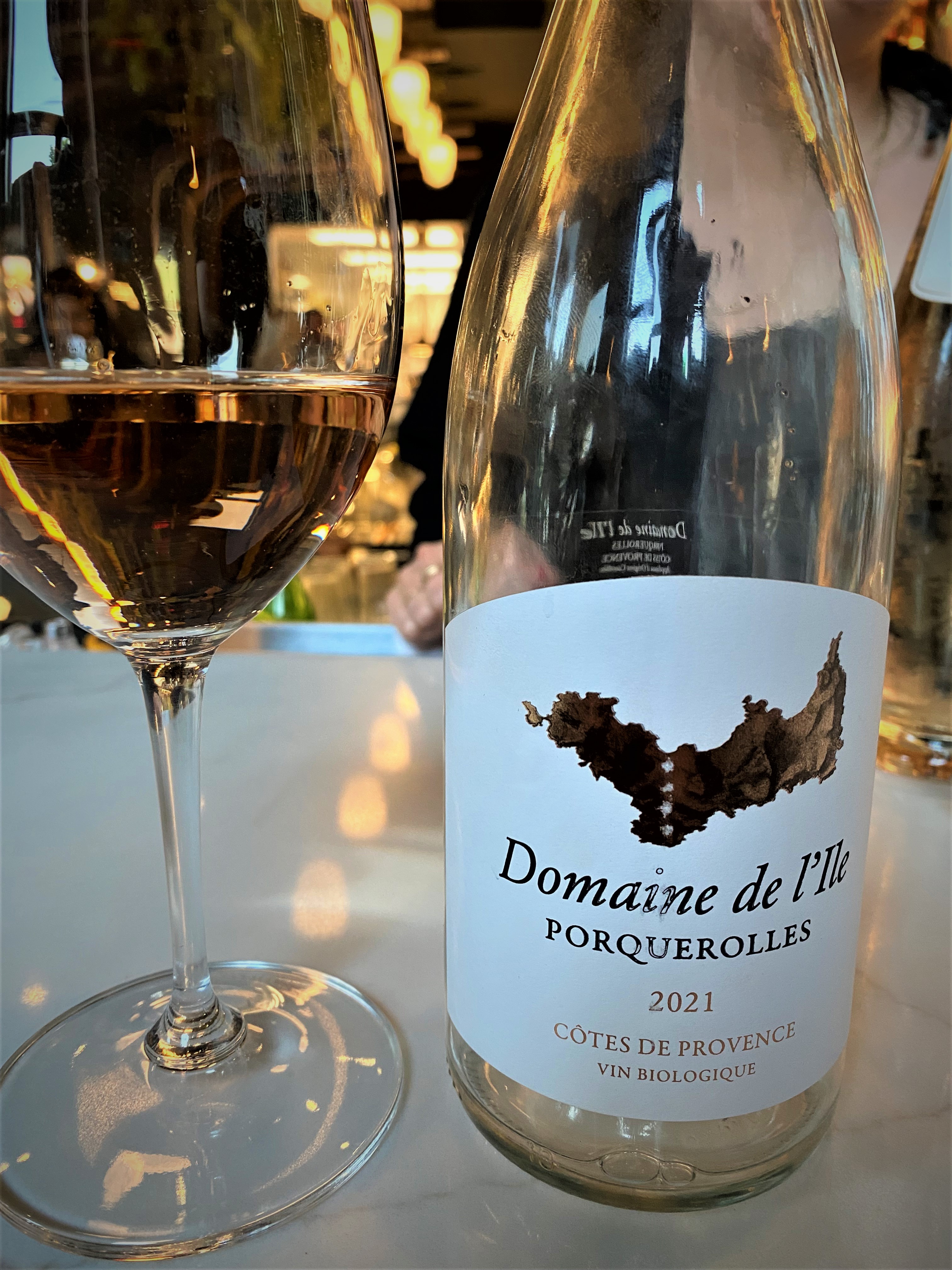
When it was time for our reservation, there was still quite a bit of activity in the bar area from the tasting crowd, but we had worked up an appetite. There were plenty of interesting items, on the menu, but I have to admit, that we both went traditional for us. My Bride had the Great Lakes Whitefish with crispy skin, Back Fin Crab, Beurre Blanc and Roe. She had also poured herself a glass of wine from the tasting that she liked and that was Domaine de l’Ile Porquerolles Cotes de Provence 2021. The Cotes de Provence is the largest appellation of the Provence and produces the majority of the rosé wine. Francois-Joseph Fournier an adventurer of the old school went from France to the New World in search of fame and fortune and ended up finding his island home that he bought for his new wife, the Porquerolles Island in 1912. The island is 4.3 miles long and 1.9 miles wide and it is here that he planted vines, fruits, and olives. There are thirty-two hectares of vineyards planted on soil of shale and clay. The wine is a blend of twenty-six percent Syrah, twenty-five percent Cinsault, twenty-two percent Mourvedre, twenty-one percent Grenache, and six percent Tibouren. A salmon-pink colored wine that offered notes of red currants and florals. On the palate there was a mix of red fruits, bright acidity, salinity and a finish of fruit and terroir.
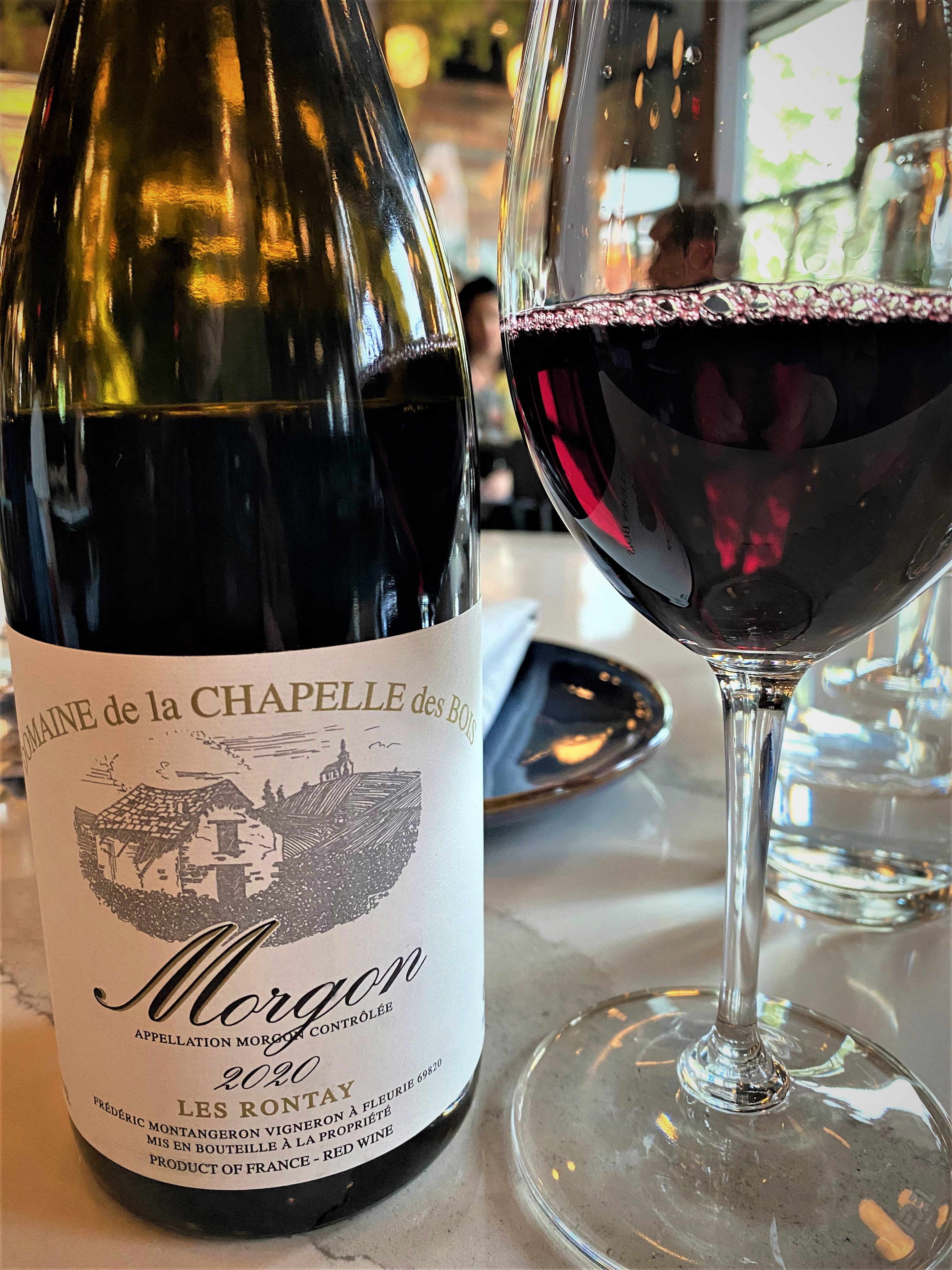
I had the Duck Confit with Agrodolce (a Sicilian sweet and sour type of sauce), Grapes and Frisee (from the chicory family). I also opted to have a red wine with my dinner. I had Domaine de la Chapelle de Bois Morgon Les Rontay 2020. Morgon is one of the ten crus in the hills of Beaujolais, and Morgon allows Chardonnay, Aligoté and Melon de Bourgogne in a mix of fifteen percent to the balance of Gamay, this particular wine is pure Gamay. The soil is granite, schist, and volcanic influences, rich in iron on a mix of sandy to loams to heavier clays. Domaine de la Chapelle des Bois goes back to at least 1820 and it has been in the family for seven generations. The fruit is all hand-harvested and then the fruit undergoes vatting for about ten days, where the juice is pumped from the bottom to the top twice a day, and grids are placed over the fruit to weight it down. The grids are removed before final pressing. The resulting, slightly alcoholic, quite sweet juice, bursting with aromas is called locally “Paradis.” The estate is just over eight hectares and is organic in approach. The wines of Morgon are denser than the other wines of Beaujolais and tend to get barrel aging. The wine is ruby-red and offered notes of plums and cherries, and violets. On the palate this was a medium-bodied wine with tones of cherry and plums, medium acidity, and tannins. It opened up, more as we sat discussing the tasting and during the dinner and would not be mistaken for a Beaujolais Nouveau.

 The Wine Raconteur