Through social media and assorted wine associates, I found out about a wine tasting at Bar Pigalle in Detroit. Detroit is undergoing a change, it is being rediscovered and areas that were once elegant and trendy, had become areas that were to be avoided by the time of my student days; as they were where one would go for illicit activities. The area in the Roaring Twenties was known as Little Paris, and is now called Brush Park in the reawakened Midtown of Detroit. A beautiful bar has been installed in The Carlton Lofts; an historic building built by the famed architect Louis Kamper. The uniqueness of the wine tasting, is that the Bar Pigalle offered one end of their bar, and all the wine glasses for the event. Those that wished to attend, the entrance fee was a bottle of French Rosé of their choice. My Bride and I brought two bottles, just in case, not knowing what to expect. I think that I heard that there were twenty-eight entrants and twenty-one bottles of wine. I will discuss some of the wines that were offered that evening.
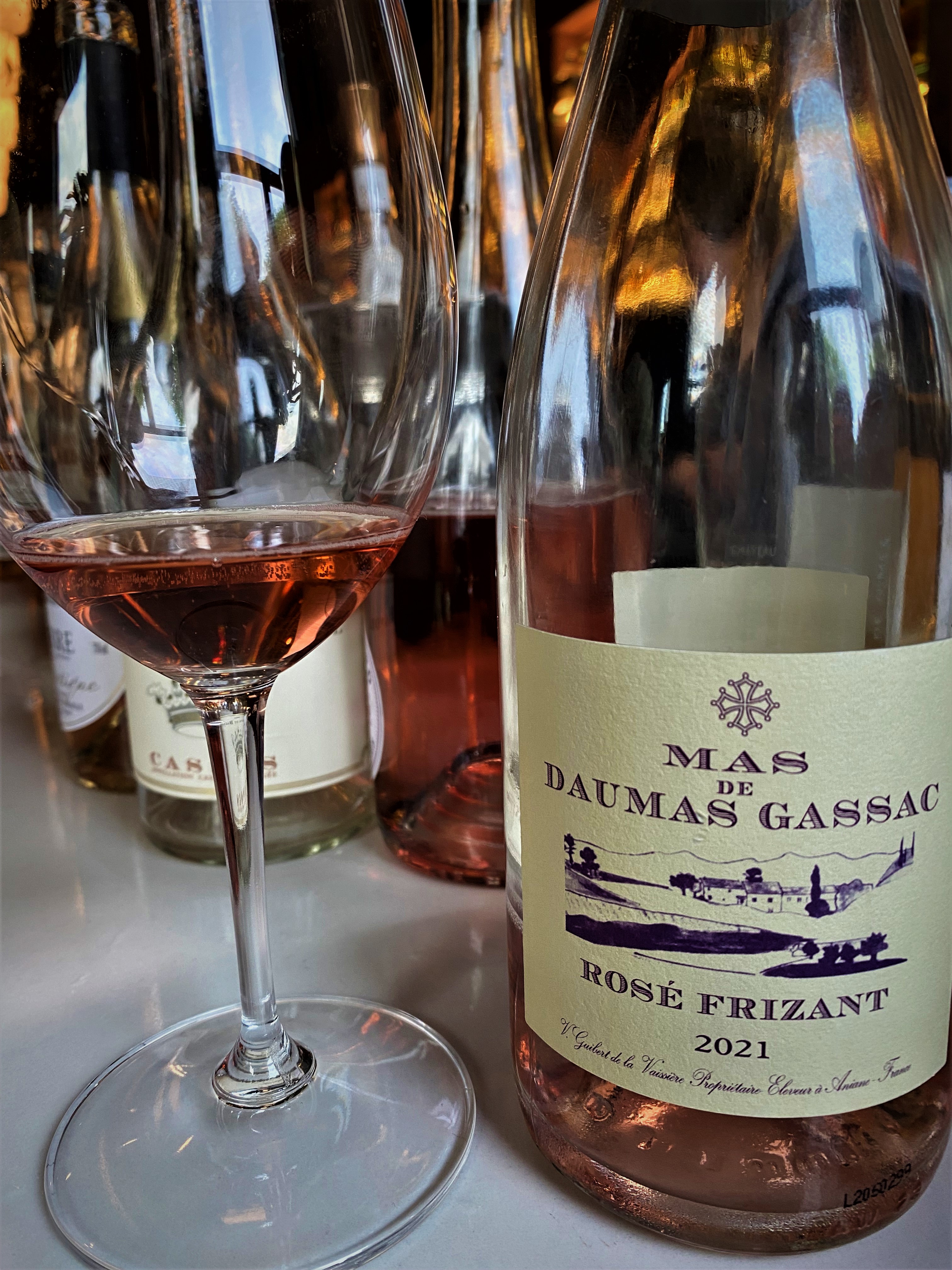
We got there just before the restaurant was opening, as we wanted to make sure that we had parking in their lot across the street. We may have stuck out a bit, as we were oldsters, instead of hipsters, but I guess our enthusiasm and interest in wines won over, most of the people that we were chatting with, and my Bride was definitely enjoying the moment. One of the first bottles opened was Mas de Daumas Gassac Rosé Frizant Mousse IGP Pays de l’Herault 2021. IGP Pays de l’Herault is a department of Languedoc-Rousillon on the southern coast of France and well over a hundred varieties are allowed to be used, and the region is so vast that it encompasses plenty of different terrains. Mas de Daumas Gassac is well known and is nicknamed “the Lafite of the Languedoc.” The winery cellars were built in the foundations of an ancient Roman mill. The wines are vinified in Stainless-Steel and kept naturally cool by two springs running under the cellars, and slows down fermentation. The first vines were planted in 1972. The estate is still family owned and operated. The wine is a blend of Cabernet Sauvignon, Mourvedre, Pinot Noir, Sauvignon, Petit Manseng, and Muscat; all hand-harvested and grown on white clay soil. They use free-run juice (saignée) at low temperature, followed by fermentation in the Charmat Method. A coppery-rose colored wine offering notes of strawberry and violets. On the palate a charming sparkling wine with tones of watermelon, strawberry, soft mousse and short finish of fruit and terroir.
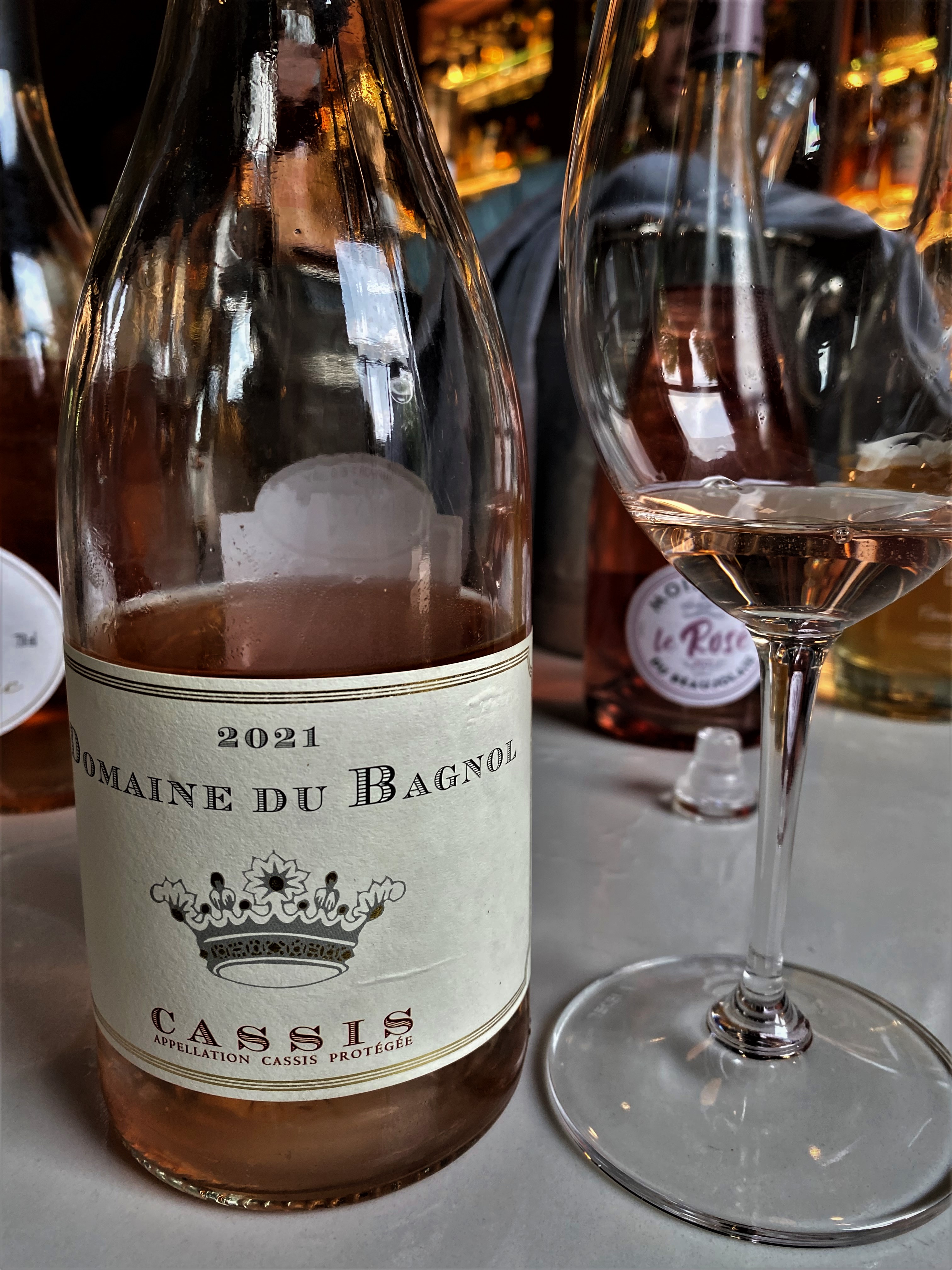
Another of the wines that we were tasting with the crowd was Domaine du Bagnol Cassis Rosé 2021. Cassis is a small coastal village in Provence. It is one of the first five AOC regions in France, as it was recognized in May, 1936 for white, rosé, and red wines from area of about two-hundred-hectares. The Domaine takes its name from a vineyard in the Bagnol district that was recorded in 1430 and in 1867 the first formal trace of the property. The domaine has twenty-three hectares of vines, including eight in the heart of Cassis and is one of ten oldest in the district. Jean-Louis Genovesi purchased the estate in 1997 and now they are in the second generation of family, and they began growing organically and became certified in 2014. The grounds are limestone and the wine is a blend of fifty percent Grenache, thirty percent Cinsault and twenty percent Mourvedre. The fruit is pressed directly and rapidly, under two hours (saignée) to extract as little color as possible and all fermentation and aging, I presume is done in Stainless-Steel. A pale golden-rose colored wine offering notes of red fruit and florals. On the palate a refreshing balanced wine with tones of strawberry, cherry, and herbs; with a soft finish of fruit and a slightly salty mineral end to compliment the terroir.

 The Wine Raconteur