As were going to enjoy the last two wines poured by Anne Charlotte Melia Bachas of Chateau de la Font, du Loup where she is both owner and winemaker, at my local wine shop, The Fine Wine Source in Livonia, Michigan. I have had the pleasure of tasting many fine wines since I became a club member at the wine shop, but this was a first to try several wines from the historic Chateauneuf-du-Pape district. Anne Charlotte also has put an emphasis on environmental stewardship at the vineyard. The soils are fertilized with organic composted sheep manure and grape pomace. Where possible she also likes to leave vegetation between vines to improve soil structure and resist erosion.
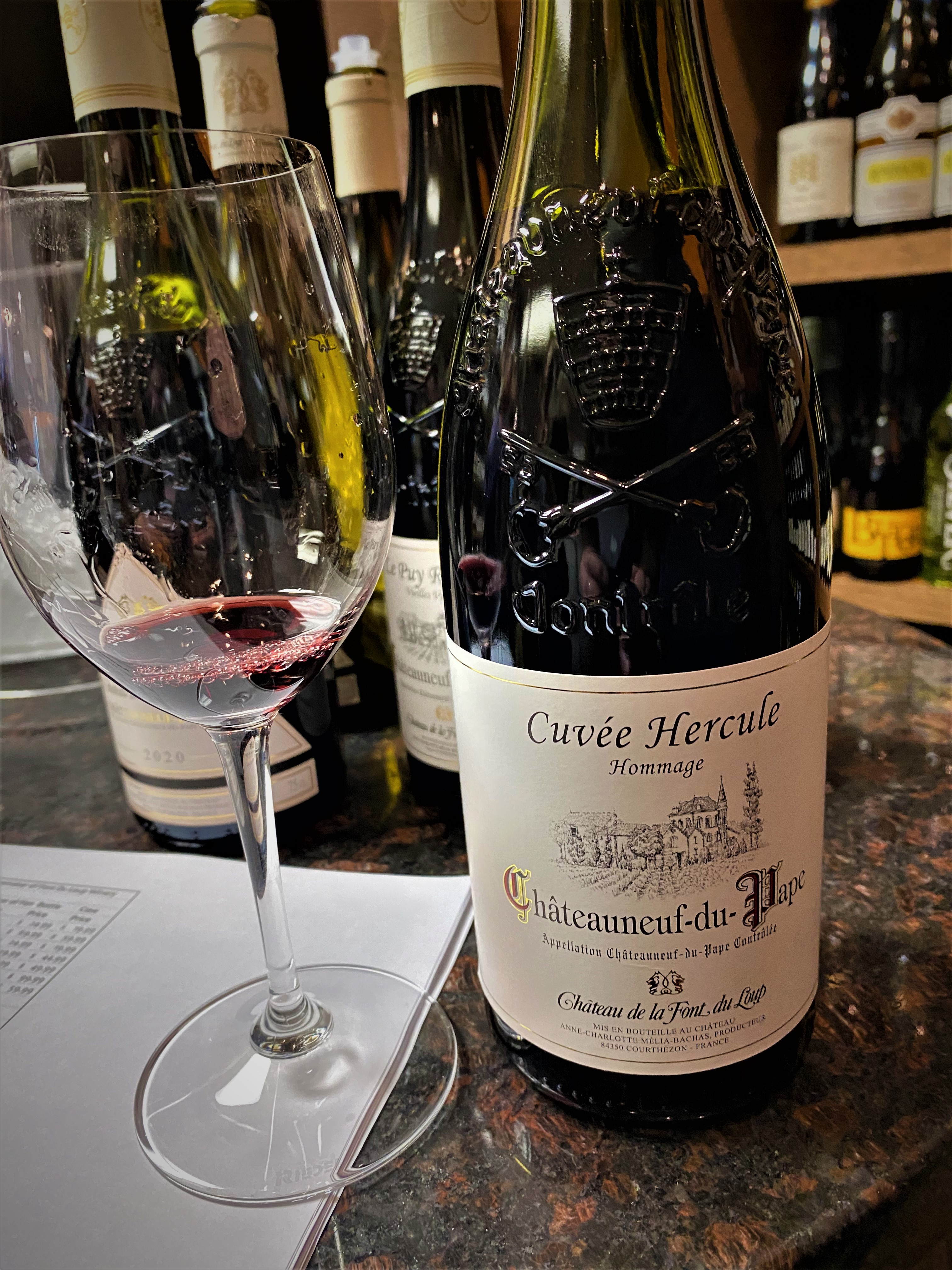
The penultimate wine of the tasting was Chateau de la Font, du Loup Cuvée Hercule (Hommage) Chateauneuf-du-Pape 2019. As the label shows, this wine is an Homage to Hercule, and Hercule is a French name for the local shipper’s father, who was the first in America to represent her wines. Anne actually shipped bottles of the unfished individual varietal wines to the son, who has taken over the business from his father. He and Anne, then began the unique work of creating a special blend for the cuvée during a Zoom session, talk about fun. While eighteen varietals are allowed for this wine, the winery used their four varietals: Grenache, Syrah, Mourvedre and Cinsault. The vines are all about forty-five years of age, the blend may be proprietary, but we know that each variety was fermented separately and processed in the same manner as her Chateauneuf-du-Pape. A garnet-colored wine offering notes of red and black fruits, herbs and spices, and florals. On the palate tones of cherries and plums, spices, a tinge of mint in a medium-bodied wine with ripe tannins, balanced with a nice finish of terroir and fruit.

The final wine for the tasting was Chateau de la Font, du Loup Chateauneuf-du-Pape Le Puy Rolland 2020. In 1992, the estate purchased a four-hectare plot of one-hundred-year-old Grenache vines, and these vines are used to produce Le Puy Rolland. The soil is predominately sand with stones, on high elevation sloping vineyards with north-facing plots, that require an additional two weeks ripening period compared to the basic appellation wines. The soil, elevation, and varietal are also found in the legendary Chateau Rayas in Chateauneuf-du-Pape. The Initial Fermentation using indigenous yeasts and Maceration occur in Concrete tanks. The juice is then aged for eighteen months in large French Oak barriques; one-thousand-two-hundred-cases are produced. A garnet-ruby colored wine that offers notes of Kirsch, orange peel, cloves, and tobacco. On the palate, a big, fresh wine tones of brandied cherries, strawberries, black fruit, cloves, licorice, silky tannins, an elegant wine that ends with a long finish of Kirsch.

 The Wine Raconteur